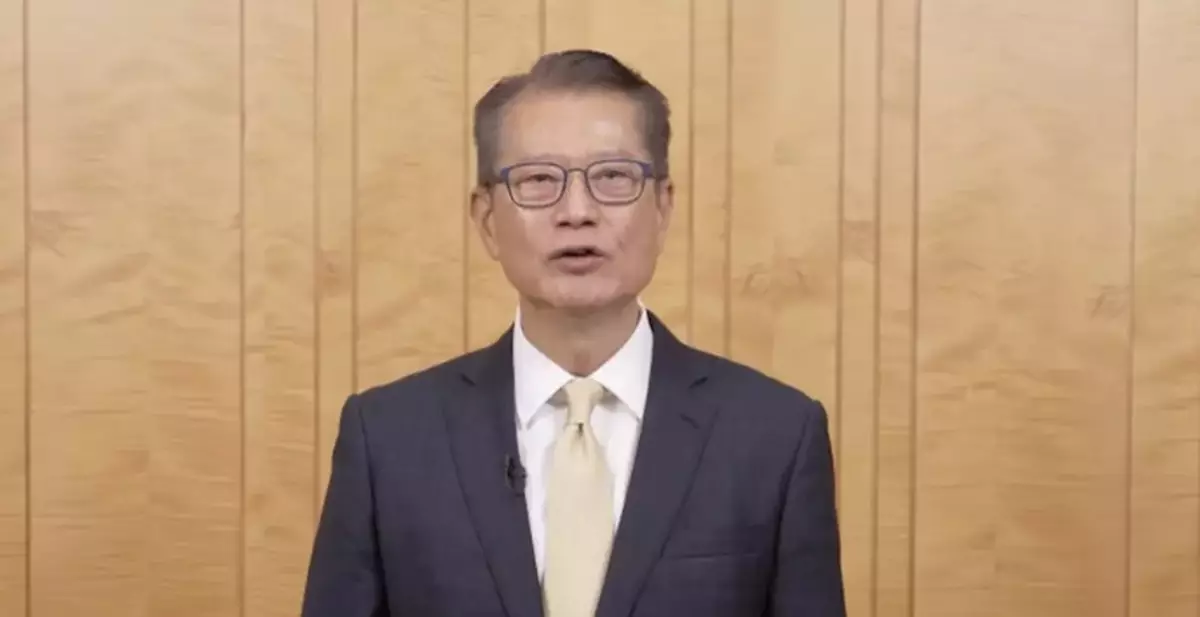
Speech by FS at Greater Bay Area Conference 2026
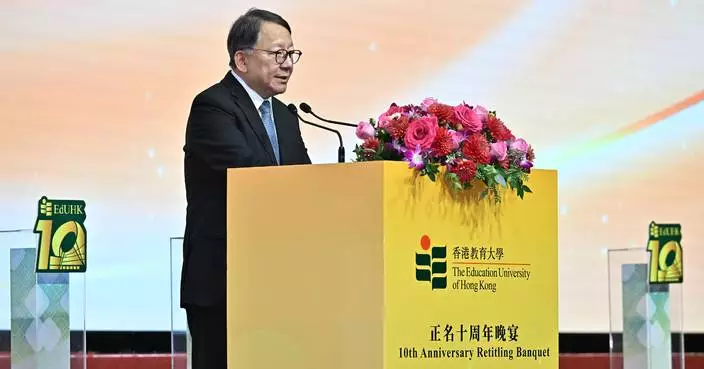
Following is the video speech by the Financial Secretary, Mr Paul Chan, at Greater Bay Area Conference 2026 today (September 3):
Click to Gallery
The Financial Secretary, Mr Paul Chan, Photo source: reference image
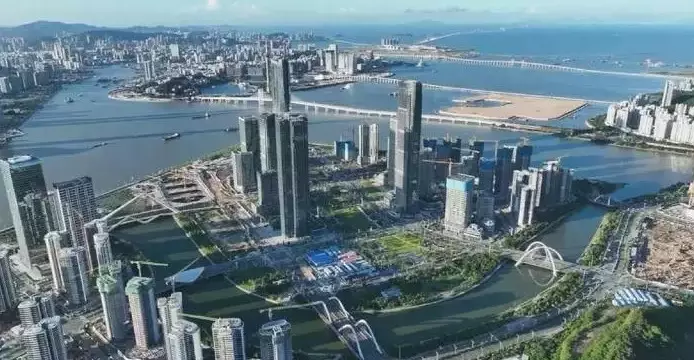
The Greater Bay Area, Photo source: reference image
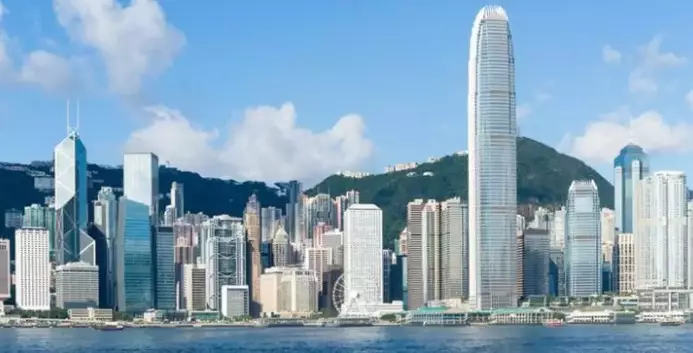
Hong Kong, Photo source: reference image
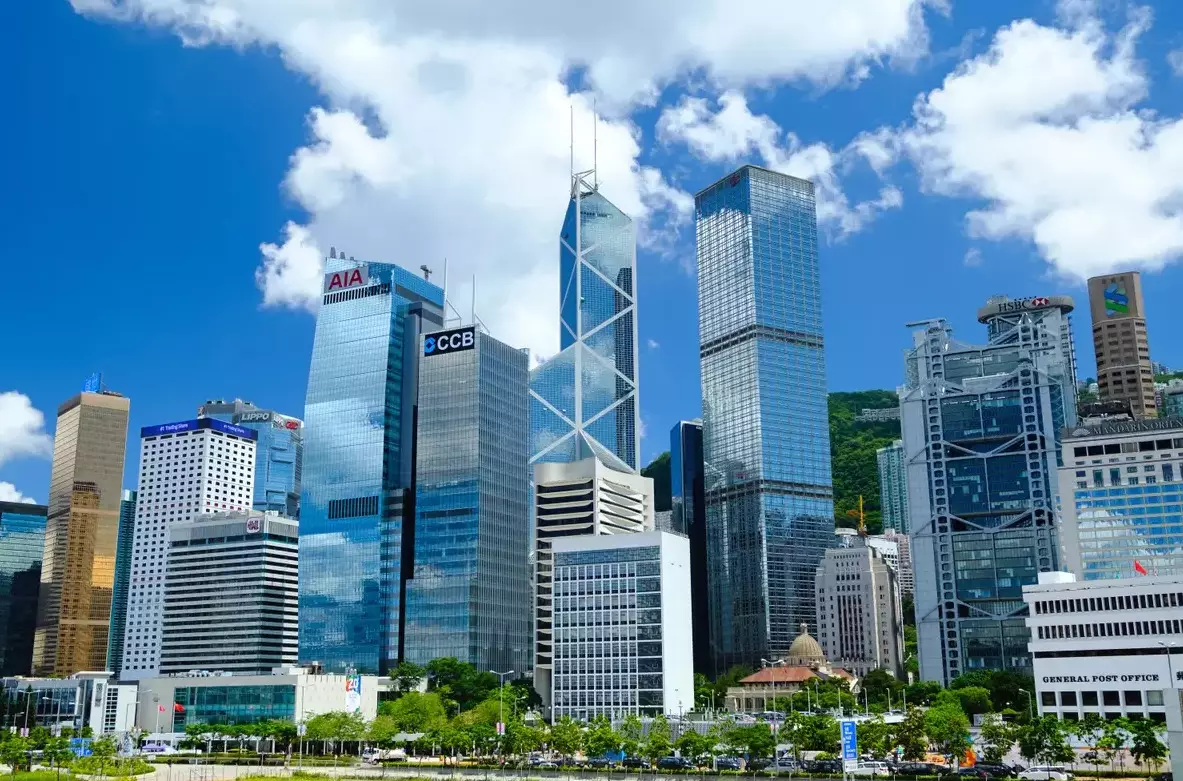
Hong Kong, Photo source: reference image
The Financial Secretary, Mr Paul Chan, Photo source: reference image
Honourable Vice-Chairman C Y Leung (Vice-Chairman of the National Committee of the Chinese People's Political Consultative Conference and Chief Convenor of the Hong Kong Coalition), Mr Qu Yingpu (Publisher and Editor-in-Chief of China Daily), Deputy Director Sun Shangwu (Deputy Director of the Liaison Office of the Central People's Government in the Hong Kong Special Administrative Region), Deputy Commissioner Hua You (Deputy Commissioner of the Office of the Commissioner of the Ministry of Foreign Affairs in the Hong Kong Special Administrative Region), distinguished guests, ladies and gentlemen,
Good morning.
It is a pleasure to join you all at the Greater Bay Area Conference, a welcome opportunity to share a few thoughts on the new dynamics taking shape across the Asia-Pacific, and what they mean for connectivity in the Greater Bay Area (GBA).
The Greater Bay Area, Photo source: reference image
The theme of today's forum is timely, pointing to a question that matters to all of us: the role and prospects of the GBA in the Asia-Pacific.
We are living in an age of profound change, driven by geopolitics and technological transformation. And Asia's collaborative development has entered a new phase. China and ASEAN (Association of Southeast Asian Nations) together account for more than two billion people and some US$23 trillion of GDP, and last year their bilateral trade passed the US$1 trillion mark for the first time. But this is not simply a matter of scale. The change is also one of quality. Demand for computing power and equipment, driven by artificial intelligence, is knitting Asian production and supply chains more tightly together. Regional co-operation is far more technology-intensive than it was even a few years ago.
At the same time, the logic of global investment is shifting. If geopolitical uncertainty has sent capital in search of safe harbours, then technological change is fuelling appetite for high-growth assets. Asia is precisely where the two meet. China's technological capabilities - and its ability to scale them - are increasingly recognised worldwide. ASEAN has a young population, a fast-growing middle class and a digital economy on course to reach a trillion US dollars by 2030. And more good news: the region remains safe and stable.
It is these profound changes that make President Xi Jinping's vision of an Asia-Pacific community with a shared future all the more far-sighted, and all the more relevant. Economies in the region compete as well as collaborate, but it is increasingly clear that regional synergy - working together to make the pie bigger and help each other grow faster - holds the key to growth.
Hong Kong, Photo source: reference image
A multiplying effect
That brings me to Hong Kong and the GBA. When I speak with friends from overseas, I often say that the GBA is unique in the world. Nowhere else will you find, within a single region, a leading international financial centre, one of the world's most dynamic innovation clusters, advanced manufacturing at scale, and a multimodal transport network linking not just East Asia and Southeast Asia, but the world as well.
As the country's most internationally connected region, the GBA presents a strong value proposition for Asia-Pacific collaboration. It rests on a simple conviction: when we partner, we do not merely add up our strengths - we multiply them, and extend their reach well beyond Asia.
Financial markets are a good case in point. Hong Kong has much to offer economies at various stages of development. That includes, for example, a full range of funding options to support innovation, infrastructure and green transition, and our experience in using fintech to advance financial inclusion.
But more compelling still is connectivity. A few months ago, when securities exchanges from across Asia gathered in Hong Kong, I put a proposition to them: that we strengthen connectivity in standards, in trading, clearing and settlement, in underlying infrastructure, and in products. We can cross-list ETFs (exchange-traded funds). We can list companies and infrastructure assets on one another's markets, and support dual listings. Working together, we can deepen liquidity for one another, lower the cost of cross-border activities, and attract global capital jointly rather than separately - and in doing so, inject fresh momentum into the region's growth.
In frontier technology, too, the GBA has much to offer. Embodied intelligence is a good example. We have world-class AI research, outcome translation, application scenarios and international reach – and in Shenzhen, a robotics supply chain where most components are within half an hour's drive. Here, research moves seamlessly to prototype, testing, mass production and, finally, to market. In short, the GBA is rising as an ecosystem open to cross-border collaboration across a wide range of scenarios.
Commercial aerospace, to which this forum will turn today, is another field of enormous potential. Companies in the sector here from the GBA need access to international capital; yet the Asia-Pacific, for its part, is among the fastest-growing space markets in the world. Here again, connectivity is what matters - connection to global customer networks, and alignment of standards. That is precisely the role Hong Kong is uniquely positioned to play.
Whether in finance or in technology, it's people who matter most. As the world turns its attention to a fast-moving Asia, demand for talent across the region is growing. Hong Kong and our sister cities in the GBA are moving towards a deeper integration of education, research, talent development and industry clusters. For Hong Kong, our bilingual and multicultural environment, excellent law and order, top-class universities, and the ease with which we connect internationally, give us a marked advantage in attracting talent from around the world.
Our ambition is to nurture talent for the country and to build Hong Kong into an international education hub serving the Asia-Pacific and the world. The Northern Metropolis' University Town is the vehicle to realise that ambition. It will be where technology, industry and talent meet. And its impact will be felt far beyond Hong Kong.
Hong Kong, Photo source: reference image
Concluding remarks
Ladies and gentlemen, let me conclude with a note on APEC (Asia-Pacific Economic Cooperation). In October, Hong Kong will host the APEC Finance Ministers' Meeting; in November, Shenzhen will host the Economic Leaders' Meeting. We see the occasions as an opportunity for the GBA to serve as a vital link, encouraging dialogue, deepening co-operation, fostering partnerships. And, yes, making our own contribution to building an Asia-Pacific community with a shared, brighter future.
I wish this Conference every success, and all of you the very best of health and business. Thank you.