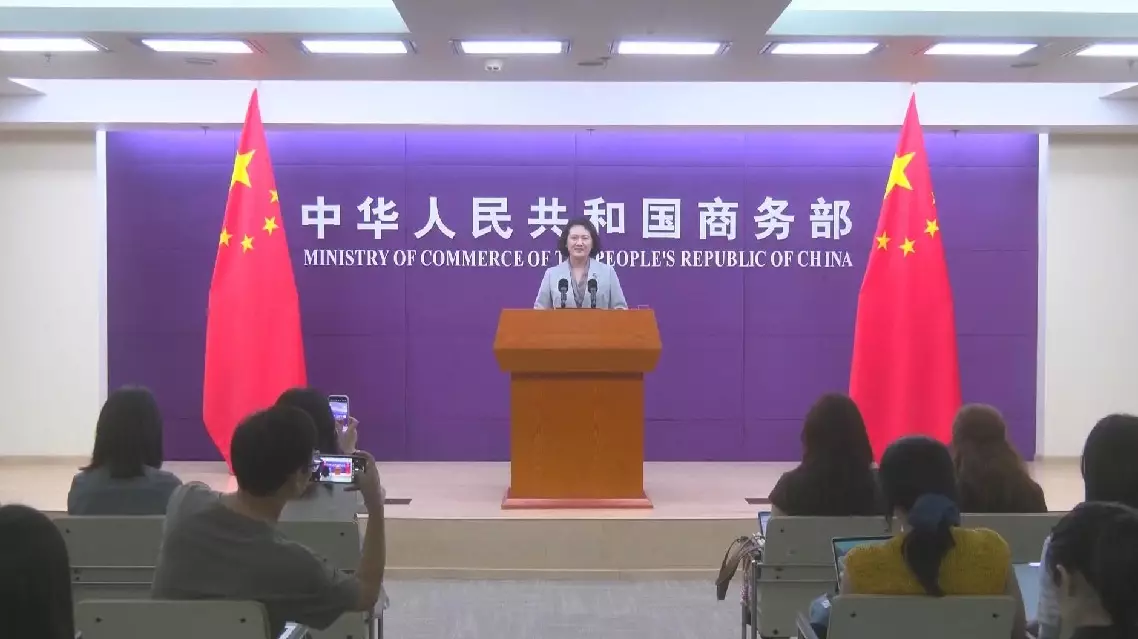
A spokeswoman for the Chinese Ministry of Commerce said on Thursday China opposes U.S. efforts to use the Group of 20 and other multilateral forums to peddle its rhetorics about so-called "economic imbalances" and "excess capacity," saying such moves amount to protectionism and serve as a pretext for pressuring and restricting China.
Huang Ling, the spokeswoman, made the statement at a regular news briefing in Beijing in response to a question about the recent China-related comments by U.S. Treasury Secretary Scott Bessent.
"China believes that using the G20 and other multilateral forums to hype up the so-called 'economic imbalances' and 'excess capacity' rhetorics is, in essence, protectionism and a pretext for putting pressure on and restricting China. China firmly opposes this. This will only disrupt the global economic and trade order and undermine healthy global economic development. All countries should uphold multilateralism, strengthen policy coordination, expand openness and cooperation, work together to ensure global industrial and supply chains remain stable and unimpeded, and promote realization of mutually benefit and all-win outcome," Huang said.
China rejects U.S. push for "economic imbalance" rhetorics at G20
Egypt's former Minister of Antiquities, Mamdouh Al Damaty, has hailed the state visit of Chinese President Xi Jinping as a significant step forward in bilateral cultural exchanges, noting that the trip has not only reinvigorated bilateral cooperation in heritage and archaeology but also underscored China's active role in bolstering Egypt's capacity for documenting and preserving its ancient discoveries.
Xi landed in Cairo on Tuesday for a state visit to Egypt. During the visit, Xi held talks with Egyptian President Abdel Fattah El-Sisi. The two heads of state jointly witnessed the signing of multiple cooperation documents on Belt and Road cooperation, artificial intelligence, economic and trade, and industrial and supply chain cooperation.
"This is a very important visit. China has a very high standing, not just on the political and economic fronts globally, but also on the cultural and civilizational level, much like Egypt. Therefore, Sino-Egyptian relations need to be strengthened even further, with more cultural and civilizational exchanges in addition to economic cooperation," Mamdouh said in a recent interview.
Egypt, cradle of one of the world's most ancient civilizations, has held a special appeal for Xi. During the 2016 visit to Egypt, Xi traveled to Luxor, an ancient city nestled on the banks of the Nile, widely described as one of the world's largest open-air museums.
"There was extensive cooperation between us and sharing of experiences and know-how. During my term, we had the Year of Culture between Egypt and China. During his visit in 2016, I had the pleasure of accompanying his excellency President Xi on a tour of the Karnak Temple and Luxor in Egypt. He was very interested in Egyptian civilization. His questions and remarks showed passion and very good knowledge of Egyptian culture and history," Mamdouh said.
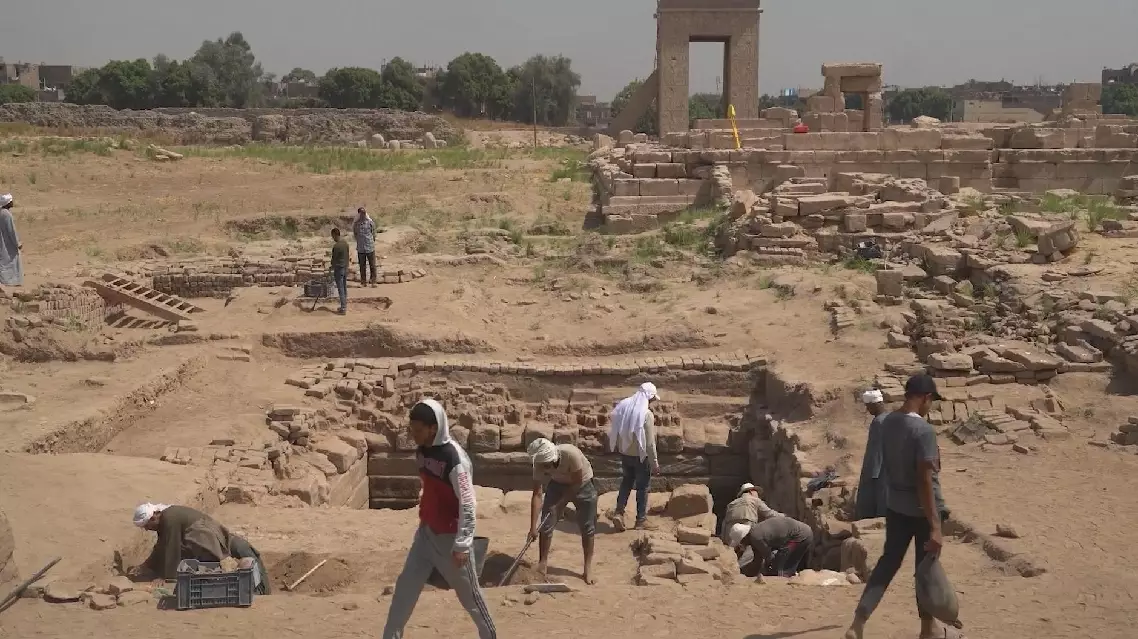
China began participating in archaeological fieldwork in Egypt in 2018, bringing advanced expertise to help unravel enduring mysteries of ancient Egyptian civilization. Working closely with Egyptian counterparts, Chinese teams have unearthed numerous artifacts and features, but the most notable achievement remains the discovery of the Southern Sacred Lake at the Montu Temple complex near Karnak.
"This type of cooperation started in 2018. One of the excavation teams is working in the Temple of Montu in the north of Karnak Temple, which is a very important location rich in monuments. There used to be a French excavation teams before, but now this team has been doing very well there and in three locations by introducing the latest technology. The real contribution of the latest technology is not the excavation itself but, more crucially, introducing technology in 3D documentation, archiving and digitization of discoveries. This is a revolutionary step in the antiquities sector," he said.
Looking ahead to future cooperation between the two countries, Mamdouh said he looks forward to the full implementation of the 2025 bilateral agreement on heritage protection and anti-smuggling efforts, and praised President Xi's visit as a testament to China's leadership in advancing such initiatives.
"In my field, for instance, China and Egypt signed an agreement in 2025 on the protection and management of world cultural heritage, as well as on combating the smuggling and illicit trade of cultural relics, heritage items, and ancient artifacts. It would be wonderful to see this agreement implemented and put into action. I believe the Chinese President's visit has demonstrated leadership in advancing such initiatives," Mamdouh said.
China, Egypt need to continue promoting cultural cooperation: former Egyptian minister