Skip to Content Facebook Feature Image

Spain's leader struggles to answer lawmakers about Ceuta border crisis

News

Spain's leader struggles to answer lawmakers about Ceuta border crisis
News

News

Spain's leader struggles to answer lawmakers about Ceuta border crisis

2026-09-03 23:51 Last Updated At:09-04 00:00

MADRID (AP) — A day after tens of thousands of Spaniards protested the government’s handling of the Ceuta border crisis, Prime Minister Pedro Sánchez struggled to field lawmakers' questions about the matter, including what role Morocco played in the deadly mass crossing in July.

Five weeks after the incident, it remains unclear how 72,000 people were able to stream across the border shared by Spanish exclave in North Africa and Morocco in the first place. While rejecting suggestions that Moroccan authorities helped orchestrate the incident, Sanchez said Moroccan police “allowed the border to be crossed."

More Images
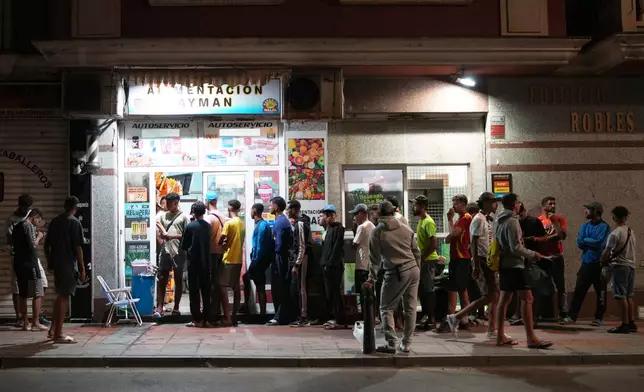
Migrants wait to buy food at a store in the Spanish exclave of Ceuta, Wednesday, Sept. 2, 2026. (AP Photo/Francis González)
Migrants wait to buy food at a store in the Spanish exclave of Ceuta, Wednesday, Sept. 2, 2026. (AP Photo/Francis González)

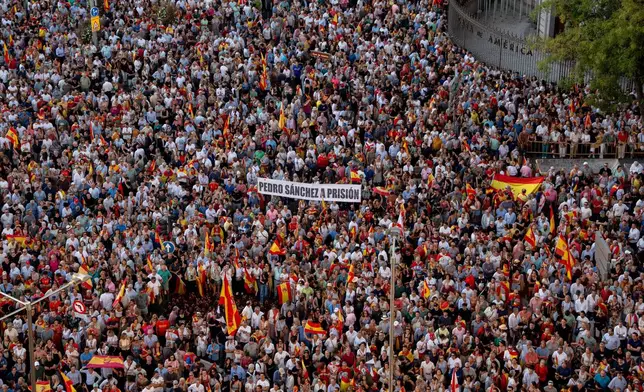
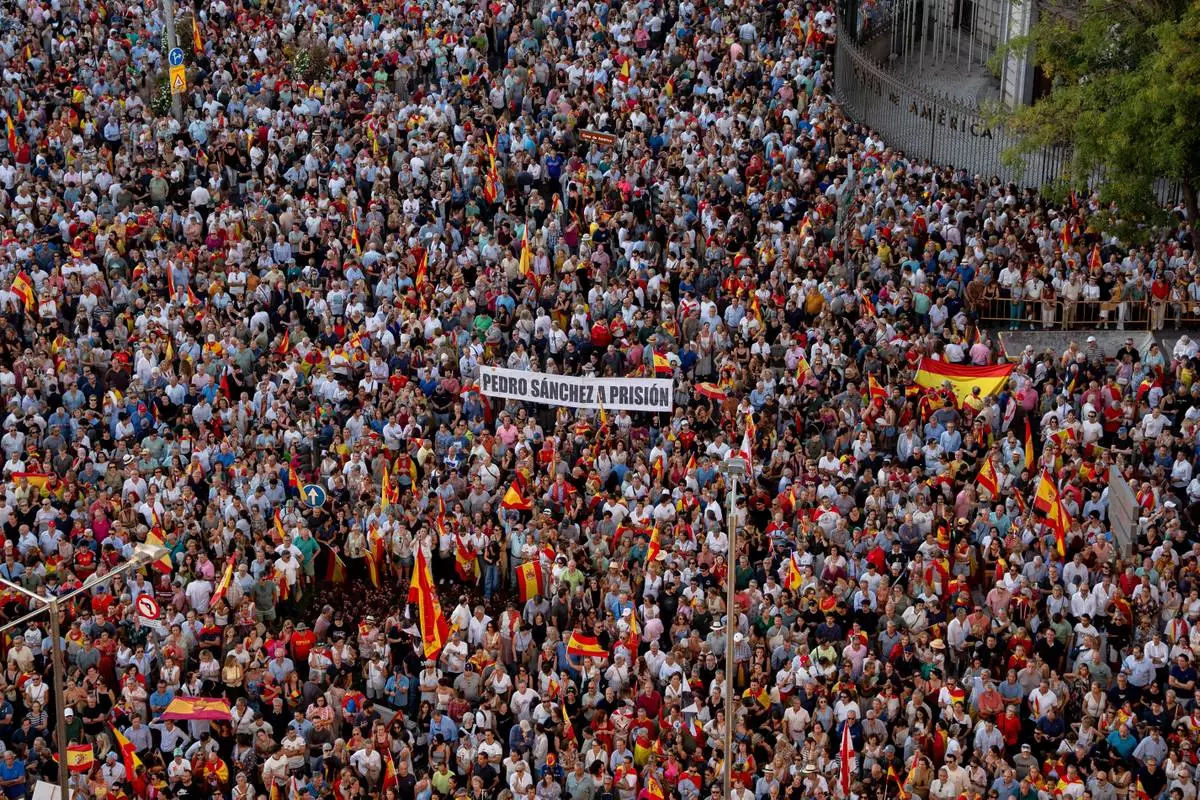
Protesters gather in support of Ceuta to mark the city's anniversary in Madrid, Spain, Wednesday, Sept. 2, 2026. (Gabriel Luengas/Europa Press via AP)
Protesters gather in support of Ceuta to mark the city's anniversary in Madrid, Spain, Wednesday, Sept. 2, 2026. (Gabriel Luengas/Europa Press via AP)

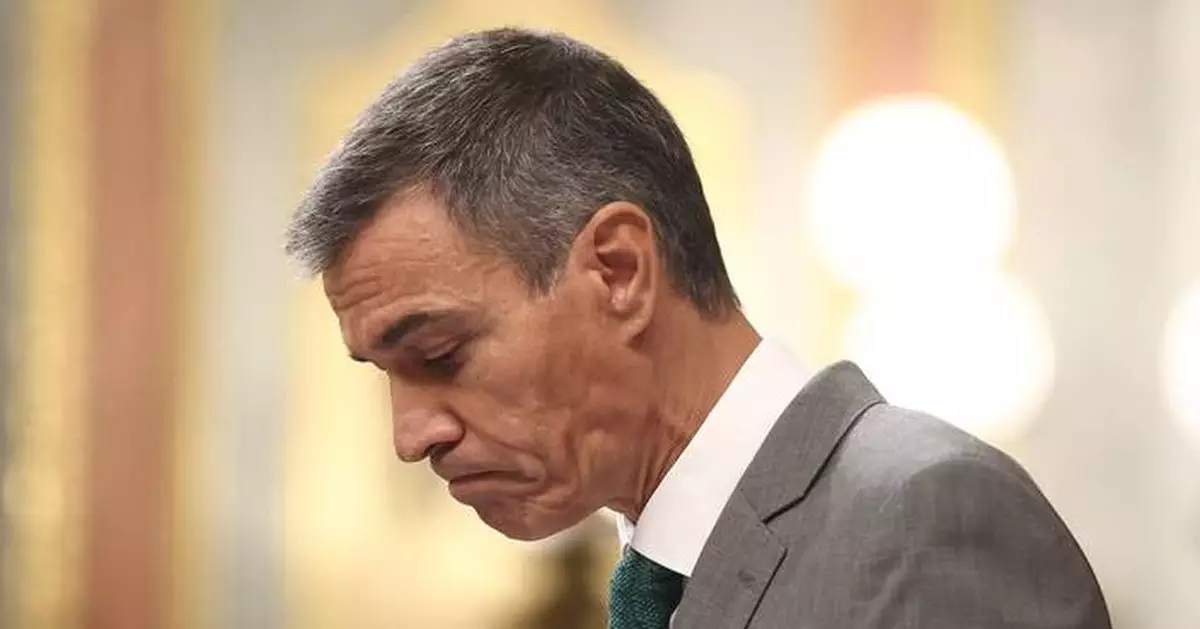
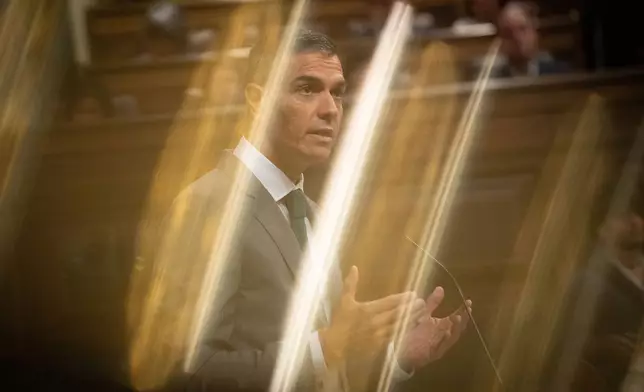
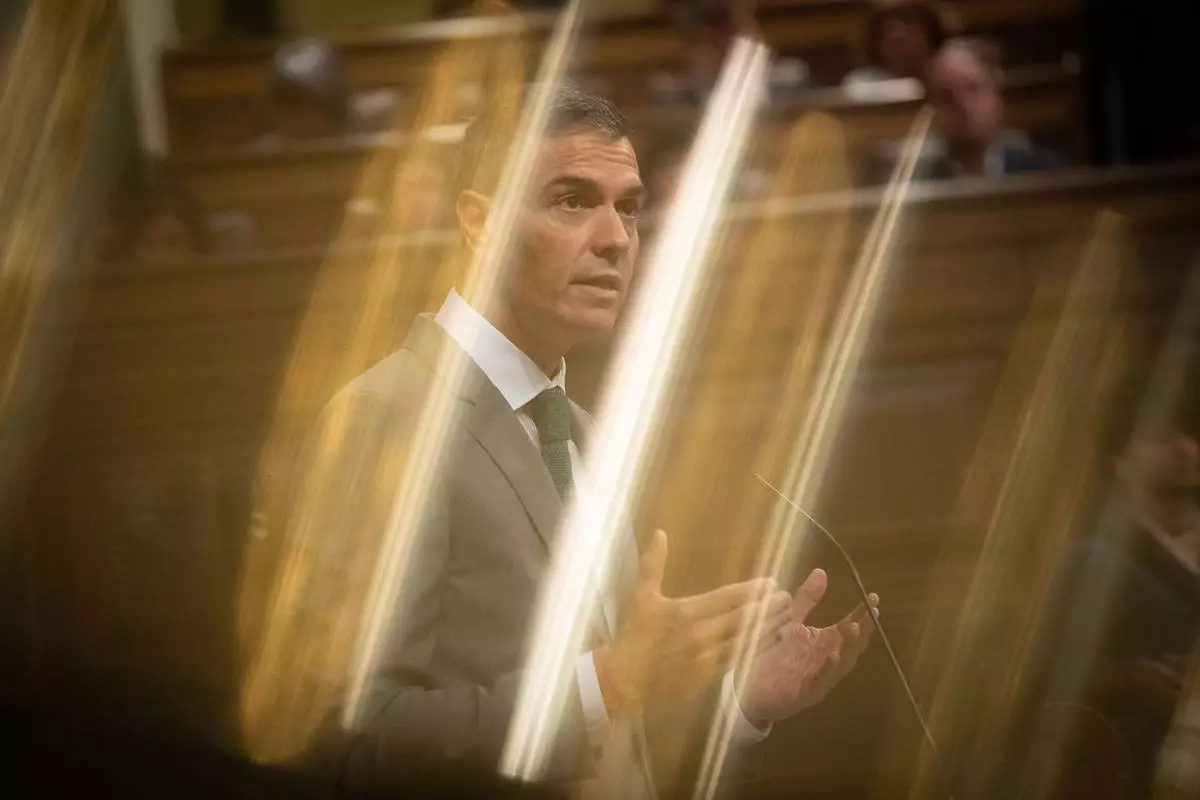
Spanish Prime Minister Pedro Sánchez addresses lawmakers about the situation in Ceuta, the Spanish exclave in North Africa facing a migrant crisis, during a session of Parliament in Madrid, Thursday, Sept. 3, 2026. (Fernando Sánchez/Europa Press via AP)

Spanish Prime Minister Pedro Sánchez addresses lawmakers about the situation in Ceuta, the Spanish exclave in North Africa facing a migrant crisis, during a session of Parliament in Madrid, Thursday, Sept. 3, 2026. (Fernando Sánchez/Europa Press via AP)
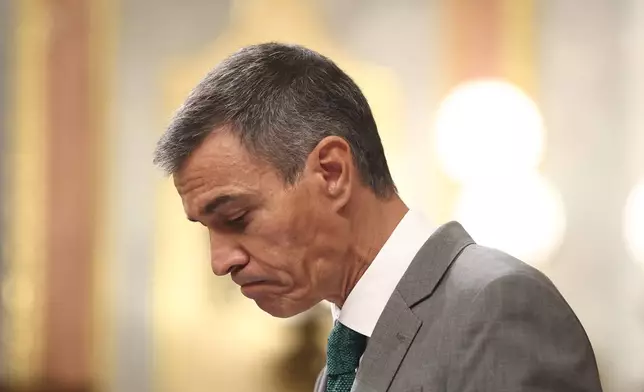
Spanish Prime Minister Pedro Sánchez addresses lawmakers about the situation in Ceuta, the Spanish exclave in North Africa facing a migrant crisis, during a session of Parliament in Madrid, Thursday, Sept. 3, 2026. (Fernando Sánchez/Europa Press via AP)

Spanish Prime Minister Pedro Sánchez addresses lawmakers about the situation in Ceuta, the Spanish exclave in North Africa facing a migrant crisis, during a session of Parliament in Madrid, Thursday, Sept. 3, 2026. (Fernando Sánchez/Europa Press via AP)

Spanish Prime Minister Pedro Sánchez addresses lawmakers about the situation in Ceuta, the Spanish exclave in North Africa facing a migrant crisis, during a session of Parliament in Madrid, Thursday, Sept. 3, 2026. (Fernando Sánchez/Europa Press via AP)

Spanish Prime Minister Pedro Sánchez addresses lawmakers about the situation in Ceuta, the Spanish exclave in North Africa facing a migrant crisis, during a session of Parliament in Madrid, Thursday, Sept. 3, 2026. (Fernando Sánchez/Europa Press via AP)

Sánchez said his government would release key reports about the border breach, but did not say when they would be made public or what they would entail.

He also elevated the official death toll from the event to 141 people, up significantly from the most-recent estimate of a total 96 in Spain and Morocco, provided by authorities in Ceuta and Morocco's National Human Rights Council. He cited the revised figure twice, but neither his office nor the interior ministry could say how it had been tallied when contacted by The Associated Press.

Sánchez is facing mounting scrutiny amid a prolonged humanitarian crisis in Ceuta, where the flood of thousands of migrants has angered residents in the tiny community, which is ill-equipped to handle such an influx.

Top government officials have at times provided conflicting information about the event. Last week, the defense ministry said Spain’s intelligence agency provided prior warning of the border rush, while the interior ministry and others said it had not.

Spaniards on Wednesday joined protests in support of Ceuta, demanding solutions to the city's ongoing tensions and calling for Sánchez step down. The crisis is shaping up to be one of the most serious threats his government has faced. Sánchez faced a barrage of questions on Thursday from lawmakers after his opening address alongside calls for early elections.

“The people of Ceuta have been without normality, without security and without answers for over a month. And us Spaniards are at the same time perplexed and outraged in the face of the violation of our territorial integrity,” said opposition leader Alberto Núñez Feijóo of the center-right Popular Party.

“Why are you afraid of Morocco?” Feijóo asked.

Most of the migrants who crossed into Ceuta in late July returned to neighboring Morocco or were ushered back within days. But around 5,000 people, including 1,200 minors remain in the city weeks later, according to the national government. Ceuta’s local government cites a higher figure of about 9,000 people.

Sánchez, who faces an election next year, has said a misinterpretation of a Supreme Court ruling and disinformation on social media encouraged people to rush the border.

The prime minister has also accused social media accounts linked to Russia and Israel and right-wing groups of exploiting and amplifying the Ceuta crisis after it happened on July 30 and 31. Israel and Russia have denied the claim.

Sánchez also maintained there was no evidence Morocco's government was behind the mass crossing.

“I can assure you that that no institution — neither the diplomatic service, nor the European Commission, nor any international body — has provided the Spanish government with solid evidence that Morocco planned or carried out the incident. None,” Sánchez said.

Earlier this week, Spanish media reported that a police report had highlighted the alleged permissiveness of Moroccan security forces in the incident, but Spanish officials denied that the document blamed the Moroccan government.

Sánchez acknowledged that for a 10-hour period on July 30 when migrant arrivals peaked, Morocco’s Gendarmerie police “allowed the border to be crossed," in Ceuta, but said the same force effectively took control of it later.

As questions have grown on the right and left in Spain about Morocco's role in the event, the Spanish leader said he would wait until there was solid evidence about Rabat's involvement.

“For the record, if such solid evidence existed, we would act accordingly with absolute decisiveness, as the situation demands,” he said.

Sánchez condemned comments from two Moroccan ministers questioning the sovereignty of Ceuta and Melilla, another Spain's other territory in North Africa. Spain summoned Morocco's ambassador in Madrid over the comments, he said.

Morocco’s Foreign Ministry did not respond to questions from the AP seeking comment on Spain summoning the Moroccan ambassador to Madrid or the alleged Spanish police report.

The two exclaves have the European Union’s only land borders with Africa.

Akram Oubachir in Casablanca, Morocco, and Renata Brito in Barcelona contributed to the report.
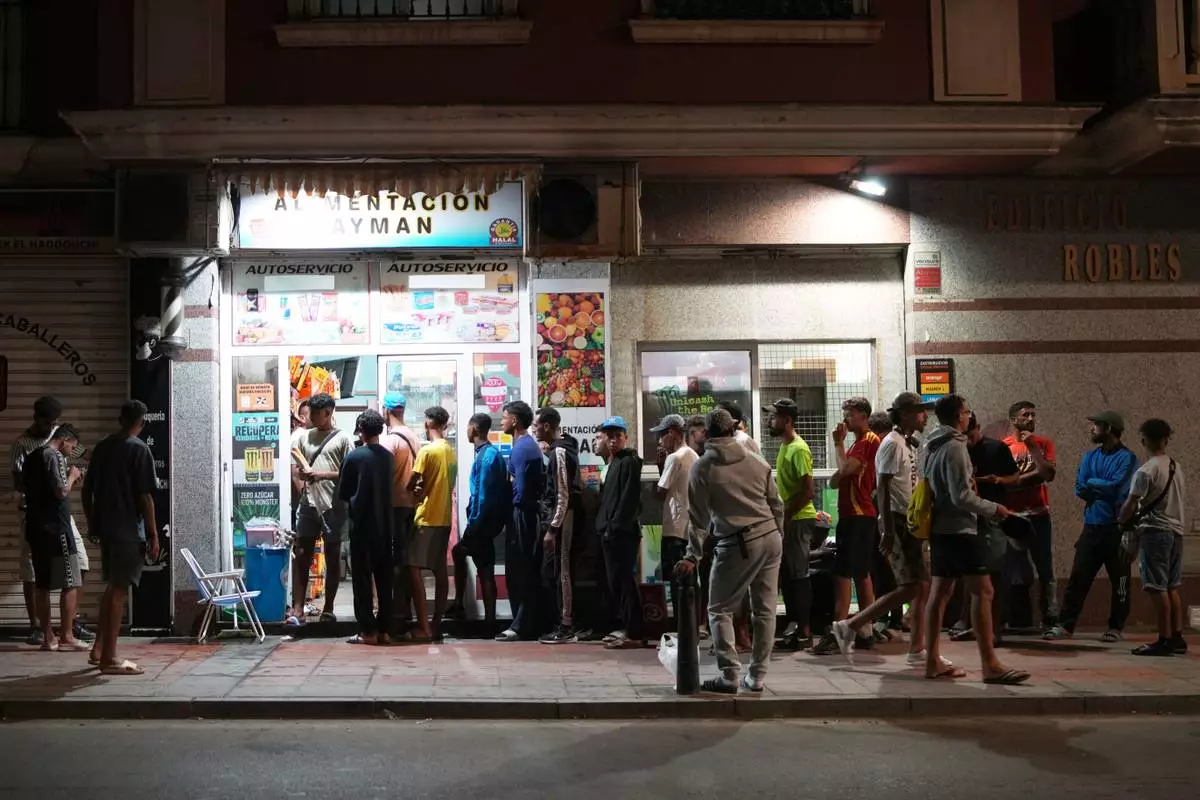
Migrants wait to buy food at a store in the Spanish exclave of Ceuta, Wednesday, Sept. 2, 2026. (AP Photo/Francis González)
Migrants wait to buy food at a store in the Spanish exclave of Ceuta, Wednesday, Sept. 2, 2026. (AP Photo/Francis González)

Protesters gather in support of Ceuta to mark the city's anniversary in Madrid, Spain, Wednesday, Sept. 2, 2026. (Gabriel Luengas/Europa Press via AP)
Protesters gather in support of Ceuta to mark the city's anniversary in Madrid, Spain, Wednesday, Sept. 2, 2026. (Gabriel Luengas/Europa Press via AP)

Spanish Prime Minister Pedro Sánchez addresses lawmakers about the situation in Ceuta, the Spanish exclave in North Africa facing a migrant crisis, during a session of Parliament in Madrid, Thursday, Sept. 3, 2026. (Fernando Sánchez/Europa Press via AP)
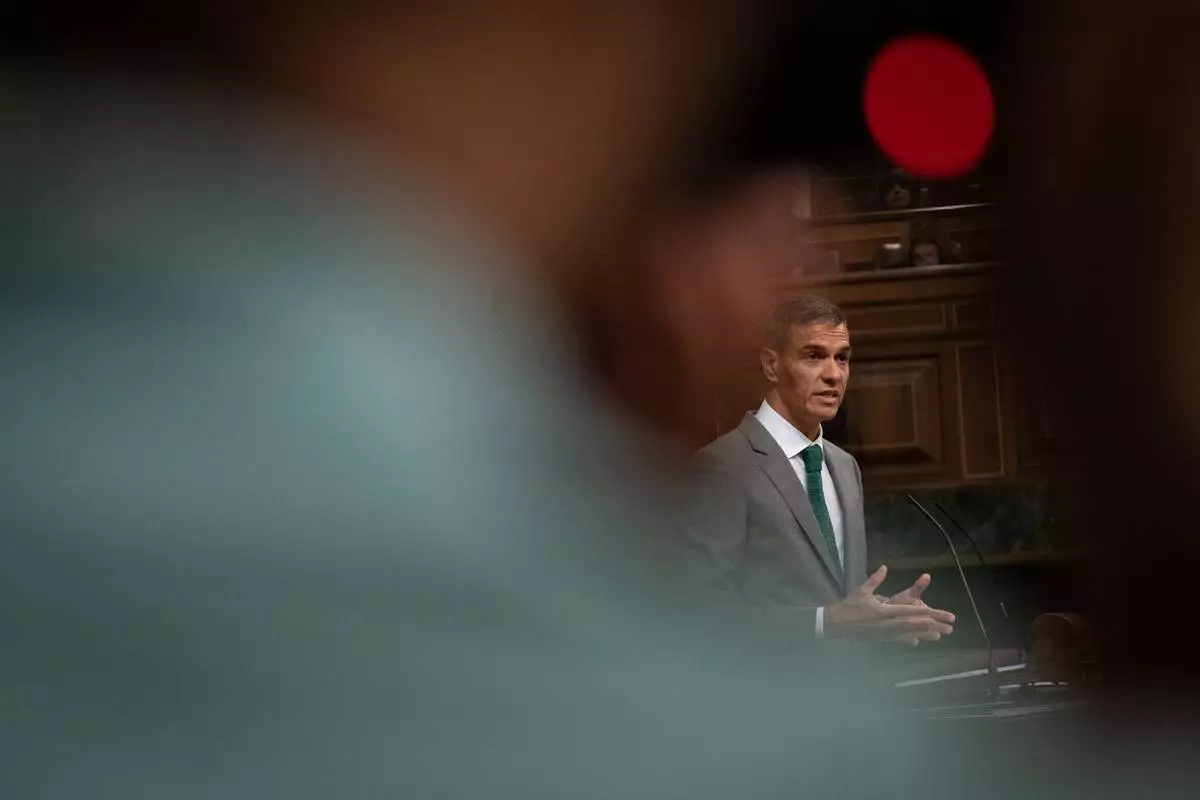
Spanish Prime Minister Pedro Sánchez addresses lawmakers about the situation in Ceuta, the Spanish exclave in North Africa facing a migrant crisis, during a session of Parliament in Madrid, Thursday, Sept. 3, 2026. (Fernando Sánchez/Europa Press via AP)
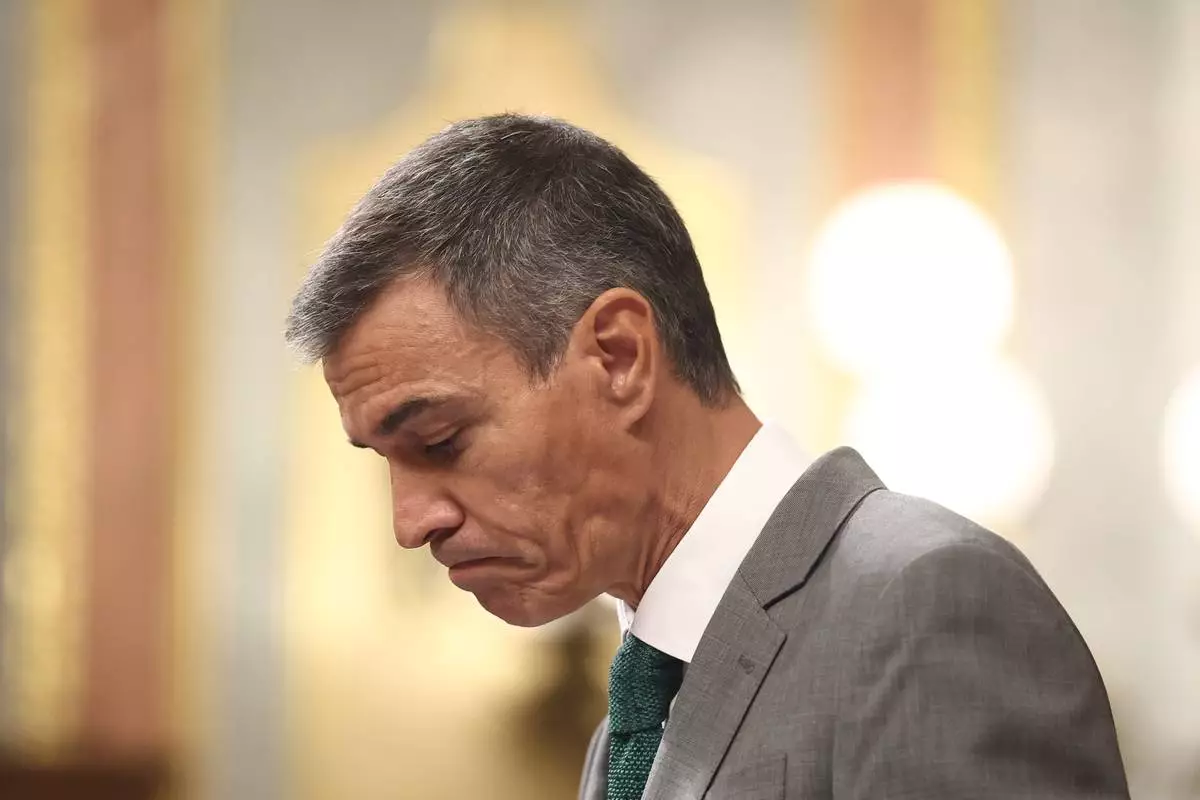
Spanish Prime Minister Pedro Sánchez addresses lawmakers about the situation in Ceuta, the Spanish exclave in North Africa facing a migrant crisis, during a session of Parliament in Madrid, Thursday, Sept. 3, 2026. (Fernando Sánchez/Europa Press via AP)

Spanish Prime Minister Pedro Sánchez addresses lawmakers about the situation in Ceuta, the Spanish exclave in North Africa facing a migrant crisis, during a session of Parliament in Madrid, Thursday, Sept. 3, 2026. (Fernando Sánchez/Europa Press via AP)
Spanish Prime Minister Pedro Sánchez addresses lawmakers about the situation in Ceuta, the Spanish exclave in North Africa facing a migrant crisis, during a session of Parliament in Madrid, Thursday, Sept. 3, 2026. (Fernando Sánchez/Europa Press via AP)
Spanish Prime Minister Pedro Sánchez addresses lawmakers about the situation in Ceuta, the Spanish exclave in North Africa facing a migrant crisis, during a session of Parliament in Madrid, Thursday, Sept. 3, 2026. (Fernando Sánchez/Europa Press via AP)

Iran fired at Kuwait on Thursday as part of its retaliation for U.S. bombardments earlier in the week. Meanwhile, Israeli police said they arrested a settler allegedly involved in an attack on Palestinians last week.

Here’s a look at the latest developments in the Iran war and the wider Middle East. Full coverage can be found here.

Sirens sounded in Kuwait early Thursday, where air defenses intercepted missiles and drones during a “blatant Iranian aggression,” the Defense Ministry said on X.

It came after U.S. allies Bahrain and Jordan said their air defense systems also intercepted several Iranian air attacks Wednesday.

Fighting between the U.S. and Iran has increased this week after the U.S. hit Iranian rocket launchers on an island in the Strait of Hormuz on Sunday, saying Iran was planning to use them to shoot mines into the waterway.

Israeli attacks killed three Palestinians, including a 15-year-old child, in northern Gaza and Gaza City on Thursday, according to officials at the Shifa hospital, where the casualties were taken.

When asked about the incident in northern Gaza, the Israeli military said that it “identified two terrorists who crossed the Yellow Line and approached the troops in a manner that posed an immediate threat."

However, officials at the Shifa hospital said the two Palestinians were killed in a “safe area” west of the so-called yellow line, which delineates the part of the Gaza Strip that the Israeli military controls, hemming the territory’s 2 million Palestinians into a narrow coastal zone.

Another strike later in the day killed one Palestinian in Gaza City and critically wounded two others, the hospital added. Israel’s military confirmed striking the area but did not elaborate.

Hundreds of people participated in the funeral of four victims, including two women and two children, who were killed in an airstrike at a wedding in southern Iran, state TV reported.

Mourners carried caskets wrapped in the Iranian flag as families, relatives, soldiers and others accompanied the coffins in the streets of the port town of Kuhestak, located about 1,100 kilometers (680 miles) southeast of Iran's capital Tehran.

A U.S. missile hit a home in the town where dozens were gathered to celebrate the wedding of a fisherman’s daughter on Tuesday night, according to a rights group and Iranian media.

Iranian state TV said Thursday that a person injured in the attack had died, increasing the death toll to five.

Ship traffic through the Strait of Hormuz remains well below pre-war levels due to the risk of Iranian attack if ships do not comply with an Iranian vetting regime. The decline is in sharp contrast to the unhindered navigation before the war.

Last week there were 102 transits and 126 the week before, according to shipping data company Lloyd’s List Intelligence. That compares with 130 or more per day before the war.

Significant amounts of oil, however, continue to flow through the strait due to a shuttle trade in which tanker operators risk going through a southern route near the coast of Oman under the guidance of U.S. forces.

Over the past 28 days, 5 million barrels a day have exited the strait on average, according to TankerTrackers.com.

Authorities in Israel arrested an Israeli settler for his suspected role in an attack on a Palestinian home in the occupied West Bank, according to a police statement Thursday.

The statement did not identify the suspect but said he was being held for questioning and that police would request to extend his detention.

The 19-year-old man is believed to have participated in a violent riot in the Palestinian village of Qusra on Saturday, in which settlers threw stones and barricaded themselves inside the home of one of the villagers.

A Lebanese man who had been held prisoner in Israel was released Thursday, the first such handover since the outbreak of the latest Israel-Hezbollah war six months ago, the International Committee of the Red Cross and Lebanese officials said.

The office of Israeli Prime Minister Benjamin Netanyahu said in a statement that Israel had agreed to release five Lebanese civilians detained by Israeli forces in southern Lebanon.

They were detained after Lebanon provided assistance in searching for the bodies of Lebanese Jewish leaders who were “abducted and murdered by terrorist organizations” in the 1980s, during Lebanon’s civil war.

A report by Mizanonline.ir, affiliated with Iran's judiciary, said that U.S. strikes on Tuesday killed one navy and two air force pilots. It also reported that three other members of the navy were killed during the attacks.

The U.S. Central Command said Tuesday’s strikes focused on Iranian military targets, including air defense sites, radar systems and maritime assets.

Mourners attended the funeral on Thursday of two Palestinians, aged 16 and 19, who were killed by Israeli forces the night before in the occupied West Bank.

Israeli troops fired on them while accompanying settlers into the village of Al-Mughayyir. Amin Abu Aliya, a local official, told the Palestinian news agency Wafa that settlers and Israeli soldiers entered the village, attacked two homes and stole sheep. Residents confronted the settlers and the military responded by firing on them.

With his legacy on the line, Netanyahu is imploring his erstwhile allies to unite into larger parties that have a better chance of entering parliament.

A series of small, pro-Netanyahu parties are competing in the run-up to the Oct. 27 vote. But instead of strengthening the Israeli leader, these parties — including hard-line blocs led by polarizing Cabinet ministers Itamar Ben-Gvir and Bezalel Smotrich — risk weakening his chances for reelection by splitting the vote among Netanyahu’s base.

This piece will be updated throughout the day as new developments emerge.

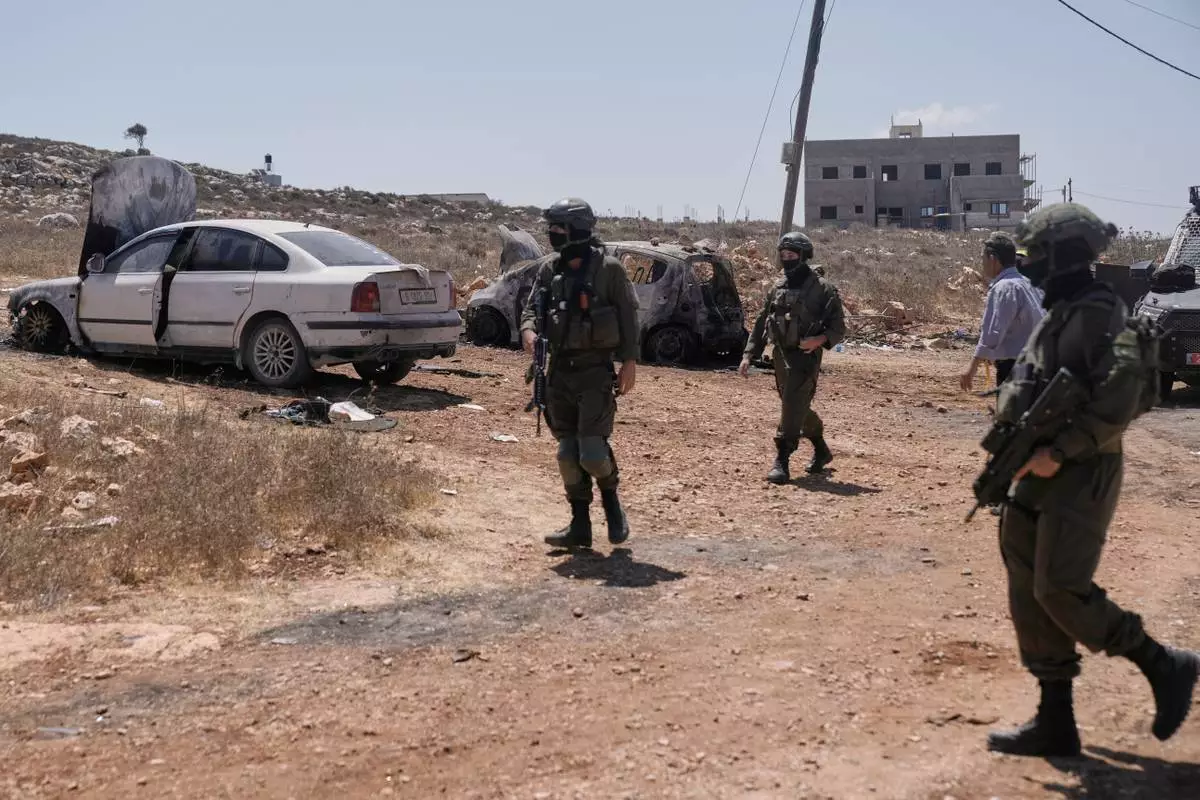
Members of the Israeli forces arrive at the site where cars were set on fire following an attack by Israeli settlers in the West Bank village of Beita, southeast of Nablus, Wednesday, Sept. 2, 2026. (AP Photo/Majdi Mohammed)

Members of the Israeli forces arrive at the site where cars were set on fire following an attack by Israeli settlers in the West Bank village of Beita, southeast of Nablus, Wednesday, Sept. 2, 2026. (AP Photo/Majdi Mohammed)

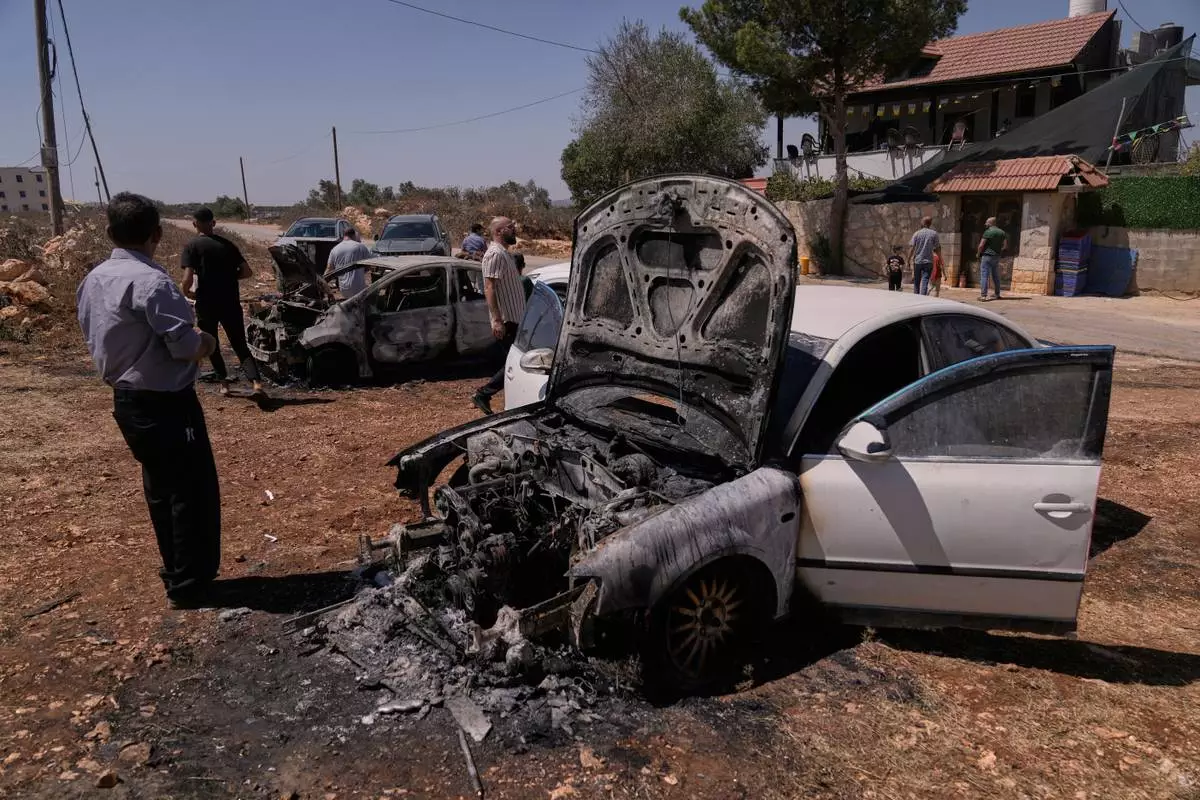
Palestinians stand next to burned cars following an attack by Israeli settlers in the West Bank village of Beita, southeast of Nablus, Wednesday, Sept. 2, 2026. (AP Photo/Majdi Mohammed)

Palestinians stand next to burned cars following an attack by Israeli settlers in the West Bank village of Beita, southeast of Nablus, Wednesday, Sept. 2, 2026. (AP Photo/Majdi Mohammed)

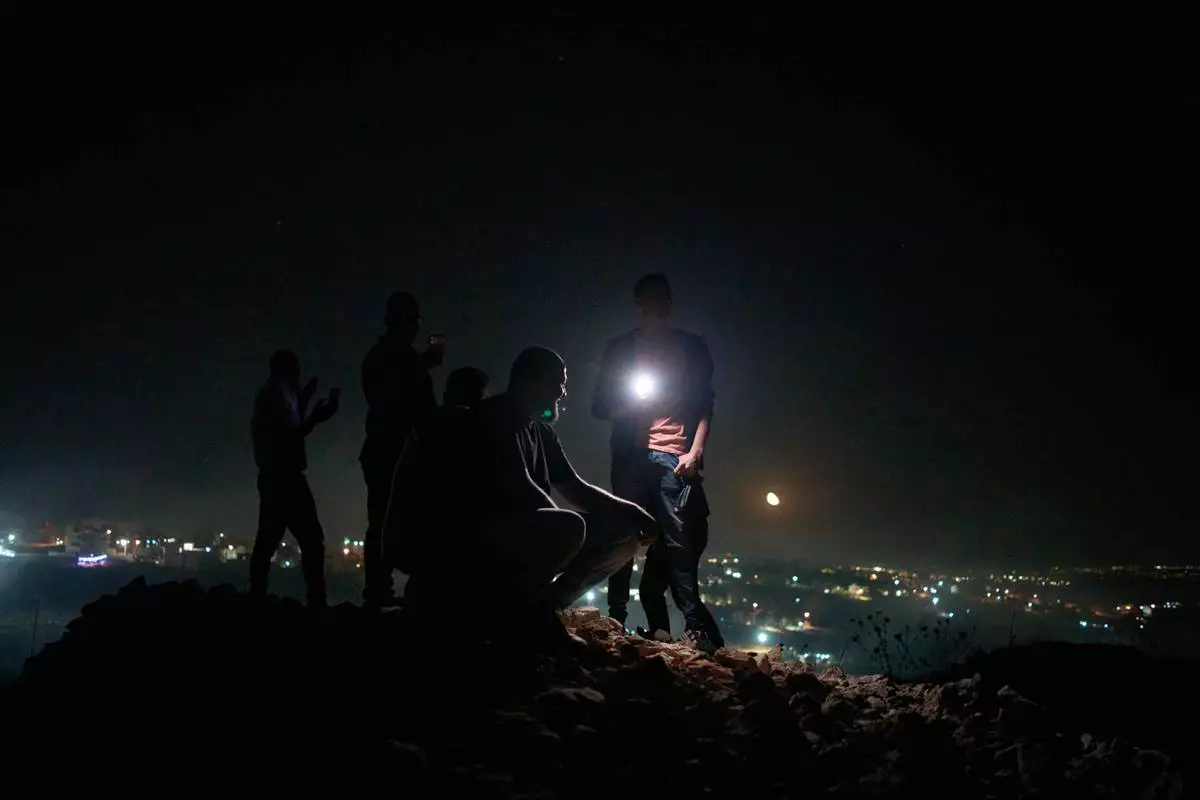
Palestinians stand atop a hill during a volunteer night watch to help prevent Israeli settler attacks in the West Bank town of Sinjil, Wednesday, Sept. 2, 2026 (AP Photo/Leo Correa)

Palestinians stand atop a hill during a volunteer night watch to help prevent Israeli settler attacks in the West Bank town of Sinjil, Wednesday, Sept. 2, 2026 (AP Photo/Leo Correa)

Birds gather around litter on a beach as commercial vessels lie anchored in the Strait of Hormuz off Bandar Abbas, Iran, Wednesday, Sept. 2, 2026. (Razieh Poudat/ISNA via AP)

Birds gather around litter on a beach as commercial vessels lie anchored in the Strait of Hormuz off Bandar Abbas, Iran, Wednesday, Sept. 2, 2026. (Razieh Poudat/ISNA via AP)

Recommended Articles