WASHINGTON (AP) — A plan by the Environmental Protection Agency could make it harder for the public to learn about and comment on proposed AI data centers that have sparked backlash in communities across the United States and transformed the midterm election landscape.
The EPA proposal would eliminate a federal requirement that states notify the public and seek comment before issuing air pollution permits for data centers and other industrial facilities. States could still offer opportunities for public comment, but the EPA would no longer mandate them as a condition for states to grant permits.
Critics say the move could thwart local residents from learning about proposed data centers or making their voices heard before projects are approved and construction begins. The move comes during a widespread backlash as tech giants build hundreds of massive server warehouses to fuel artificial intelligence and cloud computing.
“By eliminating the long-standing federal requirement for public notice, this proposal continues efforts by the Trump administration to turn its back on the fundamental EPA principle of transparency,” said Mike Koerber, a former deputy director of EPA’s air quality office.
If made final, the plan could create “an unlevel playing field where citizens in one state are kept completely in the dark about new data centers and heavy industrial emissions in their backyards, while neighboring states maintain oversight,” he said.
Under the EPA plan, states with weak or no requirements for public comment could speed permits for data centers, power plants and other pollution sources without consulting the public or even informing communities where the facilities are located, Koerber and other critics said.
“Data centers and other industrial sources should not be able to get their air pollution permits in secret,” said Keri Powell, senior attorney for the Southern Environmental Law Center, an advocacy organization that leads a coalition of nearly 200 environmental, health and community groups that filed comments with the EPA opposing the plan. “Communities deserve a chance to weigh in" before potentially harmful projects are approved.
An EPA spokesperson called that a false narrative.
“In our proposal we are saying that states get to pick how they want their permitting process to go for minor sources” of air pollution, spokesperson Carolyn Holran said.
The EPA proposal does not specifically identify data centers, she said, noting that the plan also would apply to laundromats, car repair shops and even landfills and steel mills that are considered “minor” pollution sources under the federal Clean Air Act.
The proposal does not demand that states make particular changes to their programs, nor does it alter federal emission standards or weaken environmental protections, Holran said. “Rather, the proposal simply aligns the national program with the Clean Air Act language to ensure that states are in the lead regarding their programs."
EPA Administrator Lee Zeldin, who has made U.S. leadership in AI a top agency priority, said in a statement that the plan is aimed at “cutting unnecessary and burdensome red tape, unleashing American energy and advancing cooperative federalism” with states. The EPA is expected to make the rule final next year.
President Donald Trump continues to stick up for data centers, even as politicians from both parties criticize them and many communities try to block them. Trump said on social media this week that U.S. communities that don’t have data centers will “end up being backwards and poor.”
Trump has acknowledged that data centers need “a little public relations help” and has pushed tech companies to generate their own electricity to shield consumers from higher utility bills. The Republican president calls data centers critical to winning the AI race against China.
Environmental groups and other critics say the EPA proposal ignores the reality that many states, particularly in the South and Midwest, don't require public notice or hearings beyond those set by federal agencies. The federal plan would leave many communities in the dark before data centers show up in their backyards, they said.
“It’s beyond cruel for Trump’s EPA to silence front-line communities who bear the brunt of unhealthy air,” said Brandon Jones-Cobb, a senior attorney at the Center for Biological Diversity, another environmental group.
The EPA “has already turned its back on science, cut enforcement against industrial polluters and eliminated life-saving air pollution measures," he said. “Now it wants to shut the public out of decisions to build or expand facilities that expose communities to dangerous air pollution, including data centers.”
Powell, whose organization focuses on six Southern states from Virginia to Alabama, said many states “only do what is required by federal law” when it comes to public notice of land-use projects and other environmental concerns.
"We rely on a minimum federal requirement to ensure we have environmental protections and a voice,'' she said in an interview, calling regulation of data centers a crucial issue in a region where the energy-hungry behemoths are proliferating. Virginia and Georgia are both among states with the highest concentration of current and proposed data centers.
About 4 in 10 U.S. adults say they are “extremely” or “very” concerned about the environmental impacts of AI, according to a poll last year from The Associated Press-NORC Center for Public Affairs Research and the Energy Policy Institute at the University of Chicago. Americans are more likely to think that over the next decade, artificial intelligence will do more to hurt than help the environment, the economy and society as a whole, the poll found.
Besides powering AI and cloud computing, data centers are often sources of nitrogen oxide, which helps form ozone, as well as carbon monoxide and other air pollutants. Local communities also have expressed concerns about excessive water use and noise from data centers.
Many Americans worry that AI could increase economic disparities and cause widespread job losses.
Data center advocates stress that local taxes paid by the centers can help fund public schools, reducing the financial burden on homeowners.
Jane Williams, executive director of California Communities Against Toxics, said even if data centers ultimately are approved, "every community should be able to participate robustly in governmental decisions that can pollute our air.''
Rolling back the EPA rule “pulls a dark cloud, filled with soot and toxic chemicals, over communities’ right to know what polluting facilities are planned in their community,” she said.
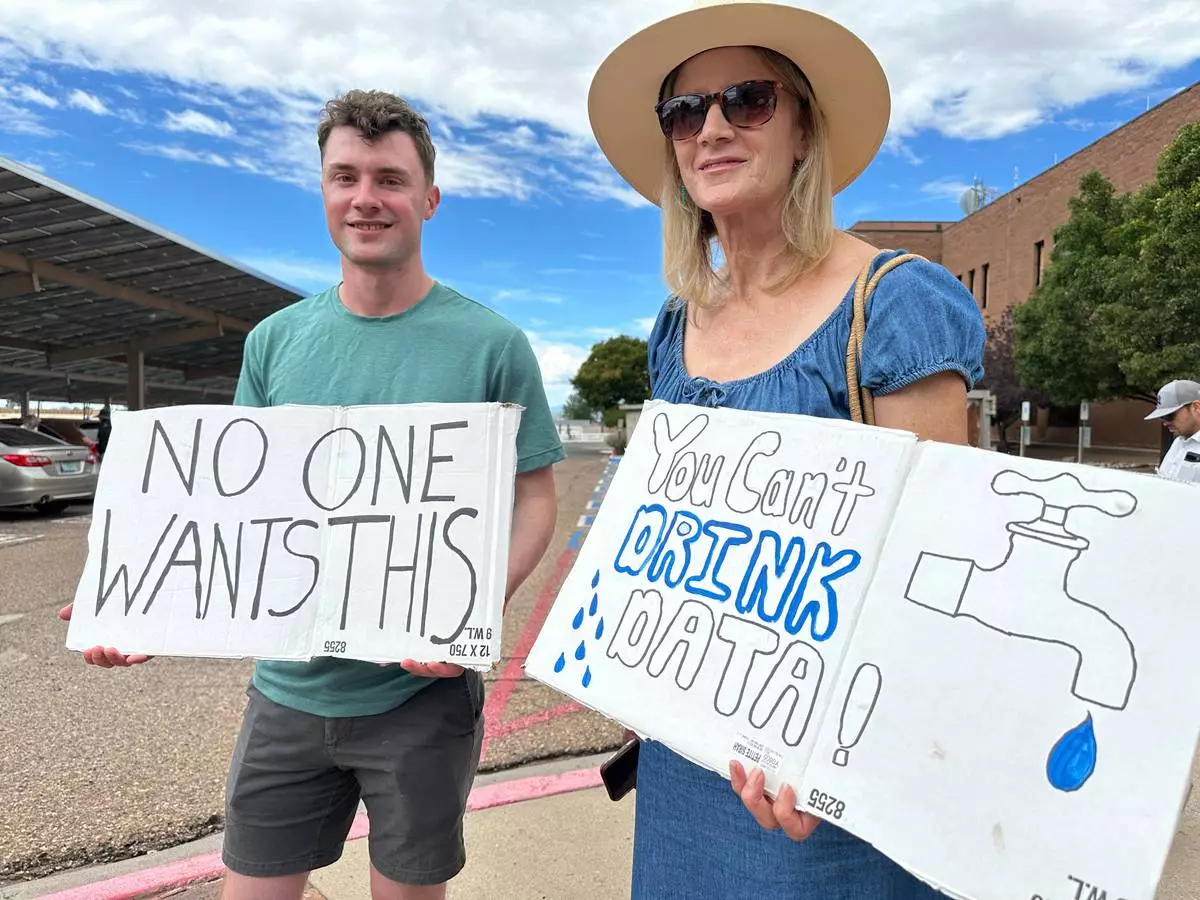
Jacob Weinreich and his mother Sharon Metcalf protest the Project Jupiter data center during a demonstration in Santa Fe, N.M., Friday, Aug. 21, 2026. (AP Photo/Susan Montoya Bryan)
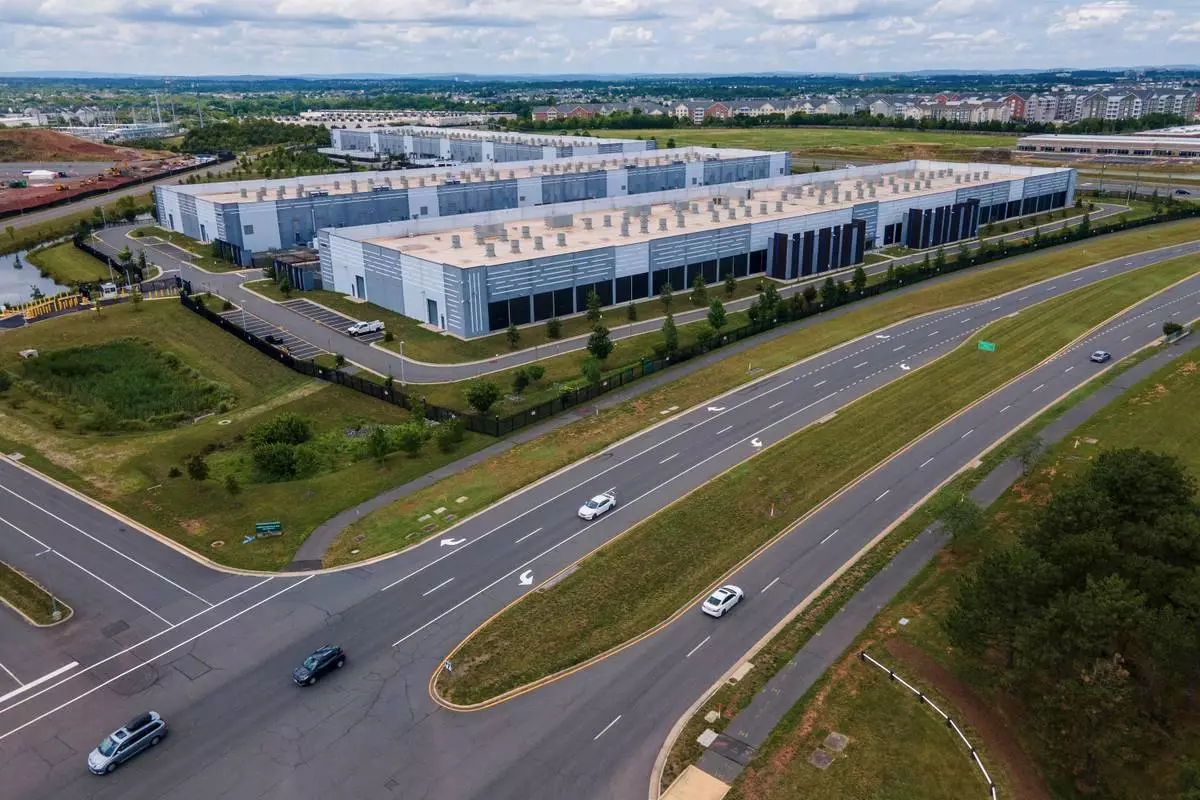
FILE - Cars drive past data centers, July 16, 2023, in Ashburn, Va. (AP Photo/Ted Shaffrey, File)
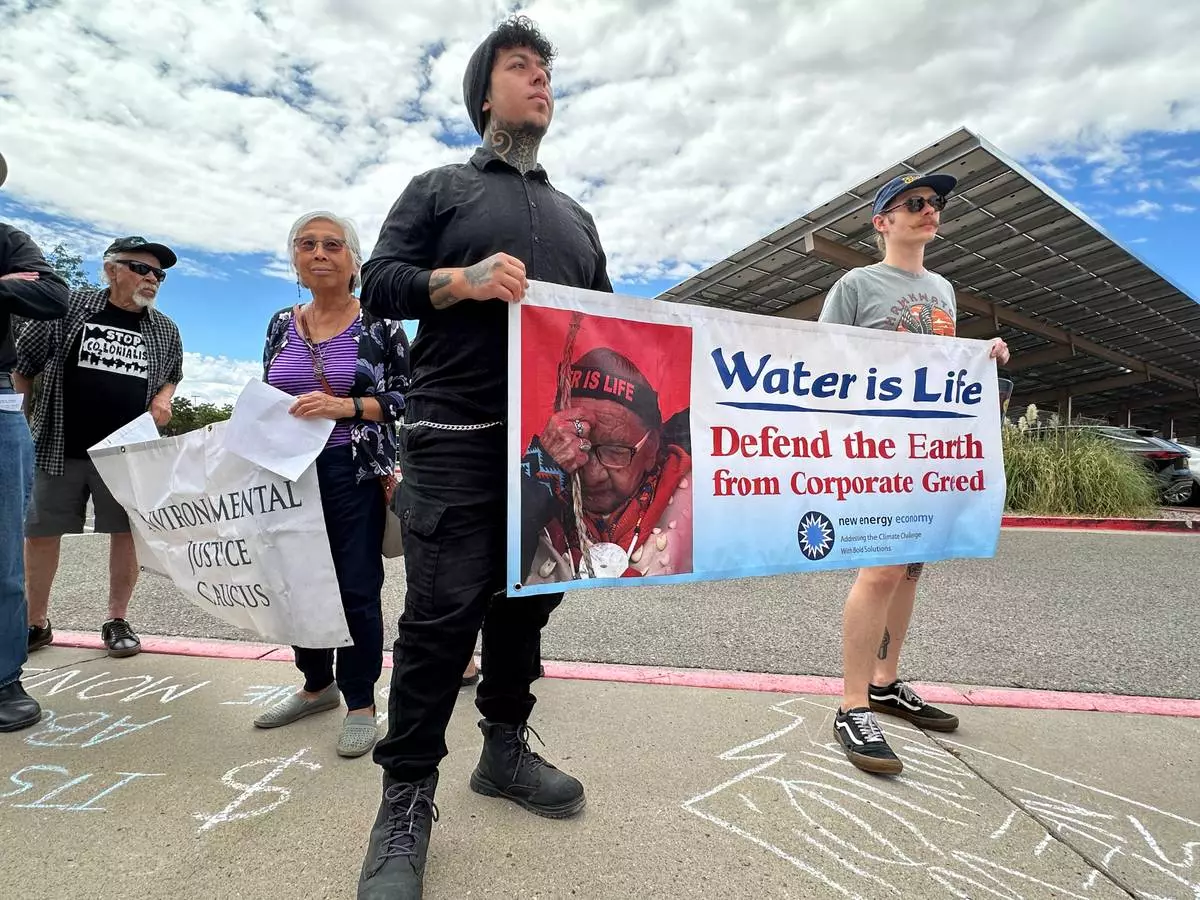
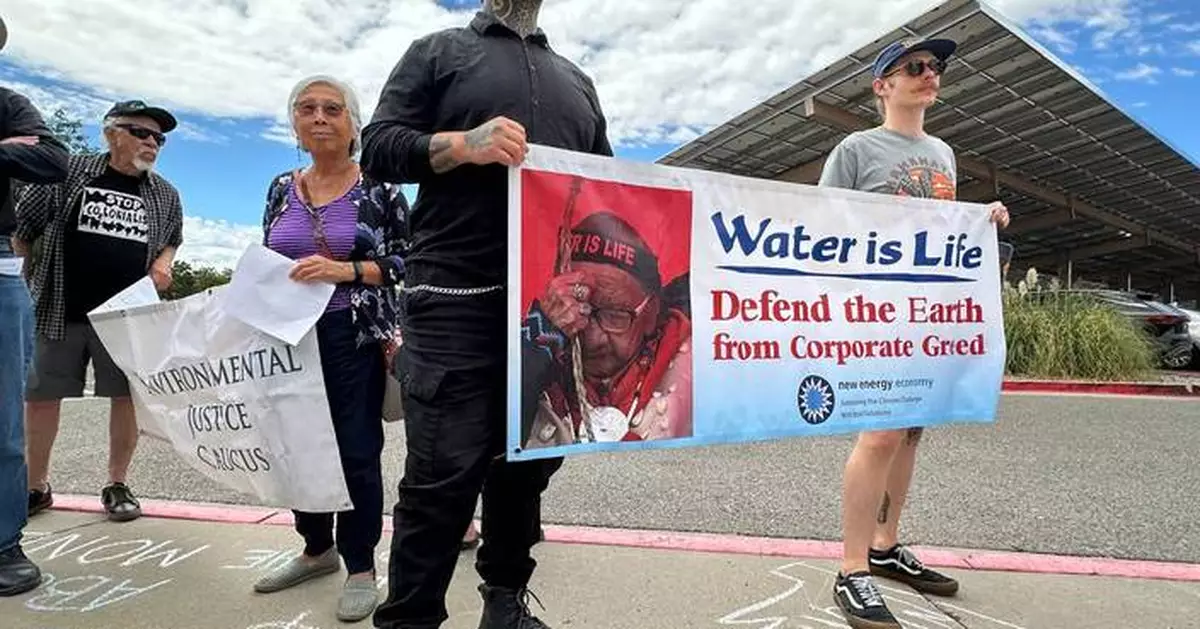
Protesters hold signs in opposition of the Project Jupiter data center during a demonstration outside a state office in Santa Fe, N.M., Friday, Aug. 21, 2026. (AP Photo/Susan Montoya Bryan)
President Donald Trump urged Republican lawmakers facing tough reelection campaigns to run on his record in the White House despite his sagging popularity, and he pledged to campaign in all of the roughly three dozen contests that are likely to determine control of Congress.
Also, a federal judge in Boston is hearing arguments Thursday on whether to extend her prohibition against the U.S. Postal Service requiring states to use a new mail balloting system for the midterms as part of an executive order by Trump. The hearing in the closely watched case comes the day before the first state begins sending mail ballots to voters.
Here's the latest:
Nothing has shaped what it means to be Venezuelan today more than oil.
For more than 100 years, in good times and bad, Venezuelans’ identity has been built around the belief that their country’s bountiful oil resources belong to the people, not a government or a company.
This belief, and a troubled nation’s pride, took a bruising last week when acting President Delcy Rodríguez agreed to give the United States control of roughly one-fifth of Venezuela’s oil reserves — the largest in the world.
While the deal could eventually generate billions of dollars for an oil industry and economy wrecked by years of mismanagement, many Venezuelans see it as a surrender. Some say they’re not surprised; they believe gaining control of Venezuelan oil was the ultimate objective when President Trump ordered U.S. forces to capture then-President Nicolás Maduro at the beginning of the year, leaving Rodríguez in charge.
▶ Read more
Its latest salvo is a federal review of California’s coastal management program, which is run largely by a state commission that’s had a powerful role for decades in shaping development along the coast. Environmental advocates fear federal officials could use the review to strip the California Coastal Commission of its ability to have a say in projects involving federal agencies that affect the state’s rugged coastal bluffs, pristine beaches and world-class surfing spots.
The administration, citing a need for energy security and job creation, has already announced plans for new offshore oil leases in California as well as Florida, where the federal government hasn’t allowed drilling since 1995 because of concerns about oil spills in the Gulf of Mexico.
Trump officials also helped a Texas firm jump-start an old pipeline system that had been idled since its 2015 rupture caused one of California’s worst oil spills, blackening beaches for 150 miles (240 kilometers) from Santa Barbara to Los Angeles and polluting habitat for endangered whales and sea turtles.
▶ Read more
Beginning on Day One, House Democrats plan to “hold the crooks accountable.”
That’s the promise House Democratic leader Hakeem Jeffries has made, previewing an ambitious agenda with oversight of President Trump’s administration and legislation to address the high costs of living, if Democrats seize majority control from Republicans in the midterm elections.
But first, the Democratic leaders have to ensure they can keep their own politically diverse — and sometimes rebellious — big-tent caucus in line, which was tested this week. Two go-their-own-way Democrats bucked the party on a routine procedural vote, angering colleagues and raising a red flag about potential party divisions to come.
“His greatest challenge will be governing,” Ashley Etienne, a former top aide to Nancy Pelosi during her historic tenure as House speaker, said of Jeffries.
▶ Read more
The U.S. trade deficit widened to $88.6 billion in July, up 24% from June and the highest since March 2025 when Trump was just beginning to ramp up import taxes to protect American industry from foreign competition. An investment boom in artificial intelligence is drawing in imports of computers and computer and telecommunications equipment.
Overall, U.S. imports rose 2.8% in July and exports dropped 2.1%.
Still, the January-July deficit — the gap between what the U.S. buys from and what it sells to other countries — is down nearly 30% from a year earlier.
Black refused to appear for a sworn deposition before Congress on Thursday and instead sued the House Oversight Committee, asking a federal court to block subpoenas issued as part of its investigation into Jeffrey Epstein.
The House Oversight Committee served Black with two subpoenas following a closed-door interview in June after lawmakers said he refused to answer questions about nondisclosure agreements.
Black’s lawsuit argues the subpoenas exceed the committee’s authority by seeking private information.
“The Committee is on a fishing expedition that oversteps its authority and completely ignores its responsibility,” Black’s attorney, Susan Estrich, said in a statement.
The Labor Department reported Thursday filings for benefits ticked up to 206,000 last week from a revised 204,000 the week before. The four-week average of claims, which smooths out week-to-week volatility, rose modestly to 207,250 last week.
Claims for jobless benefits are a proxy for layoffs, and economists watch them because they can be a sign of where the job market is headed. For the past year, claims have mostly stayed within a historically low range of 200,000 to 230,000 a week.
Companies, remembering the worker shortages that followed the end of COVID-19 lockups, are still reluctant to let go of staff. The unemployment rate is low at 4.1%.
▶ Read more
The latest pieces of President Trump’s wide-ranging Washington makeover are set for an airing Thursday in front of a federal panel that already has blessed other big-ticket plans from the designer-in-chief.
The National Capital Planning Commission, which this spring approved Trump’s White House ballroom proposal after he razed the Executive Mansion’s East Wing without authorization, will discuss a proposed fence around Lafayette Park in front of the White House.
The panel also will review a proposed underground security screening center for White House visitors. It’s the first time the commission will take up either idea, and votes aren’t expected. But the commission and the separate U.S. Commission of Fine Arts thus far have not been an obstacle for Trump’s plans for the capital.
▶ Read more
The president took the unusual step of correcting a misleading statement by Commerce Secretary Howard Lutnick, who had said in an interview that no U.S. forces had died in the Iran war.
“Sec. Lutnick had Venezuela on his mind when he said nobody was killed,” Trump posted on social media. “18 people were killed in Iran!”
Lutnick had said in a Wednesday CNBC interview that no Americans had died in the conflict that began at the end of February. But Lutnick in his remarks was specifically talking about the Iran war, which he called “an economic chokeout.”
A federal judge in Boston will hear arguments Thursday on whether to extend her prohibition against the U.S. Postal Service requiring states to use a new mail balloting system for the midterms as part of an executive order by President Donald Trump.
The hearing in the closely watched case comes the day before the first state begins sending mail ballots to voters.
U.S. District Court Judge Indira Talwani is considering whether to order a preliminary injunction that would bar the Postal Service from requiring the new system to be used for the midterms. Last week, she imposed a 14-day temporary restraining order to keep it from being used. That order expires next week as more states begin sending out mail ballots.
▶ Read more
President Donald Trump on Wednesday urged Republican lawmakers facing tough reelection campaigns to run on his record in the White House despite his sagging popularity, and he pledged to campaign in all of the roughly three dozen contests that are likely to determine control of Congress.
Voters’ dim views of the economy and the war in Iran have put Republicans in a tough spot as the midterm election season enters its final stretch. But during a dinner in the Rose Garden, one of the spaces he has controversially renovated since returning to office last year, the president told his party’s most vulnerable lawmakers they had a triumphant story to tell voters.
“All you have to do is talk about it, and you’re going to win and you’re going to win big,” Trump said a week before the party gathers in Dallas for an unusual midterm convention.
▶ Read more
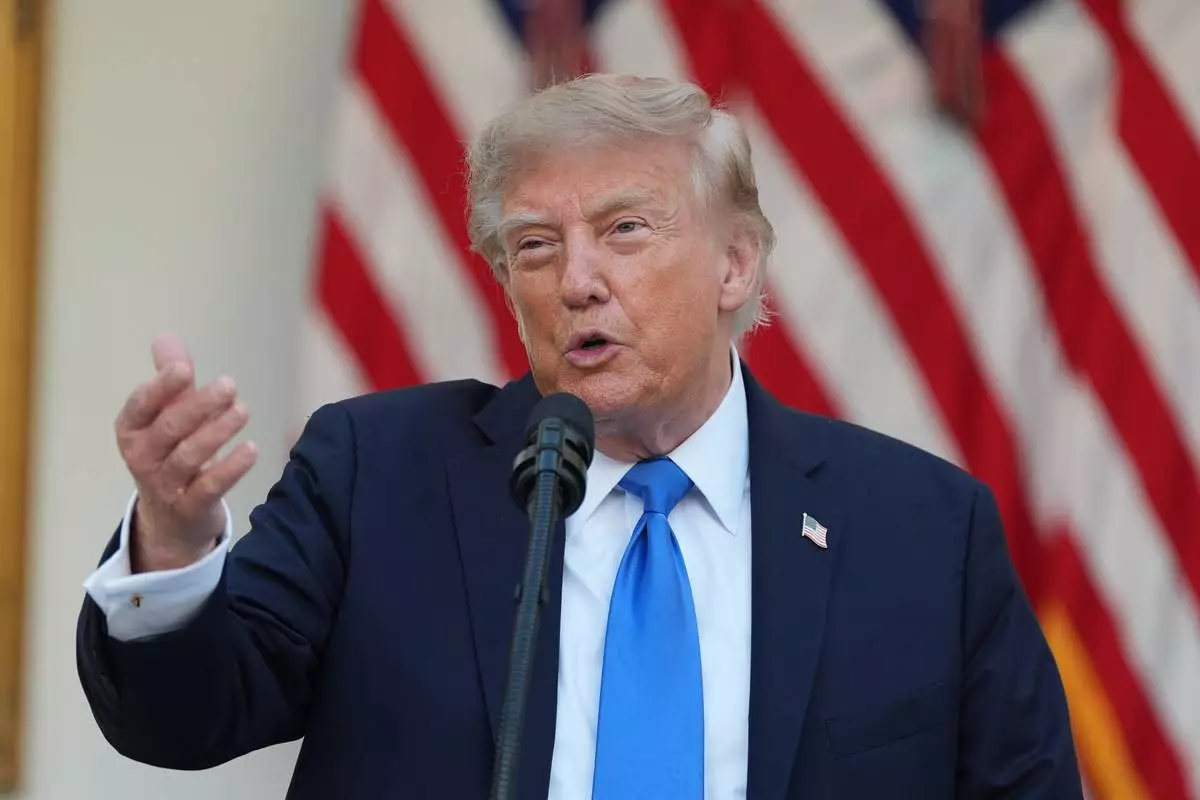
President Donald Trump speaks during an event with Republican lawmakers in the Rose Garden of the White House, Wednesday, Sept. 2, 2026, in Washington. (AP Photo/Alex Brandon)
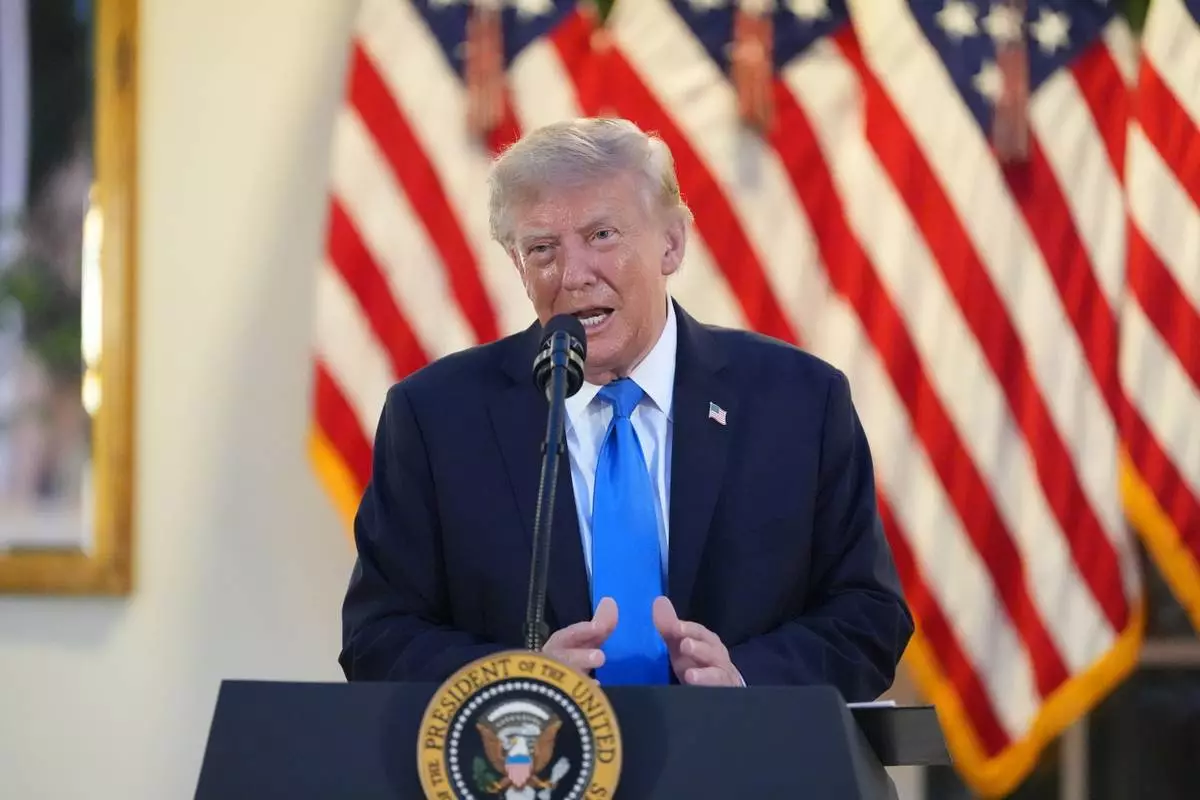
President Donald Trump speaks during an event with Republican lawmakers in the Rose Garden of the White House, Wednesday, Sept. 2, 2026, in Washington. (AP Photo/Alex Brandon)