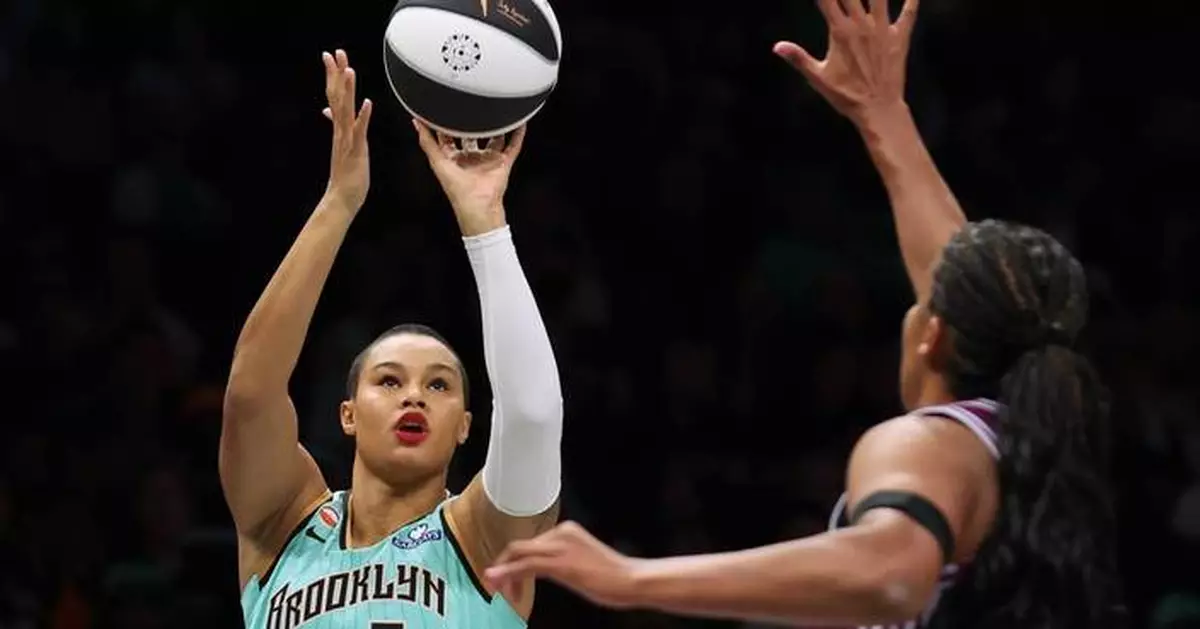
Satou Sabally's first season with the New York Liberty is over as the team announced Thursday that she's out for the remainder of the season.
Sabally has been sidelined since suffering a concussion on June 23 against the Las Vegas Aces. Liberty coach Chris DeMarco said a few weeks ago that Sabally was going to take some time away from the team to recover.
It was her second concussion in the past year. Sabally came to New York as a free agent this past offseason.
Sabally played in just 13 games this season and averaged 10.4 points and 2.8 assists. She suffered her first concussion in the WNBA Finals last season while playing with Phoenix.
She was going to be one of the centerpieces of the German national team which is hosting the FIBA World Cup that begins Friday, but said a few weeks ago she would have to miss it.
“I'm sad for her because it has been a dream of hers. We're not going to have another World Cup in Berlin during her career,” German coach Olaf Lange said. “She's still dealing with parts of (the concussion) so I just hope that she'll be okay. I'm hopeful she'll be herself again very soon.”
Nyara Sabally will be playing for Germany and was sad that her sister won't able to.
“It's a loss that you can't really deal with. I think the whole team is behind her,” Nyara Sabally said. “She was looking forward to it for the past five years so it's upsetting obviously, but I know she'll be watching and cheering us on.”
New York has clinched a playoff spot and is still battling for postseason positioning. The WNBA is currently on a two-week break for the World Cup and the Liberty has four games remaining when play resumes.
See AP’s full WNBA coverage here
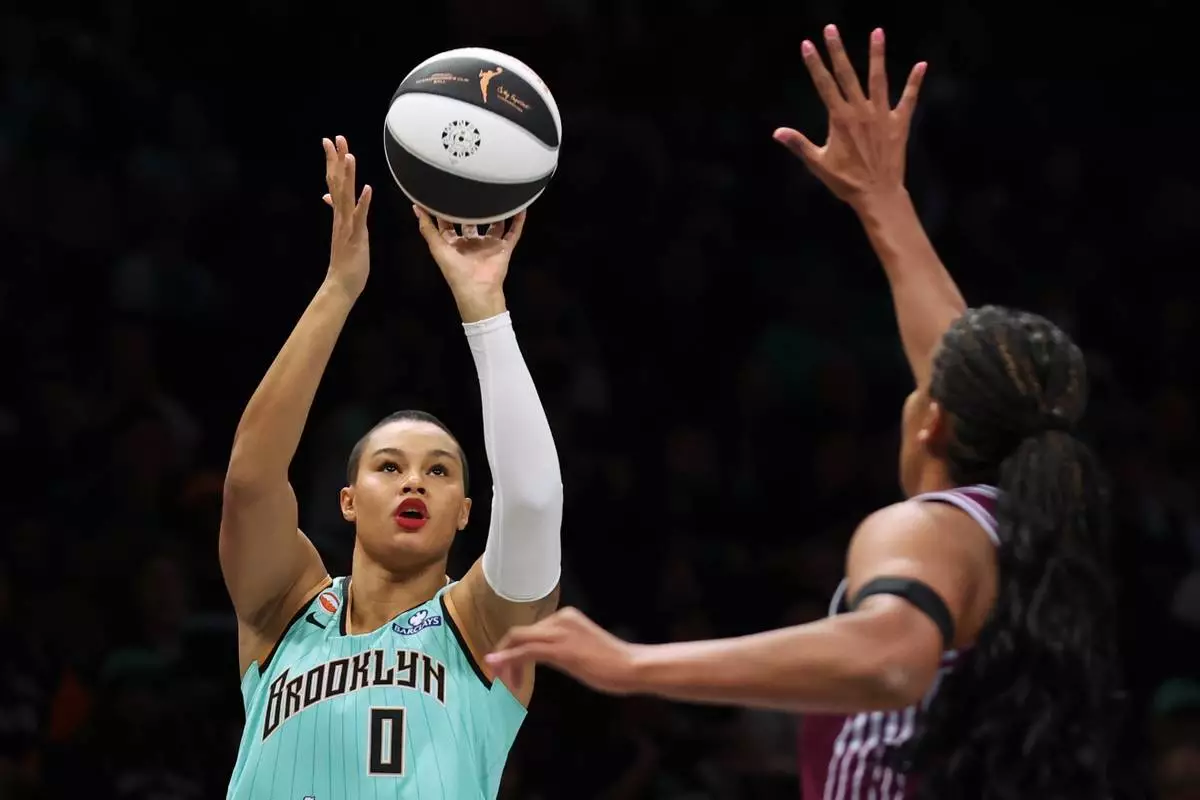
FILE - New York Liberty forward Satou Sabally (0) shoots over Toronto Tempo forward Nyara Sabally during the first half of a WNBA basketball game on June 3, 2026, in New York. (AP Photo/Heather Khalifa, File)
HARARE, Zimbabwe (AP) — The Caine Prize for African Writing has cleared Zimbabwean author Simbarashe Kundizeza of using artificial intelligence to write this year’s award-winning story, but also announced new measures to guard against the use of generative AI in submissions.
Kundizeza said Thursday he felt “relieved” that the allegations raised in an article by The Atlantic magazine had been dismissed.
“It was not necessary in the first place, I am happy to put all this behind me and continue with my writing journey,” he said.
The allegations had sparked a wider debate on social media, with some questioning whether Black authors are being unfairly targeted by AI-related accusations.
The Caine Prize for African Writing said Wednesday it considered “the matter closed” after an internal review that included “rigorous” interviews with the author and metadata analysis of drafts.
“We feel the evidence is clear and have made the decision that Simbarashe’s award stands,” Ellah Wakatama, chair of the Caine Prize, said. “We look forward to awarding as well as celebrating with Simbarashe in Zimbabwe before the end of the year.”
Kundizeza’s “The Blue Fighter” won this year’s $10,000 Caine Prize for African Writing in October. But a report in The Atlantic magazine subsequently said that AI detection tool Pangram had indicated the entire story was AI-generated, with the exception of an excerpt from a poem by another author.
Kundizeza denied the allegations, insisting that the story, centered on family relationships and economic hardship, was entirely his own work that reflected his family’s life during Zimbabwe’s years of economic turmoil.
He said “aspects of the story, including characters and the setting” were drawn from events in his own life, describing it as “a deeply personal story about economic collapse and familial relationships.”
Alongside its decision to uphold the award, the Caine Prize announced new measures it said would strengthen safeguards against use of generative AI. They include AI declarations from publishers submitting stories and from all shortlisted writers, along with an “AI use policy for guidance.”
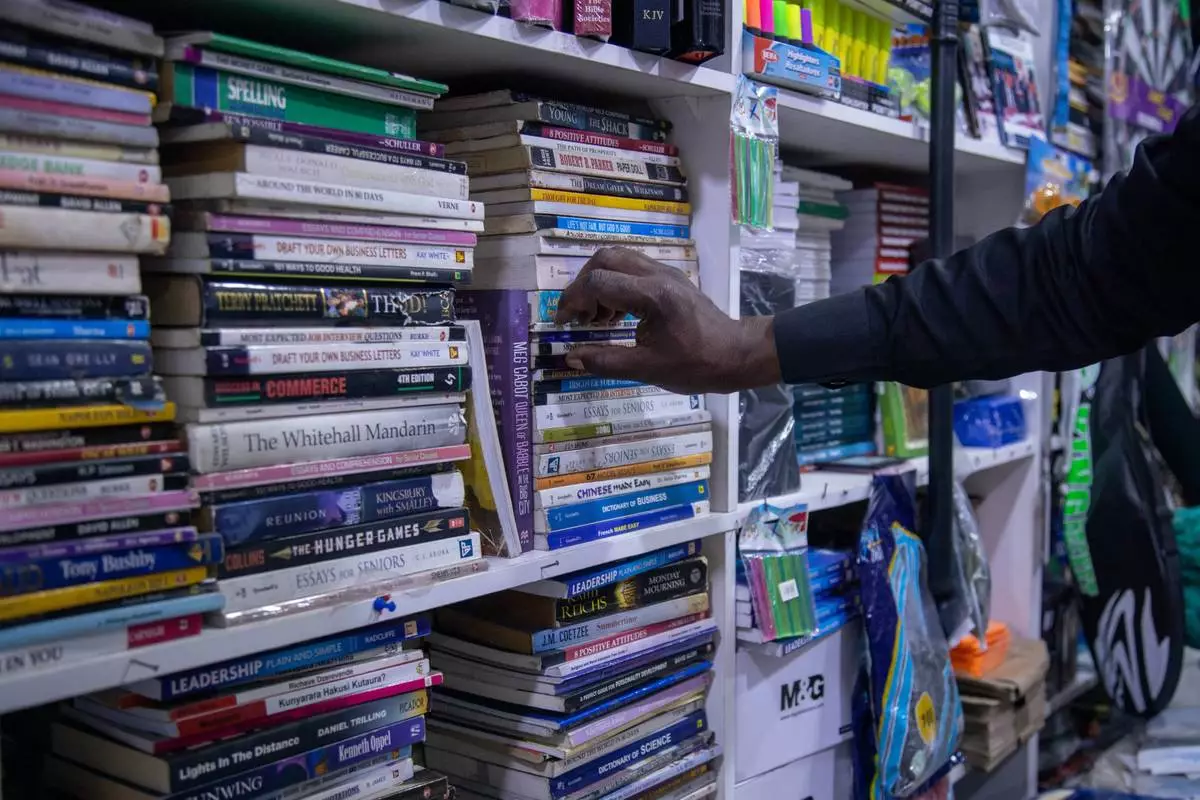
FILE - A customer browses for books at a bookstore in Harare, Zimbabwe, Oct. 14, 2026. (AP Photo/Aaron Ufumeli, File)