GENEVA (AP) — A Romanov sapphire weighing nearly 198 carats on a diamond-covered bracelet sold for more than 4.1 million Swiss francs ($4.9 million) at auction, vastly higher than the expected price range, Sotheby's said.
The cushion-shaped sapphire attributed to onetime ownership of Russia's imperial family was billed as a very rare stone, and had been expected to fetch between 850,000 and 1.7 million francs ($1 million and $2 million) at the Geneva auction late Wednesday.
The buyer, a private collector, wasn't identified.
The 197.80-carat Ceylon sapphire likely came from the Mughal Empire in south Asia, made its way into Russia's imperial jewels in the 19th century and is one of the most important surviving gemstones from the Russian court.
Dowager Empress Maria Feodorovna, Czar Nicholas II's mother, wore the sapphire at the Winter Palace Ball of 1903 — "widely regarded as the last great spectacle of Imperial Russia and immortalized in some of the most iconic images of the Romanov court,” the auction house said.
After the Russian Revolution, the sapphire was recorded in inventory before entering the Soviet government’s dispersal sales of imperial treasures, Sotheby's said.

A Sotheby's employee displays the Highly Impressive and Historically Significant Sapphire, Rock Crystal and Diamond Bracelet during a preview at Sotheby's in Geneva, Switzerland, Thursday, Nov. 5, 2026. (Martial Trezzini/Keystone via AP)
KUALA LUMPUR, Malaysia (AP) — Mongolia has lodged a diplomatic protest with Malaysia over the handling of the murder case of a Mongolian woman, urging authorities to ensure a fair legal process and provide answers to her family 20 years after her killing.
Altantuya Shaariibuu was shot dead and blown up with military-grade plastic explosives in a jungle outside Kuala Lumpur in October 2006. Her killing touched off a scandal linked to former Prime Minister Najib Razak, who has repeatedly denied any involvement.
Two members of an elite police unit who were Najib’s bodyguards were convicted of killing Altantuya. Her lover Abdul Razak Baginda, a close aide to Najib, was tried but acquitted of abetting the crime. Who ordered the killing was never established. Altantuya was 28 and pregnant at the time of her death.
Former Mongolian Prime Minister Zandanshatar Gombojav said Thursday that Mongolia “profoundly regret the decision” in January by Malaysia’s Court of Appeal that removed the Malaysian government’s liability in a civil suit brought by Altantuya’s family and reduced the damages awarded.
Zandanshatar is Mongolia's special envoy and a member of a high-level government task force to support Altantuya's family.
He said Mongolia had sent a diplomatic protest note on Tuesday with four requests: including a fair review of the court ruling, the return of a convicted officer who escaped to Australia so he can testify in the civil suit, an examination of potentially new evidence and an official written response to Mongolia.
“Twenty years have passed, and her family has endured unimaginable loss without ever hearing the words ‘I am sorry.’ A fair and final resolution of this case matters greatly to the trust between our two countries,” Zandanshatar told a news conference in Kuala Lumpur.
There was speculation that Altantuya, who was also working as a translator for Abdul Razak, was silenced to prevent her from exposing alleged corruption involving the purchase of submarines from France when Najib was deputy premier and defense minister.
The two policemen were sentenced to death. One fled to Australia while appealing his conviction, while the other had his sentence commuted to 40 years in prison in 2024.
Najib later became prime minister, but his party lost power in a 2018 general election and he was imprisoned for graft in a financial scandal. The new government reopened investigations into Altantuya's death following appeals from her family, but there was no clear outcome.
The family then filed a civil suit against the government, the two policemen and Abdul Razak for the shock and trauma they suffered in connection with her death. In 2022, a Malaysian high court ruled that the defendants were liable for damages and awarded the family 5 million ringgit ($1.2 million).
But the decision was overturned in January by the Court of Appeal, which reduced the damages to 1.4 million ringgit ($343,000) and said the defendants were not liable as the conduct of the two policemen fell outside the scope of their official duties. Altantuya’s family has challenged the appellate ruling.
Zandanshatar said the two policemen's testimony was crucial to obtaining justice. He urged Malaysia to step up talks with Australia to secure the return of the policeman still there. The officer's death sentence is a major obstacle to extradition from Australia.
The policeman imprisoned in Malaysia had reportedly made a statutory declaration in 2019 alleging that Najib had ordered the killing. The other officer in Australia has also made statements suggesting the killing was carried out on orders from higher authorities. Najib has denied the allegations, which have not been established in court.
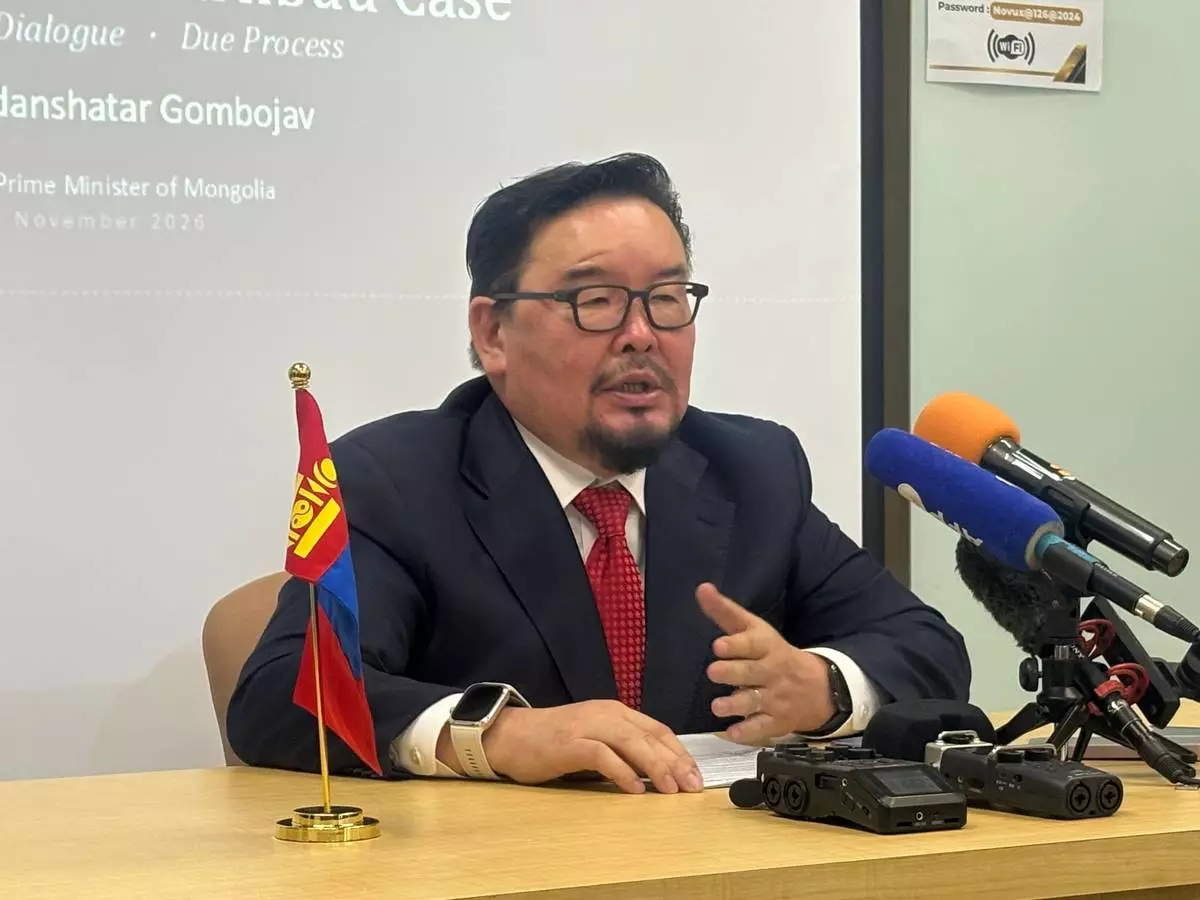
Former Mongolian Prime Minister Zandanshatar Gombojavyn speaks during a press conference in Kuala Lumpur, Malaysia, Thursday, Nov. 12, 2026. (AP Photo/Eileen Ng)