LONDON--(BUSINESS WIRE)--Sep 3, 2026--
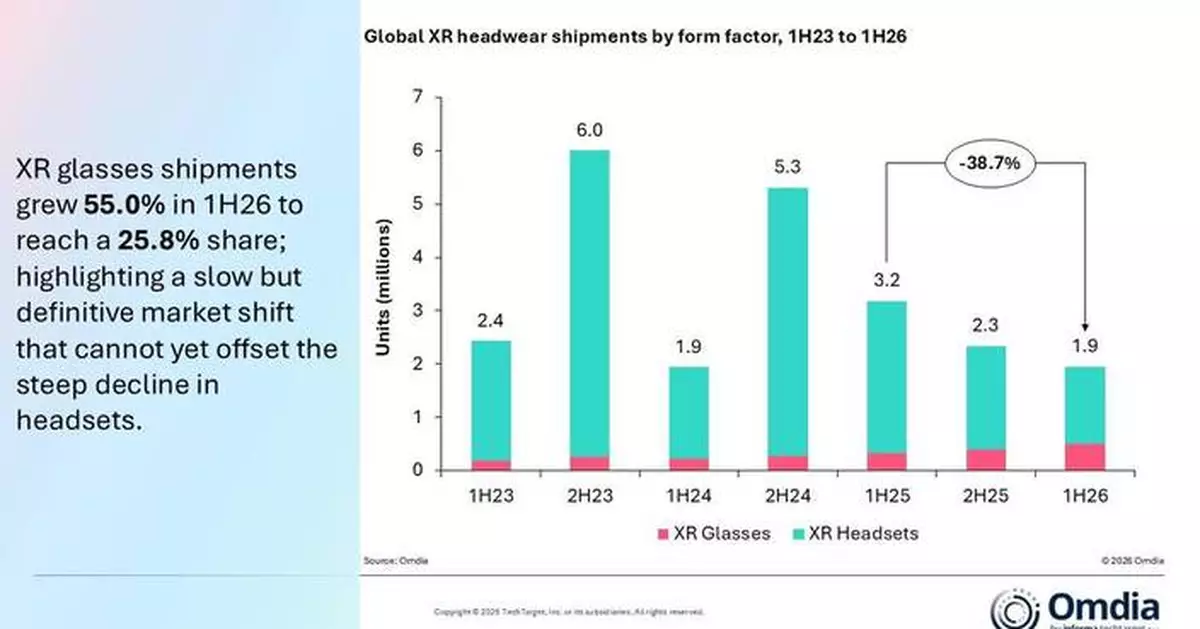
Global shipments of XR headwear declined 38.7% year-on-year to 1.9 million units in the first half of 2026, according to the latest data from Omdia. While XR glasses are gaining traction, their growth from a small base was insufficient to counter a steep drop in XR headset shipments. By 2025, the market had recorded its fourth consecutive year of decline following the pandemic-induced peak in 2021.
This press release features multimedia. View the full release here: https://www.businesswire.com/news/home/20260903768294/en/
In 1H26, XR glasses expanded their share of total shipments to 25.8% – up from 10.2% in 1H25. Tethered display glasses drove almost all of this growth, with RayNeo, VITURE, and XREAL collectively capturing 93.1% of the tethered display glasses segment. Strong demand for devices such as the RayNeo Air 4 and VITURE Beast series propelled RayNeo and VITURE into second and third place, respectively, in the overall XR headwear market, with shares of 9.9% and 8.6%.
“XR glasses are gaining momentum because consumers are increasingly willing to trade some immersion for less friction,” said Qiran Ju, Senior Analyst at Omdia. “Lighter designs and familiar use cases such as video viewing and gaming are lowering the barriers to adoption.”
Meta, meanwhile, retained the overall market lead despite its share dropping sharply from 71.3% in 1H25 to 48.2% in 1H26, as demand for the Meta Quest 3 and 3S continued to weaken.
“Meta poured massive resources into headsets, but has struggled to replicate the breakout success of the Quest 2,” said George Jijiashvili, Senior Principal Analyst at Omdia. “Despite the Quest 3 and 3S offering better specs at accessible prices, they have failed to drive a major upgrade cycle or meaningfully expand the audience. The ongoing slump across the headset market reinforces that bulky headwear remains a tough sell beyond a core enthusiast base.”
From a regional perspective, North America remained the largest XR headwear market with a 43.9% shipment share in 1H26, followed by Western Europe at 23.8%. Greater China recorded the largest increase in global shipment share, going from 11.9% in 2025 to 16.3% in 1H26, surpassing Rest of Asia-Pacific as the third-largest regional market, supported by strong domestic uptake of tethered glasses.
“The next phase of XR evolution will be less about requiring people to enter isolated virtual environments, and more about embedding AI and spatial capabilities naturally into everyday wear,” noted Jijiashvili. “Moving away from occasional, closed-off sessions to frequent, light-touch interactions will be the key to breaking out of the current enthusiast niche.”
ABOUT OMDIA
Omdia, part of TechTarget, Inc. d/b/a Informa TechTarget (Nasdaq: TTGT), is a technology research and advisory group. Our deep knowledge of tech markets grounded in real conversations with industry leaders and hundreds of thousands of data points, make our market intelligence our clients’ strategic advantage. From R&D to ROI, we identify the greatest opportunities and move the industry forward.
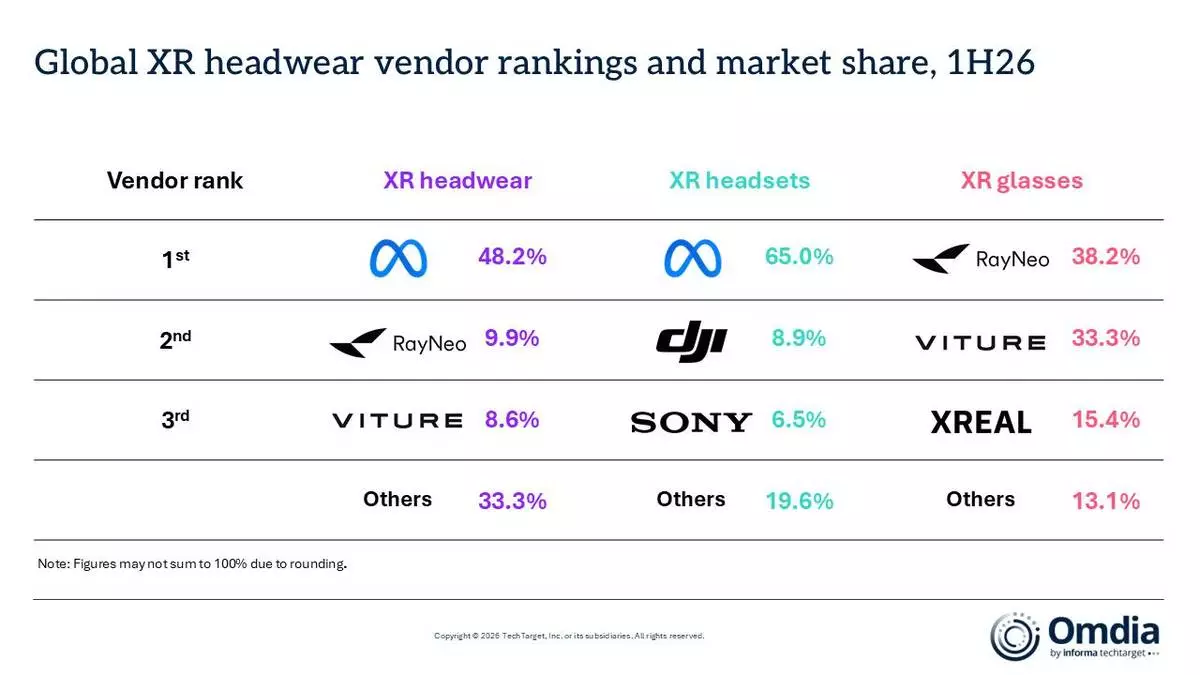
Global XR headwear vendor ranking and market share, 1H26
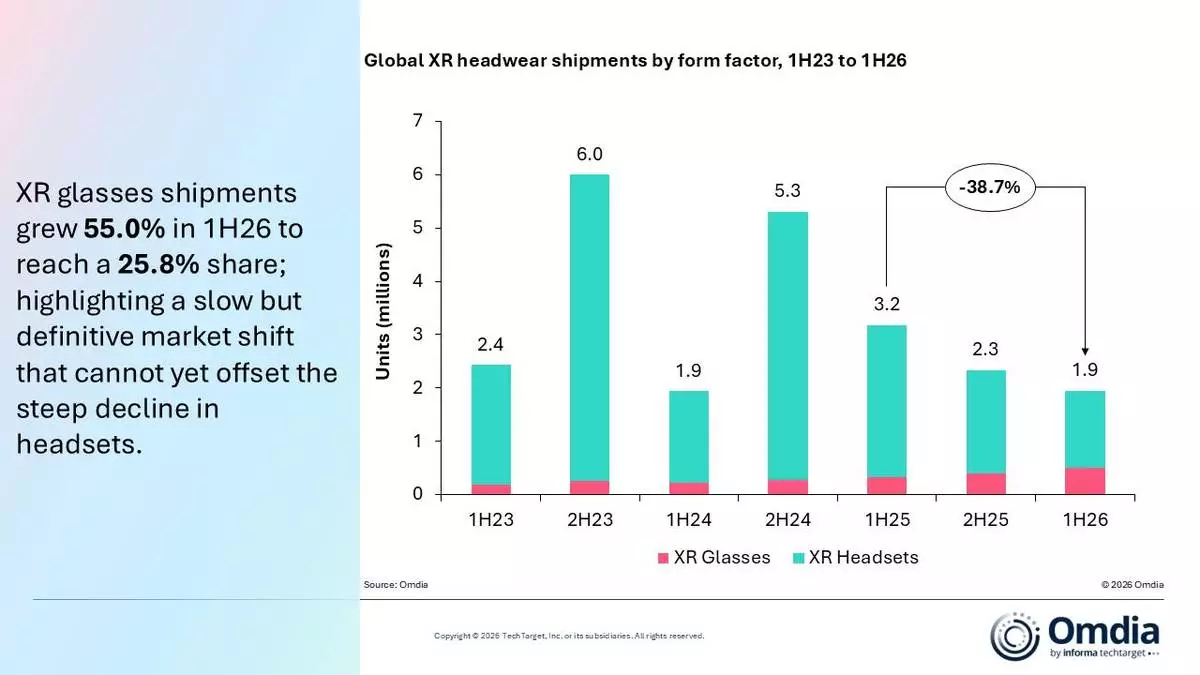
Global XR headwear shipments by form factor, 1H23 to 1H26
Riyadh’s King Khalid International Airport was open for domestic flights on Wednesday following multiple Houthi strikes on the Saudi capital this month.
A British naval maritime security organization said a projectile ignited a fire aboard a tanker off Oman, but its crew was safe.
Here is the latest news from the Middle East on Wednesday. Read our full coverage here.
A limited number of Saudi airlines took off and landed at the country’s main airport on Wednesday, two days after authorities notified airlines that they could resume operations with prior permission.
Saudia and FlyNas were operating flights Wednesday, according to flight-tracking data published by FlightAware. Major carriers, including Lufthansa and Air France, have canceled flights through mid-November.
Riyadh’s King Khalid International Airport has been hit multiple times by Yemen’s Houthi rebels this month and shut down on Oct. 10.
The Houthis have acknowledged attacking the airport, claiming without evidence that Saudi Arabia provided military equipment to government forces through the facility.
The United Kingdom Maritime Trade Organization said Wednesday unknown projectiles ignited a fire aboard a tanker in the Persian Gulf off Oman and struck another tanker off Iraq in separate incidents.
The first attack occurred 12.6 miles west of the coastal town of Bukha in the Omani province of Musandam, it said.
The UKMTO said the fire was extinguished and the tanker was at anchor, with its crew safe.
The second attack occurred 34.5 miles southeast of Al Faw, Iraq. The tanker's crew is safe while no damage to the tanker or environmental impact has been reported.
The attack was the latest against vessels attempting to transit the Strait of Hormuz without coordinating with Iran amid its conflict with the United States.
Maj. Gen. Turki al-Malki, a spokesman for the Saudi-led coalition fighting against the Iranian-backed Houthi rebels in Yemen, said in a social media post Wednesday that five drones fired toward Saudi Arabia were intercepted and destroyed over the holy city of Medina.
The attack was the latest on Saudi Arabia since the resurgence of fighting with the Houthis in mid-July. The Yemeni rebels repeatedly struck targets in the kingdom, including oil facilities and airports, and engaged in fierce clashes with Saudi-backed Yemeni forces in Yemen.
The coalition, in turn, hit the rebel-held areas in Yemen including the capital, Sanaa and provided air cover to a major offensive the Yemeni government launched earlier this month.
Houthi military spokesman Brig. Gen. Yahya Saree said a ballistic missile struck a military camp adjacent to Yemen's Aden airport in Khor Maksar district.
The Houthis claim the military camp houses a command center for the Saudi-led forces fighting the rebels.
A transportation ministry official in Aden said a civilian airplane had taken off from the airport before the strike, while the departure hall was evacuated.
He said operations in the airport were temporarily suspended and that there was no damage to the tarmac. The official was speaking on condition of anonymity because he was not authorized to brief the media.
This is the second time the Houthis claim to have targeted the military camp inside the airport complex in five days and the third this month.
— By Sara El Deeb in Beirut and Samy Magdy in Cairo
French President Emmanuel Macron on Wednesday arrived in Saudi Arabia for an unannounced visit as part of a regional tour.
Macron is expected to meet with Crown Prince Mohammed bin Salman as the kingdom seeks support from allies in the face of attacks by Iran-backed Houthi rebels in neighboring Yemen.
Macron’s office said he is there to show solidarity and to “continue ongoing efforts to secure oil and gas supplies” from the region.
Iran is willing to “give diplomacy another chance” but is fully prepared to defend itself if full-scale war resumes, Foreign Minister Abbas Araghchi wrote in the Financial Times.
Araghchi gave no details of talks with Washington through mediators on Iran’s recent seven-day proposal to end the war and fully reopen the Strait of Hormuz.
He said there was “little reason to expect progress now,” citing what he described as Washington’s unwillingness to advance the talks while threatening further violence.
He warned against renewed U.S. military action, saying: “I can say with complete and utter confidence that it will result in an even greater strategic failure.”
Brad Lander, a Democrat running for a New York seat in the U.S. House of Representatives, was briefly detained by Israeli police on Wednesday as he joined rabbis and other volunteers accompanying Palestinian farmers during the annual olive harvest in the occupied West Bank.
Police gave no reason for Lander’s release, and dozens of other volunteers remained detained, according to Beck Strober, a spokesperson for Protect the Harvest, the group that organized the visit.
Neither Israeli police nor the military responded to requests for comment.
The detentions are the latest incident during this year’s Palestinian olive harvest, which has seen a surge in violence between Israeli settlers and Palestinian villagers harvesting their crops.
Israeli rights group Yesh Din and the Palestinian Farmers’ Union have described this year’s harvest as the most violent in recent history, with hundreds of reported thefts, clashes and arson attacks.
Yemen’s internationally recognised government has added 135 bankers, military officials, firms and tankers allegedly involved in oil smuggling to its terrorism list as part of efforts to cut off financing for the Houthi rebels.
Information Minister Moammar al-Eryani on Wednesday called the decision a “significant step” aimed at “cutting off terrorist financing, dismantling the militia’s financial and commercial networks.”
It was not immediately clear how the measures would affect the Houthis’ finances.
This report will be updated throughout the day as new developments emerge.

Prisoners detained in connection with Yemen's ongoing conflict line up before they are freed by the Houthis in a release supported by the International Committee of the Red Cross, in Sanaa, Yemen, Saturday, Oct. 17, 2026. (AP Photo/Osamah Abdulrahman)
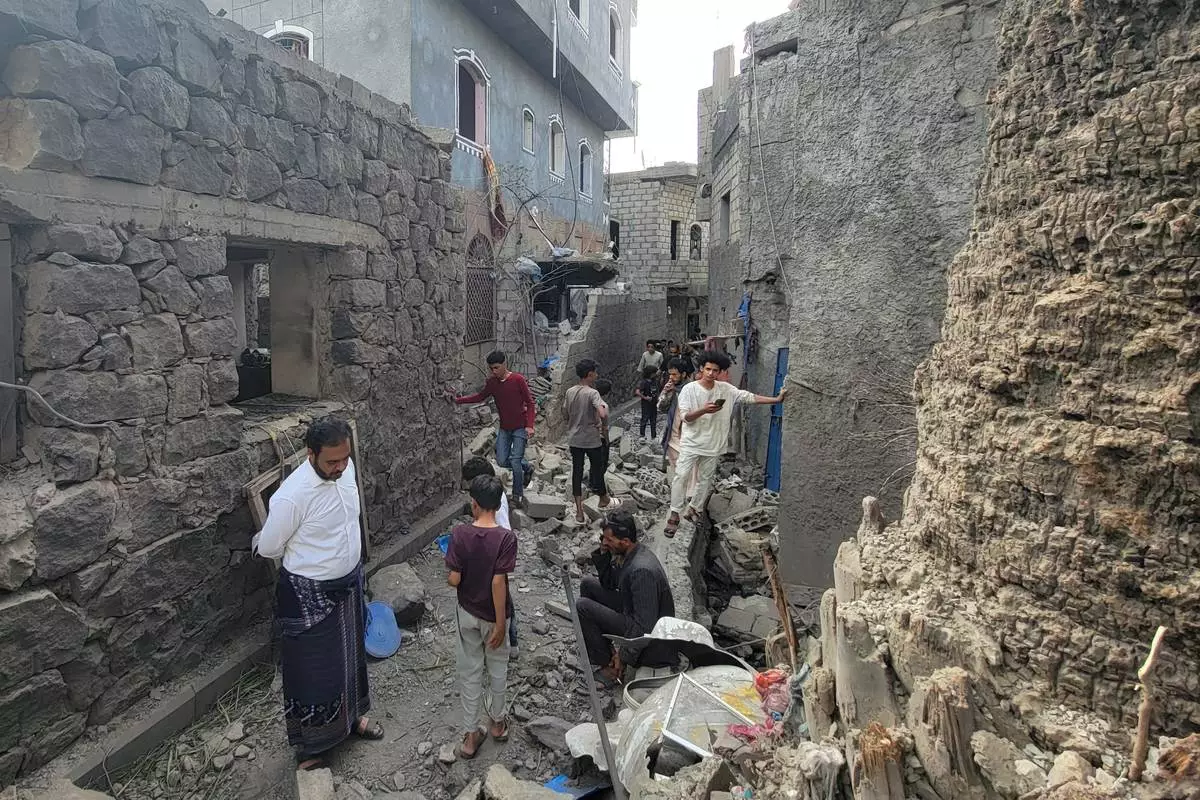
Residents inspect debris of their homes after a missile strike in Seina, Taiz, Yemen, Tuesday, Oct. 20, 2026. (AP Photo/Marzouq Al Jabri)
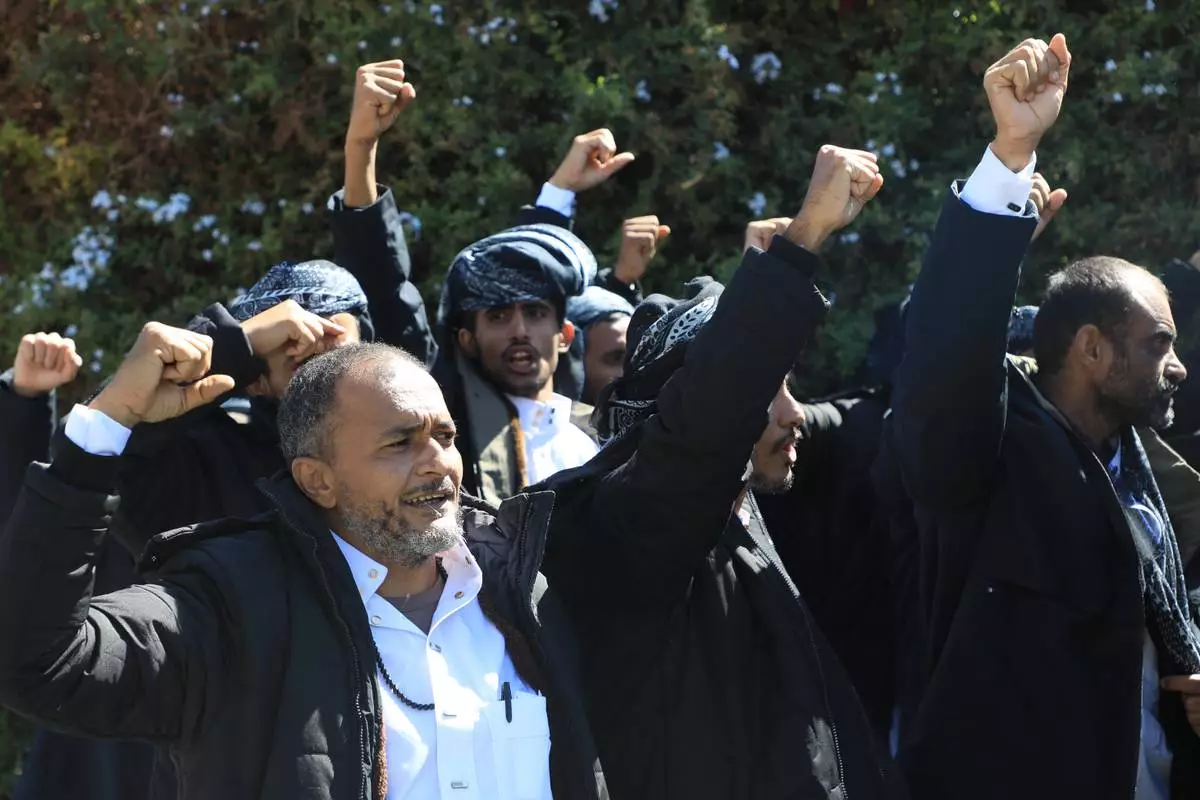
Prisoners detained in connection with Yemen's ongoing conflict react before they are freed by the Houthis in a release supported by the International Committee of the Red Cross, in Sanaa, Yemen, Saturday, Oct. 17, 2026. (AP Photo/Osamah Abdulrahman)
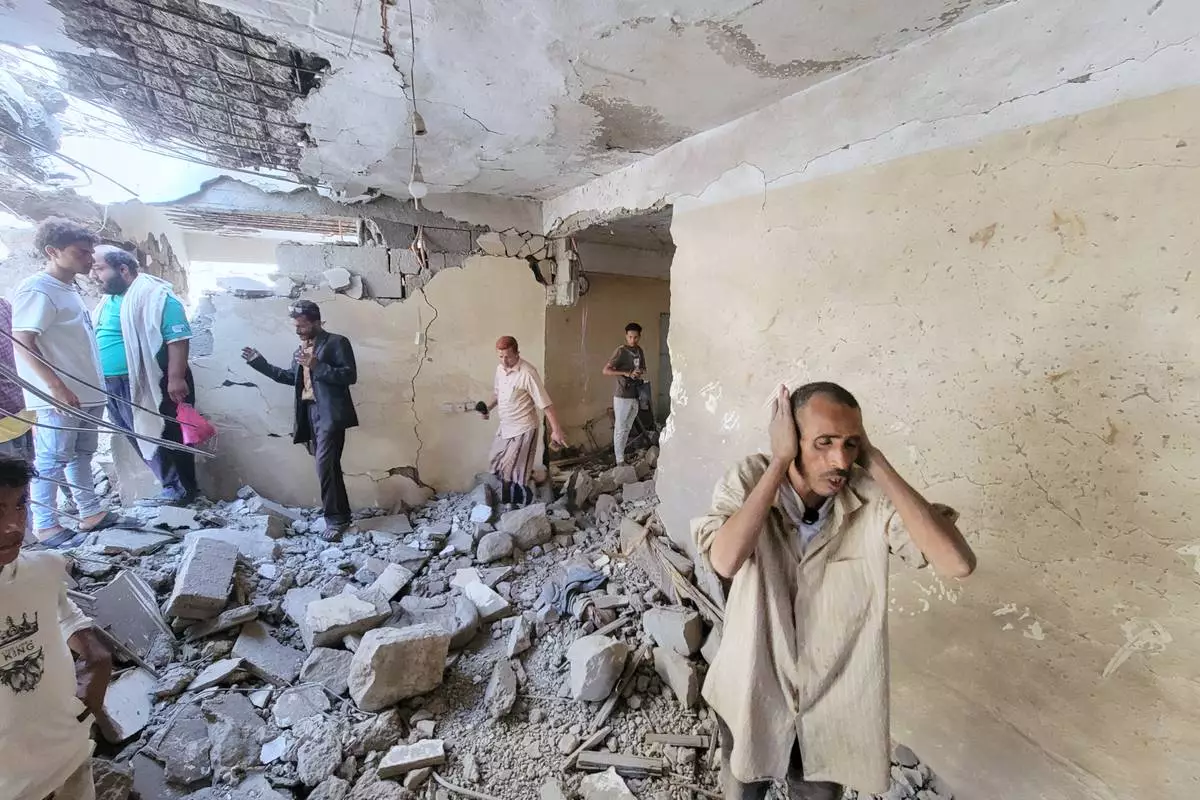
Residents walk on debris of their homes at Seina district in Taiz, Yemen, after a missile strike, Tuesday, Oct. 20, 2026. (AP Photo/Marzouq Al Jabri)