CAPE CANAVERAL, Fla. (AP) — Two Mercury-bound spacecraft left their mother ship behind on Thursday and headed down the home stretch of their nearly decade-long voyage to the solar system's smallest and closest-to-the-sun planet.
The linked European and Japanese spacecraft separated as planned from their cruiser, but controllers had to wait two anxious hours to receive confirmation via radio signals. The crucial operation was broadcast from the European Space Agency's control center in Germany, more than 124 million miles (200 million kilometers) away.
“It’s a brilliant moment,” said lead project scientist Geraint Jones.
If all goes well, the conjoined spacecraft known as BepiColombo will enter orbit around Mercury in November and split from each other in December to map and study the entire planet from different altitudes. As of Thursday, the spacecraft still had 2 million miles (3.3 million kilometers) to go before reaching its destination.
Launched in 2018, the BepiColombo mission is named for the Italian mathematician who took part in NASA’s Mariner 10 mission to Mercury in the 1970s. Only one other spacecraft, NASA’s Messenger, has explored the puzzling, scorching planet that is just a little bigger than our moon.
“How tiny Mercury is and still it holds some of the biggest mysteries of our solar system," mission manager Santa Martinez said earlier this week.
Added Jones: “There’s a huge amount still left to be learned."
BepiColombo already has traveled more than 6 billion miles (10 billion kilometers) on its roundabout route, according to Martinez.
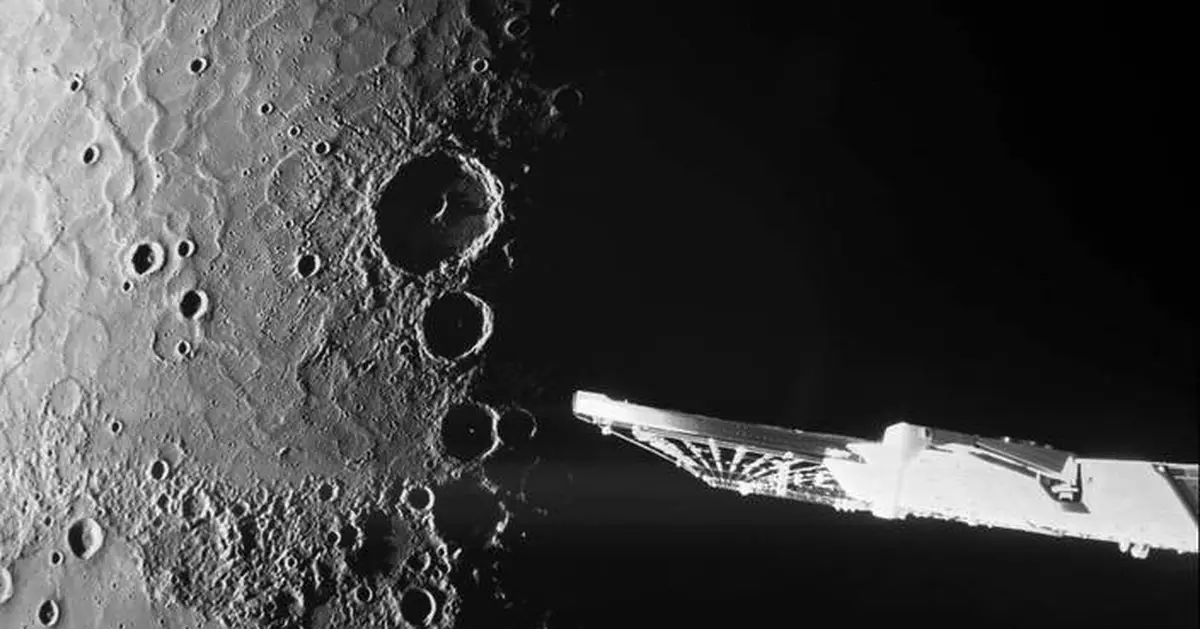
It needed nine planetary flybys to reduce its energy enough to be caught in Mercury's orbit. The last flyby, in January 2025, yielded stunning photos of Mercury's impact craters and volcanic plains.
Beginning next spring, a slew of science instruments on the European and Japanese spacecraft will study the magnetic field that envelops Mercury, the planet's dense interior, and the geologic processes at the surface, including the hollows, or depressions, that scientists believe are being eaten away by minerals vaporizing from rocks.
It's a strange world of contrasts. On a planet where the temperature can top 800 degrees Fahrenheit (427 degrees Celsius), the poles are frigid with deep, permanently shadowed craters packed with ice.
Given Mercury's proximity to the sun, engineers had to design the spacecraft to withstand "extremely punishing" conditions, said the European Space Agency's Ignacio Tanco, a mission operations chief.
“It's essentially equivalent to operating with a very hot pizza oven running right on your back,” he said.
Science observations should begin next spring, with the European Space Agency covering most of the mission's $2 billion (1.7 billion euros) cost.
The Associated Press’ health and science coverage receives financial support from the AP Fund for Journalism and private foundations. AP is solely responsible for all content. Find AP’s standards for working with philanthropies, a list of supporters and funded coverage areas at AP.org.
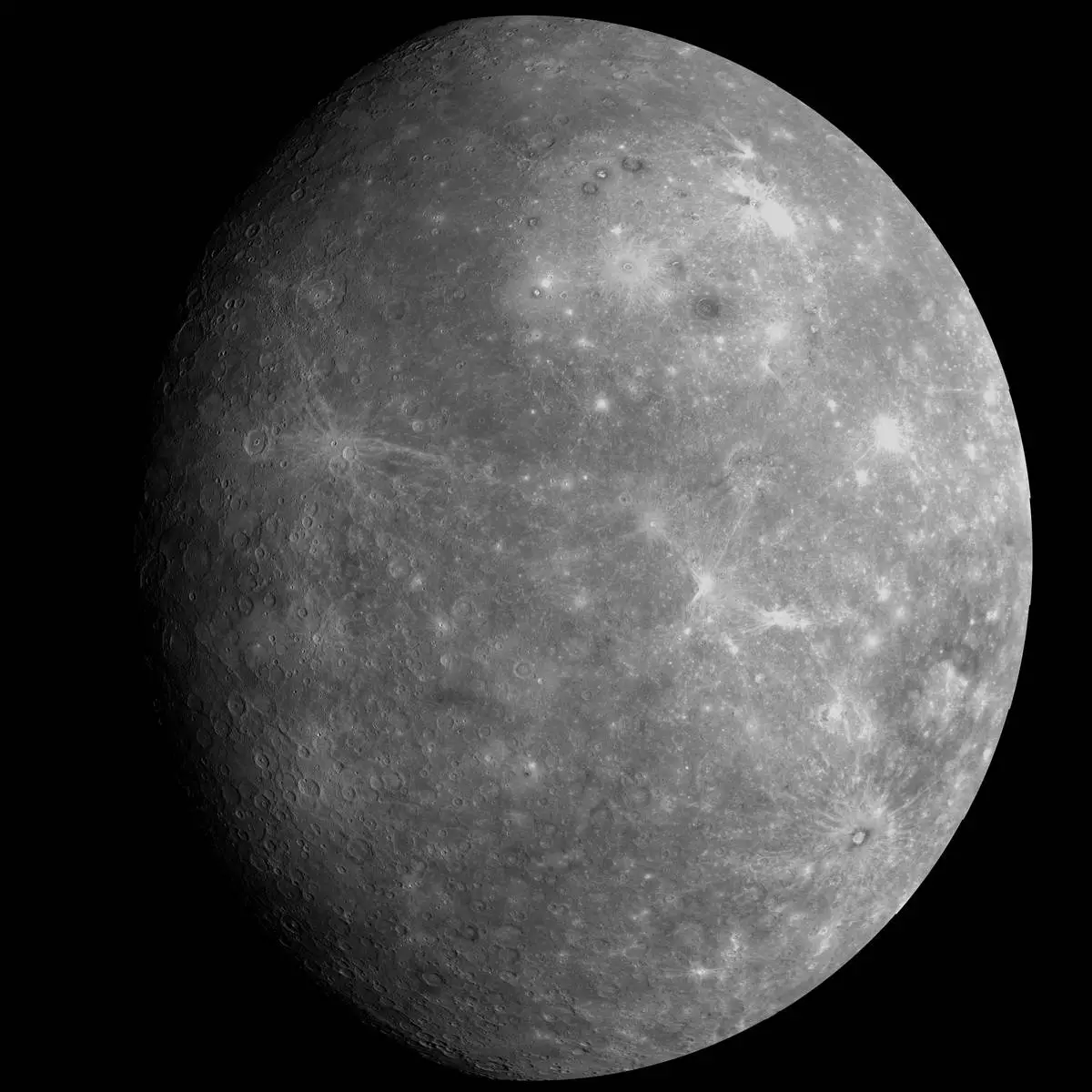
This composite image provided by NASA/Johns Hopkins University Applied Physics Laboratory/Carnegie Institution of Washington on Oct. 22, 2013, shows Mercury as it appeared to the Messenger spacecraft following a flyby of the planet. (NASA/Johns Hopkins University Applied Physics Laboratory/Carnegie Institution of Washington via AP)
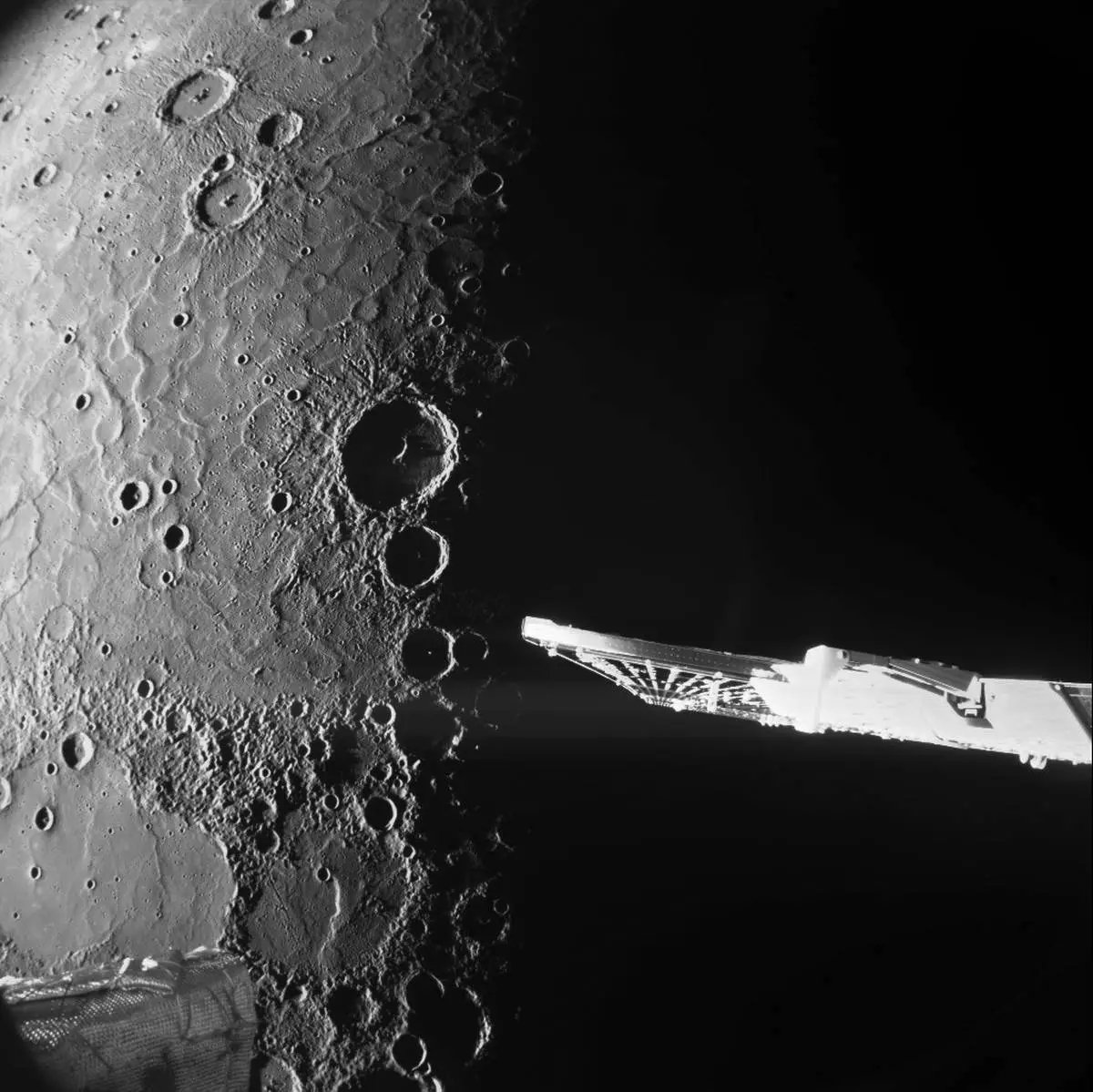
FILE - This undated image provided by the European Space Agency shows close-up photos of Mercury's north pole captured by the European-Japanese spacecraft BepiColombo. (ESA via AP, File)
WASHINGTON (AP) — Federal prosecutors have charged a U.S. Immigration and Customs Enforcement officer with lying to investigators about the events leading up to the shooting of a Venezuelan man during the Minneapolis immigration crackdown earlier this year, a person familiar with the matter told The Associated Press.
The person was not authorized to publicly discuss the investigation and spoke on condition of anonymity. The person said Christian Castro, the officer who authorities say shot Julio Cesar Sosa-Celis in the leg in January, has been charged with making false statements to federal investigators.
The federal charges, which remain under seal, follow Castro's release from jail last week after Texas’ governor refused to immediately sign an extradition warrant to hand him over to Minnesota authorities, who have charged him separately with assault and false reporting of a crime related to the same shooting.
Federal authorities had initially accused Sosa-Celis and another man of beating an officer with a broom handle and a snow shovel during the confrontation. But federal prosecutors dropped charges against the men after video evidence showed the officers may have lied about the encounter, and officials opened an investigation.
Earlier this week, a federal prosecutor working on the case told lawyers for Sosa-Celis and other victims that Justice Department officials blocked the prosecutor’s push to bring a more serious civil rights charge against the officer for the shooting, ProPublica reported.
But the person familiar with the investigation disputed the prosecutor’s characterization, saying the civil rights probe is continuing and there has been no final decision on whether to bring additional charges. The prosecutor, Matthew Evans, was fired on Thursday and is now under investigation for alleged obstruction of a grand jury probe, the person said.
An automatic email response from Evans' Justice Department account said he was on leave. Other attempts to reach him were not immediately successful.
Castro was initially arrested in May in the Minnesota case, and he was held in custody in Brownsville, Texas, a city bordering Mexico, while Minnesota officials sought his extradition. But Texas Gov. Greg Abbott refused to immediately sign off, citing continuing investigations of fraud in government social service programs in Minnesota, which Trump used to justify his immigration crackdown there.
Minnesota officials had sought to stop the sheriff in Cameron County, Texas, from releasing Castro, out of fear that he would flee to Mexico. According to a lawsuit filed by Minnesota, Castro had a conversation with a woman, while he was incarcerated, where he spoke about marrying her and buying a house in Mexico after his release.
But Castro was released a week ago after a federal judge refused to order Texas to extradite him.
The Department of Homeland Security previously called Minnesota’s prosecution of Castro “unlawful and nothing more than a political stunt,” saying only federal authorities have jurisdiction in the case.
Castro was suspended from ICE without pay in February while federal authorities conducted the investigation.
“The men and women of ICE are entrusted with upholding the rule of law and are held to the highest standards of professionalism, integrity, and ethical conduct,” ICE's acting director at the time, Todd Lyons, said then. “Violations of this sacred sworn oath will not be tolerated. ICE remains fully committed to transparency, accountability, and the fair enforcement of our nation’s immigration laws.”
Minnesota officials alleged that Castro, 52, fired through the front door of a home and shot Sosa-Celis in the thigh.
Castro and another officer had chased a different man, Alfredo Alejandro Aljorna, to the Minneapolis apartment duplex where he and Sosa-Celis lived. Minnesota prosecutors said the officer then falsely accused Sosa-Celis and another man of attacking an ICE officer with a broom handle and a snow shovel.
Attorneys for Sosa-Celis and Aljorna, who Minnesota officials have said were legally in the U.S., didn’t immediately respond to emails Thursday from The Associated Press.

FILE - A federal agent wears an Immigration and Customs Enforcement badge in New York, June 10, 2025. (AP Photo/Yuki Iwamura, File)