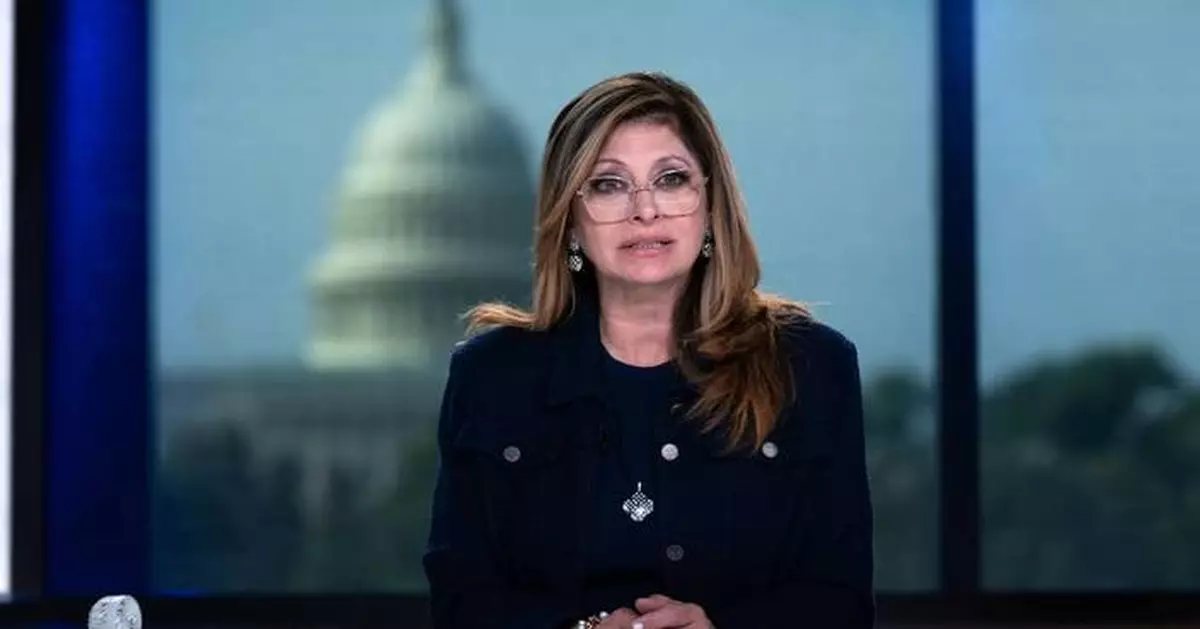
Politically influential financial journalist Maria Bartiromo has departed Fox News Media after more than a decade, the company announced Thursday hours after Fox Business Network aired the final episode of the show that bears her name. The company did not specify the reasons for her separation.
“We thank Maria for her work over the last 12½ years,” a Fox statement read, “and wish her all the best on her next chapter.”
There was no immediate reaction from Bartiromo. Her X account still showed a banner photo Thursday afternoon encouraging people to “grab yourself a cup of coffee, and join us every morning for Mornings With Maria.”
Other high-profile, on-air personalities that have left Fox News Media in recent years include Tucker Carlson and Bill O’Reilly. Former Fox personality Pete Hegseth left the network in 2024 after being nominated as President Donald Trump's secretary of defense.
Bartiromo hosted “Mornings with Maria” that aired on Fox Business Network, the last episode of which aired Thursday morning, as well as “Maria Bartiromo's Wall Street.”
The first show will be renamed “Mornings with Fox Business” and will feature rotating anchors, the company said in its statement. The second will be renamed “FBN's Wall Street” and will also use rotating anchors. Additionally, her weekly Fox News show “Sunday Morning Futures” will be hosted by Jason Chaffetz for the time being.
Bartiromo has frequently earned praise from Trump, who has granted her multiple interviews over the years. He has called her a “great reporter.” Vice President JD Vance, talking with reporters Thursday afternoon, said, “I love Maria.” He said he had not talked to her and did not know the back story.
In 2025, a lawsuit against Fox News by voting technology company Smartmatic alleged that Bartiromo spread false rumors about claims of election fraud on the air — a notion she had vehemently rejected.
Bartiromo had said before an earlier lawsuit involving Fox and Dominion Voting Systems that it’s “absurd” to think that she personally lobbied former Attorney General William Barr to aggressively investigate Trump’s charges of voter fraud during the 2020 election. Instead, she said she was doing a journalist’s job in asking follow-up questions. That case was settled in 2023.
Before Fox, Bartiromo worked for CNBC for 20 years as a financial journalist. Previously to that, she worked for CNN. At CNBC, she pioneered daily live reporting from the floor of the New York Stock Exchange and won an Emmy Award for a documentary about Google.
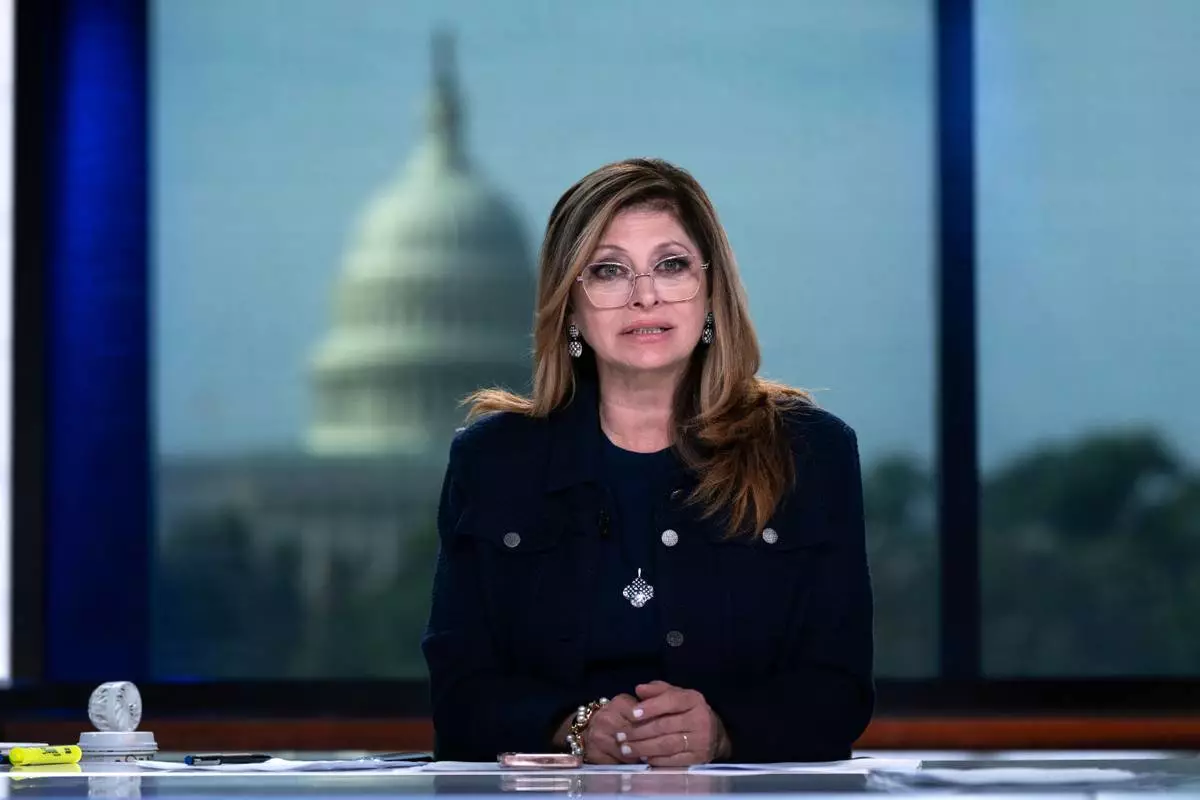
FILE - FOX Business Network's Mornings with Maria show anchor Maria Bartiromo, speaks during an interview, June 9, 2026, in Washington. (AP Photo/Jose Luis Magana, File)
WASHINGTON (AP) — Confronted by an intransigent Iranian government that has refused to back down in the face of a massive military campaign, President Donald Trump appears to have settled on a dual-prong approach that combines economic pressure with the potential of a devastating escalation in force.
Having launched “Operation Economic Outcast” just last week to try to isolate Iran from its remaining global trade partners, the Trump administration also resumed strikes in recent days, prompting Iranian retaliation that has renewed concerns of an all-out regional war.
However, the combination of already intense sanctions on Iran and an off-and-on bombing campaign since the war began more than six months ago has not bowed the Iranian leadership and has left the administration struggling to find a way to wind down the conflict. Tehran has dug in its heels — to Trump’s frustration — as energy prices rise, the global economy roils and poll numbers on the administration's handling of the war dip ahead of November’s midterm congressional elections.
Trump said Wednesday that he didn't think the conflict would last “much longer,” but he again shrugged off suggestions that its unpopularity and high gasoline prices resulting from Iran's chokehold on the Strait of Hormuz would affect the elections for Republicans.
“It doesn’t matter. And I’m not affected by the election,” he told reporters. "I’m not running. But my party is running, and I’m going to help my party. But I think my party respects the fact that we’re not allowing Iran to have a nuclear weapon.”
A regional diplomat briefed on the matter described the current impasse between Tehran and Washington as reflective of both countries' domestic priorities: the midterm elections for Trump and Republicans and the internal crises within Iran.
Domestic issues are critical reasons why neither side is willing to blink first, said the diplomat, who spoke on condition of anonymity to discuss sensitive negotiations.
The diplomat said negotiations, including those between Iran and Oman or even Iran and the U.S., will not go anywhere without addressing the initial catalyst of war: Israel. And the diplomat was skeptical of the Trump administration's new sanctions plan, saying the threats require more explanation than what the U.S. has provided so far.
The administration's new push for Iran's economic isolation was announced with great fanfare last week and a dire warning for all remaining countries to cut off financial and trade ties with Iran or face U.S. retaliation — but the campaign so far has fallen flat.
Just one branch of an Egyptian bank in the United Arab Emirates has been targeted so far. For actual sanctions to bite, experts agree that they must apply to Iran’s main trading partners: mainly China but also India and Russia. But Trump is loath to target China especially as he is preparing to host President Xi Jinping later this month.
Trump also insists that the U.S. has control over the Strait of Hormuz, where one-fifth of the world’s oil transited before the war began. The strategic waterway has been a key pressure point for Iran, and reopening it fully has become one of the prime goals for the U.S. administration.
Ship traffic through the strait is well below pre-war levels due to the risk of attack if vessels don’t comply with an Iranian vetting regime near its coastline, which is in sharp contrast to the unhindered navigation before the war. There were 102 transits last week and 126 the week before, according to shipping data company Lloyd’s List Intelligence, compared with 130 or more per day before the war.
“As President Trump said, the strait is open and all mines have been cleared,” White House spokeswoman Anna Kelly said Thursday. “The naval blockade remains in full force and effect, and Operation Economic Outcast is underway to sever every remaining economic lifeline sustaining the regime.”
The White House has repeatedly touted the economic impact that the sanctions have had on Iran, citing its rampant inflation and the massive loss in the value of its currency. U.S. officials have described Iran's financial system as “one big house of cards.”
Going forward, Secretary of State Marco Rubio said “the price” Iran will pay will be primarily economic, “but we reserve the right ... to take military action when necessary — not just to protect ourselves but to prevent them from being able to threaten others as well.”
“They’re going to continue to feel the squeeze,” he told Fox News host Brian Kilmeade in an interview that aired Wednesday.
Vice President JD Vance said Thursday that he would not characterize the current situation as a “war” but that the administration would respond to any Iranian hostile action.
“Major combat operations are currently not ongoing, and they haven’t been ongoing in a very long time," Vance told reporters during a White House briefing. "In fact, what we did just a couple of days ago is that we made it harder for the Iranians to shoot at commercial shipping again in order to ensure the flow of oil and gas into world energy markets.”
Complicating things for the U.S., Iran’s leadership has shown signs of divisions between moderates more open to a diplomatic solution and hardliners who want to press ahead with a more confrontational approach.
President Masoud Pezeshkian is one of the most prominent voices still calling for a negotiated solution. But the hardliners appear to have gained the upper hand, and Iran shows no sign of backing down. Tehran continues to lash out at U.S. interests and allies around the region in response to military strikes.
“This kind of a hybrid approach — the combination of military force, blockade and economic pressure — that is the only option that seems to be available to the United States at this moment,” said Hamidreza Azizi, senior Iran analyst for the International Crisis Group.
Still, he said, “it’s been for a long time, but now maybe more than ever, a battle of endurance between the two sides.”
Amr Hamzawy, director of the Middle East program at the Carnegie Endowment for International Peace, pointed to two main reasons for the deteriorating situation.
“One, none of the two parties is satisfied with the outcome — meaning that the current situation does not serve U.S. interests well, and it does not serve Iranian interests well,” Hamzawy said.
The other reason is how leaders from both sides are perceived at home.
“The Trump administration is afraid of being portrayed in the U.S. as an administration that failed to end a military campaign successfully, and that’s going to impact the midterm elections," he said. “And the Iranians, especially the Revolutionary Guard, are quite afraid of appearing as if they are submitting to U.S. sanctions with no actions on their side, which might hurt them domestically.”
Magdy reported from Cairo. Associated Press writers Will Weissert in Washington and David McHugh in Frankfurt, Germany, contributed to this report.
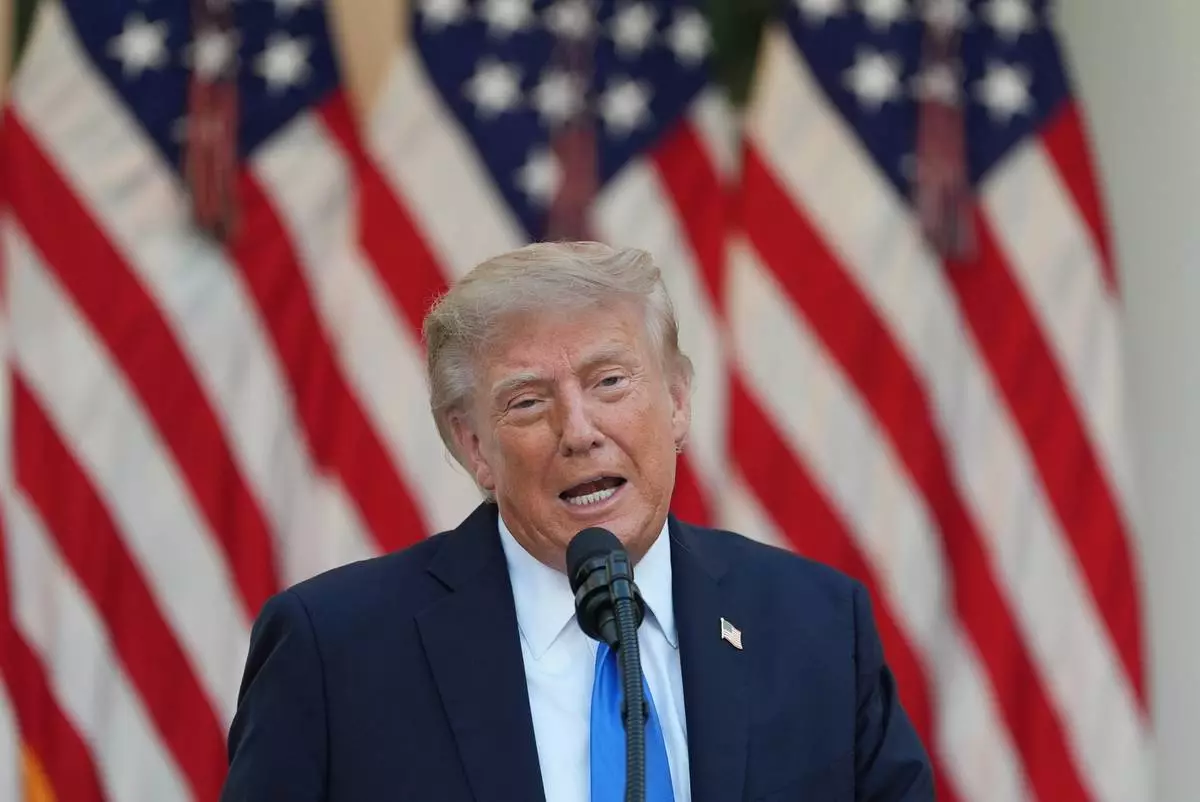
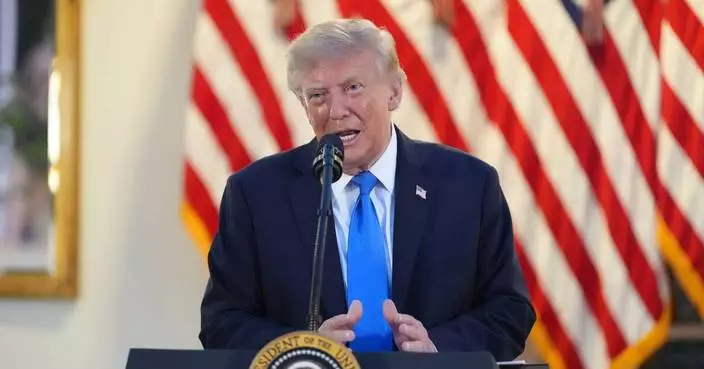
President Donald Trump speaks during an event with Republican lawmakers in the Rose Garden of the White House, Wednesday, Sept. 2, 2026, in Washington. (AP Photo/Alex Brandon)
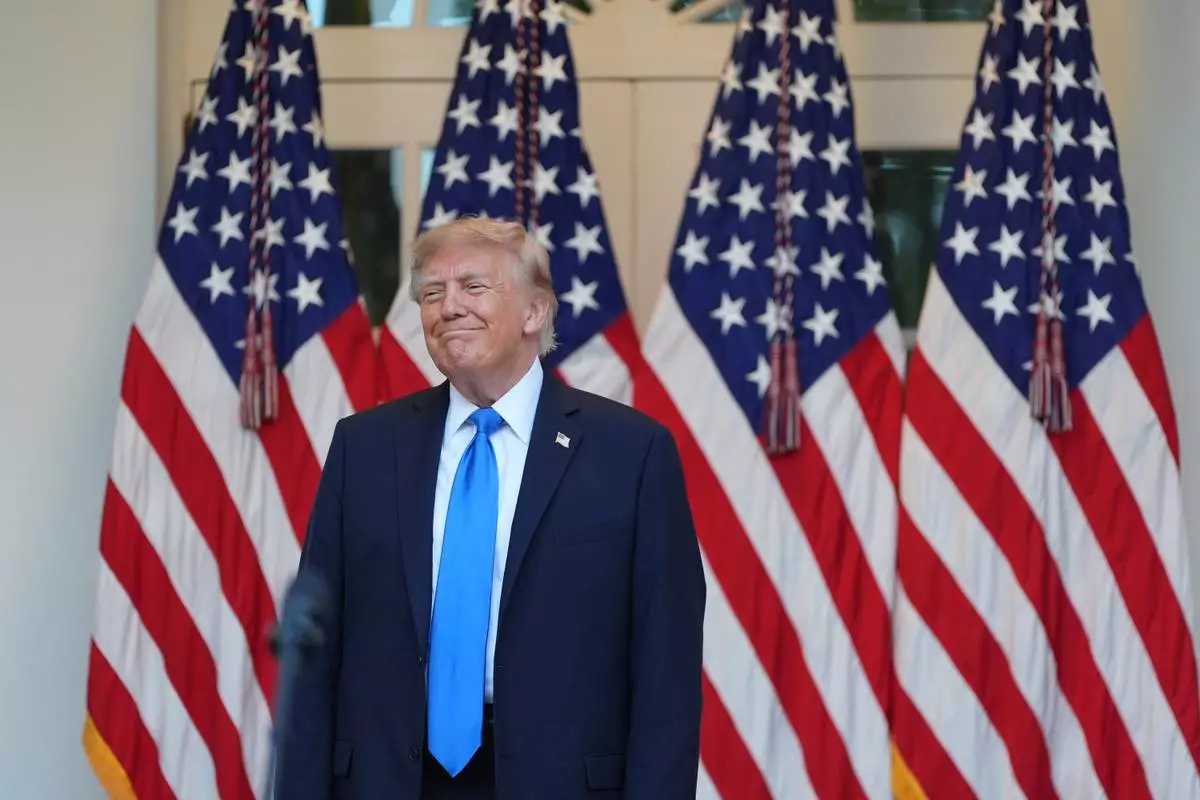
President Donald Trump attends an event with Republican lawmakers in the Rose Garden of the White House, Wednesday, Sept. 2, 2026, in Washington. (AP Photo/Alex Brandon)