
INDIANAPOLIS (AP) — There's the mother of two who needs a full-time job to keep up with the bills, but can’t afford full-time childcare. There’s the medical technician who stopped buying groceries and turned to food banks so she could pay for her infant's care.
There’s the baby who remained in foster care, even after his mother completed the steps to bring him home. She had found a job, as the state required, but couldn't afford his childcare.
Click to Gallery
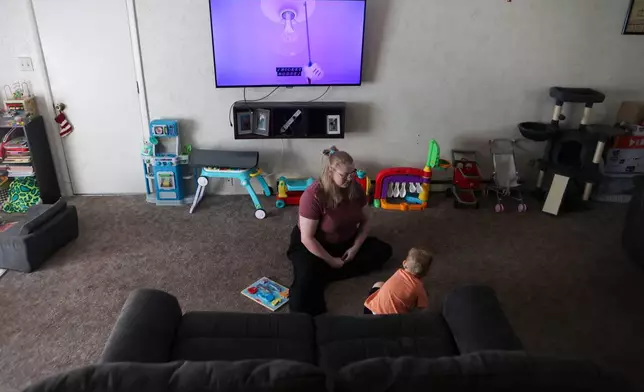
Meygan Maloney does a Mickey Mouse puzzle with her son Callum Wilson, 3, Friday, Aug. 28, 2026, at their home in Hartford City, Ind. (AP Photo/Cara Penquite)

Meygan Maloney looks through a toy with her son Callum Wilson, 3, Friday, Aug. 28, 2026, at their home in Hartford City, Ind. (AP Photo/Cara Penquite)
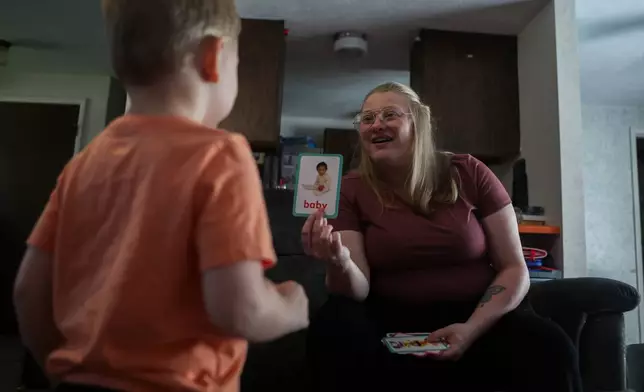
Meygan Maloney goes through flashcards with her son Callum Wilson, 3, Friday, Aug. 28, 2026, at their home in Hartford City, Ind. (AP Photo/Cara Penquite)
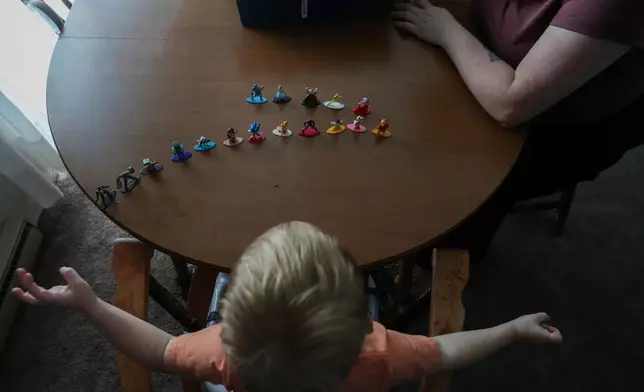
Meygan Maloney and her son, Callum Wilson, 3, play with figurines Friday, Aug. 28, 2026, at their home in Hartford City, Ind. (AP Photo/Cara Penquite)
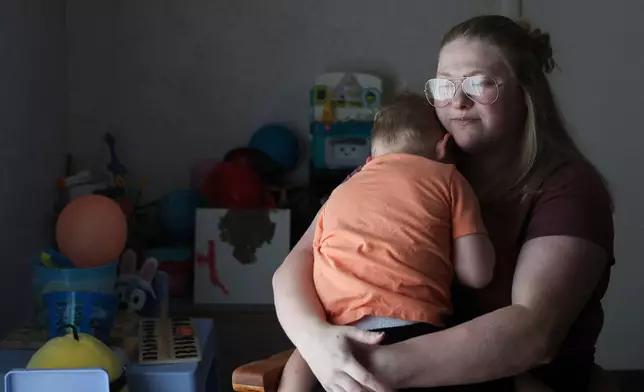
Meygan Maloney poses for a portrait with her son Callum Wilson, 3, Friday, Aug. 28, 2026, at their home in Hartford City, Ind. (AP Photo/Cara Penquite)
It’s hardly news that childcare is expensive, straining the budget of even middle-class parents. But these families all qualify for government-funded childcare assistance, intended to drastically reduce the childcare bills of needy parents so they can work or go to school. Instead, Indiana's program, which had run short on funds, wait-listed them.
Hundreds of thousands of children were sitting on childcare assistance waitlists in 23 states and the District of Columbia as of this spring, according to an analysis by The Associated Press. In three more states, many eligible families who applied were simply turned away.
Childcare assistance, funded by the federal government with help from states, is supposed to aid working parents who are low-income, homeless or caring for foster children. But waitlists have ballooned since 2023, when eight states had them, according to the AP analysis. Reporters collected waitlist and enrollment data from 47 states and the District of Columbia.
Many of the waitlists first started after $28 billion in pandemic aid expired in the fall of 2024. The Republican-led Congress declined to extend the extra money. Some states have increased funding to try to fill the gap, but families' need for childcare assistance has only grown, as they've faced mounting costs for food and gas.
While eligible families sit on waitlists, untold numbers of adults are sidelined from education or the workforce because they can't afford childcare. Those parents who remain in school or keep working make difficult tradeoffs. In interviews, parents described forgoing necessities, falling behind on bills or relying on acquaintances to watch their children. Unable to find viable childcare, some have resorted to bringing their children with them to work or class.
For Meygan Maloney's family in rural Indiana, waiting for childcare assistance means month after month of falling short financially. Maloney was working as a caregiver for adults with disabilities before she had her second child in 2023. Around the same time, the family took emergency custody of a close relative’s newborn daughter.
The next three years were marked by deepening financial struggles. Maloney only received $300 a month to care for her foster daughter, and both toddlers were put on a waitlist when she applied for childcare vouchers for 2025.
While the girl returned to her family in the fall, Maloney and her husband are still behind on bills. They recently refinanced their home, and her husband is working seven days a week as a tire technician and delivery driver. A local childcare provider gave her a steep discount, allowing her to leave her son four mornings a week so she can clean at a local hospital.
“We’re trying to get out," Maloney said. "But for us to get out, we need the assistance."
Indiana started its waitlist in December 2024, a few months after pandemic aid ran out and it became clear the state would struggle to support families already in the program. Until May of this year, it put virtually everyone who applied on the waitlist, including foster parents. By spring 2026, nearly 37,000 children were waiting for assistance.
Maloney and other Indiana foster families feel like they were misled by the state, which had for many years paid for childcare for foster children. Malinda Cox, an Indianapolis mom who took in a newborn last year, said she was forced to dip into her family’s savings to pay for the baby boy's childcare so she could return to work. At one point, she considered giving up custody of the boy because her family could not afford his childcare bill.
In the meantime, the boy’s biological mother was completing the requirements she had to satisfy to take him home. She had taken parenting classes and gotten a job. But she could not afford daycare, and because the boy could not get childcare assistance, he had to remain with Cox.
“He should be home with his mom, but (because of) this massive system upset, he’s not,” Cox said.
In April, Indiana Gov. Mike Braun, a Republican, announced the state would send $200 million in surplus funds to the state’s childcare assistance program. So far, the money has allowed it to move roughly 8,000 children off the waitlist. The state says it plans to use the funds to give assistance to an additional 6,000 children.
There are stark differences of opinion on whether the government should provide help with childcare — or how much. This year, 40 congressional Republicans called for “robust” funding of the federal program that underwrites childcare assistance. Instead, it received the same money as the year before. President Donald Trump said during his campaign that he could make childcare more affordable by using tariff revenue, but this spring he told a White House audience that paying for childcare should be up to states.
“We’re fighting wars," Trump told people gathered for an Easter luncheon. “We can’t take care of daycare. You got to let a state take care of daycare, and they should pay for it, too.”
On a rainy May day in Indianapolis, Cox bundled up her foster son and delivered him to a social worker. The boy’s biological mother still had not gotten childcare assistance, but Cox had negotiated a deal with a childcare provider to offer a massive discount. When even that was out of the mother’s reach, Cox agreed to pay half.
She arrived at the boy’s new home to watch him reunite with his mother. She felt a mix of grief over parting with him and elation over seeing his delight with his mother.
Three weeks later, the mother got notice: He had finally been approved for a voucher.
This story has been updated to correct the total number of children being helped by Indiana’s childcare subsidies. An estimated 8,000 children have come off the waitlist and 6,000 more are projected to move off the list, bringing the total to 14,000, not 8,000.
The Associated Press’ education coverage receives financial support from multiple private foundations. AP is solely responsible for all content. Find AP’s standards for working with philanthropies, a list of supporters and funded coverage areas at AP.org.
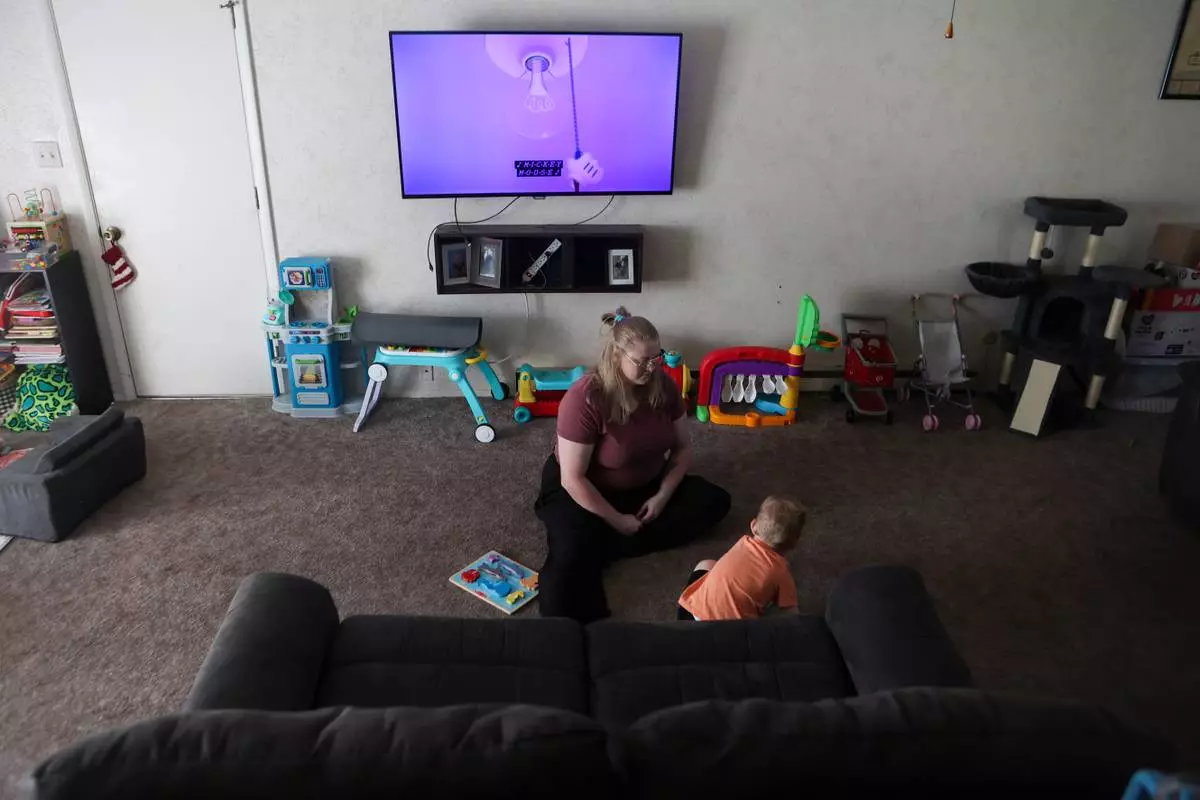
Meygan Maloney does a Mickey Mouse puzzle with her son Callum Wilson, 3, Friday, Aug. 28, 2026, at their home in Hartford City, Ind. (AP Photo/Cara Penquite)

Meygan Maloney looks through a toy with her son Callum Wilson, 3, Friday, Aug. 28, 2026, at their home in Hartford City, Ind. (AP Photo/Cara Penquite)
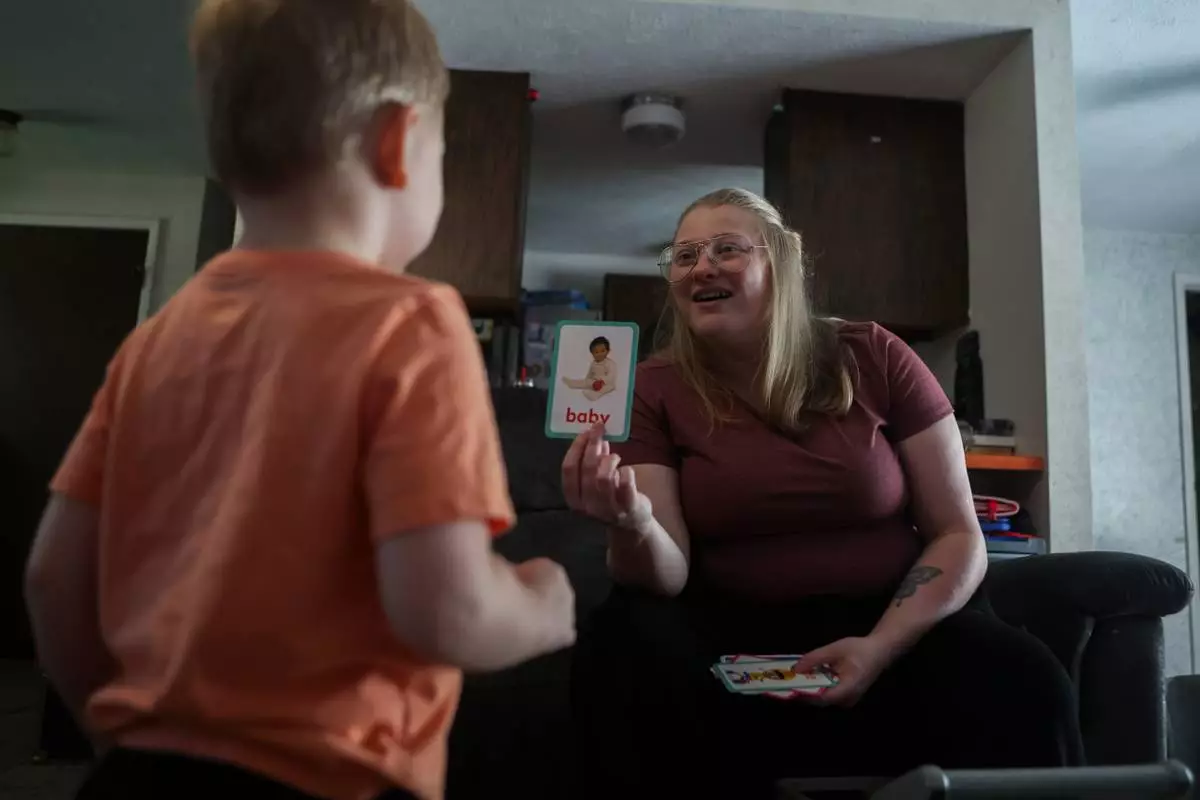
Meygan Maloney goes through flashcards with her son Callum Wilson, 3, Friday, Aug. 28, 2026, at their home in Hartford City, Ind. (AP Photo/Cara Penquite)
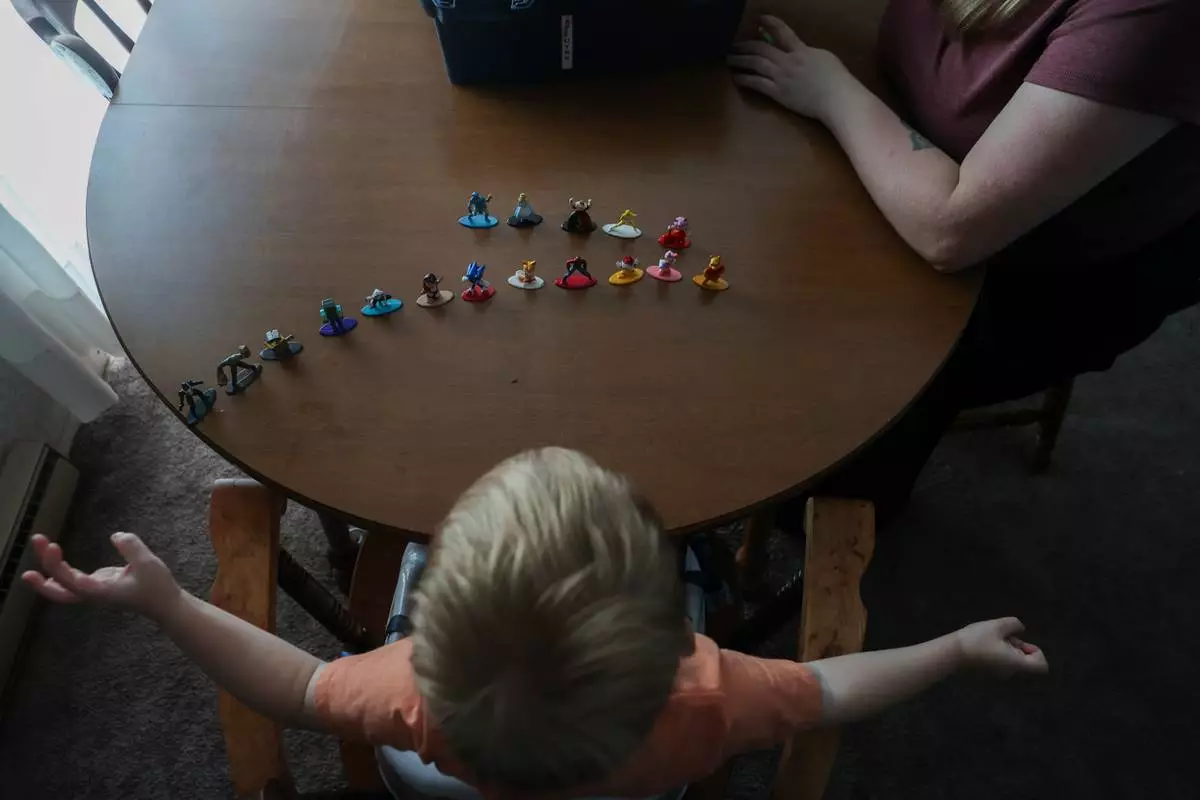
Meygan Maloney and her son, Callum Wilson, 3, play with figurines Friday, Aug. 28, 2026, at their home in Hartford City, Ind. (AP Photo/Cara Penquite)
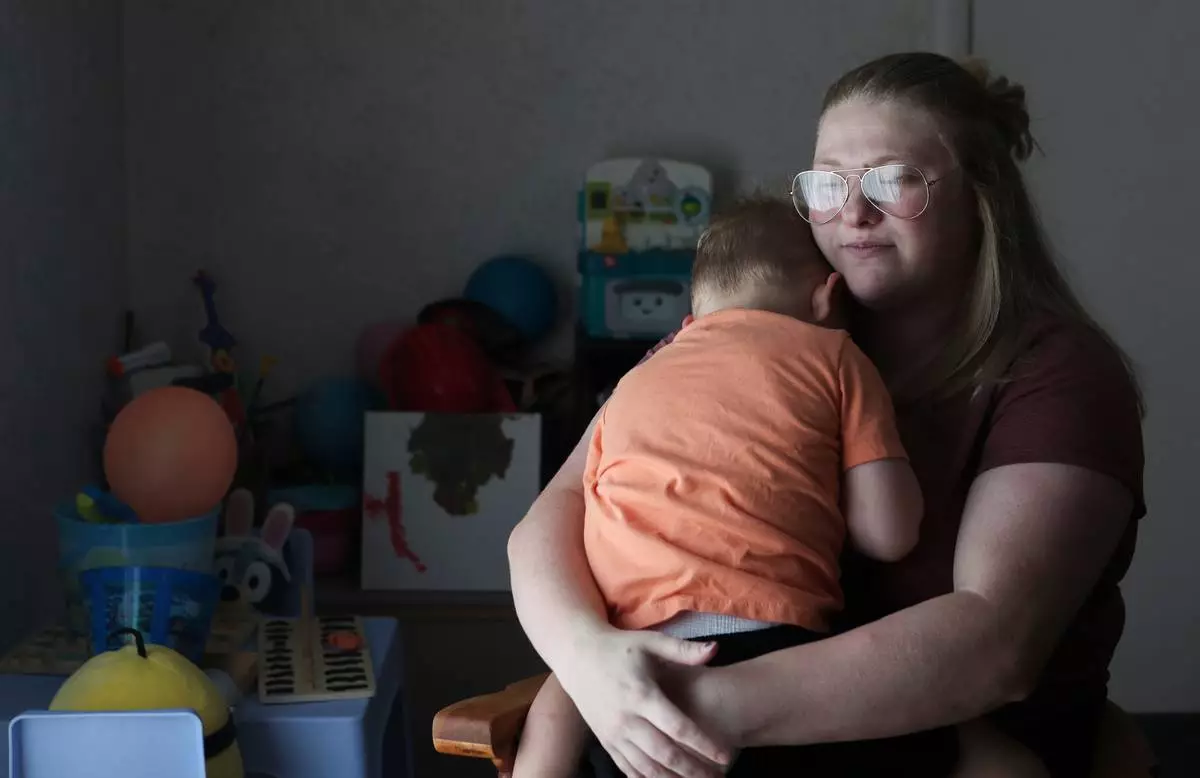
Meygan Maloney poses for a portrait with her son Callum Wilson, 3, Friday, Aug. 28, 2026, at their home in Hartford City, Ind. (AP Photo/Cara Penquite)