Skip to Content Facebook Feature Image

NCAA eligibility court fights are focused on football. Basketball lurks with its own uncertainties

Sport

NCAA eligibility court fights are focused on football. Basketball lurks with its own uncertainties
Sport

Sport

NCAA eligibility court fights are focused on football. Basketball lurks with its own uncertainties

2026-09-04 02:18 Last Updated At:02:30

CHAPEL HILL, N.C. (AP) — Michael Malone has gone from winning an NBA championship in his head-coaching career to throwing himself fully into a new world of leading a blueblood college basketball program at North Carolina.

Yet these days, he’s not much different than any college coaching veteran just trying to get a handle on who’s eligible to play and who isn’t.

“What is strange about college athletics is that it seems like the rules change every day,” Malone said Thursday morning. “Like, literally every day. So that is the hardest part."

The NCAA’s move to a five-year, age-based eligibility model has begat a series of eligibility battles in courts across the country, along with last week’s rushed-into-place rules by football-playing power conferences trying to sort out that chaos with the start of the season now at hand.

The same questions hover in basketball, too, as to whether players can come back to college after in failed bids to make the pros or after closing what was supposed to be a four-year career in the spring.

The sport has the benefit of more time for those cases to make their way through the legal system. Still, preseason practices officially begin later this month, and there’s roughly two months remaining until the season kicks off on Nov. 1. It is unclear how much clarity will come between now and then as to the status of more than 250 men’s and women’s players involved in some type of court action tied to the NCAA's age-based eligibility model.

That includes for Malone's first UNC team. South Dakota transfer big man Cameron Fens committed last month to UNC when he appeared to be eligible to play a fifth season after one court ruling, only to be ineligible again based on a stay issued in response to an appeal.

“You put together the best team you can, you start practicing in the summer and now let’s unleash 80 players into the sport in the first week of August,” UConn men’s coach and two-time NCAA champion Dan Hurley said last month. “You can’t go on like this, no other sport is going like this. ... It is total chaos and it is not sustainable.”

The change has largely centered around the NCAA's adoption of a five-year eligibility model that is due to be fully implemented next fall. It will allow players to have five years of eligibility with the clock starting when an athlete turns 19 or graduates from high school, whichever is earliest.

But that quickly led to lawsuits from four-year players in the high school class of 2022, who began their careers in the 2022-23 season and completed four seasons of eligibility but are seeking that fifth year.

In data as of Thursday morning, the NCAA said there have been 79 lawsuits with a total of 450 plaintiffs across all sports involved in litigation tied to the five-year rule, with 234 of those coming in men's basketball and 33 in women's basketball. Of that group, 154 men's players and 26 women's players have received some type of relief from the courts allowing them to play while the rest are currently be ineligible.

Yet things can change rapidly, with players moving from one category to the other.

Last season, basketball got a preview of what was to come when Alabama's Charles Bediako won a temporary restraining order allowing him to play five games for the Crimson Tide last year after playing in the NBA G League. An Alabama judge ultimately sided with the NCAA that Bediako should be ineligible.

And now, former St. John's standout guard RJ Luis Jr. is trying to play for new LSU coach Will Wade despite going pro after the 2024-25 season and spending time with two NBA teams. A Louisiana judge cleared the way for him last week to start practicing and potentially play for the Tigers; Luis was briefly under contract with the Utah Jazz and Boston Celtics but never played in an NBA game.

These fights have also come with the NCAA and major conferences pushing Congress for help by passing the Protect College Sports Act. That bipartisan measure has been touted by supporters as having the ability to tamp down on the lawsuits that have led to the eligibility issues.

The Power Four football conferences — the SEC, Atlantic Coast Conference, Big Ten and Big 12 — all adopted bans of former pro athletes last week. The Big 12 banned professional athletes from competing in any league-sponsored sport, while the SEC and the ACC bans focused on men's and women's basketball along with football. The Big Ten's was limited to football.

The Big East, the only other league to win an NCAA title in the past decade, has yet to formally adopt a similar policy. But that league doesn't have football as a pressing concern with basketball as its flagship sport with the November tipoff, and that comes with the Big East in the first days of Tim Brosnan's tenure as commissioner.

A person with knowledge of the situation said Big East schools are discussing options and monitoring developments tied to the eligibility cases as well as the actions taken by other top leagues. The person spoke to The Associated Press on condition of anonymity because the league hasn’t publicly discussed those evaluations.

Back at UNC, Fens joined the roster as a county judge in Tennessee granted him and 18 other basketball players a temporary injunction to retain their eligibility for a fifth year.

But in recent weeks, that state’s Court of Appeals put on hold that order, meaning Fens can practice but is currently ineligible to play. That was one of multiple wins for the NCAA in ongoing litigation across the nation, including stays of injunctions in Ohio and South Carolina state courts as well as in a federal court in Colorado.

Malone — who coached three-time NBA MVP Nikola Jokic to the 2023 title with the Denver Nuggets — knows it all can change quickly. So he's leaning on his staff to keep him “attuned” to developments while he focuses on preparing the Tar Heels for November, and other pressing matters.

“I still haven't found a place to live, so I've got to find a place to live, man, you know?” he quipped.

AP freelance writer Jim Fuller in Storrs, Connecticut, contributed to this report.

Sign up for Top 25 poll alerts here, visit the Top 25 here and see AP’s full men’s basketball coverage here
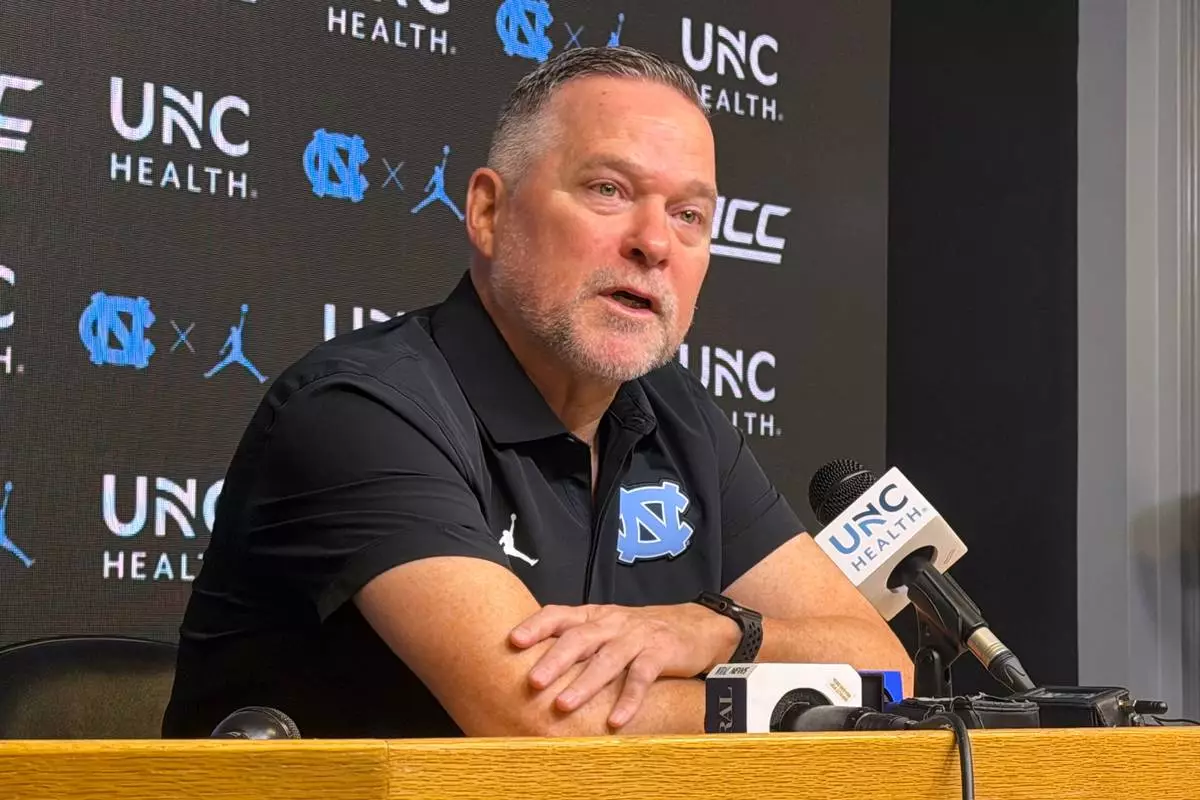
In this photo taken with a smartphone, North Carolina men's basketball head coach Michael Malone speaks during a news conference Thursday, Sept. 3, 2026, in Chapel Hill, N.C. (AP Photo/Aaron Beard)

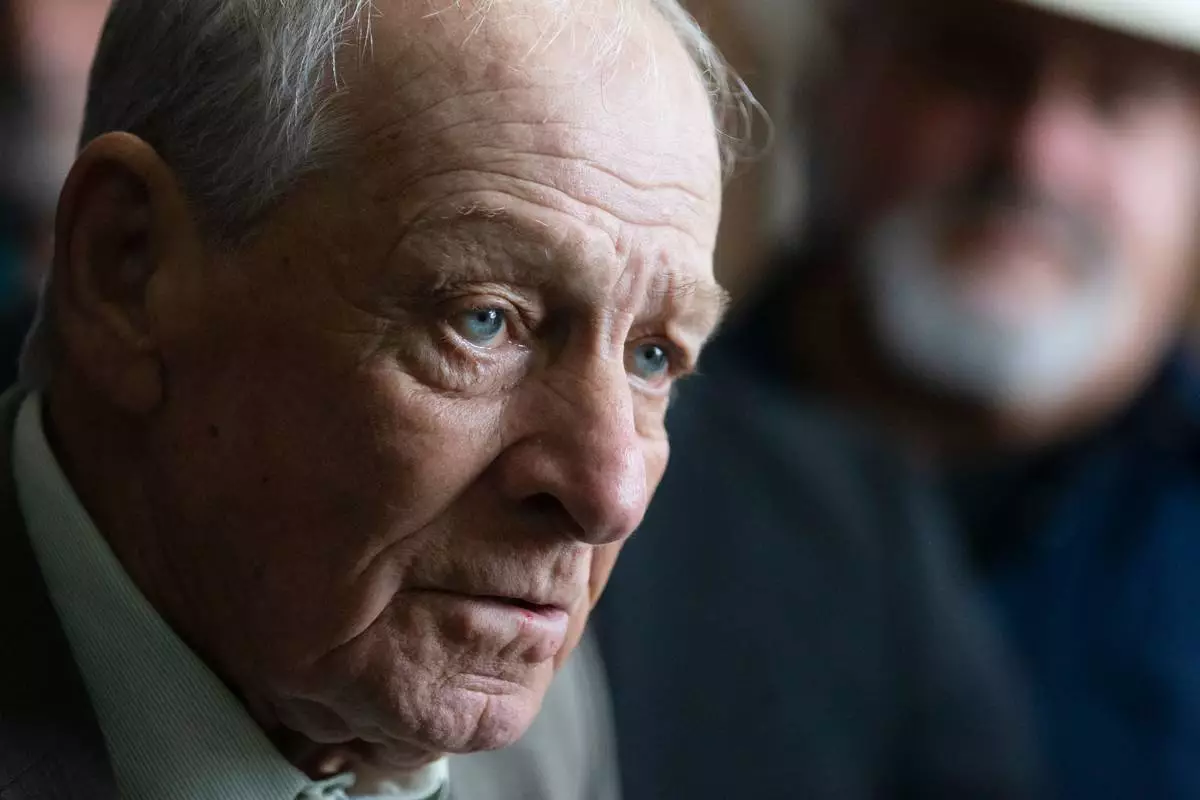
In this photo taken with a smartphone, North Carolina men's basketball head coach Michael Malone speaks during a news conference Thursday, Sept. 3, 2026, in Chapel Hill, N.C. (AP Photo/Aaron Beard)
A man convicted over a “Texas Killing Fields” death was sentenced to 20 years in prison Thursday in a rare trial related to the bodies of dozens of women found near Houston beginning in the 1970s.

James Dolphs Elmore Jr. was given the maximum sentence by a jury in Galveston County a day after they found him guilty of manslaughter in the death of 16-year-old Laura Miller. Elmore, 61, was arrested earlier this year and accused of preparing the dose of cocaine that killed Miller. Her body was found in the infamous area in 1986.

Investigators believe multiple people may be responsible for the deaths of more than 30 girls and young women, whose bodies were found in a stretch of land along Interstate 45 southeast of Houston. The “Texas Killing Fields” have inspired books, movies and a Netflix documentary.

Miller was one of four young women whose bodies were found between 1984 and 1991 in a rural field off a desolate dirt road in League City, located about 28 miles (45 kilometers) southeast of Houston.

Elmore was accused in an indictment of preparing a vial of cocaine that was administered to Miller by Clyde Hedrick, who authorities have alleged was the person responsible for the deaths of the four women and had been Elmore’s longtime friend. The district attorney’s office said in March that they had decided to seek grand jury indictments against Hedrick in the deaths, but the 72-year-old Hedrick died by suicide before the grand jury presentation.

Hedrick was convicted of manslaughter in 2014 in the death of Ellen Beason, a young woman whose body was found in 1985 after going missing the previous years. He was released in 2022 and was still on parole at the time of his death, according to the Texas Department of Criminal Justice.

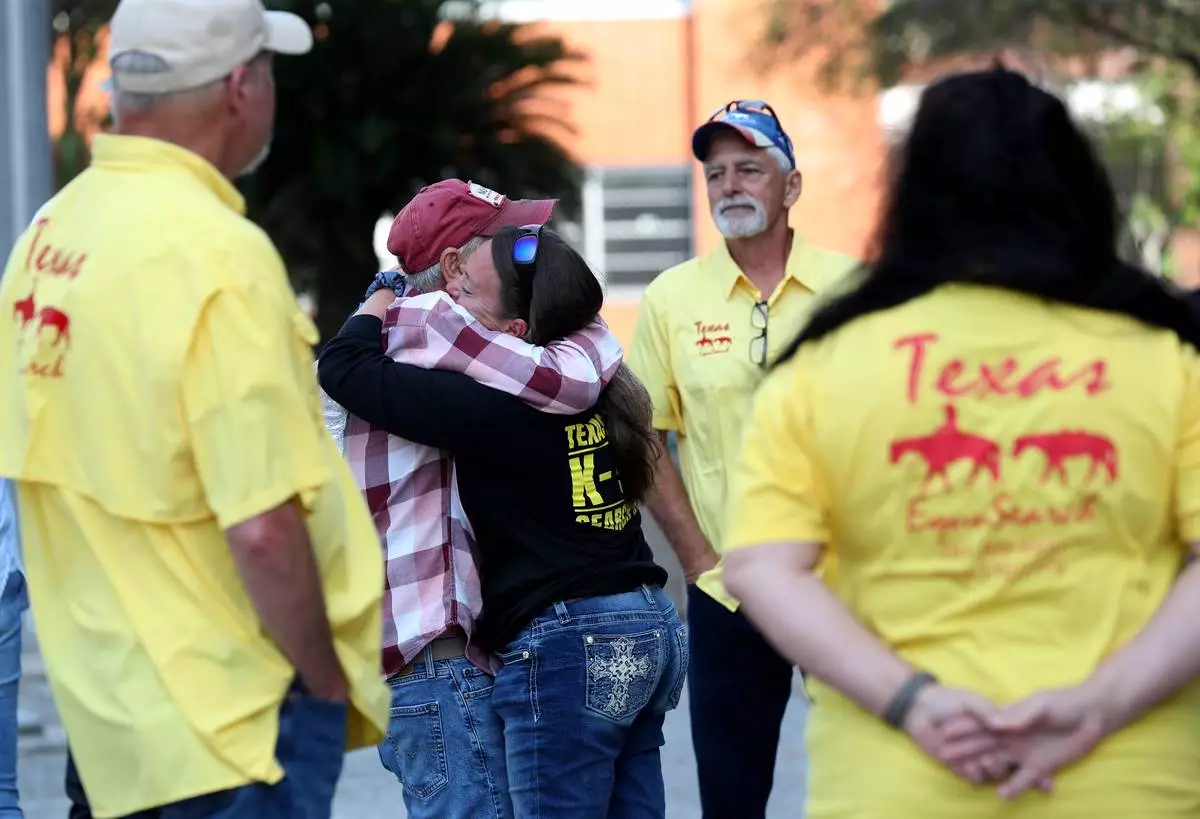
After Laura Miller's death, her father, Tim Miller, founded Texas EquuSearch, a nonprofit that helps look for missing people.

Most of the deaths associated with the “Texas Killing Fields” remain unsolved.

In 2022, William Reece, an Oklahoma death row inmate, pleaded guilty to three murders in Texas, including those of 12-year-old Laura Smither and 17-year-old Jessica Cain in Galveston County, and 20-year-old Kelli Cox, who was from Denton in North Texas but whose body was found hundreds of miles away in Brazoria County, located next to Galveston County. He received life sentences for all three murders.

Tim Miller, father of Laura Miller, speaks outside of the courtroom after James Dolphs Elmore Jr. was found guilty of manslaughter in Galveston, Texas, Wednesday, Sept. 2, 2026. (Stuart Villanueva/The Galveston County Daily News via AP, Pool)

Tim Miller, father of Laura Miller, speaks outside of the courtroom after James Dolphs Elmore Jr. was found guilty of manslaughter in Galveston, Texas, Wednesday, Sept. 2, 2026. (Stuart Villanueva/The Galveston County Daily News via AP, Pool)

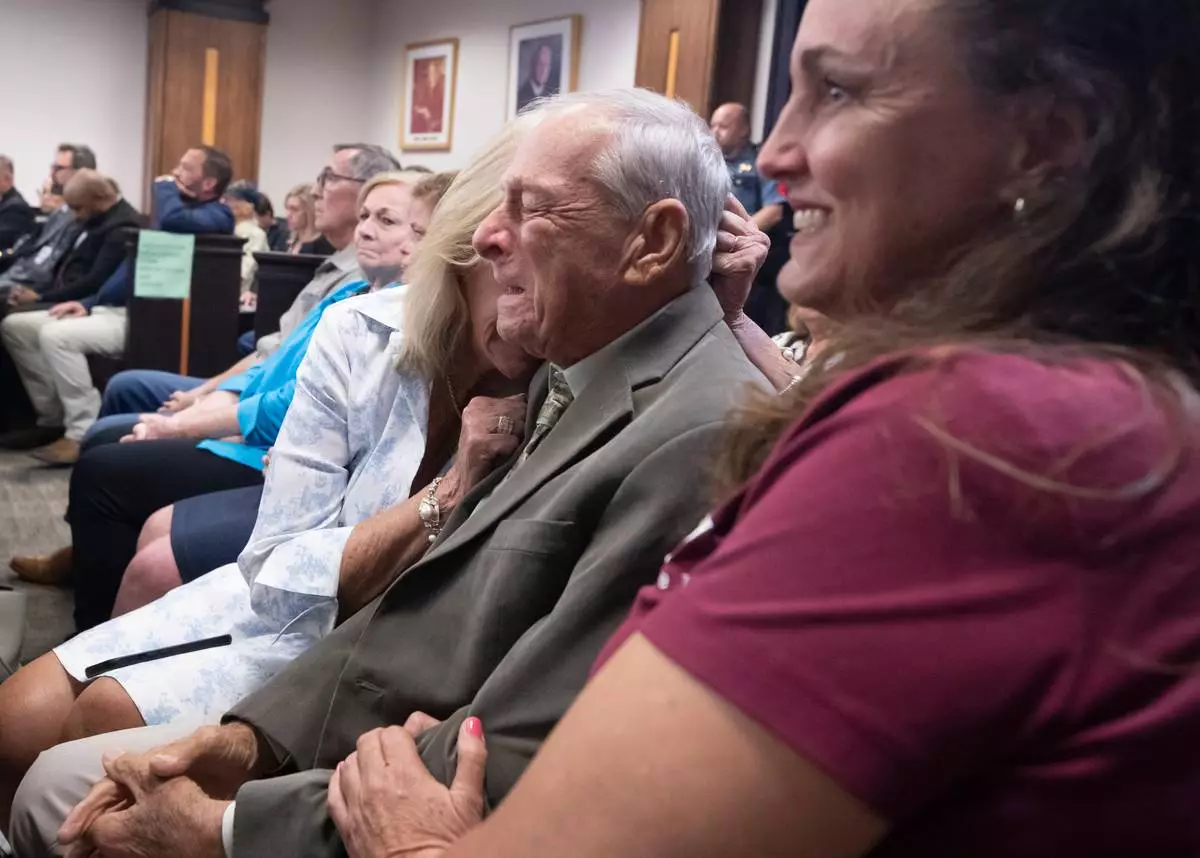
Surrounded by friends and family, Tim Miller, father of Laura Miller, reacts after James Dolphs Elmore Jr. was found guilty of manslaughter in the death of Laura Miller, Wednesday, Sept. 2, 2026, in Galveston, Texas. (Stuart Villanueva/The Galveston County Daily News via AP, Pool)

Surrounded by friends and family, Tim Miller, father of Laura Miller, reacts after James Dolphs Elmore Jr. was found guilty of manslaughter in the death of Laura Miller, Wednesday, Sept. 2, 2026, in Galveston, Texas. (Stuart Villanueva/The Galveston County Daily News via AP, Pool)

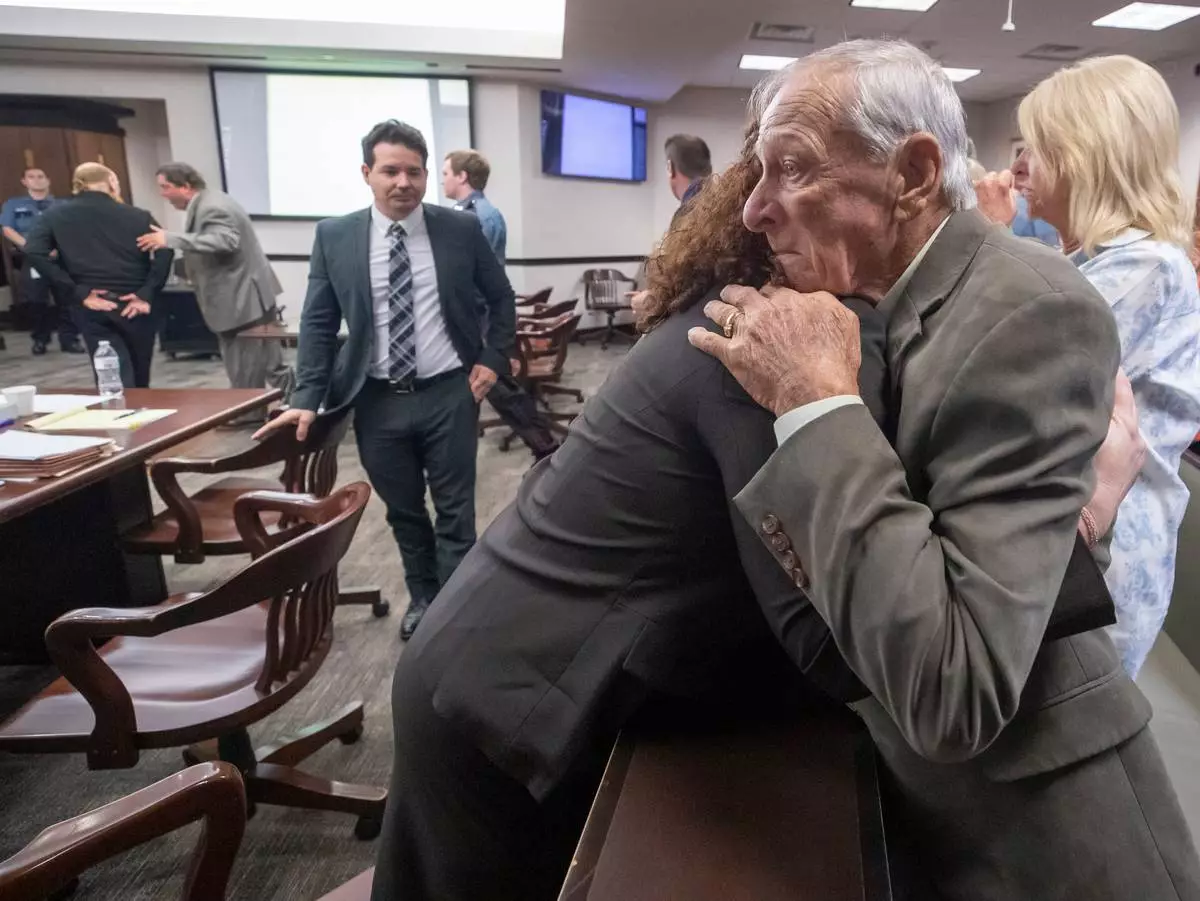
Tim Miller, father of Laura Miller, embraces Galveston County Chief Assistant District Attorney Kate Willis, as James Dolphs Elmore Jr., far left, walks in handcuffs from the courtroom after he was found guilty of manslaughter in Galveston, Texas, Wednesday, Sept. 2, 2026. (Stuart Villanueva/The Galveston County Daily News via AP, Pool)

Tim Miller, father of Laura Miller, embraces Galveston County Chief Assistant District Attorney Kate Willis, as James Dolphs Elmore Jr., far left, walks in handcuffs from the courtroom after he was found guilty of manslaughter in Galveston, Texas, Wednesday, Sept. 2, 2026. (Stuart Villanueva/The Galveston County Daily News via AP, Pool)

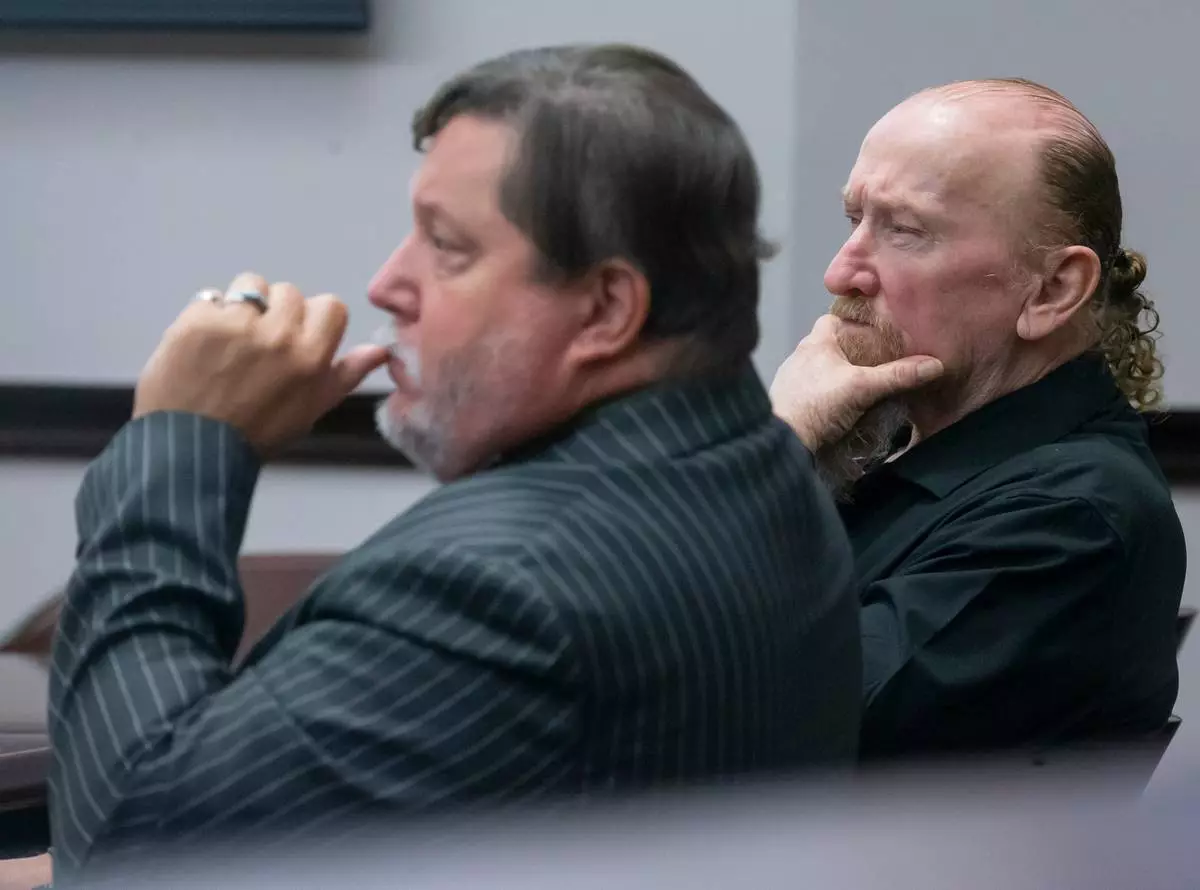
Defendant James Dolphs Elmore Jr., right, sits with his attorney, William Agnew, while listening to witness testimony during his trial in Galveston, Texas, Tuesday, Sept. 1, 2026. (Stuart Villanueva/The Galveston County Daily News via AP, Pool)

Defendant James Dolphs Elmore Jr., right, sits with his attorney, William Agnew, while listening to witness testimony during his trial in Galveston, Texas, Tuesday, Sept. 1, 2026. (Stuart Villanueva/The Galveston County Daily News via AP, Pool)

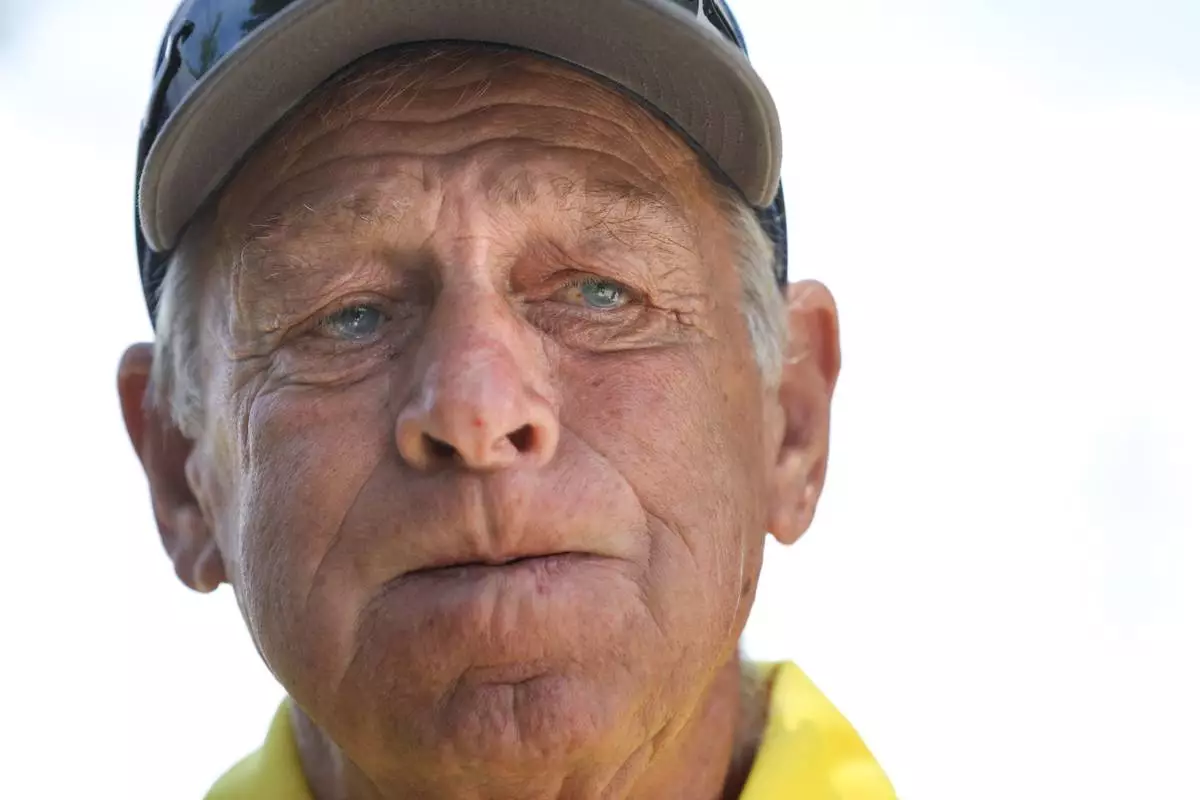
FILE - Tim Miller, director of Texas EquuSearch and whose daughter, Laura Miller, went missing in 1984, and her body was found in 1986, listens to a reporter's question during a news conference, Aug. 8, 2021, in Houston. (Jon Shapley/Houston Chronicle via AP, File)

FILE - Tim Miller, director of Texas EquuSearch and whose daughter, Laura Miller, went missing in 1984, and her body was found in 1986, listens to a reporter's question during a news conference, Aug. 8, 2021, in Houston. (Jon Shapley/Houston Chronicle via AP, File)

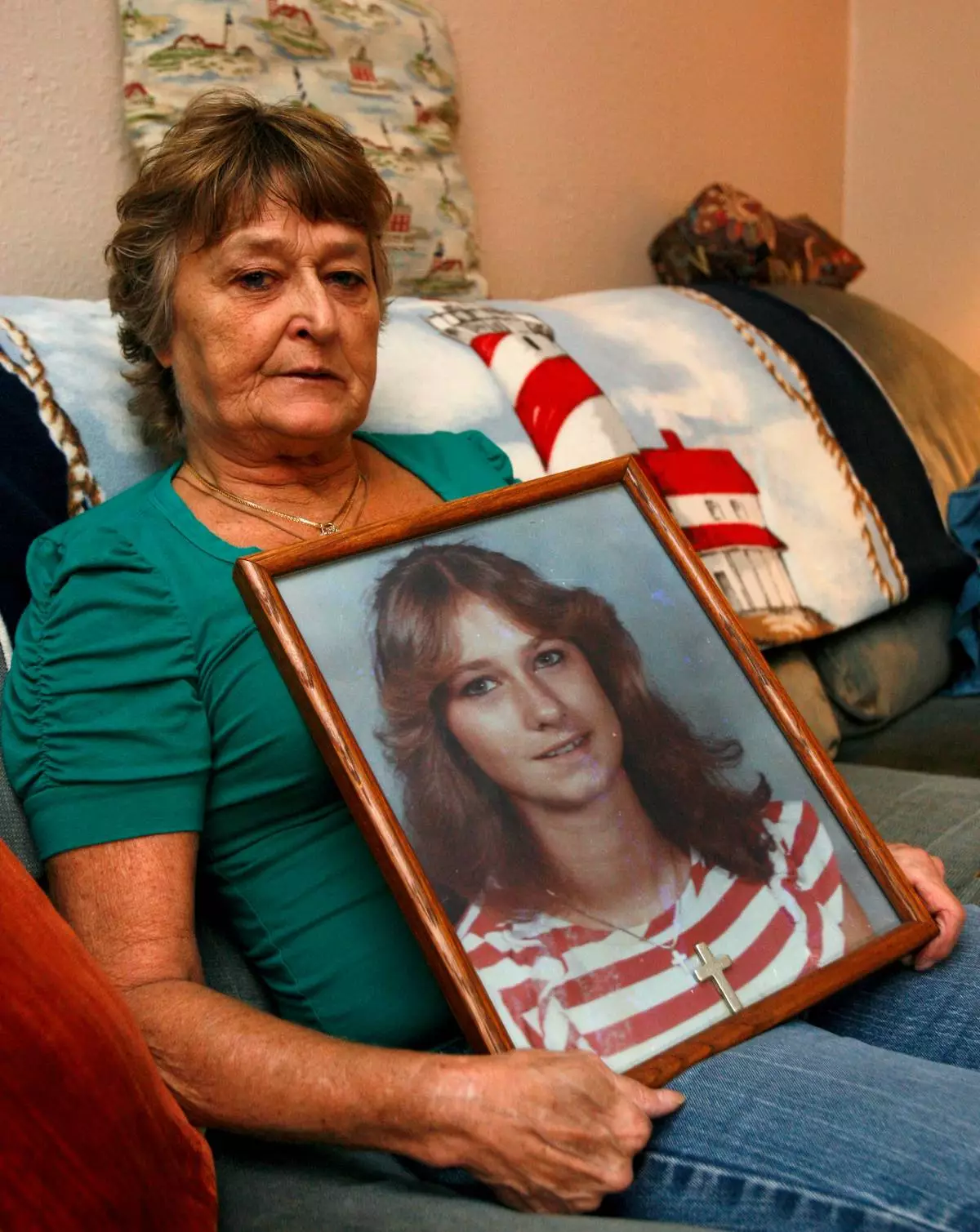
FILE - Jan Miller holds a photo of her daughter, Laura Miller, who was killed and her body found in a League City field in 1986, Oct. 18, 2011, in Texas City, Texas. (Jennifer Reynolds/The Galveston County Daily News via AP, File)

FILE - Jan Miller holds a photo of her daughter, Laura Miller, who was killed and her body found in a League City field in 1986, Oct. 18, 2011, in Texas City, Texas. (Jennifer Reynolds/The Galveston County Daily News via AP, File)

FILE - A member of Texas EquuSearch hugs Tim Miller, the group's founder whose daughter, Laura, was killed and her body found in a League City field in 1986, outside the Galveston County Courthouse in downtown Galveston, Texas, April 1, 2026. (Jennifer Reynolds /The Galveston County Daily News via AP, File)

FILE - A member of Texas EquuSearch hugs Tim Miller, the group's founder whose daughter, Laura, was killed and her body found in a League City field in 1986, outside the Galveston County Courthouse in downtown Galveston, Texas, April 1, 2026. (Jennifer Reynolds /The Galveston County Daily News via AP, File)

Recommended Articles