The Trump administration said Thursday that excavation work will start over the next two weeks on the site where it plans to build a towering, gilded arch, a project that is facing a lawsuit and that critics say will disrupt historic sightlines in Washington, D.C.
The proposed arch is one of several projects the Republican president is pursuing to leave his lasting imprint on Washington, including renaming and renovating the Kennedy Center, building a huge new White House ballroom, refurbishing the Lincoln Memorial Reflecting Pool and rebuilding a golf course in East Potomac Park that could significantly reduce the public’s access to running and biking paths.
Click to Gallery
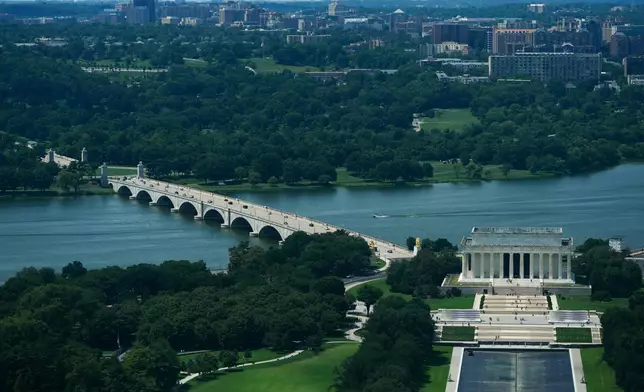
FILE - Memorial Circle, where President Donald Trump has proposed building an arch to commemorate the United States' 250th anniversary, the Arlington Memorial Bridge and the Lincoln Memorial, are seen from the Washington Monument, Aug. 17, 2026, in Washington. (AP Photo/Julia Demaree Nikhinson, File)
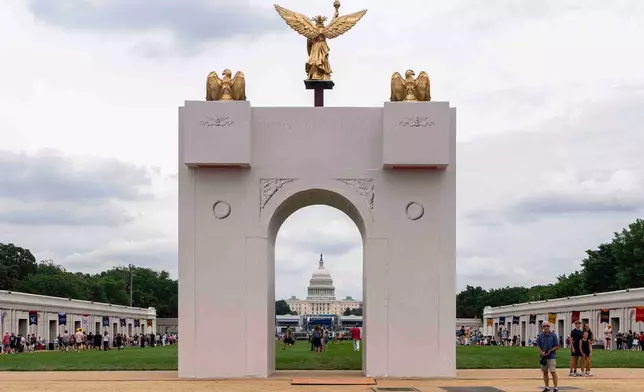
FILE - A mockup of President Donald Trump's proposed triumphal arch stands at the Great American State Fair on the National Mall, June 27, 2026, in Washington. (AP Photo/Jen Golbeck, File)
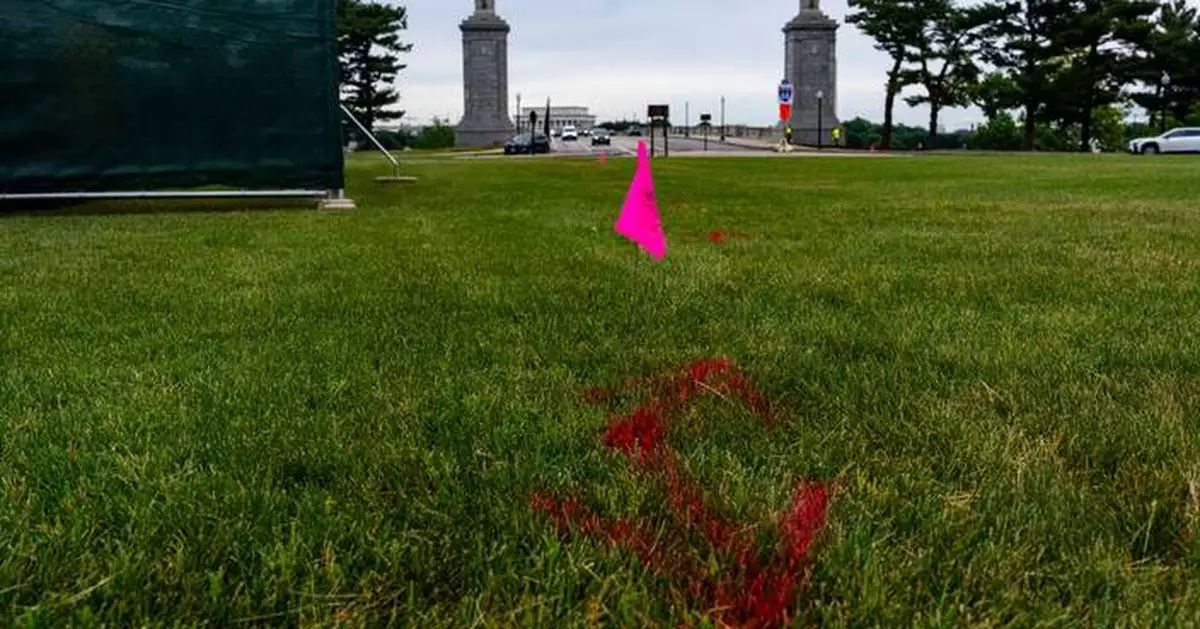
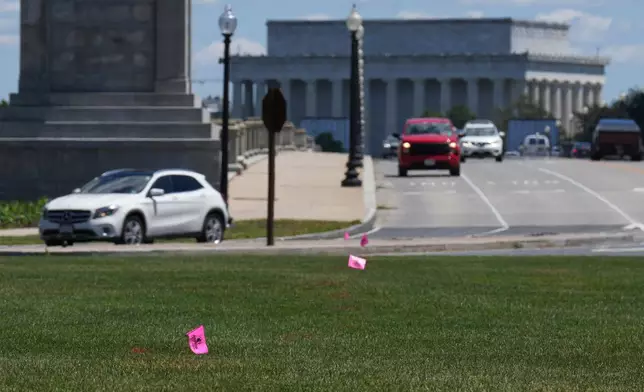
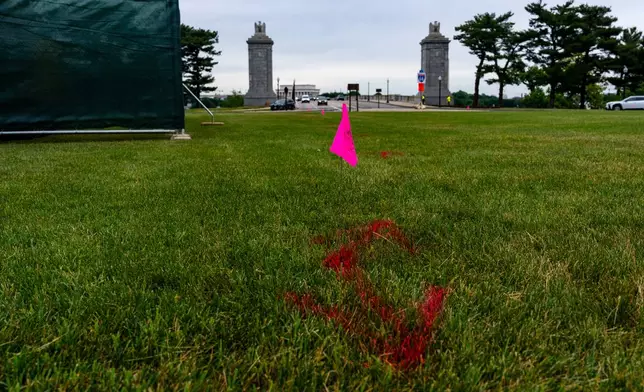
FILE - Flags placed by workers are pictured in the Memorial Circle, where President Donald Trump has proposed building an arch to commemorate the United States' 250th anniversary, Friday, May 15, 2026, in Washington. (AP Photo/Jacquelyn Martin, File)
FILE - Flags are placed as workers survey the Memorial Circle, where President Donald Trump has proposed building an arch to commemorate the United States' 250th anniversary, May 11, 2026, in Washington. (AP Photo/Alex Brandon, File)
“This will be one of the Great Pieces of American Architecture,” Interior Secretary Doug Burgum wrote on X, “befitting the most powerful Capital in the World.”
Along with the announcement on X, Burgum posted artistic mockups of the planned 250-foot-tall (76-meter) memorial arch, which will stand between the Lincoln Memorial and Arlington National Cemetery.
The renderings showed a towering, white arch with gold detail, stamped with “ONE NATION UNDER GOD." On its top is a Lady Liberty-like gold figure with wings and a torch, as well as gold eagles, their wings spread outward.
A National Park Service report released Friday backed the project, though it said there would be adverse effects to the sightlines between a host of iconic landmarks, disrupting the historical significance of dozens of nearby sites.
Many of Washington’s monuments, buildings and sites have been carefully planned over decades to reflect significant moments in the nation’s history and to evoke symbolism through sightlines that connect them to other landmarks.
A lawsuit filed by three veterans and an architectural historian argues “congressional authorization is necessary and lacking for this project,” said Nicolas Sansone, an attorney with Public Citizen Litigation Group representing the plaintiffs.
"We believe that construction cannot and should not proceed apace, and we are prepared to inform the court that it needs to, at this juncture, needs to step in," he said. Sansone did not specify what their next court filing would be, but he added that he's “very confident” that they'll find success.
Burgum, in a series of posts on X, defended the arch's construction on historical grounds, arguing that the idea for a monument had been bouncing around for more than a century, citing old reports of congressional attempts at and discussions of a monument in the circle.
“Despite Congress’s intent, the site became and remains today a barren traffic circle lacking any monumental treatment and significant historic value,” he wrote, adding that over 70 cities worldwide had “beautiful arches” but now the U.S. will have the “most spectacular and beautiful arch of them all!”
The court case is ongoing, with the Department of Justice filing a new document Thursday arguing that the lawsuit should be thrown out.
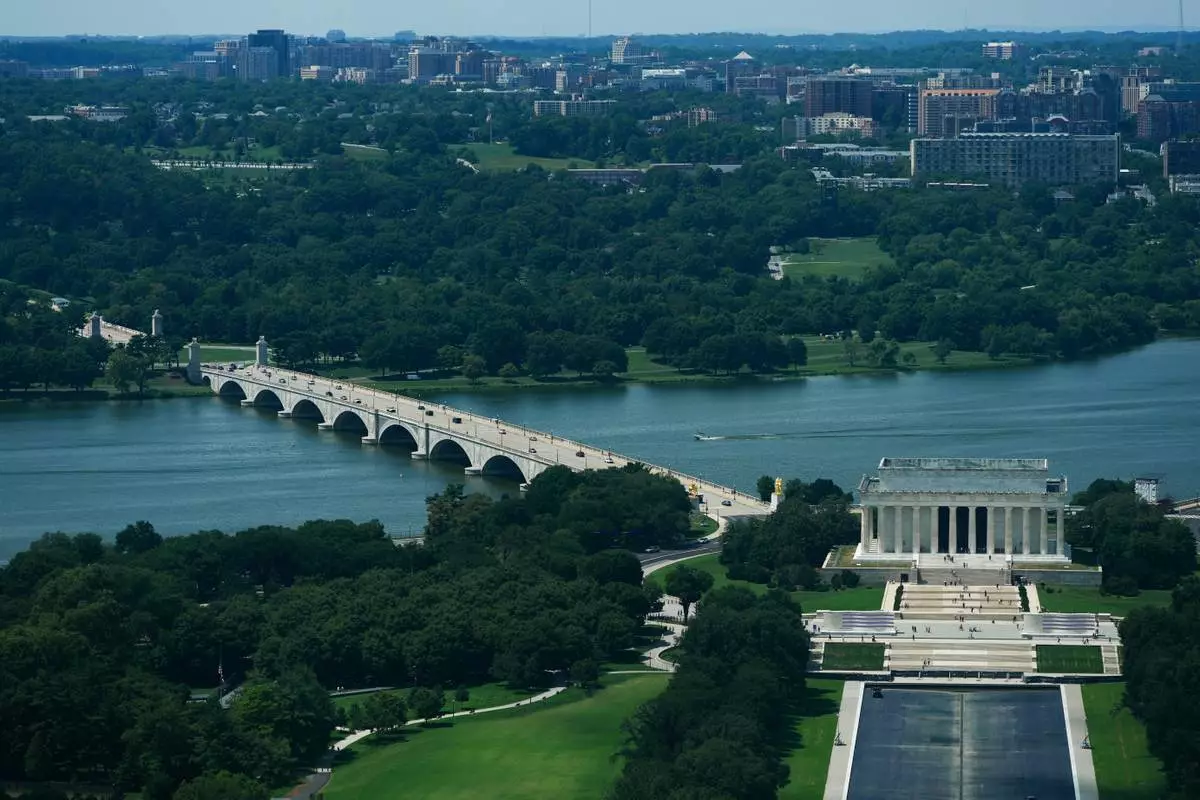
FILE - Memorial Circle, where President Donald Trump has proposed building an arch to commemorate the United States' 250th anniversary, the Arlington Memorial Bridge and the Lincoln Memorial, are seen from the Washington Monument, Aug. 17, 2026, in Washington. (AP Photo/Julia Demaree Nikhinson, File)
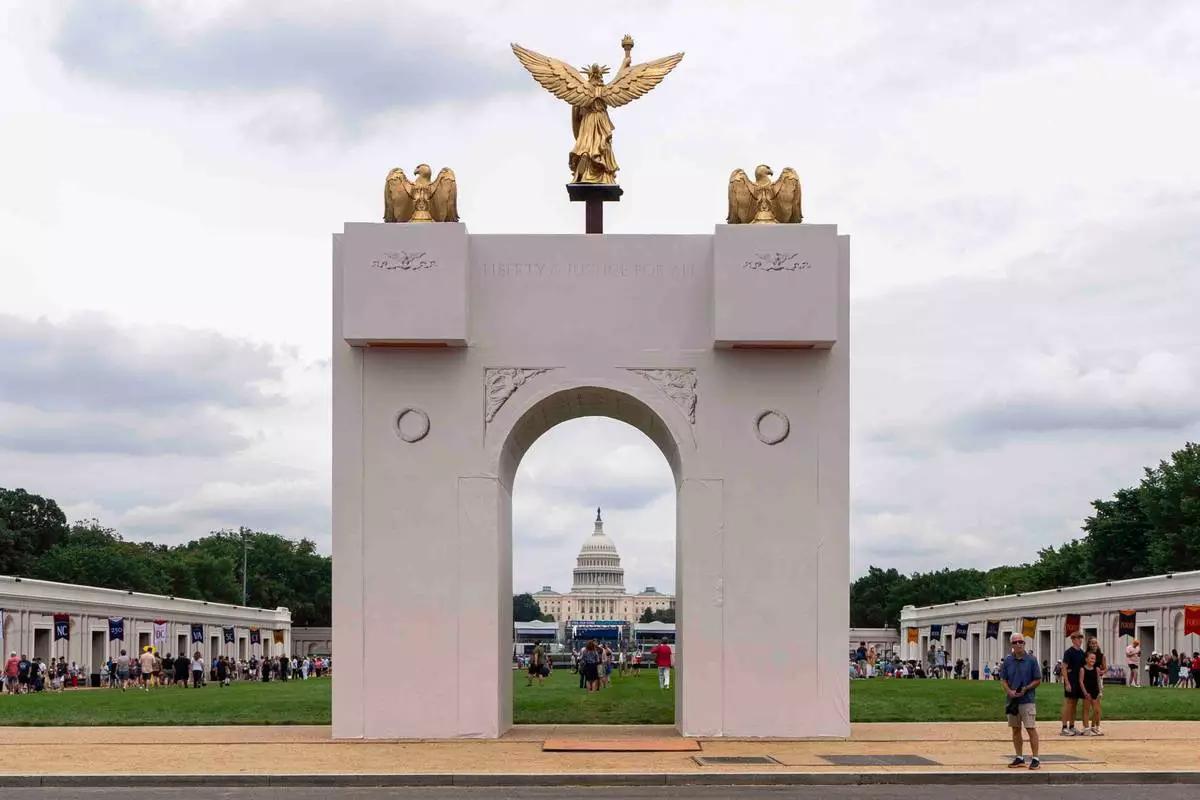
FILE - A mockup of President Donald Trump's proposed triumphal arch stands at the Great American State Fair on the National Mall, June 27, 2026, in Washington. (AP Photo/Jen Golbeck, File)
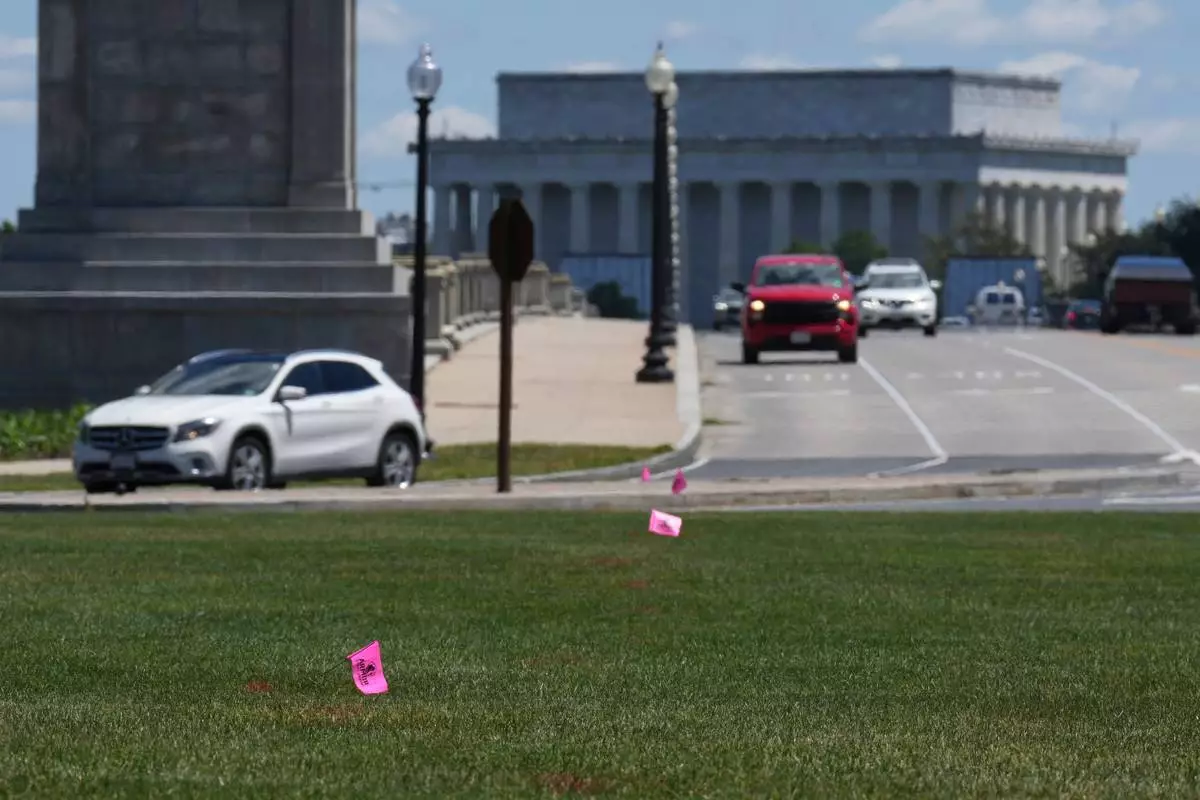
FILE - Flags placed by workers are pictured in the Memorial Circle, where President Donald Trump has proposed building an arch to commemorate the United States' 250th anniversary, Friday, May 15, 2026, in Washington. (AP Photo/Jacquelyn Martin, File)
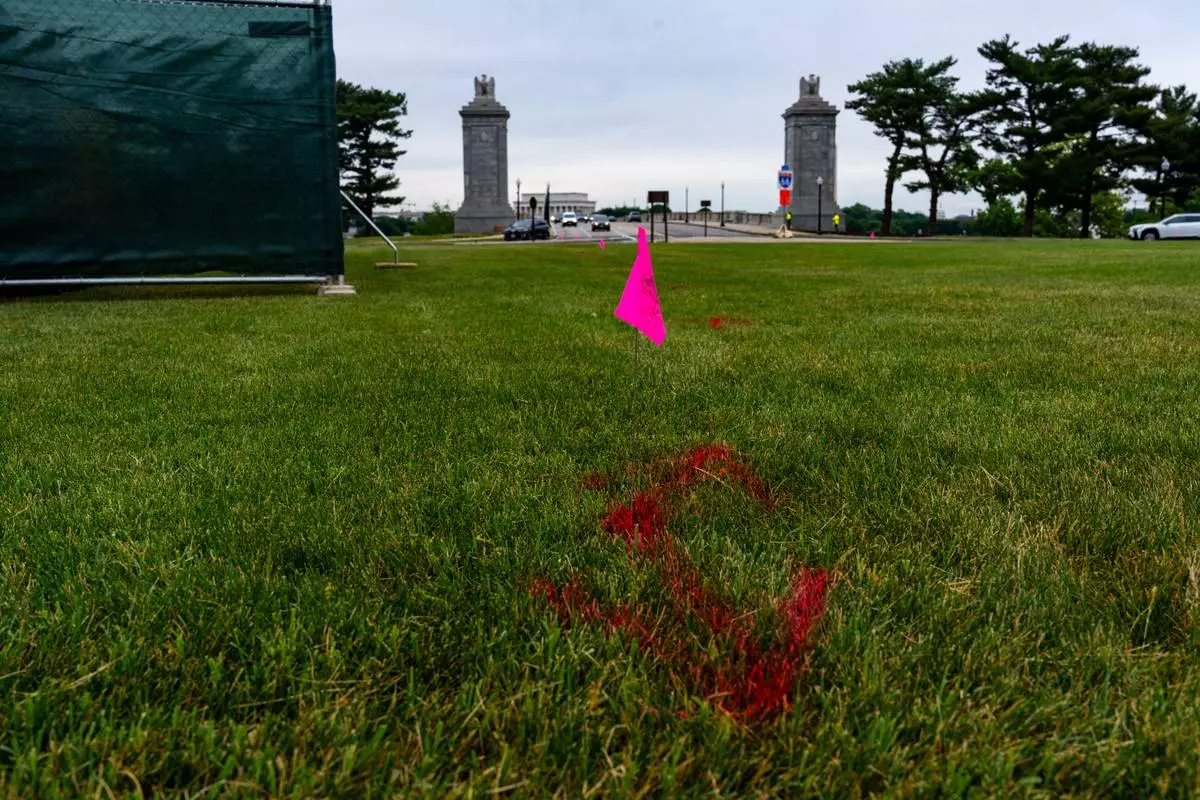
FILE - Flags are placed as workers survey the Memorial Circle, where President Donald Trump has proposed building an arch to commemorate the United States' 250th anniversary, May 11, 2026, in Washington. (AP Photo/Alex Brandon, File)
BOSTON (AP) — The Trump administration on Thursday asked the Supreme Court to reject an order by a federal judge that halts it from implementing a new rule regulating mail ballots, hours after being unable to tell that judge whether the computer system that would govern the entire project was operational yet.
The administration filed its appeal the afternoon before mail ballots were scheduled to be sent out by North Carolina, which on Friday kicks off a wave of states shipping ballots out for the rapidly approaching midterm election. Its appeal was part of a flurry of last-minute litigation as the federal government struggles to implement President Donald Trump's restrictions on mail ballots before the midterm elections in November, and came even as legal wrangling over President Donald Trump’s executive order continued in lower courts.
The high court's conservative majority previously allowed the president’s plan to move ahead, but they have not decided whether it is legal.
Under Trump’s executive order, the U.S. Postal Service could refuse to deliver ballots from states that do not follow a uniform envelope style and submit lists of eligible voters to an online portal that was apparently still inactive Thursday.
During a hearing in Boston, U.S. District Court Judge Indira Talwani repeatedly questioned Department of Justice attorney Michael Velchik about whether the Postal Service could actually implement Trump's plan from an executive order he issued last spring. The key piece is the online portal, which would track tens of millions of mail ballots. States would be required to upload their list of mail voters to the portal to have ballots delivered, and if the data there didn't match what was on the envelopes, the ballots would not be sent.
“I don’t even have a declaration from the Postal Service: ‘This is how it will work.’ I don’t have it. I have nothing,” Talwani said, adding later that it felt like the government was running an “experiment” to see if the system would work in the upcoming election.
“As you sit here today, you can’t tell me the government has a program ready to go?” Talwani asked.
Velchik repeated that the Postal Service would “fully implement the rule” that it published last month, triggering the latest round of litigation. He argued the main issue is whether Talwani has the legal power to stop it.
“The $64,000 question is, is this authorized by the statute?” Velchik said.
Talwani is considering whether to extend her temporary order barring the Postal Service from requiring use of the system through Sept. 10. The first state to send out all its mail ballots, North Carolina, is scheduled to begin shipping them out Friday, with other states quickly following.
Talwani has been here before. In June, she prohibited the administration from implementing Trump's executive order for the November election, ruling the changes came too close to voting for the federal government to embark on such a project.
But the Supreme Court late last month ruled that Talwani's order was premature because the Postal Service had not yet published regulations governing how it would apply Trump's order. The agency did so just before the high court ruling came down, prompting Democrats and voting rights groups to swiftly re-file their lawsuits.
They counter that the president has no authority to set election rules, which is a power designated by the Constitution to the states and, in some cases, to Congress.
They won an initial victory with Talwani's 14-day restraining order, which the administration has already appealed.
Trump has long opposed mail voting and falsely blamed it for his 2020 election loss to Democrat Joe Biden, even though he often uses that method to cast his own ballot.
Election officials say there's simply no way they can comply with the Postal Service directives, which could require a complete overhaul of their operations. Before it delivers mail ballots for any state, the Postal Service would have to approve the design of the envelopes that contain them and have the state upload a list of voters receiving them to an online portal.
Some ballots have already gone out. A few municipalities in Wisconsin opted to send mail ballots to voters earlier this week, but Friday marks the full kickoff of voting as North Carolina starts shipping its mail ballots to all voters who requested them.
The administration has contended the changes are relatively minor and legal. But the portal was still not active this week, and most election offices have already printed their envelopes and ballots.
Velchik told the judge that the federal government is offering states the choice to opt into the system, but the Postal Service has yet to identify a single state that has done so. None of the 12 states that intervened in the lawsuit to argue the Trump administration has the right to require the program have announced that they have voluntarily opted into it.
Talwani scolded Missouri Solicitor General Lou Capozzi for arguing on behalf of the project.
“You want the voters in your states to be disenfranchised,” Talwani said. “I don't understand the interest.”
Capozzi said that was misinformation: “There is no risk that people would be disenfranchised.”
A whistleblower report made public this week warns that the postal system's requirements could lead to millions of mail ballots never being sent. The new rule requires all ballots to be physically brought to post offices before being mailed to voters. But if a single one's bar code registers an error, the whole batch gets thrown out, even if it contains tens of thousands of legitimate ballots.
Riccardi reported from Denver.
FILE - Delivery vans are parked during a protest staged as part of a countrywide National Day of Action Tuesday, July 28, 2026, outside the main United States Postal Service headquarters in northeast Denver. (AP Photo/David Zalubowski, File)