STATE COLLEGE, Pa. (AP) — Lawyers for former Penn State assistant football coach Jerry Sandusky asked Thursday to cancel a court date for a hearing over a claim that an accuser wants to recant allegations that Sandusky sexually abused him years ago.
The hearing was scheduled for Sept. 8 in the latest bid by Sandusky's lawyers to secure a new trial for him. The judge in the case scheduled a status conference Friday to discuss it with defense lawyers, who suggested in a court filing that they want first to appeal the judge's refusal to hear other claims besides the accuser's recantation.
Sandusky, 82, has been serving a decades-long prison sentence since he was convicted of 45 counts of sexual abuse in 2012, after eight young men testified about what happened to them as boys. He has repeatedly lost efforts to get a new trial.
The Pennsylvania Office of Attorney General has said that the supposed recantation is “highly suspect.”
The accuser, identified in court documents as R.R., said he was coached extensively by authorities.
“I was told — both directly and indirectly — that trauma may have fragmented my memory, and that I could safely affirm details I did not fully recall. I was assured this was common and even expected,” R.R. said in an affidavit filed by Sandusky’s attorneys.
R.R.’s allegations were “based on suggestive leading questioning, prosecutorial coercion and influence, confirmatory bias and memory manipulation, which permeated throughout each of the accusers as well,” the defense said.
Sandusky was the defensive coordinator at one of the country’s top football programs under Hall of Fame head coach Joe Paterno. The scandal led to Paterno’s firing, and the university paid more than $100 million to people who said they were abused by Sandusky.
Authorities said he found and groomed boys at The Second Mile, a charity he founded for at-risk youth. Sandusky has repeatedly declared his innocence.
R.R., who was 25 years old at trial, testified that when he was 11, Sandusky sexually abused him in the coach’s basement in 1998, a transcript shows.
“He told me that if I told anybody that I would never see my family again,” said R.R., who was in foster care at the time.
Sandusky later apologized and said “he loved me,” R.R. testified.
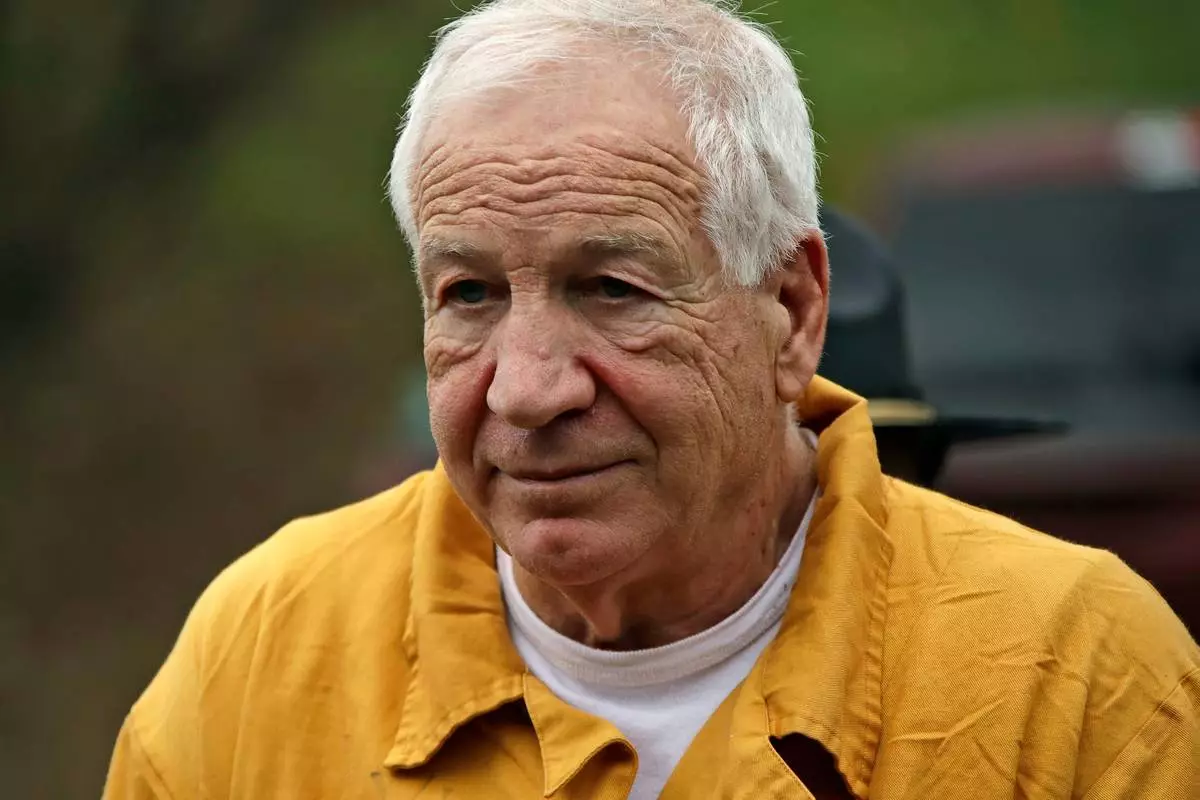
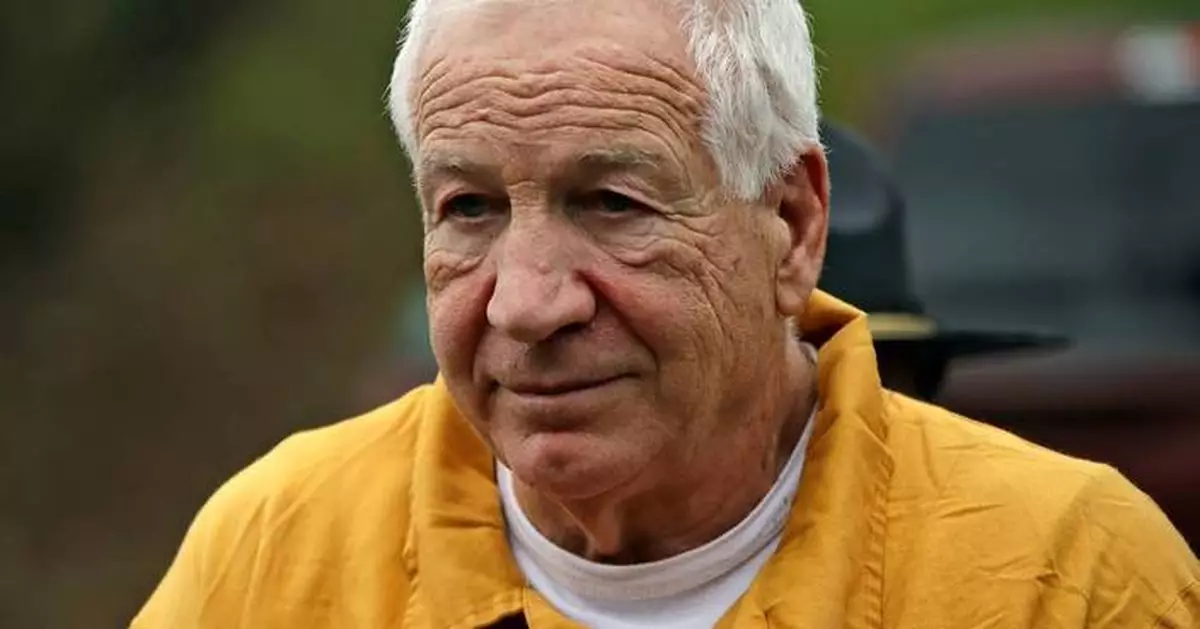
FILE - Former Penn State University assistant football coach Jerry Sandusky arrives at the Centre County Courthouse, Friday, Nov. 22, 2019, in Bellefonte, Pa. (AP Photo/Gene J. Puskar, File)
BOSTON (AP) — The Trump administration on Thursday asked the Supreme Court to reject an order by a federal judge that halts it from implementing a new rule regulating mail ballots, hours after being unable to tell that judge whether the computer system that would govern the entire project was operational yet.
The administration filed its appeal the afternoon before mail ballots were scheduled to be sent out by North Carolina, which on Friday kicks off a wave of states shipping ballots out for the rapidly approaching midterm election. Its appeal was part of a flurry of last-minute litigation as the federal government struggles to implement President Donald Trump's restrictions on mail ballots before the midterm elections in November, and came even as legal wrangling over Trump’s executive order continued in lower courts.
The high court's conservative majority previously allowed the president’s plan to move ahead, but they have not decided whether it is legal.
Under Trump’s executive order, the U.S. Postal Service could refuse to deliver ballots from states that do not follow a uniform envelope style and submit lists of eligible voters to an online portal that was apparently still inactive Thursday.
During a hearing in Boston, U.S. District Court Judge Indira Talwani repeatedly questioned Department of Justice attorney Michael Velchik about whether the Postal Service could actually implement Trump's plan from an executive order he issued last spring. The key piece is the online portal, which would track tens of millions of mail ballots. States would be required to upload their list of mail voters to the portal to have ballots delivered, and if the data there didn't match what was on the envelopes, the ballots would not be sent.
“I don’t even have a declaration from the Postal Service: ‘This is how it will work.’ I don’t have it. I have nothing,” Talwani said, adding later that it felt like the government was running an “experiment” to see if the system would work in the upcoming election.
“As you sit here today, you can’t tell me the government has a program ready to go?” Talwani asked.
Velchik repeated that the Postal Service would “fully implement the rule” that it published last month, triggering the latest round of litigation. He argued the main issue is whether Talwani has the legal power to stop it.
“The $64,000 question is, is this authorized by the statute?” Velchik said.
Talwani is considering whether to extend her temporary order barring the Postal Service from requiring use of the system through Sept. 10. The first state to send out all its mail ballots, North Carolina, is scheduled to begin shipping them out Friday, with other states quickly following.
Talwani has been here before. In June, she prohibited the administration from implementing Trump's executive order for the November election, ruling the changes came too close to voting for the federal government to embark on such a project.
But the Supreme Court late last month ruled that Talwani's order was premature because the Postal Service had not yet published regulations governing how it would apply Trump's order. The agency did so just before the high court ruling came down, prompting Democrats and voting rights groups to swiftly re-file their lawsuits.
They counter that the president has no authority to set election rules, which is a power designated by the Constitution to the states and, in some cases, to Congress.
They won an initial victory with Talwani's 14-day restraining order. In a sign of the pressures on the administration, its lawyers already appealed that order to the 1st Circuit Court of Appeals in Boston, but they added the Supreme Court appeal Thursday and urged the top justices to act quickly.
Illustrating the challenge, Justice Ketanji Brown Jackson, the high court justice designated to deal with appeals from the region, set a Sept. 8 deadline for the plaintiffs to file their arguments, likely pushing any decision into the middle of next week at the earliest.
Trump has long opposed mail voting and falsely blamed it for his 2020 election loss to Democrat Joe Biden, even though he often uses that method to cast his own ballot.
Election officials say there's simply no way they can comply with the Postal Service directives, which could require a complete overhaul of their operations. Before it delivers mail ballots for any state, the Postal Service would have to approve the design of the envelopes that contain them and have the state upload a list of voters receiving them to an online portal.
Some ballots have already gone out. A few municipalities in Wisconsin opted to send mail ballots to voters earlier this week, but Friday marks the full kickoff of voting as North Carolina starts shipping its mail ballots to all voters who requested them.
The administration has contended the changes are relatively minor and legal.
“While the States have primary authority to regulate the manner of elections, they cannot choose to use the federal mails to carry out their elections but then insist that their election-related mail is somehow exempt from the Postal Service’s rulemaking authority, conferred by Congress, to regulate envelope design and addressee information,” Trump's solicitor general, John Sauer, wrote in the appeal.
Still, the hearing before Talwani focused more on practicalities — especially that the portal was still not active, while most election offices have already printed their envelopes and ballots.
Velchik told the judge that the federal government is offering states the choice to opt into the system, but the Postal Service has yet to identify a single state that has done so. None of the 12 states that intervened in the lawsuit to argue the Trump administration has the right to require the program have announced that they have voluntarily opted into it.
Talwani scolded Missouri Solicitor General Lou Capozzi for arguing on behalf of the project.
“You want the voters in your states to be disenfranchised,” Talwani said. “I don't understand the interest.”
Capozzi said that was misinformation: “There is no risk that people would be disenfranchised.”
A whistleblower report made public this week warns that the postal system's requirements could lead to millions of mail ballots never being sent. The new rule requires all ballots to be physically brought to post offices before being mailed to voters. But if a single one's bar code registers an error, the whole batch gets thrown out, even if it contains tens of thousands of legitimate ballots.
Riccardi reported from Denver.
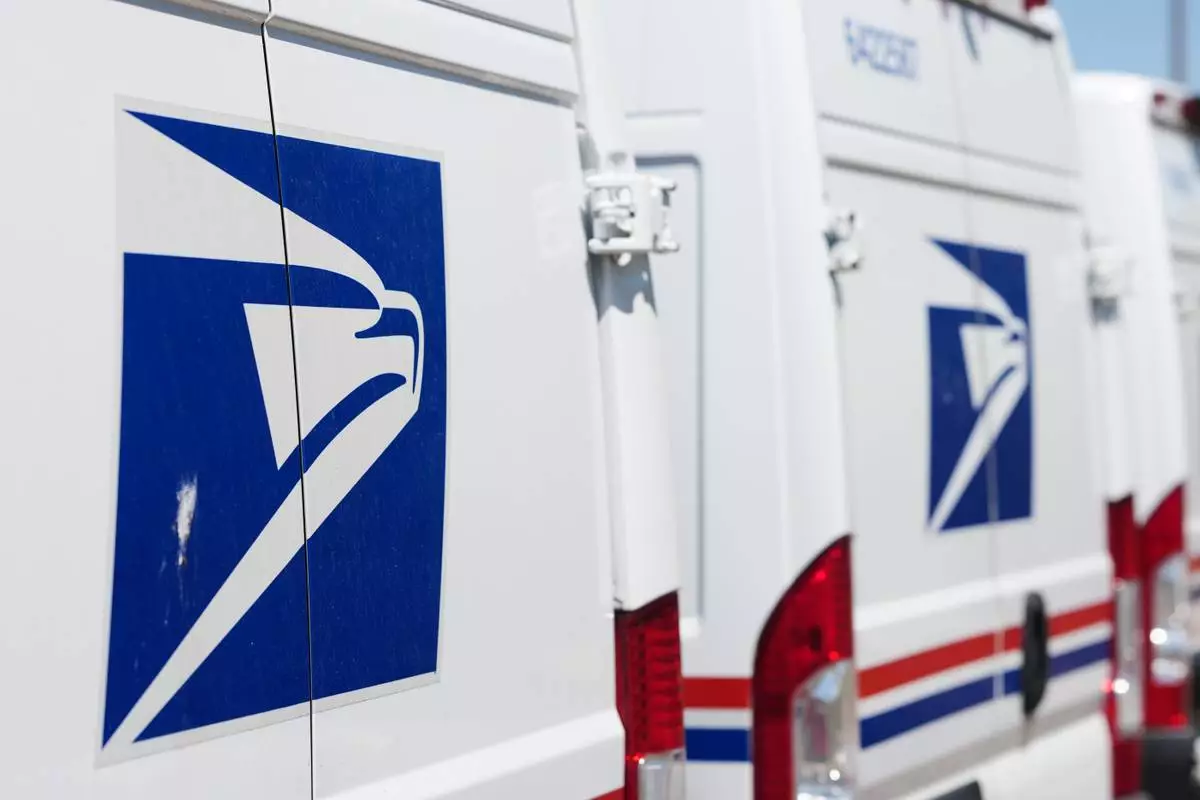
FILE - Delivery vans are parked during a protest staged as part of a countrywide National Day of Action Tuesday, July 28, 2026, outside the main United States Postal Service headquarters in northeast Denver. (AP Photo/David Zalubowski, File)