WASHINGTON (AP) — The Trump administration is proposing a new rule that would strip private schools and colleges of their tax-exempt status if they provide targeted help to students based on their race, a significant escalation in the White House's campaign to eradicate diversity programs directed at Black, Hispanic and other minority students.
The Treasury Department proposed the change Thursday in a new regulation that, if made final, would kick in after May 2027. The rule is broadly aimed at ending any policies or programs that help students because of their race, and it specifically says such benefits in admissions, scholarships and facilities “would be incompatible” with the rule.
It’s the latest attempt by the Trump administration to pressure schools and colleges to weed out diversity, equity and inclusion policies that had become common before President Donald Trump returned to the White House with a promise to end them. Trump officials have used Civil Rights-era laws to unwind the policies, saying they discriminate against white and Asian American students.
Higher education leaders criticized the proposal.
“The administration’s latest rules changes are its most blatant attack to keep working class Americans and people of color from accessing higher education and a better life,” Mike Gavin, Alliance for Higher Education president and CEO, said in a statement. “By claiming that efforts to increase fair opportunity for all students are discriminatory, the administration is trying to gaslight the American people into believing that up is down and black is white.”
Scores of universities have shut down or rebranded their DEI offices and ended scholarships and clubs designed for minority students under pressure from the White House. In a statement announcing the proposal, Treasury Secretary Scott Bessent suggested that even policies that are no longer under the banner of DEI could be targeted.
“Schools rebranding race-based preferences as equitable, inclusive, or diversity-enhancing does not change their discriminatory nature,” Bessent said.
The Treasury Department and IRS estimate that up to 18,000 private schools, colleges and other education institutions could be affected by the proposal.
America’s private universities have been exempt from many taxes for more than a century because they provide a public good. The benefit saves many universities millions of dollars every year.
Trump has seen the tax-exempt status as a lever to pull in his pressure campaign against colleges that he describes as hotbeds of “wokeness.” He threatened to cut the benefit for Harvard University last year during his battle with the nation’s oldest college. In a response, Harvard officials said there was no legal basis for doing so and argued it would force cuts to financial aid and crucial medical research.
It’s incredibly rare for the federal government to go after a college’s tax-exempt status, but there’s one notable precedent. Bob Jones University, a small Christian school in South Carolina, lost the benefit in the 1970s over a ban on interracial dating and marriage on campus. The Supreme Court upheld the IRS’s decision to deny the school its exemption. The school has since ended the ban and regained tax-exempt status in 2017.
Laws forbid the IRS from targeting individuals and organizations for ideological reasons, and federal officials are not allowed to direct IRS investigations.
To maintain nonprofit status, which allows donations to be tax-deductible, organizations must follow IRS rules on lobbying, political campaign activity and annual reporting requirements, as well as other obligations.
The Trump administration describes the new proposal as a move toward restoring merit in the nation’s education systems.
Marjorie Hass, president of the Council of Independent Colleges, said the change would most likely impact donations, which are often earmarked for scholarships.
The uncertainty around the proposal also will create challenges for schools, said Tim Powers, a vice president of the National Association of Independent Colleges and Universities.
“Our institutions are committed to complying with applicable civil rights laws and maintaining safe and supportive campuses free from discrimination,” Powers said. “However, the proposed rule may create new compliance burdens and legal uncertainties for institutions of higher education that are already operating in line with existing nondiscrimination rules.”
The Justice Department has separately opened investigations into several medical schools that it accuses of favoring Black and Hispanic students in admissions. Trump officials say any such favoritism violates Title IV of the Civil Rights Act of 1964, a federal law that forbids discrimination in education and was created to fight segregation and its impact.
A statement from IRS Chief Executive Officer Frank J. Bisignano said private schools that promote discriminatory practices will no longer be exempt from taxes.
“Today’s proposed regulations put institutions on notice and schools that continue to engage in racial discrimination should expect to lose that status,” he said.
Associated Press Education Writers Annie Ma and Heather Hollingsworth contributed to this report.
The Associated Press’ education coverage receives financial support from multiple private foundations. AP is solely responsible for all content. Find AP’s standards for working with philanthropies, a list of supporters and funded coverage areas at AP.org.
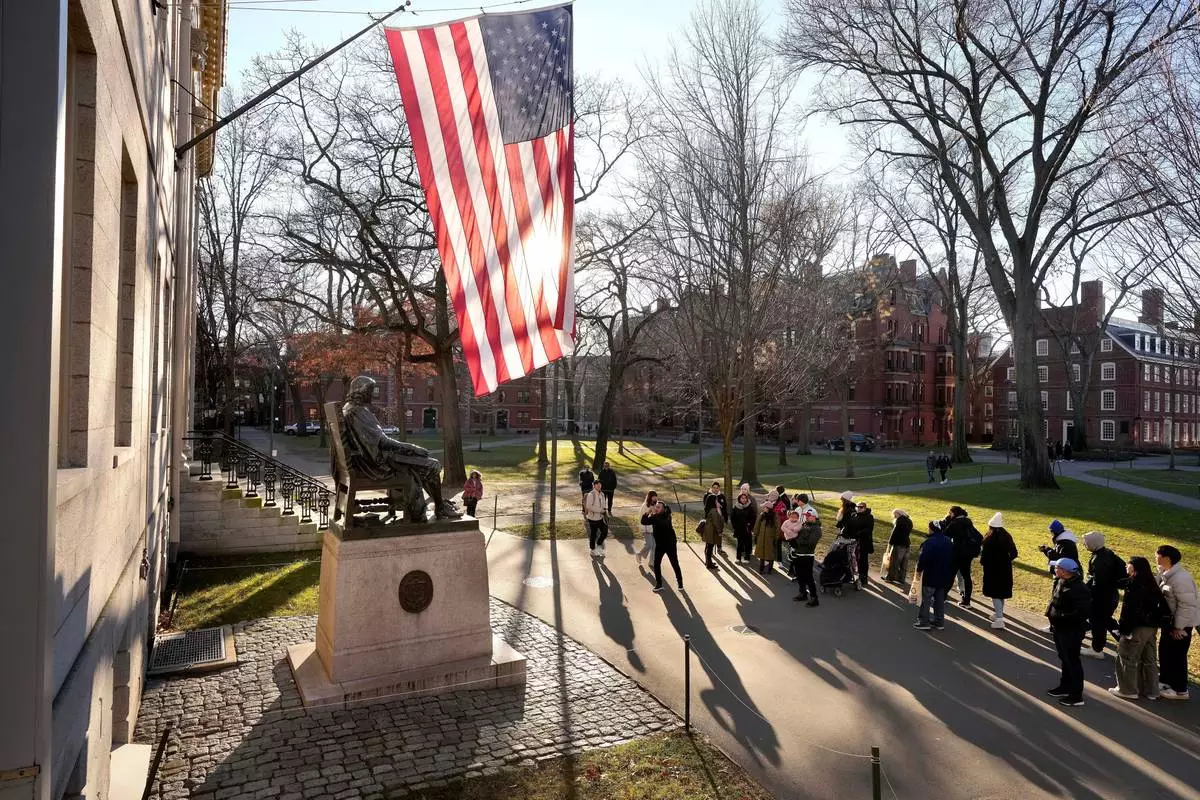
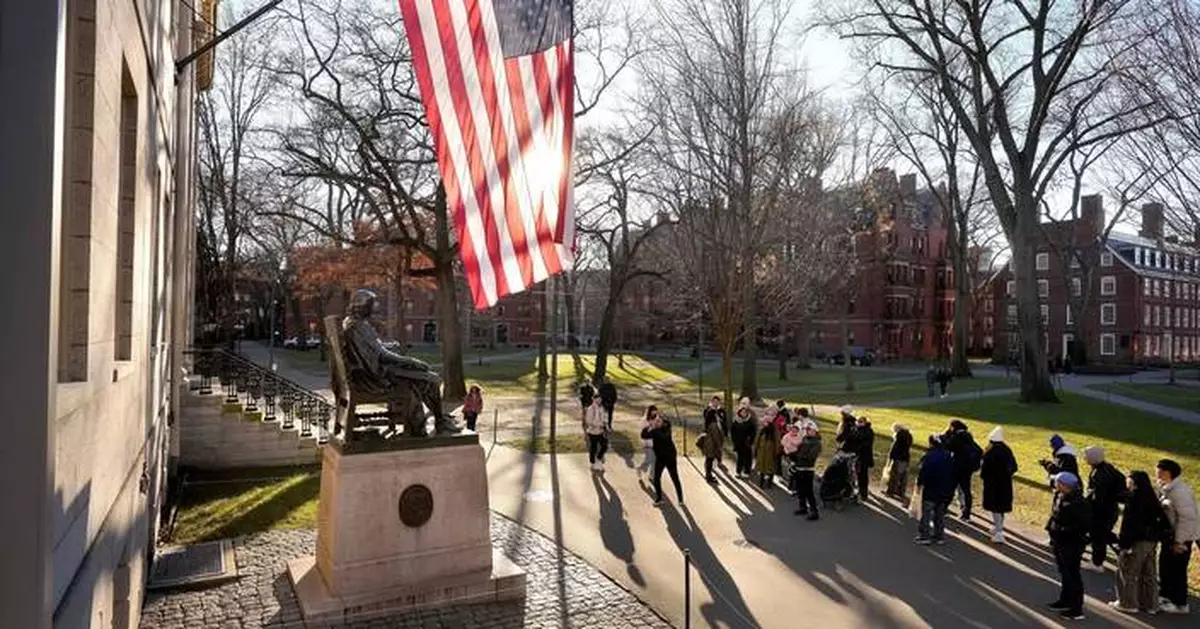
FILE - People take photos near a John Harvard statue, left, on the Harvard University campus, Jan. 2, 2024, in Cambridge, Mass. (AP Photo/Steven Senne, File)
MADRID (AP) — A day after tens of thousands of Spaniards protested the government’s handling of the Ceuta border crisis, Prime Minister Pedro Sánchez struggled to field lawmakers' questions about the matter, including what role Morocco played in the deadly mass crossing in July.
Five weeks after the incident, it remains unclear how 72,000 people were able to stream across the border shared by the Spanish exclave in North Africa and Morocco in the first place. While rejecting suggestions that Moroccan authorities helped orchestrate the incident, Sánchez said Moroccan police “allowed the border to be crossed."
Sánchez said his government would release key reports about the border breach, but did not say when they would be made public or what they would entail.
He also elevated the official death toll from the event to 141 people, up significantly from the most-recent estimate of a total 96 in Spain and Morocco, provided by authorities in Ceuta and Morocco's National Human Rights Council. He cited the revised figure twice, but neither his office nor the interior ministry could say how it had been tallied when contacted by The Associated Press.
Sánchez is facing mounting scrutiny amid a prolonged humanitarian crisis in Ceuta, where the flood of thousands of migrants has angered residents in the tiny community, which is ill-equipped to handle such an influx.
Top government officials have at times provided conflicting information about the event. Last week, the defense ministry said Spain’s intelligence agency provided prior warning of the border rush, while the interior ministry and others said it had not.
Spaniards on Wednesday joined protests in support of Ceuta, demanding solutions to the city's ongoing tensions and calling for Sánchez to step down. The crisis is shaping up to be one of the most serious threats his government has faced. Sánchez faced a barrage of questions on Thursday from lawmakers after his opening address alongside calls for early elections.
“The people of Ceuta have been without normality, without security and without answers for over a month. And we Spaniards are at the same time perplexed and outraged in the face of the violation of our territorial integrity,” said opposition leader Alberto Núñez Feijóo of the center-right Popular Party.
“Why are you afraid of Morocco?” Feijóo asked.
Most of the migrants who crossed into Ceuta in late July returned to neighboring Morocco or were ushered back within days. But around 5,000 people, including 1,200 minors, remain in the city weeks later, according to the national government. Ceuta’s local government cites a higher figure of about 9,000 people.
Sánchez, who faces an election next year, has said a misinterpretation of a Supreme Court ruling and disinformation on social media encouraged people to rush the border.
The prime minister has also accused social media accounts linked to Russia and Israel and right-wing groups of exploiting and amplifying the Ceuta crisis after it happened on July 30 and 31. Israel and Russia have denied the claim.
Sánchez also maintained there was no evidence Morocco's government was behind the mass crossing.
“I can assure you that no institution — neither the diplomatic service, nor the European Commission, nor any international body — has provided the Spanish government with solid evidence that Morocco planned or carried out the incident. None,” Sánchez said.
Earlier this week, Spanish media reported that a police report had highlighted the alleged permissiveness of Moroccan security forces in the incident, but Spanish officials denied that the document blamed the Moroccan government.
Sánchez acknowledged that for a 10-hour period on July 30 when migrant arrivals peaked, Morocco’s Gendarmerie police “allowed the border to be crossed" in Ceuta, but said the same force effectively took control of it later.
As questions have grown on the right and left in Spain about Morocco's role in the event, the Spanish leader said he would wait until there was solid evidence about Rabat's involvement.
“For the record, if such solid evidence existed, we would act accordingly with absolute decisiveness, as the situation demands,” he said.
Sánchez condemned comments from two Moroccan ministers questioning the sovereignty of Ceuta and Melilla, Spain's other territory in North Africa. Spain summoned Morocco's ambassador in Madrid over the remarks, he said.
Morocco’s Foreign Ministry did not respond to questions from the AP seeking comment on Spain summoning the Moroccan ambassador to Madrid or the alleged Spanish police report.
The two exclaves have the European Union’s only land borders with Africa.
Akram Oubachir in Casablanca, Morocco, and Renata Brito in Barcelona contributed to the report.
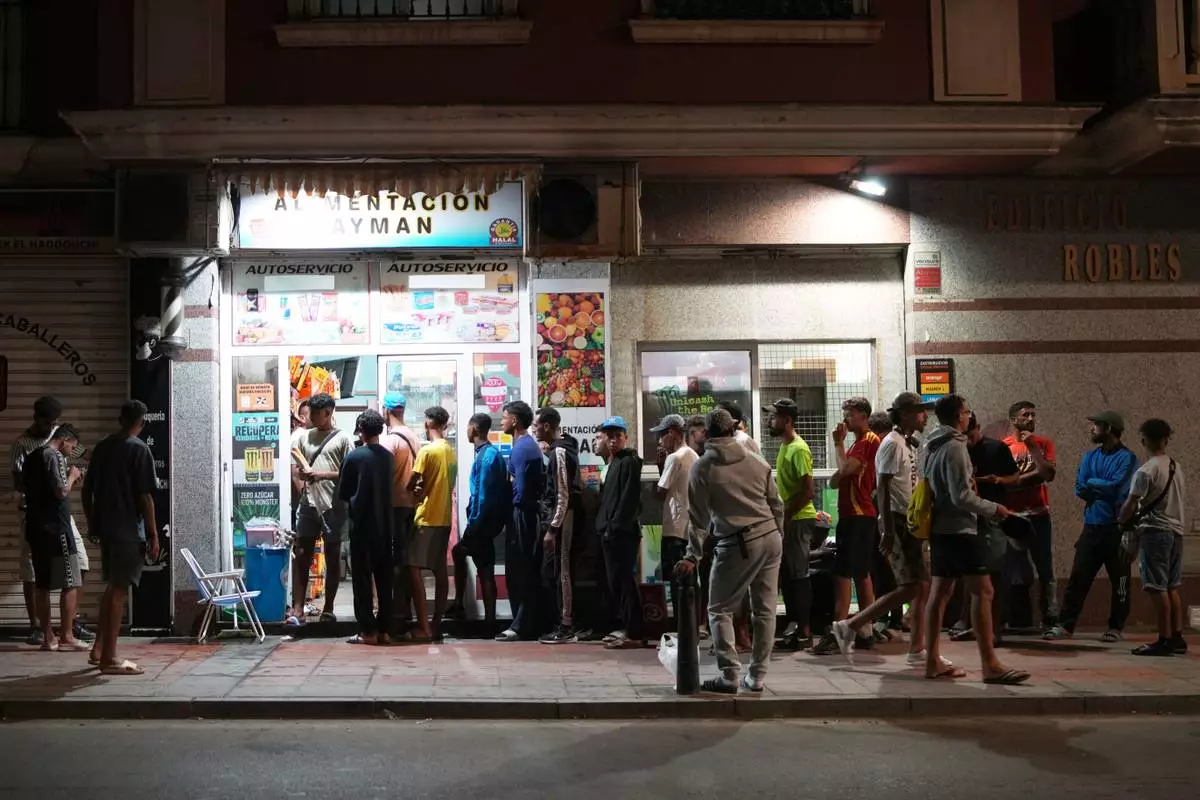
Migrants wait to buy food at a store in the Spanish exclave of Ceuta, Wednesday, Sept. 2, 2026. (AP Photo/Francis González)
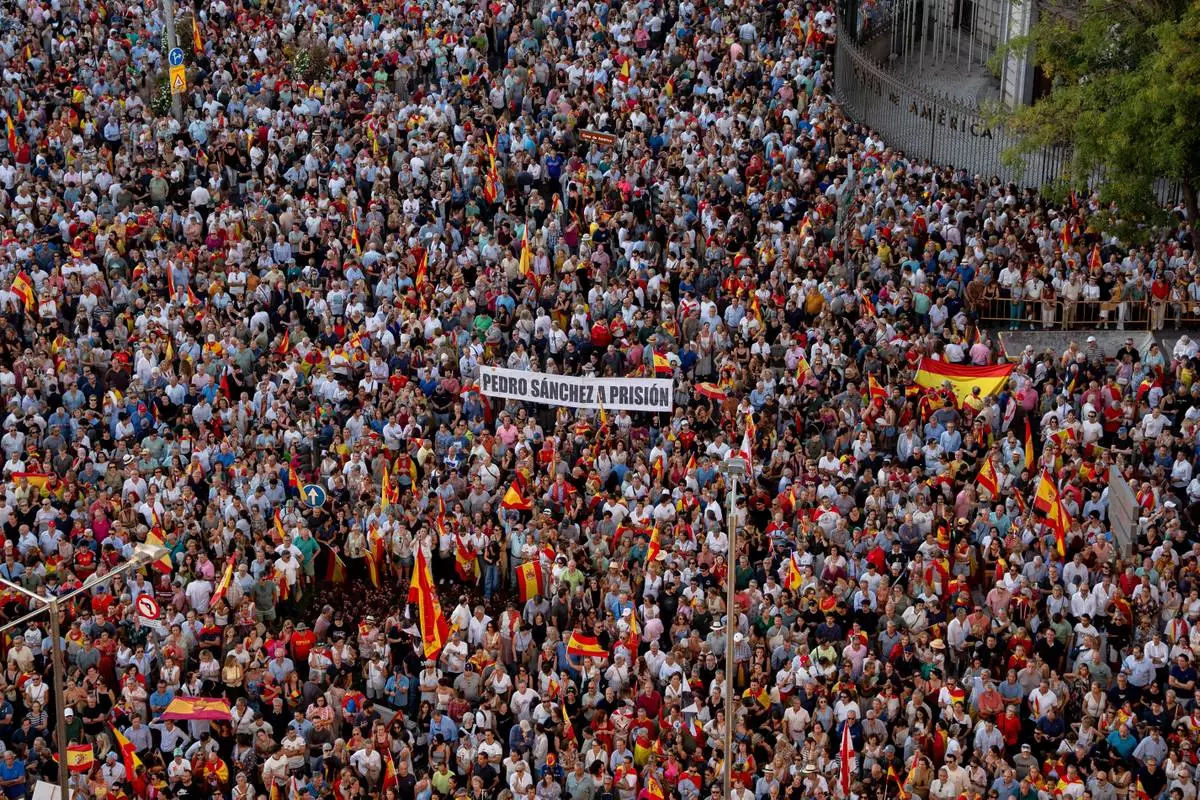
Protesters gather in support of Ceuta to mark the city's anniversary in Madrid, Spain, Wednesday, Sept. 2, 2026. (Gabriel Luengas/Europa Press via AP)
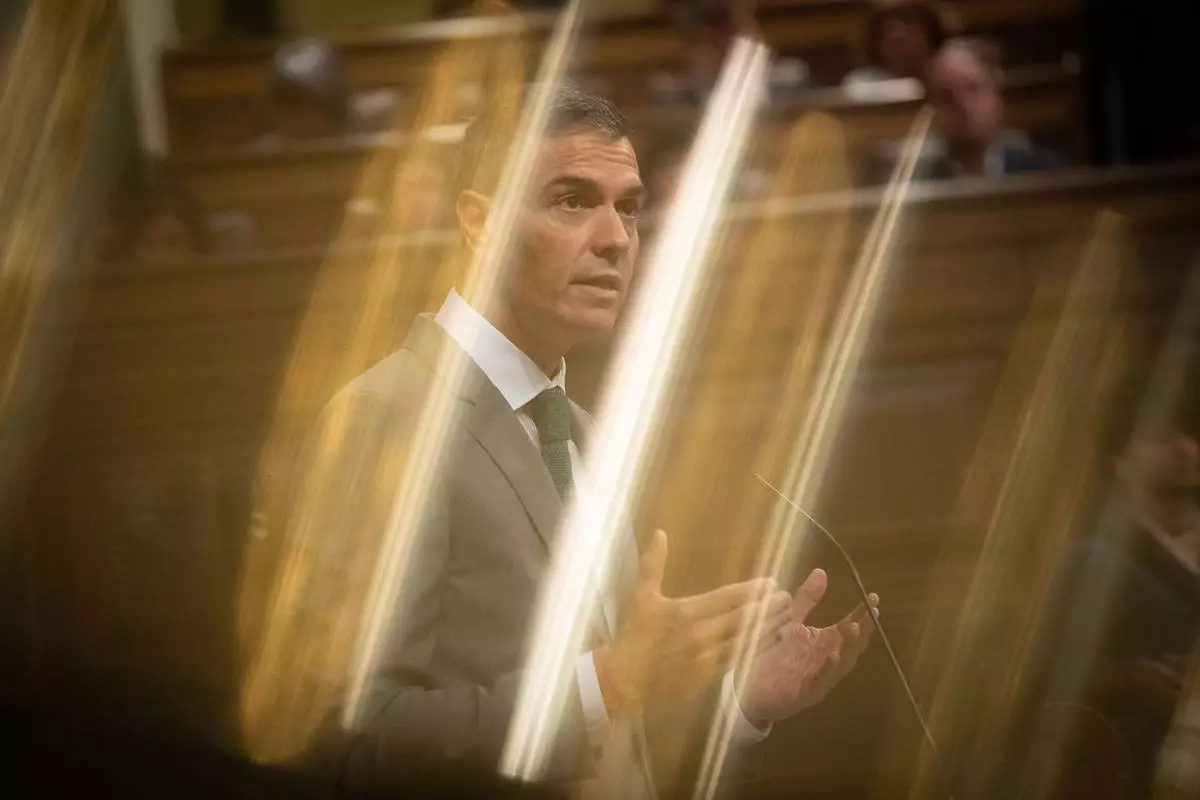
Spanish Prime Minister Pedro Sánchez addresses lawmakers about the situation in Ceuta, the Spanish exclave in North Africa facing a migrant crisis, during a session of Parliament in Madrid, Thursday, Sept. 3, 2026. (Fernando Sánchez/Europa Press via AP)
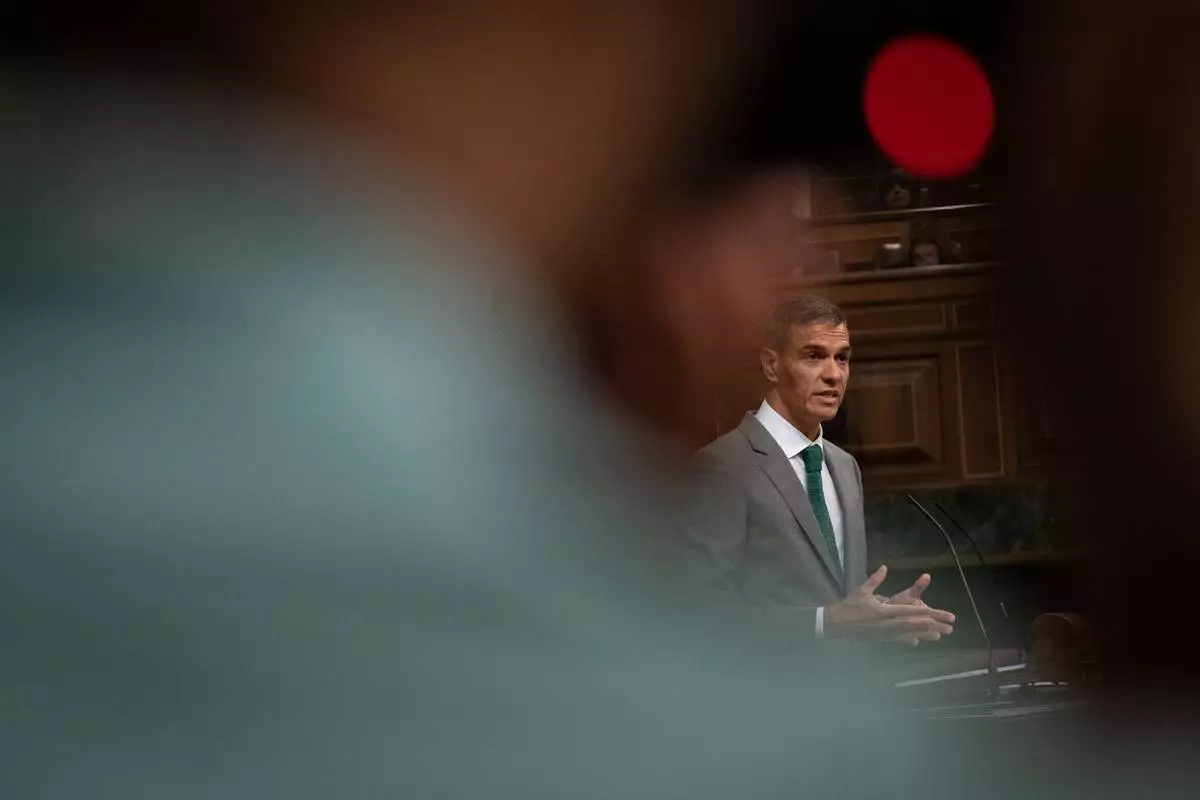
Spanish Prime Minister Pedro Sánchez addresses lawmakers about the situation in Ceuta, the Spanish exclave in North Africa facing a migrant crisis, during a session of Parliament in Madrid, Thursday, Sept. 3, 2026. (Fernando Sánchez/Europa Press via AP)
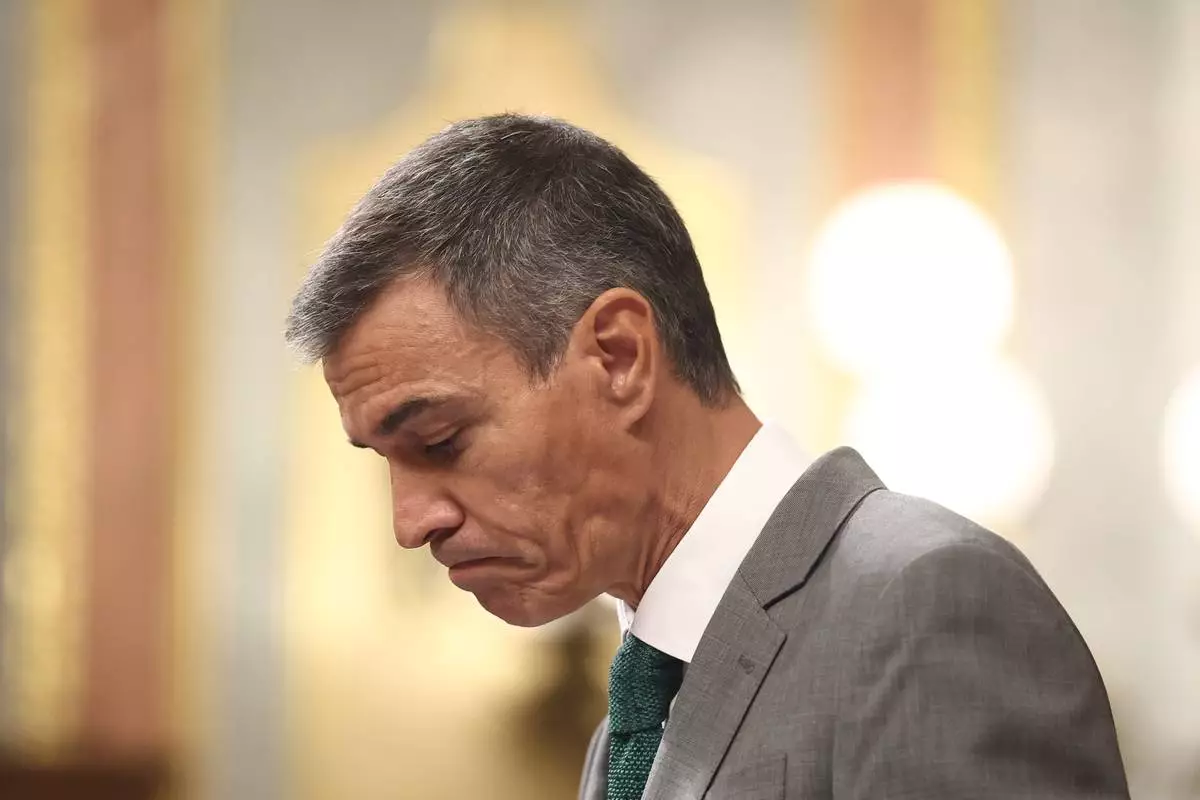
Spanish Prime Minister Pedro Sánchez addresses lawmakers about the situation in Ceuta, the Spanish exclave in North Africa facing a migrant crisis, during a session of Parliament in Madrid, Thursday, Sept. 3, 2026. (Fernando Sánchez/Europa Press via AP)