Skip to Content Facebook Feature Image

Vance says Iran fight isn't a 'war' as Trump tries to navigate unpopular conflict as election nears

News

Vance says Iran fight isn't a 'war' as Trump tries to navigate unpopular conflict as election nears
News

News

Vance says Iran fight isn't a 'war' as Trump tries to navigate unpopular conflict as election nears

2026-09-04 08:30 Last Updated At:08:41

Washington (AP) — Vice President JD Vance on Thursday rejected the use of the word “war” to describe the U.S. fighting with Iran as he steered clear of predicting that the six-month-old conflict would be over by November's midterm elections, in which Republicans are trying to hang on to their narrow majorities in Congress..

“I wouldn’t call it a war,” Vance said after being asked during a White House press briefing about whether the fighting could be wrapped up before voters cast their ballots in the Nov. 3 congressional elections. “Right now, there is no active shooting.”

Vance's assertion came even as Iran fired at U.S. Gulf ally Kuwait on Thursday as it continued to retaliate for rounds of U.S. strikes on Iran earlier in the week.

The vice president said the U.S. had a “responsibility” to carry out this week's strikes because Iran continues the targeting of commercial vessels passing through the Strait of Hormuz.

Vance's attempt to minimize the intensity of the fighting illuminates the difficult task at hand for Trump and his administration as he tries to persuade American voters to keep Republicans in control of Congress, even as the unpopular conflict — one the White House said at its outset would last a matter of weeks — has driven up gas prices and left consumers grappling with higher inflation.

Vance said he didn’t want to set “artificial timelines."

“But when you ask, ‘When will this end?’ You’re asking me a question like, ‘When will the Iranians stop shooting at ships?’” Vance said. “I think the reality is, I don’t know the answer to that question. You would have to ask the Iranians.”

The administration in July faced scrutiny after it reclassifiedfour fallen soldiers as well as dozens of wounded troops in its Defense Casualty Analysis System, which Pentagon officials have repeatedly pointed to as the definitive source on the numbers of dead and wounded from the conflict. Those killed or wounded in fighting after a brief ceasefire between the U.S. and Iran fell apart were classified in a new category called “Overseas Operations” after initially being tallied in the totals from the war.

Brent crude prices hovered above $95 per barrel on Thursday. The international benchmark was around $72 per barrel the day before the conflict began.

Still, Trump and his aides have sought to push that the U.S. Navy is in control of the Strait of Hormuz, which accounted for about 20% of the flow of the world's oil prior to the start of the war. They insist a near pre-war level of Gulf oil is now making its way out of the critical waterway.

Vance at Thursday's press briefing said the U.S. escorted about 15 million barrels of oil on Wednesday. This is after Energy Secretary Chris Wright told CNBC on Wednesday that 17 million barrels were carried through the strait on Monday with assistance from the U.S. Navy. About 20 million barrels of Gulf oil flowed through the strait prior to the start of the war.

But ship traffic through the strait remains well below pre-war levels, according to independent firms that track marine traffic.

There were 102 transits last week and 126 the week before, according to shipping data company Lloyd’s List Intelligence, compared with 130 or more per day before the war.

Over the past 28 days, 5 million barrels a day have exited the strait on average, according to TankerTrackers.com. Other recent estimates have varied from 2 million barrels per day to 6 million barrels per day.

Over the course of the war, Trump has repeatedly reported progress in negotiations or called off threats of military action at the last moment when global markets have become jittery. And markets have reacted swiftly to his public signals of peace or hints of progress.

“The administration is still jawboning oil markets,” said Rosemary Kelanic, Middle East director at Defense Priorities, of the administration's claims of dramatically increased flowsof oil. “And they appear to be doing it again to keep prices from going too high, so that they can extend the timeline before there’s a worse price spike.”

With Iran's refusal to back down in the face of the U.S. military campaign, Trump has settled on a dual-prong approach that combines economic pressure with threats of an escalation in force, if necessary.

Trump has consistently emphasized that the campaign launched by the U.S. and Israel has been devastating for Iran’s navy and air force. Iranian officials have said the country has suffered $270 billion in direct and indirect damage. Israeli military strikes in the first weeks of the war wiped out much of the theocratic government’s leadership structure, including its Supreme Leader Ayatollah Ali Khamenei,

Still, Iran has found leverage through its own strikes on the strait and Gulf allies of the United States. But the administration has sought to make the case that the waterway will become less important by the day, even as it asserts that more oil is getting through.

Treasury Secretary Scott Bessent said in a Fox Business interview this week that the Strait of Hormuz will become a “worthless piece of water” within two years as new land pipelines planned for the region bypass the energy chokepoint. Trump himself took to social media on Thursday to highlight a news report about Syria's effort to transform the port of Baniyas on the Mediterranean coast into a westward route to international markets for Gulf exporters.

Meanwhile, Iran and Oman have recently held talks to discuss a phased approach to jointly managing ship traffic through the Strait of Hormuz.

The administration maintains it's making progress economically choking off Iranian hardliners, including the powerful Islamic Revolutionary Guard Corps. At the moment, it would be a leap for Trump to agree to any plan that puts Iran in position to claim control of the strait, analysts say.

“I find it hard to believe the president would agree to anything that hands back any modicum of IRGC control over the strait that has been wrested away,” said Richard Goldberg, who served as a senior adviser on Iran policy in Trump's first administration.

Aaron David Miller, a senior fellow at the Carnegie Endowment for International Peace, said Iran does not appear ready to “let Trump out of the box” despite the massive pain being inflicted on its economy.

At the same time, Miller said, Trump seems to have settled into a holding pattern ahead of the midterms — one in which he avoids both a return to the full-throttle bombardment of Iran and making any accommodations to Tehran on the Strait of Hormuz.

“The White House doesn't want a massive war, and they don’t want to be seen as offering massive concessions,” Miller said. “The tack they are taking avoids both of those things.”

—-

AP writers Jonathan J. Cooper and Josh Boak in Washington and David McHugh in Frankfurt, Germany, contributed reporting.
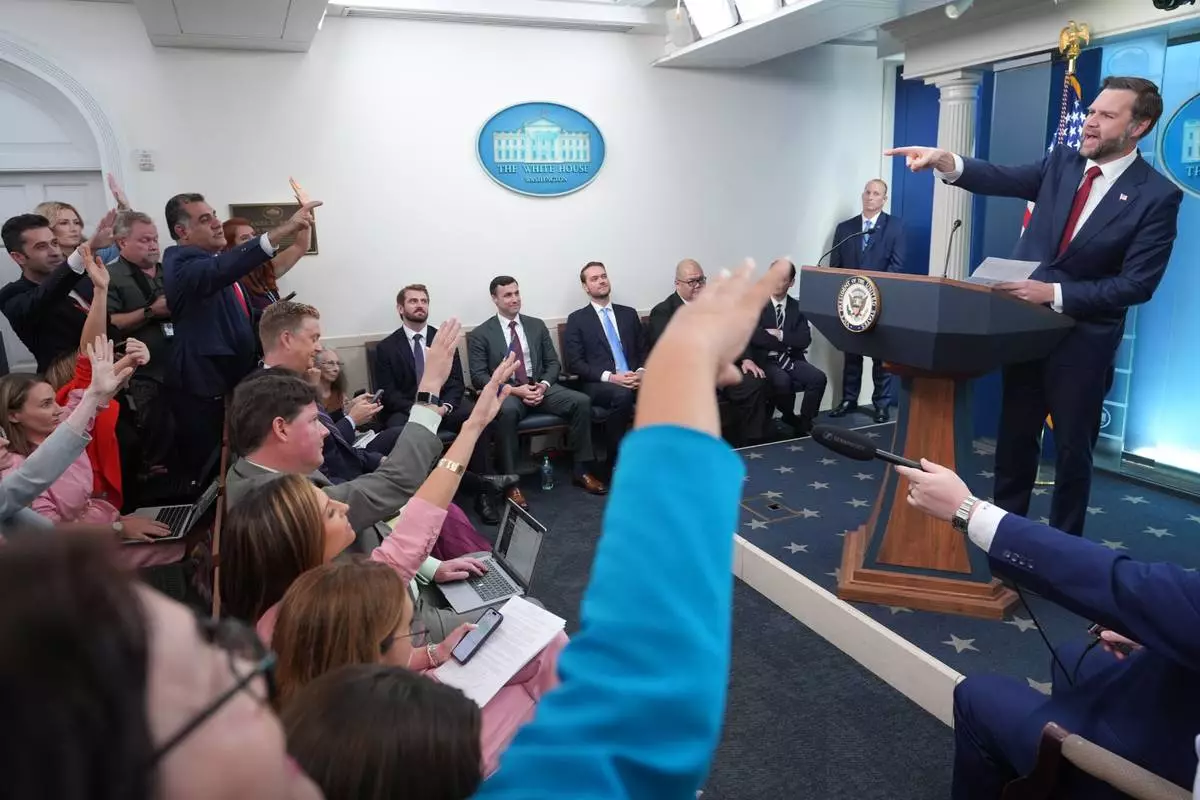
Vice President JD Vance speaks with reporters in the James Brady Press Briefing Room at the White House, Thursday, Sept. 3, 2026, in Washington. (AP Photo/Alex Brandon) CORRECTION: Date corrected to Sept. 3 instead of July 23.
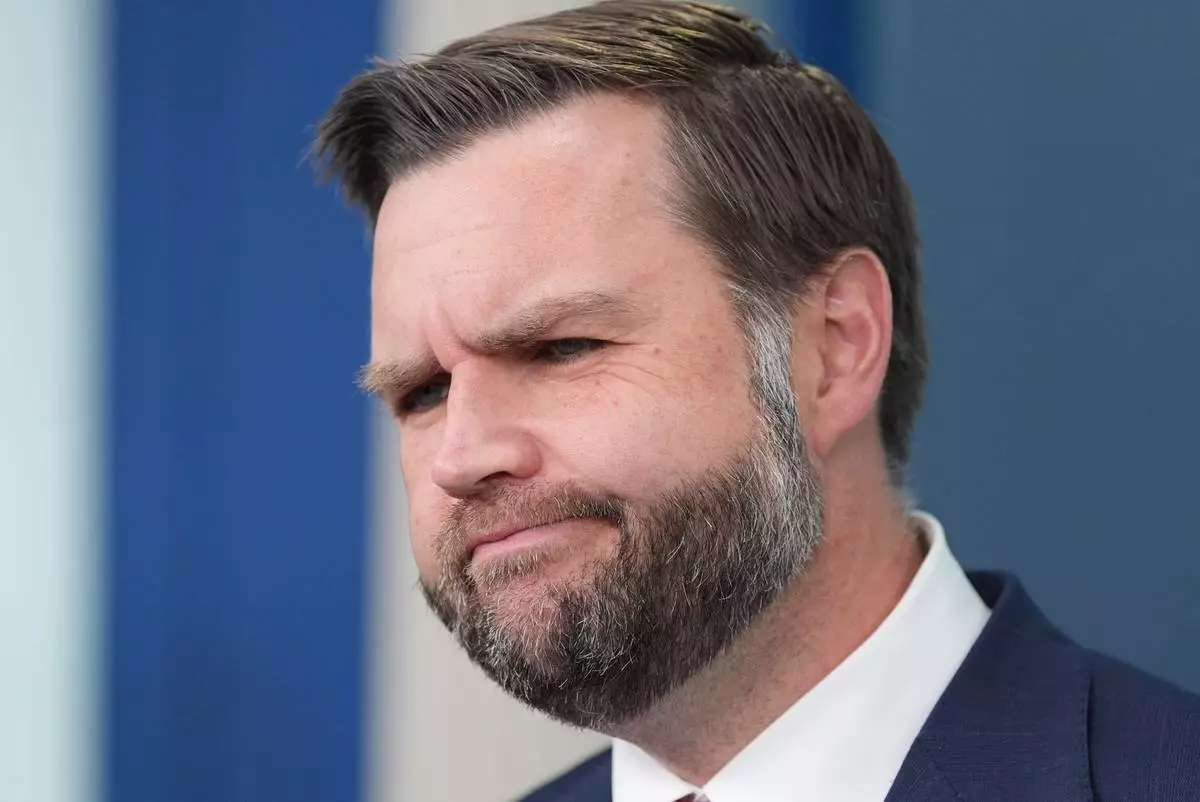
Vice President JD Vance speaks with reporters in the James Brady Press Briefing Room at the White House, Thursday, Sept. 3, 2026, in Washington. (AP Photo/Alex Brandon) CORRECTION: Date corrected to Sept. 3 instead of July 23.
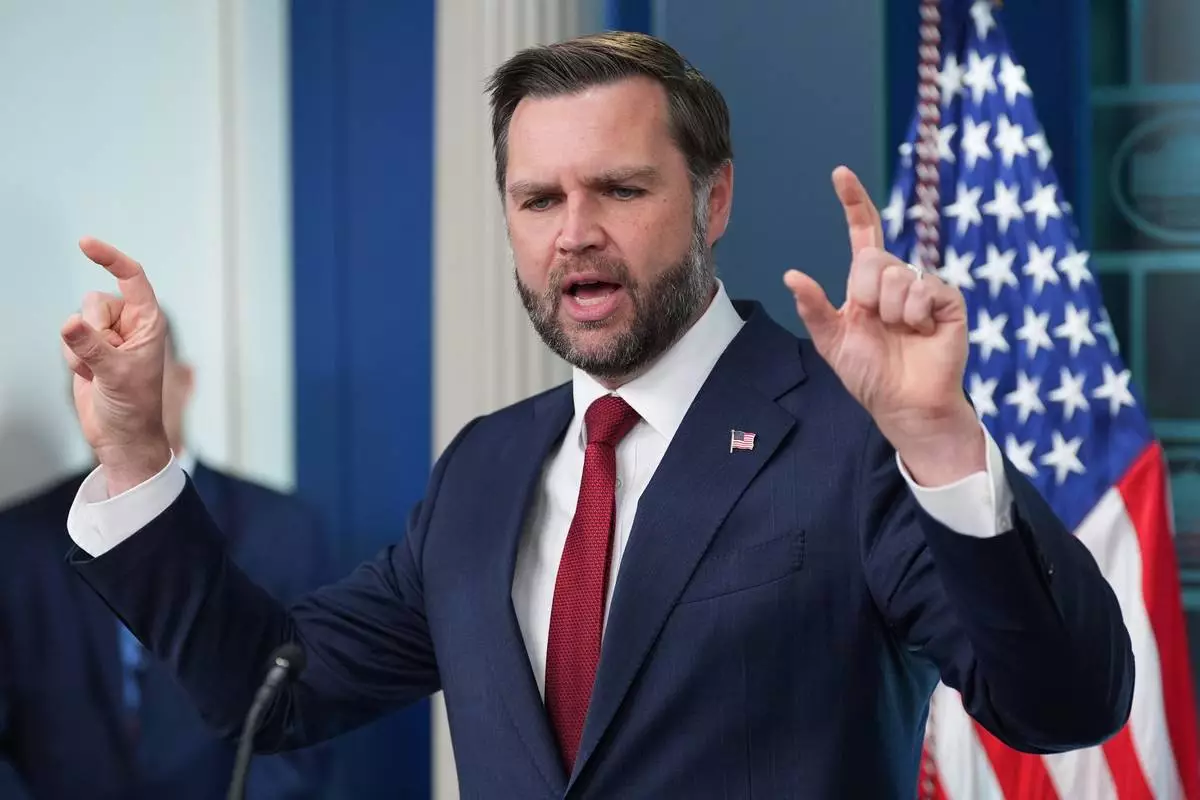
Vice President JD Vance speaks with reporters in the James Brady Press Briefing Room at the White House, Thursday, Sept. 3, 2026, in Washington. (AP Photo/Alex Brandon) CORRECTION: Date corrected to Sept. 3 instead of July 23.

Vice President JD Vance speaks with reporters in the James Brady Press Briefing Room at the White House, Thursday, Sept. 3, 2026, in Washington. (AP Photo/Alex Brandon) CORRECTION: Date corrected to Sept. 3 instead of July 23.
Vice President JD Vance speaks with reporters in the James Brady Press Briefing Room at the White House, Thursday, Sept. 3, 2026, in Washington. (AP Photo/Alex Brandon) CORRECTION: Date corrected to Sept. 3 instead of July 23.
Vice President JD Vance speaks with reporters in the James Brady Press Briefing Room at the White House, Thursday, Sept. 3, 2026, in Washington. (AP Photo/Alex Brandon) CORRECTION: Date corrected to Sept. 3 instead of July 23.
NEW YORK (AP) — Alex Eala and her fans are headed to the weekend at the U.S. Open, along with two-time champion Naomi Osaka and 2023 winner Coco Gauff.

So are Madison Keys and men's top seed Alexander Zverev — just barely — but not No. 3 Felix Auger-Aliassime, who became the highest-seeded player knocked out of the tournament thus far. No. 6 Alex de Minaur losing in straight sets to Botic van de Zandschulp made it four of the top-10 seeded men's players to get eliminated before the third round.

Zverev survived another early scare, but nothing about his second match was easy. He needed five sets and more than 4 1/2 hours to beat Quentin Halys 6-4, 4-6, 7-6 (3), 6-7 (3), 6-3 in the nightcap that stretched well into Friday morning.

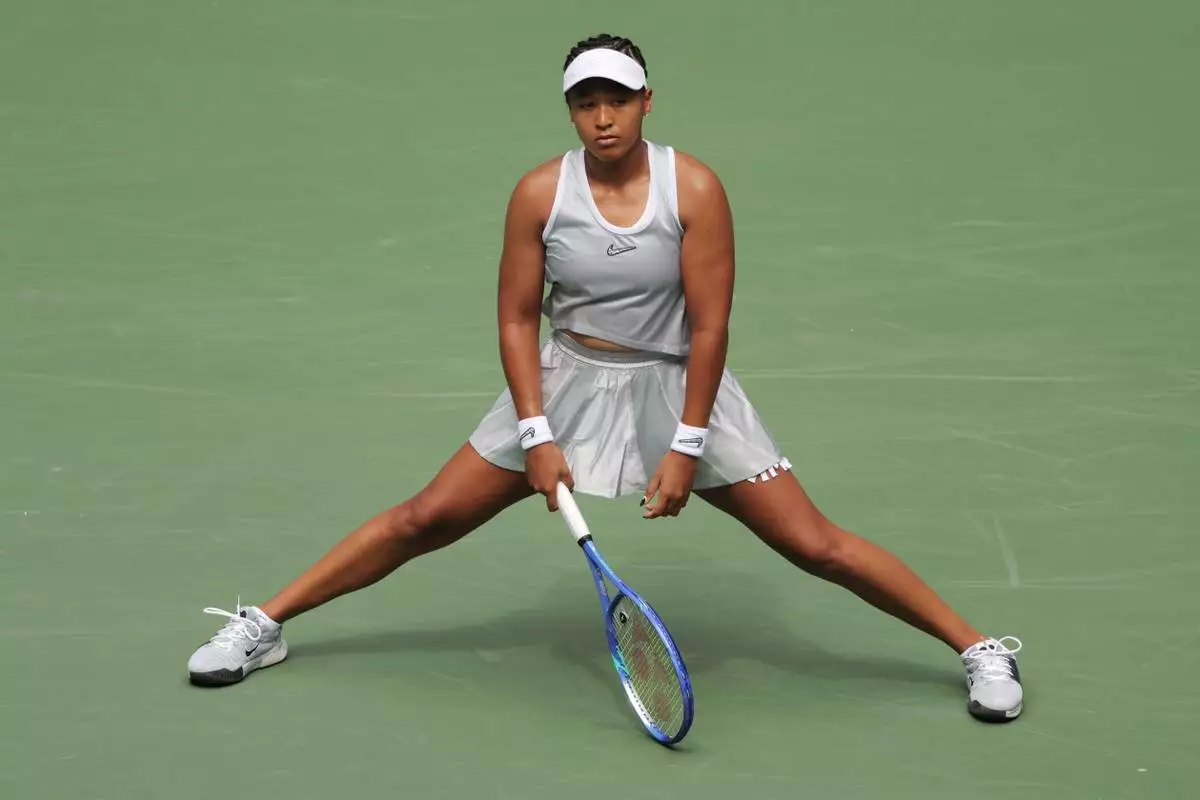
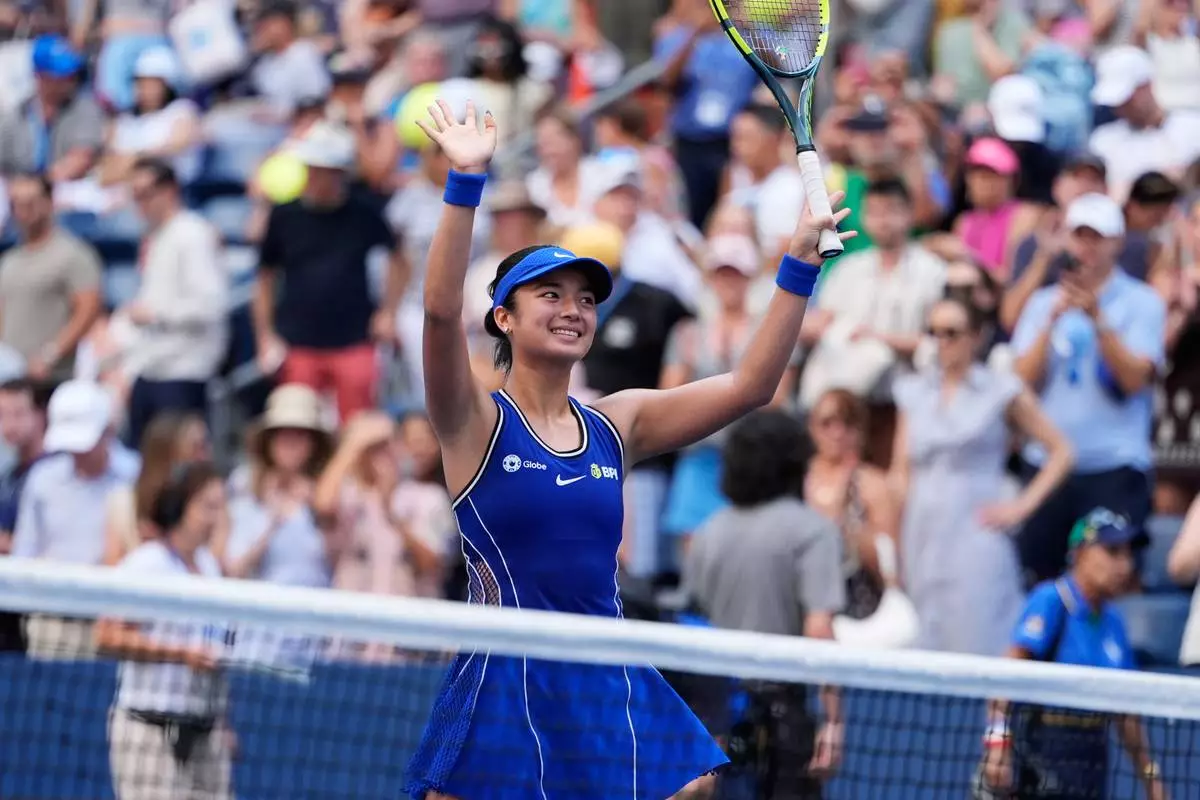
Osaka recovered after a mid-match lapse to advance to the third round with a 6-2, 5-7, 6-1 victory over Katerina Siniakova on Thursday, before Eala beat Oleksandra Oliynykova 6-1, 6-4.

Doubles play also began, though Serena and Venus Williams won’t play their first-round match until Friday night against Hao-Ching Chan and Maya Joint, who beat Serena in singles play at Wimbledon this summer.

Eala, the No. 17 seed from the Philippines, gave her passionate backers reason to cheer immediately by winning the first nine points against her Ukrainian opponent, who had won their only previous meeting.

“I think everybody represents something in their own way; I’m Filipino and I proudly represent that,” Eala said. “And a lot of the crowd here today is Filipino and I’m sure they share in that sentiment.”

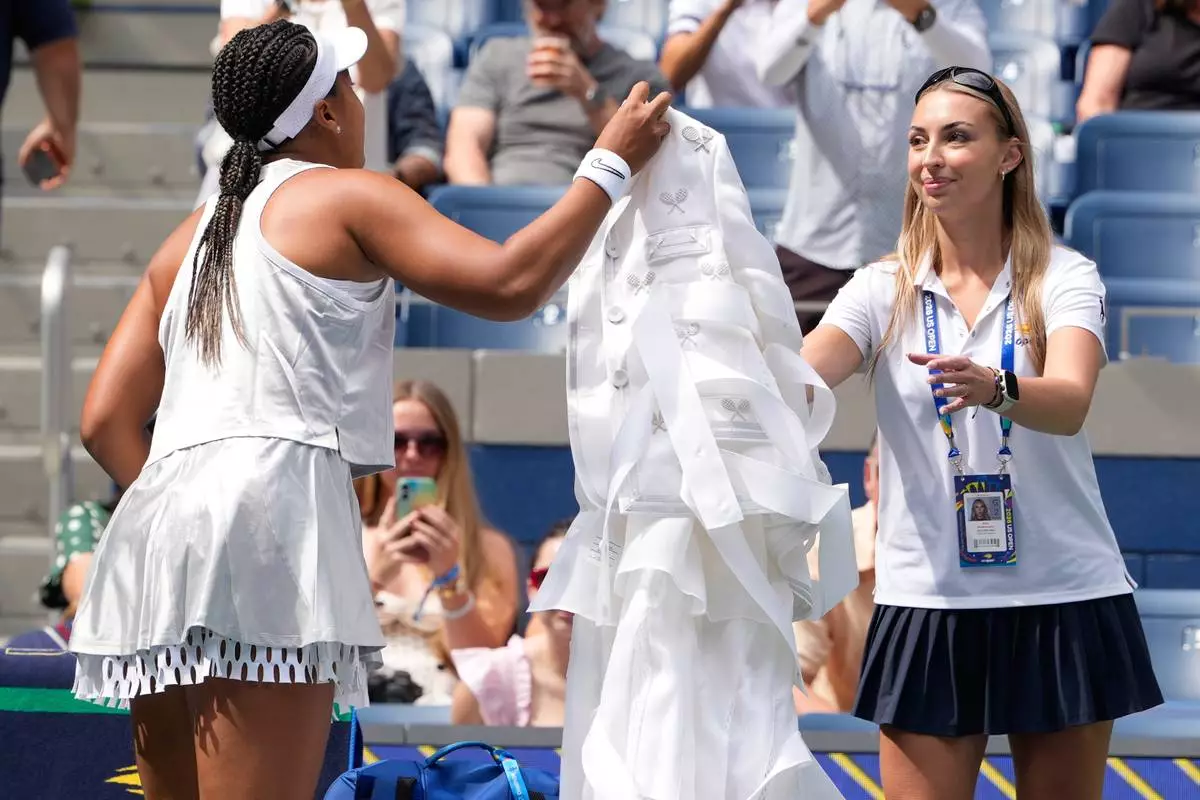
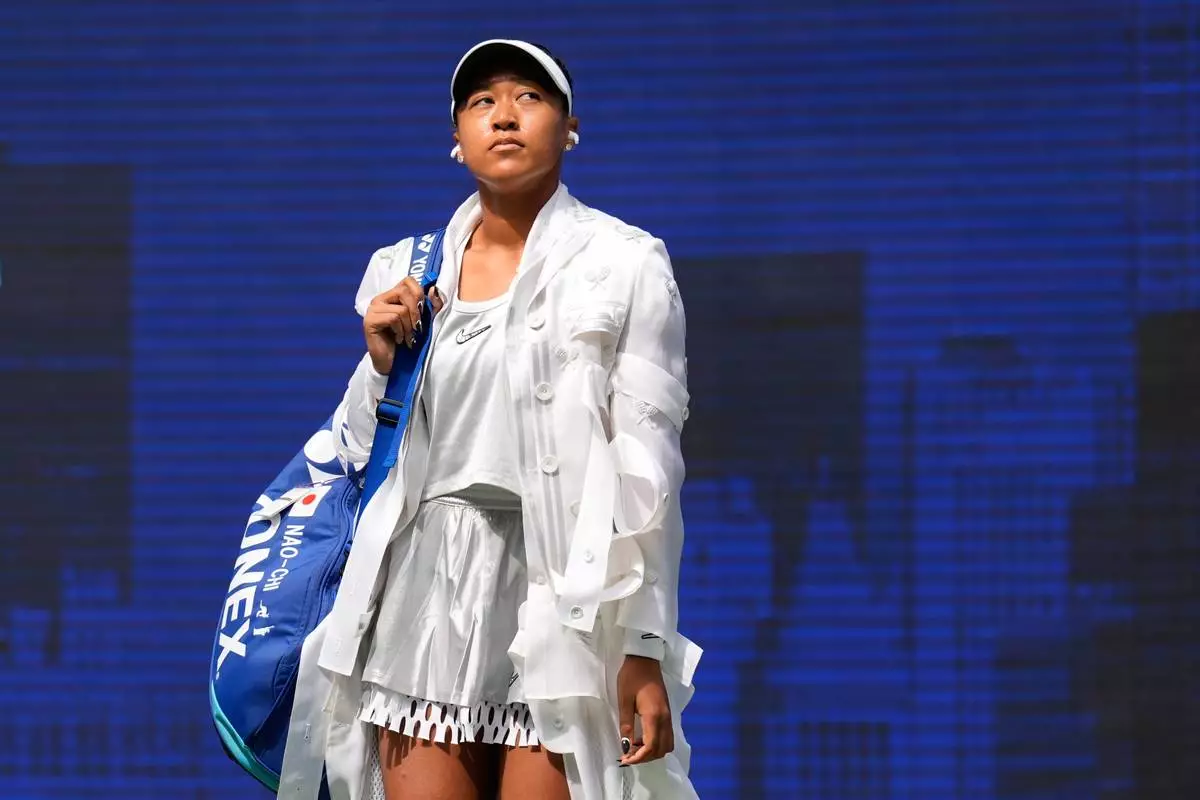
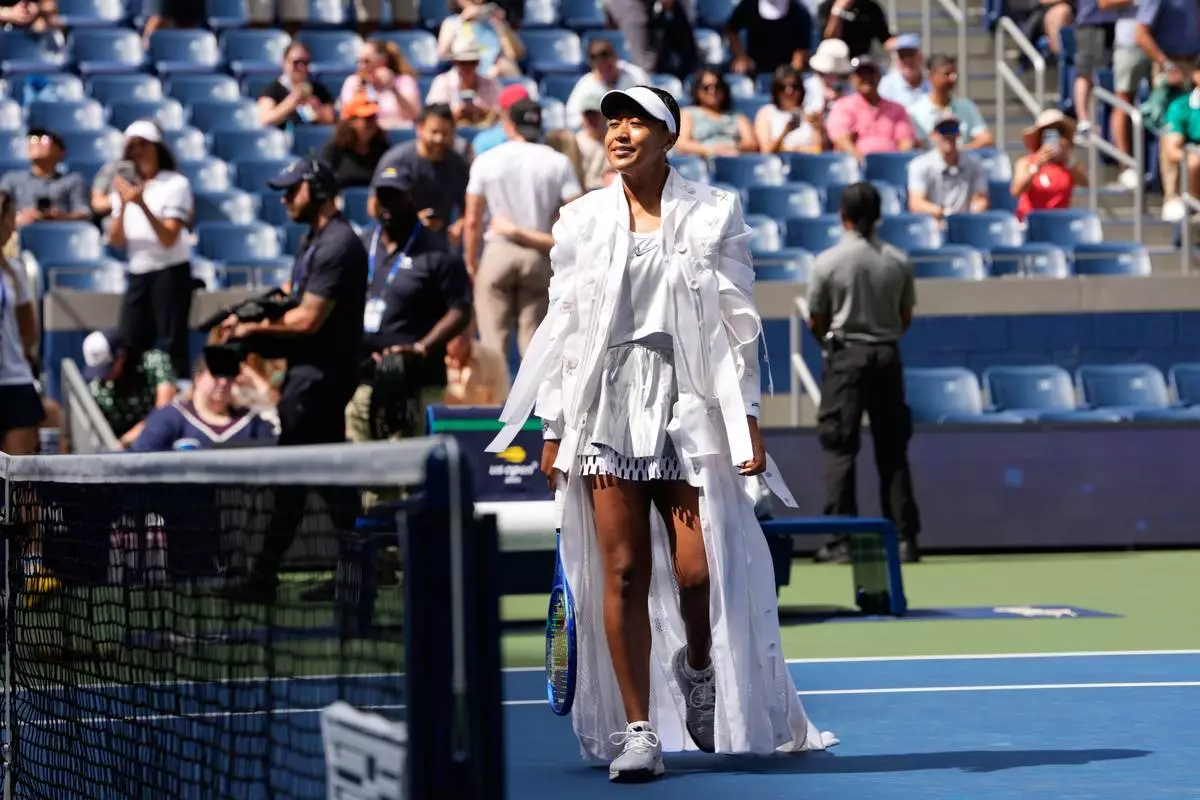
Osaka wore silver and white under her long white jacket with a white visor as she arrived for her match in Arthur Ashe Stadium, three days after she was dressed in black with her hair done in cornrows under a headband in a tribute to former NBA superstar Allen Iverson for her opener at night.

The No. 13 seed won the first set in 30 minutes and then opened a 4-2 lead in the second. But her level of play took a substantial dip, with 20 unforced errors in the set after only four in the first.

Osaka quickly regained control, breaking for a 2-0 lead in the third before finishing a 19-shot rally with a volley for a winner en route to taking the next game, appearing more relieved than excited by her nice touch.

“The match was definitely really tough and I don’t know, I just felt like I had to fight,” Osaka said. “I definitely had a couple opportunities in the second set and I think I was a little bit too hard on myself. So I took the bathroom break, regrouped a little, came back and just tried to have no regrets.”

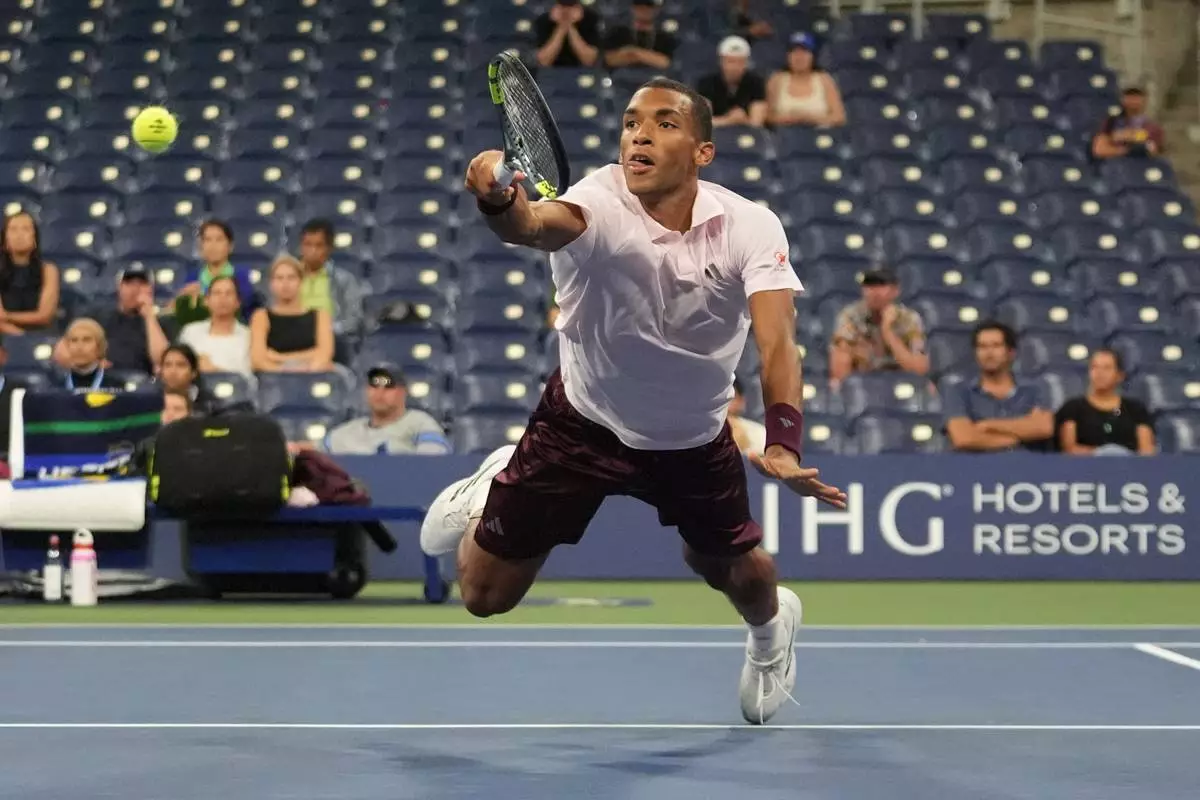
Auger-Aliassime said he was feeling dizzy and seeing spots and couldn't recover, falling to Karen Khachanov 6-7 (5), 6-3, 6-2, 6-2.

“Karen is a great player. Look, I cannot beat him or anybody in this draw feeling the way I felt today,” the Canadian said. “If I cannot move, we’re not talking about tennis here.”

The highest seed to fall so far had been No. 4 Novak Djokovic, who lost in the first round at the U.S. Open for the first time in the 24-time Grand Slam champion's career.

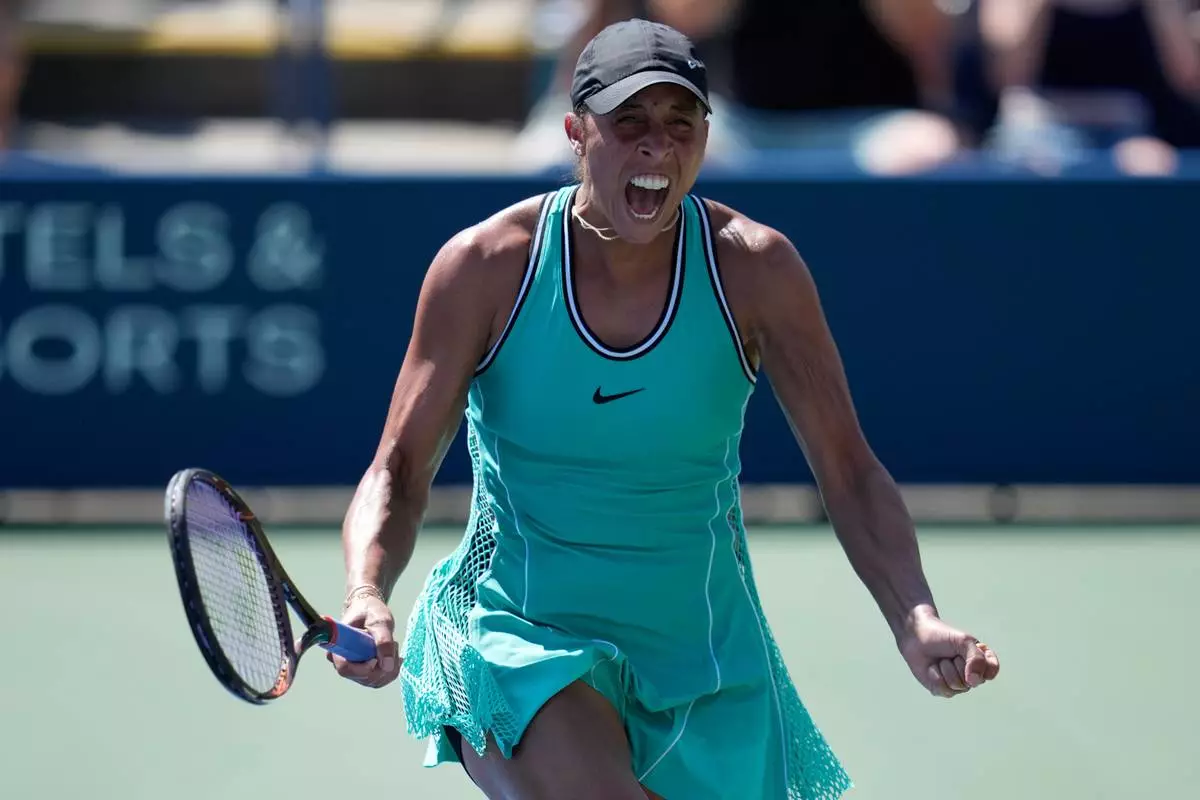
Keys, the 2017 runner-up, also was on the verge of an early exit before erasing five match points and edging Anna Bondar 5-7, 6-4, 7-6 (10-5).

“That was something, huh? No stress, though, we all knew I had it right?” Keys joked to the fans afterward.

Other winners included 2022 champion Iga Swiatek and 2025 runner-up Amanda Anisimova. Taylor Fritz, the 2024 men's runner-up, eased to 6-0, 6-1, 6-1 victory over Mattia Bellucci, while fifth-seeded Flavio Cobolli defeated Tristan Schoolkate 3-6, 6-3, 6-4, 7-5.

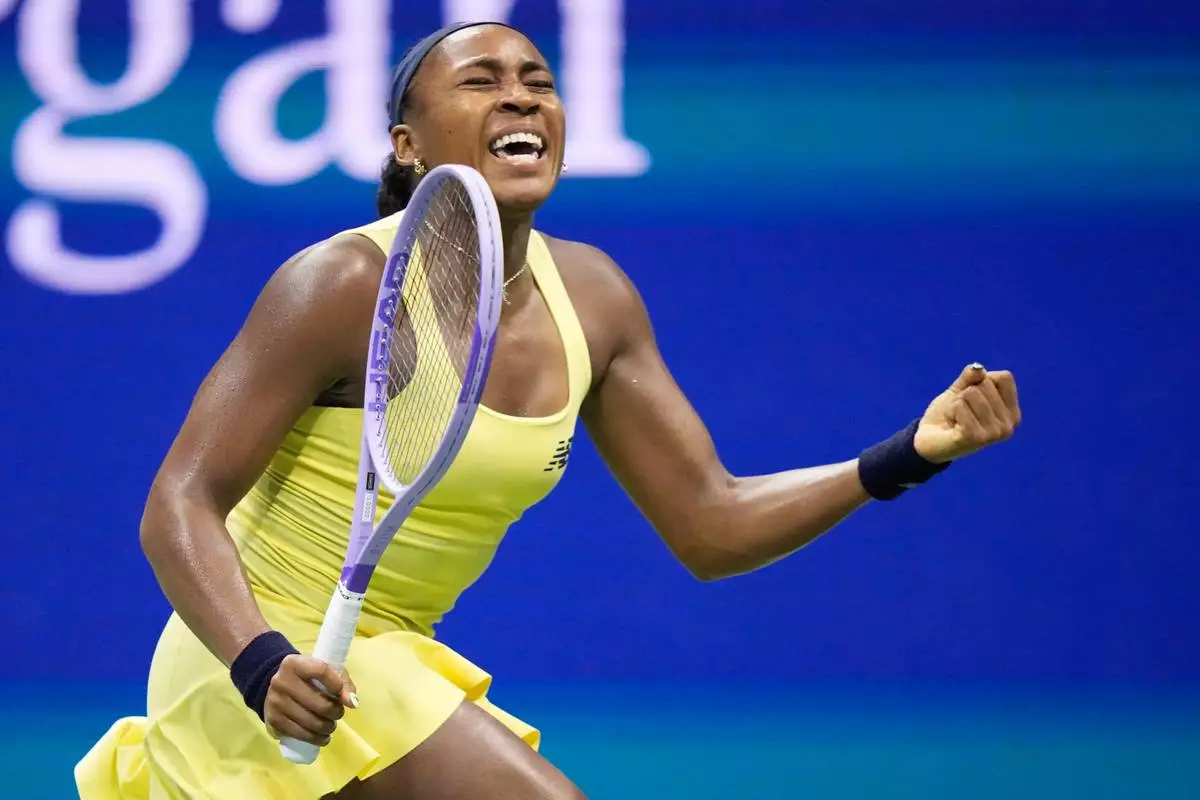
Gauff, who won her first major title at Flushing Meadows three years ago, moved on by beating Paula Badosa 6-4, 7-6 (5) under the lights on Ashe. Badosa was playing for a third consecutive day, forced to finish her first-round match Wednesday after play was suspended Tuesday because of rain that hampered the tournament for multiple days.

“Paula's a tough player,” Gauff said. “I don't think there was too much I did wrong. I feel like she really stepped it up.”

Zverev was hoping for an easier time after needing five sets to edge Lorenzo Sonego on Tuesday. Instead, he became the first top-seeded man to play back-to-back five-set matches to start a major in the Open Era, which dates to 1968.

Spending more than nine hours on the court through two rounds, Zverev avoided the earliest exit by a No. 1 seed since Andre Agassi in 2000. Concluding at 2:15 a.m., it is the second-latest second-round finish in U.S. Open history.

Before the clock struck midnight, Gael Monfils lost to No. 14 Learner Tien in what is expected to be the 40-year-old Frenchman's final Grand Slam match before calling it a career.

AP Sports Writer Stephen Whyno contributed to this report.

See AP’s full tennis coverage here

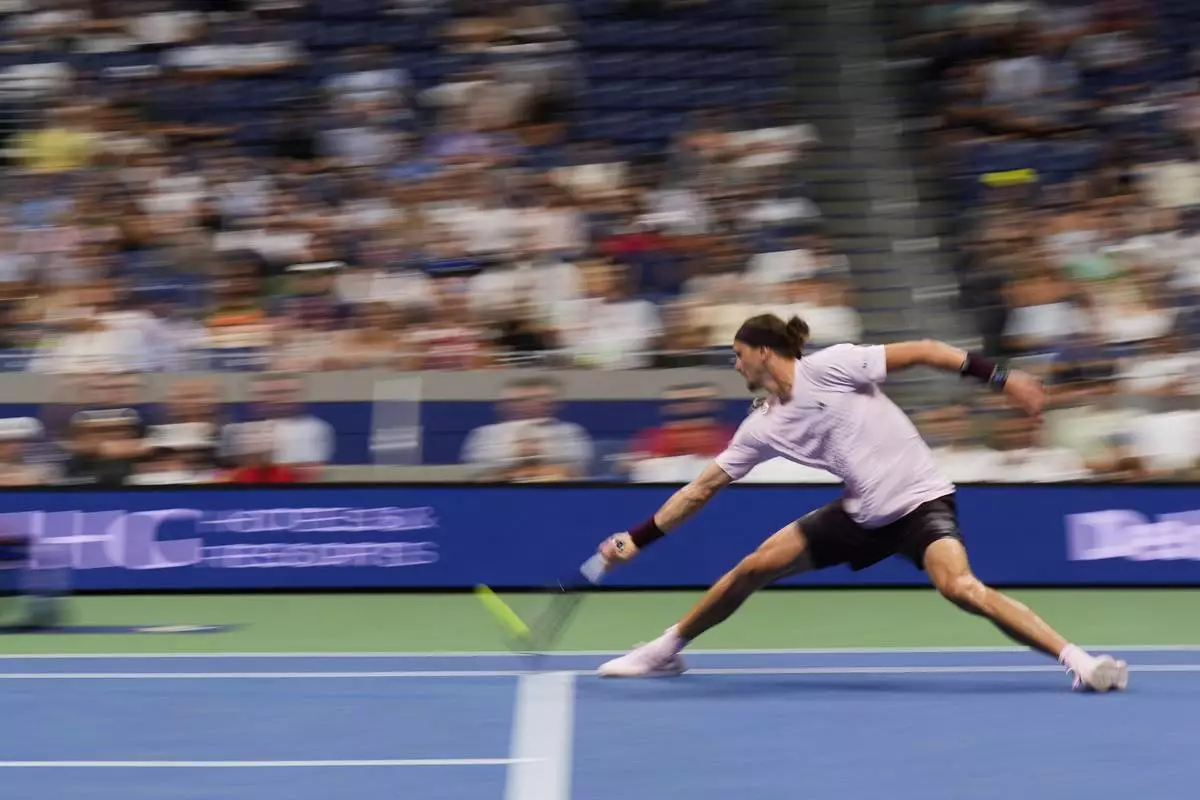
In this image taken with a slow shutter speed, Alexander Zverev, of Germany, hits a return to Quentin Halys, of France, during the second round of the U.S. Open tennis championships, Thursday, Sept. 3, 2026, in New York. (AP Photo/Frank Franklin II)

In this image taken with a slow shutter speed, Alexander Zverev, of Germany, hits a return to Quentin Halys, of France, during the second round of the U.S. Open tennis championships, Thursday, Sept. 3, 2026, in New York. (AP Photo/Frank Franklin II)

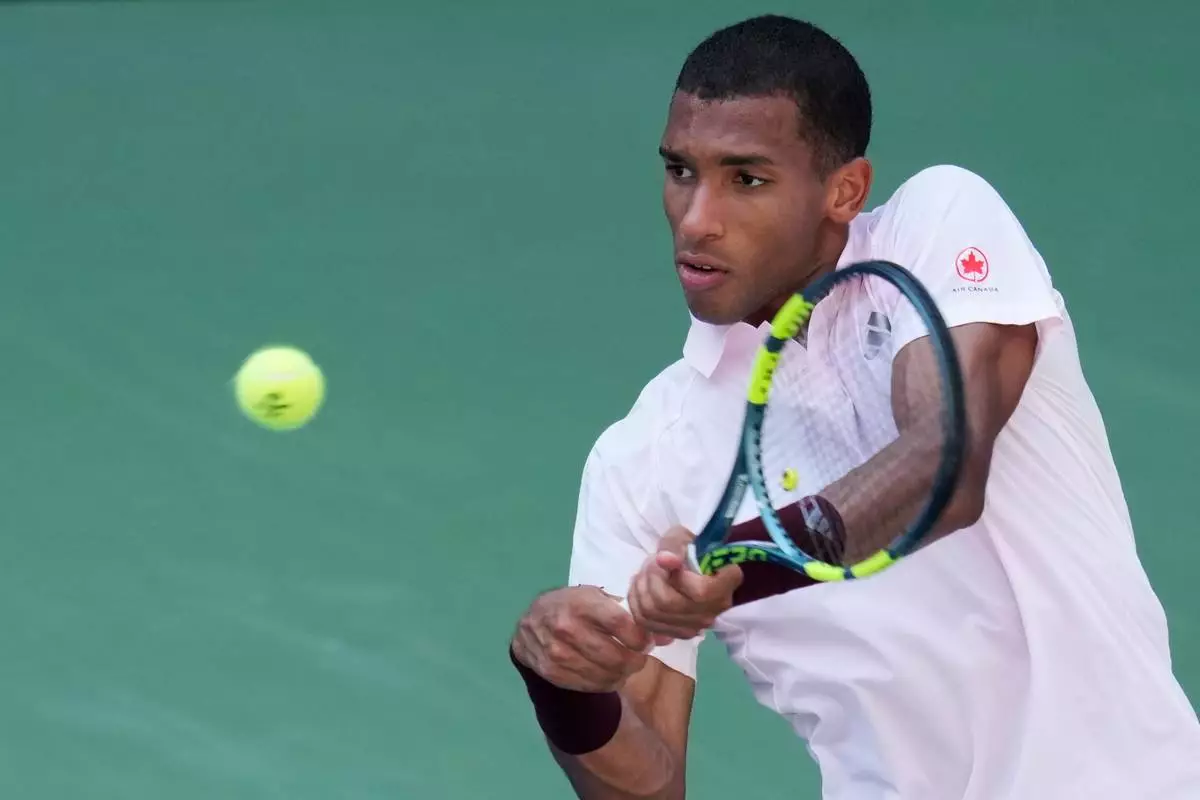
Felix Auger-Aliassime, of Canada, returns the ball to Karen Khachanov, of Russia, during the second round of the U.S. Open tennis championships Thursday, Sept. 3, 2026, in New York. (AP Photo/Seth Wenig)

Felix Auger-Aliassime, of Canada, returns the ball to Karen Khachanov, of Russia, during the second round of the U.S. Open tennis championships Thursday, Sept. 3, 2026, in New York. (AP Photo/Seth Wenig)

Coco Gauff, of the United States, celebrates during the second set of her match against Paula Badosa, of Spain, during the second round of the U.S. Open tennis championships, Thursday, Sept. 3, 2026, in New York. (AP Photo/Frank Franklin II)

Coco Gauff, of the United States, celebrates during the second set of her match against Paula Badosa, of Spain, during the second round of the U.S. Open tennis championships, Thursday, Sept. 3, 2026, in New York. (AP Photo/Frank Franklin II)

Alexandra Eala, of the Philippines, gestures after she won her match against Oleksandra Oliynykova, of Ukraine, during the second round of the U.S. Open tennis championships Thursday, Sept. 3, 2026, in New York. (AP Photo/Seth Wenig)

Alexandra Eala, of the Philippines, gestures after she won her match against Oleksandra Oliynykova, of Ukraine, during the second round of the U.S. Open tennis championships Thursday, Sept. 3, 2026, in New York. (AP Photo/Seth Wenig)

Felix Auger-Aliassime, of Canada, falls as he tries to return the ball to Rinky Hijikata, of Australia, during the first round of the U.S. Open tennis championships Monday, Aug. 31, 2026, in New York. (AP Photo/Frank Franklin II)

Felix Auger-Aliassime, of Canada, falls as he tries to return the ball to Rinky Hijikata, of Australia, during the first round of the U.S. Open tennis championships Monday, Aug. 31, 2026, in New York. (AP Photo/Frank Franklin II)

Madison Keys, of the United States, celebrates after she defeated Anna Bondar, of Hungary, during the second round of the U.S. Open tennis championships Thursday, Sept. 3, 2026, in New York. (AP Photo/Seth Wenig)

Madison Keys, of the United States, celebrates after she defeated Anna Bondar, of Hungary, during the second round of the U.S. Open tennis championships Thursday, Sept. 3, 2026, in New York. (AP Photo/Seth Wenig)

Naomi Osaka, of Japan, hands off her arrival outfit ahead of a match against Katerina Siniakova, of the Czech Republic, during the second round of the U.S. Open tennis championships Thursday, Sept. 3, 2026, in New York. (AP Photo/Seth Wenig)

Naomi Osaka, of Japan, hands off her arrival outfit ahead of a match against Katerina Siniakova, of the Czech Republic, during the second round of the U.S. Open tennis championships Thursday, Sept. 3, 2026, in New York. (AP Photo/Seth Wenig)

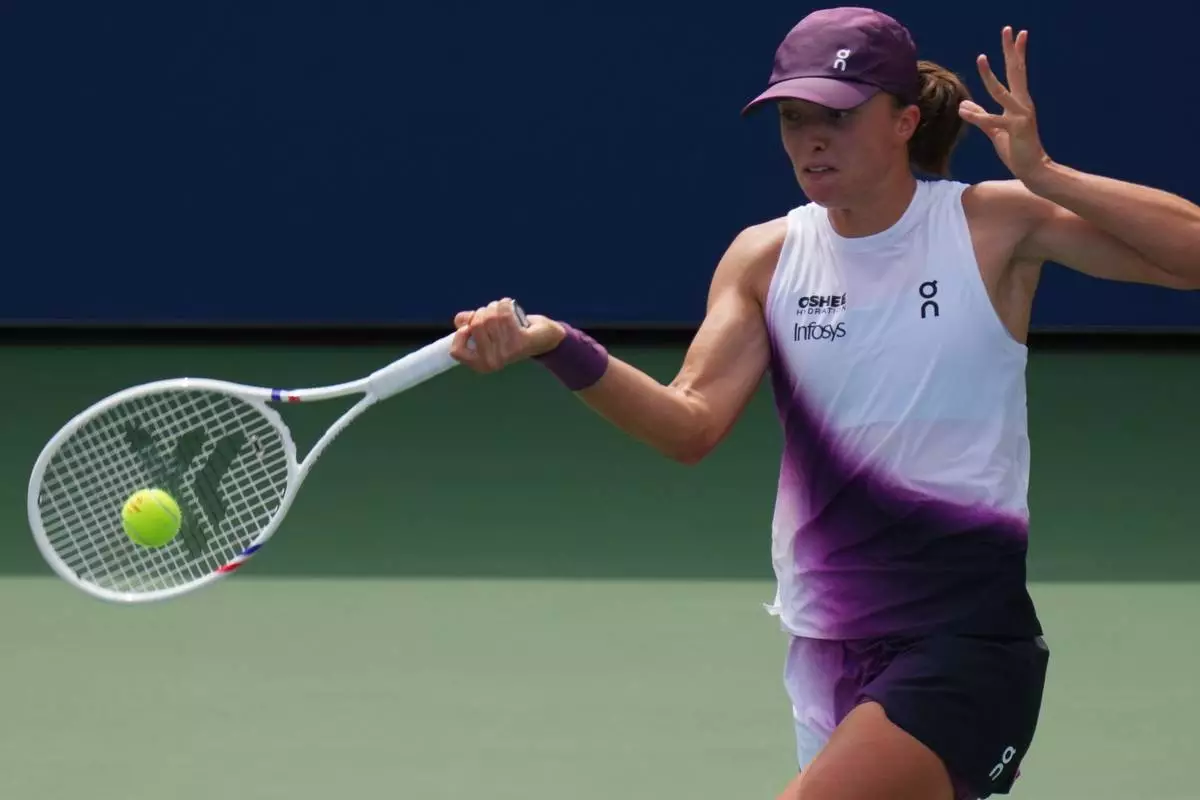
Iga Swiatek, of Poland, returns the ball to Nadia Podoroska, of Argentina, during the second round of the U.S. Open tennis championships Thursday, Sept. 3, 2026, in New York. (AP Photo/Kirsty Wigglesworth)

Iga Swiatek, of Poland, returns the ball to Nadia Podoroska, of Argentina, during the second round of the U.S. Open tennis championships Thursday, Sept. 3, 2026, in New York. (AP Photo/Kirsty Wigglesworth)

Naomi Osaka, of Japan, arrives ahead of a match against Katerina Siniakova, of the Czech Republic, during the second round of the U.S. Open tennis championships Thursday, Sept. 3, 2026, in New York. (AP Photo/Seth Wenig)

Naomi Osaka, of Japan, arrives ahead of a match against Katerina Siniakova, of the Czech Republic, during the second round of the U.S. Open tennis championships Thursday, Sept. 3, 2026, in New York. (AP Photo/Seth Wenig)

Naomi Osaka, of Japan, arrives ahead of a match against Katerina Siniakova, of the Czech Republic, during the second round of the U.S. Open tennis championships Thursday, Sept. 3, 2026, in New York. (AP Photo/Seth Wenig)

Naomi Osaka, of Japan, arrives ahead of a match against Katerina Siniakova, of the Czech Republic, during the second round of the U.S. Open tennis championships Thursday, Sept. 3, 2026, in New York. (AP Photo/Seth Wenig)

Naomi Osaka, of Japan, reacts during the second round of the U.S. Open tennis championships against Katerina Siniakova, of the Czech Republic, Thursday, Sept. 3, 2026, in New York. (AP Photo/Andres Kudacki)

Naomi Osaka, of Japan, reacts during the second round of the U.S. Open tennis championships against Katerina Siniakova, of the Czech Republic, Thursday, Sept. 3, 2026, in New York. (AP Photo/Andres Kudacki)

Recommended Articles