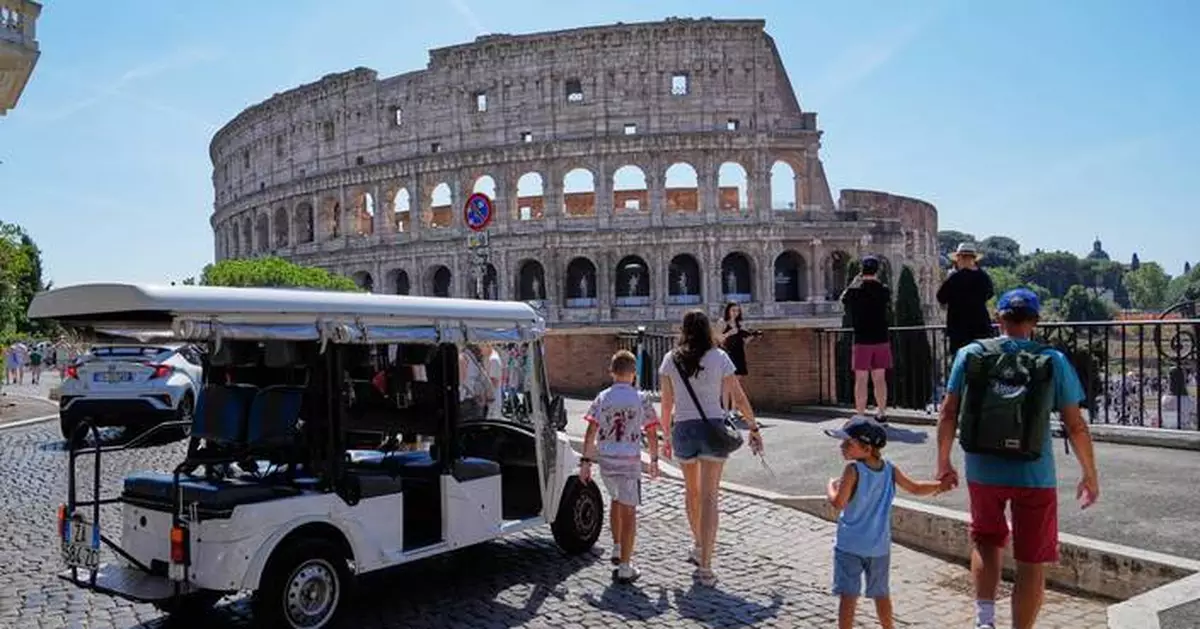
ROME (AP) — Beneath the splendor of its monuments and ruins, Rome is taking aim at a modern-day chariot: the golf cart.
Hundreds of them have started carrying tourists through the historic center. Even rolling along at a moderate speed, these golf carts have so far outpaced regulation. But the city is mounting a crackdown.
Click to Gallery
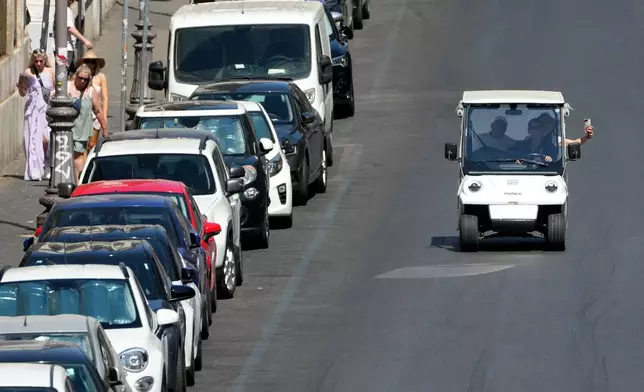
A golf cart carrying tourists travels past parked cars in Rome, Tuesday, Aug. 18, 2026, as city officials move to regulate the rapidly growing industry amid complaints about congestion, illegal parking, and overtourism. (AP Photo/Gregorio Borgia)
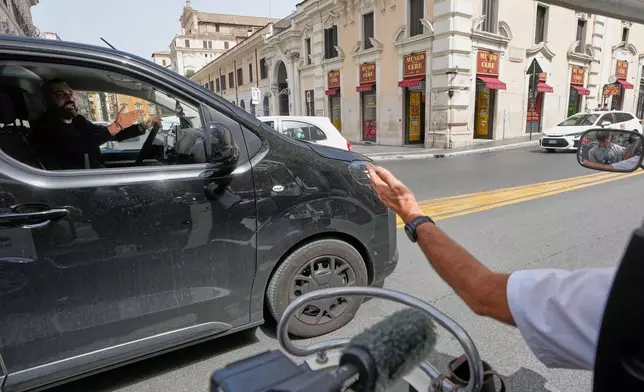
Pascal Duijnhoven, right, argues with a private-hire driver as he drives his golf cart in downtown Rome, Thursday, Aug. 27, 2026, amid growing debate over the vehicles’ role in congestion and overtourism. (AP Photo/Gregorio Borgia)
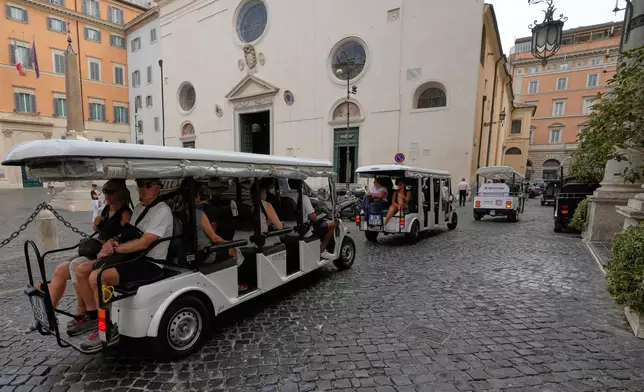
A flotilla of golf carts carrying tourists travels past the Basilica of Santa Maria sopra Minerva in Rome, Thursday, Aug. 27, 2026, as city officials move to regulate the rapidly growing industry amid complaints about congestion, illegal parking, and overtourism. (AP Photo/Gregorio Borgia)

A golf cart makes its way through crowds of tourists in Rome’s historic center, Tuesday, Aug. 18, 2026, amid growing debate over the vehicles’ role in congestion and overtourism. (AP Photo/Gregorio Borgia)
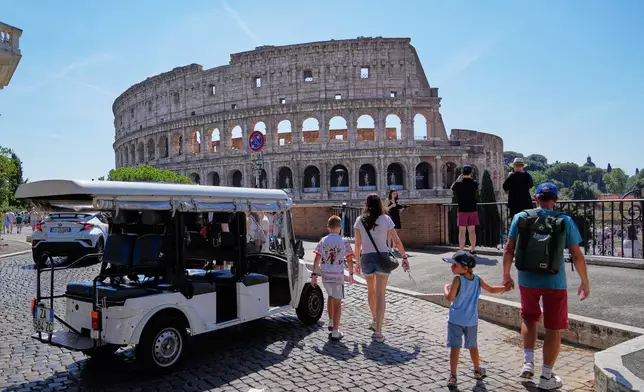
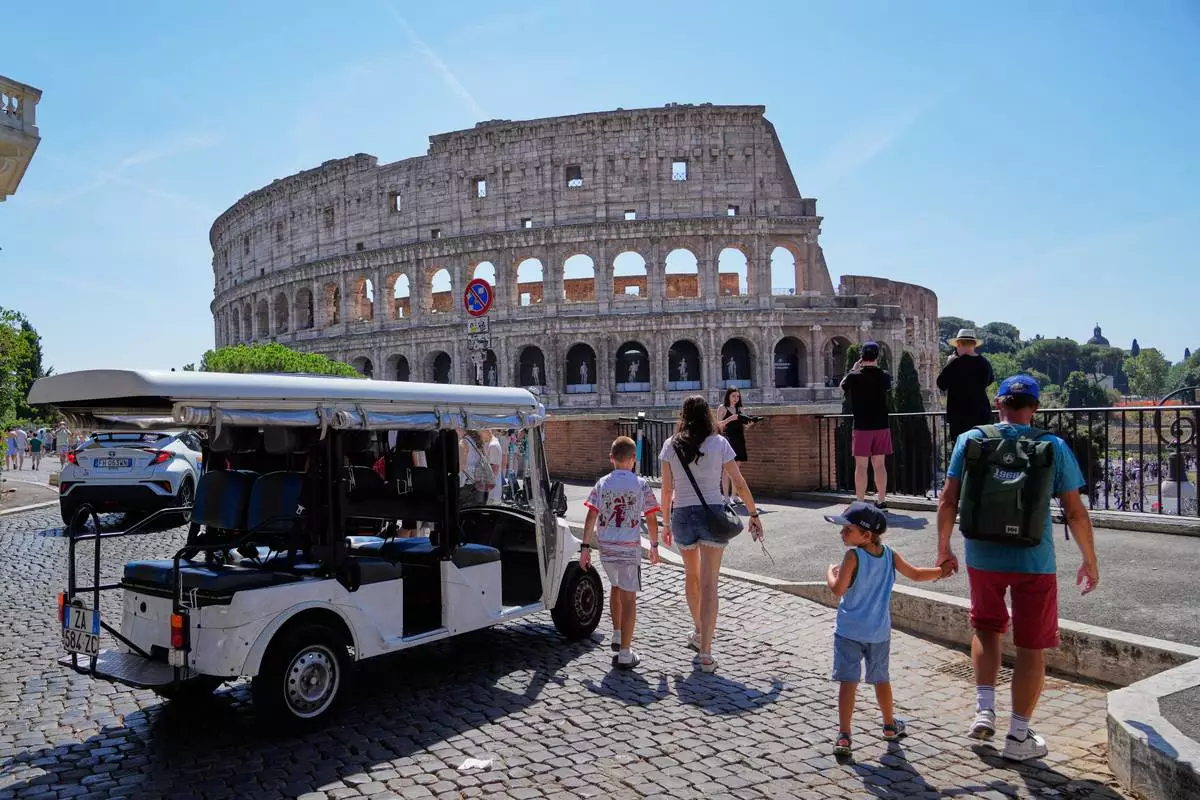
A golf cart sits near the Colosseum as tourists crowd the surrounding streets in Rome, Tuesday, Aug. 18, 2026, highlighting the growing presence of the vehicles in the capital’s historic center as authorities move to curb an industry blamed by critics for worsening congestion, illegal parking, and overtourism. (AP Photo/Gregorio Borgia)
For critics, the carts are running amok, parking illegally, worsening congestion and unlocking another level of overtourism. Some local media invoke sensational language, calling it an “invasion” and saying Rome is being “held hostage by golf carts.”
Advocates argue carts are silent, occupy less space than tourist vans and buses, and don’t choke the air with exhaust that also stains historic monuments.
The Associated Press got a taste of the enmity during a late August ride when a black, eight-seater van pulled up alongside.
“You’re in the middle of the road!” its driver barked. “Move it!”
“Always the same! The road isn’t yours!” the golf cart driver shouted back. Both gesticulated angrily with their free hands, following a time-honored Roman traffic tradition.
Carts like this zip through Rome’s cobblestone alleys, past tourists eating spaghetti carbonara from checkered tablecloths and shops hawking hot priest calendars and tote bags stamped with cliches (Ciao Bella!). But there’s no time to buy anything except a cappuccino or gelato; these tours are targeted blitzes on Rome’s hot spots — at least until they collide with authorities.
Best buckle up.
Ruth Sanderson from Manchester, England, surprised her husband with the tour for his birthday during their first trip to Rome. They could see the major sights in three hours and “just potter around” for the rest of their short stay, said Sanderson, 50.
Their guide swung around the basilica where Pope Francis is buried then headed to the Spanish Steps, where he parked in an area exclusively for car-sharing — the first of several illegal spots he snagged.
“We don’t have a proper stop for golf carts, so we park where we can — as legal as possible,” driver Martin Halili explained to them.
Even before the golf cart boom, parking was a pain. Cars, vans, Vespas and motorcycles are stationed atop curbs, crosswalks and medians. Trucks double-park while unloading.
Any spare cranny is claimed in Rome's historic center, because there are only 4,300 regular on-street spots available, about one-quarter the number of cars owned by the area's residents, according to the city's transport chief, citing a field survey conducted last year. Plus, an average 50,000 vehicles enter daily. Unsurprisingly, some residents are unhappy.
“This was the last straw because, unfortunately, there has already been traffic here for a long time, since there are too many categories of vehicles authorized,” Luigi la Licata, head of the Monti neighborhood association, told the AP. “The golf cart is the most obvious one — and the latest — but there are many others.”
Golf cart bookings this summer grew 147% from 2024, according to TripAdvisor, whose subsidiary Viator is the biggest source of passengers. Rome has as many as 500 carts, with one-fifth belonging to the Metur association of tour operators, established last December to seek common ground with locals and the city.
“Overtourism is a real problem, and we’re not denying it. And maybe we’re also part of it in a way. But if we’re part of it, then at least be part of it in a smart way,” Pascal van Duijnhoven, the association’s president, said. “We believe, especially for Rome, that it’s a solution. And we really hope that people start looking at it like this. But we need a hand. We need some help from the authorities.”
Rome’s deputy mayor for sustainable mobility and transport, Eugenio Patanè, is striving to restore order and reduce traffic — and not just golf carts.
In July, electric vehicles started paying for admission to the historic center, as gasoline-powered cars had been — a strategic shift from cutting emissions to tackling congestion. The number of authorized vehicles is down about one-quarter, to 350,000, and Patanè aims to halve the number of daily entrants.
But it hasn't been so simple to put the brakes on golf carts. First, not all carts are created equal; technical specifications mean some fall under existing rules while others can roam freely. Second, passenger transport and tourism businesses are regulated regionally, Patanè said.
So he requested the region transfer that power to Rome, and anticipates that will occur this month. Then he can present his regulation that would establish fixed tour routes, cap the number of carts of all types and create a system to select operators.
“Cities where this golf cart phenomenon is expanding truly have very few weapons,” he said. “We will be able to regulate this phenomenon that has now become rampant and, in some cases, even worrisome.”
Operators say such proposals would kneecap their nascent industry. Meantime, their carts are already getting curbed.
Authorities stopped vehicles owned by Metur associates 14 times in the back half of August, with reviews of drivers' documents that lasted up to an hour, van Duijnhoven said, and punishments that were inconsistent and severe. Carts allegedly operating as black-market, private-hire vehicles can be banned from the streets for over a month, or drivers slapped with 4,000-euro ($4,600) fines for unlicensed tour guiding.
One block from the Pantheon, the AP saw an officer from Italy's financial police inspecting the documents from a cart carrying a family from Florida. During the half-hour stop, he took their IDs and copied down their information. Three nearby private-hire vans — also parked illegally — were receiving no such scrutiny.
Halili, who guided the couple from Manchester and owns Wheel Tours, says private-hire and taxi drivers are bristling at the new kid on the block taking a bite out of their business.
“They have waged a war against us, filing complaints and appeal after appeal, because they are a powerful lobby,” he said. “This is the problem: They have it in for golf carts.”
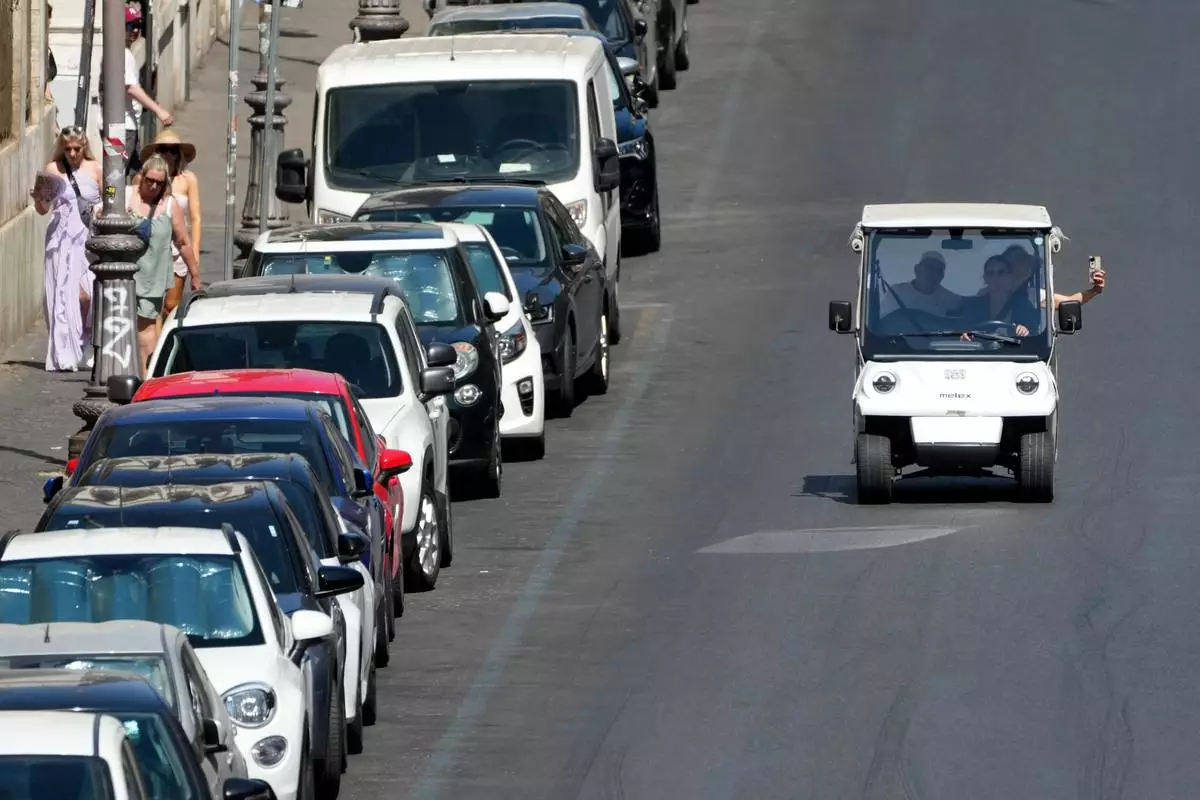
A golf cart carrying tourists travels past parked cars in Rome, Tuesday, Aug. 18, 2026, as city officials move to regulate the rapidly growing industry amid complaints about congestion, illegal parking, and overtourism. (AP Photo/Gregorio Borgia)
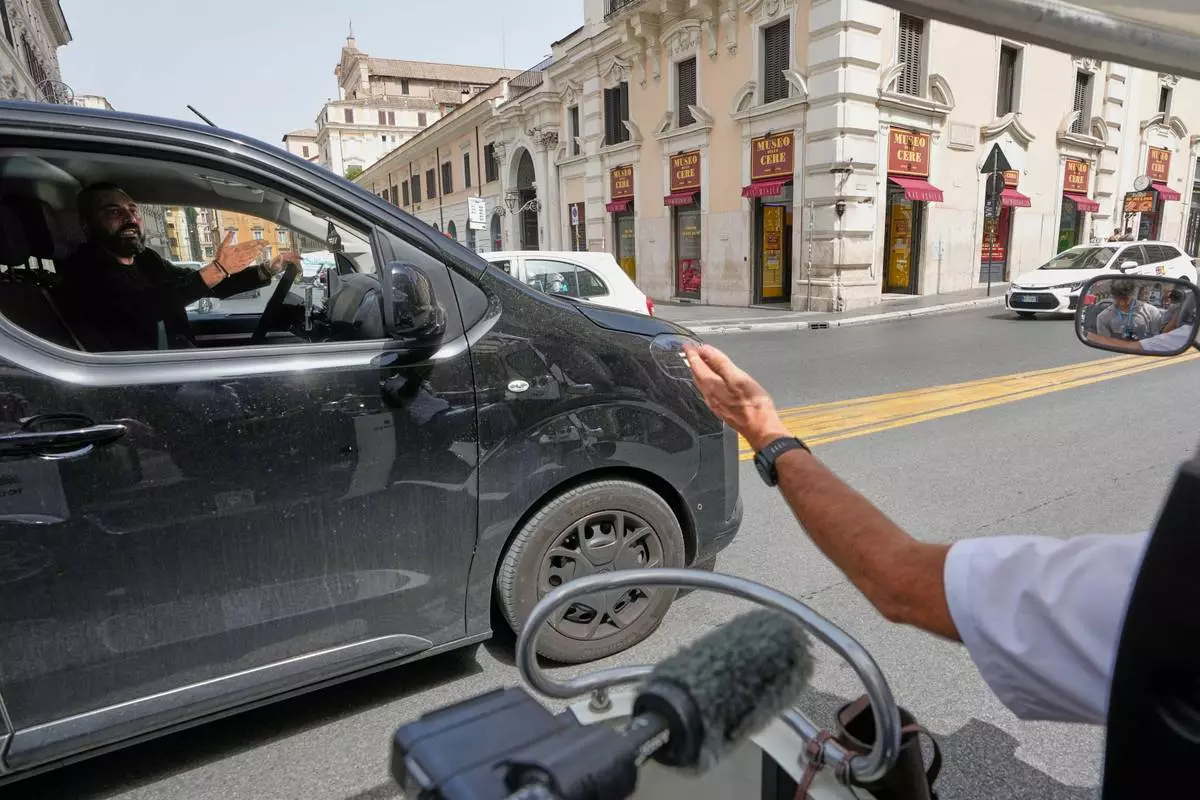
Pascal Duijnhoven, right, argues with a private-hire driver as he drives his golf cart in downtown Rome, Thursday, Aug. 27, 2026, amid growing debate over the vehicles’ role in congestion and overtourism. (AP Photo/Gregorio Borgia)
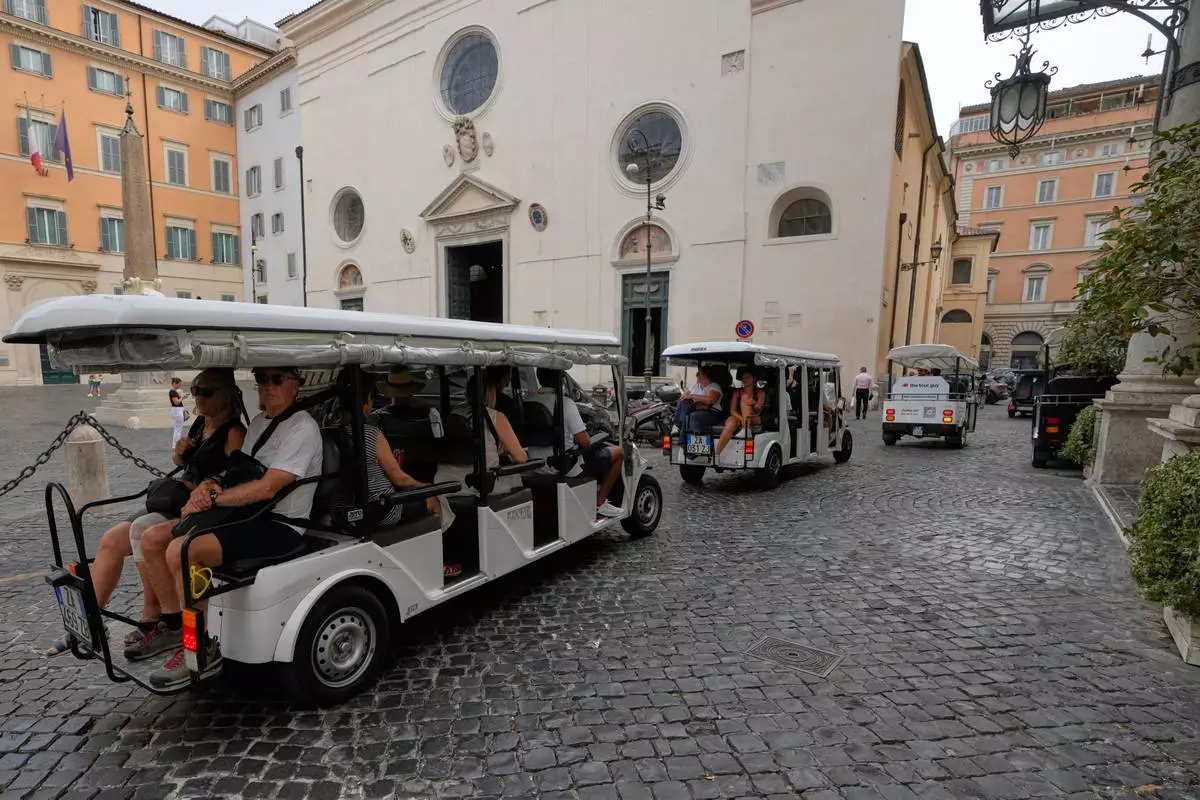
A flotilla of golf carts carrying tourists travels past the Basilica of Santa Maria sopra Minerva in Rome, Thursday, Aug. 27, 2026, as city officials move to regulate the rapidly growing industry amid complaints about congestion, illegal parking, and overtourism. (AP Photo/Gregorio Borgia)

A golf cart makes its way through crowds of tourists in Rome’s historic center, Tuesday, Aug. 18, 2026, amid growing debate over the vehicles’ role in congestion and overtourism. (AP Photo/Gregorio Borgia)
A golf cart sits near the Colosseum as tourists crowd the surrounding streets in Rome, Tuesday, Aug. 18, 2026, highlighting the growing presence of the vehicles in the capital’s historic center as authorities move to curb an industry blamed by critics for worsening congestion, illegal parking, and overtourism. (AP Photo/Gregorio Borgia)