China's upcoming Tianwen-3 Mars sample-return mission will make the search for traces of Martian life as its top scientific goal, its chief scientist said on Thursday, a quest that could not only answer whether humanity is alone in the universe but also unlock critical clues about Earth's own long-term fate.
The mission, scheduled for launch around 2028, represents a meticulously calculated scientific priority. Mars is considered the most Earth-like planet in the solar system, and mounting evidence suggests that early Mars once harbored liquid water, a denser atmosphere, and a global magnetic field, which are widely believed to have created a habitable environment billions of years ago.
"Tianwen-3's primary scientific objective is to search for signs of life. Therefore, we must land in a very precisely targeted area, which, both in theory and according to existing records, is the most likely to harbor life," said Hou Zengqian, an academician with the Chinese Academy of Sciences.
Hou made the remarks on the sidelines of the International Deep Space Exploration Conference 2026, which opened on Thursday in Hefei City of east China's Anhui Province. "It is widely believed that if there is life beyond Earth, Mars is the most likely place to find it. Why? Because Mars in its past was quite similar to Earth: it had water, an atmosphere and a magnetic field. It was a habitable environment, and such an environment could have given rise to life. People are paying close attention to whether life could exist beyond our planet, and Mars is the most important planet that may provide a scientific answer," he said.
Hou emphasized that obtaining definitive biosignature evidence would have profound implications for one of humanity's oldest questions: Did life ever emerge beyond our home planet? But he noted that the mission's scientific value extends far beyond astrobiology.
The academician explained that Earth, Mars, and Venus began as "three siblings" roughly 3.5 billion years ago, yet followed dramatically different evolutionary paths. Understanding why Mars -- once so Earth-like -- underwent such rapid planetary aging could provide indispensable insights into the mechanisms that govern habitability.
"Why did Mars age so quickly? Why did a once-habitable world become so inhospitable? What are the controlling factors behind planetary habitability? These mysteries remain unsolved. Exploring Mars may help us unlock the fundamental mechanisms that regulate habitability and allow us to better understand Earth and predict its future," he said.
According to the China National Space Administration, the Tianwen-3 probe will have five components -- a lander, an ascender, a service capsule, an orbiter, and a reentry module. It will be launched around 2028 on two Long March-5 heavy-lift carrier rockets from the Wenchang Space Launch Site in China's southernmost island province of Hainan.
If everything goes according to plan, the mission will collect samples from the Martian surface and then send them back to Earth around 2031, becoming the first to return the Red Planet's substances to Earth.
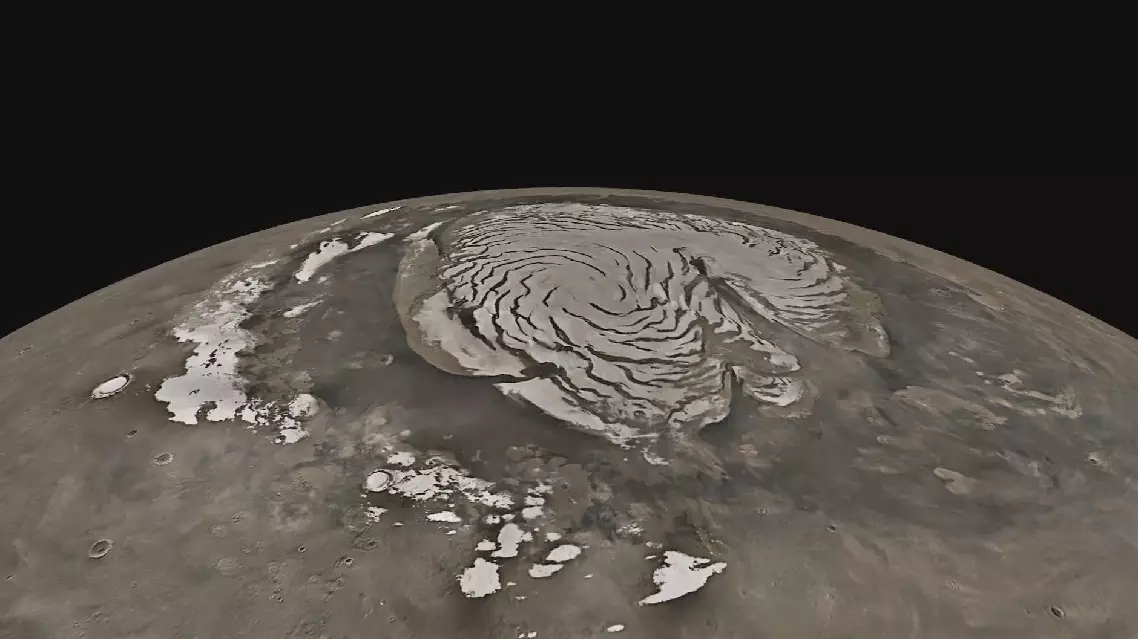
Tianwen-3 to search for traces of life on Mars: chief scientist
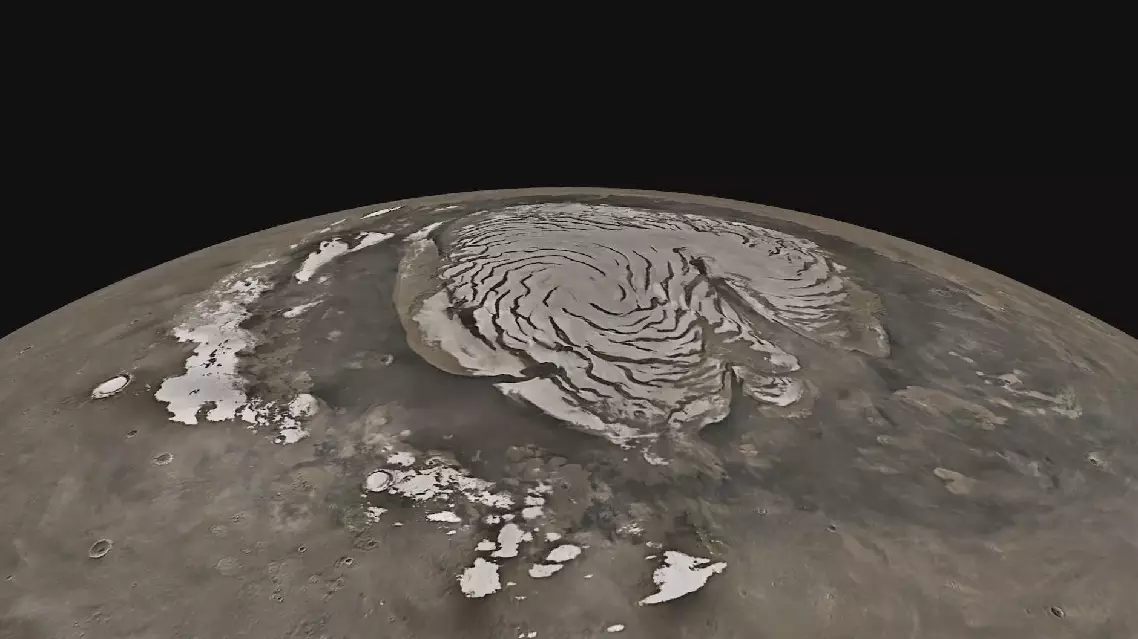
Tianwen-3 to search for traces of life on Mars: chief scientist