Large-scale urban developments, integrated ecosystems and transparent pricing platforms address longstanding concerns over information access and product quality.
HANOI, VIETNAM – Media OutReach Newswire – 4 September 2026 – For overseas Vietnamese considering investment in their country of origin, two persistent concerns have traditionally been access to reliable information and confidence in product quality. As large-scale, internationally oriented urban developments continue to take shape across Vietnam, that landscape is evolving. With projects spanning thousands of hectares, living standards refined over nearly two decades, and an integrated ecosystem rarely matched in the market, Vinhomes has emerged as a natural destination for overseas Vietnamese investment.
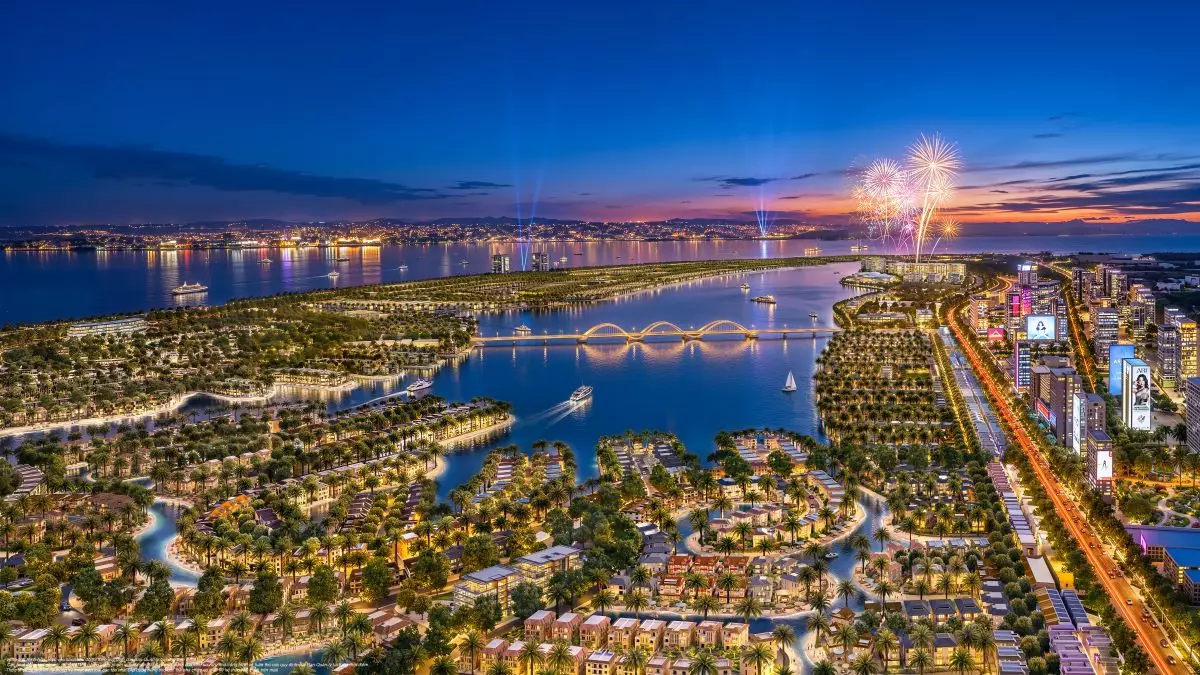
Vinhomes currently has a land bank of approximately 29,500 hectares.
Global Remittances: A Steady Flow Increasingly Directed Toward Real Estate
Globally, remittances have long ranked among the most stable sources of external finance for developing economies. According to World Bank estimates cited by the U.S. Federal Reserve, global remittance flows reached a record approximately US$818 billion in 2023(1), nearly four times the combined official development assistance (ODA) provided by OECD countries. Increasingly, these funds are moving beyond day-to-day consumption toward long-term asset accumulation, with real estate ranking among the preferred choices of financially established households.
Vietnam offers a particularly clear illustration of this trend. Total remittances to the country reached approximately US$16 billion in 2024(2), keeping Vietnam among the world's ten largest recipients. Notably, nearly US$8 billion in remittance capital flowed into Vietnam's real estate market in the first nine months of 2025 alone(3), a strong indication of growing confidence among overseas Vietnamese in the domestic market.
Unlike short-term speculative capital, overseas Vietnamese buyers tend to view property as a means of preserving and building wealth over the long term. This helps explain why large-scale urban developments with coherent master planning, transparent legal frameworks and proven operational capabilities are increasingly prioritized by this demographic.
Recent amendments to Vietnam's Land Law and Law on Real Estate Business, which took effect in 2024, have further expanded the rights of overseas Vietnamese. Those of Vietnamese origin who retain Vietnamese citizenship enjoy land-related rights and obligations broadly equivalent to those of domestic citizens. Those of Vietnamese origin without Vietnamese citizenship have also gained a more accessible legal pathway to home ownership.
This policy shift addresses a substantial unmet demand. Potential housing demand among overseas Vietnamese in Vietnam has been estimated at more than three million homes, a market whose development was previously constrained in part by procedural barriers and concerns over the transparency of project information.
Vinhomes: A Key Destination for Overseas Vietnamese Investment
If policy reforms have opened the door, Vinhomes has become one of the key addresses through which overseas Vietnamese are choosing to invest.
Over nearly two decades, beginning with developments such as Royal City, Times City and Vinhomes Riverside, Vinhomes has helped introduce and scale a model of integrated urban living in Vietnam, bringing homes, education, healthcare, retail, green mobility and essential services together within a single, connected environment. In doing so, the company has helped raise the benchmark for urban development across the domestic real estate sector.
The scale of that platform is reflected in figures that few developers in Vietnam can match. Vinhomes currently holds a land bank of approximately 29,500 hectares, equivalent to nearly two-thirds of Singapore's total land area, making it the country's largest real estate developer by land holdings. The company has brought 32 projects and urban developments into operation, supporting the daily lives of hundreds of thousands of residents across Vietnam.
Its momentum in 2025 further reinforced that leading position. Vinhomes recorded VND205.3 trillion in contracted sales in 2025, up 98% year on year. During the year, four new mega-urban developments were introduced to the market: Vinhomes Wonder City in Hanoi, Vinhomes Golden City in Hai Phong, Vinhomes Green Paradise in Can Gio, Ho Chi Minh City, and Vinhomes Green City in Long An.
The company's approach to raising living standards has also received recognition beyond Vietnam. At the Dot Property Southeast Asia Awards 2025, Vinhomes was named "Developer of the Year Southeast Asia 2025", the highest distinction presented by the awards.
It is this combination of scale, brand credibility and transparency that is proving particularly relevant to the global Vietnamese community.
At Vinhomes Royal Island in Vu Yen, Hai Phong, the project attracted nearly 10,000 visitors and close to 2,000 purchase bookings within just over a month of its launch. A significant proportion of these prospective buyers were overseas Vietnamese from Germany, Poland and other European countries.
The project was also among the first Vinhomes developments to publicly list property prices on the Vinhomes Market platform, enabling buyers anywhere in the world to access product information, pricing and sales policies remotely. For overseas Vietnamese, this directly addresses one of the most persistent obstacles to investing from abroad: the difficulty of obtaining comprehensive and reliable information without being physically present in Vietnam.
At Vinhomes Hai Van Bay in Da Nang, a number of overseas Vietnamese families have chosen to acquire two different types of property within the development: one designed to generate rental income while they remain overseas, and another, such as a villa, intended for their eventual return to Vietnam, whether for retirement or long-term residence.
Behind the appeal of individual developments is the broader Vingroup ecosystem, which brings together education through Vinschool and VinUni, healthcare through Vinmec, retail through Vincom Retail, hospitality and entertainment through Vinpearl and VinWonders, and green mobility through VinFast and Green SM.
The significance lies not simply in the number of businesses involved, but in how these services work together. They allow a Vinhomes development to function as a complete living environment, with the convenience, connectivity and service standards increasingly expected of international cities. For overseas Vietnamese who have spent years accustomed to high-quality urban environments abroad, that continuity of experience can be an important consideration — whether the intention is to invest today or plan for a future return to Vietnam.
A Two-Way Connection: When Confidence Becomes a Growth Driver
The convergence of more open policies, substantial remittance flows and a leading urban developer with Vinhomes' scale is creating a reinforcing cycle.
Greater confidence encourages more overseas Vietnamese capital to enter the domestic property market. At the same time, the scale, credibility and operating track record of large urban developments give investors greater confidence that their capital is being placed in an environment they can understand, access and ultimately return to.
For the global Vietnamese community, property can serve as one of the tangible links between financial participation and a deeper connection with their country of origin. As Vietnam's cities continue to evolve, the opportunity increasingly moves in both directions: capital can flow back before people do, while the developments they invest in can become the places to which they eventually return.
In that sense, Vinhomes is not simply participating in the flow of capital back to Vietnam. Its urban developments are helping give that flow a more tangible destination, one where investment, quality of life and the prospect of returning to Vietnam increasingly converge.
Hashtag: #Vinhomes
The issuer is solely responsible for the content of this announcement.
About Vinhomes
Vinhomes is a premier real estate developer in Vietnam, committed to creating integrated, sustainable urban communities that set new benchmarks for quality of life, environmental stewardship and long-term value creation.
1. Federal Reserve — Global Remittances Cycle, February 27, 2025: https://www.federalreserve.gov/econres/notes/feds-notes/global-remittances-cycle-20250227.html
2. The Saigon Economic Times — Remittance flows into Vietnam in 2025: https://thesaigontimes.vn/dong-tien-kieu-hoi-do-ve-viet-nam-2025-xu-huong-chon-bat-dong-san-trung-tam-tphcm-lam-kenh-dau-tu-an-toan/
3. Cong Luan — Nearly US$8 billion in remittances flows in as overseas Vietnamese increase domestic real estate investment: https://congluan.vn/gan-8-ty-usd-kieu-hoi-do-ve-viet-kieu-tang-manh-dau-tu-bat-dong-san-trong-nuoc-10315605.html
** This press release is distributed by Media OutReach Newswire through automated distribution system, for which the client assumes full responsibility. **
Amid rising textile waste crisis, environmental NGO Redress’ world-leading sustainable fashion competition winner proves that designing out waste is one of fashion’s biggest opportunities
HONG KONG SAR – Media OutReach Newswire – 4 September 2026 – Redress, the Hong Kong-based, Asia-focused environmental NGO accelerating circular fashion, announced the winner of the Redress Design Award 2026, the world's leading sustainable fashion design competition, at a star-studded runway finale at CENTRESTAGE, Asia's annual fashion showcase. The finalists' runway collections, designed using circular techniques including factory surplus, discarded garments, excess new stock, furnishings waste, tackled the global textile waste crisis and highlighted what most fashion consumers do not realise: an estimated 80% of a product's environmental impact is locked in at design stage[1], long before the clothes hit the shop floor.

Redress Design Award Winner Inspires Consumers To Demand More Sustainable Fashion Choices
"My generation of designers won't be judged just on aesthetics. We must understand circularity - durability, repairability and recyclability - from the drawing board to fill the racks with what more consumers hope to buy. Coming into this wasteful fashion industry is intimidating and we must respond with courage," said Jon Liesenfeld, from Germany, Redress Design Award 2026 First Prize Winner, who outdesigned seven other finalists from Hong Kong, Chinese Mainland, United Kingdom, Austria, and Israel.
As Lead Sponsor, the Cultural and Creative Industries Development Agency (CCIDA) has supported the Award as a cornerstone project for 14 consecutive years. "Creativity and sustainability have never been more closely intertwined than they are today," shared Drew Lai, Commissioner for Cultural and Creative Industries, CCIDA. "We take great pride in the legacy of the Award: over 350 alumni across more than 40 regions, many of whom have gone on to translate circular design principles into thriving, real-world practice — a clear testament to the Award's wide-reaching impact."
The fashion industry must reinvent itself - from the drawing board up
Textile waste is a global crisis, with an estimated 120 million tonnes generated annually, of which 80% ends up in landfills or being incinerated[2]. The global textile industry is only 0.3% circular[3].
"Whilst the fashion industry faces serious challenges - from geopolitical pressures, inflation, complex global supply chains to incoming legislation - it is catastrophically still on its wasteful, runaway trainwreck," said Dr. Christina Dean, Founder, Redress. "Circularity is flat-lining despite circular textile business models being estimated to generate US$700 billion in economic value by 2030[4] and whilst clothing waste sky rockets, which will be exacerbated by global dominance of ultra fast fashion brands. Redress' work to catalyse circular fashion is critical and our educational movement has reached millions of designers in almost 100 countries worldwide," she said.
All finalists join Redress' Alumni global network of 350+ designers who continue sparking solutions. Alumnus Kevin Germanier closed Paris Couture Week this spring with a collection made entirely from LVMH-owned brands' excess inventory across. Alumnus Angus Tsui and Eric Wong have transformed retired DHL courier uniforms into accessories.
Upcycling continues moving mainstream, with LVMH Group, Miu Miu, Coach, Uniqlo, Converse, Wrangler and Vivienne Westwood, developing various upcycled collections, selling its creativity and uniqueness rather than sustainability alone.
Incoming regulation, particularly the European Union's Ecodesign for Sustainable Products Regulation (ESPR), Extender Producer Responsibility (EPR) and the ban on destroying unsold clothing and footwear, have given brands more incentive to embrace upcycling than just a few years ago.
Redress Design Award 2026 Prizes expose winners to array of British businesses
Jon Liesenfeld wins an educational journey to British fashion businesses; from design-led apparel manufacturers, Simple Approach who produce 50 million apparel pieces annually for brands including Primark and Next; luxury womenswear brand Roksanda, worn by Her Royal Highness Catherine, Princess of Wales, Michelle Obama, Kate Blanchett and Anne Hathaway. This prize is supported by GREAT Britain & Northern Ireland Campaign.
The runner-up, Jasmine Cheuk from Hong Kong, wins a mentorship with distinguished British fashion activist and competition judge, Orsola de Castro, who has mentored Redress' competition winners every cycle for the last decade and has been a judge since the competition's inception. Jasmine also won the Hong Kong Best prize.
Redress empowers emerging designers to help close the educational skills gap
Redress recognises the urgent need to equip designers with the skills required to narrow the educational gap within the fashion industry. An integrative review of 81 papers found that mainstream fashion design courses still "scarcely incorporate sustainability within their curricula", underscoring the need to strengthen sustainability education through both theoretical understanding and practical application.[5] To date, Redress has directly educated 36,500+ fashion designers and educators and has generated 18 million views across its online educational resources.
In addition to education, Redress builds strategic industry partnerships to create real-world pathways for designers. During the Redress Design Award 2026, finalists remade discarded, unwearable post-consumer clothing waste into retail-ready collections for multi-brand fashion retailer, D-mop, in collaboration with TAL Apparel, leading global garment manufacturer. This work was delivered as part of the 'Remake to Retail' challenge; the resulting collection is scheduled to launch with D-mop later this year.
Redress Design Award turns consumer concern into sustainable demand
Engaging with consumers to drive the sustainable fashion movement is critical, given rampant overconsumption and clothing underutilisation, which results in the majority of clothing being landfilled or burned within one year of production.[6] Whilst the majority of consumers believe brands have a responsibility to make positive change in the world[7], an intention gap between what consumers think and what they do persists, whereby 71% of global consumers are concerned about sustainability in fashion, yet only 3% of them are willing to pay a premium for it.[8]
Through the Redress Design Award, finalists demonstrate that sustainable fashion can be desirable. By showcasing exceptional design and compelling storytelling, and by bringing remade clothing into mainstream spaces, these next-generation designers motivate consumers to actively choose more sustainable options, turning concern into demand.
Editor's Notes
- Data and Statistics Insights: Redress Design Award: Redress Design Award Additional Resources - The Issues
- Competition Criteria: The Redress Design Award 2026 was open to global applications from emerging designers and students with less than four years' professional experience focusing on womenswear and menswear original collection designs. Competition brief here.
- The People's Choice winner, voted by the public, was Tal Zohar from Israel.
- Judges are: Orsola de Castro, Author and Fashion Activist; Rachel Franklin, Director of ESG, Simple Approach; Cherry Mui, Editorial Director, Vogue Hong Kong; Rod Henderson, President, TAL Apparel Ltd; Angus Tsui, Creative Director, ANGUS TSUI and Alumnus, Redress Design Award; and Dr. Christina Dean, Founder and Board Chair, Redress.
- Sponsors Cultural and Creative Industries Development Agency (CCIDA) as the Lead Sponsor. Other key partners include DHL and TAL Group.
- Redress Alumni Networkoffers designers ongoing support as they develop their careers in sustainable fashion.
Hashtag: #RedressDesignAward
The issuer is solely responsible for the content of this announcement.
The Redress Design Award
The Redress Design Award (www.redressdesignaward.com) is the world's leading sustainable fashion design competition that educates and empowers emerging fashion designers about circular design techniques to reduce fashion's negative environmental impacts. Organised by Hong Kong-based, Asia-focused environmental NGO Redress since 2011, the competition partners with academic institutions globally and attracts designer applicants from over 50 countries and regions to win prizes that connect them with global-leading fashion businesses to accelerate the change to a circular fashion industry.
Redress (www.redress.com.hk) is a Hong Kong-based, Asia-focused environmental NGO founded in 2007 accelerating the change to a circular fashion industry by educating and empowering designers and consumers to reduce clothing's negative environmental impacts. Locally, Redress has collected 208 tonnes of clothing for recirculation and educated 21,000+ Hong Kong students and teachers. Globally, they have directly educated 36,500+ fashion designers and teachers, amassing 18 million online views of their sustainable design educational content and building a social media reach of 46 million users.
The Cultural and Creative Industries Development Agency (CCIDA) (www.ccida.gov.hk), formerly known as Create Hong Kong (CreateHK) since 2009, was established in June 2024. CCIDA is a dedicated office under the Culture, Sports and Tourism Bureau of the Government of the Hong Kong Special Administrative Region (HKSAR Government) to provide one-stop services and support to the cultural and creative sectors with a mission to foster a conducive environment in Hong Kong to facilitate development of the arts, culture and creative sectors as industries. CCIDA's strategic foci are nurturing talent and facilitating start-ups, exploring markets, promoting cross-sectoral and multi-disciplinary collaboration, promoting industrialisation of the arts, culture and creative sectors under the industry-oriented principle, and fostering a creative atmosphere in the community, thereby reinforcing Hong Kong as Asia's creative capital and our positioning as the East-meets-West centre for international cultural exchange.
Disclaimer: The Government of the Hong Kong Special Administrative Region provides funding support to the project only, and does not otherwise take part in the project. Any opinions, findings, conclusions or recommendations expressed in these materials/events (or by members of the project team) are those of the project organisers only and do not reflect the views of the Government of the Hong Kong Special Administrative Region, the Culture, Sports and Tourism Bureau, the Cultural and Creative Industries Development Agency, the CreateSmart Initiative Secretariat or the CreateSmart Initiative Vetting Committee.
** This press release is distributed by Media OutReach Newswire through automated distribution system, for which the client assumes full responsibility. **