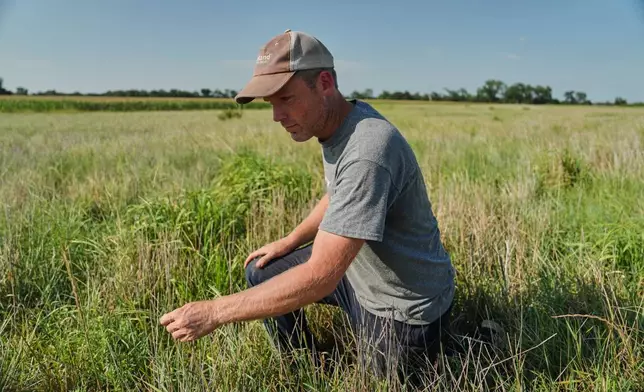
BELOIT, Kan. (AP) — Bryce Black kneels in a wheat field battered by intense drought. He holds two strands, remarking on how small the seed head is compared with what's normal.
After a late October rain last year, the fourth-generation farmer was optimistic about his 1,800 acres (728 hectares) of winter wheat. But a dry winter and spring brought extreme drought when the wheat needed moisture to establish itself. He ended up harvesting about 1,500 acres (607 hectares), but the yield was the lowest he's had since taking over his family's farm in 2017.
Click to Gallery
Mesh bags cover silflowers, an oilseed crop, after hand pollination in a research field Tuesday, July 28, 2026, at The Land Institute in Salina, Kan. (AP Photo/Joshua A. Bickel)
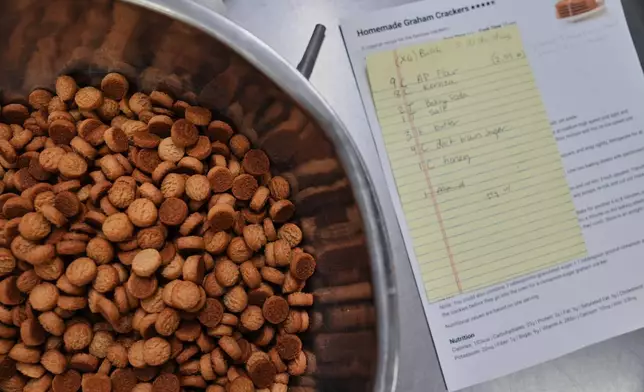
Small crackers made with Kernza flour sit in a bowl after baking in a test kitchen Tuesday, July 28, 2026, at Prairy in Newton, Kan. (AP Photo/Joshua A. Bickel)
Bags of Kernza flour sit on display, Monday, July 27, 2026, at Prairy in Newton, Kan. (AP Photo/Joshua A. Bickel)
A loaf of Kernza bread is seen at Prairy, Monday, July 27, 2026, in Newton, Kan. (AP Photo/Joshua A. Bickel)
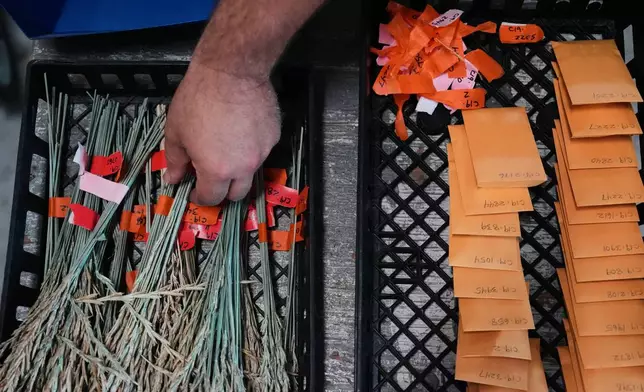
Marty Christians grabs a bundle of Kernza for cleaning and weighing Tuesday, July 28, 2026, at The Land Institute in Salina, Kan. (AP Photo/Joshua A. Bickel)
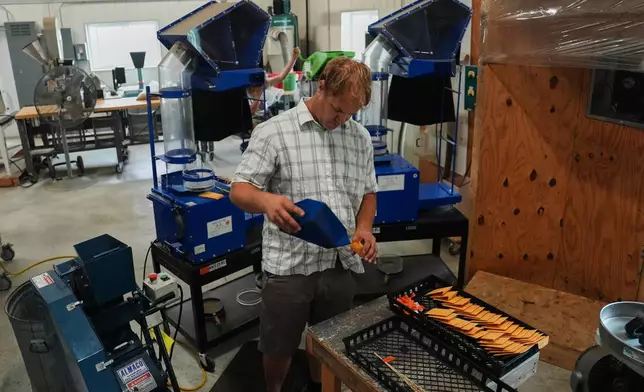
Marty Christians pours Kernza grain into an envelope after threshing Tuesday, July 28, 2026, at The Land Institute in Salina, Kan. (AP Photo/Joshua A. Bickel)
Skyler Grove holds a bundle of Kernza, Tuesday, July 28, 2026, at The Land Institute in Salina, Kan. (AP Photo/Joshua A. Bickel)
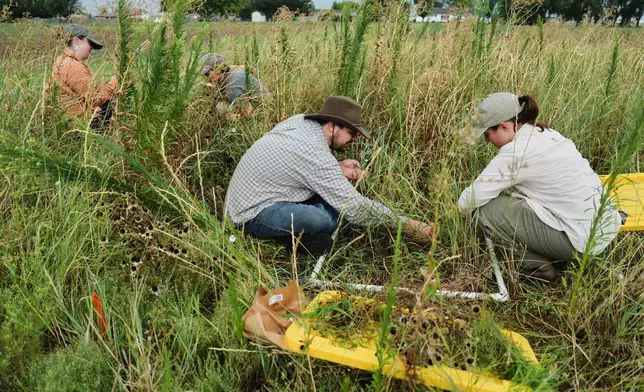
Kate Fitzsimmons, right and Jacob Barefoot, center, gather plant material from a Kernza research field Tuesday, July 28, 2026, at The Land Institute in Salina, Kan. (AP Photo/Joshua A. Bickel)
A field of Kernza, center, grows Tuesday, July 28, 2026, at a farm in Halstead, Kan. (AP Photo/Joshua A. Bickel)
David Mueller kneels down in one of his Kernza fields Tuesday, July 28, 2026, at his farm in Halstead, Kan. (AP Photo/Joshua A. Bickel)
David Mueller pulls a Kernza seed out of its husk Tuesday, July 28, 2026, at his farm in Halstead, Kan. (AP Photo/Joshua A. Bickel)
Unharvested wheat affected by extreme weather sits in a field Wednesday, July 29, 2026, in Beloit, Kan. (AP Photo/Joshua A. Bickel)
Perennial wheat grows in a research field Tuesday, July 28, 2026, at The Land Institute in Salina, Kan. (AP Photo/Joshua A. Bickel)
Unharvested wheat affected by extreme weather sits in a field Wednesday, July 29, 2026, in Beloit, Kan. (AP Photo/Joshua A. Bickel)
Kernza grows in a farm field Tuesday, July 28, 2026, in Halstead, Kan. (AP Photo/Joshua A. Bickel)
Perennial wheat grows in a research field Tuesday, July 28, 2026, at The Land Institute in Salina, Kan. (AP Photo/Joshua A. Bickel)
Bryce Black inspects two strands of weather-stressed wheat Wednesday, July 29, 2026, at his farm in Beloit, Kan. (AP Photo/Joshua A. Bickel)
David Mueller stands in his Kernza field Tuesday, July 28, 2026, at his farm in Halstead, Kan. (AP Photo/Joshua A. Bickel)
“It was just a grit your teeth and get through it type of deal,” said Black, who also grows corn, soybeans and milo on his family’s 4,500-acre (1,821 hectare) farm. “It is disheartening, you know? And it’s kind of hard to know what to do.”
When these weather events occur, farmers often look for new ways to protect their crops and their bottom line.
A small number are putting perennial grains in rotation to build resilience against extreme weather like drought and intense rainfall. Researchers are working to develop perennial versions of common annual grains like wheat, sorghum and rice, but the work is slow. And widespread adoption by farmers is challenging because perennial crops don’t yield as much, harvesting can be difficult and the market is still developing.
Despite the challenges, Black is intrigued.
“I’m in survival mode,” he said. “If you can plant something and then you don’t have to go back for four or five years … that would save so much money, so much labor, everything. That’s what makes it enticing.”
Five years ago, David Mueller planted a 12-acre (5 hectare) field of Kernza, a perennial grain similar to native grasses found in parts of Europe and western Asia.
Perennial grains don’t require yearly planting, harvesting and replanting. Instead, they are planted once every few years.
Researchers say their root systems, which can reach several feet down, can access water deeper in the ground. That helps them better withstand short-term drought. And when heavy rain hits, the larger root structures can absorb excess water that would otherwise run off and erode the soil. Those deeper roots also sequester more carbon, reducing pollution in the atmosphere.
Kernza is one of several perennial grains under development at The Land Institute in Salina, Kansas, about an hour’s drive north of Mueller’s farm. The institute, which formally began domesticating Kernza in 2001, works with researchers and farmers around the world to develop perennial versions of wheat, rice, sorghum and other grain and oil seeds.
Some farmers in Southeast Asia and parts of Africa have started planting and harvesting perennial rice in their fields. Kernza, though, is furthest along and was first harvested on a farm in 2010.
In the U.S. last year, Kernza was cultivated on 3,511 acres (1,421 hectares), compared with 37.2 million acres (15.1 million hectares) of winter, spring and Durum wheat harvested or planted in 2025-26.
Mueller's Kernza field is one of almost 100 acres (40 hectares) he has planted since 2018. He's used the crop to rebuild soil with drainage issues or to reestablish organic matter on his family's farm in Halstead, Kansas, where they also farm about 600 acres (243 hectares) each of corn and soybeans.
He also said Kernza uses about a third of the fertilizer that wheat needs, and because it's planted once every few years, he doesn't have to run gas-burning farm equipment as often.
“Not only are we able to utilize those acres profitably, but then we also build up that soil and work on some benefits to make it hopefully profitable to raise other crops on those fields in the future,” Mueller said.
A 2024 United Nations report suggests that by 2050, soil degradation could cause more than $20 trillion in losses to the global economy. Farming perennials is less disruptive to that carbon-capturing soil.
Soil serves as a reservoir, capturing planet-warming carbon dioxide from the atmosphere that plays a role in climate change, experts say. Annual cultivation — the plow, plant, harvest and repeat cycle — strains soil formation, which takes thousands of years and rapidly degrades the farmland. Perennial roots can also bring that carbon deeper into soils, where it is less likely to be disturbed, said Laura van der Pol, The Land Institute's lead soil ecologist.
And soil that has more carbon in it tends to be better for plants.
“Incorporating perennials into our agriculture seems like really the only option to have soil for generations if we want to continue to grow food,” van der Pol said. “It’s hard to imagine getting to a place where we could have soil and abundant food without a perennial option.”
Pilot programs involving perennial grains are in the works around the world, testing how to grow them in different regions, climates and soils, but the research is early and slow-moving.
Chief among the challenges is the crops' grain yield, said Lee DeHaan, who leads the Institute’s Kernza domestication program. Kernza farmers are getting yields of about 20 to 40% of what they might get from a wheat crop in the area. That's because a perennial crop has to use energy not only to grow seeds for grain, but also to grow roots to penetrate the soil so it can survive for more than a year. That contrasts with annual crops, which are engineered to put as much energy as possible into making as much seed as they can in one growing season.
Researchers at Cornell University also have found that establishing a Kernza field can be difficult as it contends with weeds in its first year. Finding the right seeding rate to maximize yield is also still being studied, said Matthew Ryan, a sustainable cropping professor at Cornell University.
Mueller said new varieties of Kernza are yielding more than previous ones, but the yield can decline as the crop ages. Yields on perennial rice are similar to annual ones, officials at The Land Institute said.
Harvesting Kernza specifically can be challenging. The grain is smaller than wheat, for example, and farmers and researchers are still finding the best ways to adapt farm equipment so the kernel isn't damaged during harvest.
Still, Ryan said farmers who experience crop loss due to drought or major flooding may be prompted to think about ways to build more resilience into their operations.
“I think farmers, more than other people, realize that the climate is changing,” he said. “They prompt people to think, and I feel like they are driving farmers to practice this.”
Even as perennial grain development steadily improves and more farmers sign on to grow it, there are still issues with consumer interest, federal support and research infrastructure.
Aaron Gaeddert, the owner of Prairy in Newton, Kansas, sells Kernza products and develops food products in his test kitchen. The grain has a sweeter flavor than wheat and can be found in products like baking mixes and beer. Building awareness is challenging, Gaeddert said, but he's hopeful interest will grow as new products are developed.
“We still have customers that shop here all the time who don’t know what Kernza is, and we’ve had it on our shelves for three or four years,” he said. “I truly think that it’s gonna take some bigger industry players to adopt a new grain like this.”
And while farmers receive federal bridge payments and other assistance for traditional crops amid market disruptions and increased production costs, federal funding for perennial grains is lacking. The value of a farmer's land and the loans they can get to subsidize operations are directly connected to what they grow.
Brandon Schlautman, a perennial crop scientist and farmer at Sustain-a-Grain, a supplier and distributor of Kernza, said he constantly hears from farmers who want to grow it, but he turns away almost all of them because the market isn't developed enough.
“What farmers really need is access to the product or the grain itself,” Schlautman said. “And stable markets that allow them to grow Kernza and sell it profitably and sustainably.”
Mueller contracts with Sustain-a-Grain, which sells him Kernza seed and buys back his crop at a fixed price. That guaranteed price means he doesn’t have to worry as much about the risk of planting an alternative crop. Mueller agrees the market for Kernza is small, but that means farmers who grow it can be paid a premium, sometimes 5 to 10 times the price of a pound of wheat, he said.
Pricing the grain low enough to open up a larger market for consumers is the main challenge.
“The fact that it has the potential to be profitable as opposed to some other alternative crops, that was intriguing too,” Mueller added. “Because at the end of the day, ideas are great, but you need to make money if you want to do this again next year.”
St. John reported from Detroit. Follow her on X: @alexa_stjohn. Reach her at ast.john@ap.org. Follow Joshua A. Bickel on Instagram, Bluesky and X @joshuabickel. Reach him at jbickel@ap.org.
Read more of AP’s climate coverage.
The Associated Press’ climate and environmental coverage receives financial support from multiple private foundations. AP is solely responsible for all content. Find AP’s standards for working with philanthropies, a list of supporters and funded coverage areas at AP.org.

Mesh bags cover silflowers, an oilseed crop, after hand pollination in a research field Tuesday, July 28, 2026, at The Land Institute in Salina, Kan. (AP Photo/Joshua A. Bickel)
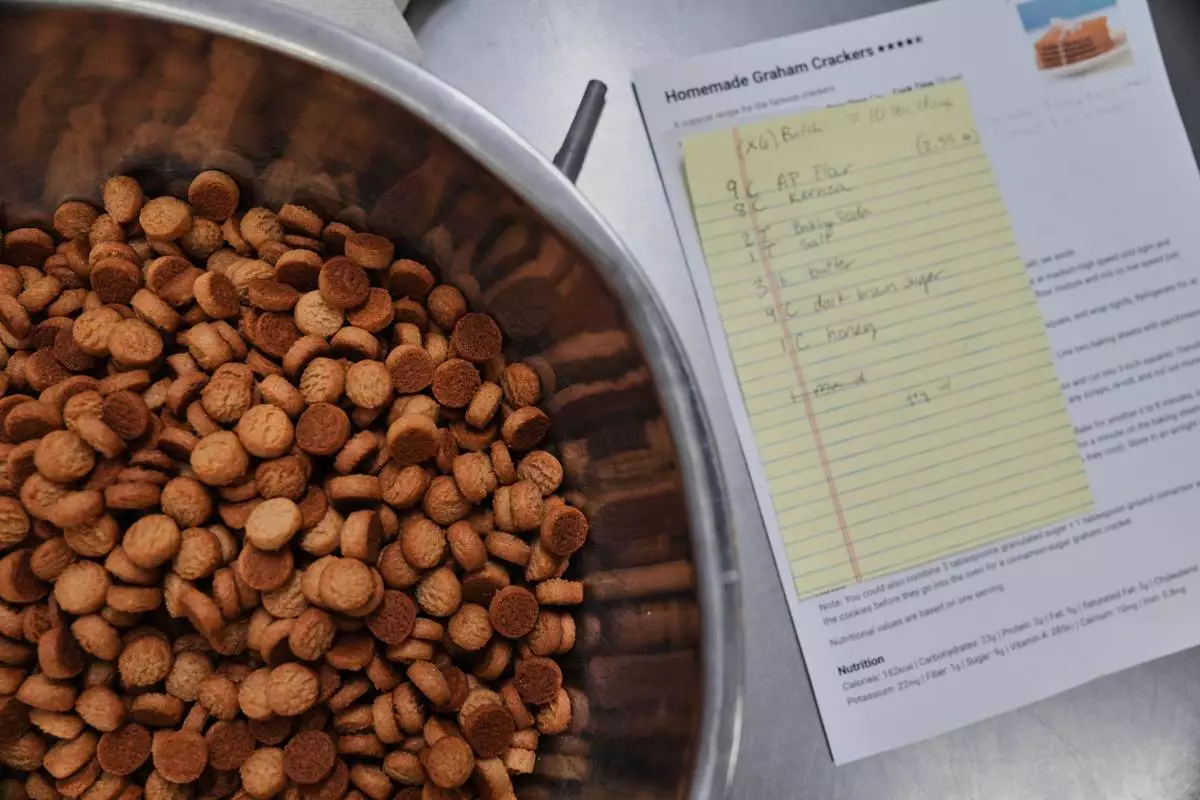
Small crackers made with Kernza flour sit in a bowl after baking in a test kitchen Tuesday, July 28, 2026, at Prairy in Newton, Kan. (AP Photo/Joshua A. Bickel)

Bags of Kernza flour sit on display, Monday, July 27, 2026, at Prairy in Newton, Kan. (AP Photo/Joshua A. Bickel)

A loaf of Kernza bread is seen at Prairy, Monday, July 27, 2026, in Newton, Kan. (AP Photo/Joshua A. Bickel)
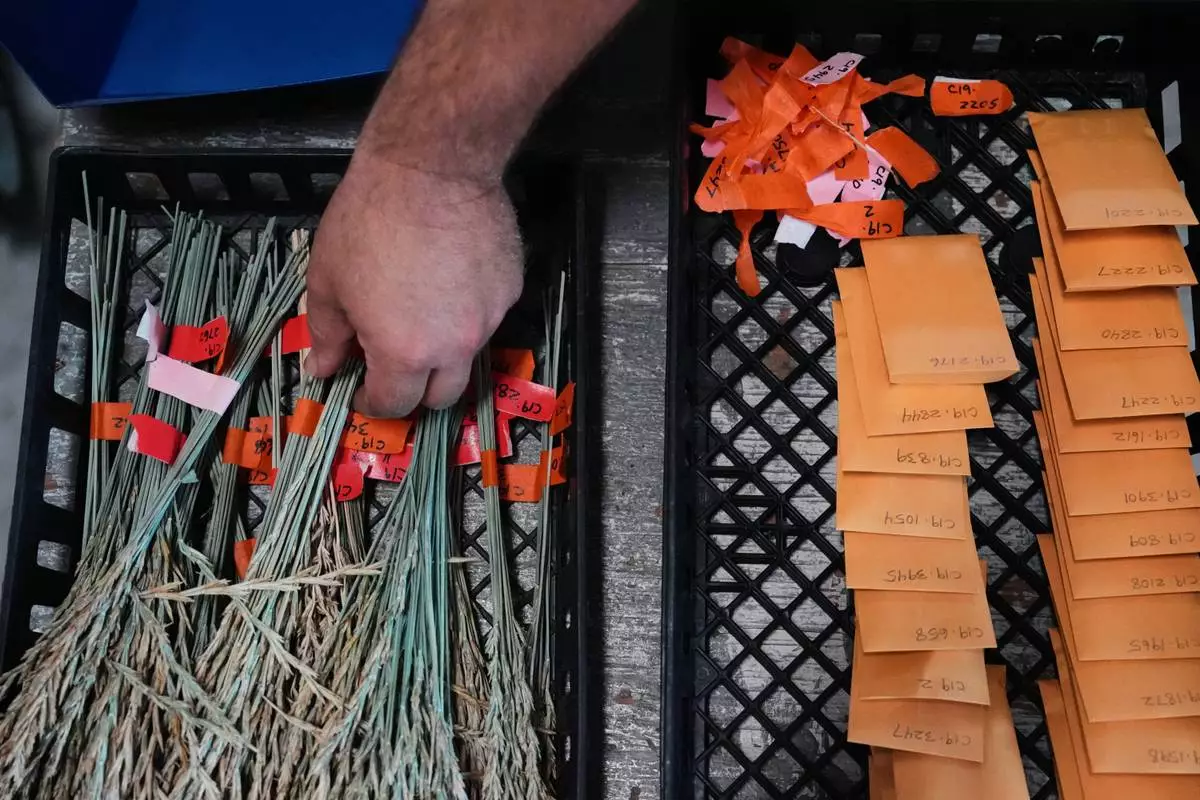
Marty Christians grabs a bundle of Kernza for cleaning and weighing Tuesday, July 28, 2026, at The Land Institute in Salina, Kan. (AP Photo/Joshua A. Bickel)
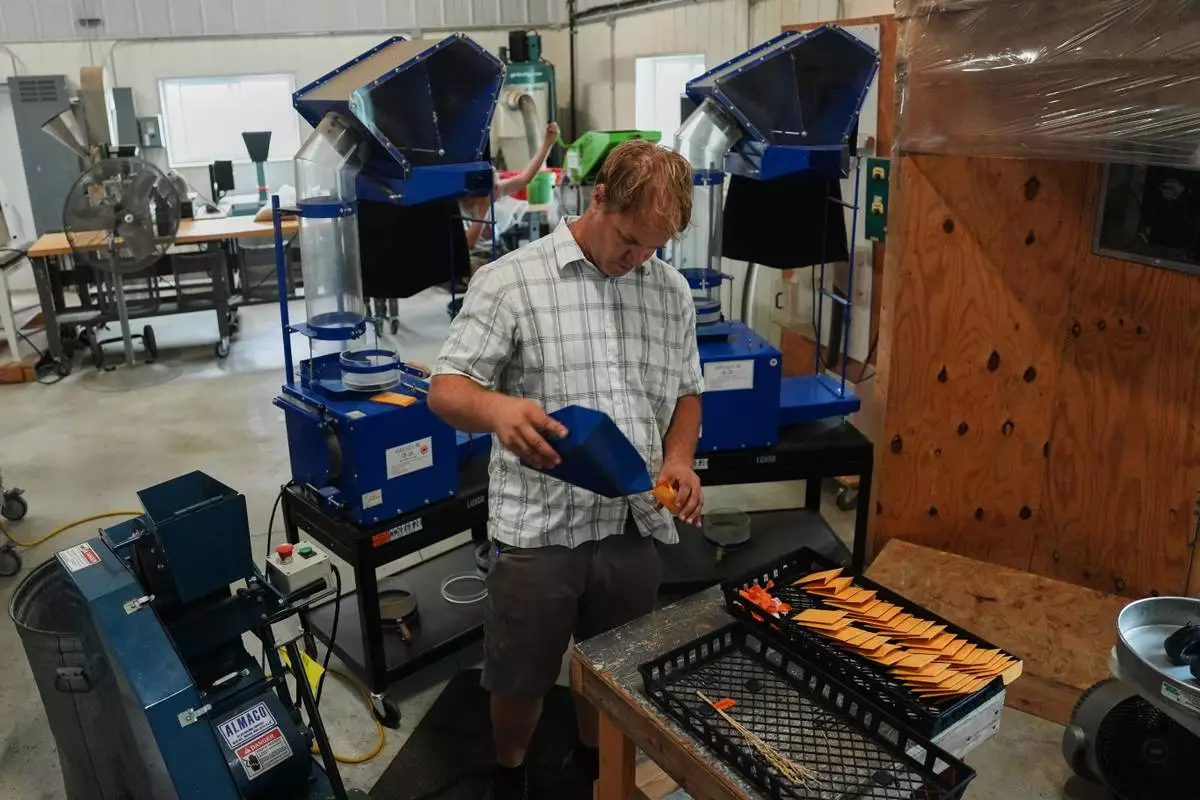
Marty Christians pours Kernza grain into an envelope after threshing Tuesday, July 28, 2026, at The Land Institute in Salina, Kan. (AP Photo/Joshua A. Bickel)

Skyler Grove holds a bundle of Kernza, Tuesday, July 28, 2026, at The Land Institute in Salina, Kan. (AP Photo/Joshua A. Bickel)
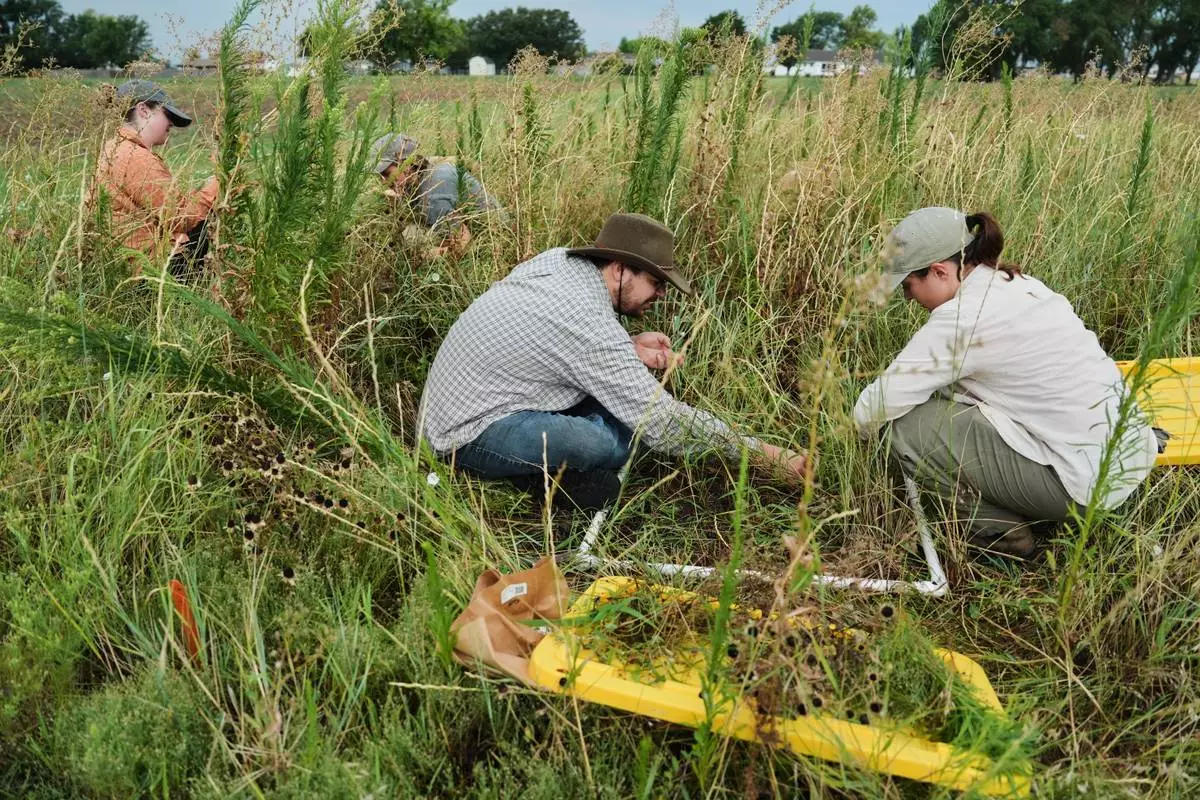
Kate Fitzsimmons, right and Jacob Barefoot, center, gather plant material from a Kernza research field Tuesday, July 28, 2026, at The Land Institute in Salina, Kan. (AP Photo/Joshua A. Bickel)

A field of Kernza, center, grows Tuesday, July 28, 2026, at a farm in Halstead, Kan. (AP Photo/Joshua A. Bickel)
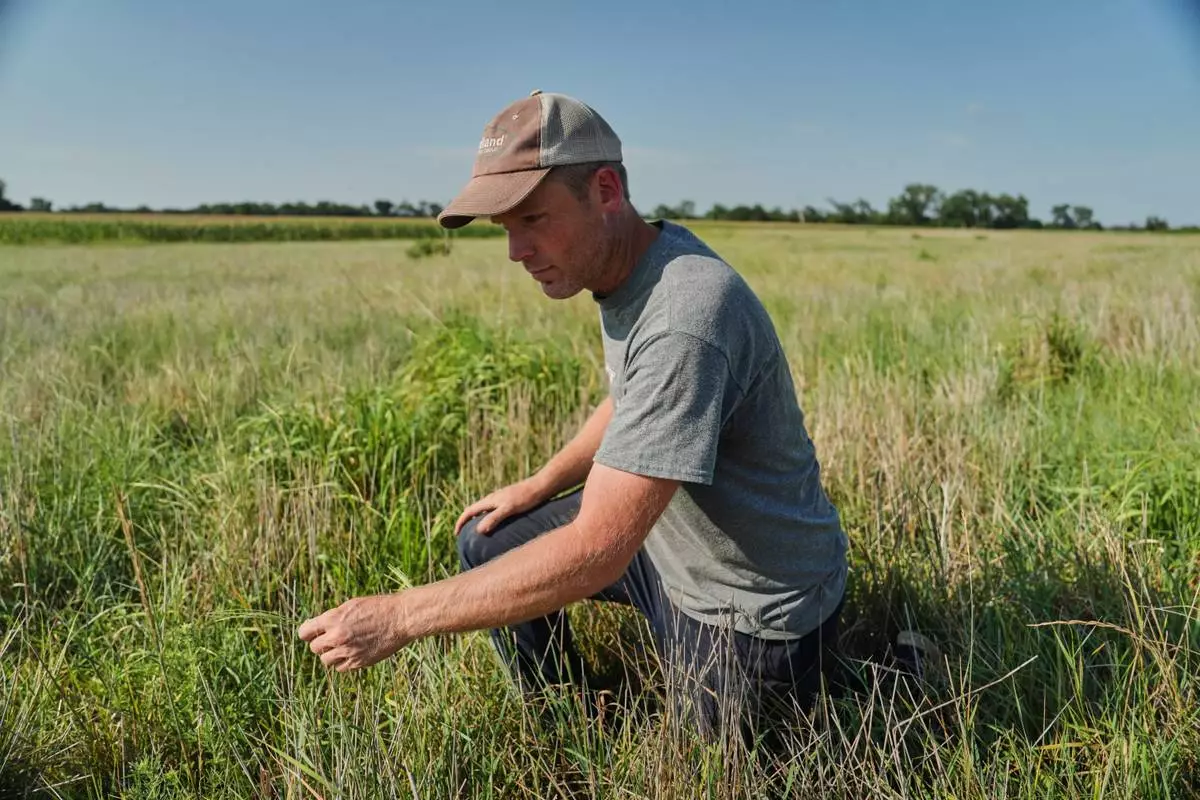
David Mueller kneels down in one of his Kernza fields Tuesday, July 28, 2026, at his farm in Halstead, Kan. (AP Photo/Joshua A. Bickel)

David Mueller pulls a Kernza seed out of its husk Tuesday, July 28, 2026, at his farm in Halstead, Kan. (AP Photo/Joshua A. Bickel)

Unharvested wheat affected by extreme weather sits in a field Wednesday, July 29, 2026, in Beloit, Kan. (AP Photo/Joshua A. Bickel)

Perennial wheat grows in a research field Tuesday, July 28, 2026, at The Land Institute in Salina, Kan. (AP Photo/Joshua A. Bickel)

Unharvested wheat affected by extreme weather sits in a field Wednesday, July 29, 2026, in Beloit, Kan. (AP Photo/Joshua A. Bickel)

Kernza grows in a farm field Tuesday, July 28, 2026, in Halstead, Kan. (AP Photo/Joshua A. Bickel)

Perennial wheat grows in a research field Tuesday, July 28, 2026, at The Land Institute in Salina, Kan. (AP Photo/Joshua A. Bickel)

Bryce Black inspects two strands of weather-stressed wheat Wednesday, July 29, 2026, at his farm in Beloit, Kan. (AP Photo/Joshua A. Bickel)

David Mueller stands in his Kernza field Tuesday, July 28, 2026, at his farm in Halstead, Kan. (AP Photo/Joshua A. Bickel)
PLYMOUTH, Mass. (AP) — Lindsay Clancy's trial judge declared a mistrial Friday after an emergency defense appeal was denied. Judge William Sullivan ended the trial after jurors on Friday sent a note for a third time saying they couldn't unanimously decide whether to hold her criminally responsible for killing her three young children in 2023.
Deliberations took a dramatic turn Thursday when the foreperson told the judge that a lone holdout was refusing to follow the court’s instructions about reasonable doubt. Clancy’s defense has argued that the judge’s refusal to remove the juror undermines the trial.
Clancy, a 36-year-old former labor and delivery nurse, doesn’t deny strangling her children in the basement of their home. Defense attorney Kevin Reddington blamed postpartum psychosis. Jennifer Sprague said Clancy knew what she was doing.
Postpartum psychosis is estimated to afflict 1 to 2 per 1,000 women after delivery. Experts at the Cleveland Clinic describe it as a mental health emergency affecting someone’s sense of reality. Though most people with postpartum psychosis don’t harm their children, mothers with severe cases may try to do so.
Here’s the latest:
David Meier, who is representing Clancy’s former husband Patrick Clancy in his civil lawsuit over her mental health treatment, released this statement:
“Patrick Clancy is grateful to the Court and to the jurors for their hard work, their commitment, and their perseverance. The loss of Patrick’s children is something from which he will never recover and from which there will never be closure. The prospect of reliving this tragedy through another trial is extraordinarily painful -- for Patrick, for his family, and for all us.”
In separate lawsuits, Lindsay and Patrick Clancy allege that various providers failed her, and should have recognized she was a risk to herself and the children.
The providers, at least those who had responded by the time the criminal trial began, deny the allegations and dispute that she clearly told them she intended to harm the kids.
“I don’t think she deserves to have to go through this all over again. I think this should have been resolved,” Marta Quijano said outside the courthouse. She said she’s been following the case since the beginning and has attended the trial.
“It’s very unfair. I feel as women we are treated very unfairly. We get dismissed, things are minimized. Even what’s happened today,” she said, referring to the juror who was singled out in a note from the foreperson. “I think one person failed her.”
Clancy’s parents and her sister were escorted by state police out the back of the courthouse. They said nothing to reporters.
Clancy remains charged with murder and will continue to be held at a psychiatric hospital until her criminal case is resolved.
During remarks to reporters, Reddington spoke affectionately about Clancy, saying “she’s like a daughter to me.”
“My heart breaks. She deserved an acquittal,” he said.
At another point, a reporter noted that Cruz said the focus should remain on the children.
“My client is well aware of the fact that her three kids, who she loved dearly, are the victims in this case,” Reddington said.
“She deserved an acquittal,” he lawyer said.
And despite some sharp exchanges in court, Reddington said he deeply respects the judge. He referred to Sullivan as “Sully” when he talked to reporters.
“He’s a great guy. He was a wonderful defense lawyer before he became a judge. Everybody loves him, he’s a fair guy,” Reddington said.Reddington said his ‘heart breaks’ for Clancy
“She deserved an acquittal,” he lawyer said.
And despite some sharp exchanges in court, Reddington said he deeply respects the judge. He referred to Sullivan as “Sully” when he talked to reporters.
“He’s a great guy. He was a wonderful defense lawyer before he became a judge. Everybody loves him, he’s a fair guy,” Reddington said.
Outside the courthouse, Reddington blasted the juror who he believes stood in the others’ way of an acquittal.
“They know they were robbed by one man, for whatever his agenda was, who stole seven weeks of the life of these other jurors that were so attentive, so beautiful, so wonderful,” he said. “You could see how defeated they were sitting there. I got a funny feeling they would have gone on for another week if they had to. So I hope that guy can sleep well at night.”
Cruz praised trial prosecutors Shanan Buckingham and Jennifer Sprague, “both mothers themselves.”
“They went home to their families after each long day in court. They embraced the most difficult trial assigned to them with utmost professionalism,” he said.
The president said he followed television news coverage of the Lindsay Clancy trial in Plymouth, Massachusetts.
“It’s a terrible situation. Look, she did a horrible, horrible thing,” Trump said. “Can’t be worse. But you’ll find out what the price to pay is. There’ll be a price — a mental institution or jail or something.”
“I have never been swayed to act a certain way or make certain decisions based upon public sentiment,” he said.
“This was and has always been about getting justice for those three little babies. We’re here at this courthouse today because those children are not. ... Children were murdered, and it’s our job to seek justice,” District Attorney Timothy Cruz said.
“This case is not about the healthcare system, or about how women are treated in it,” or the diagnosis of different medical conditions, he said. “Those are all important issues. They stir emotion. Sometimes they stir anger.
“I understand that postpartum depression has impacted the lives of countless women and families, and I sympathize with their struggles. The investigation in these heinous killings, however, did not establish that they were caused by such depression,” Cruz said.
“You only cared when the kids were dead. Why didn’t you care about the mother?” someone yelled.
Someone else yelled, “God bless those children,” as the press conference wrapped up.
“I understand that this has been an emotional trial for everyone,” Plymouth District Attorney Timothy Cruz said.
“This case was about Lindsay Clancy and what she did ... the cruel and calculated killing of three innocents.”
“This was and has always been about getting justice for those three little babies,” Cruz said. “Children were murdered and it’s our job to seek justice.”
Cruz said there would not be an immediate decision about a second trial.
— Correction: This post was updated to correct that Cruz referred to Clancy’s children as “three little babies,” not “beautiful babies.”
Shira Diner, a lecturer at Boston University law school and former public defender, told The Associated Press however that “it seems very unlikely that this judge would agree to overrule what the jury decided, which was nothing, and enter his own opinion.”
After the jury was dismissed, the judge and lawyers discussed their next steps.
The judge set a hearing for Sept. 29 at which Reddington likely will ask Sullivan to declare Clancy not guilty, a rare step but one that is allowed under state law.
The hearing could also reveal details about a possible second trial.
Neither the jury nor Clancy nor her family shows any emotion as the judge announces the mistrial.
Judge Sullivan called court back into session and confirmed that the emergency defense appeal was denied.
The judge said he would declare a mistrial as planned, but Reddington continued to object, saying federal law protecting criminal defendants was being violated.
He again requested a jury inquiry.
And again, the judge denied it, declaring a mistrial and calling jurors into the courtroom.
He then thanked the jurors for their service and dismissed them.
The appeal petition said removing the juror “is particularly important because the juror’s reasoning reflects a bias against those who suffer from debilitating mental illness, a protected category under both the Fifth and Fourteenth Amendments and Article 114 of the Massachusetts Constitution.”
Defense attorneys wrote the top court in Massachusetts in their emergency request for relief that the reasoning of one of the jurors “reflects a bias against those who suffer from debilitating mental illness.”
The defense brief says the high court has held that just one juror who is not impartial violates a defendant’s right to have an impartial jury.
It says the trial court judge “need not simply accept the juror’s professions of fidelity and impartiality,” but rather can determine whether the juror is credible in light of the other jurors’ statements.
“The judge appears to be abdicating the responsibility” to weigh the evidence of juror malfeasance, the defense argues. “This is not abuse of discretion; it is failure to exercise discretion at all.”
A member of Massachusetts’ highest court has quickly heard arguments in a last-ditch effort by Clancy’s lawyers to stop a judge from declaring a mistrial.
The defense team wants the court to order the trial judge to further question a juror about applying the law and following instructions during deliberations in the high-profile trial.
Justice Dalila Argaez Wendlandt heard arguments over video conference and then said, “I need to make a decision.”
She said she’s taking the appeal “under advisement,” and offered no timeline for her decision.
The defense appeal asks the top court in Massachusetts to require the trial judge to do two things:
″(1) to inquire into the ability of the identified juror to apply the law or (2) prohibit the further deliberations of a juror identified by the jury foreperson as biased and refusing to follow the court’s instructions on reasonable doubt unless and until the court determines by individual voir dire that the juror is willing and able to follow the court’s instructions.”
“The judge appears to be abdicating the responsibility to weight the evidence of juror malfeasance. In other words, this is not abuse of discretion; it is failure to exercise discretion at all,” the brief says. “A mistrial at this point is entirely avoidable, but only if the court does its job.”
Participants were told the lunch break would be from 1 p.m.-2 p.m.
Attorney Dana Goldblatt said she filed the emergency appeal on behalf of Lindsay Clancy’s defense attorney Kevin Reddington at 12:29 p.m. on Friday.
Trial judges don’t often allow a defense attorney to file such emergency petitions, said Joseph Perullo, a criminal defense attorney in Massachusetts.
The petition will be considered by a single justice of the Massachusetts Supreme Judicial Court who will look at whether the trial judge abused his discretion, committed a reversible error of law or did something that is “egregious and should be corrected prior to a mistrial being announced.”
The justice could initially grant a stay pausing the trial court proceedings and then consider the merits of the defense attorney’s petition in a process that would give the prosecutors a chance to present their arguments.
But “that is a high bar,” Perullo said. He doubts the justice will pause the trial proceedings to consider the merits.
More than an hour has passed since the judge gave the defense one hour to file an emergency appeal of his pending mistrial declaration.
Reached for comment, the clerk’s office for the Supreme Judicial Court of Massachusetts told The Associated Press that it is in the process of receiving all the documents related to the emergency appeal.
The case would essentially go back to the same status as before the trial — Clancy could be charged with murder and held at a psychiatric hospital awaiting a resolution of the criminal case.
Prosecutors would have to decide whether to try again with a new jury. If they do, the jury selection process would begin again and a new trial would be scheduled.
Prosecutors could also offer a plea deal to Clancy, said Brad Bailey, a Boston defense attorney and former prosecutor who is not involved in the case.
“Any time the threat of a retrial with murder one hanging over the client is re-interjected, defense lawyers will, at the very least, explore whether or not there’s any interest in a resolution,” Bailey said.
▶ Read more
Prosecutor Jennifer Sprague told the judge a mistrial was required because he had already read to the jury the legal instruction sometimes known as a “dynamite charge.”
Reddington argued the judge still had discretion: “The court has the ability to send the jury back,” he said.
Sounding exasperated, the judge said “I don’t feel I have any choice but to declare a mistrial at this time.”
Reddington then requested that the jurors be polled “as to whether or not there has been a decision reached on murder one, murder two, manslaughter or anything like that.” If they did reach such a decision, prosecuting her again on those charges would be double jeopardy, he said.
Sprague objected, saying the court can’t delve into jury deliberations. “I don’t think anything else is required at this point other than a declaration of mistrial unfortunately.”
Sullivan then said, “Over the defendant’s objection, I am going to declare a mistrial at this point.”
Then Reddington pushed back, and the judge gave him one hour to appeal to the Massachusetts Supreme Judicial Court.
Criminal defense attorney Joseph Krowski, who has been observing the trial, commented about Friday’s developments outside the court in Plymouth, Massachusetts. He said the defense wants a judge on the state’s highest court to consider an emergency stay because Reddington believes there “is a structural defect to this trial by the failure to remove the juror or do an inquiry.”
Judge Sullivan read the jury foreperson’s note aloud in open court: “It is with a heavy heart that we report we are unable to come to a unanimous decision and will not be able to.”
Sullivan and Reddington went back and forth after the judge signaled that he would declare a mistrial and summon the jury to break the news.
Then the judge suddenly gave Clancy’s lawyer time to seek an appeal to stop his mistrial order.
“What I’m asking for is time to file a single-justice appeal for this travesty,” said Reddington, who was upset over Sullivan’s refusal to remove a juror.
“I’ll hold off for an hour,” the judge said.
The clock began around 11:30 a.m.
Clancy’s parents, Paula and Mike Musgrove, and her sister, Allison Ozga, showed no reaction but stared straight ahead. Clancy’s expression wasn’t visible to the gallery.
The defense then raised objections and the jury was not brought in.
Prosecutors and Reddington are being brought up to a podium and the court clerk showed them something. It is unclear what it was.
Now they’ve returned to their tables and the judge has returned to the bench.
With nearly 100 people packed inside, a court officer told the public outside “there is no more room” and closed the courtroom doors.
First the media and now members of the public are re-entering the courtroom.
The prosecutors are at their table. Reddington is sitting next to Clancy. Clancy’s parents and her sister are two rows back.

Lindsay Clancy's parents, Mike Musgrove, left, Paula Musgrove walk back to Plymouth County Superior Court after a recess for lunch in Lindsay Clancy's murder trial Friday, Sept. 4, 2026, in Plymouth, Mass. (AP Photo/Charles Krupa)
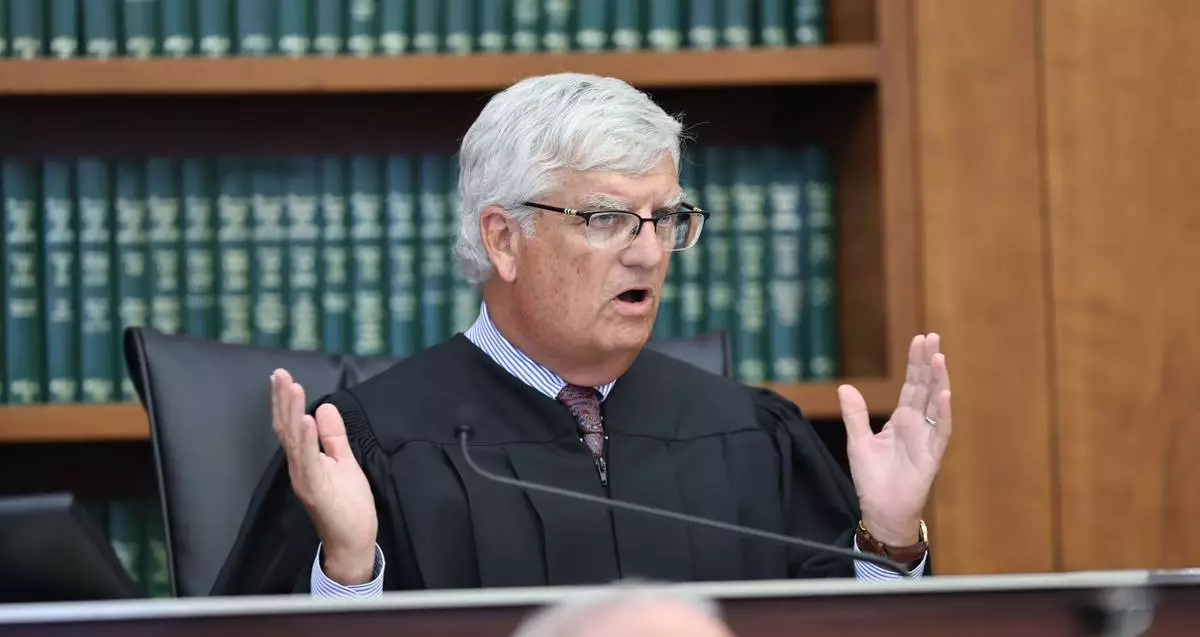
Judge William Sullivan indicates he was going to declare a mistrial before changing course and giving Lindsay Clancy's defense attorney one hour to appeal as the jury in the case has indicated they they are unable to reach a verdict on Friday, Sept. 4, 2026, in Plymouth, Mass. (Greg Derr/The Patriot Ledger via AP, Pool)

District Attorney for Plymouth County Timothy Cruz, front, leaves court after the judge declared a mistrial in Lindsay Clancy's murder trial at Plymouth County Superior Court, Friday, Sept. 4, 2026, in Plymouth, Mass. (AP Photo/Charles Krupa)

Defense attorney Kevin Reddington reacts to the judge's decision to declare a mistrial in the Lindsay Clancy murder trial on Friday, Sept. 4, 2026, in Plymouth, Mass. (Greg Derr/The Patriot Ledger via AP, Pool)
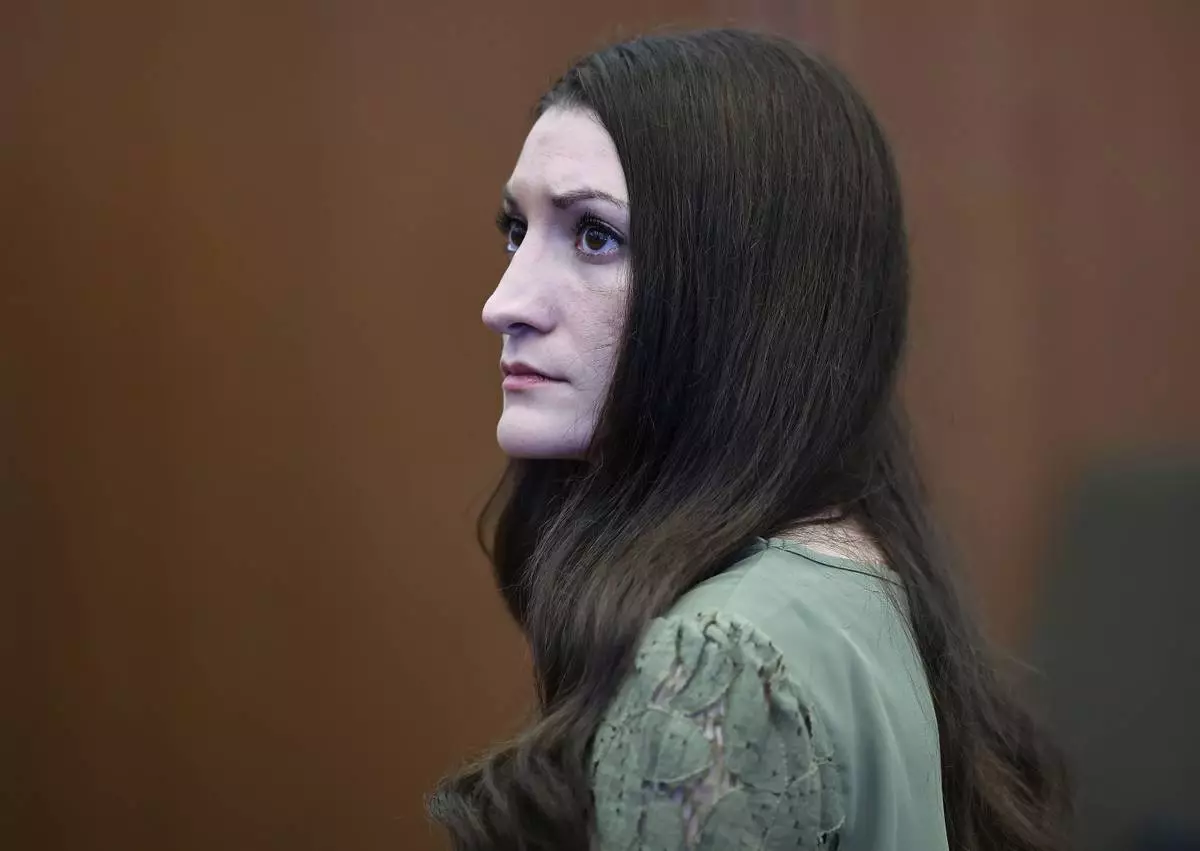
Defendant Lindsay Clancy looks at the jury after Judge William Sullivan declared a mistrial in Clancy's murder trial on Friday, Sept. 4, 2026, in Plymouth, Mass. (Greg Derr/The Patriot Ledger via AP, Pool)
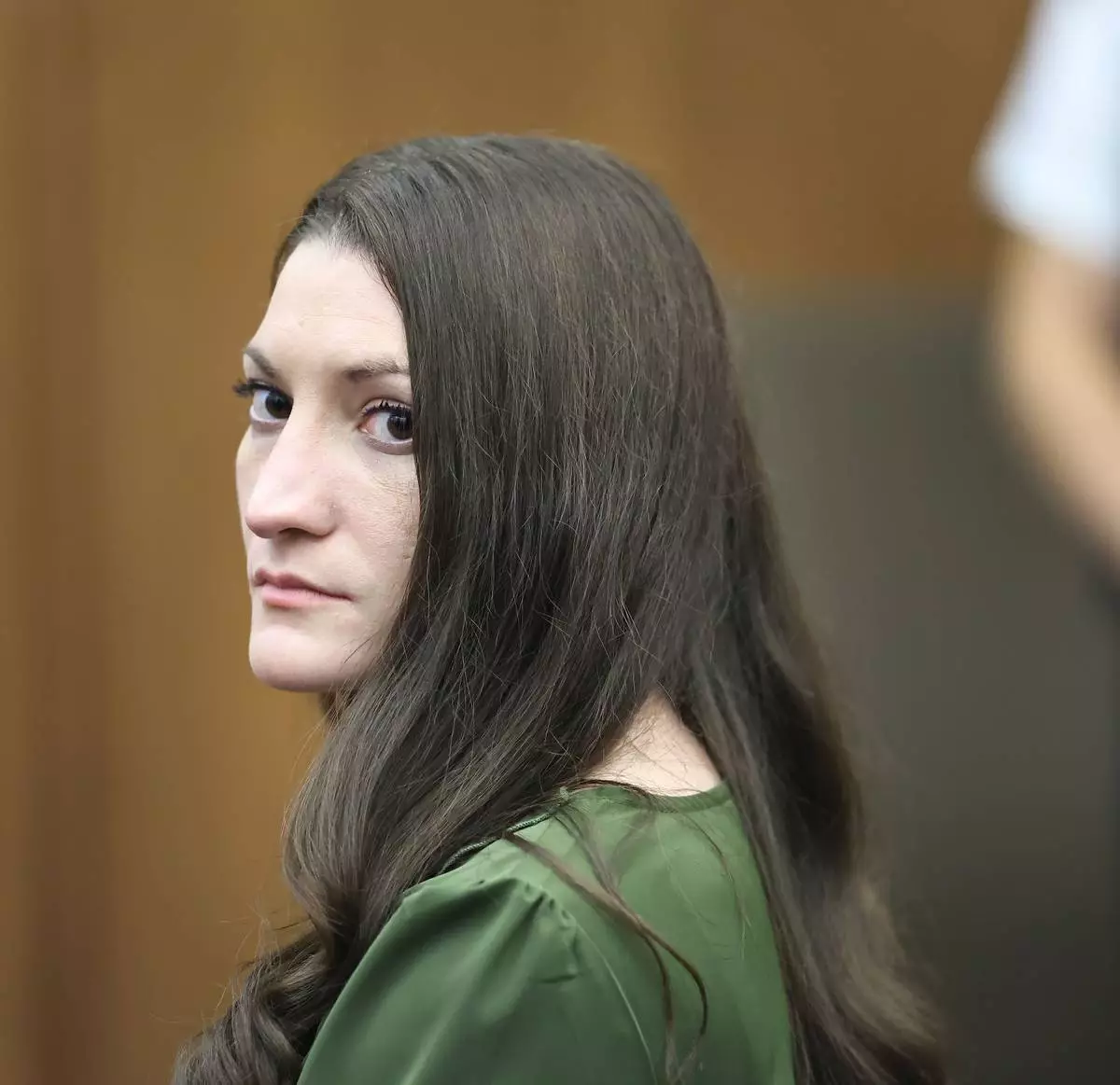
Lindsay Clancy watches jury members as Judge William Sullivan polls them during her murder trial at Plymouth Superior Court in Plymouth, Mass., Monday, Aug. 31, 2026. (Greg Derr/The Patriot Ledger via AP, Pool)
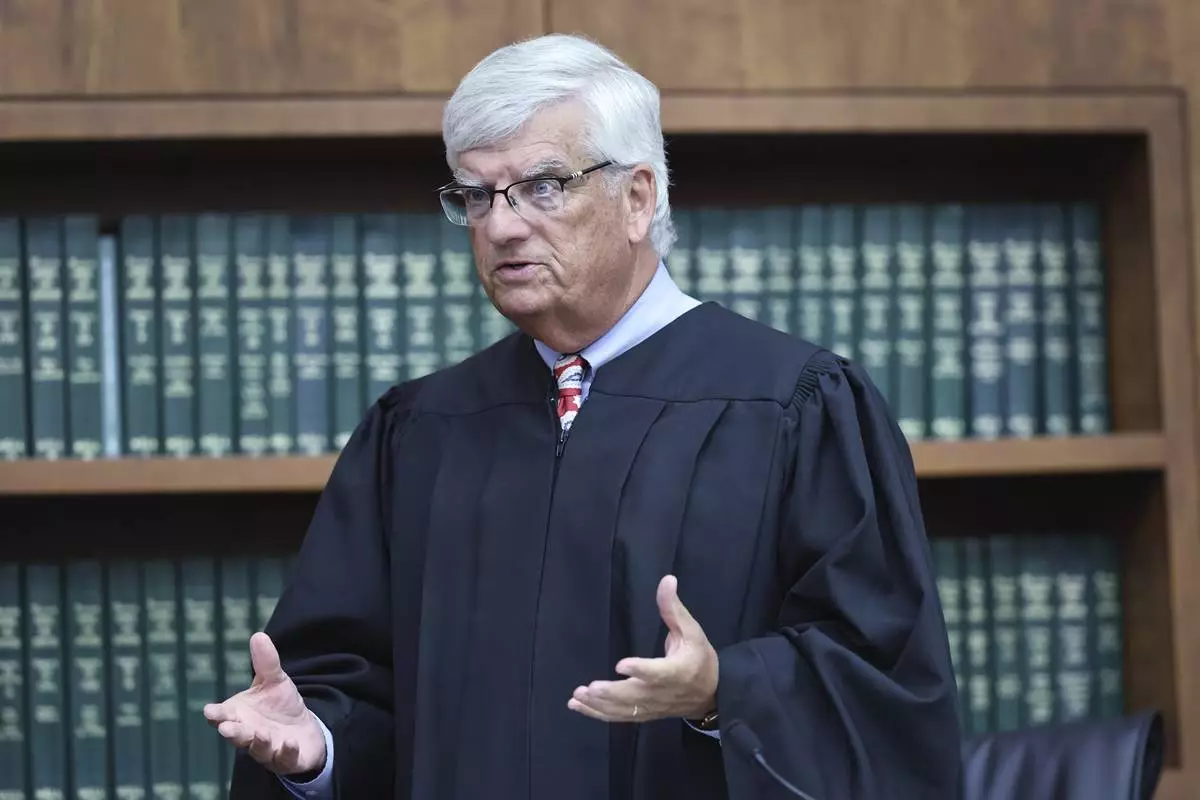
Judge William Sullivan asks the jury to continue deliberations during Lindsay Clancy's murder trial at Plymouth Superior Court in Plymouth, Mass., Tuesday, Sept. 1, 2026. (Greg Derr/The Patriot Ledger via AP, Pool)

Mike Musgrove, father of Lindsay Clancy, center right, sits with family as they listen to the judge tell the jury to keep discussing a possible verdict after jurors said they couldn't agree for a second time whether Clancy is criminally responsible for killing her three children in 2023, Wednesday, Sept. 2, 2026, in Plymouth, Mass. (Greg Derr/The Patriot Ledger via AP, Pool)

Timothy Cruz, Plymouth County District Attorney, center, leaves Plymouth Superior Court, Thursday, Sept. 3, 2026, in Plymouth, Mass. (AP Photo/Josh Reynolds )
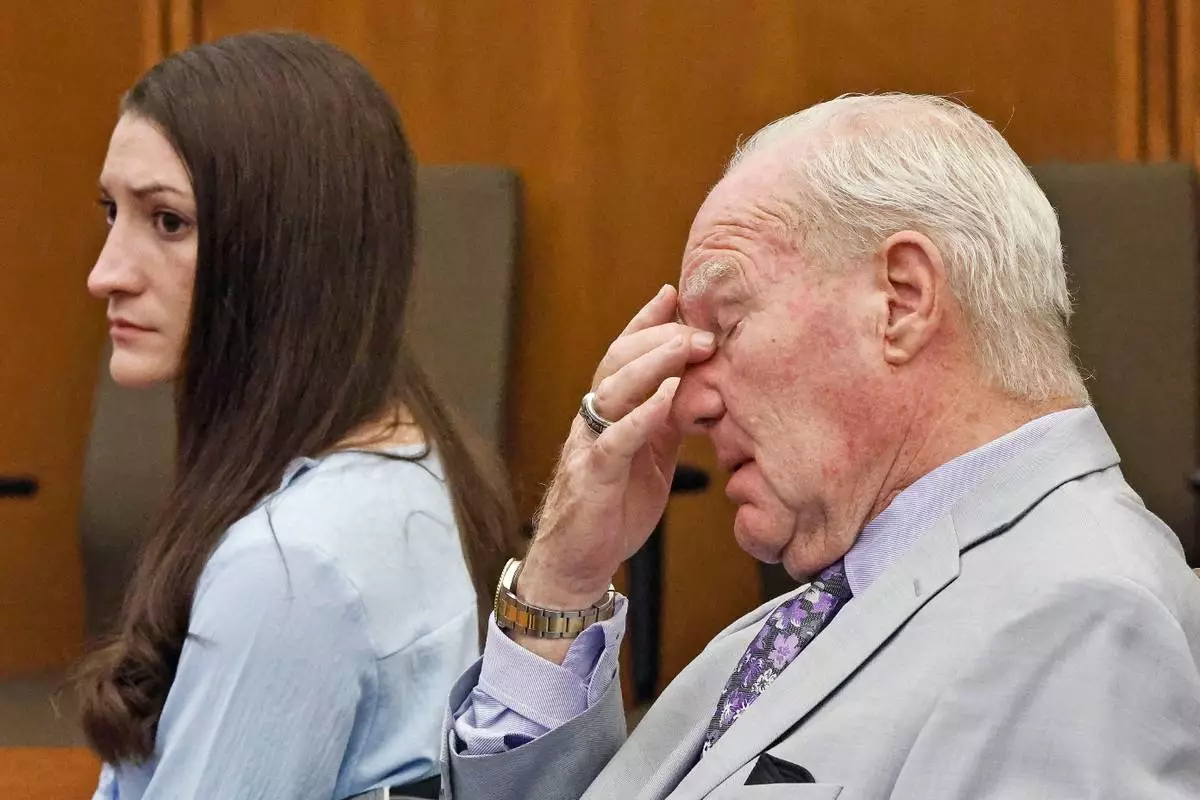
Lindsay Clancy and attorney Kevin Reddington watch as Judge William Sullivan tells the jury to keep discussing a possible verdict after jurors said for a second time they couldn't agree whether Lindsay Clancy was criminally responsible for killing her three children in 2023, Wednesday, Sept. 2, 2026, in Plymouth, Mass. (Greg Derr/The Patriot Ledger via AP, Pool)