MCALLEN, Texas (AP) — A U.S. Immigration and Customs Enforcement officer falsely told investigators he was being attacked with a broom and shovel before he shot and wounded a Venezuelan man during the Minnesota immigration crackdown last winter, according to a federal indictment unsealed Friday.
Christian Castro pleaded not guilty to six counts of making false statements to investigators during an appearance in Texas federal court after turning himself into federal authorities Thursday evening.
He was shackled at his wrists, waist and feet during the brief hearing in McAllen. A judge was expected later in the day to consider the government’s recommendation to release him with an ankle monitor.
It's the first Justice Department prosecution of a federal officer for actions taken during this year's massive Operation Metro Surge, which brought thousands of agents to the Twin Cities and led to sweeping protests, arrests and the fatal shootings of two U.S. citizens by federal officers.
The allegations in the federal indictment mirror those brought by Minnesota officials, who have separately charged Castro with assault and false reporting of a crime related to the nonfatal shooting of Julio Cesar Sosa-Celis in January.
According to the federal indictment, Castro told an FBI agent that a man grabbed a red broom off a front porch and began hitting him with it while Castro was trying to detain another man outside a Minneapolis home. Castro also claimed that another man hit him with a snow shovel and that he opened fire while on the ground as the men ran away.
The indictment alleges that Castro had a short “physical interaction” with Sosa-Celis and another man, before the two ran into a home with a 1-year-old child inside. Castro then fired a shot through the front door while standing as the men began to close it, hitting Sosa-Celis in the leg, the indictment says.
“No person struck” Castro “with a broom as he described, and no persons wielded the broom and snow shovel as he described,” the indictment says.
No attorney is listed for Castro in the case brought by Minnesota and it was not immediately clear if he had a lawyer to speak on his behalf.
Federal prosecutors had initially charged Sosa-Celis and the other man, Alfredo Alejandro Aljorna, with assault but dropped the charges after video evidence showed the officer may have lied about the encounter. Castro was suspended from ICE in February while authorities pursued an investigation.
The federal charges follow Castro’s release from jail last week after Texas’ governor refused to immediately sign an extradition warrant to hand him over to Minnesota authorities.
The federal investigation into Castro created turmoil inside the Justice Department, with a prosecutor on the case accusing higher-ups of blocking efforts to bring more serious civil rights charges.
In an email obtained by ProPublica, the prosecutor told lawyers for Sosa-Celis and others that Castro would be charged only with making false statements over his “strongest objections,” adding the decision was “being directed by the Main Justice and the US Attorney.”
A person familiar with the investigation, however, told The Associated Press on Thursday that the civil rights probe is continuing and additional charges could still be brought.
The prosecutor, Matthew Evans, has since been fired and the Justice Department is now investigating whether he broke any laws during his handling of the case, said the person, who spoke on the condition of anonymity because they were not publicly authorized to discuss ongoing investigations.
An automatic email response from Evans’ Justice Department account said he was on leave, and other attempts to reach him were not immediately successful.
Sosa-Celis' lawyer is pressing for Castro to face stiffer charges, saying in a statement on Thursday that Castro’s statements were made to “cover up the fact that he shot my client through the door of an occupied house without a self-defense justification.”
“Mr. Sosa Celis wants Mr. Castro to be held fully accountable for his crimes,” said the attorney, Robin Wolpert. The American Civil Liberties Union of Minnesota said Thursday that Sosa-Celis also plans to seek damages from the federal government.
———
Richer reported from Washington.
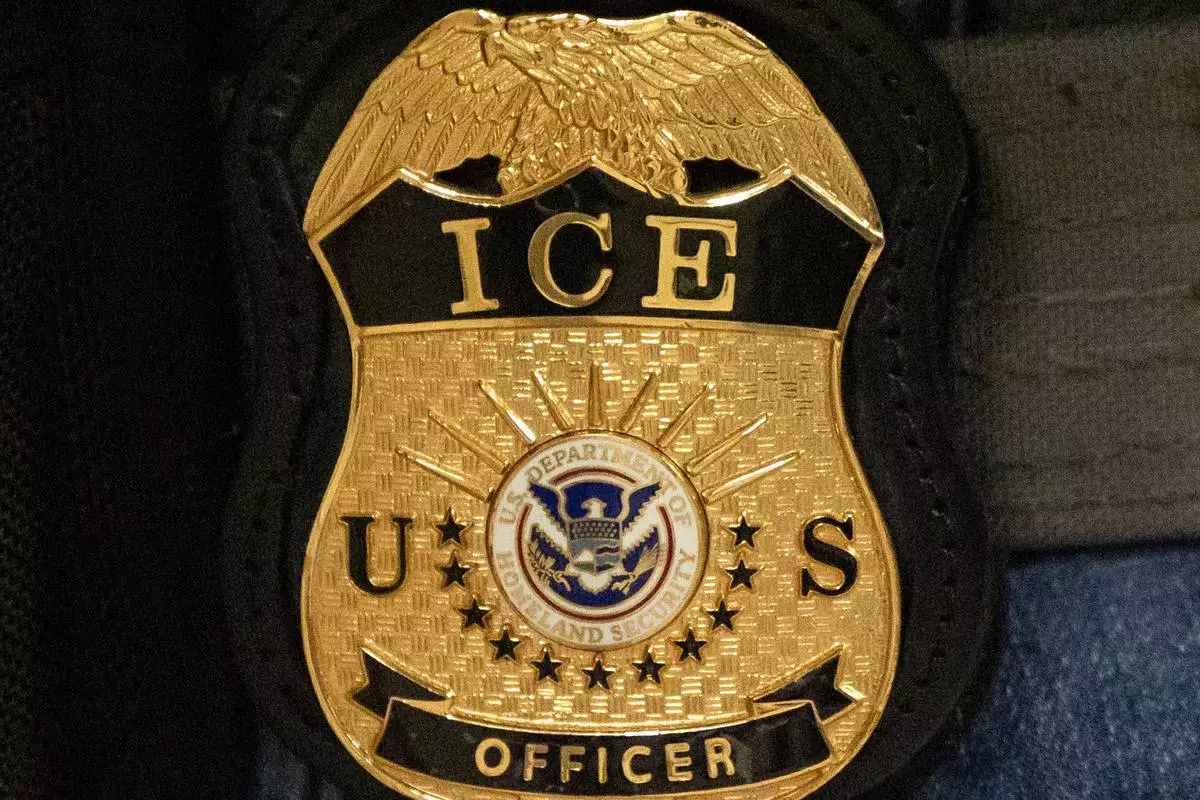
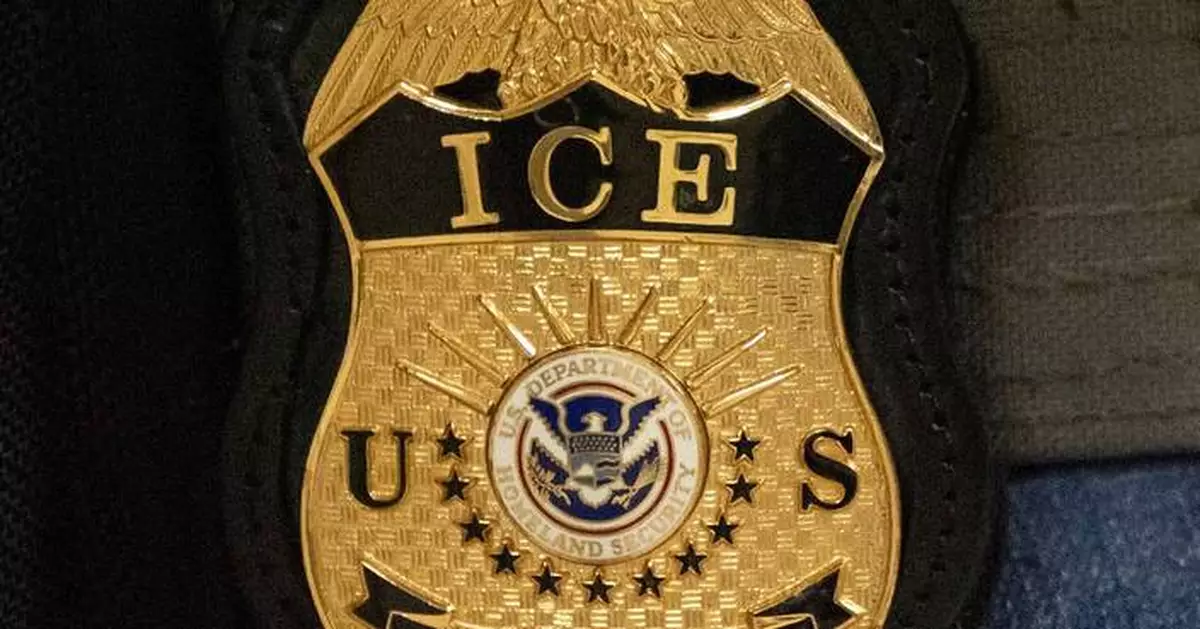
FILE - A federal agent wears an Immigration and Customs Enforcement badge in New York, June 10, 2025. (AP Photo/Yuki Iwamura, File)
Former Labor Secretary Lori Chavez-DeRemer oversaw a “toxic, intimidating and humiliating” work environment and engaged in numerous violations of department policy, according to a new report from the department’s Office of Inspector General.
Meanwhile, confronted by an intransigent Iranian government that's refused to back down in the face of a massive military campaign, President Donald Trump appears to have settled on a dual-prong approach that combines economic pressure with the potential of a devastating escalation in force.
Vice President JD Vance on Thursday rejected the use of the word “war” to describe the U.S. fighting with Iran as he steered clear of predicting that the 6-month-old conflict would be over by November’s midterm elections, in which Republicans are trying to hang on to their narrow majorities in Congress.
Here's the latest:
In a news release about sanctions on a Turkish bank, U.S. Treasury Secretary Scott Bessent said financial institutions with ties to Iran will “continue to find out the hard way that we are serious about Operation Economic Outcast.”
“While we hope no more banks will need to be sanctioned, that ultimately depends on how quickly the international community comes to its senses and ceases support of the murderous Iranian regime,” he continued.
“We know who you are, we know where you are, and we will continue to take action together with our allies and partners until we have buried the head of the Iranian snake.”
The U.S. Treasury Department announced Friday it has imposed sanctions on a Turkish financial institution as part of its latest effort to sever “critical financial lifelines” for the Iranian government.
The actions against Golden Global Yatirim Bankasi Anonim Sirketi come nearly a week after Treasury Secretary Scott Bessent announced “Operation Economic Outcast” as the new effort by Washington to get Tehran to capitulate to its demands after more than six months of war.
Last week, the U.S. targeted an Egyptian bank’s operations in the United Arab Emirates.
▶ Read more
Among the allegations are accusations that senior staff berated employees in front of colleagues and made staffing decisions based on physical appearance rather than professional qualifications.
In one incident, during a personal trip to Oregon, Chavez-DeRemer allegedly stopped at a strip club featuring partially nude dancers and directed her limousine driver to give money to a performer, the report said.
The report says it was based on interviews with 53 current and former labor department staffers and one employee from another federal agency, as well as a review of more than 500 documents, images and videos.
The president posted on his social media site that the job tally broke “all estimates (except mine!).”
“Lower the interest rates because the U.S.A. is a much stronger credit than it was just a short time ago! A STRONG COUNTRY MEANS A LOWER INTEREST RATE” Trump wrote.
He added that, “We should have the LOWEST RATE of any country in the World, like ‘the old days’ and threatened: “LOWER THE RATE OR I’LL STOP TRADING WITH COUNTRIES WITH WHICH WE HAVE A DEFICIT.”
In August, employers added a surprising 162,000 jobs, according to the latest jobs report.
Federal Reserve Chair Kevin Warsh has said inflation is still too high and suggested the central bank may have to raise interest rates in the coming months.
Former Labor Secretary Lori Chavez-DeRemer oversaw a “toxic, intimidating and humiliating” work environment and engaged in numerous violations of department policy, according to a new report from the department’s Office of Inspector General.
The report includes allegations that Chavez-DeRemer “engaged in an inappropriate relationship” with a member of her security detail and violated travel regulations by combining personal and official travel, as well as violating the department’s alcohol policies, directing staff to perform personal tasks on official timing, and failing to report gifts through appropriate channels.
Chavez-DeRemer, who resigned earlier this year, did not immediately respond to a request for comment sent to an email listed on her Facebook page.
▶ Read more
Jordan, a staunch U.S. ally that hosts American forces in the Mideast, has paid a price for its relationship with Washington, which has made the kingdom’s military bases a target of repeat Iranian strikes.
Hundreds of drone and missile attacks have added to other strains on Jordan that include a slumping economy and volatility in the neighboring West Bank, where Israeli settlers have ramped up attacks on Palestinians.
Despite the risk of more strikes, Jordanian leaders say they’re committed to maintaining the relationship after decades of courting deeper security ties with American officials and offering to be a reliable partner with the West in a region rocked by conflict. Analysts say the alliance offers Jordan a way to guard against Iran’s attempts to destabilize its neighbors.
▶ Read more
The jump in hiring last month and low unemployment rate point to a mostly solid job market, a sign the Federal Reserve could lift rates at its meeting next month to combat inflation.
Steady hiring suggests overall interest rates aren’t high enough to cool borrowing, spending and inflation. A hike by the Fed at its Sept. 15-16 meeting could lift borrowing costs for mortgages, auto loans and credit cards.
Vice President JD Vance on Thursday became the latest Trump administration official to urge the Fed to cut rates, rather than raise them, which few economists or Wall Street investors expect.
A lot will ride on next Friday’s inflation report. On Thursday, top Fed official Christopher Waller said his decision on whether to hike rates would largely hinge on whether that report shows inflation cooling or not.
U.S. companies and other employers added 162,000 jobs last month, an improvement from recent months of sluggish hiring, while the unemployment rate stayed a low 4.1%.
The figures suggest businesses are optimistic enough about the economy to expand and gives the Trump administration and Republicans running for Congress a positive talking point heading into midterm elections.
Still, average hourly wages grew 3.1% from a year ago, usually a decent figure but below the August inflation rate of 3.4%. That means Americans are losing purchasing power even amid an otherwise healthy economy.
Big job gains were recorded in manufacturing, construction, and restaurants, bars, and hotels.
Statewide mail voting for this year’s midterm elections kicks off Friday amid a churning legal battle over President Trump’s attempts to limit the practice and mounting concern over Postal Service changes that some state officials blame for a rise in rejected ballots.
The developments have created a sense of uncertainty about a popular voting method used by one-third of the nation’s voters.
North Carolina on Friday is scheduled to become the first state to widely distribute mail ballots for this year’s elections, which will determine the balance of power in Congress for the remainder of Trump’s term.
Election officials said that while they’re closely monitoring the litigation, ballots will be mailed out as expected and the state is prepared to administer a secure election even if the new limits go forward.
▶ Read more
Secretary of State Marco Rubio will travel next week to Colombia, Ecuador and Peru, three South American countries increasingly aligned with the Trump administration’s policies in the hemisphere.
The State Department said Friday that Rubio would discuss enhanced cooperation between the U.S. and the three nations to combat narcoterrorism and expanding commercial ties during his three-day trip that starts Tuesday. It will be Rubio’s fifth trip to Latin America since he became Secretary of State in January 2025.
At each stop, Rubio “will reaffirm the Trump administration’s commitment to a secure, prosperous, and democratic Western Hemisphere,” the State Department said.
The administration and Rubio in particular have made the region a priority, having ousted Venezuela’s former president and taking aim at the governments of Cuba and Nicaragua while cracking down on illegal migration.
Vice President JD Vance on Thursday rejected the use of the word “war” to describe the U.S. fighting with Iran as he steered clear of predicting that the 6-month-old conflict would be over by November’s midterm elections, in which Republicans are trying to hang on to their narrow majorities in Congress.
“I wouldn’t call it a war,” Vance said after being asked during a White House press briefing about whether the fighting could end before voters cast their ballots in the Nov. 3 congressional elections. “Right now, there is no active shooting.”
Vance’s assertion came even as Iran fired at U.S. Gulf ally Kuwait on Thursday as it continued to retaliate for rounds of U.S. strikes on Iran earlier in the week.
Vance’s attempt to minimize the intensity illuminates the difficult task at hand for Trump and his administration as he tries to persuade American voters to keep Republicans in control of Congress.
▶ Read more
Confronted by an intransigent Iranian government that has refused to back down in the face of a massive military campaign, President Donald Trump appears to have settled on a dual-prong approach that combines economic pressure with the potential of a devastating escalation in force.
Having launched “Operation Economic Outcast” just last week to try to isolate Iran from its remaining global trade partners, the Trump administration also resumed strikes in recent days, prompting Iranian retaliation that has renewed concerns of an all-out regional war.
However, the combination of already intense sanctions on Iran and an off-and-on bombing campaign since the war began more than six months ago has not bowed the Iranian leadership and has left the administration struggling to find a way to wind down the conflict. Tehran has dug in its heels — to Trump’s frustration — as energy prices rise, the global economy roils and poll numbers on the administration’s handling of the war dip ahead of November’s midterm congressional elections.
▶ Read more
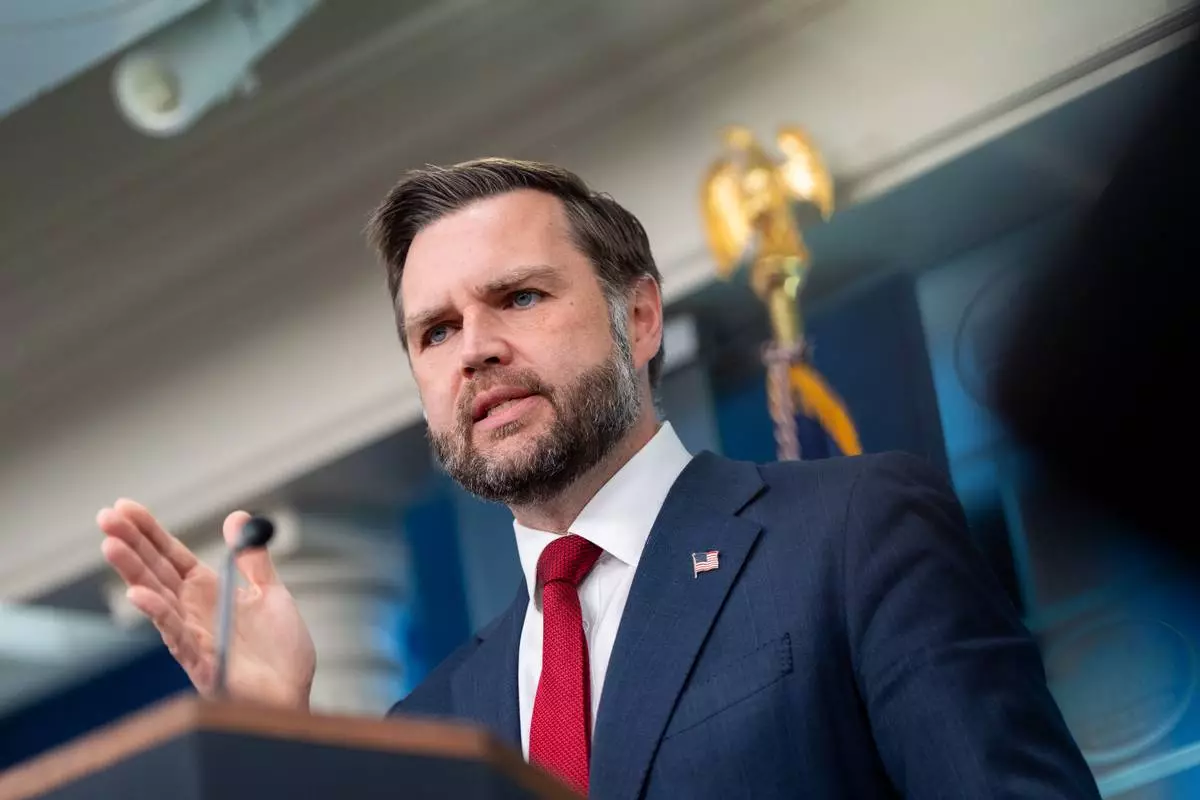
Vice President JD Vance speaks with reporters in the James Brady Press Briefing Room at the White House, Thursday, Sept. 3, 2026, in Washington. (AP Photo/Alex Brandon) CORRECTION: Date corrected to Sept. 3 instead of July 23.
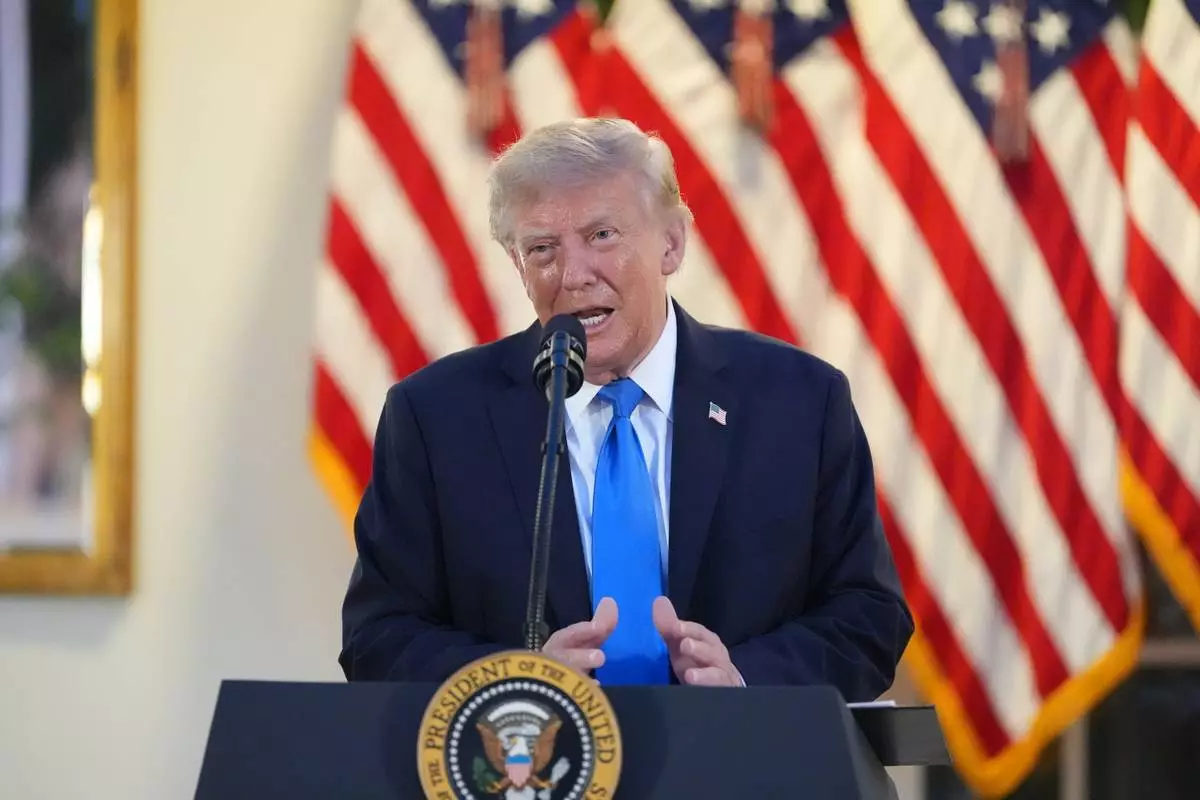
President Donald Trump speaks during an event with Republican lawmakers in the Rose Garden of the White House, Wednesday, Sept. 2, 2026, in Washington. (AP Photo/Alex Brandon)