SEATTLE (AP) — A pulp mill in Washington state where 11 workers died after a chemical tank collapsed in May had a history of safety complaints, poor maintenance and discharges of toxic chemicals, records reviewed by The Associated Press show.
State inspectors had planned to visit the plant to interview workers about two unrelated safety complaints the week of the tragedy, one of the deadliest U.S. workplace accidents in decades. Those plans were disrupted when the tank failed, expelling huge amounts of a caustic liquids.
The AP reviewed government records involving inspections and safety complaints at the Nippon Dynawave Packaging Co.'s plant in Longview, Washington. Before the accident, the state Department of Ecology had issued 54 environmental violation notices against the company since 2016 and fined them $41,500 for eight serious violations.
The state’s Department of Labor and Industries investigated more than a dozen safety complaints at the plant since 2018 and issued almost $7,000 in fines for violations. Its investigation into the tank collapse is ongoing, and it has opened two new investigations since May.
More than $2.4 million in workers' compensation claims have been paid for 169 employees injured on the job since 2015, the agency reported, including for injuries related to exposure to caustic substances.
The multiple equipment failures and safety violations are a “red flag” for this company, said Stephen Kmiotek, a chemical engineering professor at the Worcester Polytechnic Institute who has closely followed the fatal accident and its aftermath.
“My impression, you put it all together, including the most recent tank collapse, is it is a site that has not been maintained, and that creates risk to employees and risk to public,” he said.
The U.S. Chemical and Safety Board released a report last week saying the company knew the tank was “not fit for continued service,” but they still used it. The state's Department of Ecology filed a violation notice against the company after the accident, listing 35 citations.
Sam Jefferies, a spokesperson for Nippon Dynawave, declined to comment on the records showing poor maintenance at the plant. He said they're working with regulators as the investigation into the tank failure continues.
“We believe the responsible course is to allow the full investigative process to proceed and establish a complete and accurate record before conclusions are reached,” he said.
Sheri Lynn King, the mother of two brothers who were killed, has filed a wrongful-death lawsuit against Nippon Dynawave, saying her sons were burned and crushed by the white liquor and debris. The lawsuit claims the company failed to maintain and inspect equipment, failed to properly train and supervise employees and failed to implement safety policies and emergency response procedures.
An employee complained to the state Division of Occupational Safety and Health in March, saying the handle on a valve for an ammonia clarifier tank was detached so the valve could not close, according to documents obtained by the AP. Its purpose is to prevent toxic air from getting released.
The open valve was hazardous for delivery drivers who were breathing toxic air, said the worker, whose name was not disclosed in the report. He added there was also a risk of explosion.
A state inspector, who planned to interview employees on May 26 — the day of the catastrophic tank failure — returned at a later date. The investigation concluded in August with a citation and fine, saying the plant failed to inspect and maintain pipes, hoses, and valves and the “corrosive/abrasive effect of the material handled in the system to mitigate equipment failure.”
The plant also failed to keep records of inspections and tests of the aqua ammonia tank and associated piping and valves, the citation said. Officials fined the plant $2,890 — the highest it has imposed on the plant in the last decade.
Labor and Industries inspectors are also investigating an April 9 incident after an employee reported he had fallen into a sinkhole while trying to fix a stuck valve, and became submerged in hot stock up to his chest.
The worker told investigators that a drain valve had been plugged since last year and never closed completely. That caused displaced gravel around the drain, which created a sinkhole. The worker had to wade into the hot stock to try to close the valve, but it was stuck. As he struggled with it, he said he fell in up to his chest and was stuck for 35 to 40 seconds.
“After exiting the area, I was exhausted and unable to move for a short time,” the worker said in a complaint, adding that a coworker helped him cut off his clothing.
State inspectors requested documentation from the company and had planned to interview workers on May 27, the day after the tank collapse. The investigation is ongoing.
Eight times between 2017 and 2023, the U.S. Environmental Protection Agency's National Response Center received reports of methyl mercaptan releases from the plant.
Methyl mercaptan is a colorless flammable gas. Exposure can induce headache, nausea, and death, according to the Centers for Disease Control and Prevention. Four workers were killed in a 2014 methyl mercaptan leak at a DuPont industrial plant in suburban Houston.
State ecology inspectors were notified about the September 2017 methyl mercaptan release, saying in emails that a private citizen was hospitalized due to exposure. They also investigated odor complaints.
Residents regularly reported noxious smells around the plant that sometimes made them sick and kept them inside. Ecology officials fined Nippon $4,500 in 2024 for releasing excessive amounts of sulfur dioxide, a poisonous gas with a strong smell.
The plant had an active release of black liquor, a caustic chemical that can cause severe burns, from a storage tank in 2020. The person who reported the release said it was ongoing and they needed to drain the tank before it could be fixed.
Ecology officials were notified that 250,000 gallons (946,353 liters) of black liquor was discharging into and out of the containment area, according to emails among investigators. The company recovered much of the chemical but it contaminated some gravel. Ecology considered this a violation but didn’t take enforcement action.
“Black liquor spills are rare,” said Kmiotek, the WPI professor. “In all the years I’ve been in business I have not had any situations where there’s been a black liquor spill that went beyond the secondary containment.”
The plant has a history of other releases in recently years, including:
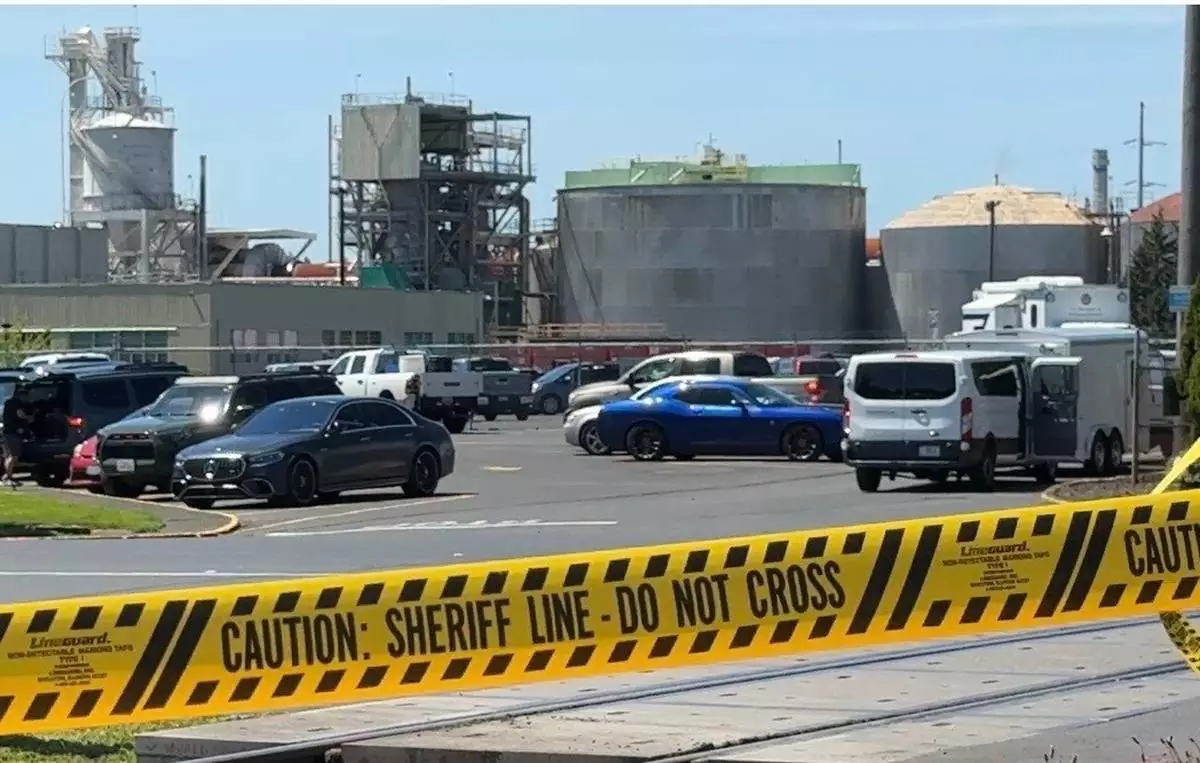
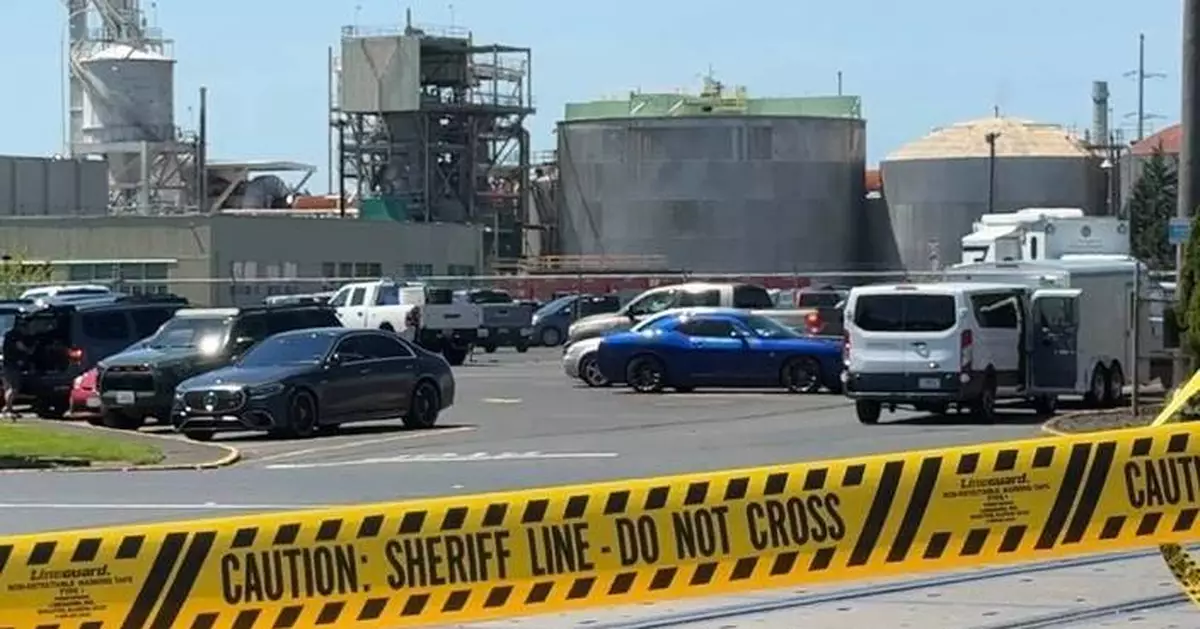
FILE - Yellow police tape is seen on May 27, 2026 outside the Longview, Wash. paper mill where a deadly chemical tank failure occurred. (AP Photo/Claire Rush, File)