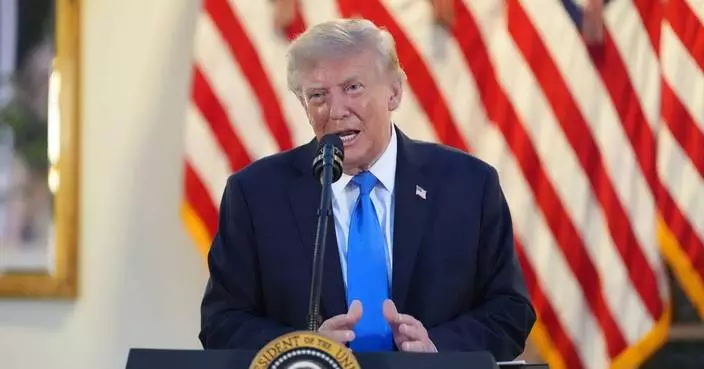
A federal judge on Friday extended her prohibition against the U.S. Postal Service implementing President Donald Trump’s executive order seeking to limit mail voting during the midterms, putting another major obstacle in the way of the administration as the first states begin sending out mail ballots.
The preliminary injunction from U.S. District Court Judge Indira Talwani replaces a temporary order she granted blocking the Postal Service’s plan.
The Trump administration had already asked the Supreme Court to lift Talwani's temporary order, and on Friday it informed her that it would appeal her latest decision to the U.S. 1st Circuit Court of Appeals.
The administration is running out of time to make big changes in voting procedures, though. North Carolina began sending out its first mail ballots Friday and more states will swiftly follow.
The legal battle could have major ramifications for this year’s elections, when control of Congress is at stake. Nearly one-third of voters in the U.S. cast mail ballots and election officials contend there isn’t enough time to revise their systems to comply with the new Postal Service directives.
Talwani, who was appointed by President Barack Obama, pointed to the tight timeline in her ruling.
“Plaintiff States are required under state law to mail millions of ballots to voters on a prescribed timeframe. As detailed below, they are unable to pivot this late in the election cycle, nearly guaranteeing significant disenfranchisement for eligible voters,” she wrote.
The White House did not immediately respond to a message seeking comment.
The order allows states to voluntarily use the new Postal Service system. To date, not a single state has announced that it will do so.
Trump has long sought to limit mail voting, even though he himself often uses that method to cast his own ballot. He has falsely blamed mail balloting for his 2020 election loss, spreading baseless claims of fraud, but has so far been unable to change the longstanding voting procedure.
An initial executive order Trump issued last year to change election rules, including a requirement for people to show documentary proof of citizenship to register to vote, was halted by federal judges. They ruled that the Constitution gives states and, in some cases, Congress the power to set voting procedures, not the president.
After Trump issued his mail voting executive order in March, Democrats and voting rights groups filed several lawsuits. Two ended up before Talwani, who placed an initial hold on the order in June, prohibiting its implementation until after November.
But the Supreme Court late last month overturned that order. Its conservative majority pointedly did not say Trump’s move was legal but found the lawsuits were filed prematurely before the Postal Service issued its rule on how it would implement the order. The rule came out just before the Supreme Court released its ruling, and the plaintiffs re-filed their suits.
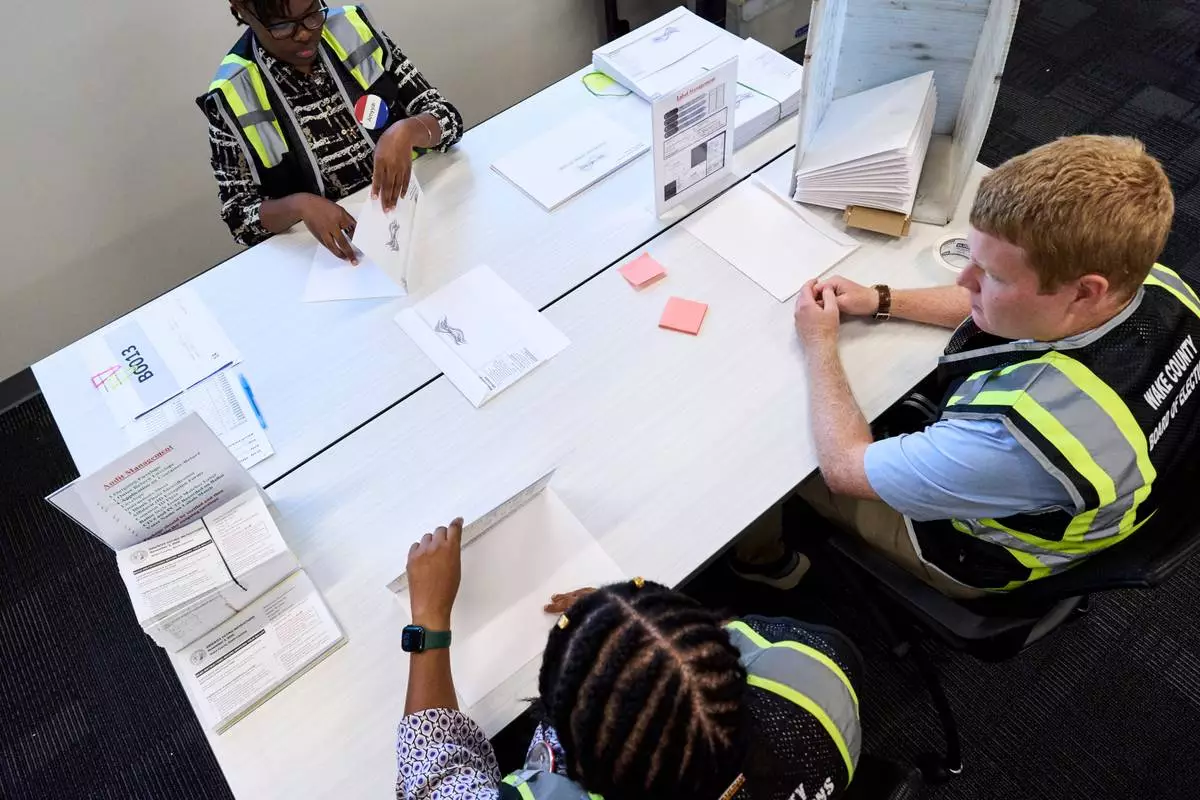
Wake County Board of Elections employees prepare absentee ballots to be mailed on Thursday, Sept. 3, 2026, in Raleigh, N.C. (AP Photo/Matt Ramey)
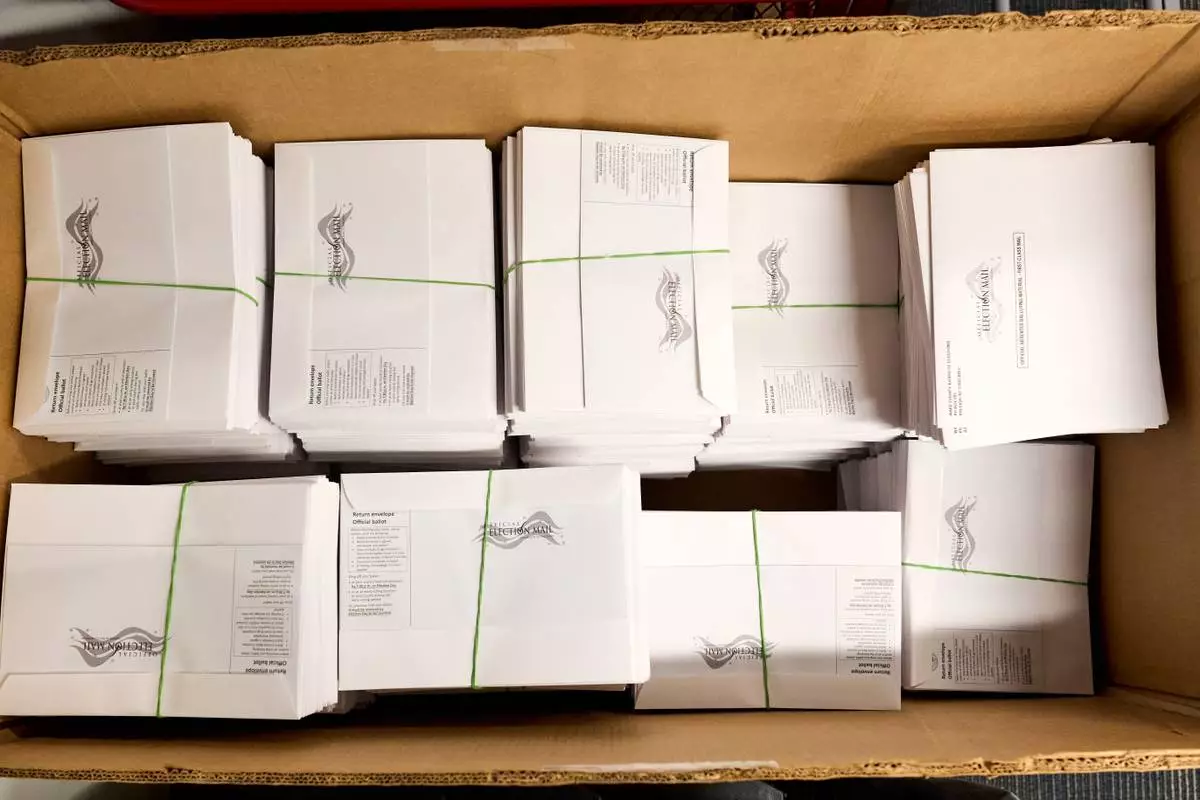
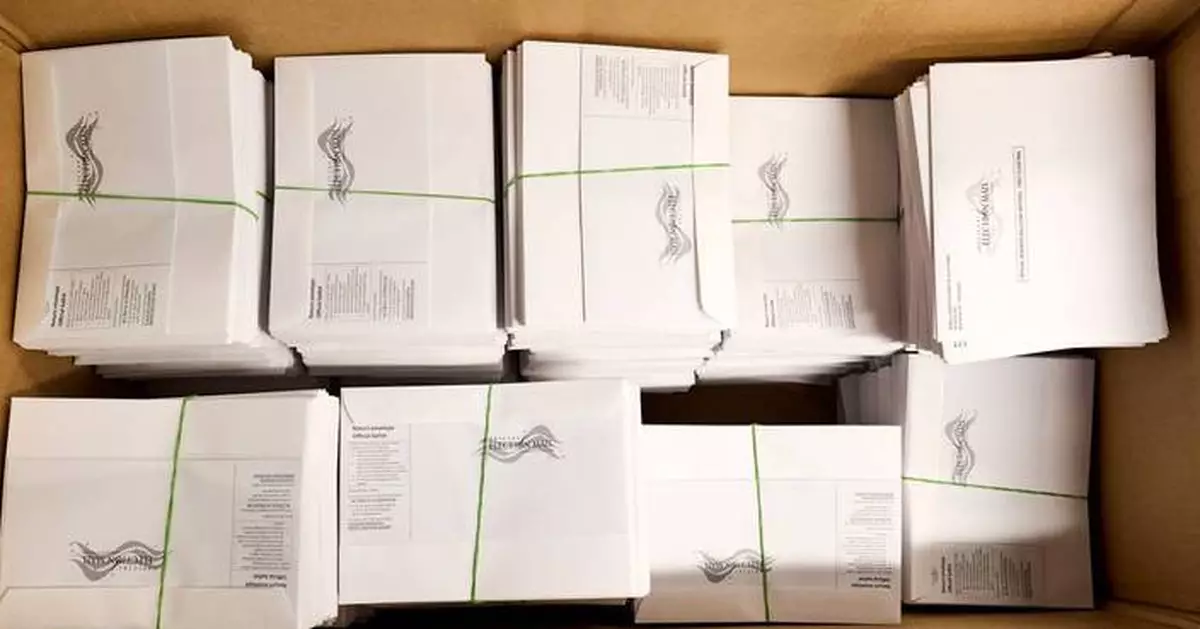
A large box of pre-assembled mail-in ballots at the Wake County Board of Elections on Thursday, Sept. 3, 2026, in Raleigh, N.C. (AP Photo/Matt Ramey)
Statewide mail voting for this year’s midterm elections kicked off Friday amid a churning legal battle over President Donald Trump’s attempts to limit the practice and mounting concern over Postal Service changes that some state officials blame for a rise in rejected ballots.
The developments have created a sense of uncertainty about a popular voting method used by one-third of the nation’s voters.
North Carolina on Friday became the first state to widely distribute mail ballots for this year’s elections, which will determine the balance of power in Congress for the remainder of Trump’s term.
Election officials said that while they are closely monitoring the litigation, ballots will be mailed out as expected and the state is prepared to administer a secure election even if the new limits go forward.
“We believe that we are well positioned,” Sam Hayes, executive director of the State Board of Elections, told reporters during a news conference in Raleigh on Thursday.
Trump frequently castigates mail voting and has falsely blamed it for his 2020 loss to Democrat Joe Biden, which he sought to overturn. Though he has repeatedly voted by mail himself, the president is pushing to curtail access for others.
In March, Trump signed an executive order seeking to limit mail balloting. States would have to submit lists of eligible voters to the Postal Service through an online portal that apparently is still inactive. Ballot envelopes also would have to comply with new Postal Service rules and include barcodes.
Trump's directive has been held up by multiple lawsuits, one of which led to a preliminary injunction Friday against its implementation, a decision the administration quickly appealed.
Election officials warn that headlines about the executive order and court fights have already confused some voters.
“The biggest part of this is that it has sparked questions about what it is. ‘What does this mean? What are you guys doing? Can I not vote by mail anymore?’” said Michael Dickerson, director of the Mecklenburg County Board of Elections.
“I just want people to be assured that, yes, you can still vote by mail,” he said, adding “it’s a safe and secure process.”
While the issue has ping-ponged around the courts, election workers in North Carolina had been working hard to get ready for the Friday deadline, officials there said in interviews.
Wake County elections employees have been processing absentee request forms, which come in daily online and in paper form, said Olivia McCall, the county's director of elections. They've also been coding ballots, running pre-election accuracy testing and packaging absentee packets that include a ballot, instructions and photo ID fliers, she said.
About 5,000 ballots will go out during Wake County's first wave, she said.
The turnaround time for ballots being returned could be quick, too, noted Dickerson, especially for military and overseas voters who can vote through an online portal.
“I guarantee you” votes will begin rolling in that way by Saturday, he said.
North Carolina Attorney General Jeff Jackson is among Democratic state officials who have aligned in one of the lawsuits challenging Trump's executive order and the changes proposed by the Postal Service.
In a recent court filing, a representative of the office argued it was “far too late in the election cycle to introduce such dramatic changes” and warned that implementing them would “imminently cause significant harm, confusion and disruption in North Carolina election administration.”
The League of Women Voters of North Carolina is issuing its standard advice to voters, while urging them not to wait until the last minute to return their mail ballot.
Officials with the State Board of Elections, which is led by a Republican majority, have projected confidence for a midterm cycle that is expected to see robust turnout, especially with a competitive U.S. Senate race on the ballot.
“It is business as usual, as far as I'm concerned,” Hayes, the board's executive director, said during the news conference.
The board has confirmed it has taken some initial steps to comply with the executive order, including submitting its envelopes to USPS for review. Hayes said they were approved. The state opted against submitting its voter information while the legal proceedings are pending.
A whistleblower told Congress this week that with the voter portal, the Postal Service is rushing an untested product that is likely to be riddled with errors that could lead to millions of mail ballots being rejected. On Friday, Postmaster General David Steiner issued a statement saying the agency's standards are not being compromised and he stands behind “the rigor of our process.”
He also sought to address the growing concerns about the agency's ability to deliver ballots and return them on time.
“Regardless of political party or perspective, we share a common goal: ensuring that Americans can have confidence that their election mail will be handled securely and delivered reliably should their election officials choose to use the mail for ballot delivery,” he said.
Election officials elsewhere are warning voters to avoid delays in returning mail ballots, but not for reasons related to Trump's attempts to alter the rules.
They are pointing to a change in how the Postal Service processes mail —- with postmarks stamped at distant processing centers rather than local post offices — as a reason for what they say has been a spike in mail ballot rejections. In many states, mail ballots arriving several days after an election can still be counted as long as they are postmarked by the final day of voting.
In California, nearly 150,000 voters had their mail-in ballots rejected in the state's June primary, mostly because they were postmarked too late. Wisconsin officials wrote to the Postal Service after hundreds of ballots arrived too late to be counted during elections in April, which has prompted at least some of the state's 1,850 municipal clerks to start sending mail ballots to voters earlier than usual.
In Washington, where voting is done almost entirely by mail, state officials issued a report this week saying the number of mail ballots rejected in the August primary because of a late postmark was 32% higher than the primary two years earlier.
“Why are we disenfranchising Americans when we've had one of the best systems in the United States?” Democratic Sen. Maria Cantwell said during a news conference in her home state to promote the report.
The Postal Service has addressed the issue on its website, saying it is not changing its postmarking practices but acknowledging that “adjustments to our transportation operations” mean that postmark dates might not match the day mail was picked up by a letter carrier or dropped off at a post office. The agency said voters can request a manual postmark at a local post office.
Other states will soon follow North Carolina in kicking off their mail ballot process throughout September, including Alabama on Sept. 9. By the middle of the month, all states are required to send ballots to military and overseas voters.
David Becker, executive director of the Center for Election Innovation and Research and a former Department of Justice lawyer, said the time to implement any major election changes for this year's midterms “has long since passed.”
The group has filed legal papers supporting states in the fight against the new postal rules.
“That’s true even if they were good changes, which the mail EO definitely is not," Becker said. “The first ballots being mailed only confirms this fact.”
Don Millis, a Republican who also chairs the Wisconsin Election Commission, said it was not surprising that some local clerks had already started sending out mail ballots earlier than they normally would. The fear is that if the Supreme Court gives a green light to Trump's executive order, it would tilt the election into chaos.
“There’s a fundamental concern this thing is not going to work,” he said.
Associated Press writers Nicholas Riccardi in Denver and Tom Verdin in Sacramento, California, and video journalist Allen Breed in Raleigh, North Carolina, contributed to this report.
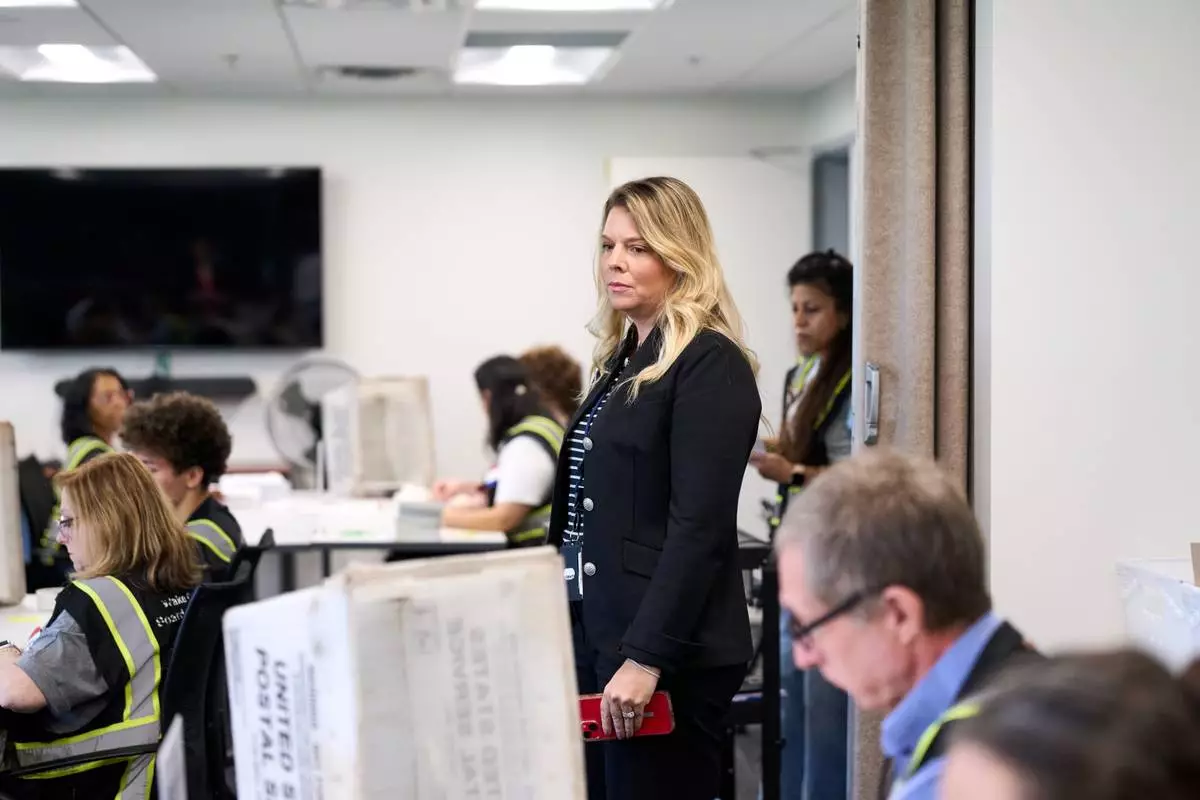
Olivia McCall, director of the Wake County Board of Elections, watches over employees preparing absentee ballots to be mailed on Thursday, Sept. 3, 2026, in Raleigh, N.C. (AP Photo/Matt Ramey)
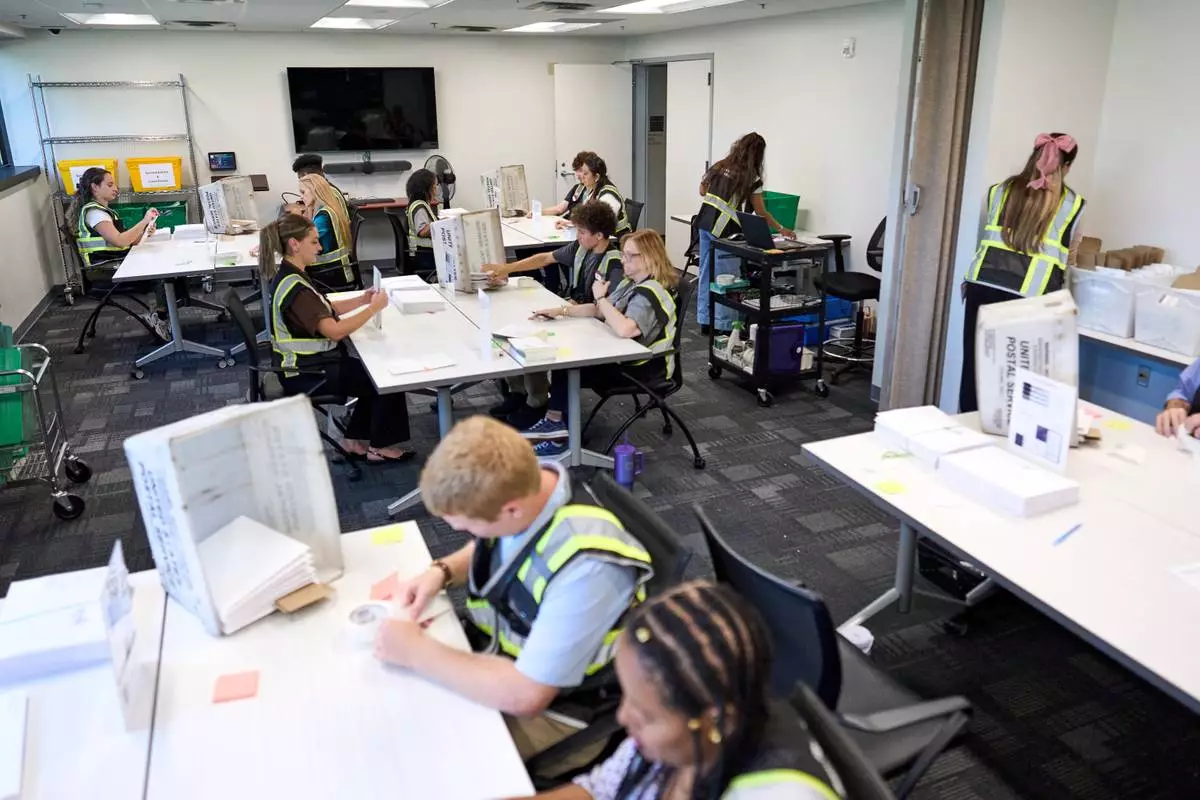
Wake County Board of Elections employees prepare absentee ballots to be mailed on Thursday, Sept. 3, 2026, in Raleigh, N.C. (AP Photo/Matt Ramey)
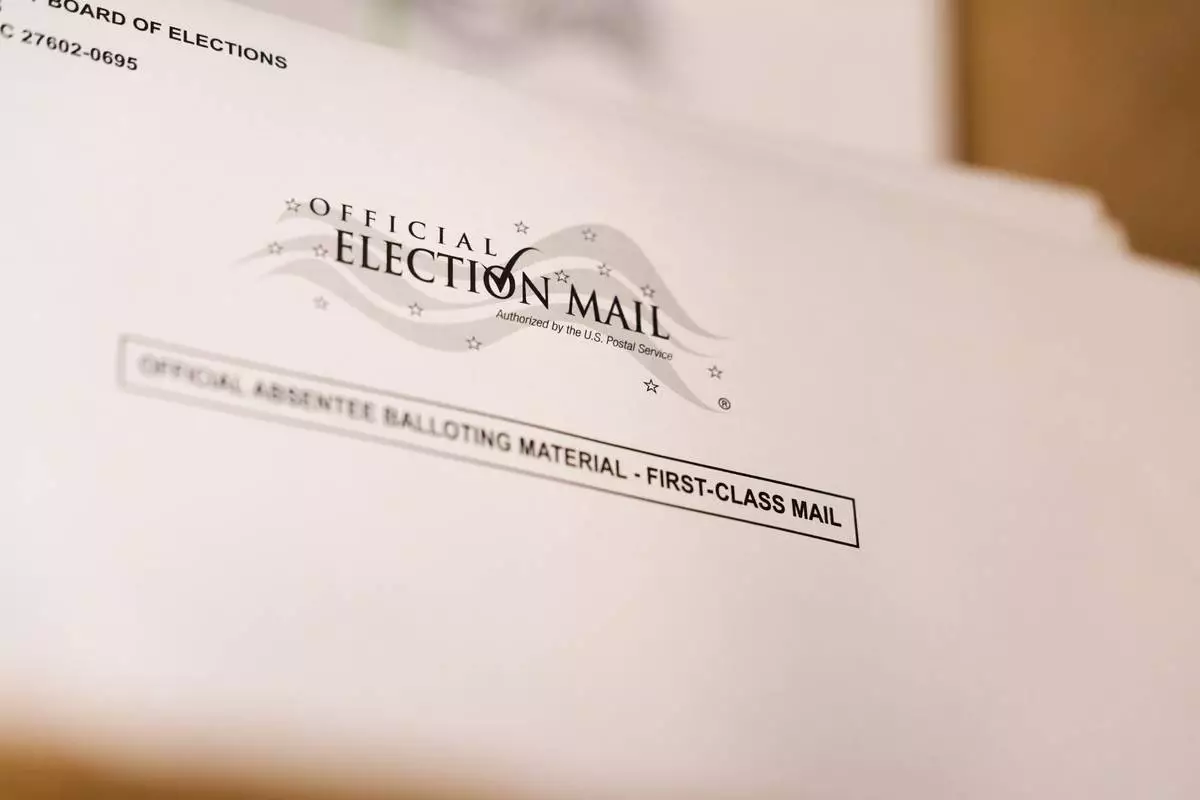
Envelopes for mail-in ballots at the Wake County Board of Elections are seen on Thursday, Sept. 3, 2026, in Raleigh, N.C. (AP Photo/Matt Ramey)
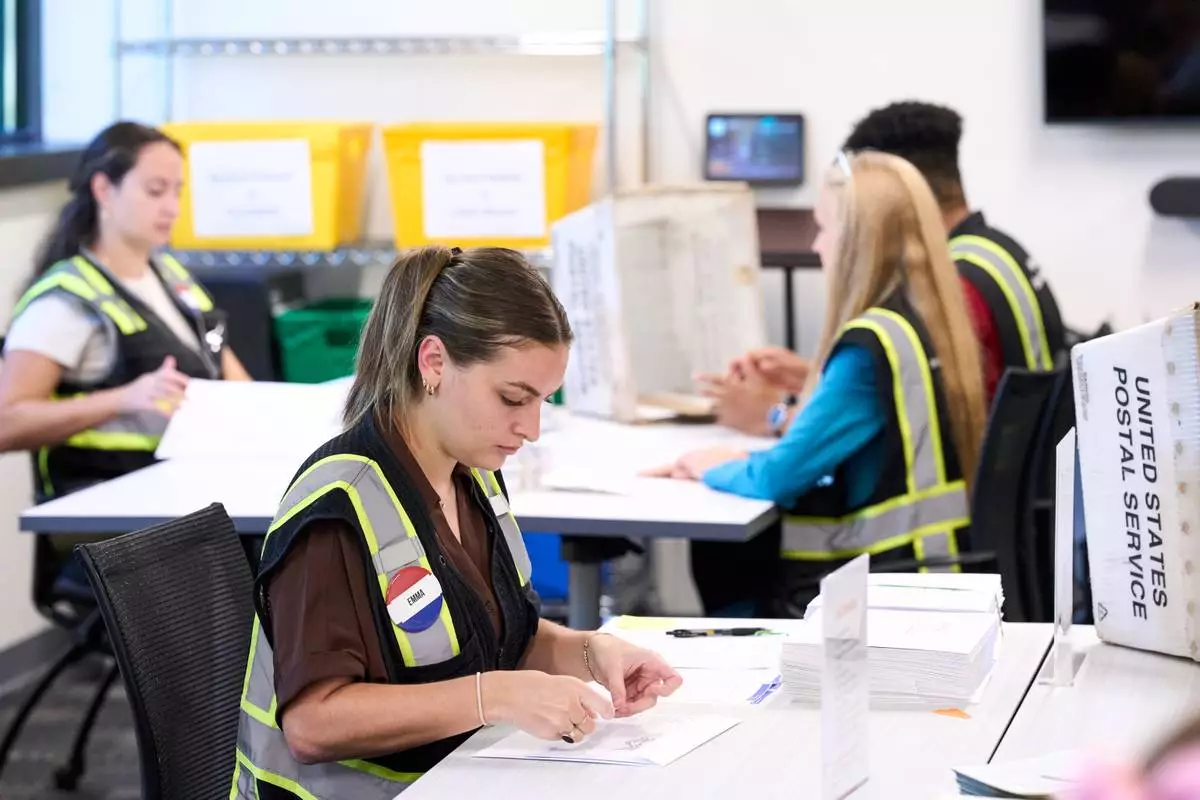
Wake County Board of Elections employees prepare absentee ballots to be mailed on Thursday, Sept. 3, 2026, in Raleigh, N.C. (AP Photo/Matt Ramey)
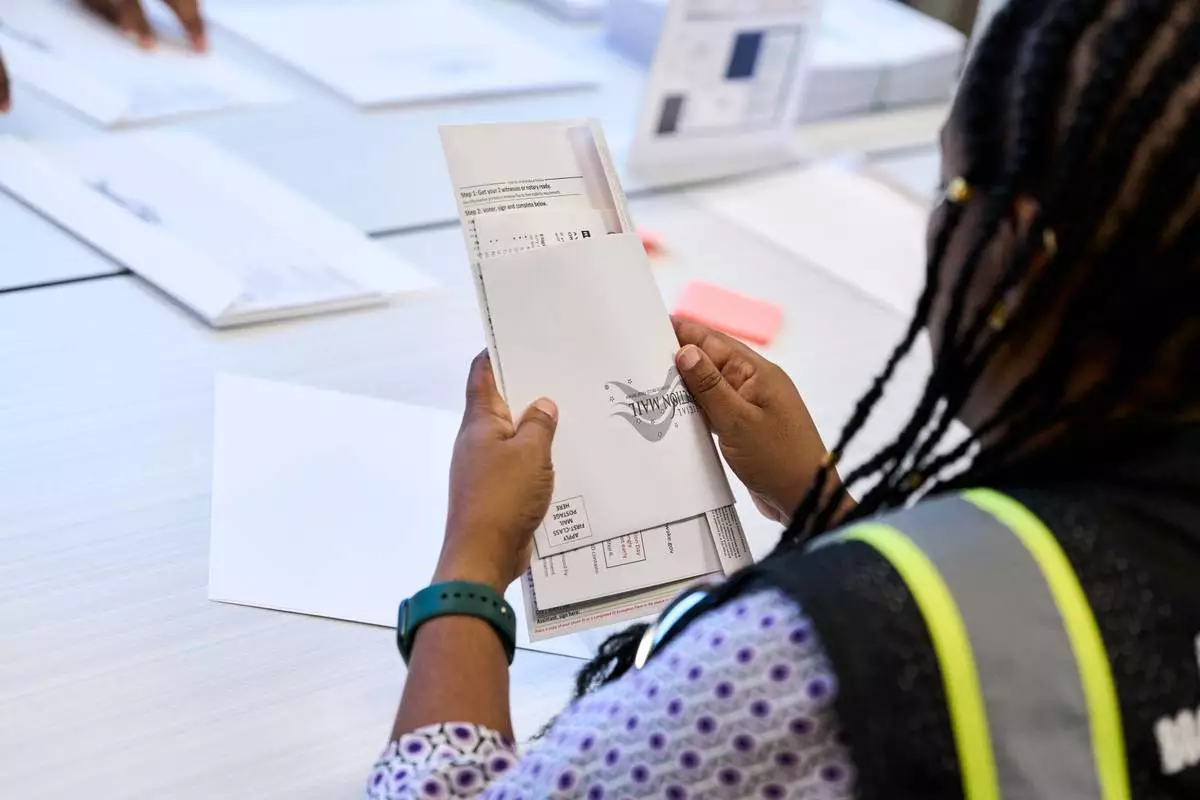
Wake County Board of Elections employees prepare absentee ballots to be mailed on Thursday, Sept. 3, 2026, in Raleigh, N.C. (AP Photo/Matt Ramey)