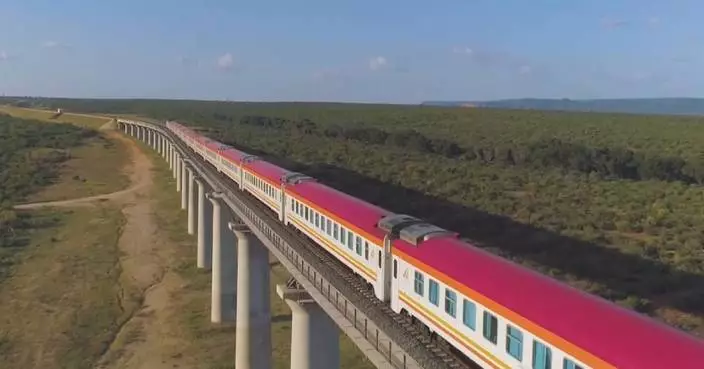
The first tunnel on the Kyrgyz section of the China-Kyrgyzstan-Uzbekistan railway has been drilled through, marking a major milestone in the development of the cross-border route, the project company said Saturday.
According to China-Kyrgyzstan-Uzbekistan Railway Company, a joint venture established by enterprises authorized by the three governments, the 209.6-meter-long Kosh Dobo North No. 2 tunnel is the first tunnel drilled through on the Kyrgyz section.
Construction began in June 2025. Since then, construction has begun on 27 tunnels, 43 bridges and 88 roadbed sections, while construction for 20 railway stations is also underway.
The railway is a landmark project between China, Kyrgyzstan and Uzbekistan under the Belt and Road Initiative.
Once completed, it will provide a new rail link between China and Central Asia, running from Kashgar, northwest China's Xinjiang Uygur Autonomous Region, through the Kyrgyz border city of Jalalabad to the eastern Uzbek city of Andijan.
The total length of the railway will exceed 500 kilometers, including 304.84 kilometers in Kyrgyzstan.
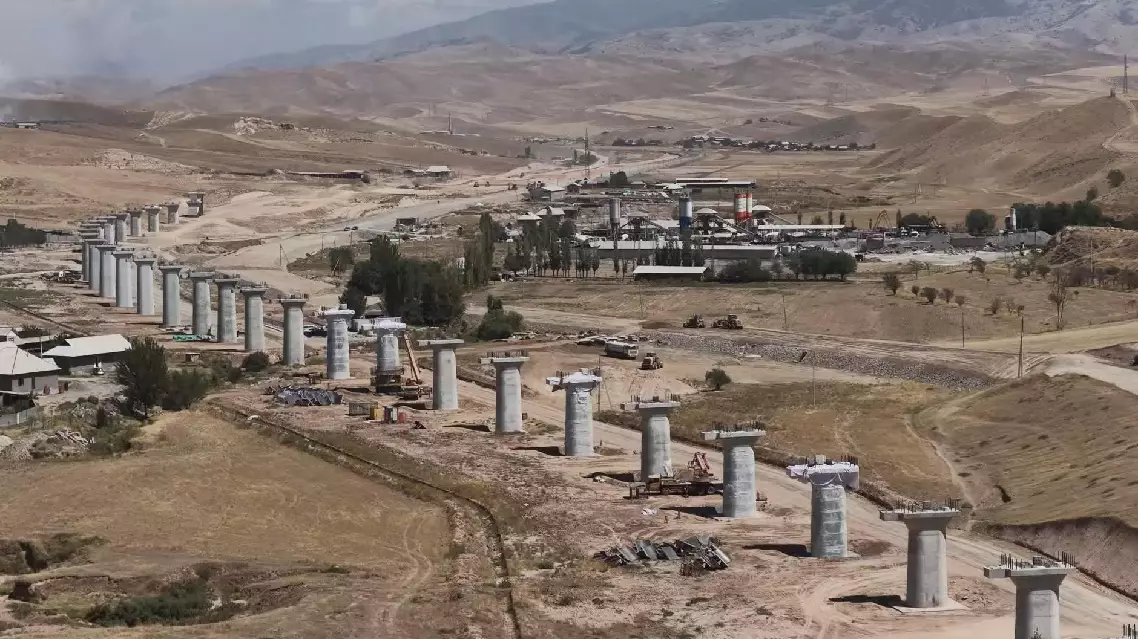
China-Kyrgyzstan-Uzbekistan railway marks milestone as first tunnel on Kyrgyz section drilled through
China on Saturday expressed serious concern and firm opposition to new U.S. outbound investment restrictions, saying that it will closely follow relevant developments and reserve the right to take all necessary measures.
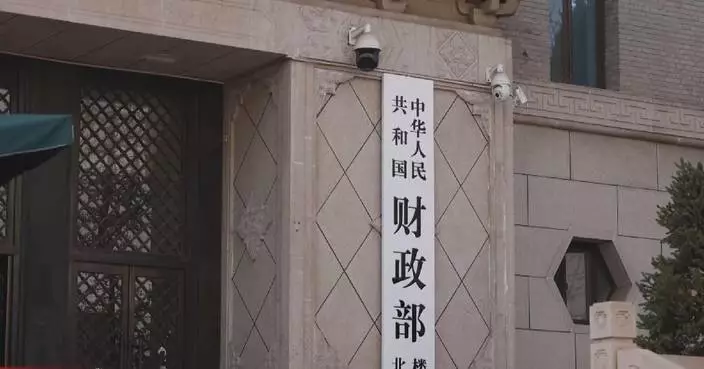
The statement made by a spokesperson for the Ministry of Commerce came in response to a media query regarding the U.S. Treasury Department's updated proposed rules on outbound investment released on Friday.
In the statement released on the ministry's official website, the spokesperson said that the proposed rule expands the scope of investment restrictions targeting China in a discriminatory manner and intensifies these constraints, which is a classic example of generalizing the concept of national security and runs counter to the important consensus reached by the two heads of state.
It also interrupts normal economic and trade cooperation between Chinese and U.S. enterprises, and undermines the international economic and trade order, the spokesperson added.
Highlighting China's enormous market and immense consumer and investment potential, the spokesperson emphasized that investing in China means investing in the future.
U.S. restrictions on investments in China not only hinder bilateral economic and trade cooperation, but also harm the interests of American enterprises themselves, the spokesperson noted.
China urges the U.S. side to respect the laws of a market economy, stop overstretching the concept of national security, stop politicizing and weaponizing trade and economic issues, and create an enabling environment for China-U.S. business cooperation, said the spokesperson.
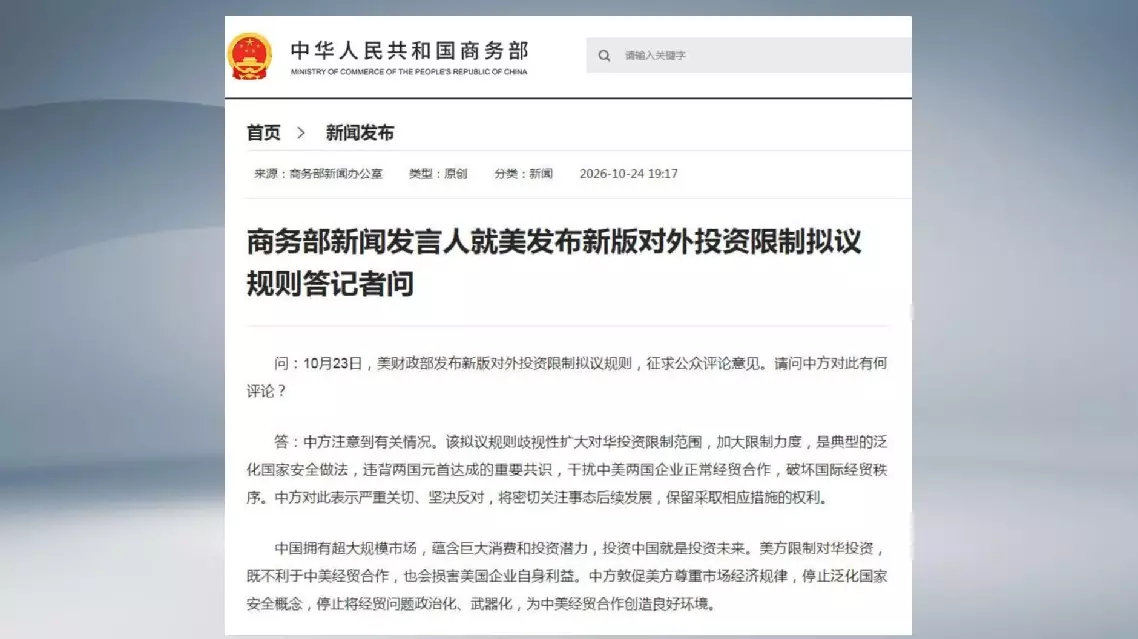
China firmly opposes US discriminatory investment restrictions: spokesperson