Skip to Content Facebook Feature Image

U.S. regulator opens probe into Tesla Cybercab self-certification

HotTV

HotTV

HotTV

U.S. regulator opens probe into Tesla Cybercab self-certification

2026-09-06 11:19 Last Updated At:14:52

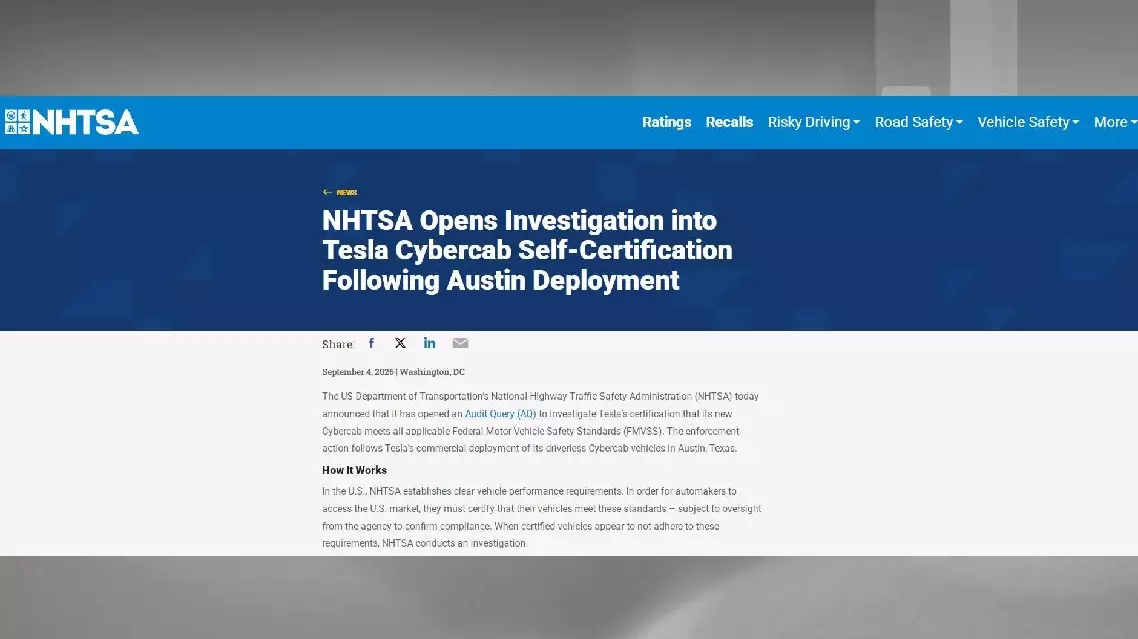
The U.S. National Highway Traffic Safety Administration (NHTSA) has opened an investigation into Tesla's certification that its new Cybercab meets all applicable Federal Motor Vehicle Safety Standards (FMVSS).

The probe, formally designated as an Audit Query, was opened on Sept. 3 and covers an estimated 1,000 Cybercab vehicles, according to an NHTSA investigation document made public on Friday. It will examine the process and technical data Tesla relied upon when certifying the Cybercab, as well as related issues. Tesla began commercial deployment of a small number of Cybercab vehicles in Austin, Texas, on Thursday and notified the agency that it had certified the vehicles as compliant with all applicable FMVSS. Tesla also told the NHTSA that it plans to gradually expand commercial deployment of the Cybercab to include additional vehicles and locations.

The vehicles lack permanently attached conventional manual controls, such as a brake pedal, gas pedal, steering wheel and mirrors, according to the NHTSA.

The agency said the inquiry will examine, among other issues, the extent to which Tesla's certification depended on determinations that certain FMVSS are inapplicable to the Cybercab.

In the United States, the NHTSA establishes vehicle performance requirements, while automakers must certify that their vehicles meet applicable standards before entering the U.S. market, subject to agency oversight to confirm compliance. The NHTSA said it conducts investigations when certified vehicles appear not to adhere to those requirements.
U.S. regulator opens probe into Tesla Cybercab self-certification

U.S. regulator opens probe into Tesla Cybercab self-certification
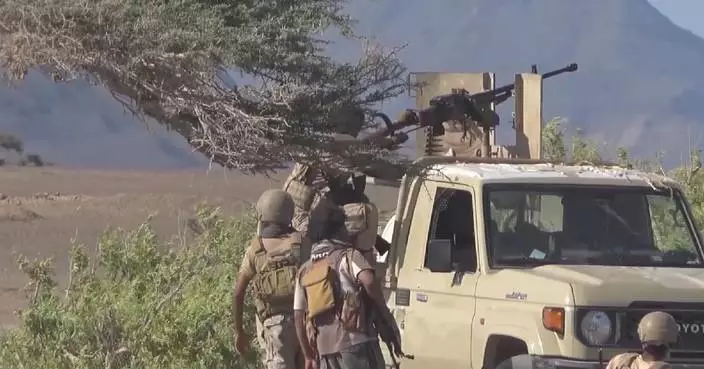
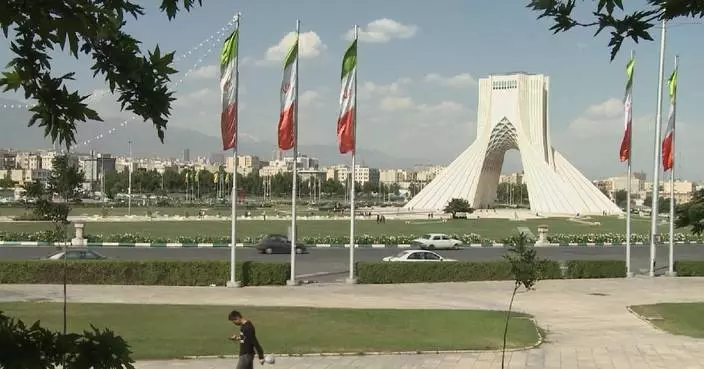
Foreign ministers from eight regional and European countries met in Istanbul on Friday, voicing opposition to military action against Iran and calling for the reopening of the Strait of Hormuz.

The meeting brought together four regional countries -- Türkiye, Egypt, Pakistan, and Saudi Arabia, and four European nations -- Britain, France, Germany, and Italy.

Following closed-door talks, Turkish Foreign Minister Hakan Fidan told reporters that the four regional countries first held its seventh standalone meeting, which focused on the threat of a potential attack on Iran and recent Houthi strikes on Saudi Arabia. The European nations subsequently joined the discussions, broadening the agenda to the wider implications of ongoing conflicts, he added.

Fidan said the two major regional conflicts, coupled with threats to maritime routes, including the Strait of Hormuz, the Bab-el-Mandeb Strait, and the Black Sea, were "incredibly disrupting energy supplies, food security, and the free trade regime, exerting immense pressure globally."

All participants shared a common understanding of the need for dialogue to prevent the destruction from spreading further, he said, stressing that all parties rejected military action against Iran.

He also noted the need for a ceasefire and a comprehensive peace agreement between Ukraine and Russia, as well as ensuring safe maritime passage through the Black Sea.

Regional, European countries warn against new attacks on Iran, call for reopening of Hormuz

Regional, European countries warn against new attacks on Iran, call for reopening of Hormuz

Recommended Articles