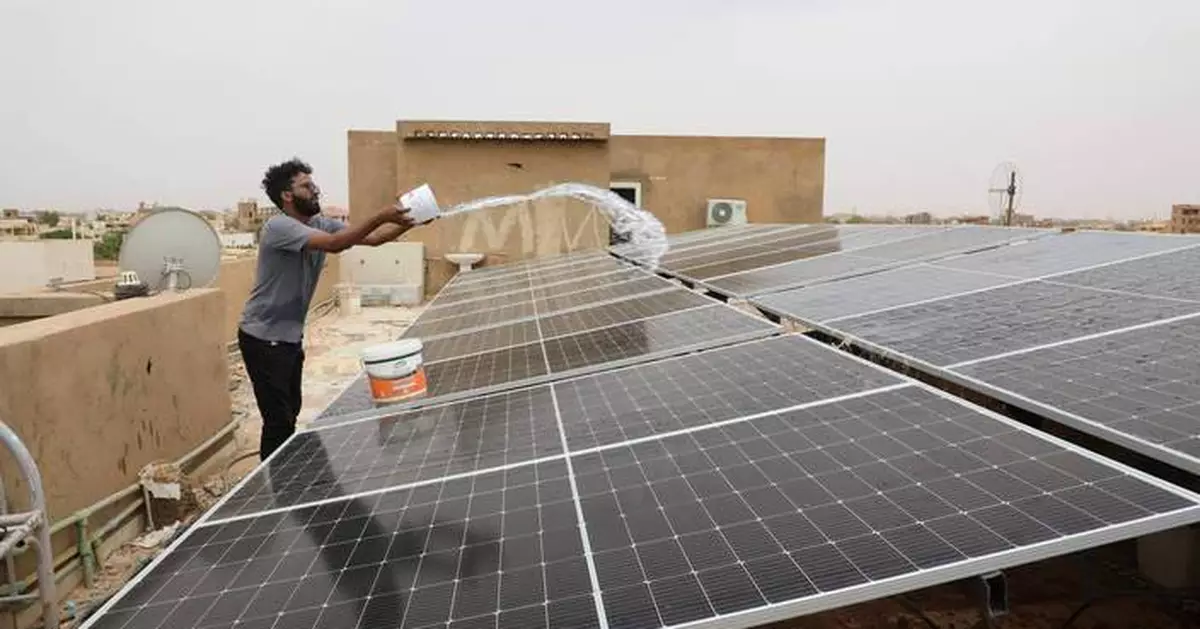
OMDURMAN, Sudan (AP) — For almost a year, Randa al-Mansour, a 31-year-old Sudanese housewife, has relied on solar energy panels installed on the rooftop of her building to survive the recurrent blackouts triggered by the war-torn country’s deteriorating electricity grid.
“We are suffering big time,” said al-Mansour, who lives with her three children in Omdurman, just outside the capital of Khartoum.
Click to Gallery
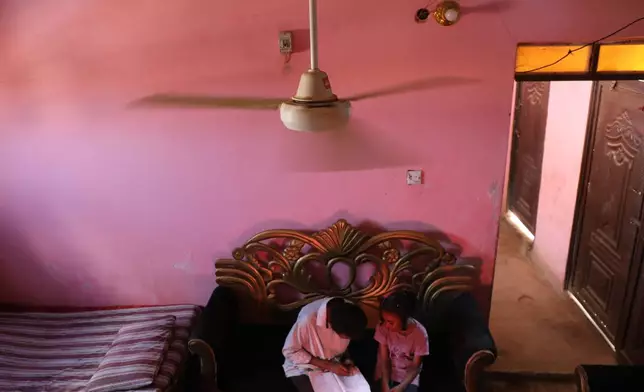
Al-Hodabi Yassin, a diabetes patient, teaches his daughter during a power cut, in Omdurman, on the outskirts of Khartoum, Sudan, Friday, July 24, 2026. (AP Photo/Mohnd Blal)
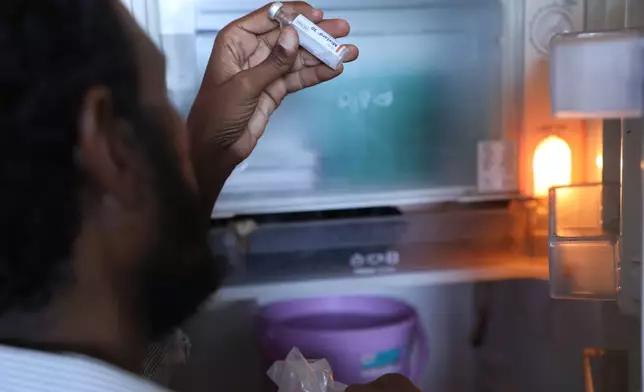
Al-Hodabi Yassin, a diabetes patient, checks an insulin injection stored in his refrigerator during an electricity shortage, in Omdurman, on the outskirts of Khartoum, Sudan, July 24, 2026. (AP Photo/Mohnd Blal)
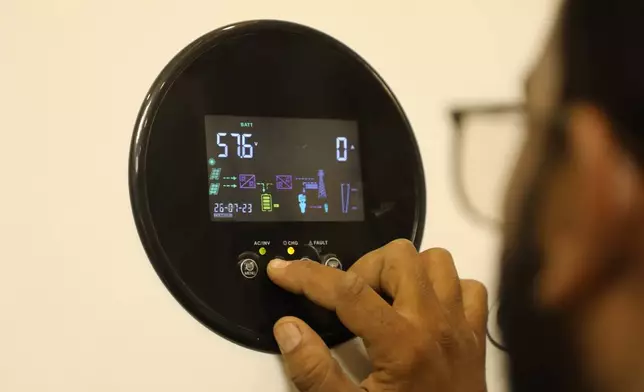
A solar energy system installation technician adjusts the system's battery settings at a home, in Omdurman, on the outskirts of Khartoum, Sudan, July 23, 2026. (AP Photo/Mohnd Blal)
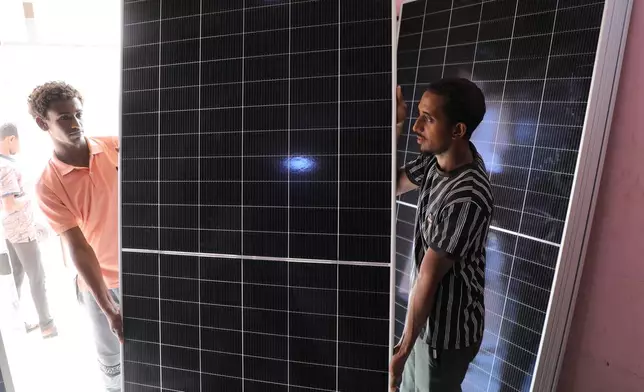
Workers carry a panel ready for installation at a solar energy systems store in Omdurman, on the outskirts of Khartoum, Sudan, July 23, 2026. (AP Photo/Mohnd Blal)
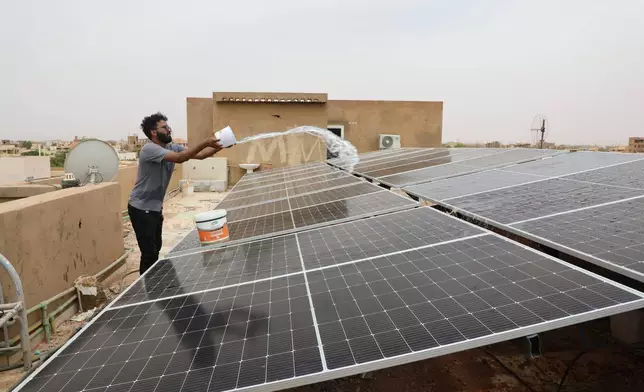
A technician cleans solar panels installed on the roof of a home in Omdurman, on the outskirts of Khartoum, Sudan, July 23, 2026. (AP Photo/Mohnd Blal)
“When kids arrive at school in the morning, they find no electricity there, so they are forced to head back home, where there is none either. It is very hard for them to study under such a high temperature.”
The Sudanese military and the paramilitary Rapid Support Forces have been fighting since April 2023, killing at least 59,000 people, though aid groups say the number could be higher, and displacing some 13 million.
The conflict also has strained an already weak power infrastructure, forcing many Sudanese to seek alternative energy sources, especially during scorching summer heat. The United Nations Development Program has estimated the damage inflicted on the electricity grid at $3 billion.
“We resorted to solar energy as a way of adapting to this situation. However, not everyone in Sudan can afford this solution,” said al-Mansour, who supports her family with remittances from her husband working in Saudi Arabia.
In recent months, billboards advertising solar panels, batteries, and inverters have expanded in the capital as more Sudanese consider transitioning to solar energy.
“For a low-income family, installing a solar panel system is a huge sacrifice but an inevitable choice,” said Mohey Eddin Abu-Bark, owner of a solar systems business in Khartoum, adding that a typical household 10-kilowatt solar system costs nearly $5,000.
Manahel Madany, a 43-year-old diabetic civil servant, cannot afford the transition, despite needing steady electricity for her fridge for her insulin.
“Every three to four days, I am forced to throw away all my insulin stock after it goes bad due to heat and power outages,” said Madany.
She lives in a two-bedroom house with her mother and sister in Omdurman, and like many Sudanese, the three are forced to sleep in their house courtyard to escape the searing heat indoors.
“Not all pharmacies can afford to install solar panels for medical storage, and that’s why most medications have become unavailable,” Madany said.
The Sudan Doctors' Network, which tracks violence across the country, warned that the continued electricity cuts could impact patients in hospitals, especially kidney patients who need constant care.
At least 30% of Sudan’s population has no access to electricity, with rural areas bearing the brunt, according to the World Bank. Conditions in grid-connected urban centers have also deteriorated, with power outages reaching up to 16 hours in many parts of the country in recent months, according to two electricity department officials who spoke to The Associated Press.
Electricity production has dropped from 4,400 megawatts before the war to 1,100 megawatts as many power plants were hit by drones launched by the RSF, while nearly half of Sudan’s best electricity engineers and technicians have also left the country since 2023, the officials said, citing a survey by a local labor union.
The two spoke on condition of anonymity because they were not authorized to brief the media.
Yassir Abdullah reported from Shendi, Sudan.
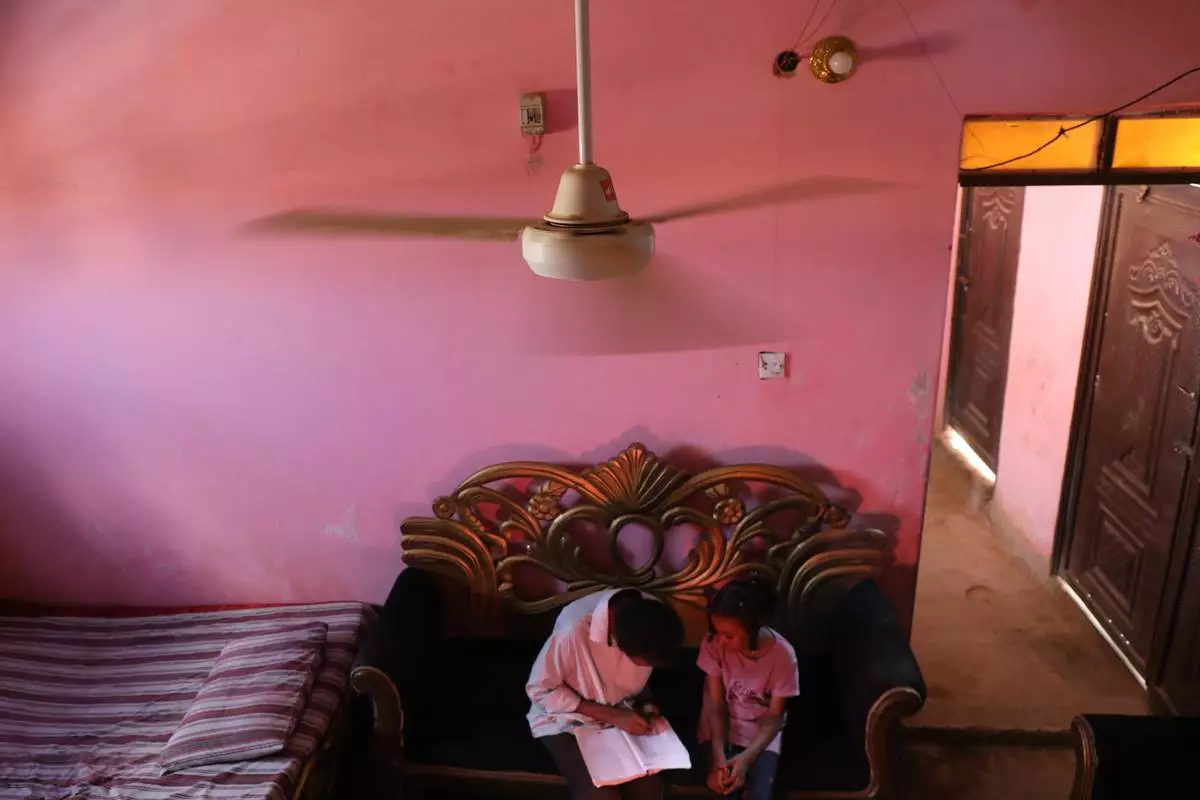
Al-Hodabi Yassin, a diabetes patient, teaches his daughter during a power cut, in Omdurman, on the outskirts of Khartoum, Sudan, Friday, July 24, 2026. (AP Photo/Mohnd Blal)
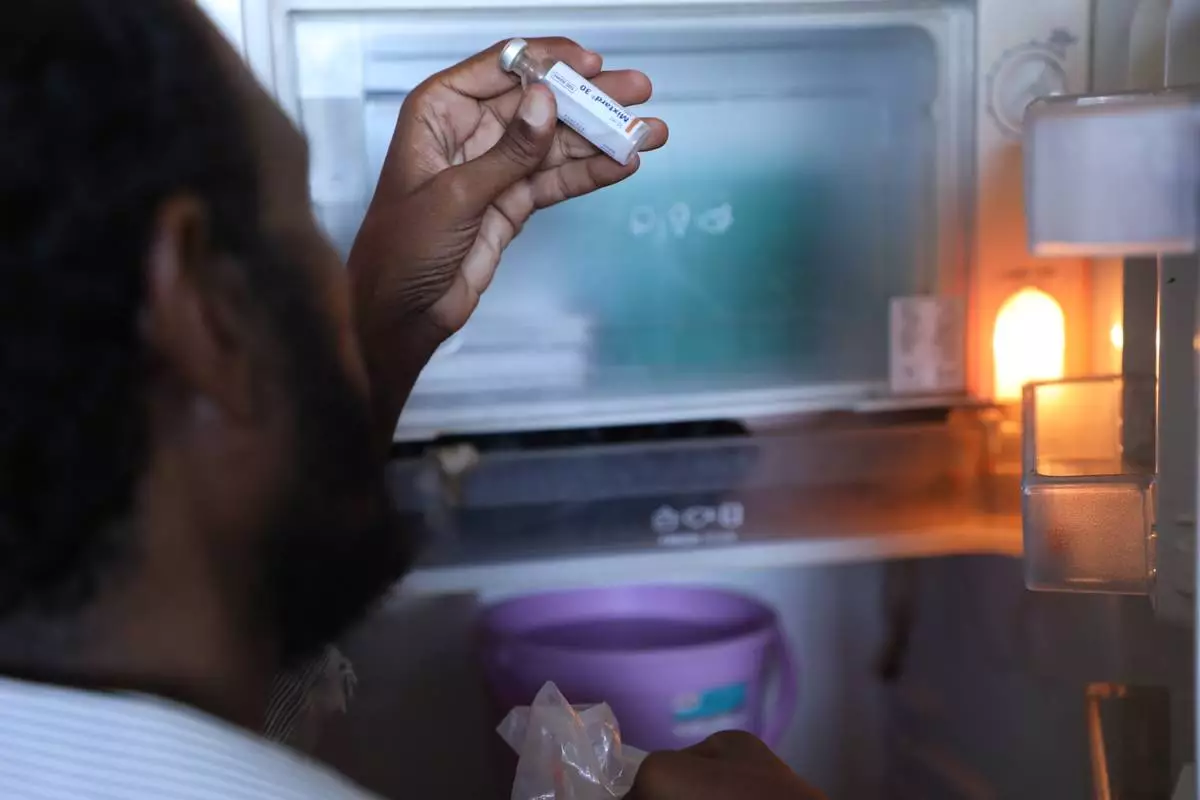
Al-Hodabi Yassin, a diabetes patient, checks an insulin injection stored in his refrigerator during an electricity shortage, in Omdurman, on the outskirts of Khartoum, Sudan, July 24, 2026. (AP Photo/Mohnd Blal)
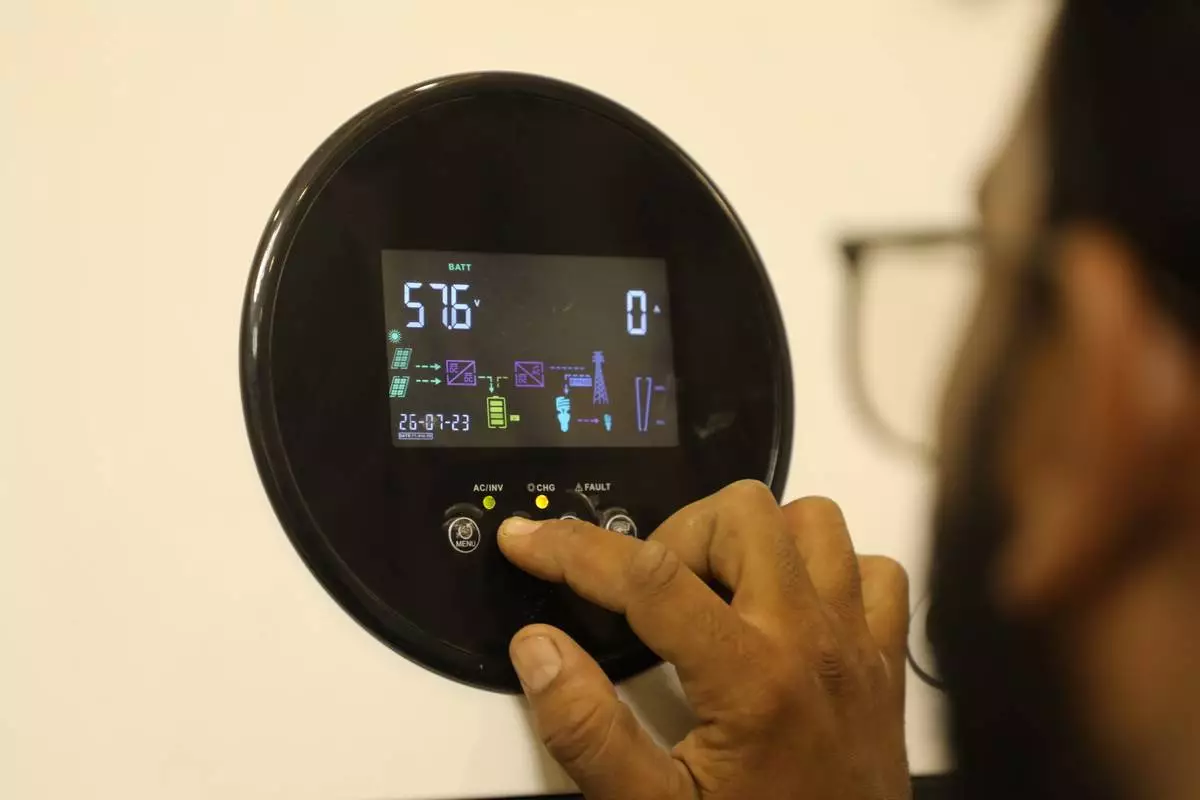
A solar energy system installation technician adjusts the system's battery settings at a home, in Omdurman, on the outskirts of Khartoum, Sudan, July 23, 2026. (AP Photo/Mohnd Blal)
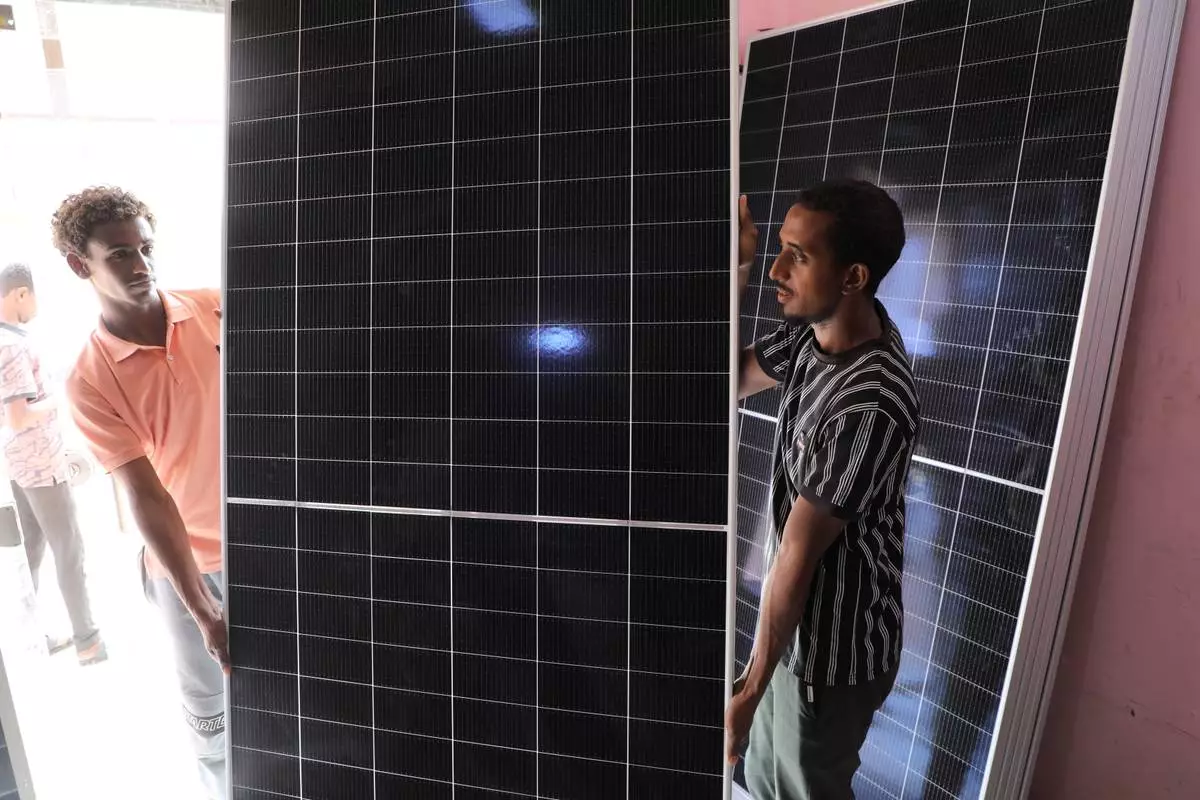
Workers carry a panel ready for installation at a solar energy systems store in Omdurman, on the outskirts of Khartoum, Sudan, July 23, 2026. (AP Photo/Mohnd Blal)
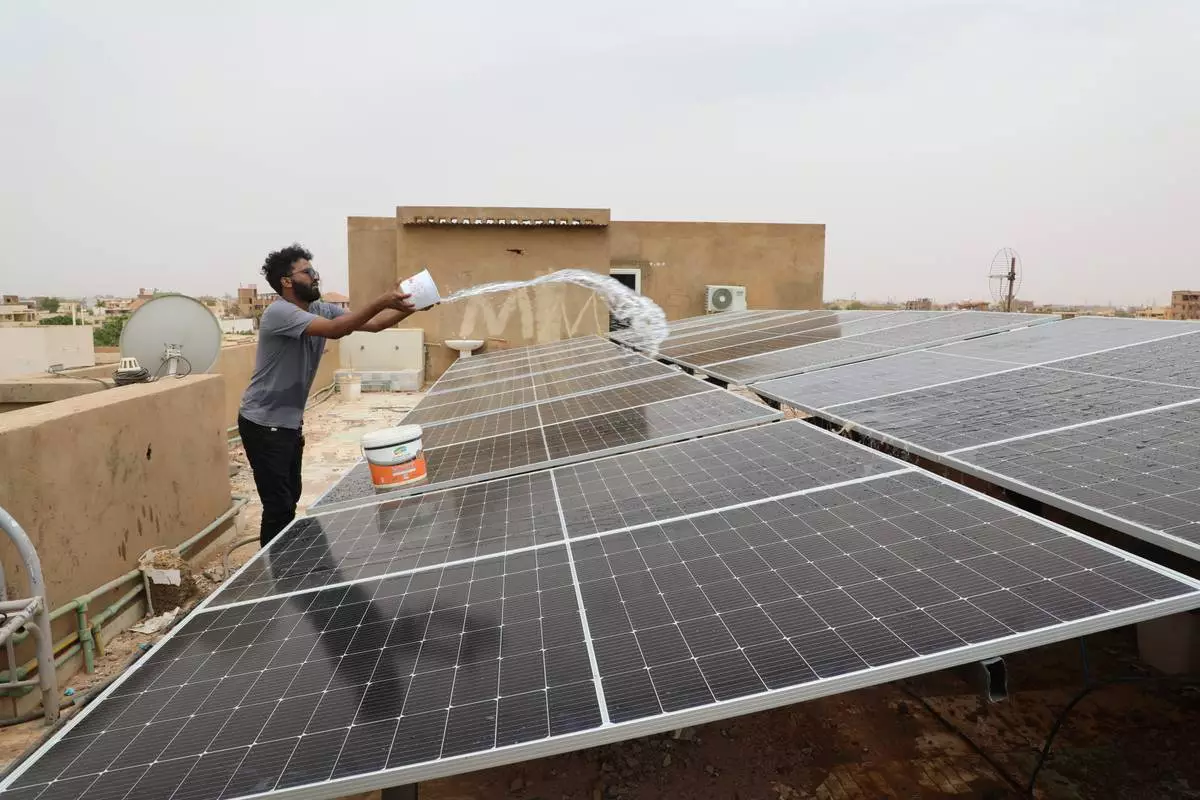
A technician cleans solar panels installed on the roof of a home in Omdurman, on the outskirts of Khartoum, Sudan, July 23, 2026. (AP Photo/Mohnd Blal)
HARARE, Zimbabwe (AP) — A television game show in Nigeria’s commercial hub of Lagos has an unforgiving rule: Speak English and you lose. For a U.S.-born millennial in the audience and a student of her parents' mother tongue, the high-stakes setting is a perfect classroom.
Meanwhile, a 15-year-old Canadian speaks to a teacher about 13,000 kilometers (8,000 miles) away in Zimbabwe, learning a language her parents feared she would never speak.
“Mhoroi,” Nyashadzashe Machingura says cheerfully with a pronounced Canadian accent while greeting in Zimbabwe's vernacular Shona.
The scenes capture a new generation of interest and entrepreneurship around African languages once pushed to the margins by decades of colonialism. Often seen as secondary to English, French and Portuguese, they are enjoying a renaissance that is also creating business opportunities.
Africa is home to over 1 billion people speaking roughly a third of the world’s languages, with between 1,500 and 3,000 across 54 countries, according to UNESCO.
Experts say the revival in some of them is driven partly by second- and third-generation Africans in the diaspora finding it easier to reconnect with their roots and communicate with older relatives, thanks to social media, online learning and entertainment.
“There were times I definitely felt left out because my family around me were all speaking Shona. And I just couldn’t understand them,” Nyashadzashe said after a lesson covering traditional greetings, proverbs and ancestral clan symbols. She said she had eaten the food and worn the traditional clothing but still felt left out.
But now her conversations with her grandparents in Zimbabwe are growing longer.
“Being able to connect with them on that level makes me really proud of my heritage,” she said.
Her Zimbabwe-based tutor, Shungu Chidovi, left her banking career in January to focus full-time on ZimbOriginal, an online platform that teaches Shona through storytelling, book clubs and “buddy pairing” exchanges.
Now she teaches about two dozen learners in Zimbabwe, Canada, Australia, South Africa, Ireland and Scotland, charging $50 a month.
The business, part of a small but growing number of online initiatives teaching African languages, emerged almost by accident. Chidovi began writing a blog about Zimbabwean traditions in 2016. Readers began asking whether she taught Shona.
“I didn’t see it at the time that I was really writing about the Shona language,” Chidovi said.
Like many in Africa, she grew up with the understanding that to get ahead she had to embrace Western languages instead of her mother tongue. English remains the dominant language for education, business and government affairs in the southern African nation that officially recognizes 16 mostly Indigenous languages.
“When you talk of Africa, you talk of English, French, Portuguese,” said Believe Mubonderi, a linguistics lecturer at Zimbabwe Open University. His research notes the importance of ensuring that African languages have a place in technologies shaping how people communicate, learn and trade.
“In most cases, African languages were sidelined. They were never exposed or modernized to be used in commerce, science and technology," he said. "When a language has a very low status, there’s a danger that that language eventually becomes endangered.”
Governments and international organizations are trying to reverse that trend.
The African Union’s 2022 decision to adopt Kiswahili, spoken in much of east Africa, as an official working language has raised its international profile. The United Nations declared 2022-2032 the International Decade of Indigenous Languages.
And the AU continental body and UNESCO are supporting efforts to document and revitalize African languages, including using artificial intelligence to generate and translate children's books and teacher guides.
But there's a steep digital disadvantage. UNESCO says only 10 languages around the world dominate the "internet ecosystem,” while less than 2% of African languages have a meaningful online presence. That leaves many with too little data to train artificial intelligence systems.
Still, momentum for change is growing, with much of it from Africans abroad.
“People of African descent have come to realize that we also have our own identity which we need to embrace and be proud of. You go on Facebook, you go on TikTok, you are seeing many different efforts,” Mubonderi said. Younger diaspora Africans "are trying by all means to revive, to revitalize, to make use of these languages.”
Chindovi said she hears that desire from children and their parents.
“When people are away from home, they long for home more than when they are home," she said.
That hunger for connection is also reshaping culture.
In Nigeria, a game show called “Masoyinbo,” meaning “Do not speak English,” has turned Yoruba, one of the country's most widely spoken languages, into prime-time entertainment. Contestants, including diaspora Nigerians, are tested on Yoruba language and culture, with prizes reaching thousands of dollars.
Host Olalekan Fabilola, who started the show in 2024, sees its popularity as part of a wider shift.
“If ‘Masoyinbo’ had started like 10 years ago, it wouldn’t have been what it is now," he said. “But we are in the age of cultural resurgence. People want to go back to their roots. Everyone wants to know why, where they are from, and so it’s timely.”
Tomi Adeshokan, a New Jersey resident who is learning to perfect her Yoruba with Fabilola as a tutor, was part of the audience during a recent recording of the show. She said she lost daily exposure to Yoruba after moving out of her father’s home before the COVID-19 pandemic. During the pandemic, she joined Clubhouse just to hear the language and later began taking classes. Now she was back visiting family.
“It’s very important for us to immerse ourselves in our culture and not to fully identify with other cultures, like the American, the Western culture," Adeshokan said.
Ikpoyi reported from Lagos, Nigeria.
For more on Africa and development: https://apnews.com/hub/africa-pulse
The Associated Press receives financial support for global health and development coverage in Africa from the Gates Foundation. The AP is solely responsible for all content. Find AP’s standards for working with philanthropies, a list of supporters and funded coverage areas at AP.org.
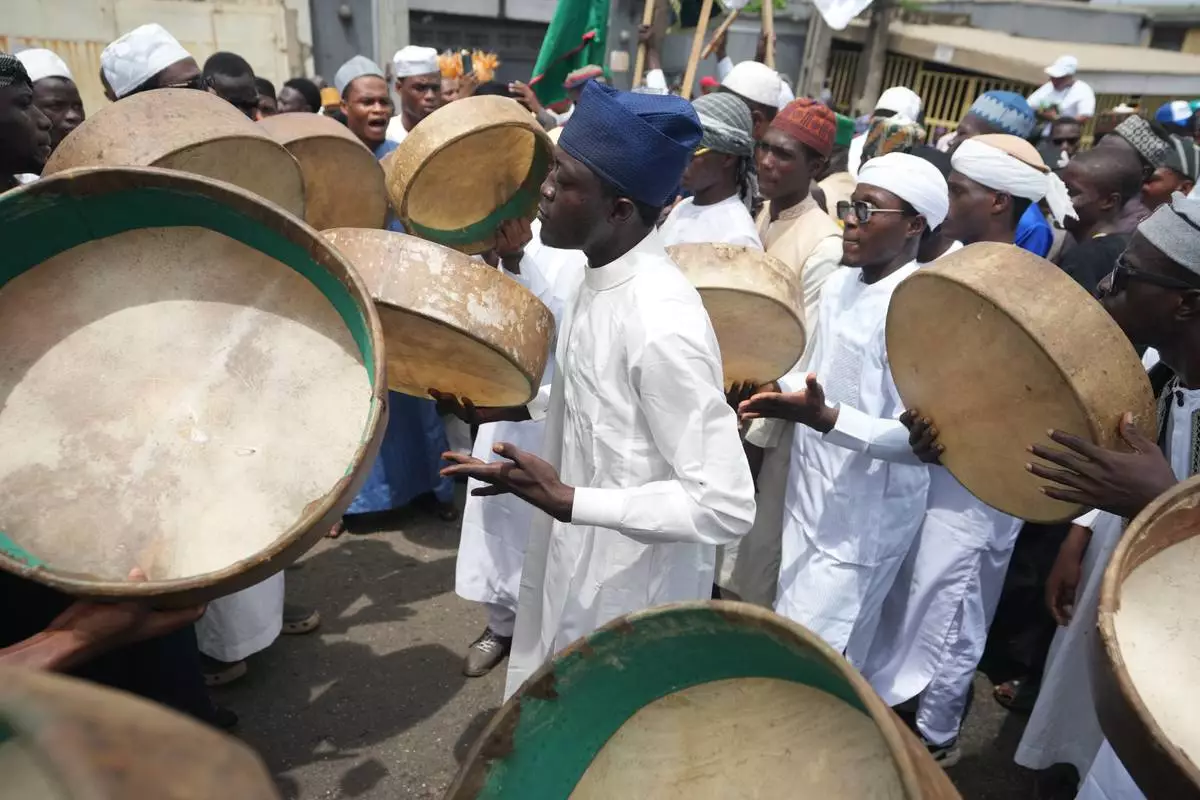
Muslim faithful sing and march to mark Prophet Muhammad's birthday, known as Mawlid, on the street of Lagos, Nigeria, Tuesday, Aug. 25, 2026. (AP Photo/Sunday Alamba)

Vincent Tabat smokes a waterpipe inside a nightclub in Sokoto, Nigeria, July 18, 2026. (AP Photo/Sunday Alamba)
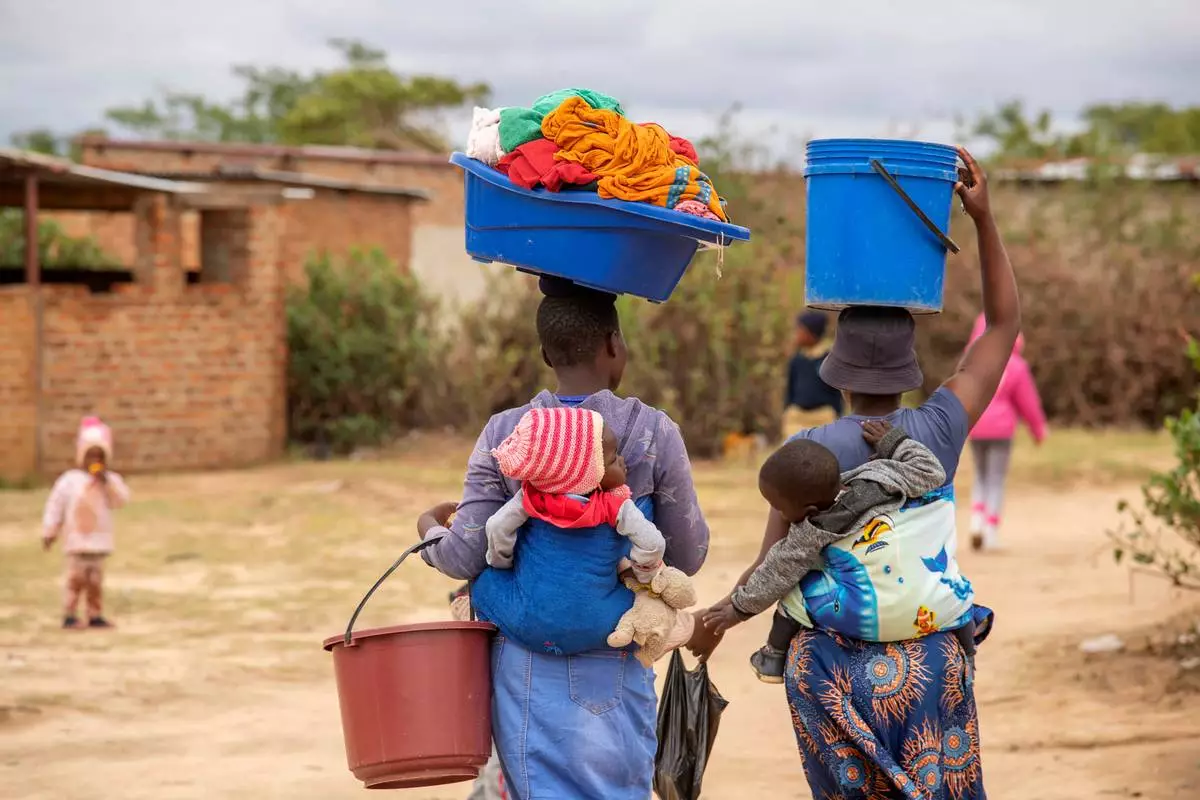
FILE - Women, with children on their backs, carry out chores in Epworth, Zimbabwe, on Nov. 14, 2024. (AP Photo/Aaron Ufumeli, File)