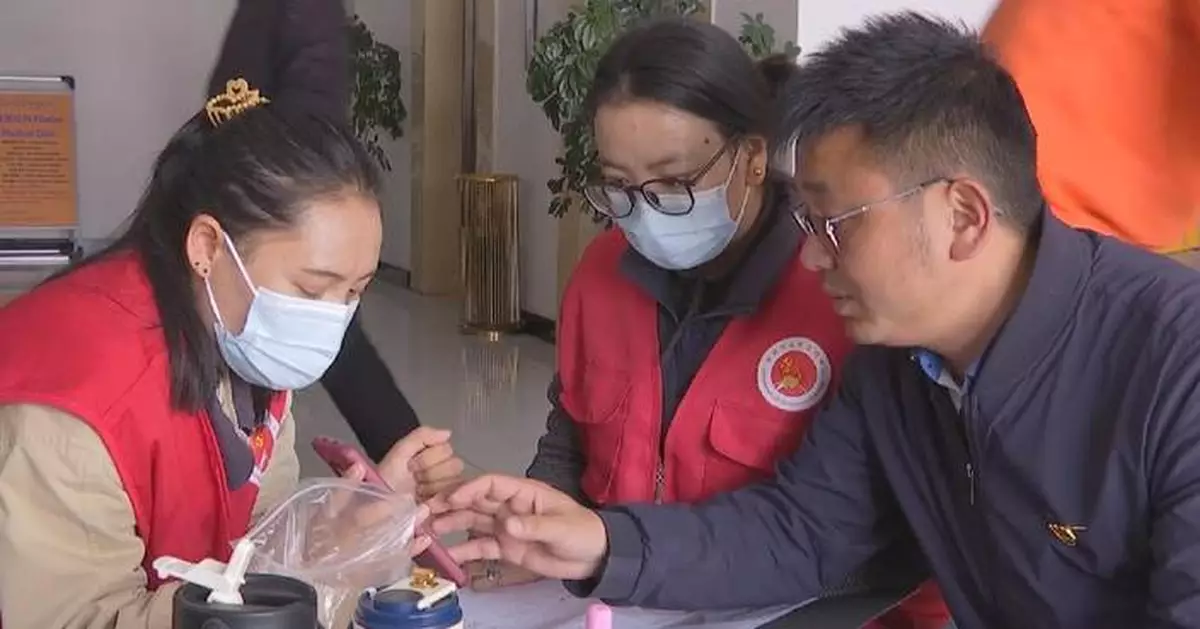
Residents displaced by the mudslide in Gyirong County, southwest China's Xizang Autonomous Region now are receiving various assistance and meticulous care at designated resettlement sites.
The deadly mudslide triggered by a glacial collapse on the Nepalese side struck the remote China-Nepal border region on Aug 26 morning.
Kami Tsering is among the 180 villagers relocated from Guoba Village following the mudslide. He was moved to a resettlement site in Gyirong Town on the second day after the disaster struck.
At the relocation site, food supplies remain ample, with staple provisions including traditional Tibetan fare, milk, and fresh fruits distributed on a regular basis.
"I arrived here on Aug. 27. The food is good, and breakfast is very nice - we have tsampa, butter tea, Tibetan sweet tea, and thenthuk (Tibetan noodle soup)," Tsering said.
Medical personnel have been deployed at the resettlement site to conduct regular health rounds. Each day, medical staff visit every relocated villager to monitor their physical well-being.
"We make morning visits once a day and carry out disinfection twice daily, in the morning and evening. Some residents here suffer from rheumatism and hypertension. For elderly individuals who are not feeling well or are experiencing sleep difficulties, we go door-to-door to administer medication and provide psychological counseling," said a medical worker at the resettlement site.
With food, shelter, and medical care now fully secured, Tsering has turned his attention to the relief efforts back in his home village. After the villagers were relocated, grassroots officials remained behind to help look after their properties. Tsering said that the officials send daily video updates to keep everyone informed.
"I have four or five oxen left behind at home. The grassroots officials post photos and videos in the group chat so all the villagers can see them, which puts our minds at ease," Tsering said.

Mudslide-affected residents at Gyirong relocation site receive various support
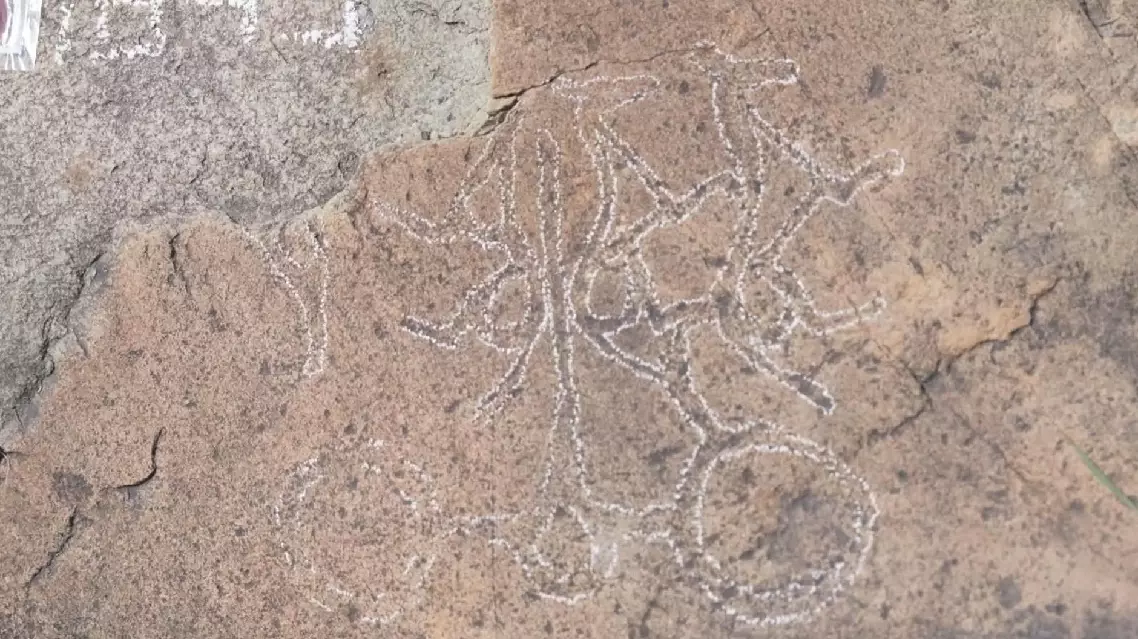
A rare rock carving of a four-horse chariot was recently discovered in the Helan Mountains of northwest China's Ningxia Hui Autonomous Region, marking the first finding of its kind in the area and filling a long-standing archaeological gap.
The carving was found on a boulder partially buried in an alluvial fan area. Surrounded by thick grass, only about 15 centimeters of the rock was exposed above ground, making it extremely difficult to spot.
"At first, we didn't notice it's a four-horse chariot pattern because there was a color difference between the grooves and the outer surface of the rock. Then I outlined the pattern with chalk and that's when we realized it features four horses. Unfortunately, part of the carving was broken," said Xu Xiaolong, a member of the Helan Mountains rock art survey team.
The carving measures 24 by 20 centimeters with groove marks about 1.5 millimeters deep.
The discovery fills a gap in similar themes, while enhancing the richness, diversity and uniqueness of the Helan Mountains rock carvings.
"The most common rock carvings we've found depict two-horse chariots, and this is the first time we've discovered a four-horse chariot here. In fact, four-horse chariot rock carvings are quite rare even across the country. They are usually associated with tribal communities, like those linked to grassland cultures, where a tribal chief or someone of high status might travel in a four-horse chariot," said Zhang Xu, deputy head of the cultural relics management department of the Helan Mountains Rock Art Management Office.
The Helan Mountains rock carvings are generally believed to date from between 3,000 and 10,000 years ago. Although the four-horse chariot rock carving cannot be precisely dated at present, an assessment based on the chisel marks, subject matter, carving techniques and general patterns excludes the Neolithic period.
"We think it might date to the late Bronze Age, possibly during the Spring and Autumn and Warring States periods (770 BC-221 BC) or possibly the Han Dynasty (202 BC-AD 220). It was likely created by nomadic people living in this area," said Zhang.
Stretching 250 km, Helan Mountains are home to over 20,000 ancient rock carvings created by early inhabitants with stones, metal tools or mineral pigments. The carvings depict diverse subjects ranging from natural images like human faces, animals and handprints, to ancient life scenes such as herding, hunting and rituals.
Rare four-horse chariot rock carving discovered in northwest China