Skip to Content Facebook Feature Image

Latest survey discovers over 500 new rock carvings in Ningxia's mountain area

China

China

China

Latest survey discovers over 500 new rock carvings in Ningxia's mountain area

2026-09-07 17:13 Last Updated At:17:37

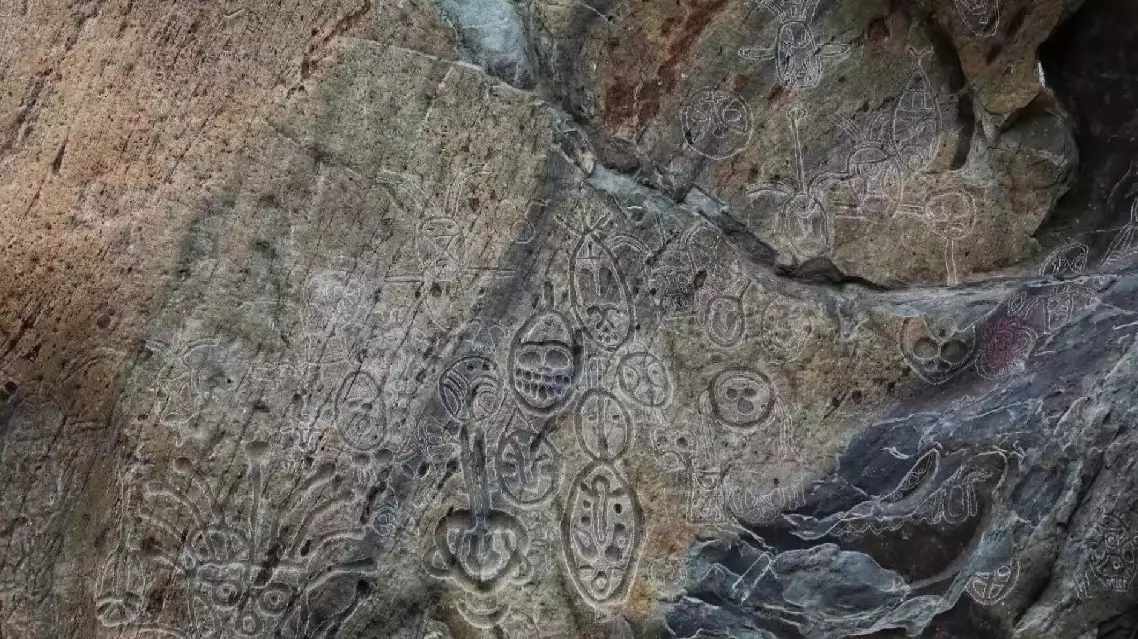
A new round of survey on rock carvings in the Helan Mountain area of northwest China's Ningxia Hui Autonomous Region has discovered more than 500 new images since 2020, as the local management office works to complete records and verify the preservation status of existing rock art.

Among the newly discovered rock carvings, abstract symbols and animal patterns account for the largest share, while a number of high-quality carvings depicting scenes of daily life and production in ancient times have also been found.

"In this area where we are now, animal rock carvings are quite common, including bighorn sheep, argali, deer, and some tigers," said Zhang Xu, deputy head of the cultural relics management section of the Helan Mountain rock art administration.

As part of efforts to strengthen protection of these carvings, China's State Council designated the site as a major national cultural heritage unit under protection in 1996, followed by the establishment of the administration in 2002. In 2003, the city-level Helan Mountain rock art protection regulation became China's first dedicated legislation for the preservation of rock art.

The first round of rock carving survey on Helan Mountain was conducted from 2002 to 2003, when more than 5,600 groups of rock carvings were registered. Limited by field survey methods and equipment conditions at the time, many rock carvings hidden under rock piles or buried under shallow soil were not recorded.

Since 2020, the rock art administration has launched a second round of review, focusing on filling gaps in the records, checking the preservation and damage status of existing rock carvings one by one, improving archive materials for each site, and addressing the shortcomings left by the earlier survey.

In the second survey, workers have combined traditional methods with new technologies to systematically collect and preserve information on the location, pattern forms, sizes, and damage conditions of the rock carvings. According to staff members, the survey work is still ongoing.

Stretching 250 km, Helan Mountain is home to over 20,000 ancient rock carvings created by early inhabitants with stones, metal tools or mineral pigments. Dating back approximately 10,000 to 3,000 years, the carvings depict diverse subjects ranging from natural images like human faces, animals and handprints, to ancient life scenes such as herding, hunting and rituals.
Latest survey discovers over 500 new rock carvings in Ningxia's mountain area

Latest survey discovers over 500 new rock carvings in Ningxia's mountain area

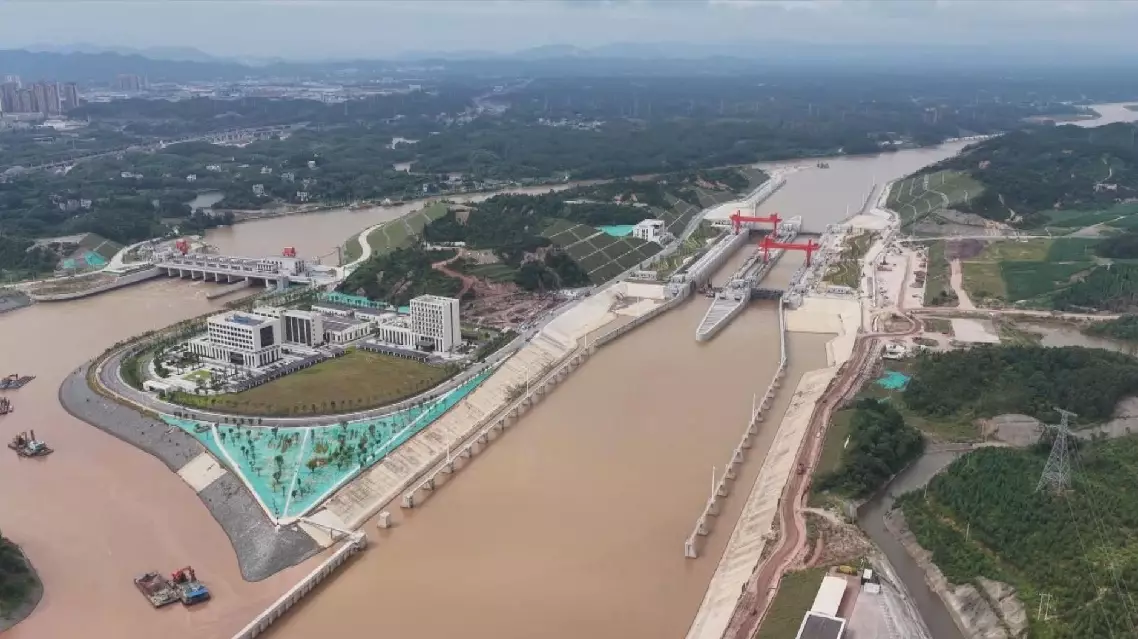
China announced on Monday that the Pinglu Canal in south China's Guangxi Zhuang Autonomous Region will open to navigation on September 16, delivering a landmark waterway project that is set to serve as a new strategic artery for regional development and cross-border trade.

At a press conference held by the Information Office of the People's Government of Guangxi Zhuang Autonomous Region, it was introduced that after four years of arduous construction, the main works of the Pinglu Canal have passed acceptance inspections, and an integrated smart dispatching platform for river and sea shipping in Guangxi has been put into full operation.

Emergency support, cargo source organization and operational preparations have all been completed, with all procedures now in place. The canal is now ready for navigation.

The nautical chart of the Pinglu Canal estuary was also officially published on Monday, providing navigational support for vessels.

The Pinglu Canal is the first canal project planned and built at the national level since the founding of the People's Republic of China in 1949 to connect rivers and seas.

It is also a backbone project of the New International Land-Sea Trade Corridor and a key project linking the Belt and Road Initiative.

Construction began on August 28, 2022, with a total investment of about 72.7 billion yuan (about 10.8 billion U.S. dollars).

The canal stretches 134.2 kilometers, starting from the Pingtang River mouth in the Xijin reservoir of Hengzhou City in Nanning in the north, passing through Luwu Town in Lingshan County of Qinzhou City, and reaching the Beibu Gulf along the Qinjiang River.

It is built to the highest navigation standard in China, meeting the Class I standard for inland waterways and capable of accommodating 5,000-tonne vessels.

Once operational, the canal will shorten the inland waterway route for cargo from southwestern China to the sea by more than 560 kilometers compared with traditional routes. The shipping distance to major ASEAN ports will be significantly reduced, and overall logistics costs will drop by 18 to 30 percent.

The project is expected to save more than 5 billion yuan in transportation costs for society each year. It is also of great significance for promoting Guangxi's maritime development, advancing the large-scale development of western China in the new era, and contributing to the building of a closer China-ASEAN community with a shared future.

Major Chinese river-to-sea canal to start navigation

Major Chinese river-to-sea canal to start navigation

Recommended Articles