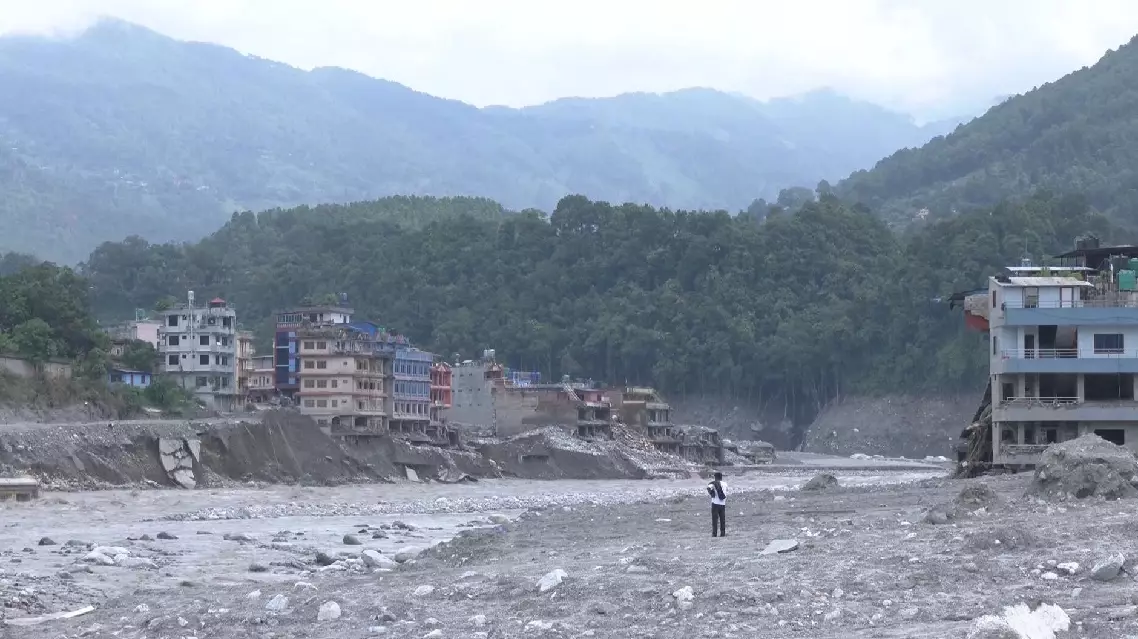
Businesses in Nepal's Trishuli Valley are assessing their losses after an ice and rock avalanche triggered a mudslide on Aug. 26, which killed more than 1,000 people and left thousands missing, and destroyed shops, homes and infrastructure, with rebuilding costs estimated at up to 5 billion U.S. dollars.
Manoj Kumar, a second-generation grocery shop owner, said the mudslide swept away most of his store and inventory. He has been trying to salvage packets of food, but said they have been ruined by the water.
"I have lost noodles, biscuits, soap, washing powder, cold drinks, consumables worth almost 10,000 U.S. dollars. I am asking for compensation but I don't know if I will get it," Kumar said.
Initial assessments in the disaster zone put the number of destroyed buildings at 7,500, with 50 government offices destroyed. Thirteen hydropower stations and a solar plant have been put out of operation, while large areas of farmland have been inundated, directly affecting more than 30,000 people.
The government's initial estimate put rebuilding costs at between 4 billion and 5 billion U.S. dollars.
Hotel owner Balram Dangol said he evacuated guests from 25 rooms at his property shortly before the mudslide struck, leaving the building little more than a shell.
"We thought this was a normal flood so we weren't too worried but then we heard two villages had been swept away so then we got scared. This was like nothing that's happened before. This time it was a really high wave completely beyond our imagination," said Dangol.
Tourism operators said cancellations were rising, particularly among European travelers concerned that the disaster had affected the entire country. Disruptions are concentrated in trekking areas and national parks along the Trishuli River, while Qomolangma Base Camp, the Kathmandu Valley and many other destinations remain unaffected.
Businesses count losses after mudslide in Nepal's Trishuli Valley
Iranian officials have strongly condemned a deadly U.S. airstrike that hit a wedding ceremony in the southern province of Hormozgan last week, which comes after numerous strikes on civilian targets which have occurred in recent months.
Iranian media reported that the U.S. strike night hit a wedding party in Sirik County of Hormozgan on Sept 1, killing at least four people and injuring 68 others. Reports said that dozens of people had gathered for the wedding of a fisherman's daughter.
Following the incident, Iranian Foreign Ministry spokesperson Esmaeil Baghaei described the attack as "a desperate U.S. attempt to hide its defeat", while U.S. Vice President JD Vance later said the United States is "investigating" the strike.
The attack has been met with widespread anger across Iran, turning what should have been a joyous occasion into one of tragedy and grief.
Jodari, a local official in Kuhestak where the attack happened, described what unfolded. He said U.S. forces first hit a signal tower in the area, before two missiles struck the wedding venue.
"Two missiles hit here. One struck the roof directly. The other came in from the edge of the roof of the building opposite and hit the upper part of the structure. Such acts should be condemned. Any attack on civilians anywhere in the world must be condemned," said Jodari as he spoke from the scene of the attack.
Iranian officials say the latest attack is the latest in a series of questionable humanitarian violations committed by the United States in its war against Iran.
"On the very first day of the war, they struck a school in Minab, and the school is nearby here. They also hit a gymnasium in Lamerd. So far, more than 30 gymnasiums and several hospitals across Iran have been attacked. Many civilian facilities, including bridges, pharmaceutical factories, and other infrastructure, have also been targeted," said Morteza Karamoozian, head of Iran's Media Basij Organization.
One of the most controversial incidents occurred on the opening day of the U.S.-Israeli war against Iran on Feb 28, when a strike hit a girls' elementary school in Minab in the south of the country, killing 168 people, most of them children, according to Iranian authorities. Evidence from subsequent investigations has pointed to a U.S. Tomahawk missile as the weapon used in the strike.
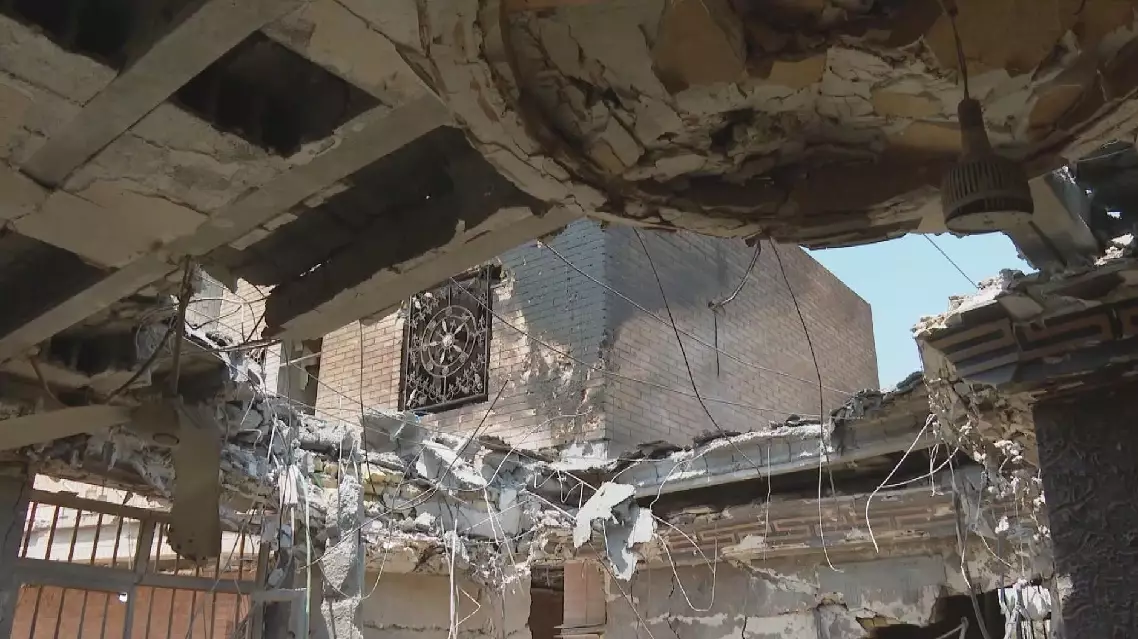
Iranian officials strongly condemn deadly US airstrike on wedding ceremony