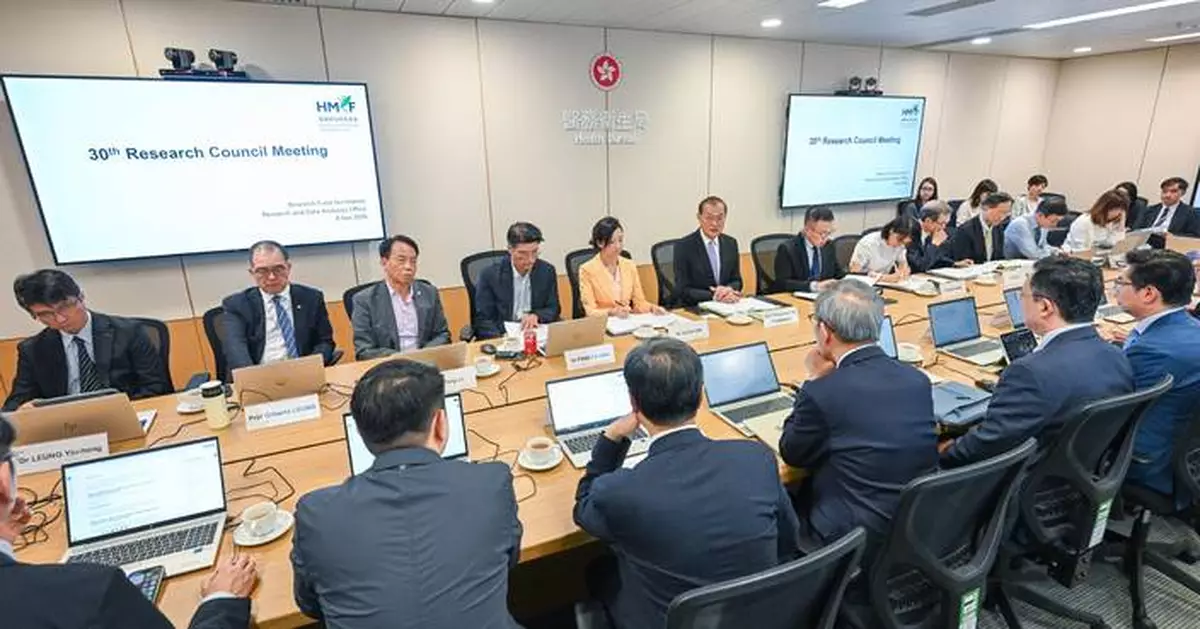
Secretary for Health chairs 30th meeting of Research Council under Health Bureau
The Secretary for Health, Professor Lo Chung-mau, chaired the 30th meeting of the Research Council (RC) under the Health Bureau (HHB) today (September 8) to review the research translation outcome of the Health and Medical Research Fund (HMRF), discuss how to further enhance the impact of the research projects, and consider the funding applications for investigator-initiated research projects received during the period from last December to March this year.
Professor Lo said, "Successful translation and application of research findings can enhance citizens' health and public health standards. The research translation strategy adopted by the HMRF last year has been gradually implemented, setting a clear direction for promoting the translation of research findings into practical applications. The HMRF will continue to drive research translation and promote research findings with potential, so that the relevant findings can more effectively support the evidence-based healthcare policies in addressing increasingly complex health challenges in Hong Kong.
"Over the past year, many projects successfully secured additional funding for subsequent research, enabling further translation of their outcomes. The HHB will continue to foster scientific research and innovation in the healthcare field, and promote high-quality outcome translations through the HMRF, supporting Hong Kong's development into an international health and medical innovation hub."
Professor Lo was pleased to note the significant translation results and the impacts of the research, as revealed from the surveys conducted on 123 HMRF-funded projects in 2026. These include:
(1) Close to 80 per cent of the projects published their research findings in peer-reviewed journals, showcasing that the HMRF is effective in supporting knowledge generation;
(2)Over 40 per cent of the projects received additional funding support from the HMRF and other funding sources for subsequent research, with each project receiving an additional funding (excluding the HMRF) amounting to more than three times that of the original HMRF grant on average;
(3) Examples of applications in public health services and clinical practices include:
(i) The development of a set of long noncoding ribonucleic acid biomarkers to provide a reliable prognostication applicable to patients with acute myeloid leukaemia (AML). The study findings have contributed to the expansion of genetic testing-related services in the Hospital Authority (HA). The services are now available at all HA clusters for all newly diagnosed AML patients. With a more accurate risk stratification of AML in the prognosis by healthcare providers, the application of precision medicine for individual patients could be more effectively supported;
(ii)A comparison of the scoliosis curve magnitude and truncal balance maintenance between two groups of adolescents with idiopathic scoliosis revealed that gradual brace weaning had no advantage over immediate brace weaning. The research findings led to the adoption of the immediate brace weaning protocol in Queen Mary Hospital and the Duchess of Kent Children's Hospital at Sandy Bay, thereby reducing the chance of flatback, muscle weakness and other problems resulting from prolonged bracing, while also helping to improve patients' quality of life, and enabling patients to start increasing their exercise volume and activity levels earlier; and
(iii)A study on establishing personalised survivorship care plans for childhood cancer survivors in Hong Kong aimed to increase the survivors' awareness of personal health risks and potential late effects. The results showed that earlier access to the plans enabled the survivors to have a higher cancer-specific health literacy level, better understand the late effects that may happen, and experience less emotional stress. The framework and materials generated from this study have been adopted by the Long-term Follow-up Clinic at Hong Kong Children's Hospital, and the provision of personalised survivorship care plans has become part of the routine care. Moreover, this study and related materials were promoted by the Long-term Follow-up Study Group of the National Children’s Medical Center to 25 institutions on the Mainland for adoption or consideration.
Furthermore, over the past year, 26 HMRF-funded projects reported to have patent applications for further development, including commercialisation. These projects covered a wide variety of therapeutic and diagnostic modalities, including novel drug compounds for infectious diseases, cardiovascular diseases and musculoskeletal diseases; gene-modulation strategies for ophthalmic diseases; and natural product-based treatments for autoimmune diseases, gastrointestinal diseases and metabolic disorders. These projects also featured advance technologies such as novel biomarkers for predicting disease progression and treatment response; vision screening; 3D anatomical measurement; patient-specific surgical implants, and non-pharmaceutical behavioural interventions for patients with early psychosis, dementia and spinal cord injury conditions.
At the meeting, the RC received a progress report and future plans of the research translation strategy since its endorsement in September last year, covering the entire research cycle including application, assessment, stakeholder engagement and dissemination. Members also discussed the future work plan of the HMRF, including measures on further enhancing its efficiency and quality of projects. The meeting also considered the funding applications for investigator-initiated projects under the HMRF received from last December to March this year, and endorsed a funding commitment of $207 million involving 204 projects. The exact details will be released in late September.
Professor Lo said, "This year marks the beginning of the National 15th Five-Year Plan, and the Chief Executive is set to announce Hong Kong's First Five-Year Plan and the Policy Address. We have always attached great importance to advancing research project translation and funding innovative medical scientific research in different areas, including prevention and treatment of cancers, clinical trials and digital health. We also encourage researchers to make full use of the research resources provided by the HMRF to drive the translation of medicine and clinical research, with a view to aligning with the national and Hong Kong Special Administrative Region's development needs for the benefit of Hong Kong citizens."
Chaired by the Secretary for Health, the RC comprises members including experts from medical schools and healthcare-related disciplines of various universities as well as representatives from the Innovation, Technology and Industry Bureau, the Department of Health, the Primary Healthcare Commission, the University Grants Committee, the HA, as well as the Hong Kong Academy of Medicine and the Institute for Medical Advancement and Clinical Excellence. The RC provides strategic guidance on funding for health and medical research and health promotion projects. It oversees the management of funds under the HHB, including the HMRF, encompassing allocation of funding to approved projects.
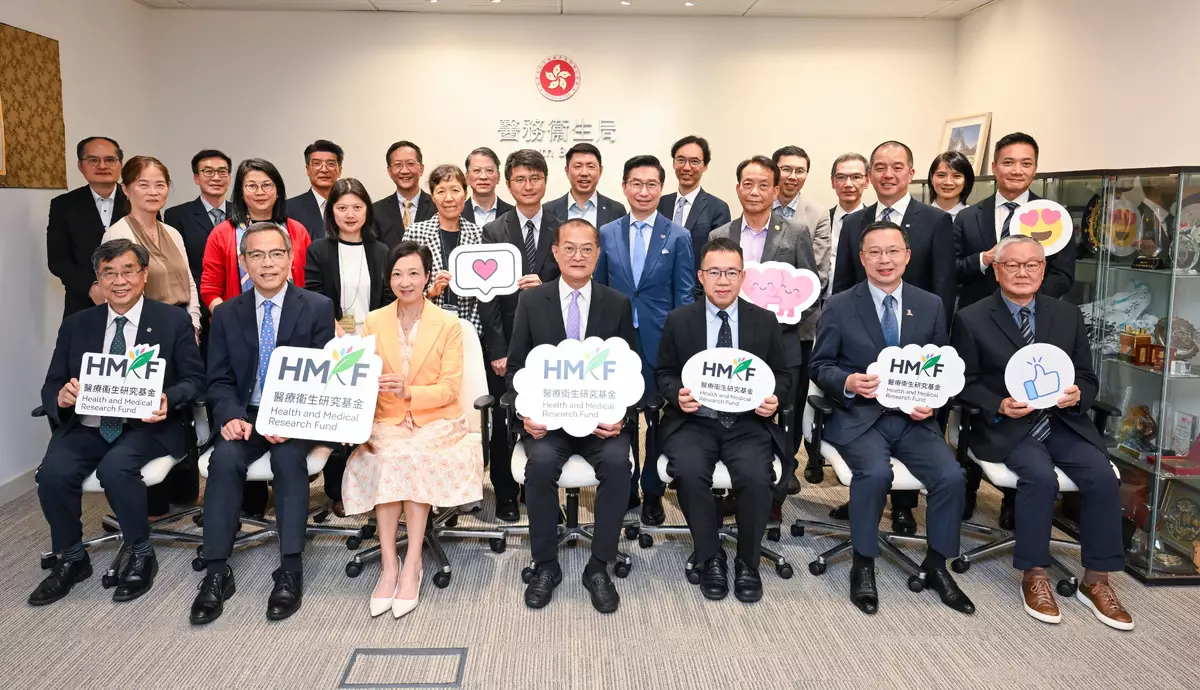
Secretary for Health chairs 30th meeting of Research Council under Health Bureau Source: HKSAR Government Press Releases
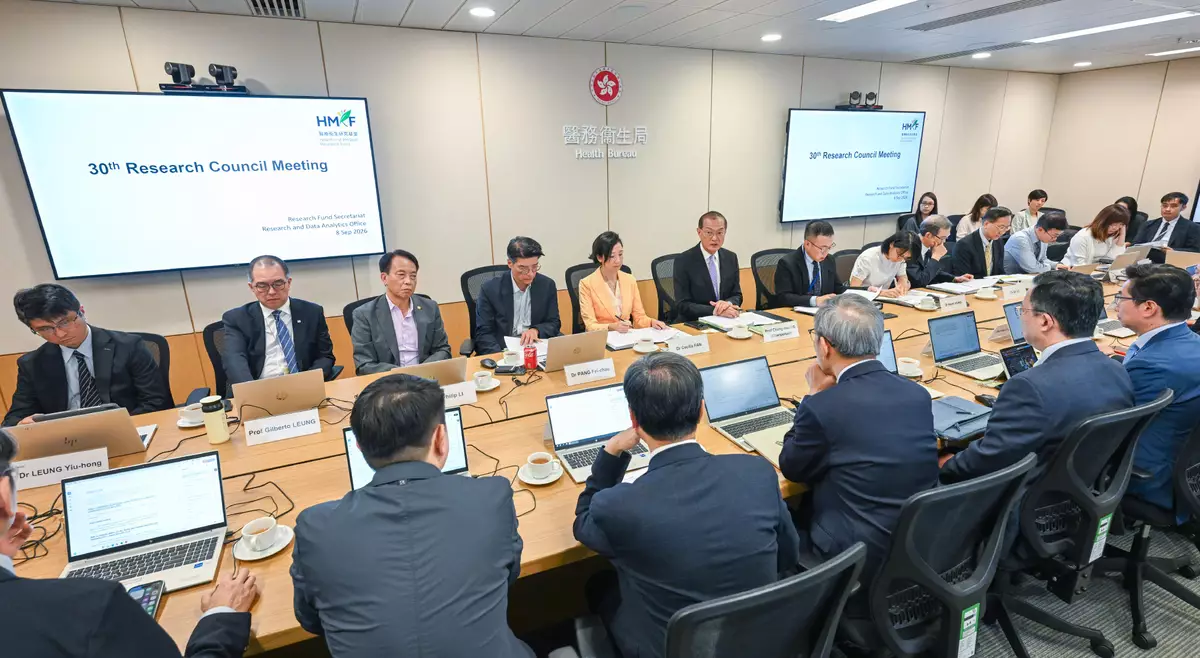
Secretary for Health chairs 30th meeting of Research Council under Health Bureau Source: HKSAR Government Press Releases