Skip to Content Facebook Feature Image

Renoir paintings are worth a fortune, but not when they're stolen

Business

Renoir paintings are worth a fortune, but not when they're stolen
Business

Business

Renoir paintings are worth a fortune, but not when they're stolen

2026-09-09 12:02 Last Updated At:12:30

Two Renoir paintings stolen from a small French museum have yet to be recovered but if the thieves are hoping to cash in on the artwork, they would be hard-pressed to find a buyer.

Selling well-known, stolen art is impossible to do at an auction house or through other public channels without raising eyebrows. Even under the table, the value plummets. And unlike other eye-catching artifacts such as jewels, paintings can't be chopped up and sold for parts without losing their entire worth.

Art crime experts stress that most buyers simply don't want the liability. In short, the reality looks nothing like the movies.

“People always think that there is this kind of ‘Dr. No’ type from the James Bond movie," said Arthur Brand, a private art detective based in the Netherlands. "But that’s Hollywood. In the real world, there are no collectors like that.”

Brand, who has investigated art crime for about 20 years, explains that often “nobody will touch” stolen art, particularly high-profile work. Sometimes that means paintings valued at millions of dollars are effectively “worth zero” once they're outside of the museum, he added, if not a small fraction of the price.

Tuesday's theft at the Renoir Museum — the last home of painter Pierre-Auguste Renoir in the French Riviera — marks the latest high-profile art crime targeting collections around the world, and experts warn there could be more.

Here's what we know.

Cagnes-sur-Mer's mayor, Bryan Masson, said a group of “well-equipped” burglars stole a total of four Renoir paintings from the museum in his town on Tuesday. But they dropped two of them — Renoir’s ’’Portrait of Madame Pichon″ and “Coco Reading" — in the museum garden before they fled, the prosecutor’s office said in a statement. Police are still searching for the perpetrators. In the meantime, Renoir's “Portrait of Madame Colonna Romano” and “Young Woman at the Well" remain missing.

Masson estimated the value of the combined Renoir works stolen Tuesday at 9 million euros ($10.5 million).

But the probability of profiting off such a heist is “extremely low,” said Erin Thompson, an art crime professor at the John Jay College of Criminal Justice in New York. And in cases that end in arrests, the common takeaway is that “thieves are people who are good at stealing things and bad at thinking through the consequences,” she added.

Some may try to make money from heists in other ways, such as through demanding a ransom or looking for an insurance payout. But Thompson explains many museums don't have insurance because it's too costly. That's why the practice is so rare in the U.S., for example, and it would be difficult to negotiate with insurance companies elsewhere without the thieves incriminating themselves.

As a result, if not surrendered or otherwise recovered, stolen paintings may remain hidden — or in some cases eventually destroyed to get rid of evidence, Thompson says.

Brand, who collaborates regularly with law enforcement in his art crime investigations, says that he's still seen limited cases of stolen paintings “floating around in the underworld” — perhaps as partial payments for products like drugs. And depending on country-by-country laws, he noted that the promise of returning the art has led to reduced sentences of other charges.

“Some more savvy criminal will acquire it as a get out of jail free card, sort of a bargaining chip,” added Christopher Marinello, a lawyer and founder of Art Recovery International. "So if some drug dealer ever is arrested, he can bargain with the prosecutor and say, ‘Listen, give me a lesser sentence and I’ll show you where these Renoirs are.’ And that has always worked and it will work again.”

Stolen paintings are much more difficult to profit from than museums' other crown jewels — literally.

Jeweled and metal goods have increasingly become a target of theft because they can be melted down or broken down into parts. Last year, a handful of experts warned that could be the fate of the stunning heist of crown jewels at the Louvre Museum in Paris, for example — noting that, if done successfully, smaller pieces could later go up for sale as part of a new necklace, earrings or other jewelry without turning too many heads.

But of course, such pieces would lose their historical worth and, if actually sold, likely only go for a fraction of their original value. Experts also warn that it's far from a simple process overall — and gems may still be identifiable by characteristics like clarity, for example.

Apart from an emerald-set imperial crown found outside the museum the day of the October 2025 heist, the stolen jewels remain unrecovered.

Paintings, in contrast, don't have the same commodity value that can potentially be parceled off. “It’s a canvas with some old oil paint on it," said art theft expert James Ratcliffe, of the Art Loss Register. “You can’t touch it up. You can’t resell it other than for what it is.”

Ratcliffe and others note that hasn't stopped thefts of famous paintings and other artwork from museums. Just earlier this year, three pieces by Renoir, Cézanne and Matisse worth millions of euros were stolen in Italy, for example, before being recovered last month.

Ratcliffe notes that smaller museums, in particular, are harder to secure because they might not have the funding necessary to invest in the latest technology — or are located in historic buildings that may take more time and effort to install new guardrails.

Still, pressures are piling up, with some warning that future cases of art theft could be likely as vulnerabilities persist.

“We need to change the way we treat small and country house museums before we lose to our cultural heritage permanently," said Marinello, who stresses that stronger security and enforcement is overdue. “We’re supposed to be preserving our cultural heritage, not allowing criminals to take what they want and using them as shopping malls.”

AP Editor Angela Charlton contributed to this report from Paris.

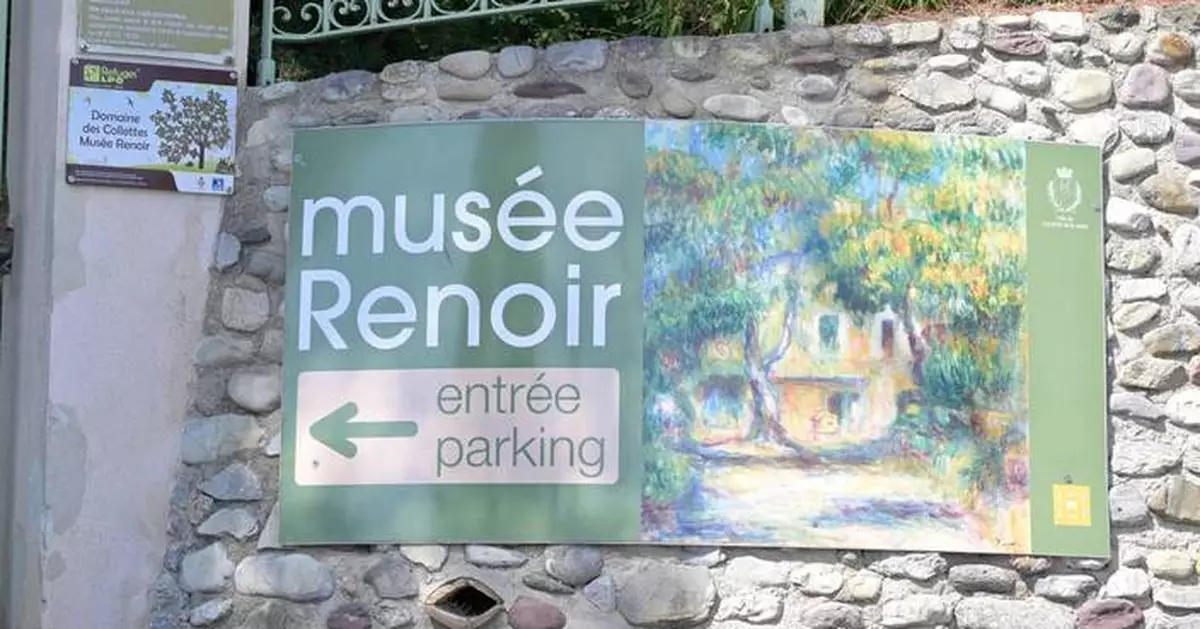
The entrance of the Renoir Museum is pictured after thieves stole four valuable Renoir paintings, in Cagnes-sur-Mer, Tuesday, Sept. 8, 2026. (AP Photo/Philippe Magoni)

The entrance of the Renoir Museum is pictured after thieves stole four valuable Renoir paintings, in Cagnes-sur-Mer, Tuesday, Sept. 8, 2026. (AP Photo/Philippe Magoni)
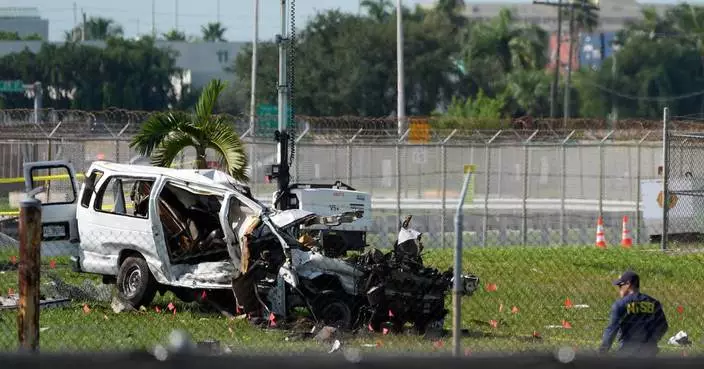
Investigators are still trying to determine what caused an Amazon cargo jet to overshoot a runway in Miami and plow into two vehicles, killing five people on the ground.

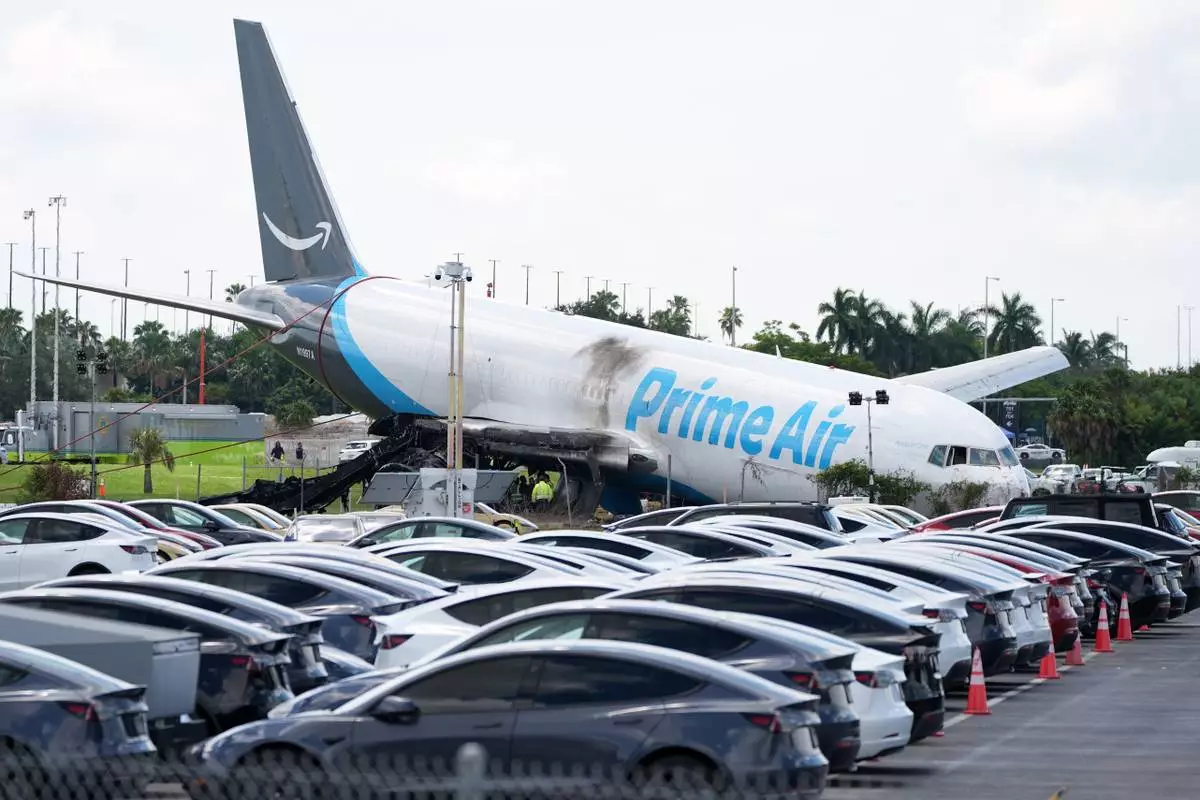
The Boeing 767 hit a van on Miami International Airport property on Sunday before ramming through a fence and hitting an SUV on a public street. Five people who were a part of a cleaning crew in the van died while two survived. The pilot and co-pilot also lived.

National Transportation Safety Board Chairwoman Jennifer Homendy called the scene at the airport “utter devastation.”

Hundreds of flights at the Miami airport have been delayed or canceled as authorities investigate the crash site, where the jet and a mangled white van have remained. By late Tuesday, only one of the airport’s four runways was still closed, raising the likelihood that the cancellations would begin to ease.

Here's what to know about the crash.

The NTSB said the plane barreled roughly 1,300 feet (396 meters) past the end of the runway.

It was landing after a two-hour flight from Puerto Rico as storms brewed around the Miami airport.

Homendy called the scene “utter devastation,” with pieces of the vehicles, air bags, destroyed navigational equipment and fencing along the plane’s route. Investigators didn't have full access to the site until all the jet fuel was recovered from the plane Monday evening.

Former FAA official Mike O’Donnell said that the fact that the plane landed on its nose and right landing gear first demonstrates this was an unstable landing. He said the pilot might have been attempting a “go-around” to retry the landing approach.

Video of the landing showed the plane hovering above the runway for a long time without flaring the nose to force the wheels onto the ground. Experts said it appeared a strong tail wind propelled the plane far past the point where it was supposed to land. Air traffic controllers also had not changed the approach to the runway to allow the plane to land into a headwind. Investigators will want to know how quickly the winds shifted.

Amazon said in a statement that it is cooperating with the investigation and the company’s deepest sympathies go to the victims and their families.

The five people killed were all in a van owned by Professional Ocean Service Corp., a company that cleans planes. The company said it wouldn’t comment on the crash out of respect for the families who lost loved ones.

“Our employees are far more than the people who work beside us each day, they are family, and they are deeply loved. Our hearts and prayers are with every employee and every family whose lives have been forever changed,” the company said in a statement Tuesday.

The Miami-Dade sheriff identified the deceased as Rolando Aleman Leon, 55; Yoel Rodriguez Naranjo, 53; Julio C. Pineda, 75; Carlos Acosta Fajardo, 53; and Javierkys Reyes Quevedo, 47.

The 32-year-old Boeing 767 was originally built to carry passengers and flew for several airlines in foreign countries for more than two decades before being converted to a cargo plane in 2015, according to flight-tracking site Flightradar24.

The final flight was operated by 21 Air, a cargo carrier based in North Carolina.

Homendy said the jet's ownership history, maintenance records and operations by 21 Air would all be reviewed by NTSB investigators.

It's the second crash of a cargo jet in the U.S. in less than a year. A UPS plane crashed after losing its engine while accelerating down the runway at Louisville’s Muhammad Ali International Airport in October. The crash killed all three pilots and 12 people on the ground. Twenty-three more were injured.

Homendy has said the NTSB will look at Miami's lack of a special system to slow and stop speeding jets at the end of runways. But investigators will examine everything that may have contributed.

About 120 airports in the U.S. have the lightweight, crushable material that the Federal Aviation Administration says has saved around 500 lives.

Even without a runway excursion system, Miami’s airport appears to be compliant with federal rules because it has a 1,000-foot (305-meter) safety buffer at the end of its runways, experts said.

Homendy said her agency’s goal is to prevent tragedies, but runway excursions continue to happen even after the board has suggested installing the systems in the past.

“Our recommendations must be implemented or we’re going to be here again,” she said.

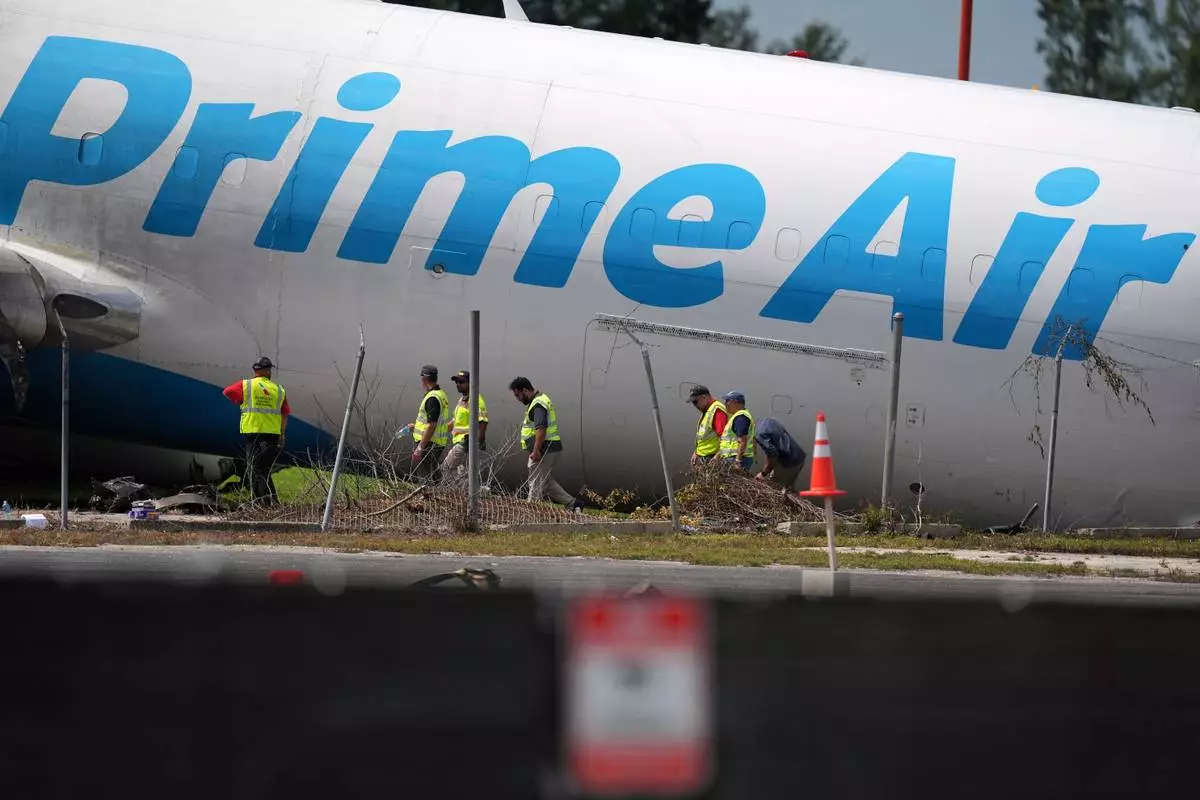
Workers inspect an Amazon cargo plane two days after it overshot a runway at Miami International Airport, Tuesday, Sept. 8, 2026, in Miami. (AP Photo/Rebecca Blackwell)

Workers inspect an Amazon cargo plane two days after it overshot a runway at Miami International Airport, Tuesday, Sept. 8, 2026, in Miami. (AP Photo/Rebecca Blackwell)

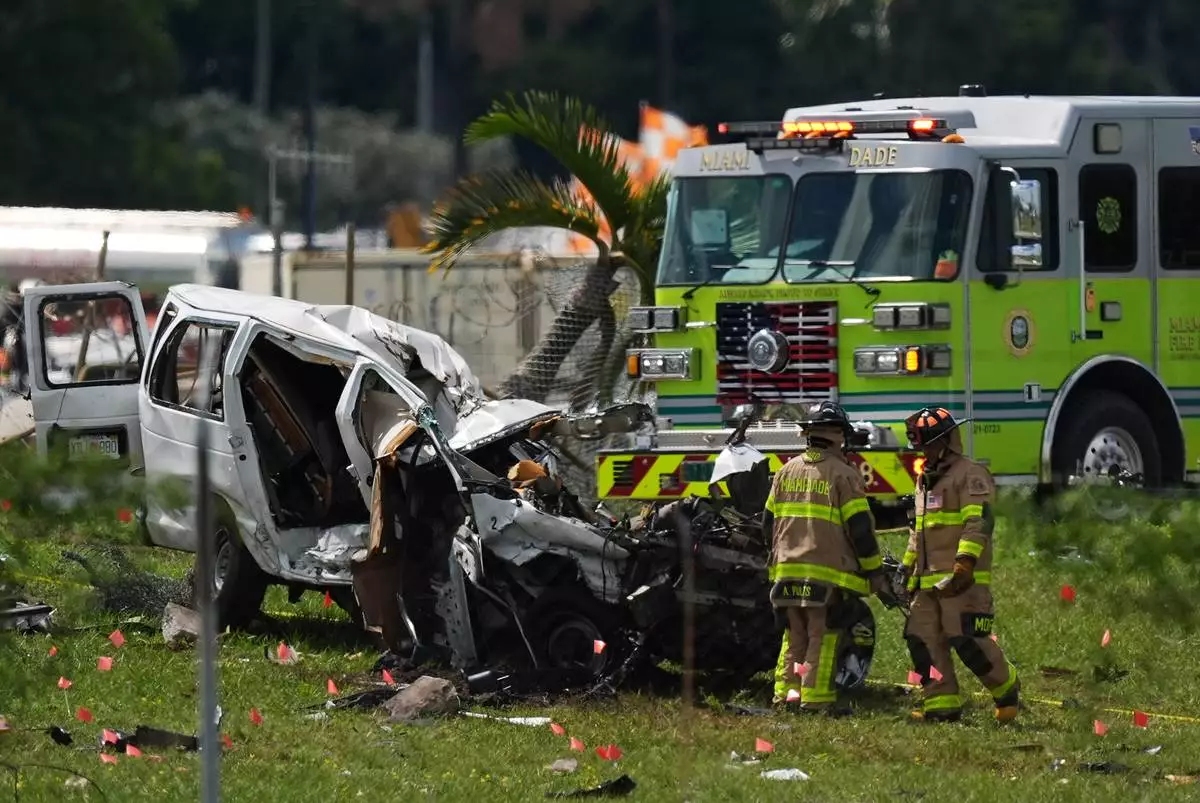
Miami Dade Fire Rescue officials inspect a damaged vehicle two days after an Amazon cargo plane overshot a runway at Miami International Airport, Tuesday, Sept. 8, 2026, in Miami. (AP Photo/Rebecca Blackwell)

Miami Dade Fire Rescue officials inspect a damaged vehicle two days after an Amazon cargo plane overshot a runway at Miami International Airport, Tuesday, Sept. 8, 2026, in Miami. (AP Photo/Rebecca Blackwell)

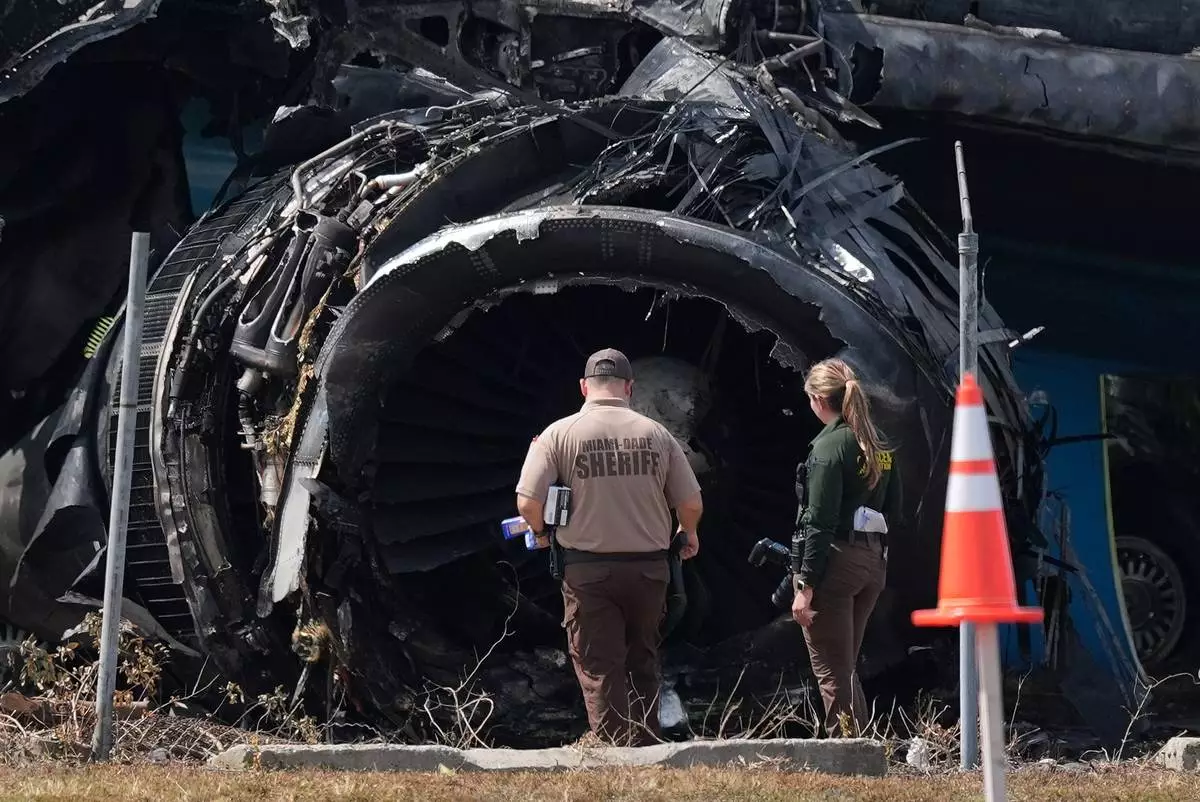
Law enforcement officers walk in front of a destroyed engine as they inspect an Amazon cargo plane two days after it overshot a runway at Miami International Airport, Tuesday, Sept. 8, 2026, in Miami. (AP Photo/Rebecca Blackwell)

Law enforcement officers walk in front of a destroyed engine as they inspect an Amazon cargo plane two days after it overshot a runway at Miami International Airport, Tuesday, Sept. 8, 2026, in Miami. (AP Photo/Rebecca Blackwell)

Workers inspect an Amazon cargo plane two days after it overshot a runway at Miami International Airport, Tuesday, Sept. 8, 2026, in Miami. (AP Photo/Rebecca Blackwell)

Workers inspect an Amazon cargo plane two days after it overshot a runway at Miami International Airport, Tuesday, Sept. 8, 2026, in Miami. (AP Photo/Rebecca Blackwell)

Recommended Articles