Hong Kong Customs detects case of non-registered precious metals and stones dealer carrying out specified transactions
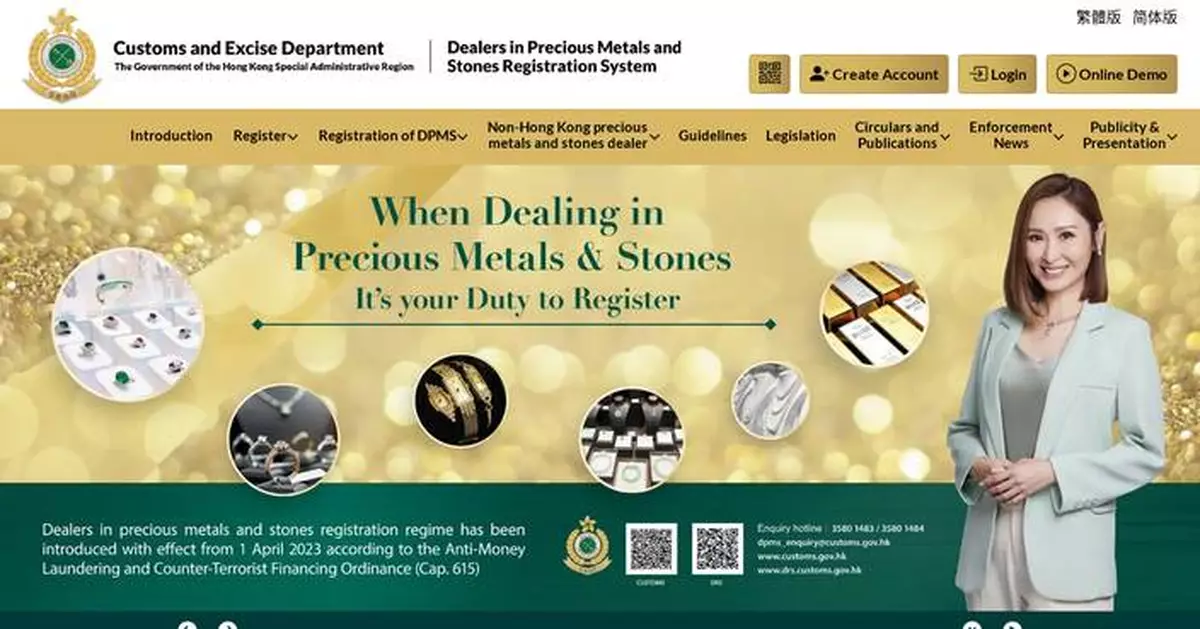
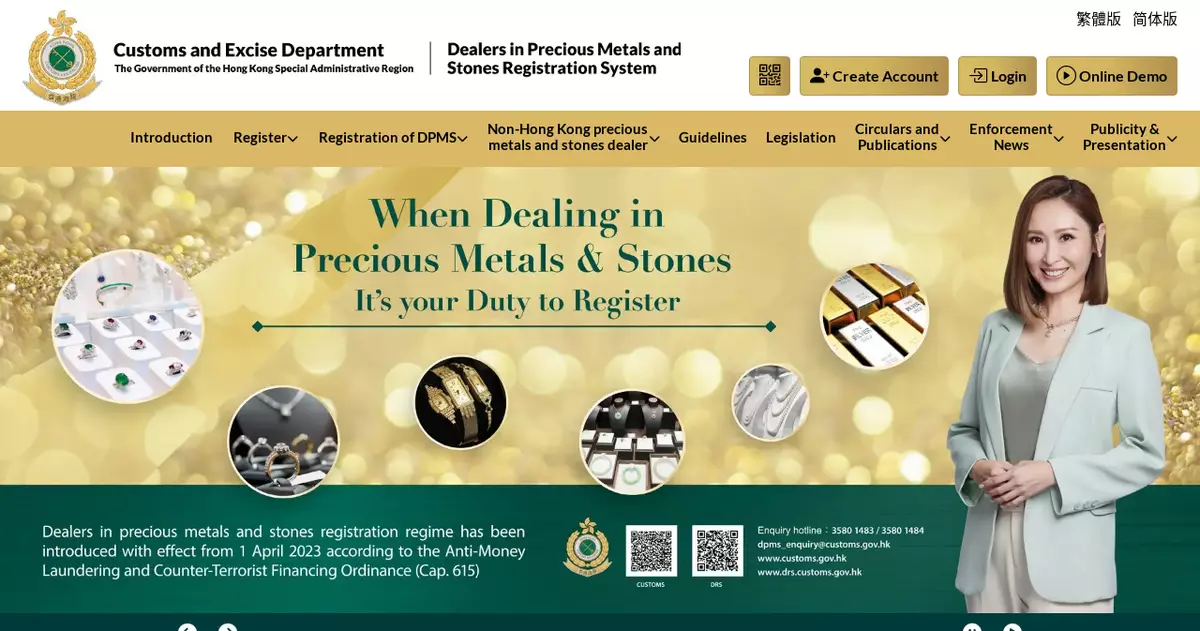
Hong Kong Customs yesterday (September 8) detected a case involving a local company that conducted transactions of jewellery containing precious metals and stones valued at over HK$120,000, without registration under the Dealers in Precious Metals and Stones Regulatory Regime. The investigation is ongoing.
According to the Anti-Money Laundering and Counter-Terrorist Financing Ordinance (Cap. 615), unless exempted, any person who is seeking to carry on a business of dealing in precious metals and stones and engage in any transaction(s) (whether making or receiving a payment) with a total value at or above HK$120,000 in Hong Kong is required to register with Hong Kong Customs. Any dealer, other than a registrant, who claims to be a registrant, claims to be authorised to carry out, or carries out any cash or non-cash transaction(s) with a total value at or above HK$120,000 is liable to a maximum fine of HK$100,000 and imprisonment for six months upon conviction.
Customs reminds dealers in precious metals and stones that they must obtain the relevant registration before they can carry out any cash or non-cash transaction(s) with a total value at or above HK$120,000.
For the forms, procedures and guidelines to submit applications for registration, please visit the website for Dealers in Precious Metals and Stones Registration System (www.drs.customs.gov.hk) or Customs' webpage (www.customs.gov.hk/en/service-enforcement-information/anti-money-laundering/supervision-of-dealers-in-precious-metals-and-ston/index.html).
Members of the public may report any suspected transactions involving precious metals and stones with a total value at or above HK$120,000 conducted without the required registration to Customs' 24-hour hotline 182 8080 or its dedicated crime-reporting email account(crimereport@customs.gov.hk) or online form (eform.cefs.gov.hk/form/ced002).
Source: AI-found images
Speech by Secretary for Health at Opening Ceremony of BIOHK2026
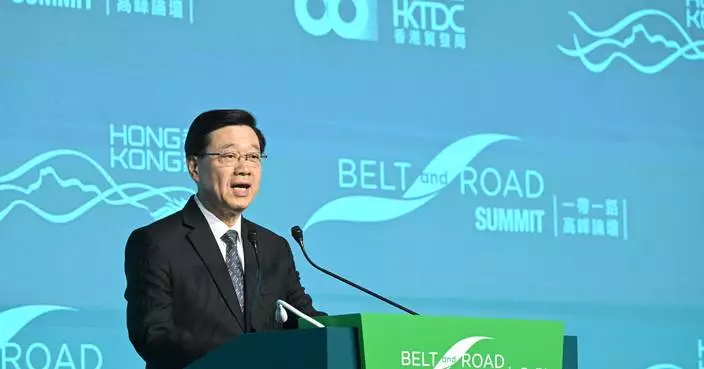
Following is the speech by the Secretary for Health, Professor Lo Chung-mau, at the Opening Ceremony of BIOHK2026 today (September 9):
Professor Albert Yu (Chairman of the Hong Kong Biotechnology Organization and President of BIOHK2026), Professor Sun Dong (Secretary for Innovation, Technology and Industry), distinguished guests, ladies and gentlemen,
Good morning. It is my pleasure to join you today at the opening of BIOHK2026. On behalf of the Health Bureau of the HKSAR (Hong Kong Special Administrative Region), I would like to express my appreciation to the Hong Kong Biotechnology Organization for creating this platform that brings together world-class researchers, global pharma leaders and investors in order to advance and translate biotechnology into clinical application for better human health.
2026 is a special year for Hong Kong. In exactly a week from today, the Chief Executive of the HKSAR will announce the Policy Address and our first Five-Year Plan, in alignment with the National 15th Five-Year Plan, which has named biomedicine as one of the emerging industries of strategic importance. At the same time, Hong Kong is already on the road as we are firmly committed to becoming an international health and medical innovation hub. Biotechnology is no longer an aspiration - it is a national and regional imperative, and Hong Kong is answering that call with conviction and speed.
The National 15th Five-Year Plan clearly defines and supports the unique role of the HKSAR. Under "one country, two systems", Hong Kong serves as the "super connector" and "super value-adder". We uniquely connect the vast clinical needs and manufacturing capacity of the Guangdong-Hong Kong-Macao Greater Bay Area (GBA)- a region of 88 million people and an RMB15 trillion economy - with regulatory standards, clinical excellence, top-tier research universities, global capital, and the trusted framework of common law and robust intellectual property protection in Hong Kong. That combination is rare and powerful.
To turn frontier science into clinical reality, technological innovation must be matched by institutional and policy innovation from the Government to create a proactive and supportive ecosystem. I am proud to share our progress on this front:
First, Hong Kong will establish the Centre for Medical Products Regulation by the end of this year. Our goal is clear: to become an internationally recognised authority.
Second, we have rolled out "primary evaluation" for new drug registrations in phases since March this year, and we are moving steadfastly toward full coverage of all products by 2030.
Third, we have launched the extended "1+" mechanism in 2023. With our newly introduced priority review pathway for new drugs recommended by the Hospital Authority (HA), we are shortening evaluation timelines from 150 to 100 days, getting life-saving medicines to patients faster than ever before.
Regulation, however, is only as strong as the clinical ecosystem that supports it. Situated strategically in the Hetao Shenzhen-Hong Kong Science and Technology Innovation Co-operation Zone, we established the Greater Bay Area International Clinical Trial Institute to drive cross-border clinical trial efficiency through the national "one zone, two parks" model with its Shenzhen counterpart. Through this GBA Clinical Trial Collaboration Platform, we are accelerating multicentre trials and targeting a 30 per cent improvement in patient recruitment and trial initiation time.
Building on that foundation, we established the Real-World Study and Application Centre, in late 2025, to standardise and integrate clinical data - including real-world evidence generated under the "special measure of using Hong Kong-registered drugs and medical devices used in Hong Kong public hospitals in the GBA", which now covers 162 medical products across 71 designated GBA institutions.
To complete the loop in this ecosystem, the Hospital Authority launched the Office for Introducing Innovative Drugs and Medical Devices in June this year. This dedicated office actively engages pharmaceutical and device developers to facilitate registration and introduction of innovative medical products to the HA and address unmet medical needs of patients.
Ladies and gentlemen, whether your focus at BIOHK2026 is regulatory science, frontier therapies, AI, or cross-border Investment, Hong Kong offers the complete framework - the policy is clear, the regulatory roadmap is defined, and the clinical infrastructure is live. Hong Kong is committed to becoming an international hub for health and medical innovation.
On that note, I wish you all a most successful and rewarding BIOHK2026! Thank you.
Source: AI-found images