MILL VALLEY, Calif.--(BUSINESS WIRE)--Sep 9, 2026--
New peer-reviewed research from Mayo Clinic and NaNotics LLC demonstrates a novel approach to cancer immunotherapy: engineered adsorptive nanoparticles called NaNots® selectively deplete a soluble protein that tumors use to suppress immune response and enable tumor growth.
This press release features multimedia. View the full release here: https://www.businesswire.com/news/home/20260909077651/en/
In the study, “Depletion of Soluble PD-L1 with Engineered Nanoparticles Promotes Antitumor Immunity and Tumor Control,” published in the International Journal of Nanomedicine, NaNots engineered to deplete soluble PD-L1 (sPD-L1) restored antitumor immunity and substantially delayed tumor growth in a humanized mouse model of triple-negative breast cancer, a notoriously difficult cancer to treat. The new study is proof-of-concept that depleting just the soluble form of an immune checkpoint protein from circulation – without targeting the tumor directly – can reduce tumor-driven immune suppression and control tumor growth.
PD-L1, co-discovered by Haidong Dong, MD, PhD, at Mayo Clinic two decades ago, is overexpressed in tumors and binds the PD-1 receptor on immune cells, inhibiting anti-tumor immunity. Checkpoint inhibitors targeting the PD-1/PD-L1 axis are now the major anti-cancer immune therapy, but fewer than 30% of patients achieve a durable therapeutic response. Previous research by the Mayo Clinic team has associated high circulating soluble PD-L1 with poor response in a range of cancer types.
“Resistance remains a significant barrier to extending the benefits of immunotherapy to more patients," said Sean Park, MD, PhD, principal investigator on the study and a co-author of the publication. "Soluble PD-L1 is a compelling target because it can suppress antitumor immunity systemically, but until now we have lacked a way to remove it selectively. Our work using this adsorptive nanoparticle demonstrates that depleting soluble PD-L1 can restore antitumor immune activity and improve tumor control in a preclinical model. It also introduces an important new concept: to overcome immunotherapy resistance, we may need to target not only the tumor, but also the systemic immune suppression that cancer creates.”
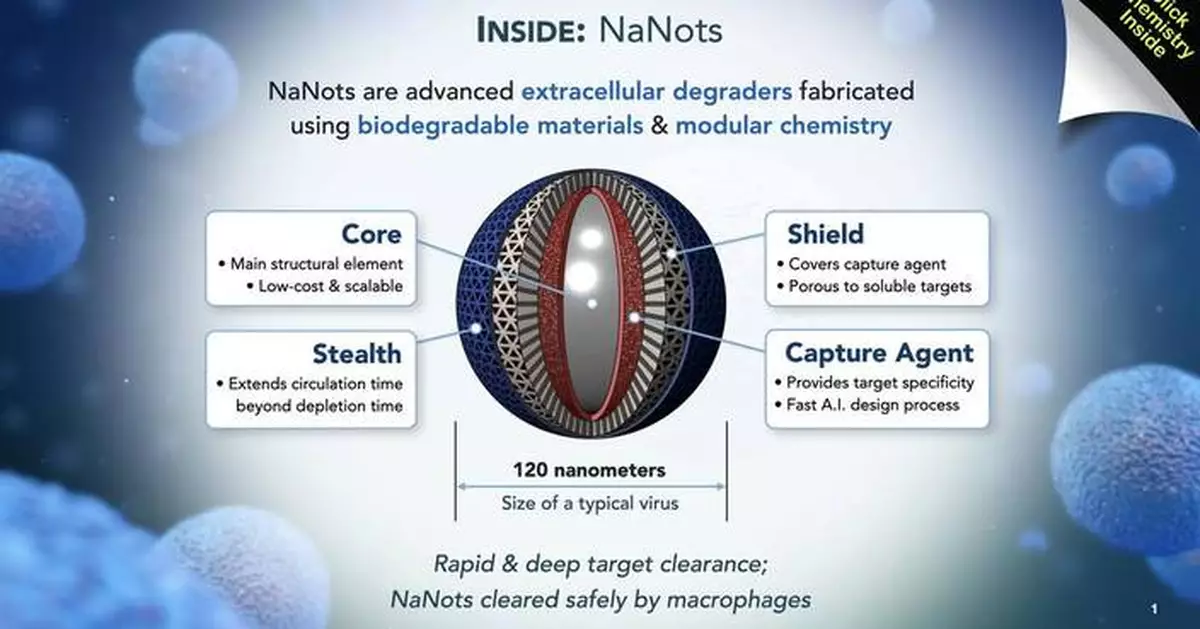
NaNots differ from conventional drugs in being subtractive rather than additive. NaNots contain shielded capture agents that bind and deplete soluble targets without binding or blocking membrane forms of the same target. NaNots differ from previous nanomedicines in that they do not deliver drugs and are not targeted to tumors. Instead, they deplete the pathogenic excess of soluble proteins that enable tumor immune evasion, and thus are expected to have negligible side-effects. NaNot shielding sharply limits off-target effects as well as B-cell engagement that leads to anti-drug antibodies. Following target capture, NaNots are broken down by liver-resident macrophages along with those targets.
“NaNots are a new class of medicine designed specifically for pathogenic soluble targets, clearing them without disturbing potentially important membrane forms, a distinction drugs simply cannot make," said Lou Hawthorne, founder and CEO of NaNotics, inventor of the NaNot platform, and a co-author of the study. "Soluble PD-L1 is an excellent test of this idea in oncology, and Mayo Clinic is the logical partner: world-class scientists – including the co-discoverer of PD-L1 – with deep clinical experience and unmatched knowledge of this specific target. This paper not only shows that depleting soluble immune inhibitors from blood can lead to tumor control, but more broadly supports a new way of treating disease: not by adding a drug, but by subtracting something upon which the disease depends.”
Professor Dong, also a co-author of the study, highlighted the advantages of depleting soluble PD-L1 without disturbing membrane PD-L1, a unique NaNot capability: "First, blocking membrane PD-L1 could interfere with the immune regulatory functions of PD-L1 on normal tissues, leading to adverse effects. In addition, we have shown that PD-L1 signaling supports the transition of effector T cells into memory T cells, a critical process for sustaining durable anti-tumor immunity. Indiscriminate targeting of membrane PD-L1 may impair the survival and function of tumor-reactive T cells, limiting therapeutic efficacy. Consequently, therapeutic strategies that selectively target soluble PD-L1 while sparing membrane-bound PD-L1 may offer a significant advantage."
In the published work, NaNots removed approximately 95% of tumor-derived sPD-L1 in culture and depleted sPD-L1 to undetectable levels in plasma drawn from human patients with metastatic melanoma. In mice with humanized PD-1 and PD-L1 proteins, and humanized sPD-L1-secreting triple-negative breast tumors, five doses of NaNots produced significant tumor growth inhibition. NaNot-treated mice also showed significantly higher levels of effector CD8+ T cells, lower levels of immunosuppressive regulatory T cells, and increased activated natural killer cells – an immune profile associated with favorable outcomes in cancer patients.
NaNots lacking the anti-PD-L1 capture agent produced no effect on tumor growth, confirming that the effect depends specifically on sPD-L1 depletion.
“The next phase is translating the anti-sPD-L1 NaNot action into a medicine,” said Curtis Ruegg, PhD, Chief R&D Officer of NaNotics and a co-author of the study. “The preclinical signal identifying sPD-L1 as a target and NaNots as an effective modality – specific to the soluble form – is strong. Our work now is focused on clinical-grade manufacturing, full pharmacokinetic and pharmacodynamic characterization, and the safety testing to support entry into clinical trials.”
The authors caution that the findings are preclinical and do not establish safety or efficacy in cancer patients. Acknowledged limitations include the use of a single sPD-L1-secreting tumor model and a dosing schedule restricted to five injections.
The study was conducted by researchers in Mayo Clinic’s Departments of Immunology, Urology, Oncology, and Radiation Oncology together with scientists at NaNotics, and was funded by NaNotics LLC. Hawthorne, Ruegg, and John Dodgson, PhD, the NaNotics Chief Technology Officer, are employed by and hold equity in the company. The Mayo Clinic co-authors disclose research funding from NaNotics.
About NaNotics LLC
Visit nanotics.com or follow the company on LinkedIn.
About Mayo Clinic
Visit mayoclinic.org or follow the hospital on LinkedIn.
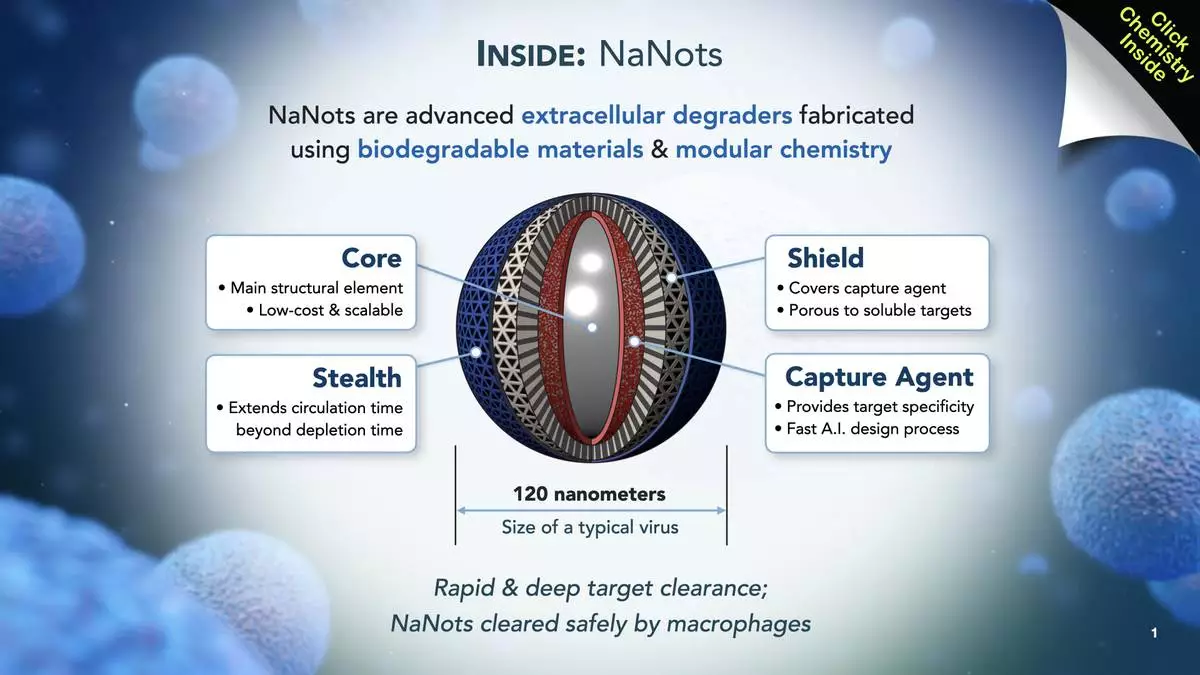
Inside NaNots