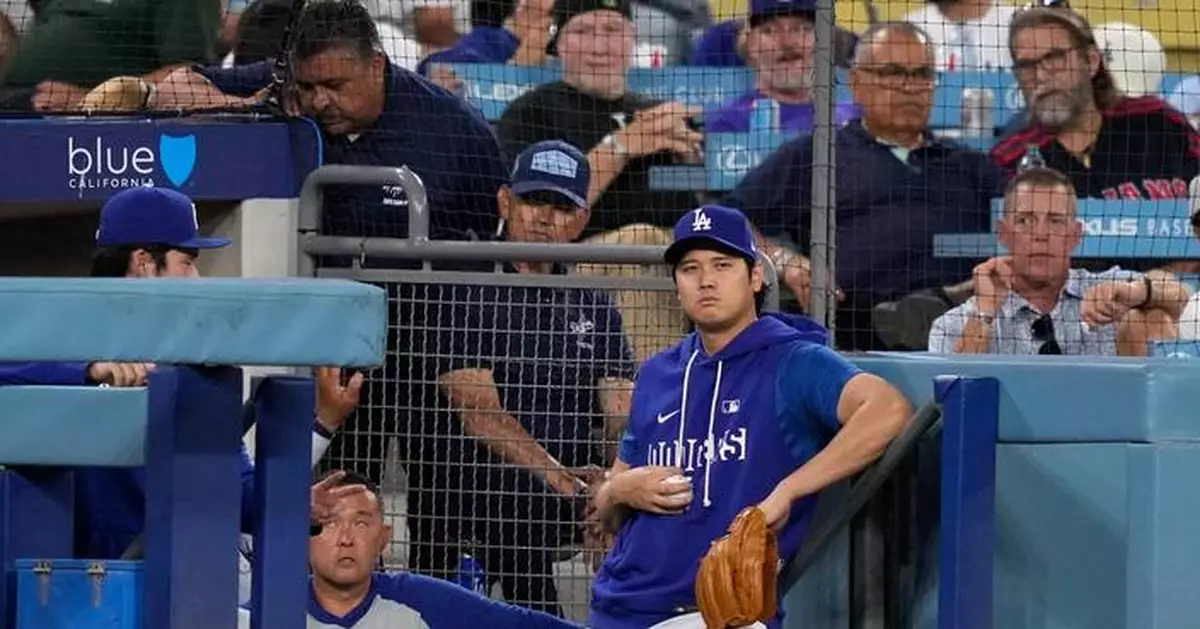
LOS ANGELES (AP) — Shohei Ohtani was out of the Los Angeles Dodgers' lineup for sixth time in seven games on Wednesday night after the two-way superstar felt something in his right arm during a swing two days earlier.
Ohtani has been managing lingering soreness in his right biceps and left knee for weeks now, but he waited until after Tuesday night's game to tell the training staff about his arm after playing Monday.
"There was a swing Monday that he didn’t feel great on, hasn’t totally recovered from Monday,” manager Dave Roberts said. “So the thought is to give him today and then huddle up with him, the medical staff, and figure out what’s the next steps.”
The Dodgers are off Thursday and open a seven-game trip in Miami on Friday.
Ohtani took swings in the batting cage on Tuesday night, when he was available to pinch-hit.
Roberts confirmed the team has stressed to Ohtani the need for him to speak up immediately about any physical issues he may have.
“The concern is that after four days (off) and then to take four at-bats and to feel something in an at-bat where we can’t keep going forward, I think that’s disappointing,” Roberts said. “Anything should be on the table as far as kind of what gets him to be the best version of himself in September.”
That includes a potential stint on the injured list.
“Obviously, it’s not ideal given that it would potentially be 15 days,” Roberts said, “but I still stand by whatever is best for him is best for us. We’ll have to make that decision at some point.”
Roberts expressed some regret about not putting Ohtani on the IL last week.
“I would love to go back and put him on the IL,” he said. “But I did feel at that moment in time, we all felt that giving him four days was sufficient. He was agreeable.”
Ohtani, a four-time MVP, is a key component of the Dodgers' bid for a third consecutive World Series championship, even though he won't be pitching the rest of the season because of his injuries.
“I just feel very confident that he’ll be back at some point,” Roberts said. "I don’t know if it’s Friday, I don’t know. We have to make a decision at some point. I do feel that he’ll be ready to go.”
Also out of the lineup Wednesday was first baseman Freddie Freeman, whose right knee has been bothering him. He made a rare appearance as the designated hitter on Tuesday, going 0 for 2 with a strikeout in a 3-2 victory over the Cincinnati Reds.
Center fielder Tommy Edman was back in the leadoff spot and Will Smith was the designated hitter in place of Ohtani for the series finale against the Reds.
See AP’s full MLB coverage here
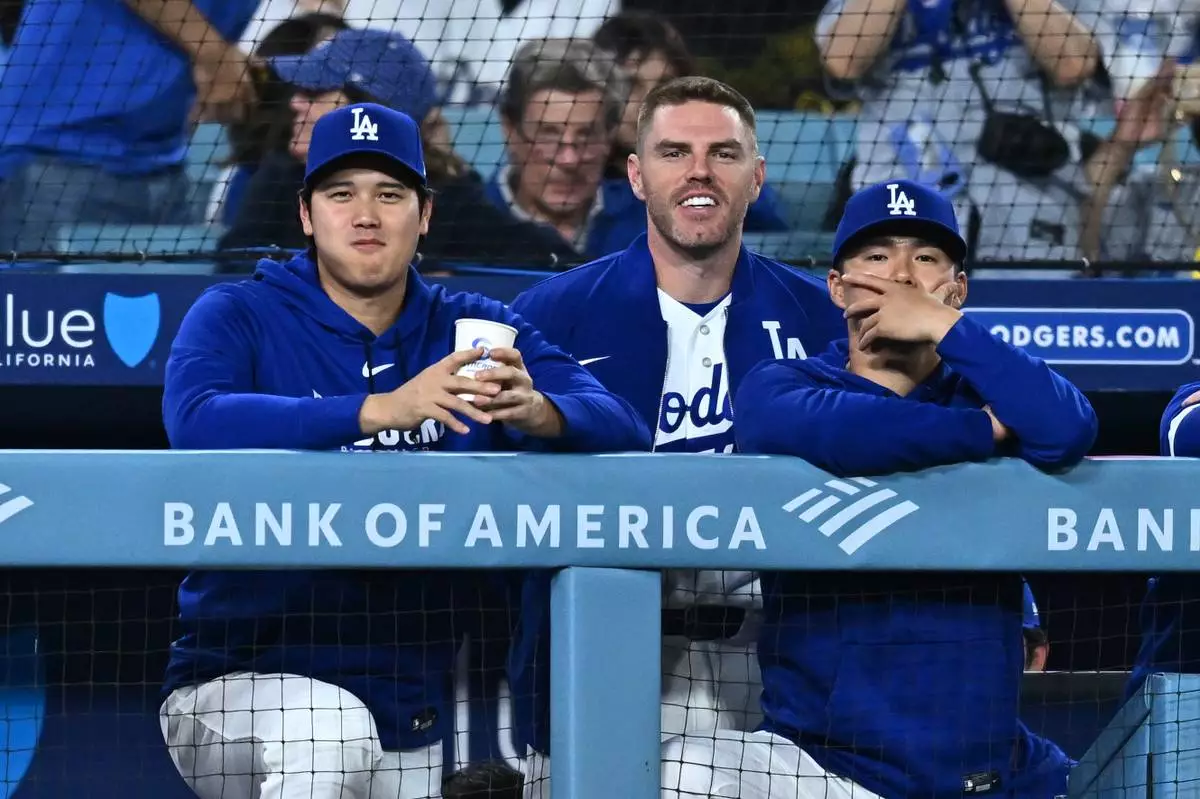
Los Angeles Dodgers' Shohei Ohtani, left, looks on during the ninth inning of a baseball game against the Washington Nationals, Friday, Sept. 4, 2026, in Los Angeles. (AP Photo/William Liang)
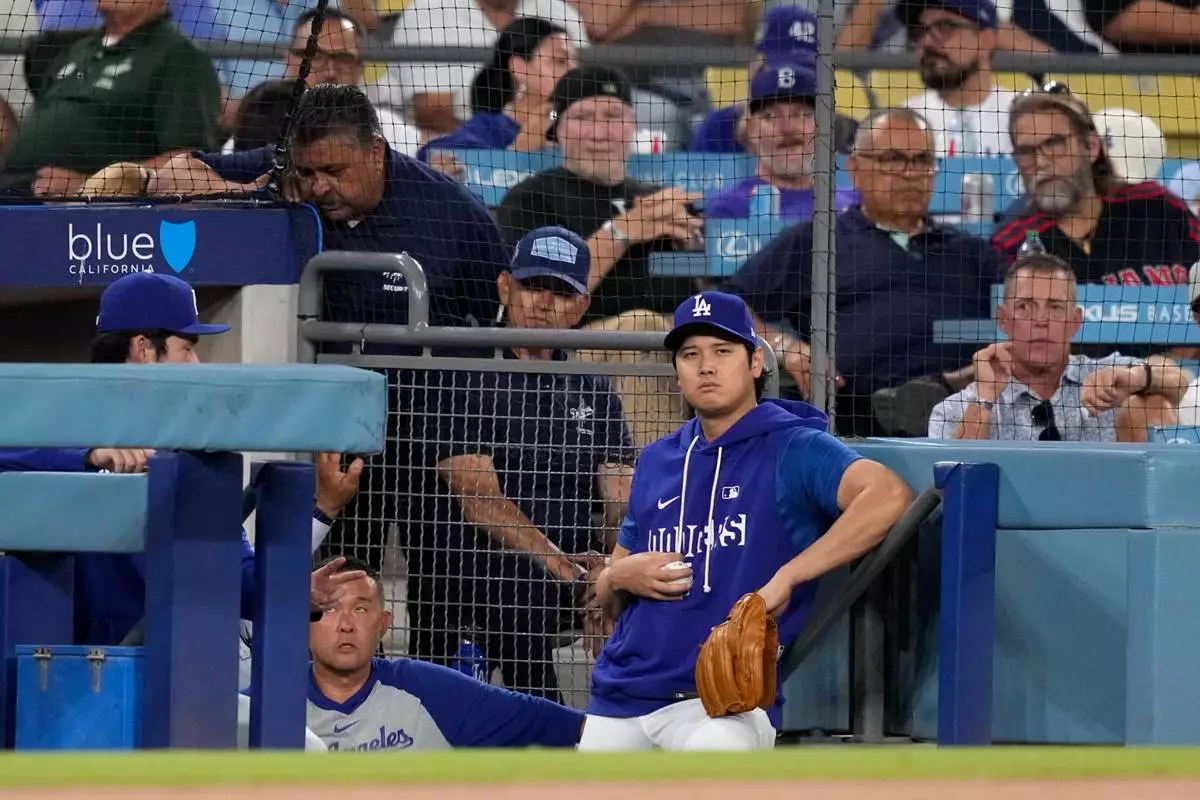
Los Angeles Dodgers' Shohei Ohtani watches from the dugout during the first inning of a baseball game against the Cincinnati Reds, Tuesday, Sept. 8, 2026, in Los Angeles. (AP Photo/Mark J. Terrill)
QUITO, Ecuador (AP) — Secretary of State Marco Rubio gave new clarity Wednesday on the U.S. approach toward combating drug trafficking in Latin American waters, saying the Trump administration is now focused on working with allied countries and aligning with their laws but insisting the military will “still blow up ships if need be.”
The public acknowledgment of a shift in U.S. strategy comes a year after Washington began a campaign of unilateral deadly strikes against those it calls “narcoterrorists" operating boats in international waters. Late Wednesday, U.S. Southern Command announced the latest such strike in the Caribbean Sea, saying it killed three people. That brought the number of people who have been killed in boat strikes by the U.S. military to at least 230 in 69 strikes.
Still, the Trump administration is focused on building agreements for joint operations with allied countries in the region, including Colombia and Ecuador, that comply with their laws in their waters.
“I think its an incredible advance for the first time to have countries that are willing to participate in these efforts in their territorial waters,” Rubio told reporters on a trip to the Ecuadorian capital, Quito.
“The important point is that these routes are being disrupted. These routes are being ended,” he added.
He said the decision is “a strike-by-strike or operation-by-operation determination” that depends on the threat and location of the boat.
Recent U.S. interdictions in Latin American waters are unlike the Trump administration’s initial strikes on alleged drug-trafficking boats that began in September 2025. Lately, people aboard floating refueling stations said to be supporting drug trafficking have been removed and transferred to Ecuadorian authorities. Then the U.S. military blows up the vessels.
The shift comes after a series of strikes on boats over the year on people the Trump administration accused of being “narcoterrorists” without providing evidence.
Rubio's comments came during a three-nation tour of South America aimed at boosting security cooperation with conservative leaders who have cozied up to President Donald Trump.
In Ecuador on Wednesday, he hailed it as the most “aggressive” partner in the Trump administration’s push to target transnational criminal groups in the Western Hemisphere. Rubio met with Ecuadorian President Daniel Noboa, who has rapidly embraced Trump’s get-tough stance on counternarcotics operations and illegal immigration.
Rubio said “elite forces” from both countries “are working jointly on a day-to-day basis in a way that has no precedent in order to try to dismantle these terrorist organizations.”
But he singled out Mexico, calling it “an even graver challenge” than other countries in the region because of cartels’ power there and saying the “ideal” scenario would be for the two countries to address the situation jointly.
“Eventually that threat will have to be confronted one way or the other,” Rubio told reporters in Ecuador. “But our hope is to do it cooperatively with Mexican authorities.”
Rubio said Mexican authorities have done “more than they’ve ever done before to go after these groups, but it is still not nearly enough.”
He also announced his latest foreign terrorist organization designation of a Latin American drug trafficking ring: Ecuador’s Los Tiguerones. It was among 22 criminal gangs designated as “terrorists” by Ecuador in 2024 after it declared an internal armed conflict during a surge in violence that included gunmen storming a television station during a live broadcast.
Under the Trump administration’s counternarcotics strategy, it could make the group a target for military action.
Ecuador has been helping the U.S. as it intercepts and sinks vessels, including one Tuesday that Washington said had links to the Ecuadorian criminal group Los Choneros. It was the sixth such operation in less than two weeks and the second in as many days.
Ecuadorian Foreign Minister Roberto Kury called his country “a loyal ally, an active ally and a decisive ally to be able to build a safer hemisphere, free hemisphere and prosperous hemisphere.”
Rubio said he would be asking Congress for $45 million to keep funding the effort of “dismantling these terrorist groups,” although he did not specify what the funds would be for.
Ecuador has struggled to contain drug violence since 2021 as rival cartels partner with local gangs and battle for control of routes and coastal ports used to smuggle cocaine. The country is wedged between Colombia and Peru, the world’s top cocaine-producing countries.
Under Noboa, Ecuador has become a strong U.S. partner in counterdrug efforts in the region.
On Wednesday, Rubio was presented with Ecuador’s second-highest national honor, the National Order of Merit in the degree of Grand Cross, for his service in improving U.S.-Ecuador ties. Noboa said Rubio was helping bring peace to the U.S. and the region by traveling between countries to strengthen security and ties.
Rubio will head next to Lima to meet new Peruvian President Keiko Fujimori, another leader aligned with Trump’s tough positions on the drug trade and migration. On Tuesday, he met with new conservative firebrand President Abelardo de la Espriella in Barranquilla on Colombia’s Caribbean coast.
Associated Press writers Gonzalo Solano in Quito, Farnoush Amiri in New York and Meg Kinnard in Columbia, South Carolina, contributed to this report.
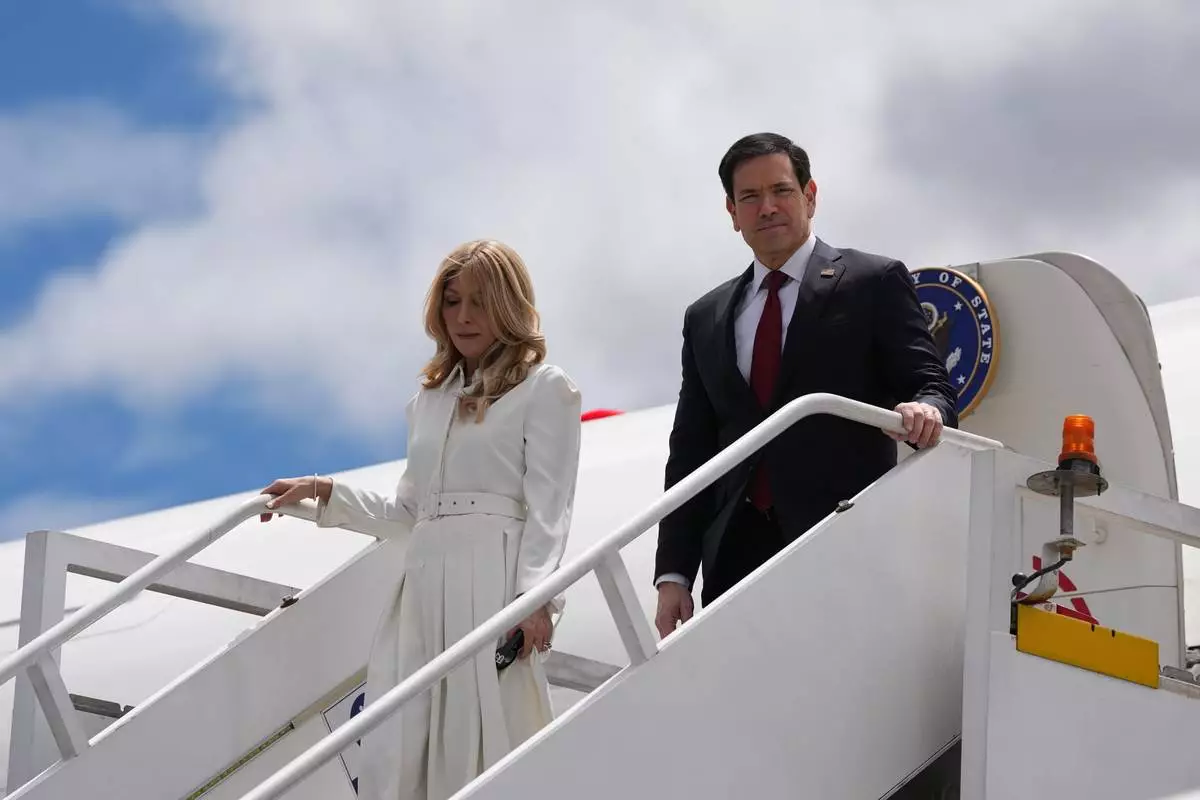
U.S. Sec. of State Marco Rubio and his wife Jeanette Rubio deplane at Mariscal Sucre International airport in Quito, Ecuador, Wednesday, Sept. 9, 2026. (AP Photo/Dolores Ochoa, Pool)
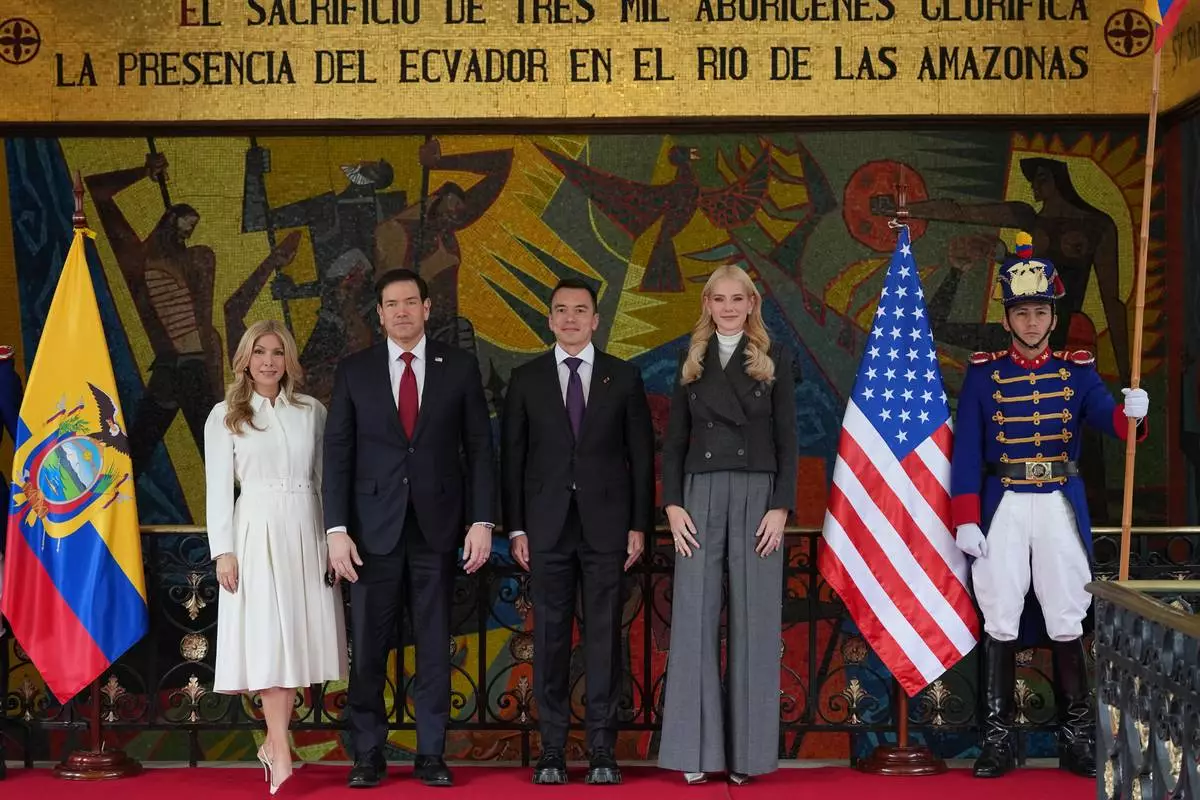
Ecuador's President Daniel Noboa, center, and first lady Lavinia Valbonesi, second from right, stand with U.S. Sec. of State Marco Rubio and his wife Jeanette Rubio at Carondelet palace in Quito, Ecuador, Wednesday, Sept. 9, 2026. (AP Photo/Dolores Ochoa, Pool)
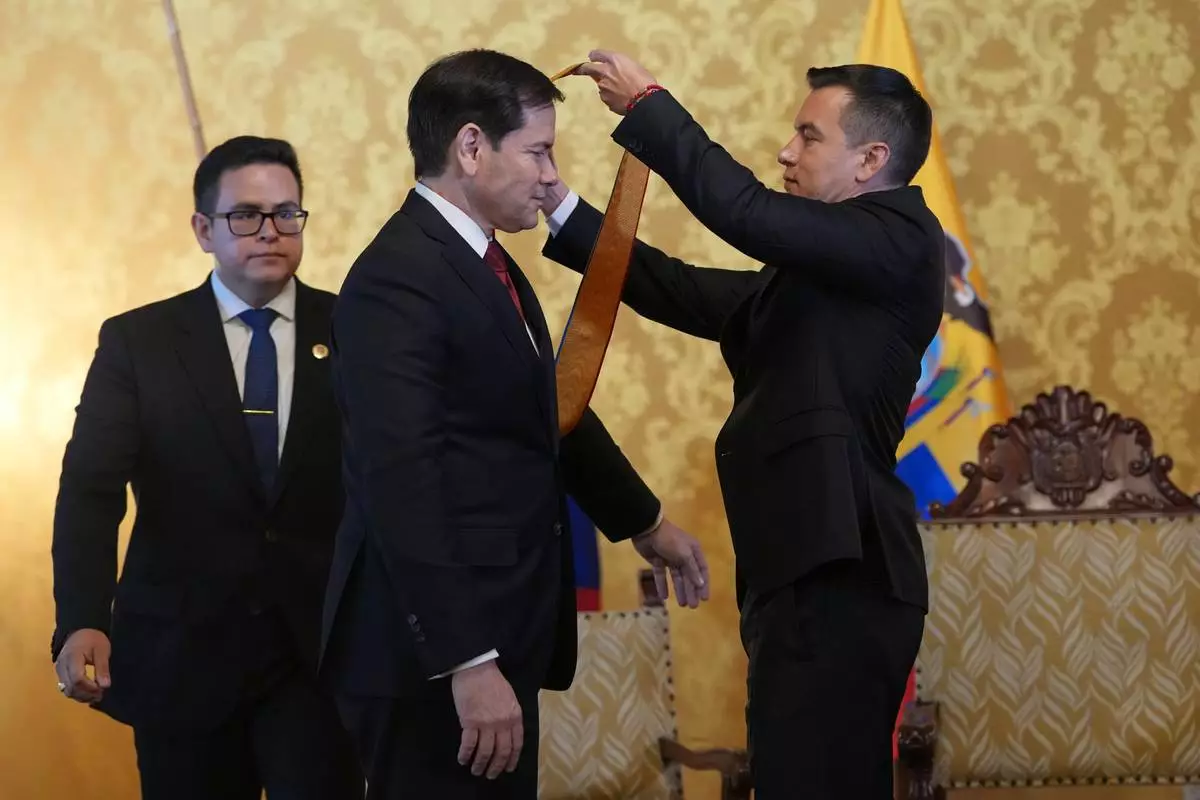
Ecuador's President Daniel Noboa, right, presents U.S. Sec. of State Marco Rubio with Ecuador's highest-ranking National Order of Merit, the Grand Cross, at Carondelet palace in Quito, Ecuador, Wednesday, Sept. 9, 2026. (AP Photo/Dolores Ochoa, Pool)
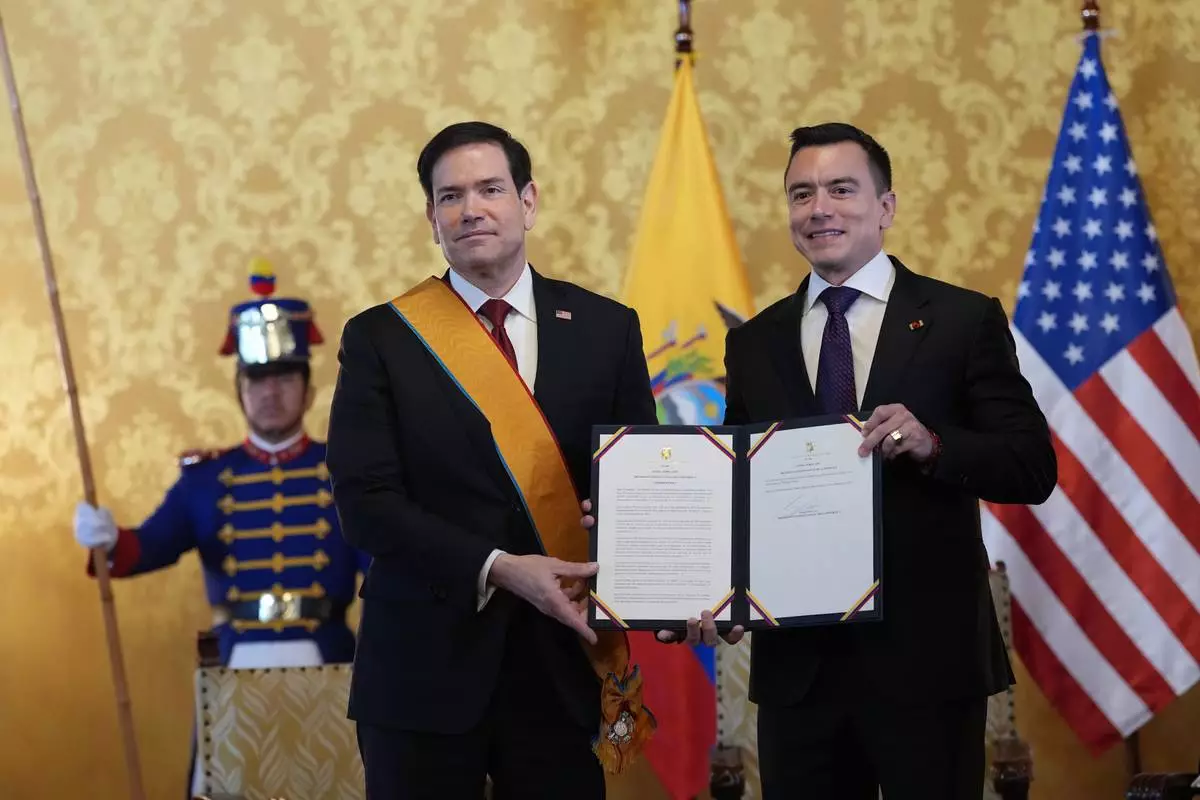
Ecuador's President Daniel Noboa, right, and U.S. Sec. of State Marco Rubio hold a document related to Ecuador's highest-ranking National Order of Merit, the Grand Cross, presented to Rubio, which he is wearing, at Carondelet palace in Quito, Ecuador, Wednesday, Sept. 9, 2026. (AP Photo/Dolores Ochoa, Pool)
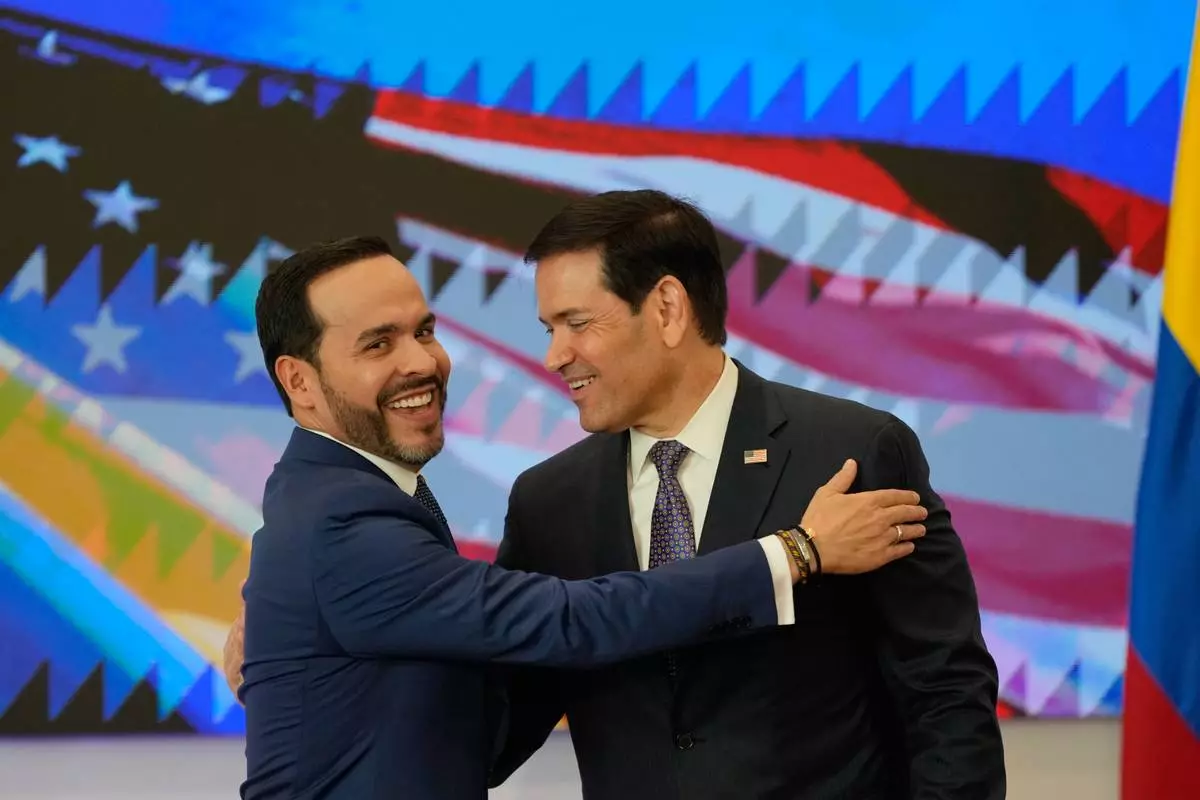
Colombian President Abelardo De La Espriella, left, and U.S. Secretary of State Marco Rubio embrace during a bilateral agreements signing ceremony in Barranquilla, Colombia, Tuesday, Sept. 8, 2026. (AP Photo/Fernando Vergara, Pool)
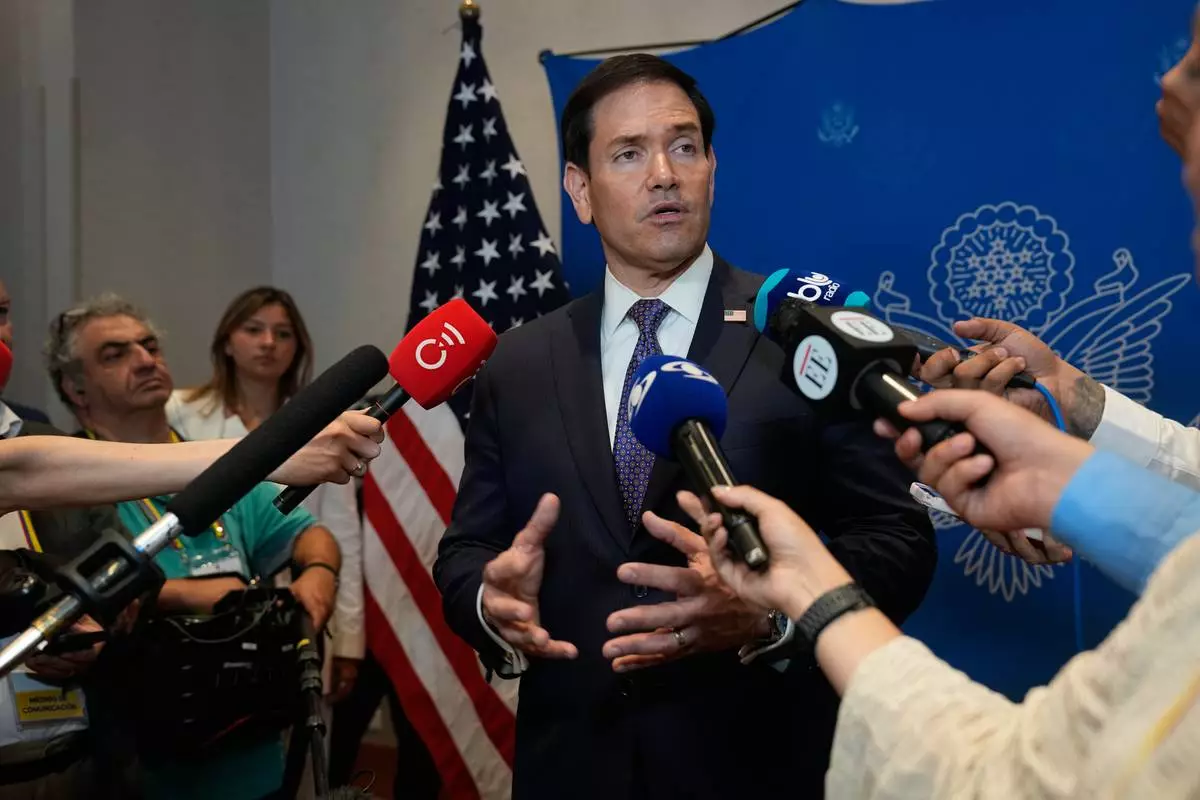
U.S. Secretary of State Marco Rubio meets with reporters in Barranquilla, Colombia, Tuesday, Sept. 8, 2026. (AP Photo/Fernando Vergara, Pool)
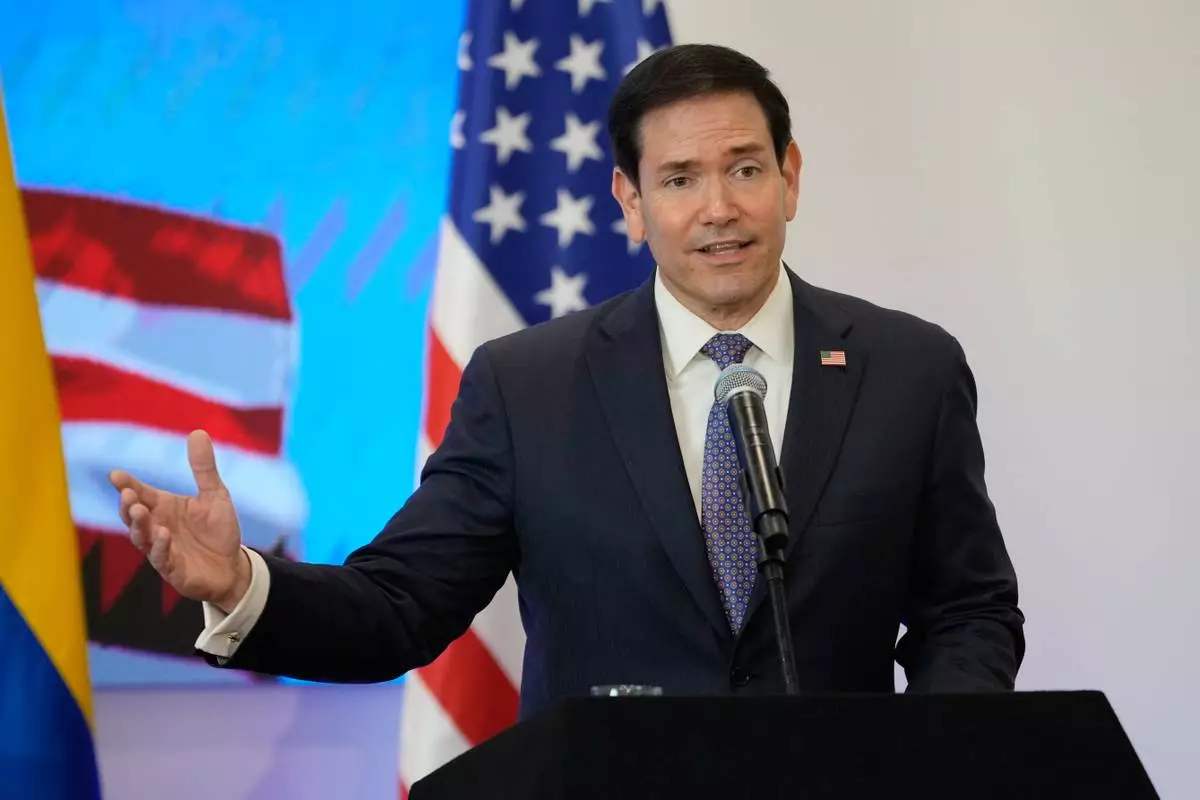
U.S. Secretary of State Marco Rubio speaks during a bilateral agreements signing ceremony in Barranquilla, Colombia, Tuesday, Sept. 8, 2026. (AP Photo/Fernando Vergara, Pool)