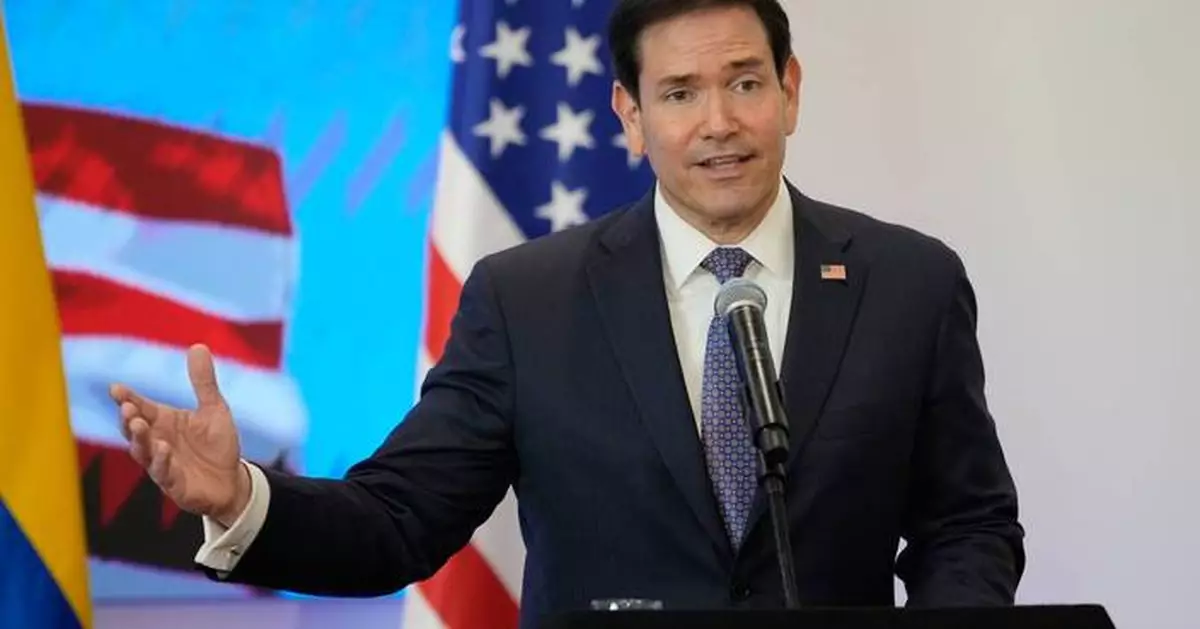
QUITO, Ecuador (AP) — U.S. Secretary of State Marco Rubio visited Ecuador on Wednesday on the second leg of a three-nation tour of South America aimed at boosting security cooperation with conservative leaders who have cozied up to President Donald Trump, especially in the administration's push to crack down on drug trafficking.
After spending Tuesday in Colombia meeting with new conservative firebrand President Abelardo de la Espriella, Rubio was in Quito for talks with Ecuadorian President Daniel Noboa, who has rapidly embraced the Trump administration’s get-tough stance on counternarcotics operations and illegal immigration.
Rubio was presented with Ecuador’s second-highest national honor, the National Order of Merit in the degree of Grand Cross, for his service in improving U.S.-Ecuador ties. Rubio used the occasion to hail Noboa and his government’s commitment to securing the country.
“When we see threats to our security, we have to work and your president is doing so in an incredible way,” Rubio said.
Ecuador has struggled to contain drug violence since 2021 as rival cartels partner with local gangs and battle for control of routes and coastal ports used to smuggle cocaine. The country is wedged between Colombia and Peru, the world’s top cocaine-producing countries.
Under Noboa, Ecuador has become a strong U.S. partner in counterdrug efforts in the region.
Coinciding with Rubio’s trip, U.S. forces intercepted and sank a vessel on Tuesday that Washington said had links to the Ecuadorian criminal group Los Choneros. It was the sixth such operation in less than two weeks and the second in as many days.
Unlike in U.S. strikes on alleged drug-trafficking boats in Latin American waters that began in September 2025, people aboard the floating refueling stations said to be supporting drug trafficking have been removed and transferred to Ecuadorian authorities.
It appears to be a shift after a series of strikes on boats over the year has killed at least 227 people, whom the Trump administration accused of being “narcoterrorists” without providing evidence. The U.S. military carried out at least two of those deadly strikes last month.
In public remarks Tuesday in Barranquilla on Colombia’s Caribbean coast, de la Espriella and Rubio both extolled a resurgence in U.S.-Colombia ties, starting in the security sector where cooperation had lagged under the previous Colombian leadership.
“We have a lot of common interests with them, both taking on regional transnational criminal terrorism and also economic engagements,” Rubio said of the three countries he is visiting. “It’s part of a trend that you’re seeing in the Western Hemisphere of alignment with U.S. and U.S. interests.”
From Quito, Rubio will travel to Lima, Peru, where he will see new Peruvian President Keiko Fujimori.
Associated Press writer Gonzalo Solano in Quito contributed to this report.
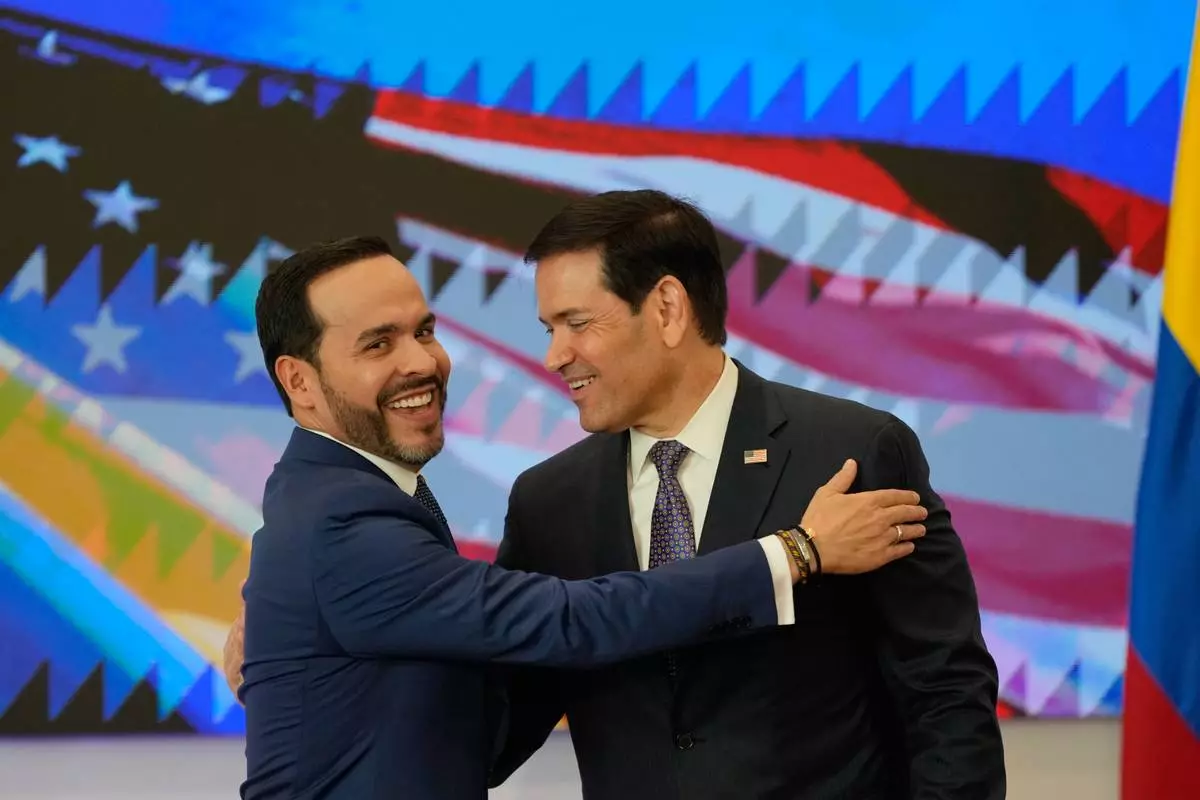
Colombian President Abelardo De La Espriella, left, and U.S. Secretary of State Marco Rubio embrace during a bilateral agreements signing ceremony in Barranquilla, Colombia, Tuesday, Sept. 8, 2026. (AP Photo/Fernando Vergara, Pool)
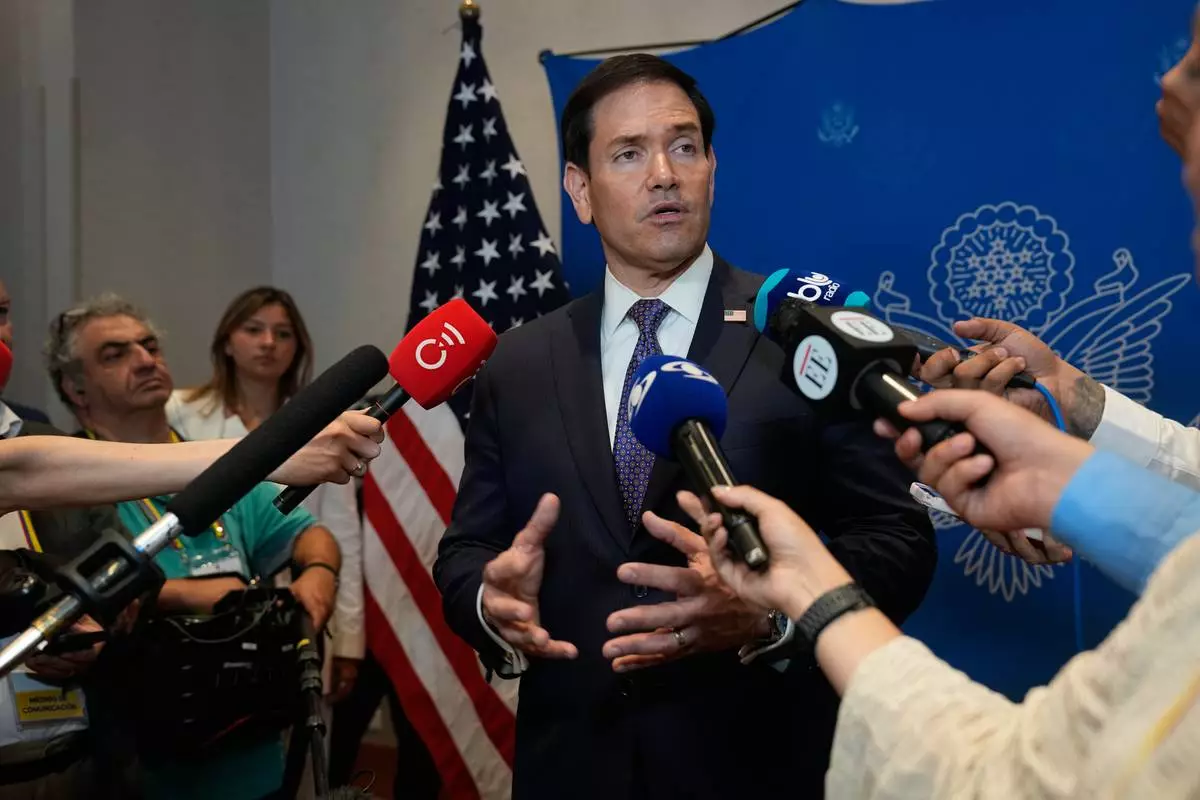
U.S. Secretary of State Marco Rubio meets with reporters in Barranquilla, Colombia, Tuesday, Sept. 8, 2026. (AP Photo/Fernando Vergara, Pool)
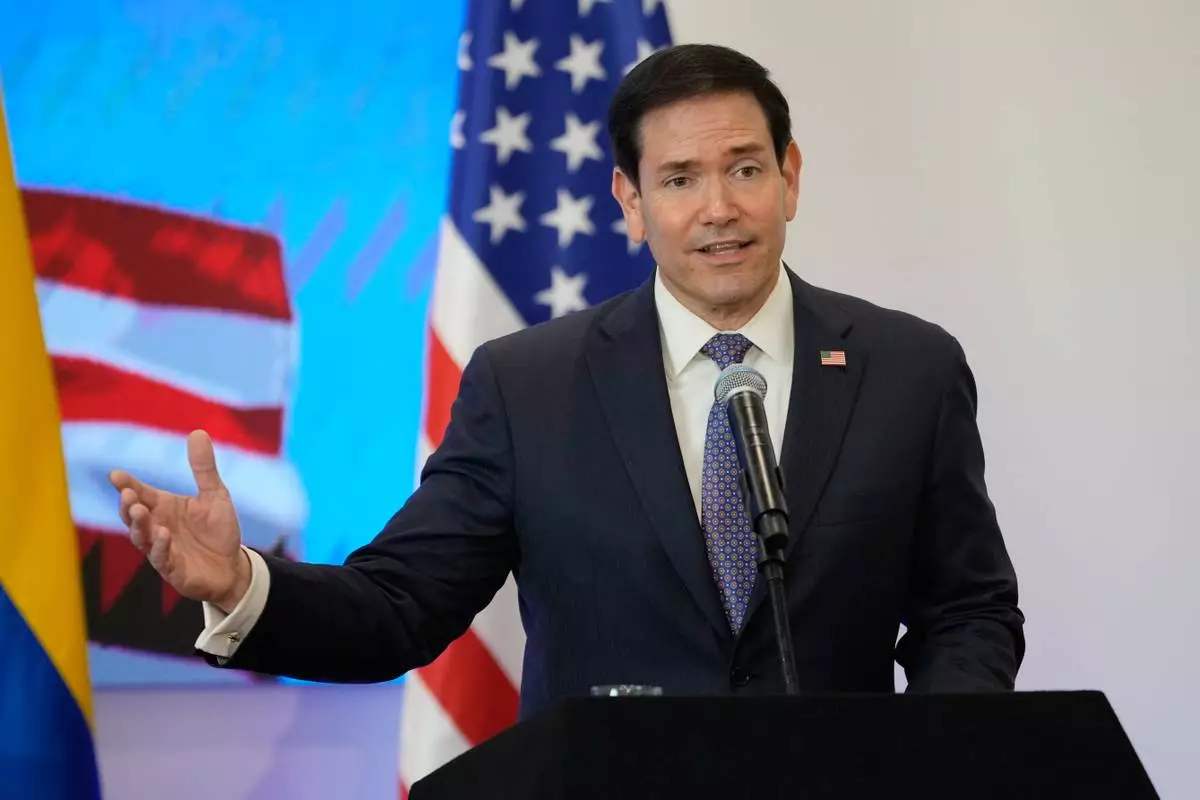
U.S. Secretary of State Marco Rubio speaks during a bilateral agreements signing ceremony in Barranquilla, Colombia, Tuesday, Sept. 8, 2026. (AP Photo/Fernando Vergara, Pool)
WASHINGTON (AP) — Americans are more skeptical of government information than they were a few years ago, with majorities now saying they have little or no trust in federal government information about elections and politics, foreign affairs or the environment, a new poll finds.
The survey from The Associated Press-NORC Center for Public Affairs Research and USAFacts shows that while mistrust of government information has grown since 2024, it's also higher than it was at the end of President Donald Trump's first term, underscoring how his recent attempts to dismantle parts of the federal bureaucracy may have affected public confidence in the executive branch, particularly among Democrats.
Those suspicions extend to the results of the coming midterm elections. Only 34% of U.S. adults trust government certifications of election results “a great deal” or “quite a bit,” which is down slightly from 40% in 2024. Certification is a typically routine process in which local and state officials confirm the vote count, but it's become politicized since Trump lost the 2020 presidential election.
Trust in government information has also become more partisan since Trump's first term, the survey found.
“It's pretty hard to trust anything that's being communicated,” said Shannon Ingram, 46, a Democrat who lives in Maryland, pointing to shifting health recommendations as an example of “questionable” government information she's seen since Trump regained office. “There is a significant amount of bias, and it comes from the people who are authoring the content.”
About 6 in 10 U.S. adults have low trust in information from the federal government about the environment, foreign affairs, elections and politics, abortion or immigration — saying they trust it “only a little” or “not at all.”
Mistrust in what the federal government says has risen at least slightly on nearly every topic that was asked about in an AP-NORC/ USAFacts survey from 2019. That includes education — which has risen from 37% in 2019 to 53% now — with a 9-percentage point spike in the last year.
The findings come after a year and a half of upheaval in the executive branch. Trump began to dismantle key parts of the federal bureaucracy soon after entering the White House for the second time, moving to end longstanding programs and shutter entire agencies.
Since then, thousands of federal employees have been fired or left their jobs, substantially reducing the ranks of the government statisticians and leading experts to warn about risks to data quality.
Shifting regulations and recommendations have also led to dramatic changes in government policy. Recent changes to longstanding health advice have put doctors and medical organizations at odds with the Trump administration on vaccination recommendations. Earlier this year, the Environmental Protection Agency rescinded a scientific finding that has underpinned government action to fight climate change for more than a decade.
Jeremy Cove, a 44-year-old Republican from Missouri, trusts the Trump administration's guidance on matters like vaccines, but he disagrees with their assertion that climate change is not happening, or that humans are not contributing to it.
“I love Trump; I voted for Trump, but some of the things he’s doing just makes me distrust more,” Cove said. “Stuff like renaming Lake Ontario to Lake America, it just makes you think about what their priorities are. Then you realize it’s not what it should be, which in turn, makes you distrust even more.”
The gap between Republicans' and Democrats' trust in government information is much wider than it was during Trump's first term, a shift that first began to appear under former President Joe Biden.
Democrats were generally less likely to trust government information in Trump's first term, but not dramatically more than Republicans. That shifted when control of the White House changed hands. Republicans' mistrust in government information rose while Biden was president and fell after Trump took office. Meanwhile, Democrats' doubts declined under Biden and spiked when Trump regained power.
For example, 61% of Democrats now have low trust in information about the federal budget, compared with 42% of Republicans, while 60% of Democrats have low trust in information about crime, compared with only 32% of Republicans.
Larry Haith, a 76-year-old Republican from Idaho, says he tends to trust the federal government — though, he acknowledges that it can vary based on the current administration.
“Generally speaking, I’ve got more confidence in the federal government today than I’ve had in years,” he said.
Independents, meanwhile, became more mistrustful of government information under Biden and haven't shifted under Trump.
The only issue without a substantial partisan divide in the new survey is vaccination recommendations and safety: about 6 in 10 Democrats, Republicans and independents trust the federal government on vaccination recommendations and safety “only a little” or “not at all.”
As the 2026 midterms approach, public concern about the accuracy of the election results is widespread. Just under half of U.S. adults are “extremely” or “very” concerned the federal government will publicly discredit or question election results, tamper with election results, or pressure state election officials to change how they certify or report results.
Over the past few months, Trump has repeated long-debunked allegations of mass voter fraud in the 2020 election, attempted to place new restrictions on mail voting in time for the midterms and pushed Congress to enact a proof-of-citizenship requirement to register and vote. Homeland Security Secretary Markwayne Mullin has also warned state officials that they could lose funding or face investigations if they fail to go along with Trump's election security demands.
At the same time, few Americans trust the information they get from political campaigns. Only about 1 in 10 U.S. adults say the Democratic Party or Republican Party campaign messages are “always” or “often” based in factual information.
In a sign of how deep the mistrust runs, only about one-quarter of Democrats trust their party's campaign messages to be factual at least “often,” while a similar share of Republicans say this about their party.
Less than half of Democrats, 44%, trust government certifications of election results “a great deal” or “quite a bit,” a substantial decline from 65% in 2024.
Even with Trump back in the White House, though, Republicans haven't seen a similar increase in confidence. Only 29% of Republicans have high trust in government certifications of election results, up just slightly from 2024.
Trust in other sources of information about election outcomes — such as national news outlets or cable news networks — is also low overall.
Kim Murza, a Democrat from Colorado, has faith in the country's ability to run fair elections but blames the Trump administration for eroding Americans' trust in the process.
“My concern is more about what the current administration is doing,” said 45-year-old Murza. “I think they are doing whatever they can to try to put that distrust in people’s minds.”
The AP-NORC/ USAFacts poll of 1,036 adults was conducted July 29 to Aug. 10 using a sample drawn from NORC’s probability-based AmeriSpeak Panel, which is designed to be representative of the U.S. population. The margin of sampling error for adults overall is plus or minus 4.1 percentage points. The margin of sampling error is plus or minus 6.4 for Republicans overall and plus or minus 6.0 for Democrats overall.
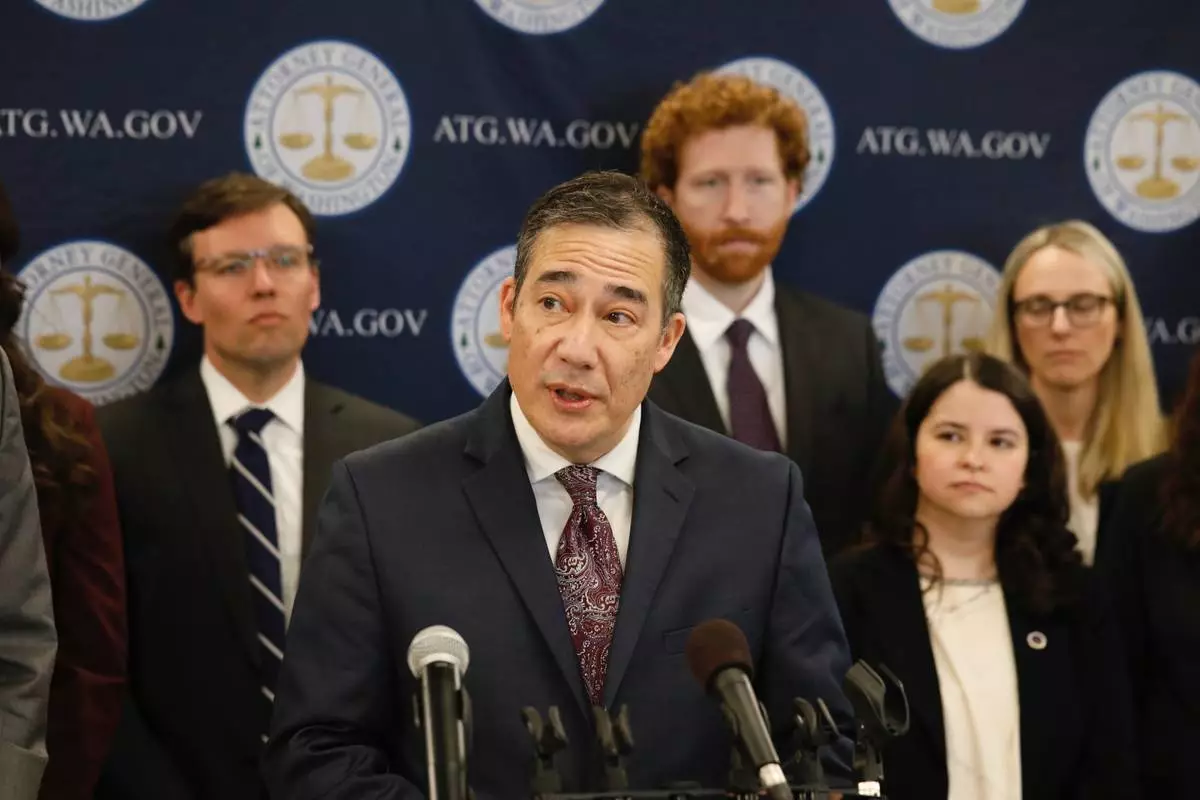
FILE - Washington Secretary of State Steve Hobbs speaks during a news conference at which the state attorney general announced a federal lawsuit challenging President Donald Trump's executive order attempting to overhaul elections in the U.S., in Seattle, April 4, 2025. (AP Photo/Manuel Valdes, File)
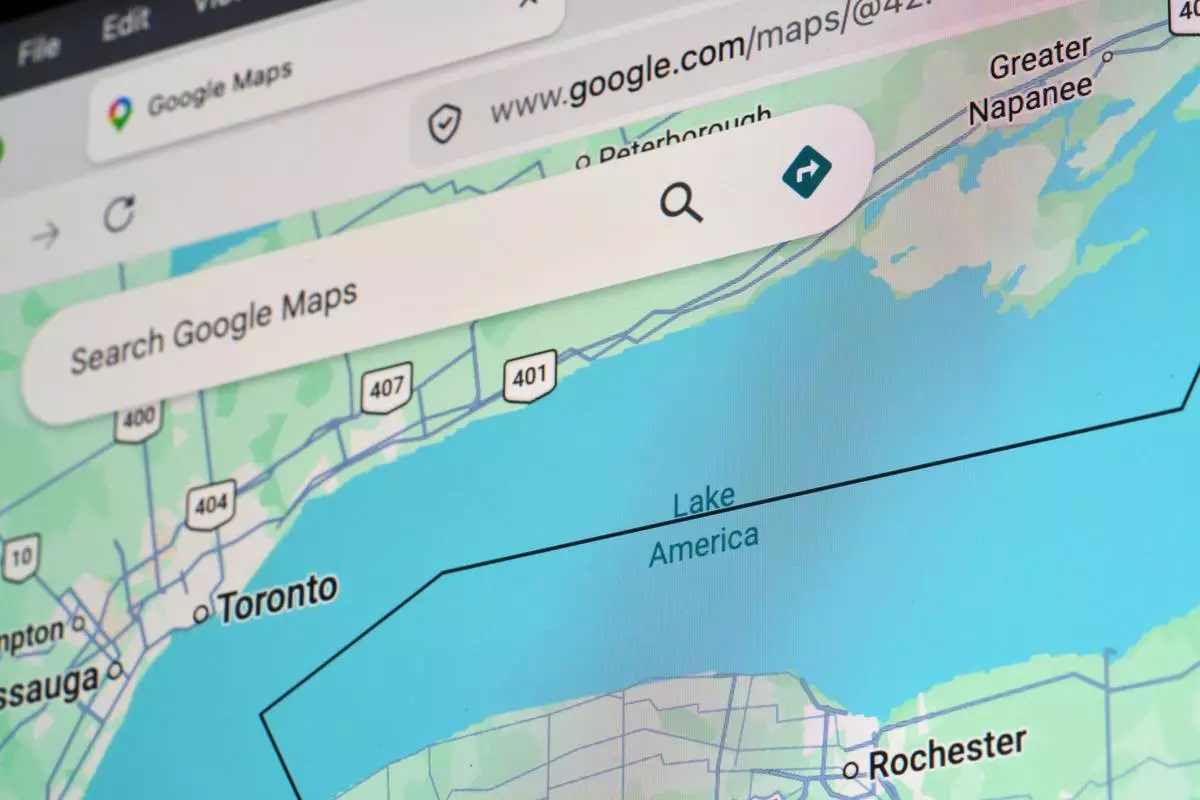
In the photo of a computer screen, a Google map showing Lake Ontario renamed as Lake America is seen Sunday, Aug. 30, 2026, in St. Louis. (AP Photo/Jeff Roberson)
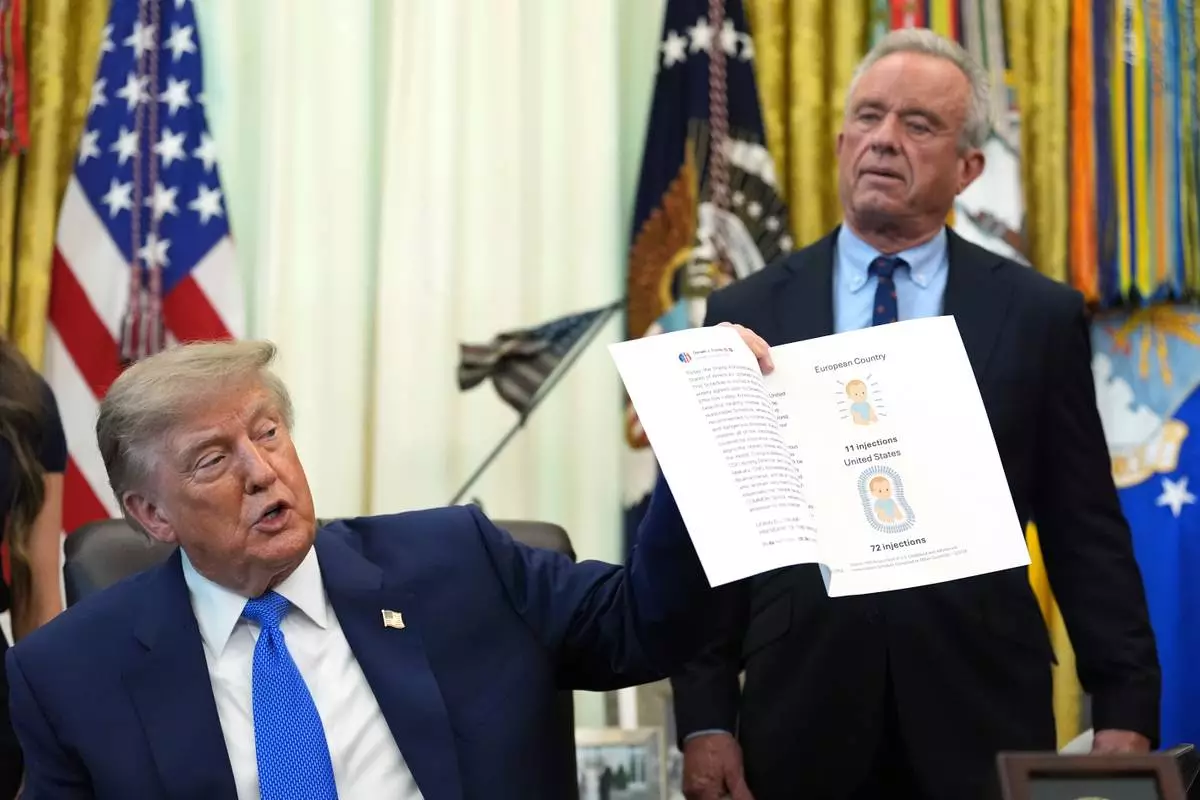
FILE - President Donald Trump holds up an image taken from his Truth Social account as Health and Human Services Secretary Robert F. Kennedy Jr. watches during a meeting to sign an executive order about vaccines, Monday, Aug. 10, 2026, in the Oval Office of the White House in Washington. (AP Photo/Jacquelyn Martin, File)