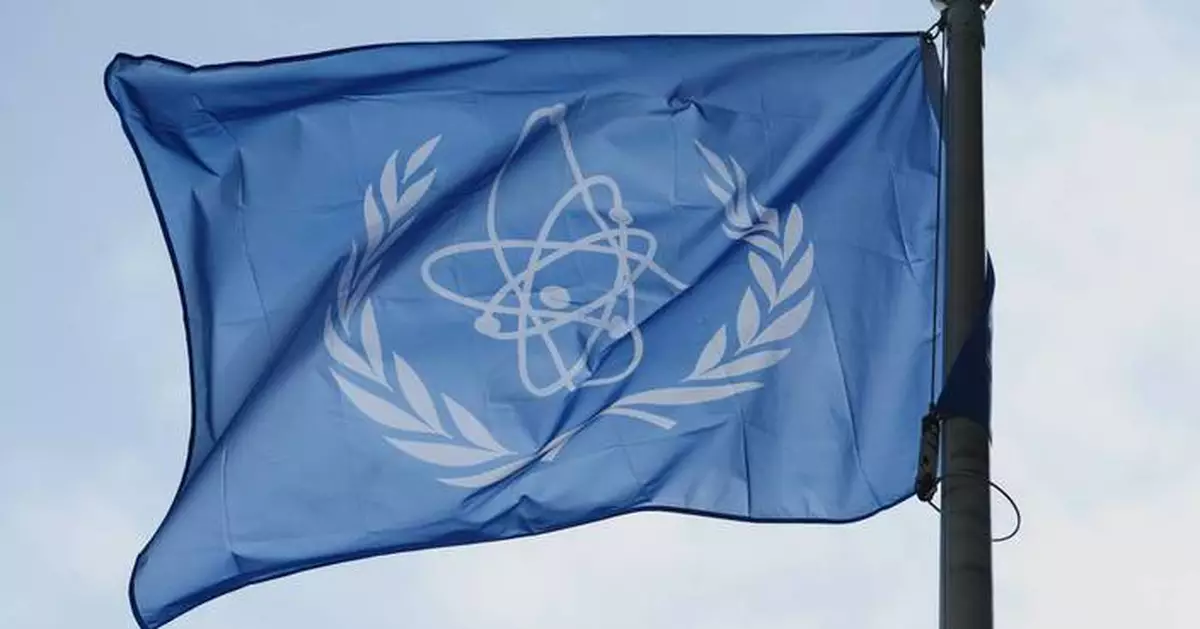
VIENNA (AP) — The U.N. atomic watchdog’s board on Wednesday reported Iran to the U.N. Security Council for the first time in 20 years, citing it for failure to cooperate in a long-running investigation into uranium traces detected by inspectors at undeclared sites.
Western officials suspect that the traces could provide evidence that Iran had a secret nuclear weapons program until 2003. Iran says that it’s not pursuing nuclear weapons, and that its program is entirely peaceful.
Reporting Iran to the Security Council opens the country to possible sanctions and asset freezes, though such punitive measures are unlikely because Iran’s allies Russia and China hold veto power on the panel.
Twenty-three countries on the International Atomic Energy Agency ’s 35-member board of governors voted for Wednesday's resolution at IAEA headquarters in Vienna.
China, Russia and Niger opposed it, while eight countries abstained and one didn’t vote as it was in arrears, according to diplomats who spoke on condition of anonymity to describe the outcome of the closed-door vote.
The resolution was put forward by the United States, Britain, France and Germany.
The diplomatic move has been under consideration since June 2025, when the IAEA board found Iran officially in noncompliance with its nonproliferation obligations because of Tehran’s lack of cooperation in the investigation.
Iran’s ambassador to the U.N. in Vienna, Reza Najafi, rejected the resolution, describing it as a “political tool” and saying that it ruined confidence in the IAEA's "independence, impartiality and credibility.”
He suggested that compliance with any obligation to allow U.N. inspections of nuclear sites inside Iran was, in any case, impossible at the moment because of the country's continuing war with the U.S. and Israel.
The U.S. this week destroyed five Iranian oil tankers and Tehran hit back at American targets in Jordan, the latest burst of back-and-forth strikes that have lurched the sides back toward open hostilities in a more than 6-month-old war.
The draft resolution, which was seen by The Associated Press, requested IAEA Director General Rafael Grossi to report the agency's concerns "to the Security Council and the General Assembly of the United Nations, in accordance with the relevant provisions of the IAEA Statute.”
The resolution also reiterated its call upon Iran “to urgently remedy its non-compliance" with previous agreements and to take steps deemed necessary by the IAEA to assure “the non-diversion of nuclear material."
Since Israel and the U.S. struck Iran’s nuclear sites during the 12-day war in June 2025, Iran hasn’t given IAEA inspectors access to nuclear sites that were affected by the strikes. The IAEA also has been unable to verify the status of Iran’s stockpile of near weapons-grade uranium since the June bombing.
Najafi said that airstrikes by the U.S. and Israel made safe access for inspectors to Iran’s nuclear sites “materially impossible.” He said that Iran has “neither stopped nor suspended its safeguards obligations,” adding that “performance is currently impossible under continuing military operations and persistent threats.”
Iran’s Deputy Foreign Minister Kazem Gharibabadi echoed that sentiment in an post on X.
“They attack Iran’s safeguarded nuclear facilities, disrupt the normal verification process, and then use that very disruption as a pretext to pass a resolution at the IAEA Board of Governors,” he said.
According to the IAEA, Iran maintains a stockpile of 440.9 kilograms (972 pounds) of uranium enriched up to 60% purity — a short, technical step away from weapons-grade levels of 90%.
That stockpile could allow Iran to build as many as 10 nuclear bombs, should it decide to weaponize its program, IAEA chief Grossi warned in an interview last year with the AP. He said that it doesn’t mean that Iran has such a weapon.
—-
The Associated Press receives financial support from multiple private foundations. AP is solely responsible for all content. Find AP’s standards for working with philanthropies, a list of supporters and funded coverage areas at AP.org.

FILE - Rafael Grossi, one of the four candidates for the next UN Secretary-General, attends an event, "The Leader the UN Needs: Choosing the Next Secretary-General," in London on May 28, 2026. (AP Photo/Kin Cheung, File)
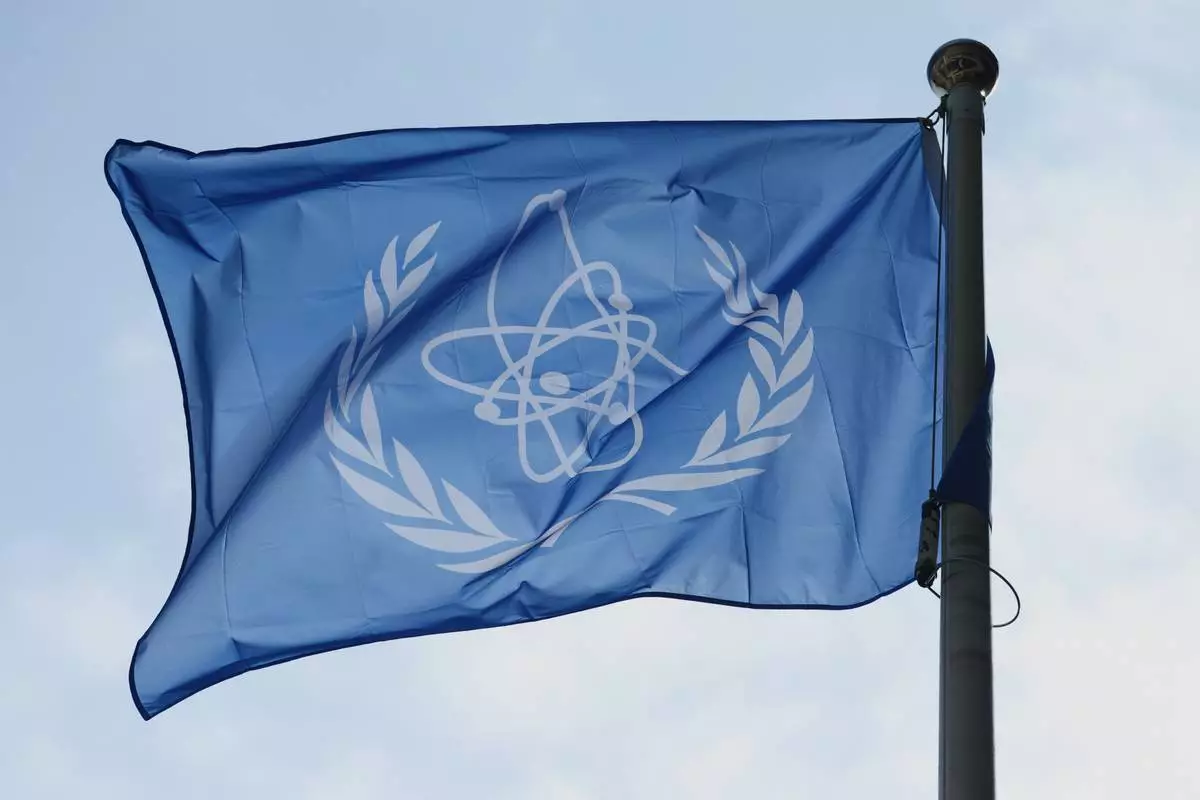
FILE - The International Atomic Energy Agency (IAEA) flag flies during a special session of an IAEA Board of Governors meeting in Vienna, Austria, March 2, 2026. (AP Photo/Heinz-Peter Bader, File)
Stocks on Wall Street lost ground again Wednesday as the price of crude oil climbed back above $100 a barrel amid further escalation in the U.S. war with Iran.
The S&P 500 index fell 0.5%. The Dow Jones Industrial Average dropped 0.8%, and the Nasdaq composite gave up 0.6%. The indexes are each on track for a weekly loss.
The losses were broad, with retailers among the companies that pulled the market lower. Amazon fell 1.8%, Starbucks lost 1.9% and Home Depot dropped 1%. Every sector within the benchmark S&P 500 declined except for energy, which rose as oil companies notched gains. Exxon Mobil rose 2.2% and Chevron added 1.9%.
Oil prices drove much of the action on Wall Street. The U.S. destroyed five Iranian tankers on Tuesday in a series of attacks between the two nations. The conflict that began in February has essentially shut down traffic in the Strait of Hormuz, where a fifth of the world’s oil supply passed before the war began.
The price of Brent crude, the international standard, rose 3.4% to settle at $101.21 a barrel. It marks the first time the price surpassed $100 a barrel since July.
The Iran war is likely going to keep oil prices elevated at least through the U.S. midterm elections in November, President Donald Trump said Wednesday.
The jump in oil prices over the course of the war has fueled already high inflation. Gasoline prices in the U.S. are up about 32% from a year ago to $4.22 per gallon. Higher fuel prices cut into household budgets directly when it comes to the cost of driving, but they also indirectly raise prices for goods because of higher shipping costs.
The price of diesel, which can have an outsized impact on consumers because it is used in shipping and production, hit an all-time high Friday and has continued to climb since. The average price for a gallon reached $5.94 overnight and is now 9 cents higher than it was Friday.
Inflation was already stubbornly high when the U.S. started its war against Iran because of the ongoing U.S. trade war with much of the world. That trade war is also heating up, especially between the U.S. and its close ally and trade partner Canada.
Wall Street will get more updates this week on inflation, starting with a look at prices at the wholesale level on Thursday with the release of the Producer Price Index for August. It measures prices businesses pay for goods before they reach customers. That report will be followed up Friday with the release of the Consumer Price Index, or CPI, for August, which shows the more direct price impact for households.
The latest reports are expected to show that the rate of inflation remains above 3%. That has been an issue for the Federal Reserve, which is aiming to hold inflation at a target rate of 2%. The central bank has been holding rates steady, but Wall Street is leaning toward a 62% chance that it will raise its benchmark interest rate at its meeting next week, according to data from CME Group.
Higher interest rates make borrowing more expensive. The goal of raising interest rates is to slow the economy and cool inflation.
Rising Treasury yields in the bond market were also weighing down stocks on Wall Street Wednesday.
The U.S. Treasury Department on Wednesday said it would buy back up to $6 billion in long-term debt. That follows an announcement in August previewing plans for an unusually large buyback in an effort to contain rising yields, which make it more expensive for U.S. companies to borrow money and also weigh down other investments, such as stocks.
Bond yields had been holding steady prior to the announcement, but gained ground shortly after.
“The simplest version here is that market interventions have a long history of not working very well,” said Guy LeBas, chief fixed income strategist at Janney Montgomery Scott.
The yield on the 10-year Treasury, which tends to impact mortgage rates, rose to 4.85% — its highest point since late October of 2023 — before easing to 4.84% from 4.80% late Tuesday. The yield on the 2-year Treasury, which tends to track expectations for Fed moves on interest rates, rose to 4.43% from 4.39% late Tuesday.
Bond yields have an inverse relationship to prices. Yields rise as bond prices fall. Rising yields signal that investors are demanding a higher return from Treasurys.
Elsewhere on Wall Street, shares of Meta Platforms rose 6.6% as the parent company of Instagram and Facebook launched a personal artificial intelligence agent, Muse, for people 18 and over who are looking for help with day-to-day tasks like schedules and shopping.
All told, the S&P 500 fell 37.16 points to 7,636.36. The Dow dropped 405.41 points to 52,380.66, and the Nasdaq gave up 168.07 to close at 26,253.34.
Markets in Europe fell while markets in Asia closed mixed.
AP Business Writers Yuri Kageyama and Michelle Chapman contributed to this report.

Specialists Dilip Patel works on the floor of the New York Stock Exchange, Thursday, Aug. 27, 2026, in New York. (AP Photo/Yuki Iwamura)
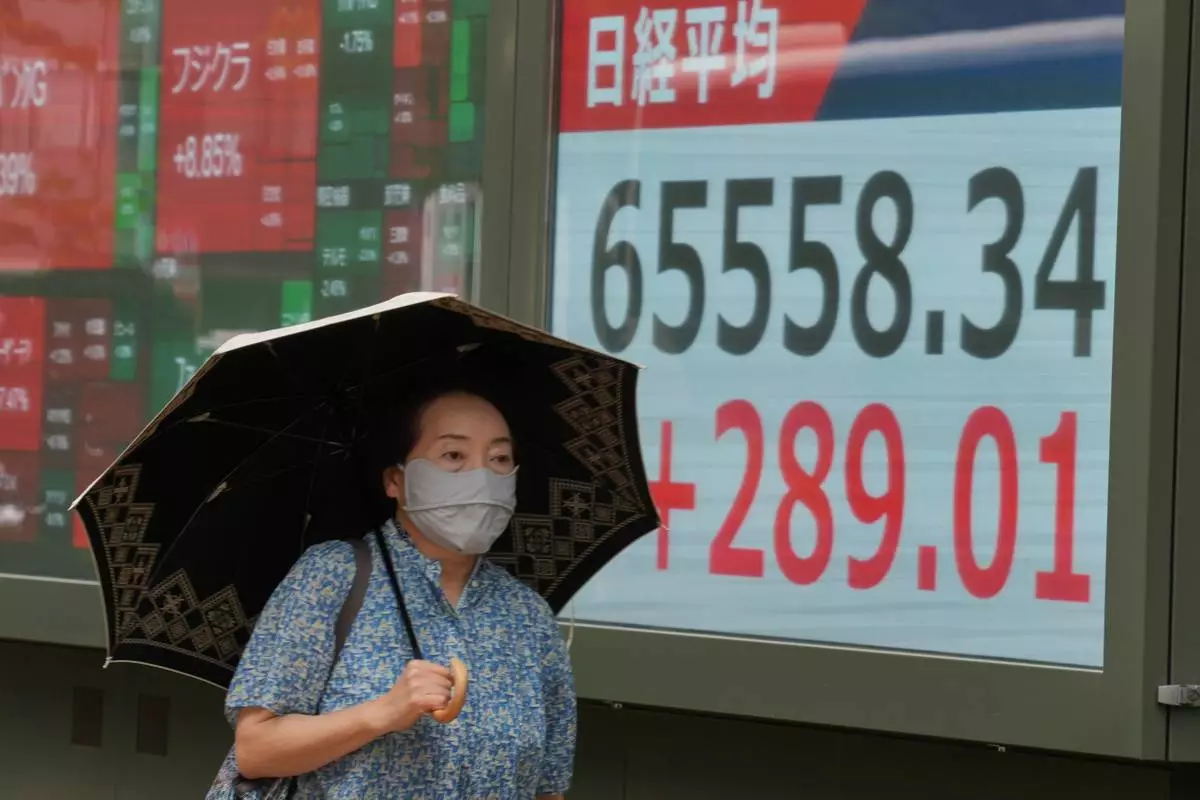
A person walks in front of an electronic stock board showing Japan's Nikkei index at a securities firm Wednesday, Sept. 9, 2026, in Tokyo. (AP Photo/Eugene Hoshiko)
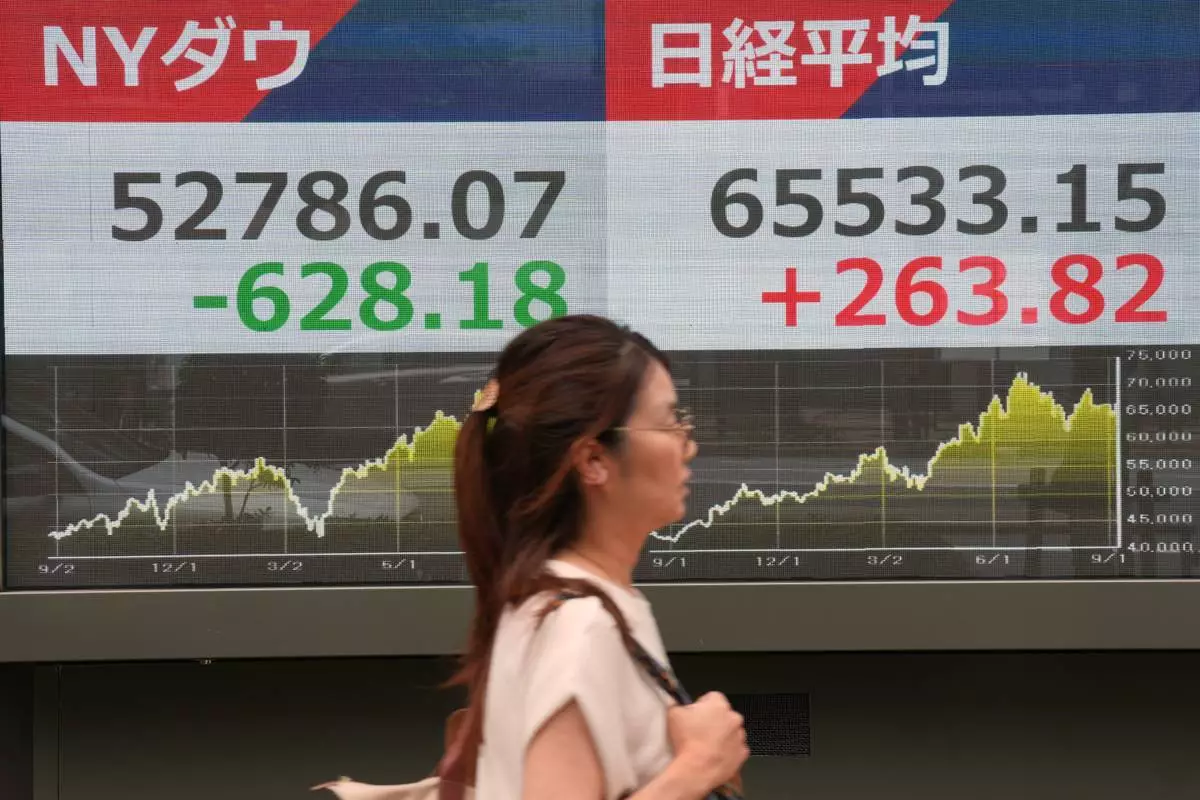
A person walks in front of an electronic stock board showing Japan's Nikkei and New York Dow indexes at a securities firm Wednesday, Sept. 9, 2026, in Tokyo. (AP Photo/Eugene Hoshiko)
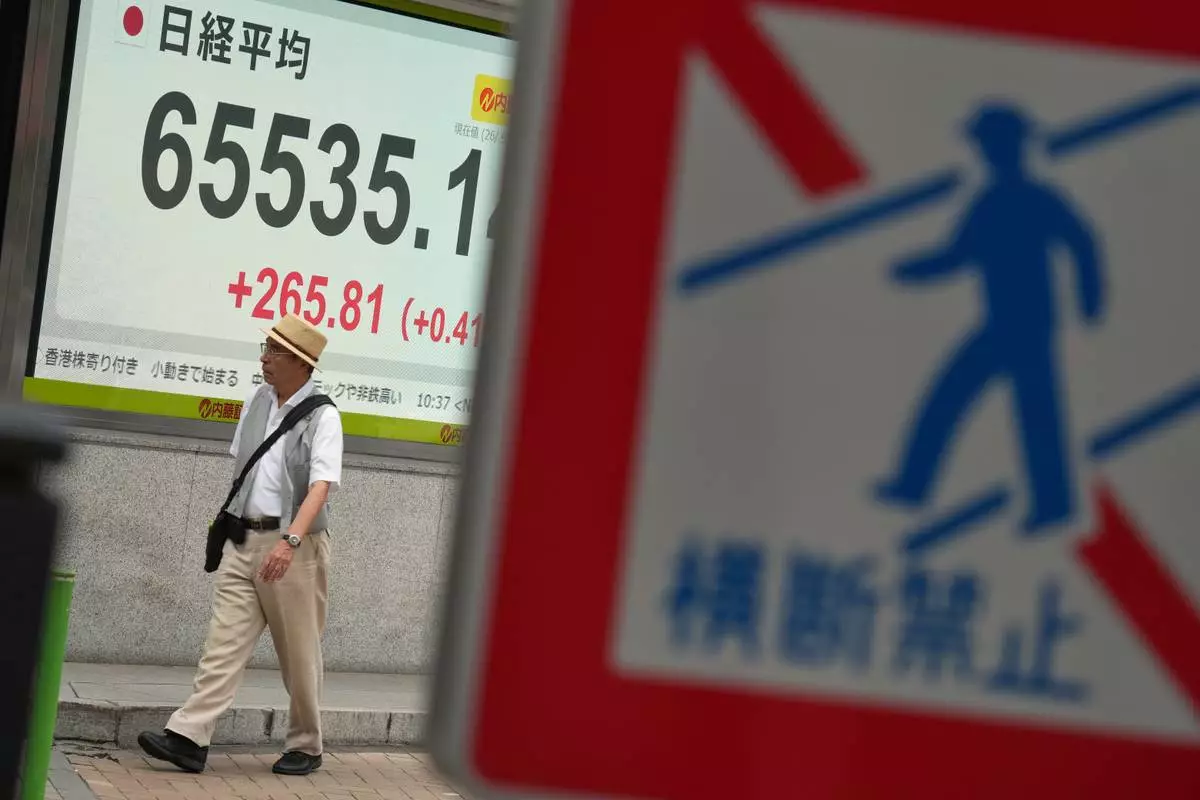
A person walks in front of an electronic stock board showing Japan's Nikkei index at a securities firm Wednesday, Sept. 9, 2026, in Tokyo. (AP Photo/Eugene Hoshiko)