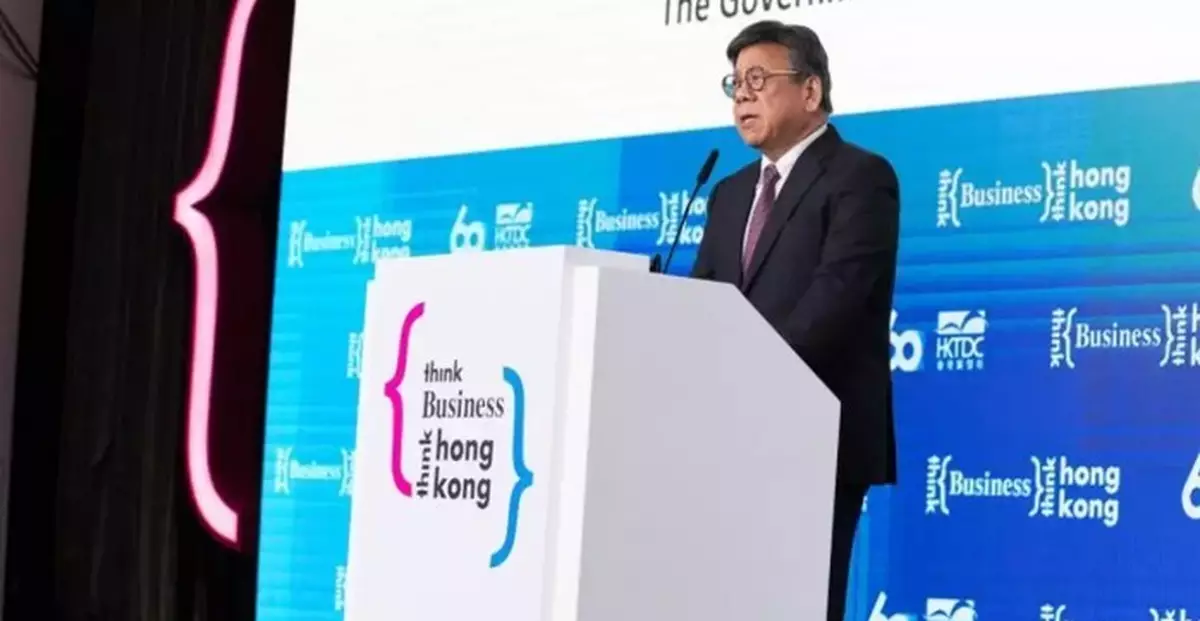
Speech by SCED at 11th Belt and Road Summit Thematic Breakout Session
Following is the speech by the Secretary for Commerce and Economic Development, Mr Algernon Yau, at the 11th Belt and Road Summit Thematic Breakout Session: Chinese Mainland Enterprises Going Global: Driving Mutual Growth Across Belt and Road Economies today (September 10):
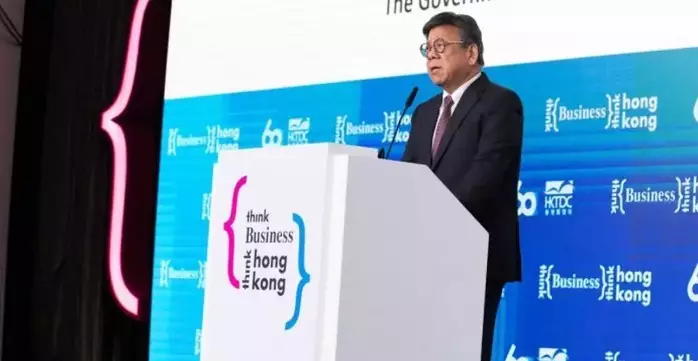
The Secretary for Commerce and Economic Development, Mr Algernon Yau, Photo source: reference image
Distinguished guests, ladies and gentlemen,
Good morning. A very warm welcome to all of you. I hope all of you have made the most of our fruitful programmes on day one. This breakout session is one of the highlights of the Belt and Road Summit this year. For the first time, we have included a new chapter on "go global" in the Belt and Road Summit, which is an opportune time for our industry leaders, enterprise representatives, and professional service experts to share our strengths and insights, as well as forge collaboration with our Chinese Mainland and Belt and Road partners.
Today's session focuses on how Chinese Mainland enterprises can drive mutual growth with Belt and Road economies by leveraging the unique advantages of Hong Kong as a "super connector" and "super value-adder".
In light of the shifting geopolitics, rising trade protectionism and the reshaping of global supply chains, businesses going global is no longer simply an option; it is an increasingly important strategy for Chinese Mainland enterprises to diversify risks, strengthen resilience and pursue new growth opportunities. In fact, according to the latest research by the Hong Kong Trade Development Council (HKTDC), over 90 per cent of Chinese Mainland enterprises are actively pursuing overseas expansion, with a particular focus on Belt and Road markets such as ASEAN (Association of Southeast Asian Nations).
This expanding "go global" trend spans diverse industries, including innovation and technology, green energy, fintech, advanced manufacturing, construction, etc. It also takes many forms, from traditional import-export trade and the optimisation of regional supply chains, to the establishment of production facilities and business operations overseas.
By doing so, "go global" enterprises can bring advanced technologies, investment capital, and quality job opportunities to overseas markets, driving regional economic co-operation and achieving a triple-win outcome for the Chinese Mainland, Hong Kong, and overseas economies. This is a valuable opportunity for the global business community to work together, create shared value and pursue sustainable growth amid ongoing economic uncertainty.
Hong Kong stands as the freest economy, a leading international financial centre, one of Asia's most international cities, and one of the world's most competitive cities. Under the "one country, two systems" principle, we enjoy unparalleled advantages as a "super connector" and a "super value-adder". These include the common law system, the free flow of capital and information, a simple and low tax regime, world-class professional services, and an extensive international business network.
Besides, the rapid development of the Northern Metropolis, which covers about one-third of the total land of Hong Kong, has released new potential and land resources to serve as Hong Kong's new engine for economic growth. It offers significant opportunities for Chinese Mainland enterprises from various sectors, such as innovation and technology, education, transport and logistics, advanced manufacturing and commodity trading, to set up operations in Hong Kong, grow their businesses and obtain professional services to prepare for their global expansion.
All in all, Hong Kong serves as the ideal platform to support Chinese Mainland enterprises throughout their "go global" journey, from setting up business functions such as regional headquarters and corporate treasury centres in Hong Kong, to raising funds, navigating overseas regulations, and forging robust international partnerships.
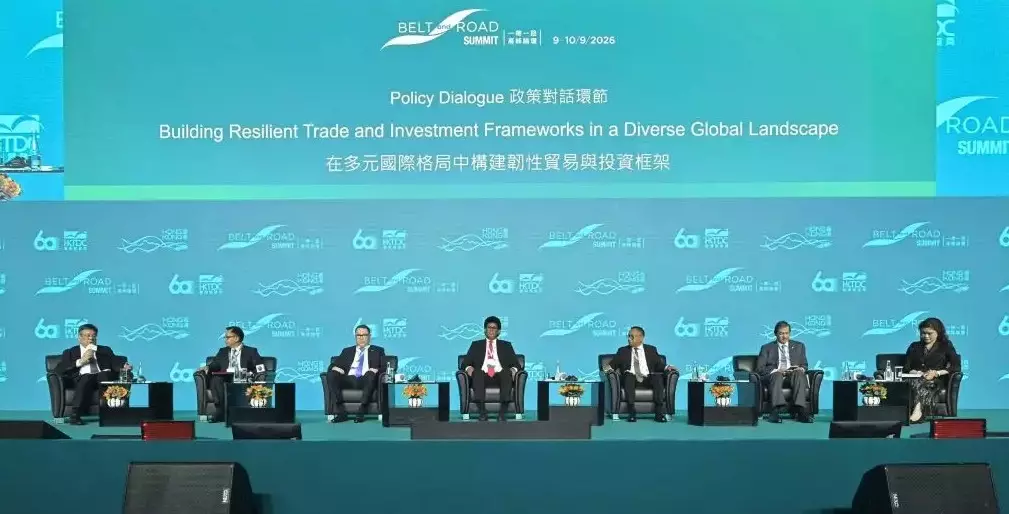
The 11th Belt and Road Summit, Photo source: FB image
To turn this vision into action, I set up the GoGlobal Task Force (Task Force on Supporting Mainland Enterprises in Going Global) last October to provide the Chinese Mainland enterprises with one-stop tailored services. This initiative aligns with the country's 15th Five-Year Plan, which outlines Hong Kong's role in assisting Chinese Mainland enterprises to venture abroad by leveraging our world-class professional services.
The GoGlobal Task Force is proactively supporting Chinese Mainland enterprises through a three-step approach: first, we attract enterprises with strong growth potential to Hong Kong; second, leveraging our strengths in professional services, we help them set up international corporate structures and meet regulatory requirements for seamless international expansion; and finally, we support them in establishing a presence overseas.
Since the establishment of the GoGlobal Task Force, I am proud to say that we have made substantial achievements. We have assisted over 300 Chinese Mainland enterprises in setting up or expanding businesses in Hong Kong; organised more than 20 promotional events and engaged over 5 000 representatives of Chinese Mainland enterprises; and established the GoGlobal Cross-sectoral Professional Services Platform to provide support in eight dedicated areas, including legal, accounting, financial services, marketing and branding, as well as testing and certification.
Thanks to the concerted efforts of GoGlobal Task Force members, relevant professional bodies and industry associations, over 200 service providers have already been listed on this Platform, administrated by the HKTDC. The GoGlobal Task Force will continue to enhance the functions of the Platform and enrich the list of professional service providers to meet the growing business needs of Chinese Mainland enterprises.
Besides, the Chief Executive and I have led two high-level missions to Central Asia and Malaysia earlier this year to help enterprises better understand overseas markets and explore co-operation opportunities. We have successfully catalysed connections and concrete collaboration between Chinese Mainland enterprises and the local business community.
To explore how such collaboration creates a triple-win situation for the Chinese Mainland, overseas markets and Hong Kong, the upcoming panel discussion of this breakout session brings together leading business representatives and experts. I am confident that the discussion will spark new ideas, forge robust partnerships, and uncover exciting opportunities across the Belt and Road region.
Apart from this breakout session, there are many other "go global" elements in this year's Summit. These include a physical GoGlobal Connect Zone in the exhibition area, which illustrates value-added services that can be offered to "go global" enterprises by various professional sectors in Hong Kong, as well as thematic roundtable discussions and business matching meetings for Chinese Mainland enterprises seeking to go global and professional service providers. In addition, the HKTDC will lead a business mission to Nansha, Guangzhou, offering participants first-hand insights into the development and investment opportunities in the Guangdong-Hong Kong-Macao Greater Bay Area.
Going forward, the Hong Kong Special Administrative Region Government will continue to step up its "go global" efforts and strengthen the two-way flow of investment between Belt and Road economies and Hong Kong.
Ladies and gentlemen, I encourage you all to seize today's opportunity to learn more about the "go global" initiative. To benefit from this initiative and other business-friendly policies such as tax incentives and the Northern Metropolis development, I strongly recommend that enterprises from the Chinese Mainland and overseas professional services providers favourably consider establishing a presence in Hong Kong.
I wish you all a highly engaging and successful discussion. Before you leave Hong Kong, please make sure that you have spared time to explore our city's delicious cuisine, diverse East-meets-West culture, and magnificent countryside landscapes, and make your visit truly memorable. Thank you.
The 11th Belt and Road Summit, Photo source: beltandroadsummit.com