Skip to Content Facebook Feature Image

Experian Launches AI-Enabled Decisioning Platform Bringing Real-Time Underwriting and Cash Flow Intelligence to its Consumer Marketplace

Business

Experian Launches AI-Enabled Decisioning Platform Bringing Real-Time Underwriting and Cash Flow Intelligence to its Consumer Marketplace
Business

Business

Experian Launches AI-Enabled Decisioning Platform Bringing Real-Time Underwriting and Cash Flow Intelligence to its Consumer Marketplace

2026-09-10 18:00 Last Updated At:18:10

COSTA MESA, Calif.--(BUSINESS WIRE)--Sep 10, 2026--

As lenders increasingly seek more personalized ways to evaluate consumers and expand access to credit, Experian ® has rolled out Experian Activate™, an AI-enabled decisioning engine powering the Experian Marketplace, a leading consumer comparison-shopping platform for credit cards ii, personal loans iii and auto insurance iv.

This press release features multimedia. View the full release here: https://www.businesswire.com/news/home/20260910764684/en/

Designed to help connect Experian's more than 90 million members with offers they're more likely to qualify for, Experian Activate is the only platform that brings together credit data, advanced analytics, AI capabilities, consumer-permissioned financial information, including cash flow insights, and lender-specific underwriting criteria to power more personalized credit decisioning and offer matching. The platform helps lenders reach qualified consumers more efficiently while helping consumers discover financial products that better match their current needs and financial circumstances.

Experian Activate represents the next evolution of Experian's AI-powered marketplace capabilities, combining real-time decisioning, advanced analytics and consumer-permissioned data to create a more intelligent and personalized lending experience for consumers and lenders alike.

AI-Powered Decisioning for More Personalized Lending

Unlike traditional marketplaces that rely on pre-screened lists or periodically refreshed data, Experian Activate evaluates consumers using real-time information when they are actively shopping for credit. This enables lenders to make more informed decisions and helps consumers receive offers that reflect their current financial situation.

The same real-time credit intelligence that powers Experian Marketplace also extends to third-party experiences such as ChatGPT. As a result, consumers receive relevant financial recommendations across platforms, and lenders can reach qualified borrowers wherever they are searching for financial products.

"Experian Activate brings together the full power of Experian's data, analytics, marketplace reach and AI capabilities to create a more intelligent lending experience," said Rakesh Patel, Executive Vice President, Experian Marketplace at Experian. "We're uniquely positioned to help lenders make better decisions with greater confidence while helping consumers discover financial opportunities that are more personalized and relevant to their needs. It's another example of how Experian is using AI and innovating to create better outcomes across the financial ecosystem."

Expanding Credit Decisions with Cash Flow Insights

As part of the rollout, Experian has expanded the use of cash flow insights by integrating Experian Cashflow Attributes ™ into Experian Marketplace. Participating lenders can incorporate consumer-permissioned cash flow data and Experian's proprietary analytics alongside traditional credit information to gain a more complete view of a consumer's financial health and create additional pathways to credit access.

Through a single connection, consumers can securely connect their bank accounts allowing Experian to generate cash flow insights while also strengthening their Experian credit profile through Experian Boost®v, the one-of-a-kind feature that allows consumers to directly add bill payment history to their Experian credit file. When consumers choose to connect their accounts, cash flow insights can be incorporated into the credit decisioning process during the same session, enabling lenders to evaluate a broader financial picture and potentially present more relevant offers to more consumers, immediately.

"Cash flow data is transforming how we understand consumer behavior, assess risk and open doors for consumers who have been historically left out of the mainstream financial ecosystem," said Ashley Knight, Senior Vice President of Product Management, Financial Services and Data at Experian. "By bringing consumer permissioned cash flow insights directly into the Experian Marketplace experience, we're helping lenders extend more competitive offers to more consumers while creating a more seamless experience for people shopping for financial products that best meet their needs."

Accelerating Financial Inclusion Through Data Innovation

The launch of Experian Activate reflects Experian's broader commitment to using AI and responsible data innovation to expand access to financial opportunities and help consumers make more informed financial decisions.

By incorporating cash flow insights and consumer-permissioned financial data alongside traditional credit information, Experian Activate helps lenders evaluate consumers more holistically and identify opportunities that might otherwise be overlooked. The result is a marketplace that helps lenders reach more qualified borrowers while helping consumers discover financial opportunities they may have previously missed.

Research shows consumers see the value of providing financial data, with 60% of consumers who’ve previously been denied credit or received less favorable loan terms than expected believing the outcome would have been different if lenders had considered their recent income and banking activity alongside their credit history vi.

Together, AI-powered decisioning, real-time data and consumer-permissioned financial insights are helping create a more personalized, accessible and inclusive marketplace for credit.

About Experian

Experian is a global data and technology company, powering opportunities for people and businesses around the world. We help redefine lending practices, uncover and prevent fraud, simplify healthcare, deliver digital marketing solutions and gain deeper insights into the automotive market through our unique combination of data, analytics and platforms. We also help millions of people realize their financial goals and save time and money.

We operate across a range of markets, including financial services, healthcare, automotive, agrifinance, insurance and many other industry segments.

We invest in talented people and advanced technologies to unlock the power of data and drive innovation. A FTSE 100 company listed on the London Stock Exchange (EXPN), Experian employs approximately 25,200 people across 33 countries. Our corporate headquarters are in Dublin, Ireland. Learn more at experianplc.com.

 

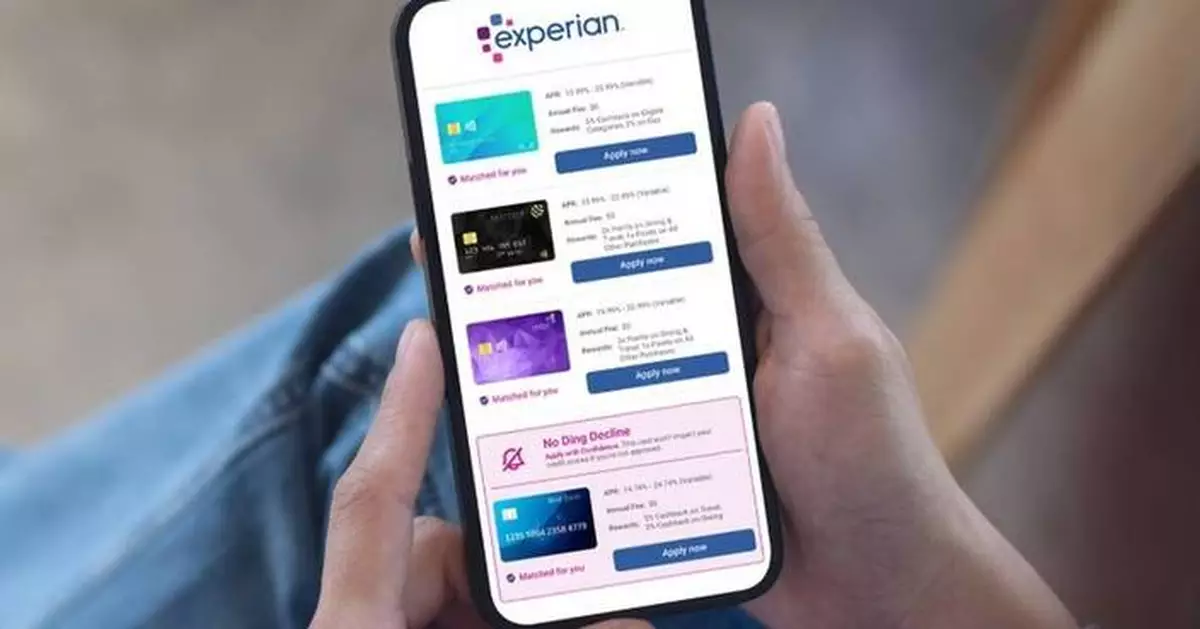
Experian Activate™ brings real-time lender defined underwriting criteria to Experian Marketplace, its consumer comparison-shopping platform for credit cards, personal loans and auto insurance.
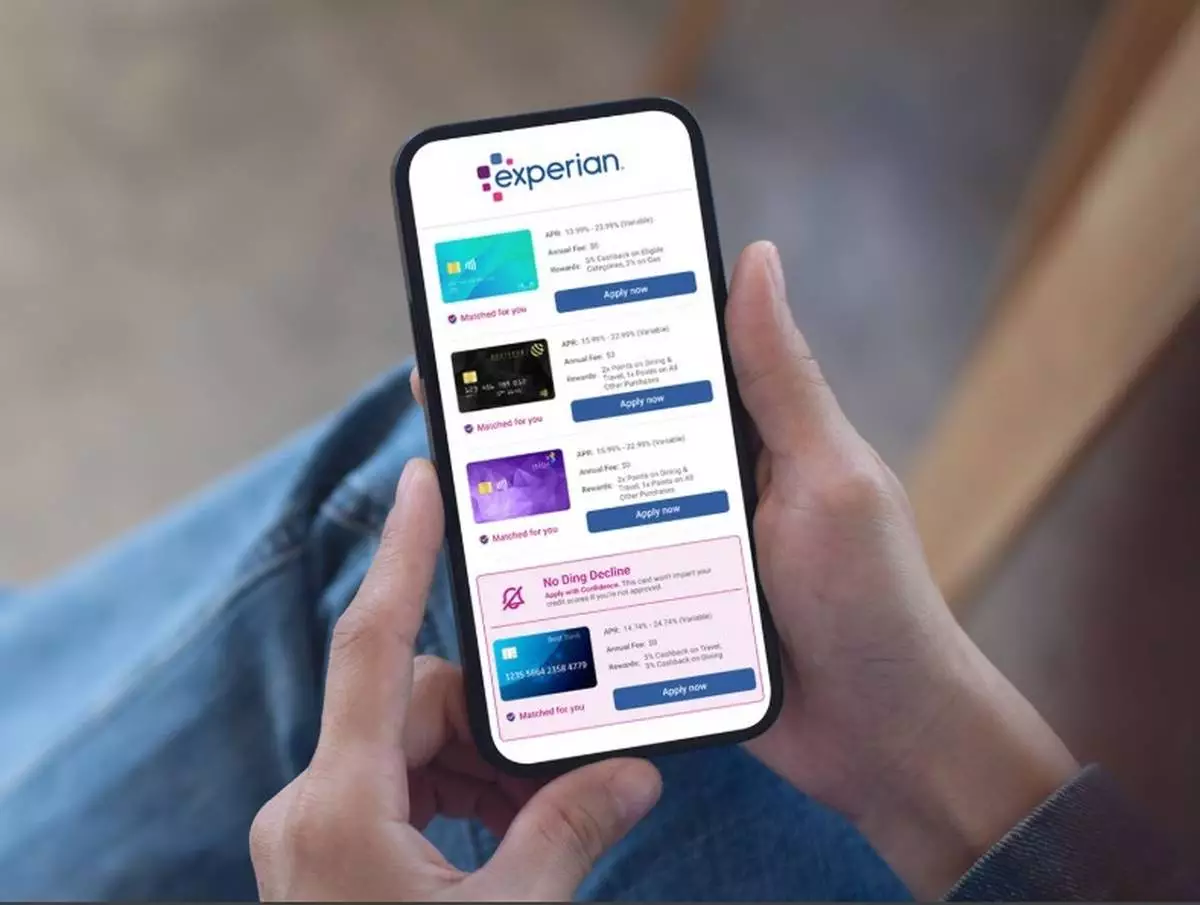
Experian Activate™ brings real-time lender defined underwriting criteria to Experian Marketplace, its consumer comparison-shopping platform for credit cards, personal loans and auto insurance.


Experian Activate™ brings real-time lender defined underwriting criteria to Experian Marketplace, its consumer comparison-shopping platform for credit cards, personal loans and auto insurance.
Experian Activate™ brings real-time lender defined underwriting criteria to Experian Marketplace, its consumer comparison-shopping platform for credit cards, personal loans and auto insurance.

PARIS (AP) — At a museum in eastern France, two men disguised with wigs used a sledgehammer and a hammer to smash a display case and make off with a 2,500-year-old gold necklace. The heist took under four minutes.

In a smash-and-grab at another French museum, three masked robbers stole 27 pieces of jewelry valued at more than 4.5 million euros (US$5.2 million), busting through two doors to break in.

Those thefts took place in July. This week, thieves sliced through a fence and climbed through the window of a museum on the French Riviera and fled with two paintings by Pierre-Auguste Renoir. They abandoned two other artworks by the Impressionist master as they made their escape.

The rash of the robberies, coming on the heels of last year's stunning jewel heist in France's most famous and most visited museum, the Louvre, show how the country is both blessed and cursed by its troves of treasure accumulated over centuries of conquest, creativity and having money to spend on art.

France's passion for paintings, sculptures, ancient artifacts and other valuables and curios is a source of national pride and identity. Thousands of museums that house collections big and small help transmit France's love of culture and history from one generation to the next. The biggest also draw millions of tourists who pump money into the French economy.

But keeping all that wealth safe is costly and difficult. Criminals see museums as soft targets. The brazen and agonizing theft of 88 million euros ($102 million) worth of crown jewels from display cases in the Louvre's Apollo gallery served as a wake-up call. But it was only the most shocking example of broader threats to museums, and not just in France.

“When the jewels of a French king disappear, to be melted down because of the price of gold, it is tragic. It breaks everyone’s heart,” said Guillaume Poitrinal, president of a foundation that funds the renovation and protection of French cultural sites, the Fondation du patrimoine.

“We need to make it more difficult to steal works of art and objects that are part of France’s cultural heritage and belong to all French people. That is absolutely essential. And to achieve that, we need to invest,” he said in an interview with The Associated Press.

Before dawn Tuesday, two robbers made off with “Portrait of Madame Colonna Romano” and “Young Woman at the Well.” They dropped ’’Portrait of Madame Pichon” and “Coco Reading” as they fled through the garden of the Renoir Museum in Cagnes-sur-Mer.

They cut through a fence with an electric knife or saw and entered the museum through the ground floor, said Bryan Masson, mayor of the town between Cannes and Nice on the Mediterranean coast.

The heist took under three minutes. Masson estimated the artworks' value at 9 million euros ($10.5 million). Offloading well-known, stolen art is impossible through legitimate channels, so the paintings could prove to be worth little or nothing for the thieves.

European police agency Europol says museum heists are becoming more violent, with sledgehammers, axes, crowbars and even explosives used for break-ins and to smash display cases.

Thieves also are increasingly targeting museum items with gold and other precious metals that can be melted down and with gemstones that can be removed and sold, the agency said in a report in August. Criminals believe “museum security measures are less robust than those in jewelry stores,” it said.

The ancient necklace stolen July 24 from the museum in Châtillon-sur-Seine, eastern France, was crafted from nearly half a kilo (a pound) of gold.

A record 10 burglaries targeted French and other European museums this summer, according to Jean-Christophe Castelain, director of Le Journal des Arts, a bimonthly revue of the art world.

“Eight of those 10 involved jewelry, coins or antique objects that can easily be melted down,” he said.

The Lalique Museum in Wingen-sur-Moder, further east near France's border with Germany, has not reopened since the July 5 theft of jewelry there from six display cases busted open with sledgehammers and hammers. The public museum celebrates 19th-century jeweler and glassmaker René Lalique and his successors.

The pain is still raw for its director, Véronique Brumm Schaich. Her voice cracked with emotion during an interview. The museum is seeking 200,000 euros ($233,000) for security upgrades.

“Robbers’ tactics are evolving,” she said. “The recent examples show that we are not the only ones who need to go further in our efforts.”

Because of government budget squeezes, it's not yet clear how much funding will come from public coffers, she said. The museum is also collecting private donations, because “these are things that are extremely expensive,” she said.

“These are difficult times,” she said. “A burglary never comes at a good time, but this one came at an especially bad time.”

Some of the funding that the Fondation du patrimoine provides, including for museums, comes from a national lottery. To help boost museum revenues, the foundation is also launching a pass that will grant subscribers access to 500 museums, monuments and châteaux.

“France is a country where we love passing the buck,” said Poitrinal, the foundation president. “People say it is the state’s responsibility or the city’s responsibility. I say it's quite simple: it is everyone’s responsibility.”

Associated Press journalists Catherine Gaschka and Alex Turnbull in Paris contributed.

FILE - A person photographs Leonardo da Vinci's painting Mona Lisa at the Louvre museum, Aug. 31, 2025, in Paris. (AP Photo/Julia Demaree Nikhinson, file)

FILE - A person photographs Leonardo da Vinci's painting Mona Lisa at the Louvre museum, Aug. 31, 2025, in Paris. (AP Photo/Julia Demaree Nikhinson, file)

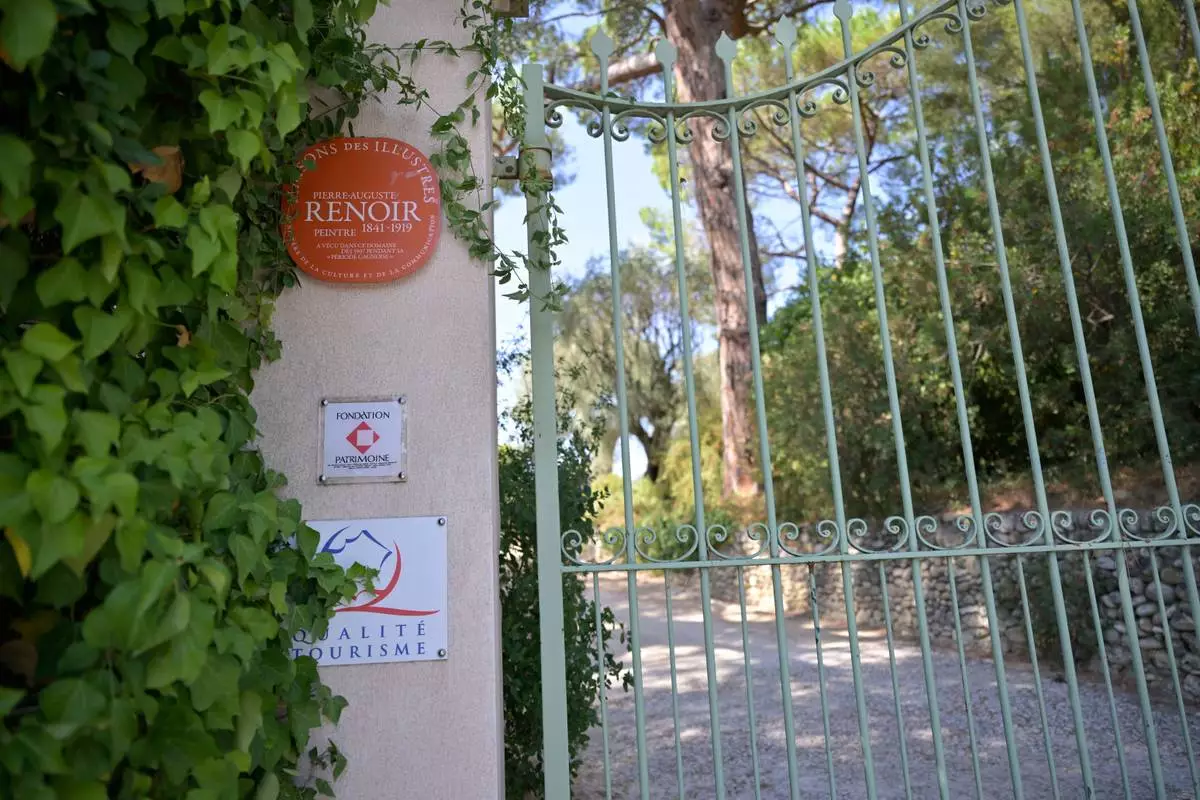
The entrance of the Renoir Museum is pictured after thieves stole four valuable Renoir paintings, in Cagnes-sur-Mer, Tuesday, Sept. 8, 2026. (AP Photo/Philippe Magoni)

The entrance of the Renoir Museum is pictured after thieves stole four valuable Renoir paintings, in Cagnes-sur-Mer, Tuesday, Sept. 8, 2026. (AP Photo/Philippe Magoni)

The Renoir Museum is pictured after thieves stole four valuable Renoir paintings, in Cagnes-sur-Mer, Tuesday, Sept. 8, 2026. (AP Photo/Philippe Magoni)

The Renoir Museum is pictured after thieves stole four valuable Renoir paintings, in Cagnes-sur-Mer, Tuesday, Sept. 8, 2026. (AP Photo/Philippe Magoni)

Recommended Articles