WASHINGTON (AP) — Twenty-five years later, the attacks on Sept. 11, 2001, are still remembered as among the most important historic events in many Americans’ lives, according to a new poll.
A new Ipsos poll finds that about half of U.S. adults name the 9/11 attacks in an open-ended question about the most important historic occurrences in their lifetimes. That's despite other momentous events that have happened since then, including the COVID-19 pandemic and the elections of Presidents Barack Obama and Donald Trump.
The polling points to the enduring legacy of 9/11, even as many Americans today are too young to have experienced or comprehended the event a quarter century ago. Ipsos found that the vast majority of Americans remember where they were when they heard about the attacks, and about two-thirds of Americans say it impacted the country “a great deal.” Separate polling from Gallup finds about 3 in 10 U.S. adults say they permanently changed the way they live their lives because of the attacks.
Despite the widespread impact, the Ipsos poll finds relatively few Americans will be marking the anniversary in some way. Only about 1 in 10 U.S. adults plans to do something to commemorate Friday's 25th anniversary of the Sept. 11 attacks.
Kevin Noel, 51, remembers watching the catastrophe unfold after he got out of a subway station to head to work near the World Trade Center that morning. To this day, the smell of the deadly inferno comes back to him whenever he’s in the area. He views 9/11 as the most historic event he’s lived through and believes “we’re going to be remembering this for the rest of history.” He plans to reflect on it privately on Friday.
“Every Sept. 11, I just — it’s a traumatic day for me where I just go silent,” Noel said.
For Americans who can remember the Sept. 11 attacks, they were a defining moment.
When U.S. adults were asked to list up to five of the most important historic events in their lifetime in the open-ended question -- where respondents answered in their own words -- the Sept. 11 attacks overshadowed the much more recent COVID-19 pandemic, which 31% of U.S. adults mentioned.
Other events, including the elections of Trump and Obama, space expeditions and the fall of the Berlin Wall, were cited by many Americans as defining moments. For Americans 65 and older, the most frequently mentioned events were the Sept. 11 attacks, followed by President John F. Kennedy’s assassination, space expeditions and the Vietnam War.
Clara Kiel, 88, says World War II had more impact on her life personally, as it hung over her childhood and she knew people who served. But she recalls the shock of watching 9/11 happen on TV from her living room. She also plans to take a moment to reflect privately on the 25th anniversary.
“It always seems like there’s something in history that changes the way people think," said Kiel, a retired secretary in Onamia, Minnesota. “9/11 did it for the generation that grew up through that.”
For younger Americans under 35, COVID-19 is more prominent. About half of U.S. adults under 35 say the pandemic was among the most impactful events of their lifetime, while about one-third mention 9/11. A significant share of younger adults were not born when the attacks happened, or were too young to remember where they were at the time.
About 6 in 10 adults who were born after the attacks say they first learned about 9/11 in a class or through schoolwork, according to a Pew Research Center poll conducted in August.
Kainoa Ilac, an 18-year-old in California, learned about the attacks from his parents, who are history teachers.
“I think that I and a lot of my peers in my generation still feel the effects of that day,” from airport security to awareness of the government’s ability to monitor communications, he said.
About 9 in 10 Americans say the attacks on Sept. 11 impacted the United States “a great deal” or “quite a bit,” according to Ipsos. Roughly 7 in 10 say it had at least “quite a bit” of impact on the world, and about 6 in 10 say it had a significant impact on their generation. Closer to 3 in 10 say it impacted their family or them personally.
Americans ages 50 and older are especially likely to say the attacks affected them personally.
Among the roughly 1 in 10 Americans who plan to mark the day, about 7 in 10 say they will participate in a moment of silence, and most, 56%, will display an American flag.
Lakesha Crowell remembers 9/11 in detail, including where she was sitting in her sophomore world history class in Meridian, Mississippi, when the teacher disclosed that two planes had hit New York’s World Trade Center. She recalls the security changes, the economic fallout, the way some people around her began looking differently upon foreigners, and the sense of vigilance at both individual and national levels.
“It affected us a lot, because it changed our way of living, and it changed our way of thinking,” said Crowell, 40.
Americans are divided on whether the country has become safer from foreign attacks since 9/11.
The Ipsos poll found about one-third of U.S. adults say the country is “more safe,” and a similar share say it is “less safe.” The remaining one-third, roughly, say the U.S. is about as safe as it was before the attacks.
Republicans are more likely than Democrats to say the country has become safer.
Recent Gallup polling found most U.S. adults, 55%, have “a great deal” or “a fair amount” of confidence in the U.S. government to protect its citizens from future acts of terrorism. That faith was at its highest, 88%, in polling conducted in the days after the 9/11 attack. It has ticked down over the 25-year trend, but the most recent measure is among the lowest recorded, similar to a poll conducted just after a deadly 2015 mass shooting in southern California.
Additionally, about one-third say they are “very” or “somewhat” worried that they or someone in their family will become a victim of terrorism. That’s down from about 6 in 10 who said that in the days following Sept. 11, 2001.
David Bronkhurst, a 49-year-old in Bloomingdale, New Jersey, recalls that after the attacks, his then-partner volunteered at the World Trade Center disaster site, handing out supplies to rescue and recovery workers, and some friends changed career paths to join the fire department. Other friends on the city’s police force died from cancers after they were exposed to toxins from the ash and dust at ground zero, he said.
He plans to attend an annual candlelight procession from a neighboring town to his own.
Bronkhurst doesn’t consider the country safer now than it was before the attacks — but he doesn’t worry too much that terrorism might strike him or his family. “You can’t go through life being scared," he said.
Peltz reported from New York.
The Ipsos poll of 1,013 adults was conducted Aug. 21-23 using a sample drawn from Ipsos's probability-based KnowledgePanel, which is designed to be representative of the U.S. population. The margin of sampling error for adults overall is plus or minus 3.5 percentage points.
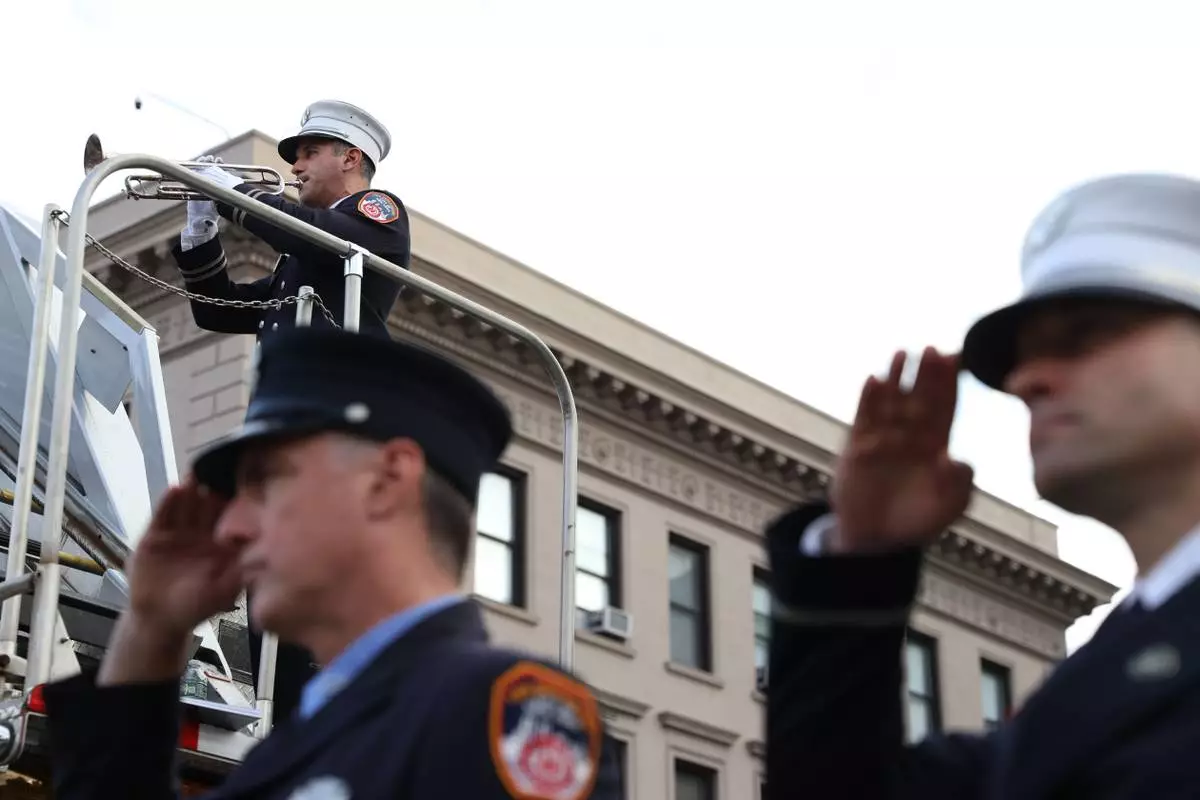
Members of the FDNY salute during a memorial to commemorate the 25th anniversary of the 9/11 attacks, Wednesday, Sept. 9, 2026, in the Staten Island borough of New York. (AP Photo/Pamela Smith)
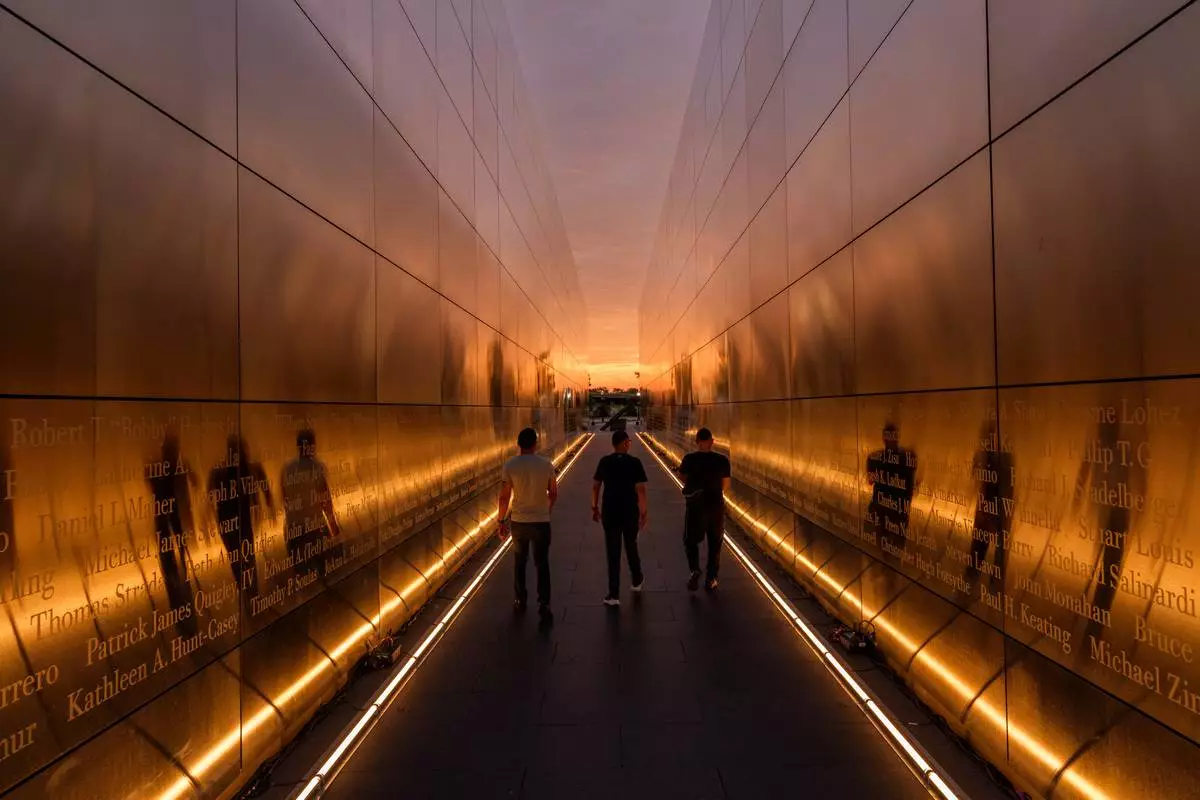
People walk through the Empty Sky 9/11 Memorial at sunset, Wednesday, Sept.9, 2026, in Jersey City, NJ. (AP Photo/Adam Gray)
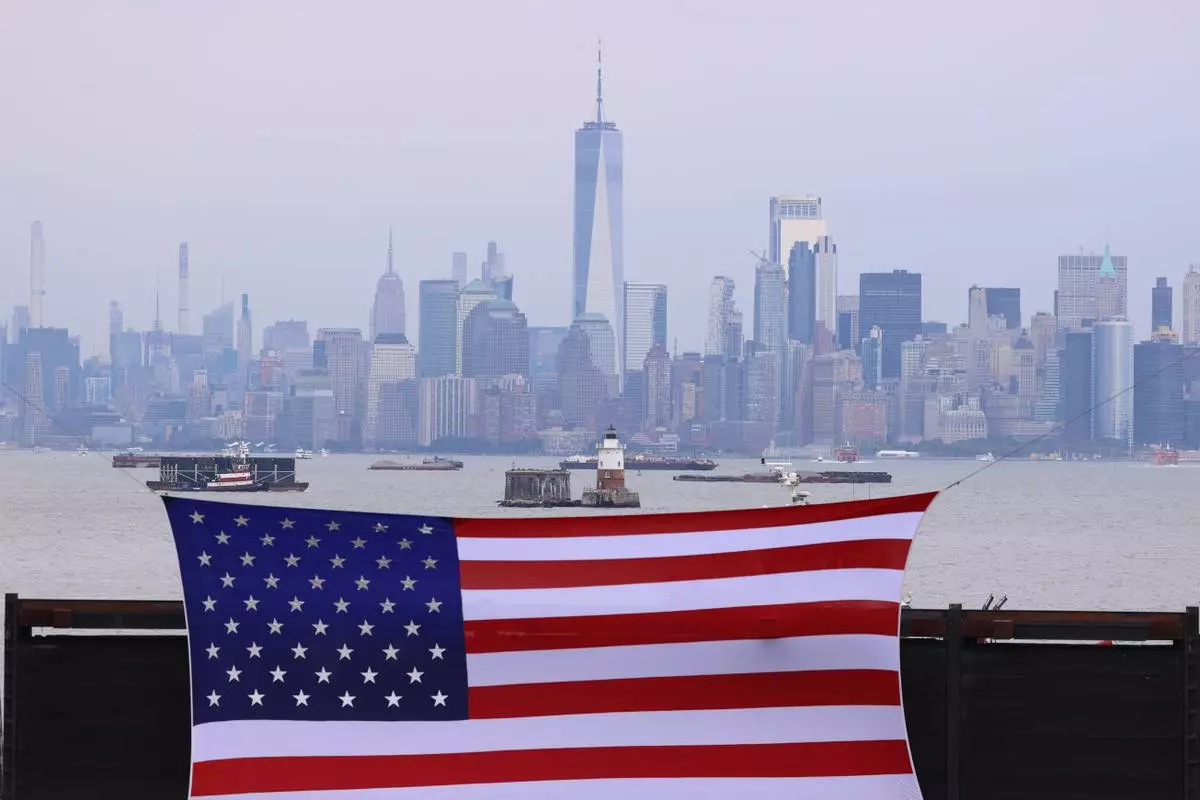
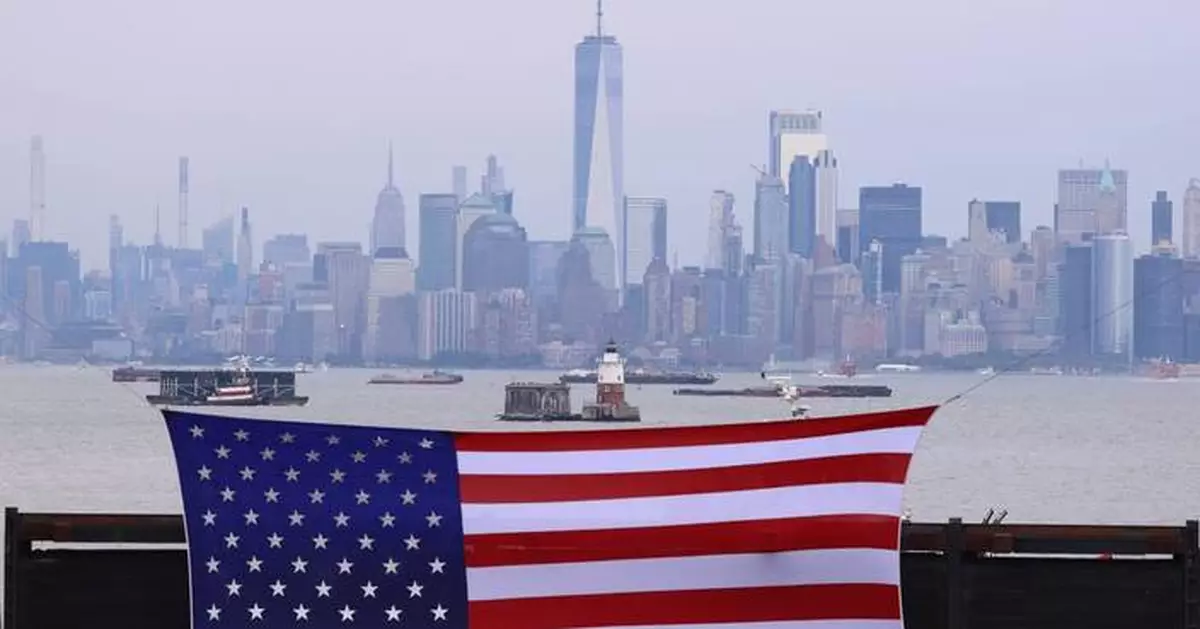
A general view of the New York skyline during an FDNY memorial to commemorate the 25th anniversary of the 9/11 attacks, Wednesday, Sept. 9, 2026, in the Staten Island borough of New York. (AP Photo/Pamela Smith)