Skip to Content Facebook Feature Image

Work to save the Afghan capital’s crumbling ancient fortress uncovers archaeological treasures

News

Work to save the Afghan capital’s crumbling ancient fortress uncovers archaeological treasures
News

News

Work to save the Afghan capital’s crumbling ancient fortress uncovers archaeological treasures

2026-11-09 15:24 Last Updated At:15:30

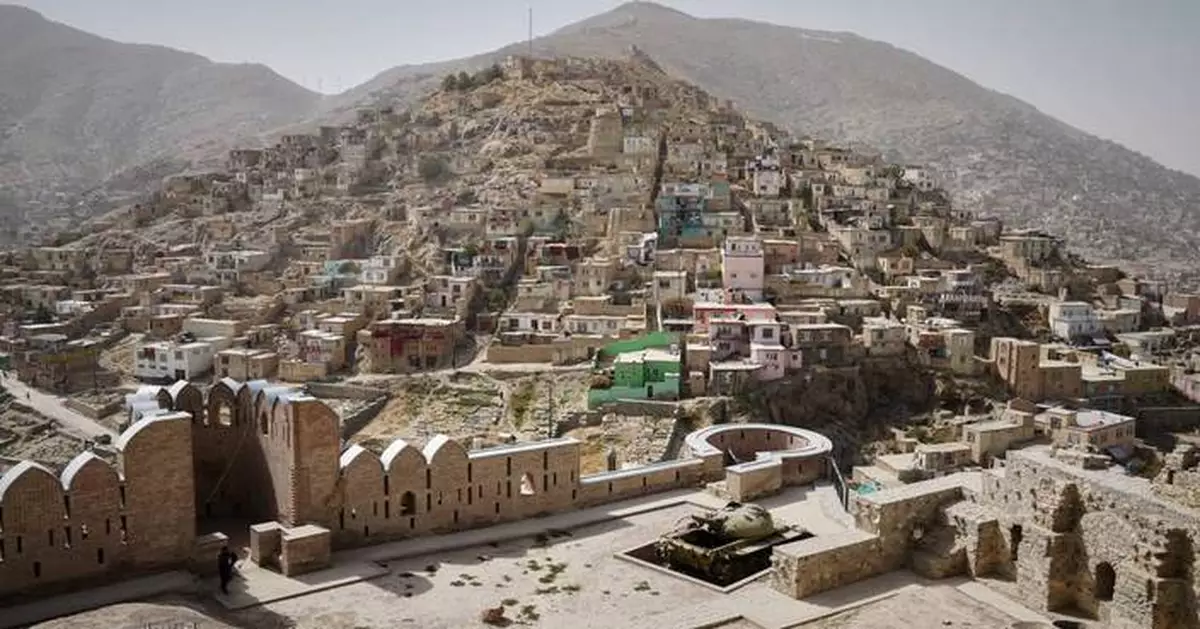
KABUL, Afghanistan (AP) — Perched high above the southern edge of Kabul’s old city, the imposing fortress of Bala Hissar has endured centuries of invasions, uprisings and conflict that scarred Afghanistan and left the citadel crumbling.

Now, an extensive, yearslong project by the Aga Khan Trust for Culture, or AKTC, is painstakingly conserving Bala Hissar. The aim is to turn the site into a public archaeological park, complete with landscaped gardens, restaurants and a museum.

More Images
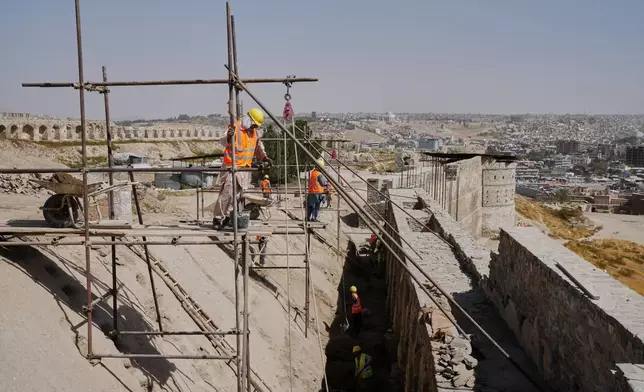
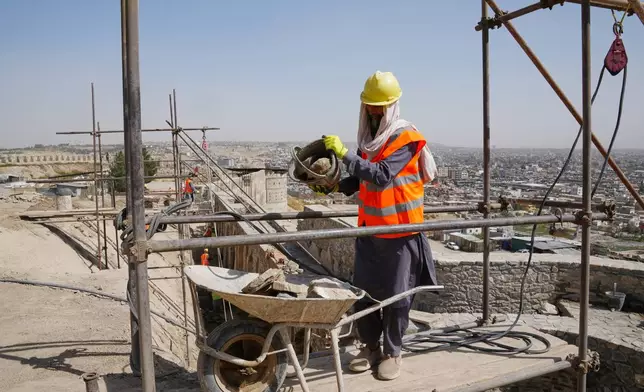
Workers carry out restoration work at the historic Bala Hissar fortress in Kabul, Afghanistan, Thursday, Oct. 8, 2026. (AP Photo/Siddiqullah Alizai)
Workers carry out restoration work at the historic Bala Hissar fortress in Kabul, Afghanistan, Thursday, Oct. 8, 2026. (AP Photo/Siddiqullah Alizai)

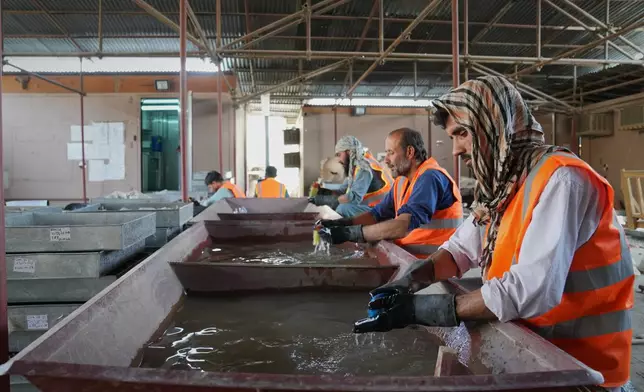
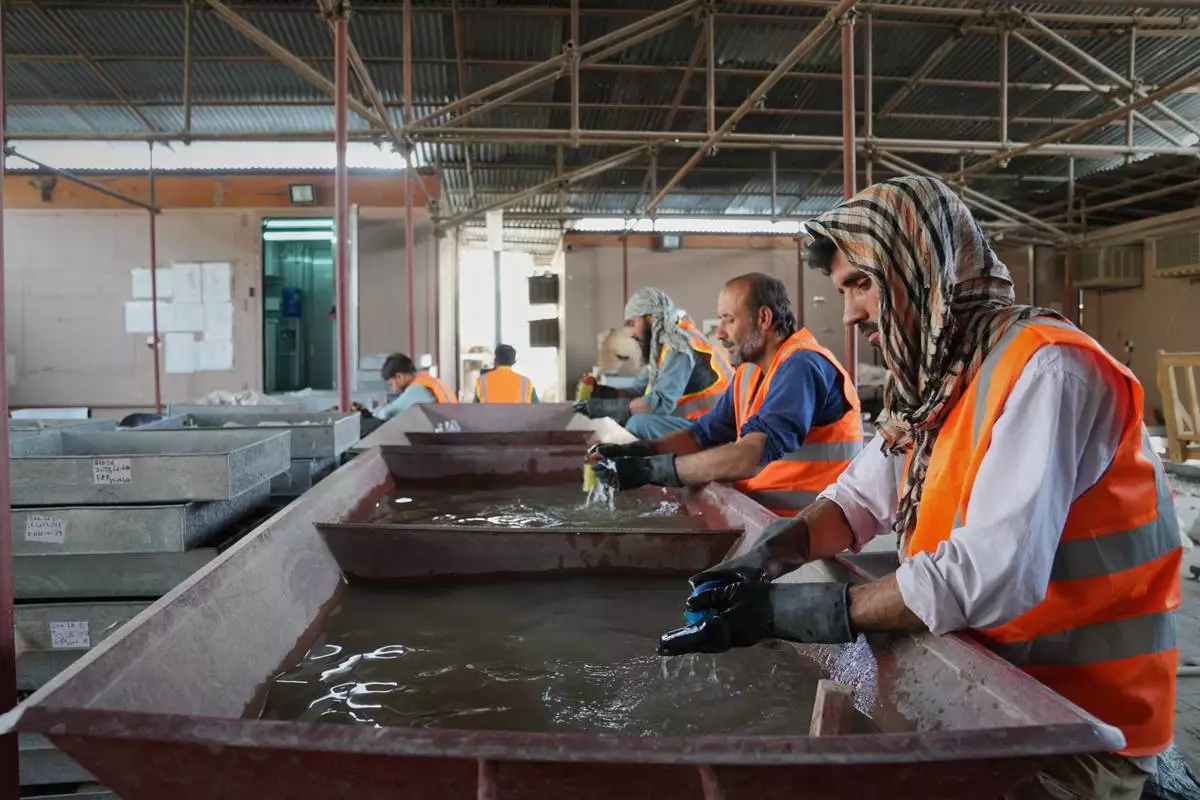
Workers wash artifacts from the historic Bala Hissar fortress compound during restoration work in Kabul, Afghanistan, Thursday, Oct. 8, 2026. (AP Photo/Siddiqullah Alizai)
Workers wash artifacts from the historic Bala Hissar fortress compound during restoration work in Kabul, Afghanistan, Thursday, Oct. 8, 2026. (AP Photo/Siddiqullah Alizai)

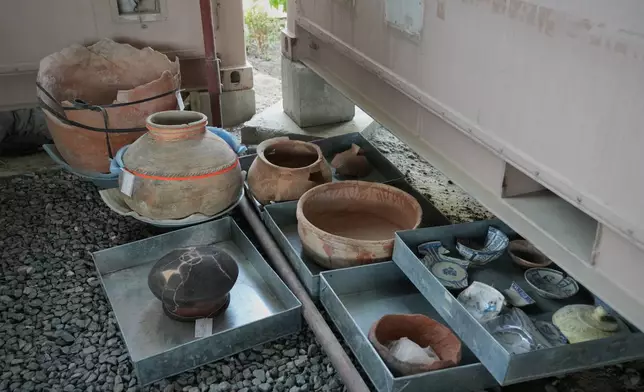
Pottery and other artifacts from the historic Bala Hissar fortress compound are arranged in trays during restoration work at the site in Kabul, Afghanistan, Thursday, Oct. 8, 2026. (AP Photo/Siddiqullah Alizai)
Pottery and other artifacts from the historic Bala Hissar fortress compound are arranged in trays during restoration work at the site in Kabul, Afghanistan, Thursday, Oct. 8, 2026. (AP Photo/Siddiqullah Alizai)

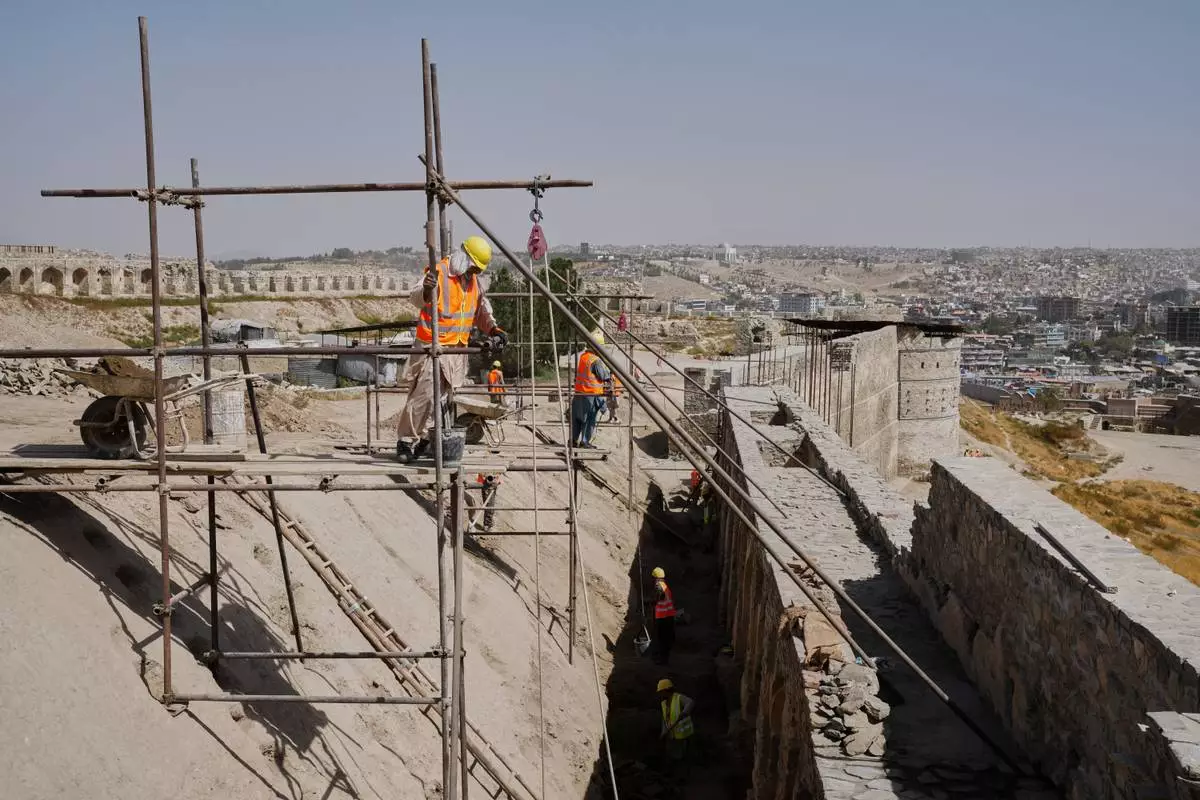
Workers carry out restoration work at the historic Bala Hissar fortress in Kabul, Afghanistan, Thursday, Oct. 8, 2026. (AP Photo/Siddiqullah Alizai)
Workers carry out restoration work at the historic Bala Hissar fortress in Kabul, Afghanistan, Thursday, Oct. 8, 2026. (AP Photo/Siddiqullah Alizai)

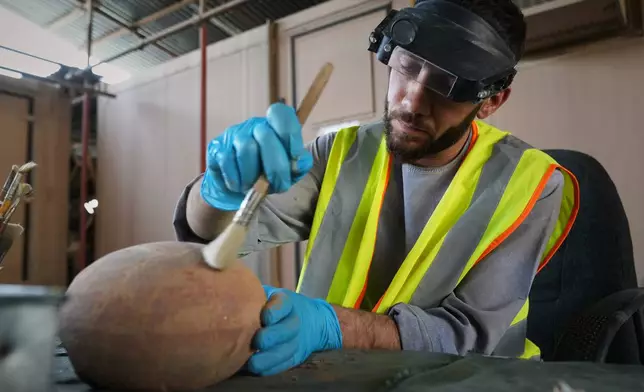
A worker uses a brush to clean a pottery vessel from the historic Bala Hissar fortress compound during restoration work in Kabul, Afghanistan, Thursday, Oct. 8, 2026. (AP Photo/Siddiqullah Alizai)
A worker uses a brush to clean a pottery vessel from the historic Bala Hissar fortress compound during restoration work in Kabul, Afghanistan, Thursday, Oct. 8, 2026. (AP Photo/Siddiqullah Alizai)

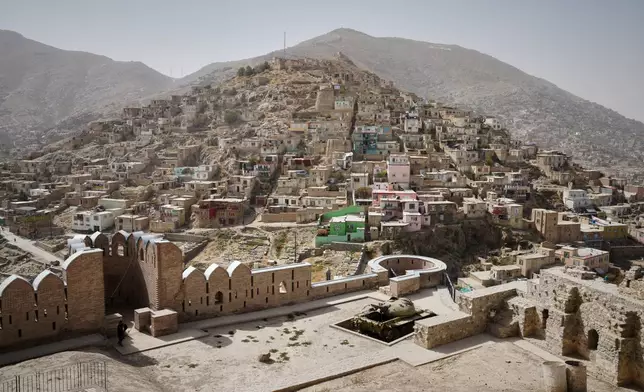
A view of the historic Bala Hissar fortress as it undergoes restoration, with a hillside neighborhood in the background, in Kabul, Afghanistan, Thursday, Oct. 8, 2026. (AP Photo/Siddiqullah Alizai)

A view of the historic Bala Hissar fortress as it undergoes restoration, with a hillside neighborhood in the background, in Kabul, Afghanistan, Thursday, Oct. 8, 2026. (AP Photo/Siddiqullah Alizai)

Despite decades of neglect and war, archaeological treasures gradually unearthed within the walls of the strategic fortress in the Afghan capital are revealing more than two millennia of the country’s tumultuous history.

The excavations are uncovering an astonishing wealth of finds, from evidence of ancient human habitation to the remains of a Buddhist monastery and the luxurious baths of a Mughal palace.

“We never thought we would find so much,” said archaeologist Babak Rafiei-Alavi, standing at one of Bala Hissar’s excavation sites as workers with trowels painstakingly sifted through the earth. “It’s like a submarine coming out of the ocean.”

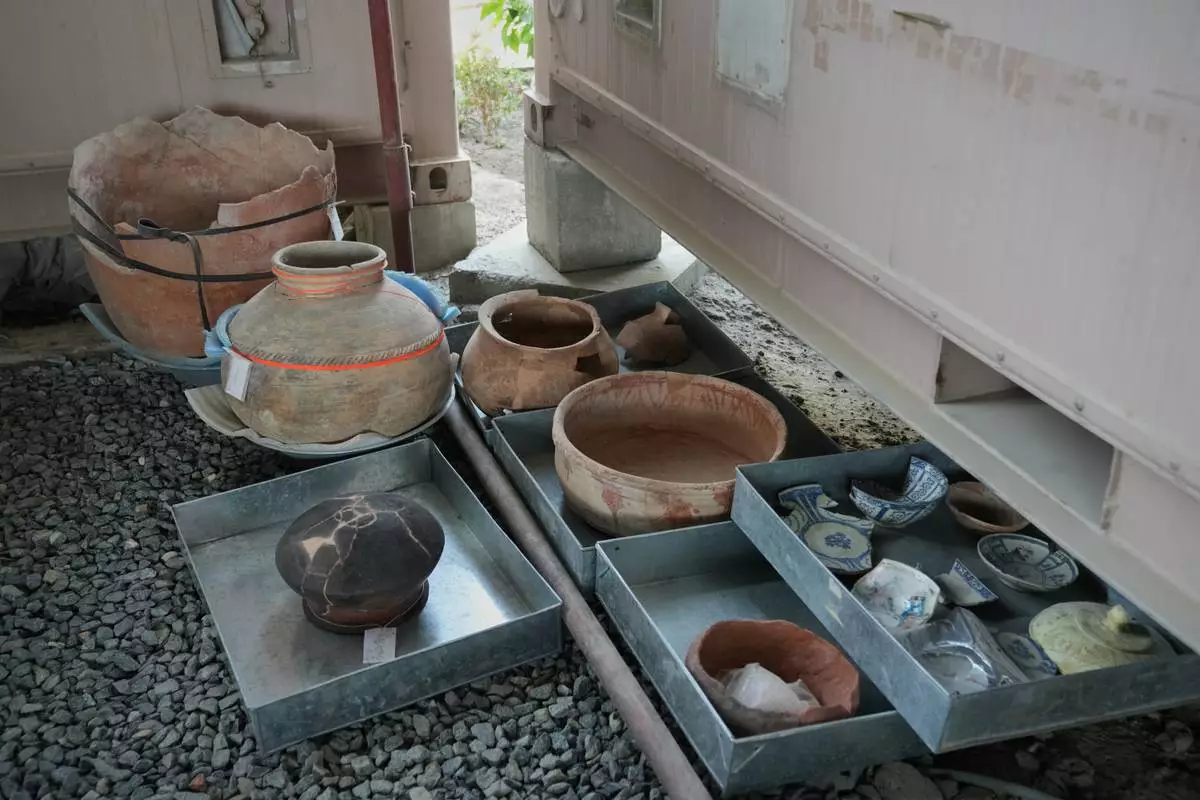
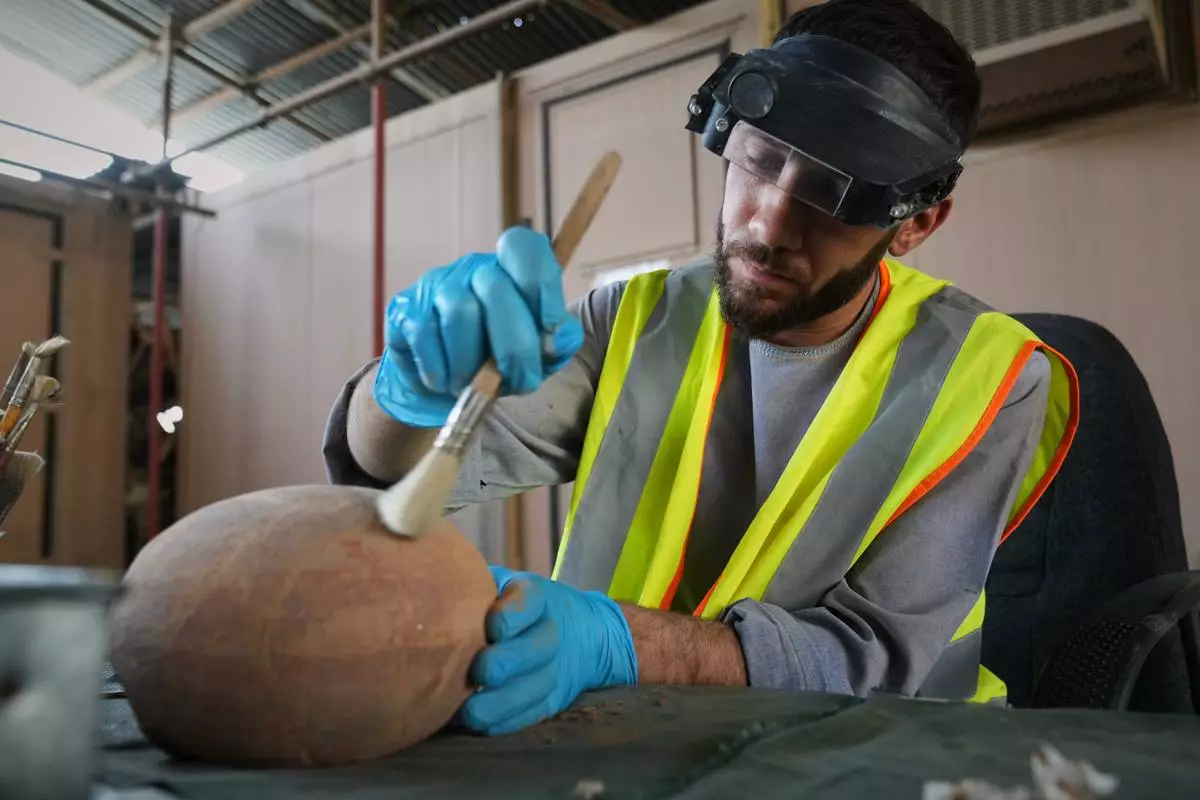
Work in five separate trenches at the site has unearthed ancient coins, fragments of Buddhist statues, glazed Islamic ceramics, oil lamps, countless pieces of pottery and the remains of palaces, monasteries and dwellings.

“In some parts we were expecting something. But not this,” Rafiei-Alavi said of the discovery of remnants of a Mughal palace, complete with murals, a thronelike structure and a star-shaped pool carved into the rock at the top of the hill.

The location of Bala Hissar, which means High Fort in Dari, is key to its significance. Cascading down a prominent outcrop of the Kuh-e-Sher Darwaza mountain ridge, the fortress occupies a commanding position above the old city that helped it protect access routes to Kabul.

Bala Hissar also was an important religious settlement and political center of power along a crucial trade route connecting the Indian subcontinent to Central Asia and beyond. It was “part of a string of pearls of these types of cultural and human settlements,” Aga Khan Cultural Services Project Manager Mustafa Nouri said.

Through the ages, the site has served as a fortress, palace complex, arsenal, administrative center, prison and military garrison.

“Bala Hissar embodies every stage of Afghan history until the American presence and the post-American presence,” Nouri said.

Only traces remain of its royal palaces and Buddhist monasteries. But an enduring characteristic has been the site’s use as a strategic defensive location, from the first century B.C. to the Mughal empire, Anglo-Afghan wars, Soviet invasion, civil war and the U.S.-led coalition. Part of the site’s lower areas are still used by the Afghan military.

“Effectively, whoever controlled Bala Hissar controlled Kabul, and controlled the region,” Nouri explained.

While Bala Hissar suffered repeated destruction and rebuilding through the centuries, the heaviest blow came when British troops avenged the 1879 killing of British envoy Sir Louis Cavagnari and his entourage inside Bala Hissar by destroying much of the complex.

Today, the sprawling site still bears the scars of years of neglect and Afghanistan's repeated conflicts.

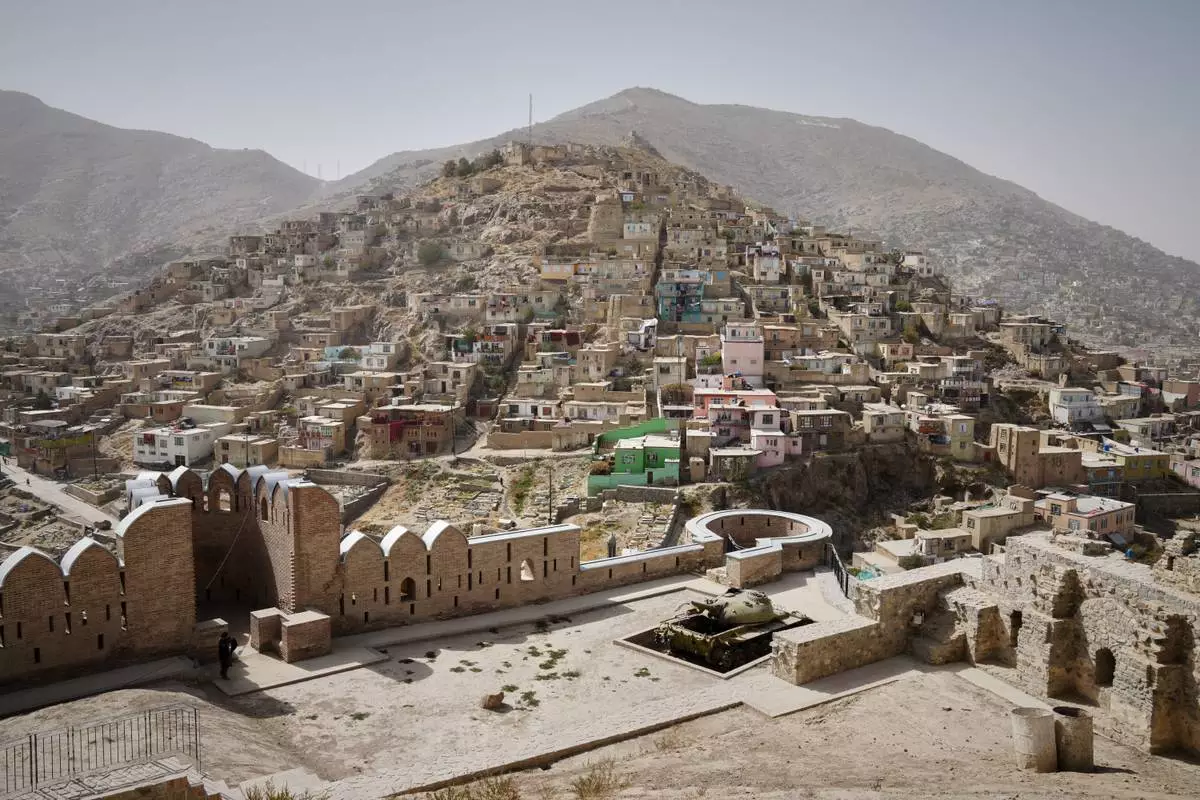
Parts of its defensive walls have crumbled. The hulk of a rusting Soviet tank, one of several still within the walls, sits on the slope leading to the highest point of the fortress. At the foot of the hill, destroyed and decaying Soviet military hardware lies tangled in a rusty heap. Nearby, large-caliber weapons abandoned after the U.S. withdrawal in 2021 stand in neat rows, now property of Afghanistan’s military.

Part of the site within the walls was leveled off in 2008 by U.S. forces who “destroyed many archaeological layers,” Rafiei-Alavi said.

Planning for the AKTC’s ambitious conservation project began in 2017, with work starting the following year. Initial surveying and documenting, including with ground-penetrating radar and 3D laser scans, were followed by emergency stabilization to prevent further collapse of the historic fortifications.

The French Archaeological Delegation in Afghanistan was initially involved in excavations, but work temporarily halted after the Taliban seized power in Afghanistan in 2021.

The French delegation did not return. But the AKTC continued operating and has carried out its most extensive work since 2022, Nouri said.

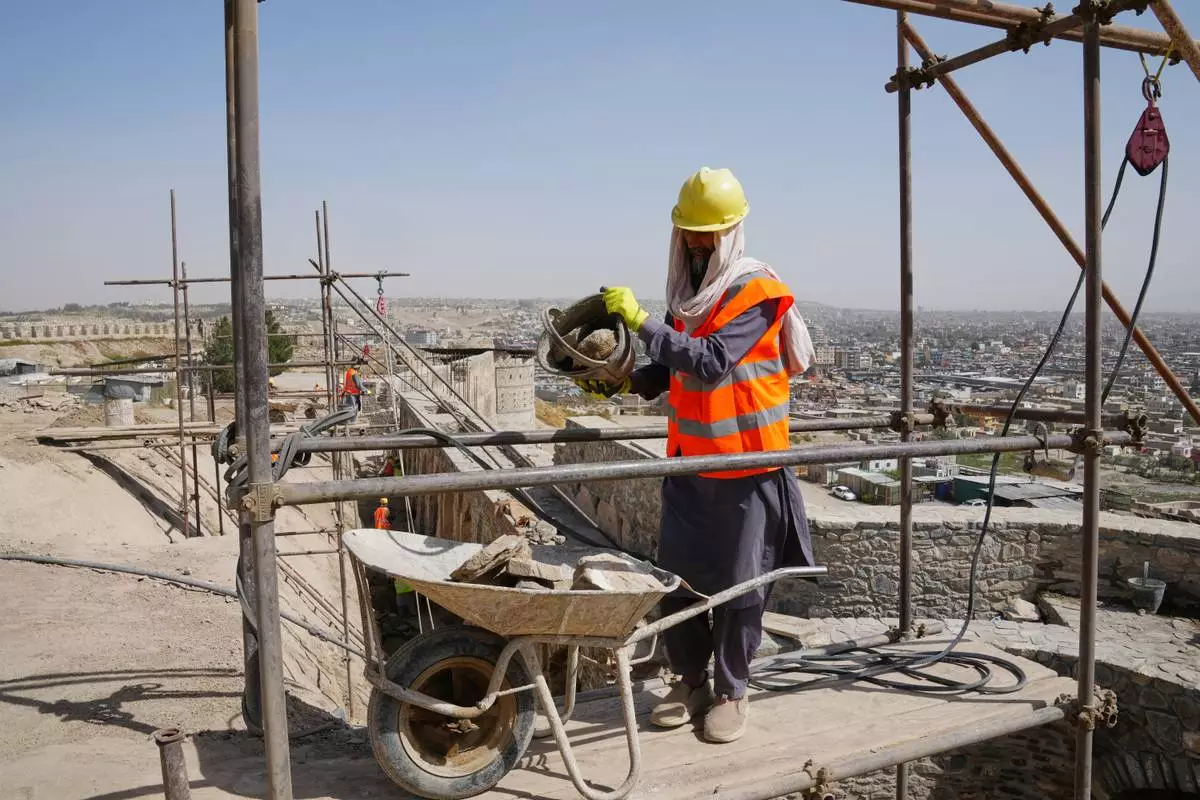
Using locally sourced rock, parts of the defensive walls are being rebuilt. In keeping with international norms of conservation and restoration, new segments are deliberately distinguishable, slightly recessed or protruding from the original construction, Nouri explained.

Metal reinforcements now hold together one of the exterior towers, which had split open and was in danger of crumbling.

The main objective is to turn Bala Hissar into an archaeological public park.

The extensive site and ambition of the project, which includes a training program for Afghan archaeology students, is a “long-term commitment … in terms of decades, due to the fact that it’s not only conservation works, but also it’s quite rich in archaeology,” Nouri explained.

One of the archaeological trenches is already 11 meters (36 feet) deep, with more to be uncovered.

“Everywhere in Bala Hissar when you dig you find something, because it’s inhabited for more than 2,000 years,” Rafiei-Alavi said.

Afghan authorities say they are keen to preserve the country’s cultural artifacts and historical sites, a radical departure from the previous Taliban rule of Afghanistan from 1996 to 2001.

In 2001, the Taliban dynamited two giant, sixth-century Buddha statues carved into a cliff face in Bamiyan in central Afghanistan and ransacked the National Museum of Afghanistan in Kabul, smashing ancient artifacts, especially statues considered to be un-Islamic.

But now, the current Taliban government says it is keen to safeguard the nation’s monuments.

“We recognize the importance of preserving the country’s ancient sites,” said Ministry of Information and Culture spokesperson Khubaib Ghufran. “We view these remnants of past civilizations as valuable sources of insight and lessons. We fully appreciate their significance.”

The government prioritizes restoring monuments facing threats, such as Bala Hissar, “ensuring that we can pass on the legacy of both past and present civilizations to future generations in a well-preserved state,” Ghufran said.

Abdul Qahar Afghan in Kabul, Afghanistan, contributed to this report.
Workers carry out restoration work at the historic Bala Hissar fortress in Kabul, Afghanistan, Thursday, Oct. 8, 2026. (AP Photo/Siddiqullah Alizai)
Workers carry out restoration work at the historic Bala Hissar fortress in Kabul, Afghanistan, Thursday, Oct. 8, 2026. (AP Photo/Siddiqullah Alizai)

Workers wash artifacts from the historic Bala Hissar fortress compound during restoration work in Kabul, Afghanistan, Thursday, Oct. 8, 2026. (AP Photo/Siddiqullah Alizai)
Workers wash artifacts from the historic Bala Hissar fortress compound during restoration work in Kabul, Afghanistan, Thursday, Oct. 8, 2026. (AP Photo/Siddiqullah Alizai)

Pottery and other artifacts from the historic Bala Hissar fortress compound are arranged in trays during restoration work at the site in Kabul, Afghanistan, Thursday, Oct. 8, 2026. (AP Photo/Siddiqullah Alizai)
Pottery and other artifacts from the historic Bala Hissar fortress compound are arranged in trays during restoration work at the site in Kabul, Afghanistan, Thursday, Oct. 8, 2026. (AP Photo/Siddiqullah Alizai)

Workers carry out restoration work at the historic Bala Hissar fortress in Kabul, Afghanistan, Thursday, Oct. 8, 2026. (AP Photo/Siddiqullah Alizai)
Workers carry out restoration work at the historic Bala Hissar fortress in Kabul, Afghanistan, Thursday, Oct. 8, 2026. (AP Photo/Siddiqullah Alizai)

A worker uses a brush to clean a pottery vessel from the historic Bala Hissar fortress compound during restoration work in Kabul, Afghanistan, Thursday, Oct. 8, 2026. (AP Photo/Siddiqullah Alizai)
A worker uses a brush to clean a pottery vessel from the historic Bala Hissar fortress compound during restoration work in Kabul, Afghanistan, Thursday, Oct. 8, 2026. (AP Photo/Siddiqullah Alizai)

A view of the historic Bala Hissar fortress as it undergoes restoration, with a hillside neighborhood in the background, in Kabul, Afghanistan, Thursday, Oct. 8, 2026. (AP Photo/Siddiqullah Alizai)

A view of the historic Bala Hissar fortress as it undergoes restoration, with a hillside neighborhood in the background, in Kabul, Afghanistan, Thursday, Oct. 8, 2026. (AP Photo/Siddiqullah Alizai)
KRAKOW, Poland (AP) — Poland was in shock after a weekend mass shooting in which a gunman opened fire, killing six people and wounding 15 in the city of Krakow before police shot and wounded him.

The shooter died in the hospital on Monday morning, police said. The man had been in critical condition and had had several surgeries.

Authorities have said he held far-right views, but it was not disclosed whether he was affiliated with any organized extremist group. Prosecutors said they are investigating the shooting as a terrorist offense.

Police have also found the bodies of the suspect's parents and sister at the family's home.

Here is what we know about the mass killing that marked a grim first in modern-day Poland:

Police say the 24-year-old attacker, wearing military-style clothing and a bulletproof vest, drove into the city's Main Square and opened fire on Saturday. The square, in Krakow’s Old Town, is a major tourist destination in Poland’s second-largest city.

What unfolded was a scene of chaos and terror. Videos posted on social media show people running away from the square into narrow streets nearby, as well as first responders trying to resuscitate victims.

Even after he was wounded by police officers, the attacker continued firing, Krakow police spokesperson Katarzyna Cisło said.

Four women and two men were killed in the square.

Three of the women and one man were Polish, Krzysztof Jan Klęczar, the Malopolska regional governor, said on Sunday. A man from the United Kingdom and a woman from Austria were also among the dead. The wounded included people from Britain, Portugal, Russia, Germany and Austria.

The two police officers who stopped the gunman, in actions authorities described as heroic, remained in the hospital. They were both conscious, with one emerging from a coma on Sunday afternoon.

After the shooting, authorities on Saturday night paused St. Mary’s Trumpet Call — a traditional five-note melody that is played every hour from the highest tower of St. Mary’s Basilica on Main Square — in tribute to the victims.

It was the first time the call had been missed since World War II.

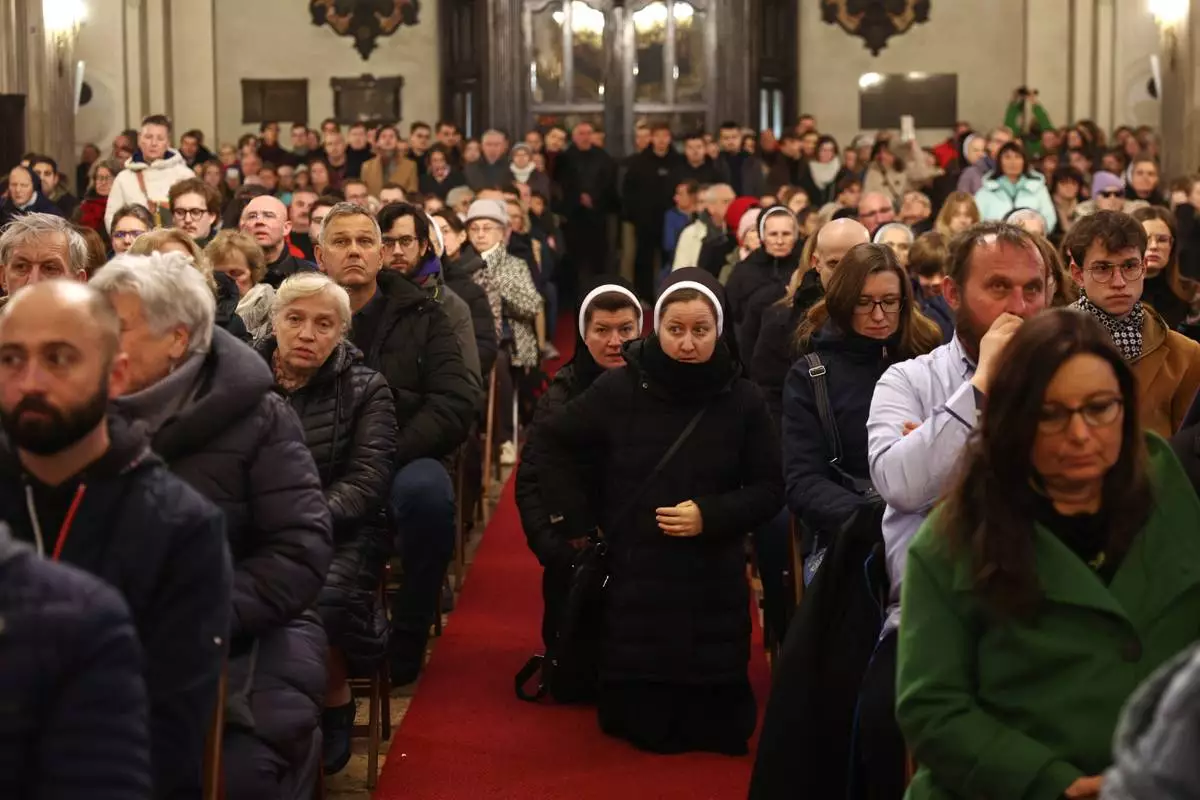
On Sunday afternoon, St. Anne’s Church in Krakow filled with mourners attending a service for the victims.

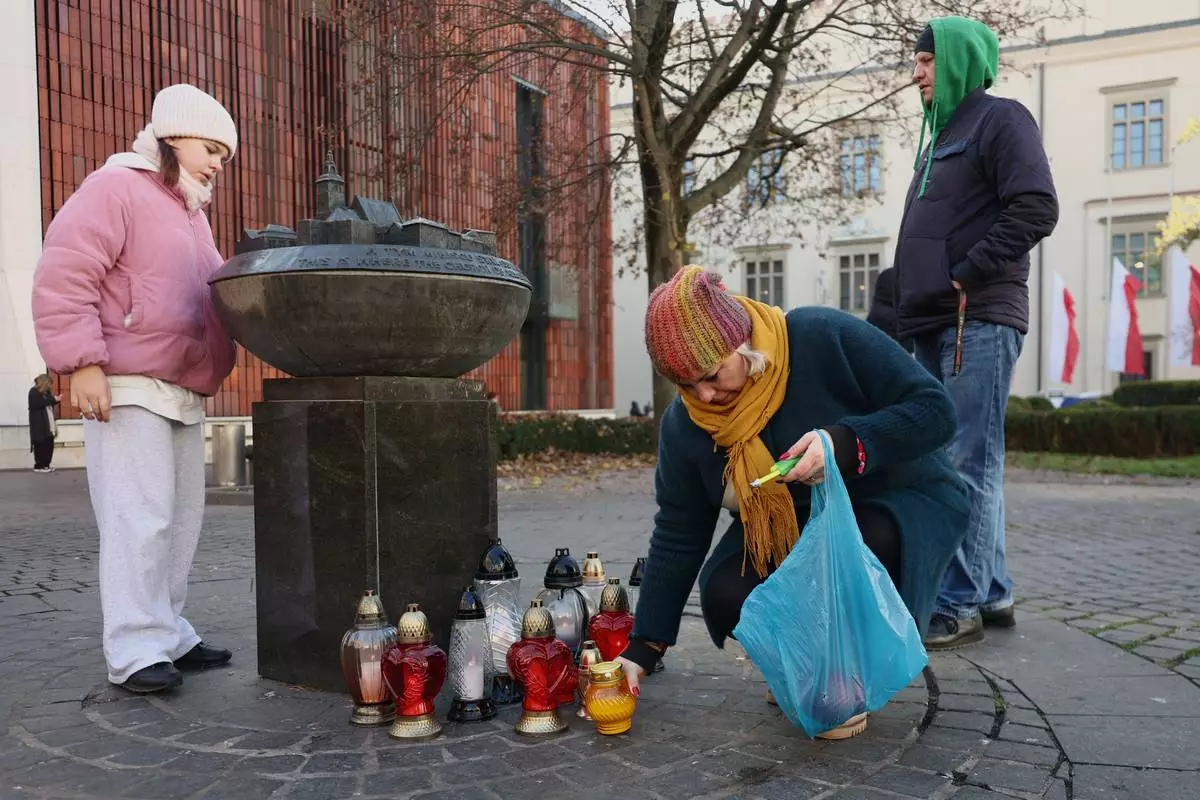
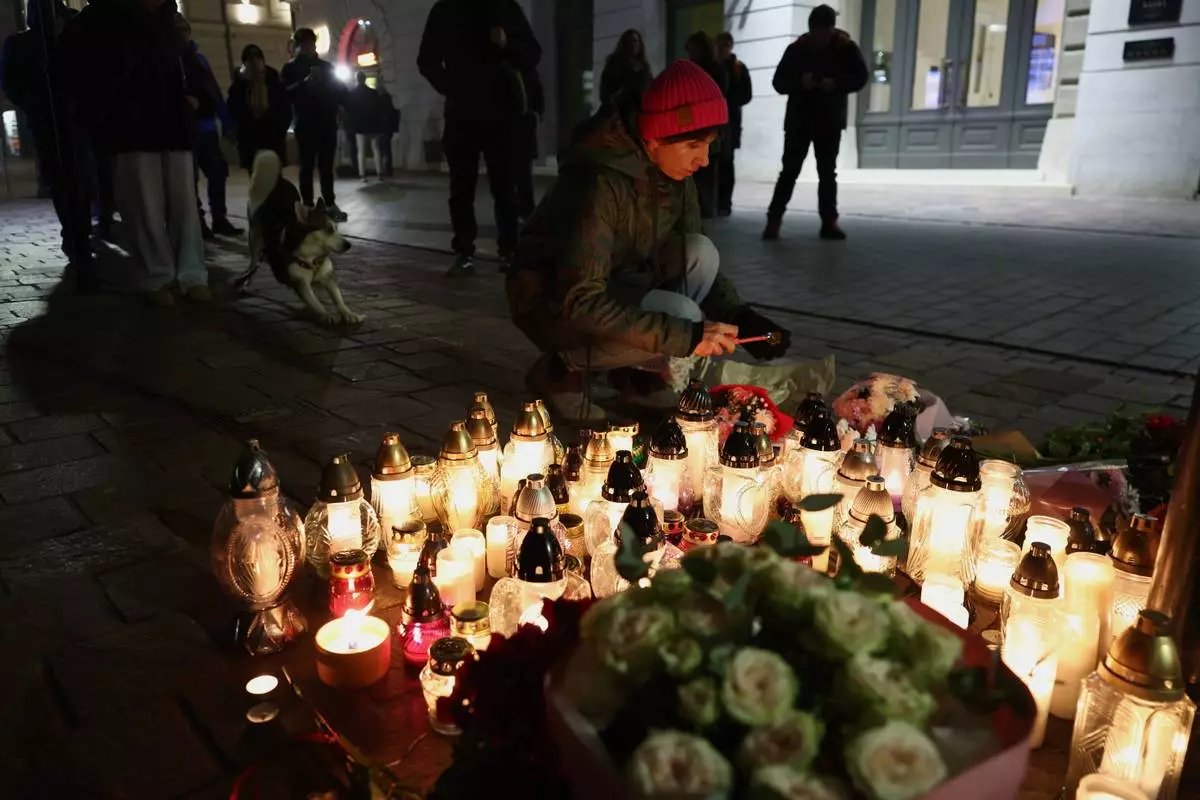
The square reopened Sunday evening with mourners gathering to lay flowers and candles in honor of the victims.

Police have not released the name of the 24-year-old attacker, a Polish national.

Interior Minister Marcin Kierwiński described his views as radical and ultranationalist, and said evidence indicated he had a fascination with far-right ideologies.

Prosecutors said they had opened an investigation into murder and attempted murder, including attacks on police officers, describing the shooting as a terrorist offense.

At the suspect's home in Ostrowiec Świętokrzyski, about 150 kilometers (93 miles) northeast of Krakow, authorities said they discovered three bodies. Police identified them as the suspect's parents and sister. They said the three likely died from gunshot wounds.

The suspect’s dead sibling was a young artist studying at the Krakow Academy of Fine Arts, which confirmed that Magdalena Oksińska was a third-year student.

“Magdalena Oksińska, 21 years old, a queer person, was an absolutely talented painter, photographer, poet and writer,” architect Pavko Krajka wrote on social media, in a post accompanied by images of the artist’s paintings. “Her death is a great loss for Krakow, Polish, European and queer culture.”

Police found four firearms at the scene of the attack. They were recovered from the attacker or from his car.

Klęczar said the attacker’s father legally owned more than 10 guns and that the attacker also owned firearms. Local officials said seven weapons were also seized from the family home, bringing the total number of firearms recovered to 11.

The Swit shooting club in Starachowice, where the attacker is believed to have trained, issued a statement Sunday saying it offered only “static shooting,” which involves firing from a fixed position at a stationary target.

The suspect, it said, “was never trained in our club in the areas of dynamic, tactical or combat shooting.”

Mass shootings are uncommon in Poland, a country of 37 million people where about 411,000 people hold gun permits. Interest in gun ownership has been rising.

Kacper Rekawek, a researcher at the International Center for Counterterrorism in The Hague, Netherlands, said the attack resembled incidents of far-right “lone wolf” attacks in Europe over the past years.

A woman lights a candle near the main square in Krakow, Poland, Sunday, Nov. 8, 2026, where several people were shot the day before. (AP Photo/Beata Zawrzel)

A woman lights a candle near the main square in Krakow, Poland, Sunday, Nov. 8, 2026, where several people were shot the day before. (AP Photo/Beata Zawrzel)

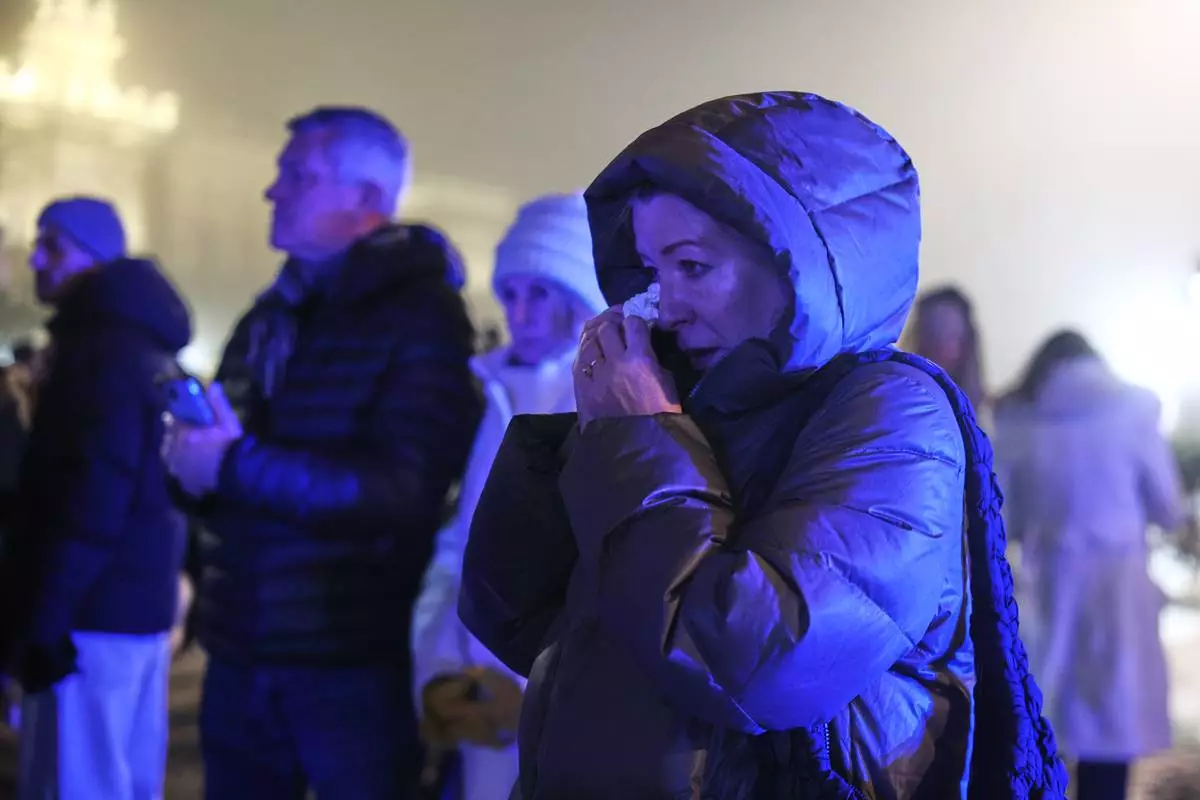
A women crying at the main square in Krakow, Poland, Sunday, Nov. 8, 2026 where several people were shot the day before. (AP Photo/Beata Zawrzel)

A women crying at the main square in Krakow, Poland, Sunday, Nov. 8, 2026 where several people were shot the day before. (AP Photo/Beata Zawrzel)

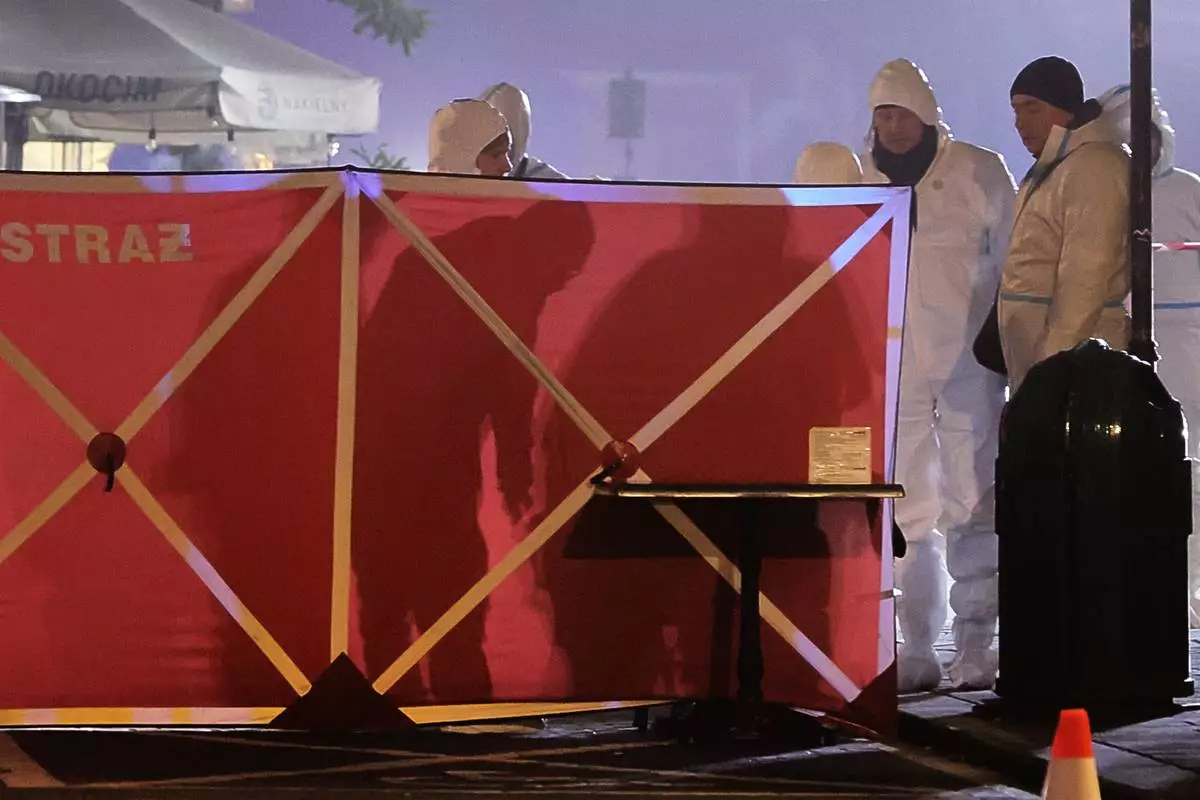
Forensic investigators work behind police privacy screens in a cordoned off area after a shooter opened fire in a market square in Krakow, Poland, Saturday, Nov. 7, 2026, leaving people dead and injured, according to authorities. (AP Photo/Beata Zawrzel)

Forensic investigators work behind police privacy screens in a cordoned off area after a shooter opened fire in a market square in Krakow, Poland, Saturday, Nov. 7, 2026, leaving people dead and injured, according to authorities. (AP Photo/Beata Zawrzel)

Worshippers attend a Mass for the victims of the previous day's shooting in Krakow, Poland, Sunday, Nov. 8, 2026. (AP Photo/Beata Zawrsel)

Worshippers attend a Mass for the victims of the previous day's shooting in Krakow, Poland, Sunday, Nov. 8, 2026. (AP Photo/Beata Zawrsel)

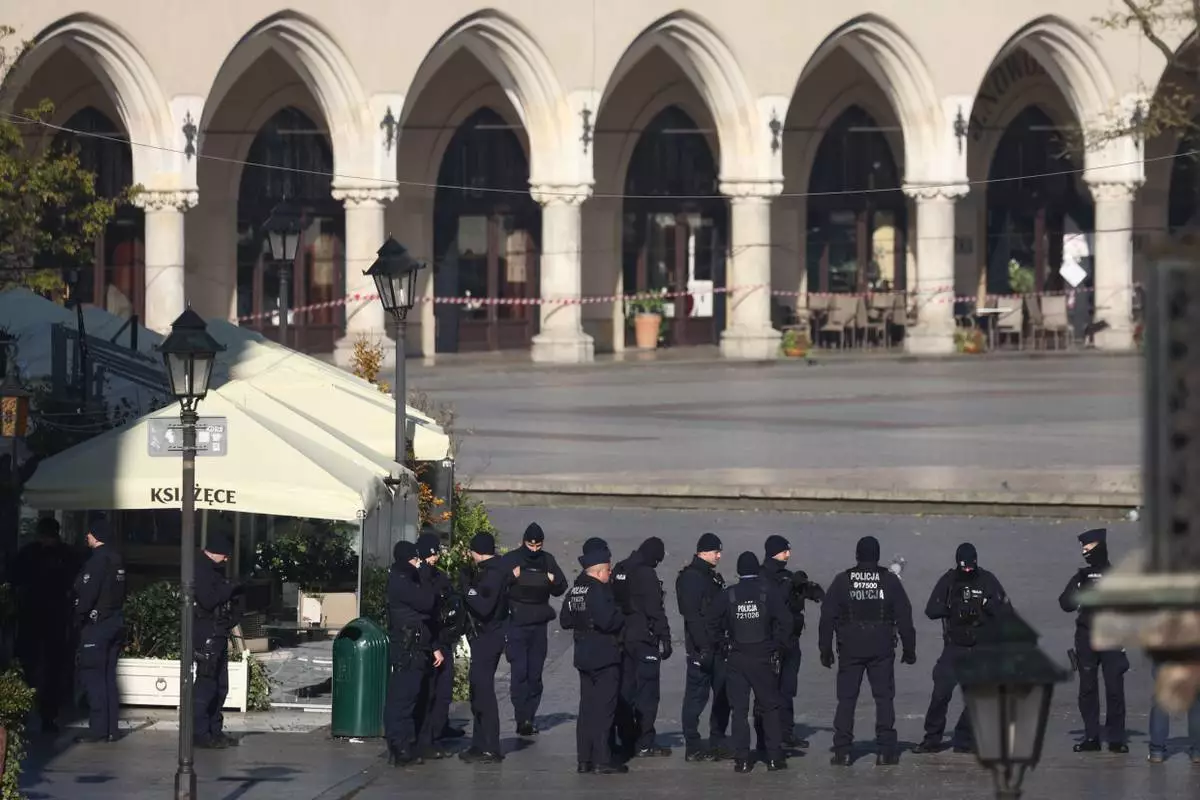
Police officers stand at the market square in Krakow, Poland, Sunday, Nov. 8, 2026, where several people were shot the day before. (AP Photo/Beata Zawrzel)

Police officers stand at the market square in Krakow, Poland, Sunday, Nov. 8, 2026, where several people were shot the day before. (AP Photo/Beata Zawrzel)

People place candles near the market square in Krakow, Poland, Sunday, Nov. 8, 2026, where several people were shot the day before. (AP Photo/Beata Zawrzel)

People place candles near the market square in Krakow, Poland, Sunday, Nov. 8, 2026, where several people were shot the day before. (AP Photo/Beata Zawrzel)

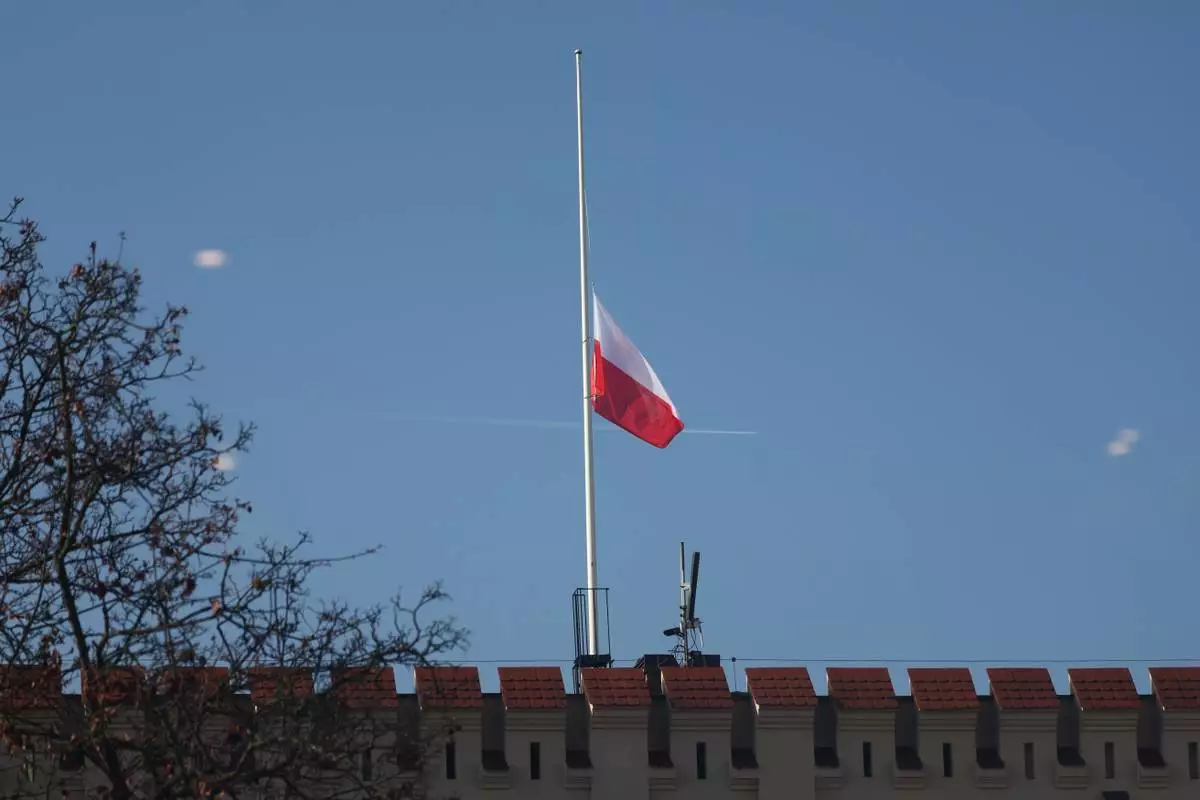
The flag of Poland flies at half-mast at the town hall in Krakow, Poland, Sunday, Nov. 8, 2026, where several people were shot the day before. (AP Photo/Beata Zawrzel)

The flag of Poland flies at half-mast at the town hall in Krakow, Poland, Sunday, Nov. 8, 2026, where several people were shot the day before. (AP Photo/Beata Zawrzel)

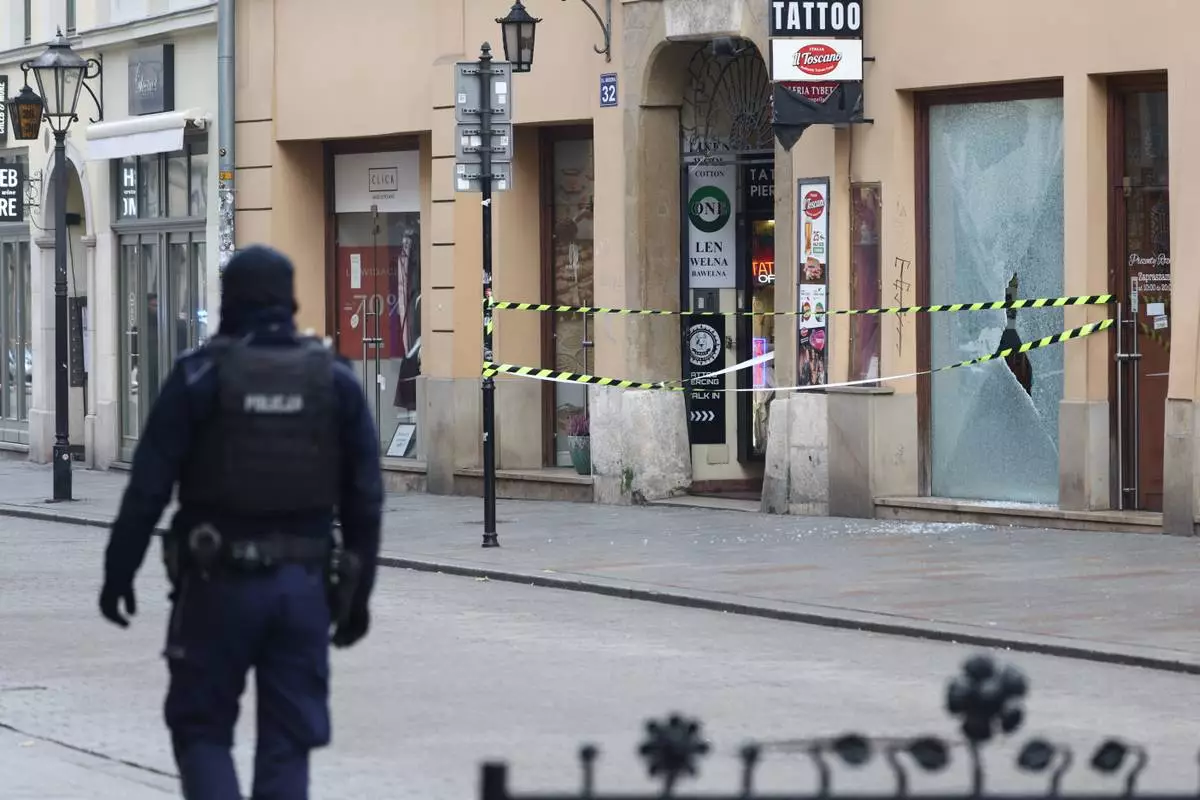
A police officer guards near the market square in Krakow, Poland, Sunday, Nov. 8, 2026, where several people were shot the day before. (AP Photo/Beata Zawrzel)

A police officer guards near the market square in Krakow, Poland, Sunday, Nov. 8, 2026, where several people were shot the day before. (AP Photo/Beata Zawrzel)

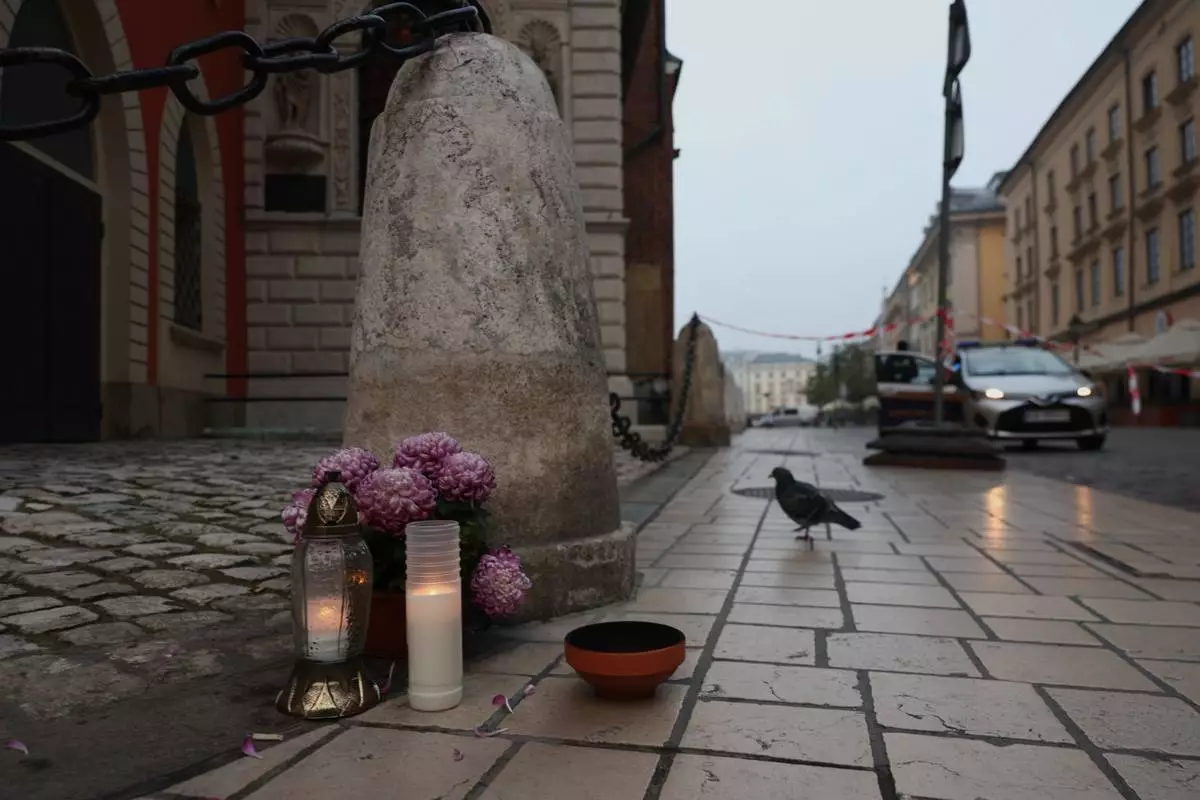
Candles stand near the market square in Krakow, Poland, Sunday, Nov. 8, 2026, where several people were shot the day before. (AP Photo/Beata Zawrzel)

Candles stand near the market square in Krakow, Poland, Sunday, Nov. 8, 2026, where several people were shot the day before. (AP Photo/Beata Zawrzel)

Recommended Articles