The spirit of the Long March, defined by faith, courage, and determination, continues to shape China's development and global engagement, said American journalist Edgar Snow's nephew Eric Foster, as this year marks the 90th anniversary of the victory of the legendary journey that his uncle first introduced to the world in a landmark book.
The Long March began in October 1934, when the main forces of the Chinese Red Army, the forerunner of the People's Liberation Army, were forced to break out of their revolutionary base areas in east China's Jiangxi Province after being surrounded by the much larger forces of the Kuomintang Party (KMT) during the Chinese civil war.
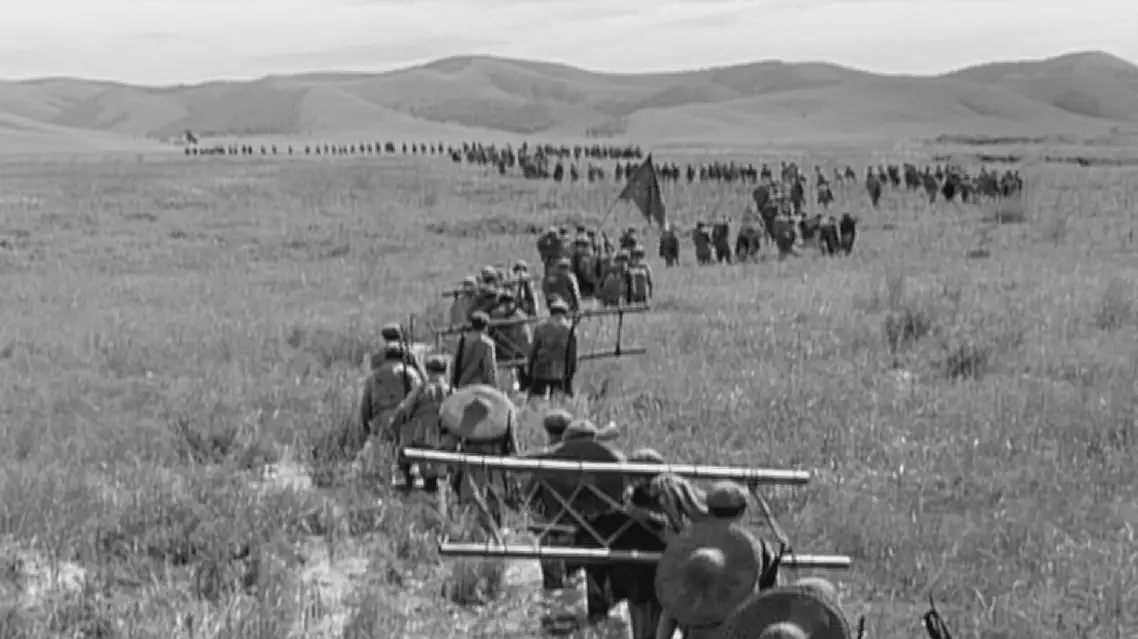
Over the next two years, different Red Army forces crossed raging rivers, climbed snow-capped mountains and traversed vast grasslands across more than 10 provinces, fighting their way out of Kuomintang military encirclement while preserving their strength.
The march lasted from October 1934 to October 1936. While estimates of the total distance vary, late Chinese leader Mao Zedong told Edgar Snow that the Red Army had traveled 25,000 li, or roughly 12,500 kilometers. The journey consequently became known as the "Long March of 25,000 li."
By October 1936, the two-year trek was drawing to a close. Red Army forces from different routes finally joined in Huining County, northwest China's Gansu Province, marking the completion of the Long March.
The journey had begun as a desperate effort to break out of encirclement. It ended as a defining turning point in the history of the CPC and the Chinese revolution.
Eric Foster visited one of the old residences of Edgar Snow and his then wife Helen Foster Snow in central Beijing's Kuijiachang Hutong. He highlighted how his uncle's classic account of "Red Star Over China" offered the world an unprecedented, firsthand portrayal of the Communist Party of China (CPC), the Red Army, and the Long March.
"You have to realize that, at that time, it was the big mystery of just who, Mao, and the Red Army really were. So, when an opportune time arose, and Edgar was able to secretly go to the Red Area himself as a journalist through a clearance letter from Madame Soong Ching Ling (former honorary president of China and wife of Chinese revolutionary Sun Yat-sen). He was able to finally find out the real truth about just who these people really were. So, when he was able to come back after spending four months there, and Snow started publishing articles about the trip with pictures, people could finally see through the lies of the KMT, that they (the Red Army) were just normal people fighting for a good cause," said Eric Foster. Snow's vivid reporting revealed the CPC's ideals, discipline, and commitment to national salvation, helping establish the Long March as an event of global significance in the fight against fascism.
"Because the heroic Red Army were determined to press forward, no matter how hard and difficult, or how many sacrifices they had to make to reach their historic destination. What drove the spirit of determination was that they knew that the Red Army was the answer to save China from imperialism and from the bondage that was like slavery that many of them had been under for thousands of years. They knew that socialism and treating people more equal was the truth that they needed to fight for at any cost," said Eric Foster.
Eric Foster highlighted the fact that the Long March spirit remains a living force in contemporary China.
"The Long March, which was an epic journey, is part of the founding history and enduring legacy of modern China today. It's part of the birth record, so it represents faith, courage, determination and the many good other attributes. So, the spirit remains highly relevant today as it inspires us to overcome challenges, no matter how difficult they are and pass on positive values across generations," said Eric Foster.
Long March spirit represents faith, courage, determination: Edgar Snow's nephew