Skip to Content Facebook Feature Image

VITW 2026 Officially Opens, Bringing Together More Than 2,000 Industrial and Technology Booths

Asia Pacific

VITW 2026 Officially Opens, Bringing Together More Than 2,000 Industrial and Technology Booths
Asia Pacific

Asia Pacific

VITW 2026 Officially Opens, Bringing Together More Than 2,000 Industrial and Technology Booths

2026-09-10 20:48 Last Updated At:20:52

HANOI, VIETNAM - Media OutReach Newswire - 10 September 2026 - Vietnam Industry and Technology Week 2026 (VITW 2026) officially opened today, bringing together more than 2,000 booths from leading Vietnamese and international companies. Under the theme "Technology Leads - Industry Transforms - Breakthrough Beyond", VITW 2026 combines exhibitions and technology demonstrations with specialised conferences and business matching, offering an up-to-date view of the trends shaping global industry.
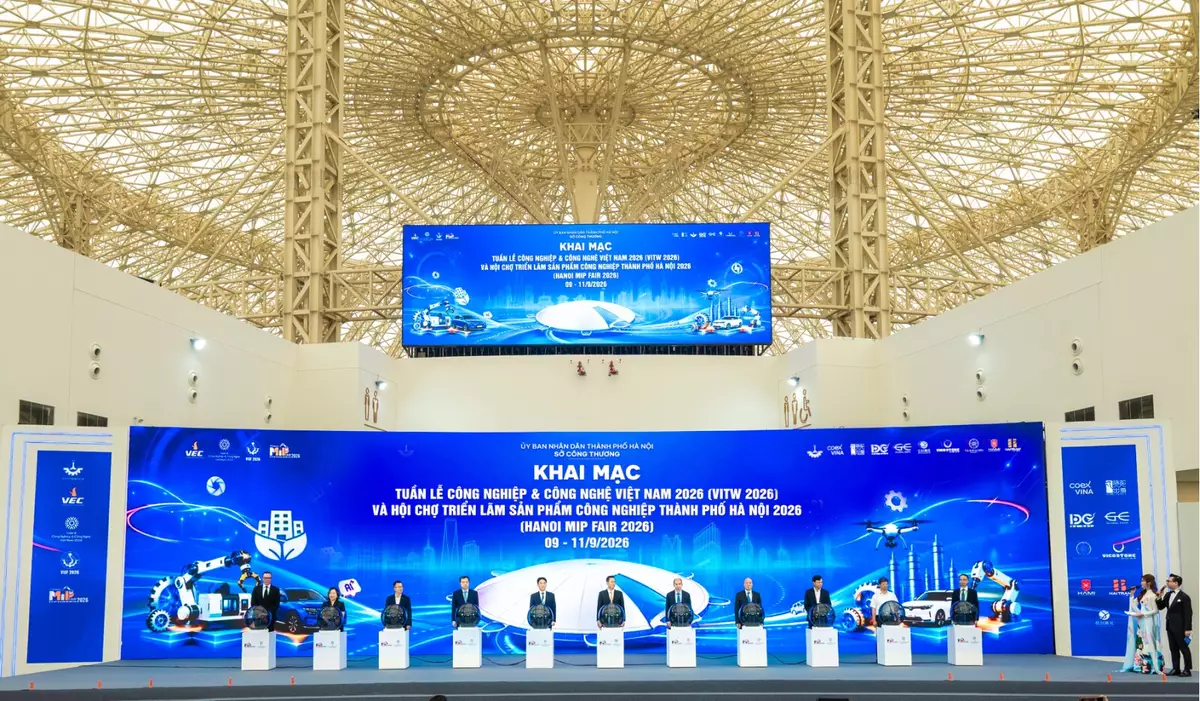
The VITW 2026 Opening Ceremony took place at VEC on September 9, 2026, marking the start of three days of exhibitions and industry-focused conferences.

The VITW 2026 Opening Ceremony took place at VEC on September 9, 2026, marking the start of three days of exhibitions and industry-focused conferences.

The exhibition runs until 11 September at the Vietnam Exposition Center (VEC) in Dong Anh, Hanoi, and is expected to draw more than 70,000 visits.

Exhibitors include hundreds of leading companies in vehicle electrification, automation, green manufacturing and supply-chain restructuring, from Vietnam and around the world. Over the three days, they will look for buyers and investment partners, extend their networks and gain an early read on the latest trends in the industry.

In 2026, VITW brings together more than 2,000 booths across more than 70,000 m² at VEC, organised into seven exhibition, fair and conference zones: the Vietnam International Industrial Fair 2026 (VIIF 2026); the International Manufacturing Congress 2026 (IMC 2026); the Hanoi Major Industrial Products Fair 2026 (Hanoi MIP Fair 2026); Automation World Vietnam 2026; the Vietnam International Technology Exhibition Series 2026; the 3rd International Clean Energy, Power and Energy Storage Industry Exhibition Series; and the 3rd Vietnam International Hardware, Hand Tools, Fasteners and Electromechanical Equipment Exhibition 2026.

Among these, the Vietnam International Industrial Fair 2026 (VIIF 2026) is one of the flagship events, spanning three exhibition halls. It showcases complete motor vehicles alongside their ecosystem of components, batteries, charging infrastructure, robots, machinery and manufacturing software.

In vehicles and supporting industries, the highlights include VinFast with its electric vehicle range and Hai Au with its Chenglong trucks; Tinh Nhue Hung Yen together with Hatico, Bristar, Navicom and FECO Vietnam, presenting mechanical products, components, seats, displays, dashcams and emission-reduction equipment; and battery and charging-infrastructure players such as Mikano and Wanxianghui.

Next comes the mechanical engineering and automation group, with industrial robotics solutions from CNCTech and Roboworld; high-precision machinery and mechanical equipment from AKC Engineering, T&T Vina, XYD Vietnam and AIT Innovation; industrial software from VINIS; and smart home appliances from VPlus Vietnam.

The gathering of major industry names at VIIF 2026 - from electric vehicles, components and energy to robotics, mechanical engineering and software - reflects the shift in Vietnamese industry towards electrification, automation and stronger domestic supply capacity. VIIF also opens the door for companies to find suppliers, partners and markets in a new phase of growth.

Adjoining VIIF 2026 is the Hanoi Major Industrial Products Fair 2026 (Hanoi MIP Fair 2026), organised by the Hanoi Department of Industry and Trade. Across more than 9,000 m², the fair presents five strategic sectors: microchips and semiconductors; information technology; electrical, electronics and refrigeration; mechanical engineering and automation; and healthcare, textiles and garments, leather and footwear, and food and beverage. Visitors can see technology applications first-hand and speak with companies at their booths, connecting Hanoi's businesses with manufacturers, buyers and technology partners from around the world.

Speaking at Hanoi MIP Fair 2026, Mr. Tran Duc Hai, Member of the Hanoi Party Committee and Director of the Hanoi Department of Industry and Trade, said: "Organising the Hanoi Major Industrial Products Fair 2026 demonstrates the effort and commitment of the city of Hanoi to actively and effectively implementing the Central Committee's resolutions on industrial development, science and technology, innovation and private-sector development."

Alongside the exhibitions, dmg events – one of the world's leading exhibition organisers - and VEC are co-hosting the International Manufacturing Congress 2026 (IMC 2026), bringing together 60 speakers: policymakers, business leaders, investors and experts from Vietnam and abroad. Through 17 in-depth sessions, IMC focuses on the issues now shaping companies' competitiveness, including advanced manufacturing, AI and automation, attracting high-value investment, supply-chain restructuring, energy security, green manufacturing and workforce development.

Alongside IMC, the Business Matching programme gives companies a direct channel to buyers, distributors, investors and technology partners - to find outlets for their products, evaluate solutions and build future partnerships.

IMC 2026 also marks the start of a long-term partnership between VEC and dmg events. dmg events' international organising experience, combined with VEC's operating capability and domestic partner network, will continue with the Vietnam International Industrial Fair 2027 (VIIF 2027). Building on VIIF's 35-year history and 32 editions, the two sides aim to expand the exhibition footprint, raise the quality of stands and the visitor experience, and deepen the professional content through the accompanying conferences, forums and investment-matching activities.

Representing the organiser, Ms Lý Hoa Liên, Deputy General Director of Business Development and External Relations at the Vietnam Exposition Center (VEC), said: "Through Vietnam Industry and Technology Week 2026, VEC hopes to help realise the vision of making Hanoi a major innovation hub of the Asia-Pacific region by 2045 – a place where ideas grow into projects and connections create value for the capital and the country. From VITW 2026, VEC will continue to bring international industrial and technology event series to Vietnam, widening the opportunities for Vietnamese companies to partner and reach global markets. We believe that, drawing on our own strength and the support of our international friends, Vietnam will achieve new breakthroughs in the nation's era of rising."

As a partner to VEC and to the Vietnamese market more broadly, Mr Christopher Hudson, President of dmg events, said: "Vietnam is well positioned to benefit from the trends reshaping global industry. Manufacturing contributes about 24.5% of GDP, while manufactured exports reached more than US$421 billion in 2025, close to 89% of total exports - evidence of Vietnam's growing role in global production and supply chains. As manufacturing enters a period of deep transformation in AI, automation, digitalisation, energy and talent, dmg events wants to work with VEC to build a strategic platform that strengthens the competitiveness of Vietnamese manufacturing."

VITW 2026 builds on the success of VITW 2025. In 2025, more than 70,000 visits and VND 600 billion in signed contracts showed that VITW's model of "multiple specialised exhibitions in one space" works, helping to lift the competitiveness and appeal of Vietnamese industry.

Programme details: https://vec.global/events/vitw2026

Hashtag: #VEC

The issuer is solely responsible for the content of this announcement.

About the Vietnam Exposition Center (VEC)

The Vietnam Exposition Center (VEC) in Co Loa, Dong Anh, Hanoi opened on 19 August 2025 with a total area of 900,000 m² and is a large-scale exhibition and convention complex in Vietnam. With the mission "Bringing Vietnam to the world and the world to Vietnam", VEC works with international organisers to develop a system of annual specialised exhibitions in industry, energy, healthcare and education.

About dmg events:

Founded in 1989, dmg events has spent 37 years creating connections that drive growth, innovation and commercial opportunity across markets worldwide. With 13 offices globally, dmg events organises more than 30 events a year in energy and policy. Spanning four continents, the company's flagship events – including ADIPEC and Gastech – bring together policymakers, industry leaders, investors and innovators to address the issues shaping the future of energy systems and global markets.

** This press release is distributed by Media OutReach Newswire through automated distribution system, for which the client assumes full responsibility. **

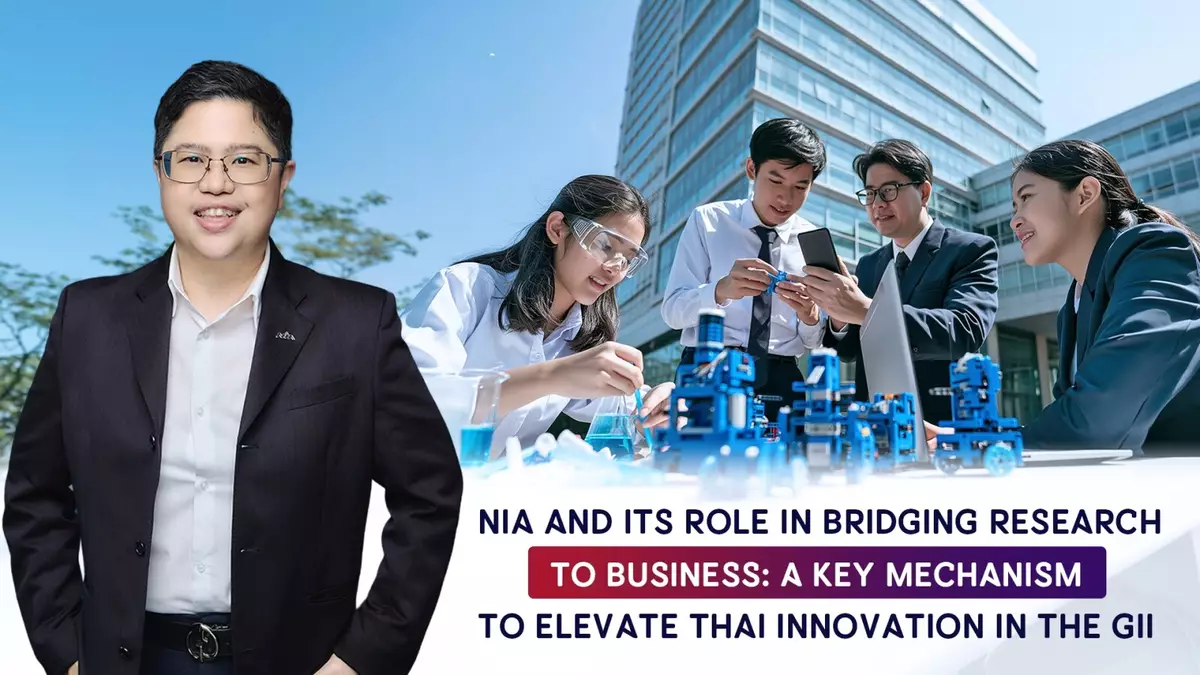
According to the GII 2025 report themed "Innovation at a Crossroads," the global innovation system is reaching a critical turning point. This comes amidst rapid advancements in emerging technologies—such as Artificial Intelligence (AI), clean energy, biotechnology, and digital systems—while nations simultaneously navigate economic challenges, technological competition, and geopolitical shifts.

Thus, the GII serves as more than just a national ranking; it is a crucial tool that reflects the strengths, weaknesses, and potential of each country's innovation ecosystem. Thailand is ranked 41st globally and continues to perform above expectations relative to its economic development level (Innovation Overperformer) within the upper-middle-income group. The nation shows strong innovation potential, particularly in digital infrastructure, innovative business development, and the linkage of knowledge between academia and industry.

This ranking highlights Thailand's progress toward an innovation-driven economy through the promotion of research and development, support for innovative entrepreneurs and startups, and the strengthening of the national innovation ecosystem. Key organizations like the National Innovation Agency (Public Organization) or NIA play a pivotal role in bridging collaboration among universities, the private sector, and government agencies to ensure research and technology are commercially deployed.

One of the key innovation indicators in the GII is "University–Industry R&D Collaboration," which reflects the depth of joint research and development between academic institutions and industrial sectors—a fundamental driver for creating innovation and sustaining long-term national competitiveness.

Dr. Krithpaka Boonfueng, Executive Director of the National Innovation Agency (NIA), explained that the NIA acts as a crucial "Innovation Intermediary" among academia, private enterprises, government sectors, and financial institutions. Its mission is to facilitate the translation of knowledge, research, and technology into tangible commercial and social benefits. Currently, Thailand's main challenge is not a shortage of research, but rather the "gap" between academic research and its industrial application. Many university research projects possess high potential but lack the supporting mechanisms for business prototyping, market testing, or connecting with entrepreneurs and investors. Therefore, the NIA's role is essential in building platforms and support programs that enable efficient collaboration between universities and the business sector.

The NIA supports University–Industry R&D Collaboration across multiple dimensions, including providing innovation grants, incubating and accelerating deep-tech startups, creating collaborative networks between universities and private entities, and promoting Innovation Ecosystems in strategic sectors such as FoodTech, AgTech, HealthTech, ClimateTech, and Deep Tech. These areas heavily rely on combining academic expertise with market capabilities and industrial investment.

Furthermore, the NIA actively promotes "Open Innovation" and "Co-Creation"—core concepts aligned with the direction of GII 2025, which indicates that the global innovation system is entering an era of multi-stakeholder collaboration and co-creation. The NIA creates platforms to match industry demands with university research capabilities, while also supporting activities such as Hackathons, Accelerator Programs, Innovation Bootcamps, and Regulatory Sandboxes to test innovations in real-world environments.

Another key responsibility is developing "Innovation-Based Enterprises" and "Startups" originated from university research (University Spin-offs). Spin-offs serve as a major driver in leading innovative nations like the United States, South Korea, and China to turn university knowledge into global tech enterprises. The NIA offers early-stage support ranging from business model development and capital access to investor networking and market connection locally and internationally.

Trends in GII 2025 demonstrate that countries with strong university-industry collaboration consistently generate continuous innovation and maintain high competitiveness. Hence, the NIA operates not merely as an innovation support agency, but as a "systemic mechanism" that bridges the gap between research and business, connects knowledge with market demand, and drives Thailand toward a long-term, knowledge-based economy.

Ultimately, elevating Thailand's performance in the University–Industry R&D Collaboration indicator requires concerted efforts among universities, the private sector, government entities, and innovation-enabling organizations like the NIA. Together, they build a comprehensive ecosystem covering knowledge creation, research, testing, investment, and market expansion—forming a solid foundation to boost the country's future competitiveness.

Lessons Learned: Startup Success Through University–Industry R&D Collaboration

Mr. Krerkchai Panyabaramee, Managing Director of Tleum Co., Ltd., shared that the commercial application of advanced material technology—derived from R&D by Dr. Supan Yodyingyong from the Institute for Innovative Learning, Mahidol University, who holds a patent for "Synthesis of Silica Aerogel from Sodium Silicate Solution at Atmospheric Pressure"—stands as a clear case study of University–Industry R&D Collaboration. The business originated from translating pilot-scale research on Silica Aerogel within the university into industrial-scale manufacturing in partnership with the private sector.

Currently, Tleum Co., Ltd. has successfully commercialized Silica Aerogel into a diverse range of products, including heat-reflective paints for buildings and industrial applications, heat-resistant cement and materials, oil absorbents for spill remediation, and cosmetic ingredients. This demonstrates the immense potential of Thai Deep Tech in value creation through advanced materials and collaborative research.

This success was not achieved by any single entity, but through the synergy of academia, business, and supporting bodies like the NIA. The NIA stepped in to bridge knowledge gaps, provide resources, and mitigate technology development risks, allowing entrepreneurs to overcome cost, testing, and scaling limitations rapidly. This highlights the NIA's role as an "Innovation Bridge" turning academic research into commercial reality.

Dr. Krithpaka concluded: "The 'University–Industry R&D Collaboration' indicator under Pillar 5: Business Sophistication measures the level of R&D collaboration between universities and industry in each country. It relies on data from the Executive Opinion Survey conducted by the World Economic Forum (WEF), which assesses business leaders' perceptions regarding the quality and effectiveness of joint R&D efforts—specifically how well they meet industry needs, achieve practical application, and generate economic value."

Therefore, this indicator does not merely evaluate the volume of research papers or joint projects; it reflects a country's capacity to transform knowledge into economic impact through cross-sector collaboration—a core hallmark of a mature innovation ecosystem.

The case of Tleum Co., Ltd. serves as a clear illustration of this concept. By licensing pilot-scale research and patents for Silica Aerogel, the private sector scaled the technology into full industrial production, yielding various commercial products globally—ranging from heat-reflective coatings and heat-resistant materials to oil absorbents and cosmetics.

This outcome underscores the importance of the NIA as an Innovation Intermediary that reduces technical and financial risks for businesses. Beyond this case, the NIA continues to drive numerous initiatives—funding, networking, tech startup incubation, and University Spin-offs—ensuring academic innovations translate into market-ready products, services, and new ventures that deliver true economic impact and strengthen Thailand's long-term competitive position.

Hashtag: #NIA #NationalInnovationAgency

The issuer is solely responsible for the content of this announcement.

** This press release is distributed by Media OutReach Newswire through automated distribution system, for which the client assumes full responsibility. **

NIA and Its Role in Bridging Research to Business

NIA and Its Role in Bridging Research to Business

Recommended Articles