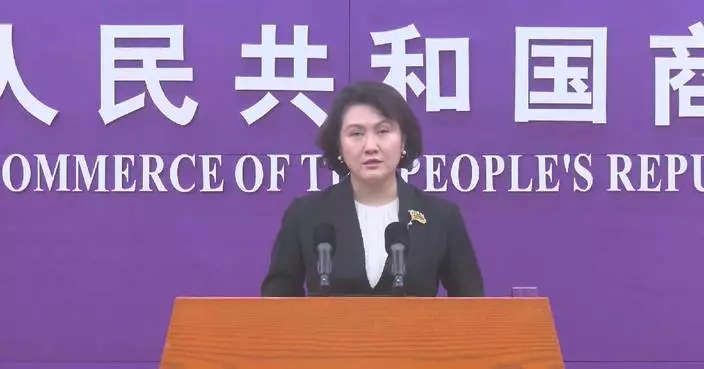
China will coordinate efforts to prevent risks, strengthen regulation and promote high-quality development during the 15th Five-Year Plan period (2026-2030), Cong Lin, deputy head of the National Financial Regulatory Administration, said at a press conference in Beijing on Wednesday.
Speaking at a series of pressers on the start of the 15th Five-Year Plan, Cong outlined priorities of the financial work in three areas.
"[On risk prevention,] the financial authorities will vigorously, systematically, and effectively resolve risks associated with local small and medium-sized financial institutions, and firmly hold the bottom line against systemic meltdowns. Efforts will focus on reducing the number and improving the quality of such institutions and optimizing their layout. A broader campaign against illegal financial activities will be deepened to protect people's savings," she said.
"On strengthening regulation, we will move faster to strengthen the legal framework for the financial sector, refine the categorized and tiered regulatory framework, and steadily push forward with differentiated regulation," Cong said.
"[On promoting high-quality development,] we will further step up support for major strategies, key areas and weak links, and boost financial backing for consumption, investment, business and job stability, as well as sci-tech innovation. Financing will be strengthened for major national strategies and security capacity-building in key areas, with priority given to key projects under the 15th Five-Year Plan. We will keep improving comprehensive financial services to help stabilize foreign trade," she added.

China to balance risk prevention, regulation, growth in 15th Five-Year Plan period
The commercialization of the robot industry has given rise to new forms of business in South China's tech hub of Shenzhen, where stores are allowing customers to rent robot models and fully customize the bots they buy.
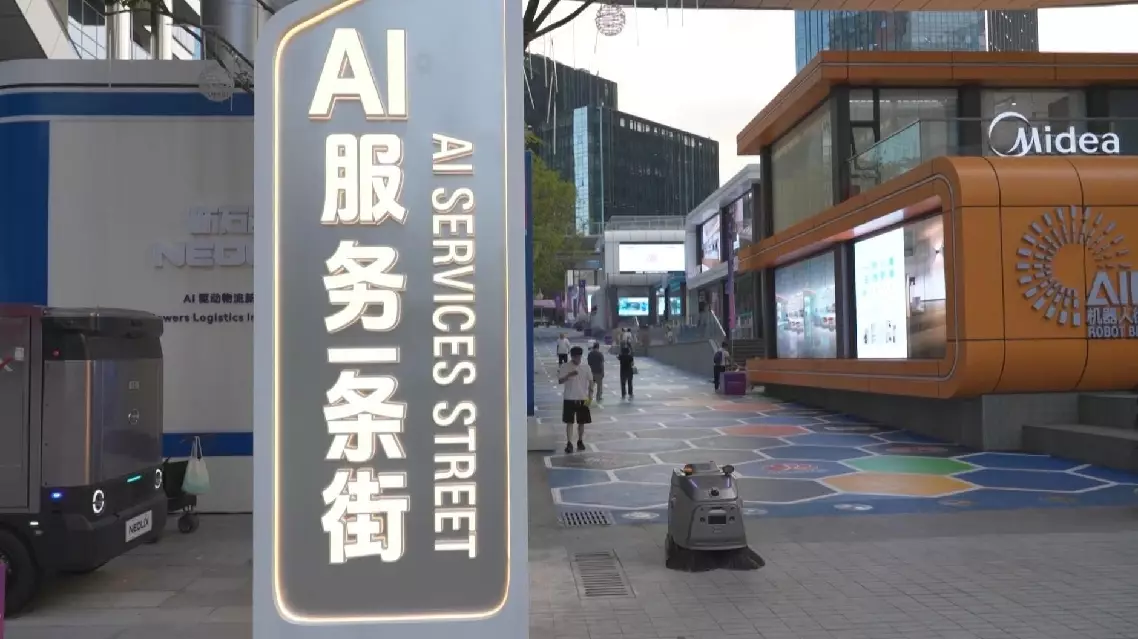
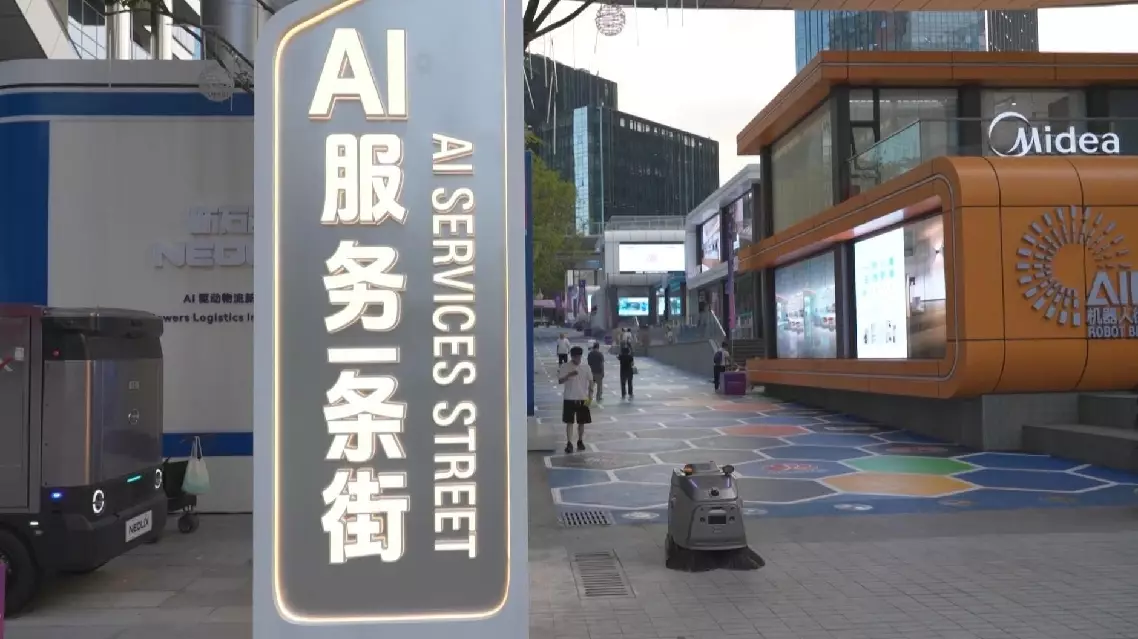
At the AI Services Street in Shenzhen's Longgang District, the first of its kind in China, crowds have been forming daily since the street opened in early September. Visitors come to view exhibitions and try robot services, and many of them leave with orders.
Robot rental is among the hottest businesses. At the Shenzhen Robot 6S Store, dozens of robots are available for rent, from robot dogs and guide bots to humanoid machines that can dance and greet guests.
The cheapest option is a robot dog, which renters can take home for just 1,000 yuan (about 150 U.S. dollars).
"In our rental business, we have more than 100 types of humanoid and special-purpose robots. Special-purpose robots mainly cover cleaning categories such as smart cleaning, as well as smart healthcare and smart elderly care. We offer customized solutions across different categories," said the manager of the Shenzhen Robot 6S Store.
A buyer from the manufacturing sector, surnamed Liu, said many robots in the store match his production line needs. He has identified several promising models and plans to study which could be used at his company.
"Transport robots, cleaning robots -- and since our company uses photovoltaic panels, I also noticed photovoltaic panel cleaning robots here. I think these three types would fit our company well," he said.
At a robot components supermarket along the AI Services Street, core parts including reducers, servo motors, controllers and sensors are displayed on shelves like everyday goods. For companies, components that once took months to source can now all be found on the street.
The supermarket has a dedicated showroom for robot components. Zhou Ying, a staff member at the showroom, said the exhibits are highly diverse, visitor traffic is high, and the showroom receives guests frequently.
"The showroom now houses components from more than 60 suppliers, including chips, sensors, casings and structural parts. Since last year, we have hosted nearly 500 events," she said.
Consumers can also customize robots on the street. Some customers bring a design drawing and receive hardware parts made to order.
"A customer gives us a blueprint of a robot, and we manufacture the hardware components accordingly. This year, our order volume has grown about fivefold compared with 2025. Customizing a robot used to take at least six to eight months from research and development to prototype; now some micro-customized products can be ready in three to four months," said Mao Fangping, senior business development manager at a Guangdong-based smart manufacturing company.
Shenzhen's robot market sees rise of rental, customization services
Shenzhen's robot market sees rise of rental, customization services