Sales of previously occupied U.S. homes declined in August to their slowest annual pace in more than a year as home shoppers grappled with rising mortgage rates and home prices.
Existing home sales fell 2% last month from July to a seasonally adjusted annual rate of 3.98 million units, the National Association of Realtors said Thursday. This is the third straight monthly decline.
Sales also fell 1.2% compared with August last year. The latest sales tally is just shy of the 4 million pace economists were expecting, according to FactSet.
“It’s not a surprise home sales and mortgage rates move in the opposite direction and we have seen mortgage rates rising, rising, rising from February,” said Lawrence Yun, NAR’s chief economist.
Home sales have been mostly hovering close to a 4-million annual pace going back to 2023, far short of the historic norm that is closer to 5.2-million. The last time the annual sales pace came in below 4 million was June 2025.
Despite the latest pullback, existing U.S. home sales are running 1.6% higher through the first eight months of this year than they were in the same stretch of 2025, NAR said.
The housing market has been stymied in large part by rising borrowing costs, as mortgage rates have marched higher in the months since the war between the U.S. and Iran started in late February. Expectations of higher inflation amid surging oil prices have pushed up the long-term bond yields that lenders use as a guide to pricing home loans, pushing up mortgage rates.
The average rate on the benchmark 30-year mortgage hit 6.71% last week, its highest level in more than a year.
Yun noted that rate could soon reach 7%, given that mortgage rates tend to follow moves in the 10-year Treasury yield, which continues to climb. The yield was at 4.92% on the bond market as of Thursday morning.
Even as sales slowed, home prices continued to rise nationally last month. The U.S. median sales price increased 1.6% in August from a year earlier to $429,100, an all-time high for the month of August based on data going back to 1999, NAR said. Home prices have risen on an annual basis for 38 months in a row.
The U.S. housing market has been in a slump since 2022, when mortgage rates began to climb from pandemic-era lows. Sales of previously occupied U.S. homes were essentially flat last year, stuck at a 30-year low.
Years of soaring home prices, especially in the early part of this decade when rock-bottom mortgage rates fueled a buying frenzy, have left many would-be homebuyers frozen out of the market. And a chronic shortage of homes for sale nationally, due partly to years of below-average new home construction, has helped prop up home prices even in a multiyear sales slump.
Many of the homes purchased last month likely went under contract in July and June, when the average rate on a 30-year mortgage ranged from 6.43% to 6.66%.
The sales slowdown is leading to unsold properties sitting on the market longer, helping boost the number of available homes.
Although home inventory levels remain well below historical norms, there were 1.62 million unsold homes at the end of last month, up 3.2% from July and up 5.9% from August last year, NAR said. That’s still short of the roughly 2 million homes for sale that was typical before the COVID-19 pandemic.
Still, August’s month-end inventory translates to a 4.9-months’ supply at the current sales pace. That’s the highest level in over 10 years. Traditionally, a 4- to 6-month supply is considered a balanced market between buyers and sellers.
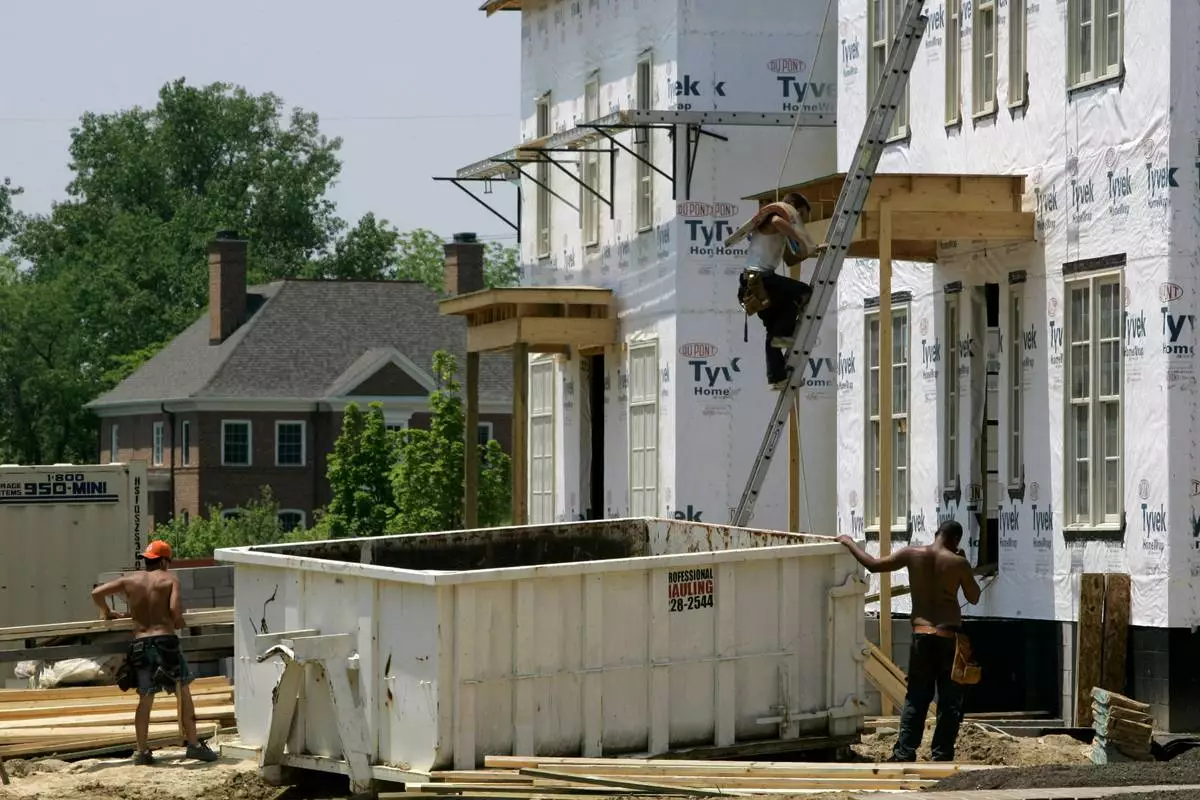
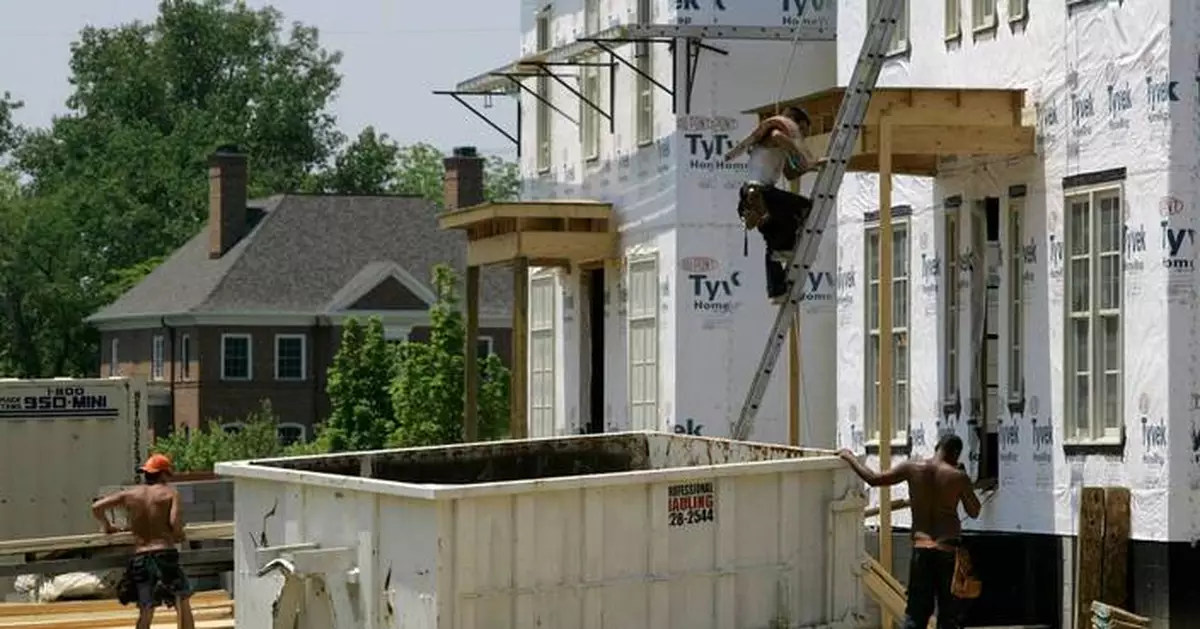
FILE - Luxury homes are under construction in a subdivision, May 22, 2007 in New Albany, Ohio. (AP Photo/Kiichiro Sato, File)
JEFFERSON CITY, Mo. (AP) — The U.S. Supreme Court again rejected a push to use Missouri congressional maps backed by President Donald Trump on Thursday, a loss for Republicans trying to maintain control of the House in the fast-approaching midterm elections.
The decision appears to clear the way for use of the old maps.
It comes after a pitched court battle shortly before ballots begin going out for the pivotal November elections. The maps were drawn to help Republicans gain an additional U.S. House seat.
It’s the second time the high court has refused to intervene to keep the Trump-backed maps in place.
THIS IS A BREAKING NEWS UPDATE. AP’s earlier story follows below.
JEFFERSON CITY, Mo. (AP) — A federal judge has allowed Missouri’s top court to proceed with a contempt hearing Thursday against Republican Secretary of State Denny Hoskins in a tense and twisting legal battle over whether new congressional districts supported by President Donald Trump can be used in the November election.
Missouri’s battle over its congressional districts has spanned more than a year and spawned confusion over which districts will be in place for voters.
The state’s top court previously ordered Hoskins not to use a Trump-backed map in the general election and instead use districts passed after the last census. But U.S. District Judge Stephen Clark on Tuesday barred Hoskins from using anything other than the new map Trump supports.
The state Supreme Court then ordered Hoskins to appear for a contempt hearing Thursday for not following its orders and instructing local election authorities to use the Trump-backed districts.
State attorneys representing Hoskins had asked Clark to halt the contempt hearing. But Clark declined to do so.
The contempt hearing for Hoskins is scheduled to occur as the U.S. Supreme Court simultaneously considers a request from redistricting opponents to halt Clark's order favoring the Trump-backed congressional map.
Missouri was the second Republican-led state, after Texas, to enact new districts after Trump urged Republicans last year to redraw House districts to their advantage ahead of the midterm elections.
The revised Missouri districts target a Kansas City-based seat held by Democratic Rep. Emanuel Cleaver by shedding parts into neighboring districts and stretching the remainder into rural Republican areas. The goal is to help Republicans win seven of the state’s eight House seats in the midterm elections — a gain of one seat.
Redistricting opponents collected hundreds of thousands of petition signatures seeking to force a statewide vote on the new districts. They submitted the signatures in December. But Hoskins waited until August — on the same day as Missouri’s primary — to reject the petition. Hoskins asserted that a referendum petition could not be used for congressional redistricting.
The delay allowed Missouri to use the new districts in its August primary. Republican state officials have argued it would violate voters' federal rights to switch districts before the general election.
But the Missouri Supreme Court last week ordered Hoskins to put the redistricting referendum on the November ballot, which he did. It also ruled that the new districts never became law and instead were suspended retroactively to the December petition submission.
The court barred Hoskins from using the new map and said the old map — passed by Republican lawmakers in 2022 after the last census — must be used in the November election. The U.S. Supreme Court on Tuesday declined to hear an appeal of that decision. But Clark issued his conflicting order moments later.

FILE - Missouri Secretary of State Denny Hoskins talks to reporters Tuesday, Aug. 4, 2026, at his office in the state Capitol in Jefferson City, Mo. (AP Photo/David A. Lieb, File)

In this photo taken with a smartphone, people opposed to a congressional redistricting plan rally outside the Missouri Capitol in Jefferson City, Mo., Wednesday, Sept. 2, 2026. (AP Photo/David A. Lieb)