ALEXANDRIA, Va.--(BUSINESS WIRE)--Sep 10, 2026--
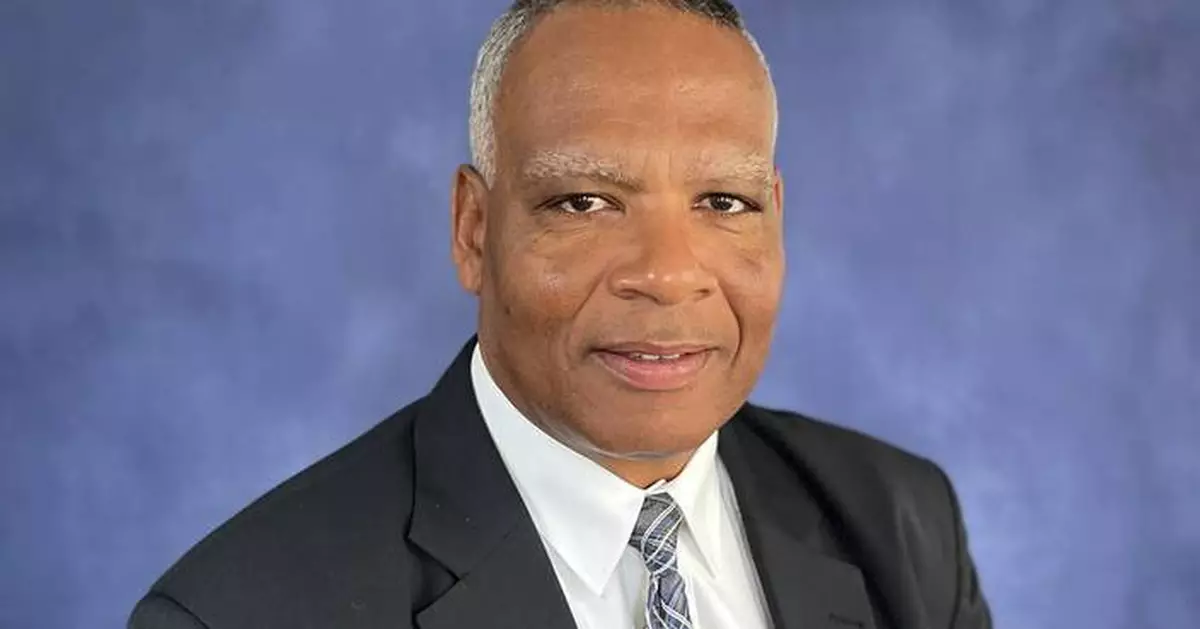
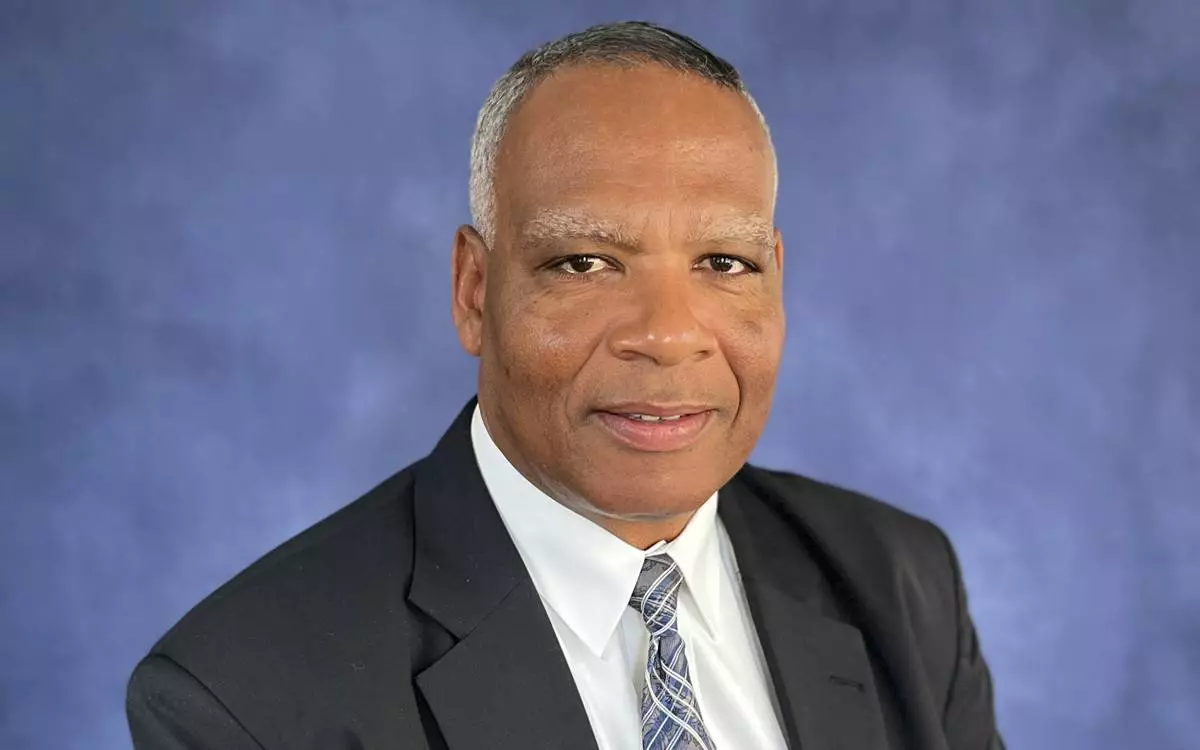
The Armed Forces Benefit Association (AFBA) today announced that Command Sergeant Major (CSM) (Retired) John Sampa will join its Board of Directors effective September 1, 2026, following his service on the Board of Directors of 5Star Life Insurance Company, AFBA’s wholly owned subsidiary.
This press release features multimedia. View the full release here: https://www.businesswire.com/news/home/20260910038217/en/
Sampa's transition to the AFBA Board reflects the enterprise's commitment to strong governance and mission-focused leadership as it continues serving military service members, government employees, first responders, and their families.
"John has been a valued member of the 5Star Life Board, bringing insight, leadership, and a strong commitment to our mission," said General Larry O. Spencer, USAF (Ret.), Chair and President of AFBA and President of 5Star Life. "As he joins the AFBA Board, we look forward to benefiting from his experience and perspective as we continue advancing our purpose of providing financial security and peace of mind to those who serve others."
Sampa has contributed significantly to the enterprise through his service on the 5Star Life Board and will continue supporting AFBA's strategic vision and long-term growth initiatives in his new role.
"It has been an honor to serve on the 5Star Life Board, and I am grateful for the opportunity to continue supporting the AFBA mission in this new capacity," said CSM (Ret.) John Sampa. "I look forward to working alongside my fellow board members to help ensure AFBA remains a trusted source of financial security for those who dedicate their lives to serving and protecting others."
About Armed Forces Benefit Association
With the support of the General of the Army, Dwight D. Eisenhower, the Armed Forces Benefit Association (AFBA) was established in 1947 in the basement of the Pentagon to ease the strain on military members and their families who, at the time, could not purchase life insurance that would pay a death benefit if the member was killed in combat. Today, headquartered in Alexandria, VA, AFBA continues to honor its mission, in war and peace, promoting the welfare of its members by providing survivor and other benefits to those who serve this great nation, including members of the uniformed services, first responders, government employees, and their families. AFBA has 900,000 members with $57 billion of death benefits in force and has paid $2 billion of death benefits since inception. AFBA death benefits are primarily underwritten by its affiliate, 5Star Life Insurance Company (a Lincoln, Nebraska domiciled company). AFBA is not affiliated with any government agency.
AFBA Welcomes CSM (Ret.) John Sampa to Board of Directors
NEW YORK (AP) — Oil prices keep climbing as the war with Iran keeps clogging the global flow of crude, and they got back to where they were before the summer on Thursday. That’s worsening worries about inflation and cranking up pressure within the bond market, helping to send stocks lower again on Wall Street.
The S&P 500 fell 0.4% and is on track for a fourth straight loss, though it’s not far from its all-time high set last month. The Dow Jones Industrial Average was down 227 points, or 0.4%, as of 11:30 a.m. Eastern time, and the Nasdaq composite was 0.4% lower.
Stocks sank under the weight of rising oil prices. Brent crude, the international standard, climbed another 3.5% and got above $105 per barrel for the first time since May.
The price for a barrel of benchmark U.S. crude rose 3.7% and topped the $100 level for the first time since before Memorial Day.
Oil prices have been jumping since early July, when Brent crude was going for less than $72 per barrel, as hopes fade that the United States and Iran may reach a deal soon to fully reopen the Strait of Hormuz and allow oil tankers to freely exit the Persian Gulf. President Donald Trump said on Wednesday that oil prices likely won’t come down until after the U.S. midterm elections in November.
The jump has pushed the price for a gallon of regular gasoline to an average of nearly $4.28 across the United States, according to AAA. That’s up nearly 34% from a year earlier and is not only costing people more at the pump but also through higher prices for all kinds of products that move by truck to store shelves.
A report on Thursday showed that inflation at the U.S. wholesale level accelerated to 5.4% last month from 4.8% in July. Retailers could eventually pass such increases in prices onto shoppers. A report is coming on Friday that will show how much inflation U.S. consumers are feeling.
The typical move to rein in high inflation is for the Federal Reserve to raise its main interest rate, the federal funds rate. Such a move then filters out through the rest of the bond market, makes it more expensive for U.S. households and businesses to borrow money, slows the overall economy and undercuts prices for investments to hopefully remove some of inflation's fuel.
A report on Thursday suggested the U.S. job market may still remain solid, as fewer workers applied for unemployment benefits last week. That could give the Fed confidence the economy may be able to withstand higher interest rates.
Following Thursday’s reports, traders see a roughly 70% chance the Fed will raise the federal funds rate at its meeting next week. That’s up from the 61% probability seen the day before, according to data from CME Group. That’s also despite Trump’s consistent lobbying for interest rates to go lower rather than higher.
The Fed’s counterpart in Europe, the European Central Bank, raised its own interest rates on Thursday in hopes of getting inflation in check. It cited “the conflict in the Middle East” and how it “continues to generate inflation pressures.”
It all pushed the yield on the 10-year Treasury up to 4.92% from 4.83% late Wednesday, which is a significant move for the bond market. It’s up from just 3.97% before the war with Iran began, and it’s back to where it was in the autumn of 2023. That was after the Fed cranked the federal funds rate higher to get super-high inflation coming out of the COVID pandemic under better control.
Higher yields mean investors can make more money from parking their money in bonds, which in turn can make investors less willing to pay high prices for stocks and other investments that carry more risk than bonds.
Some investors are eyeing a 5% yield on the 10-year Treasury as the next potential flashpoint, a level not seen since October 2023. But strategists at Bank of America's Research Investment Committee suggest 7% may be the more important threshold, pointing to how expensive stocks peaked around that point in the past in Japan and on the Nasdaq.
On Wall Street, Macy’s fell 3% even though the retailer reported stronger profit and revenue for the latest quarter than analysts expected. It also raised its forecasts for earnings and other financial measures for its fiscal year, but it warned that “there are macroeconomic and geopolitical factors that could influence” how much its customers feel comfortable spending.
Macy’s said it received $116 million in tariff refunds from the government — $98 million during the quarter and another $18 million after the quarter ended. Macy’s CEO Tony Spring told The Associated Press Thursday that it’s using some of the proceeds to lower prices on certain items like furniture and other big-ticket purchases.
Helping to limit the market's losses was JetBlue Airways, which rose 2.2%. It said booking trends remain strong and customers continue to be willing to pay to fly. It said revenue trends for the latest quarter look to be better than it had earlier forecast, even as its fuel prices climb higher than it had expected.
In stock markets abroad, indexes slipped across much of Europe and Asia. Hong Kong’s Hang Seng dropped 1.3% for one of the world’s biggest moves.
AP Business Writers Anne D’Innocenzio and Elaine Kurtenbach contributed to this report.
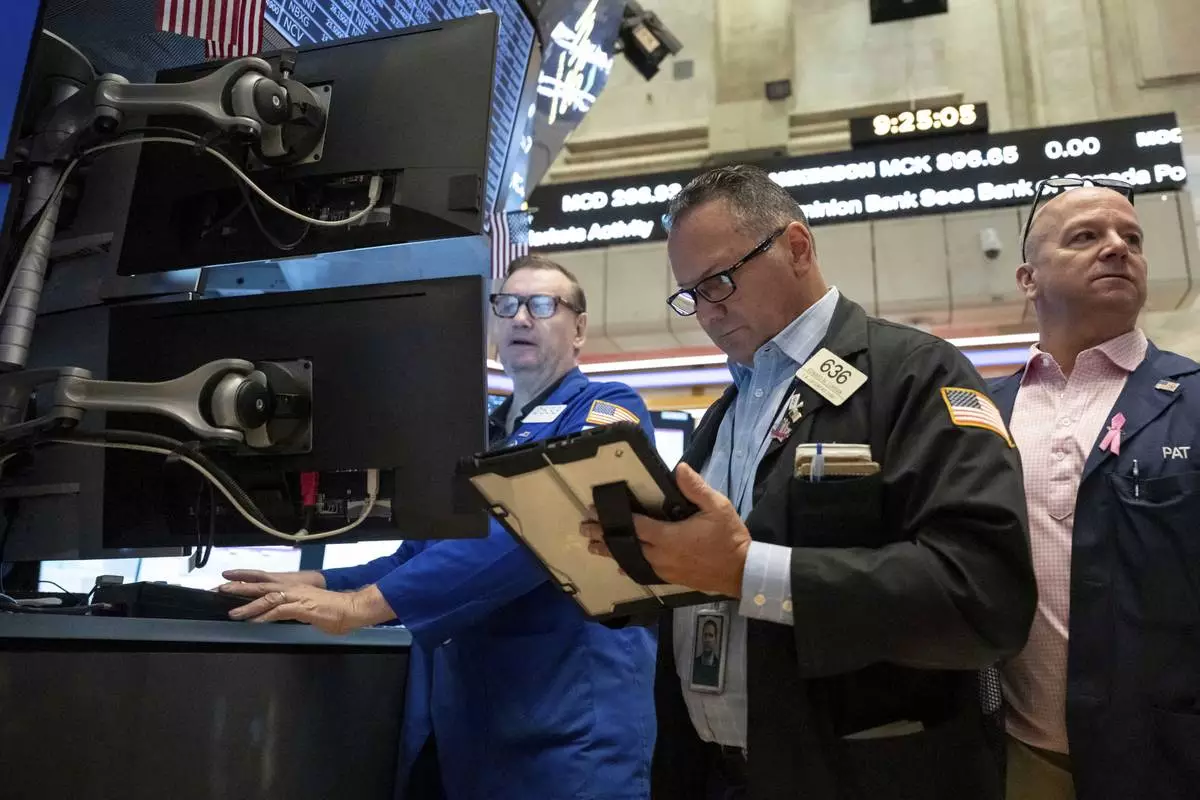
Trader Edward Curran works on the floor of the New York Stock Exchange, Thursday, Aug. 27, 2026, in New York. (AP Photo/Yuki Iwamura)
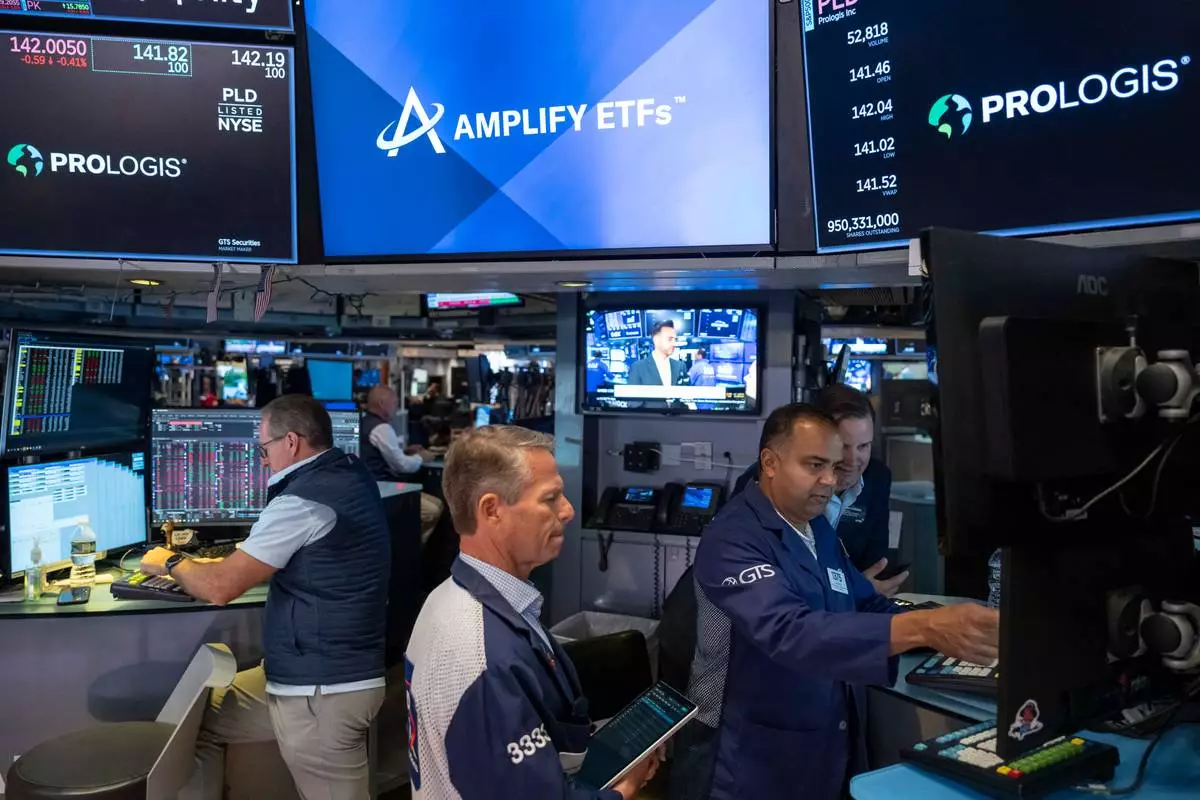
Specialists Dilip Patel, right, and Trader Robert Charmak, center, work on the floor of the New York Stock Exchange, Thursday, Aug. 27, 2026, in New York. (AP Photo/Yuki Iwamura)
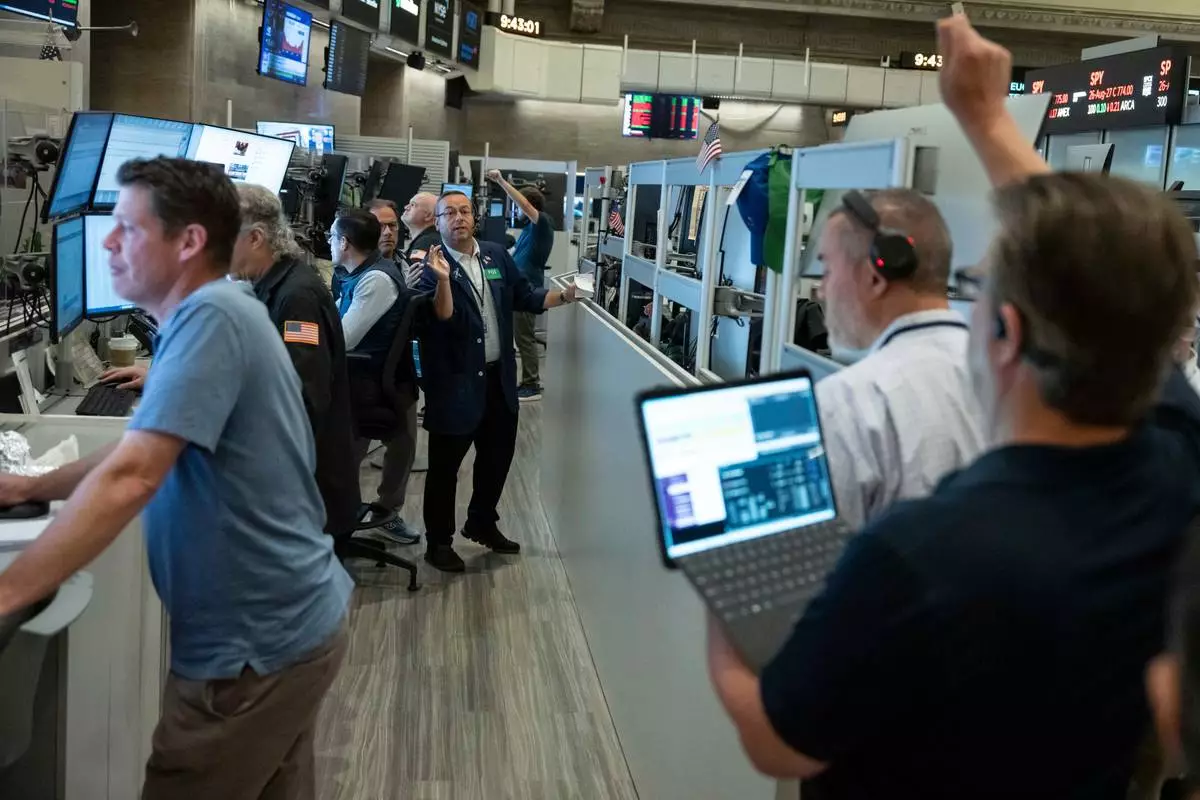
Options trader Matthew Hefter works on the floor of the New York Stock Exchange, Thursday, Aug. 27, 2026, in New York. (AP Photo/Yuki Iwamura)

Currency traders watch monitors at the foreign exchange dealing room of the Hana Bank headquarters in Seoul, South Korea, Thursday, Sept. 10, 2026. (AP Photo/Ahn Young-joon)
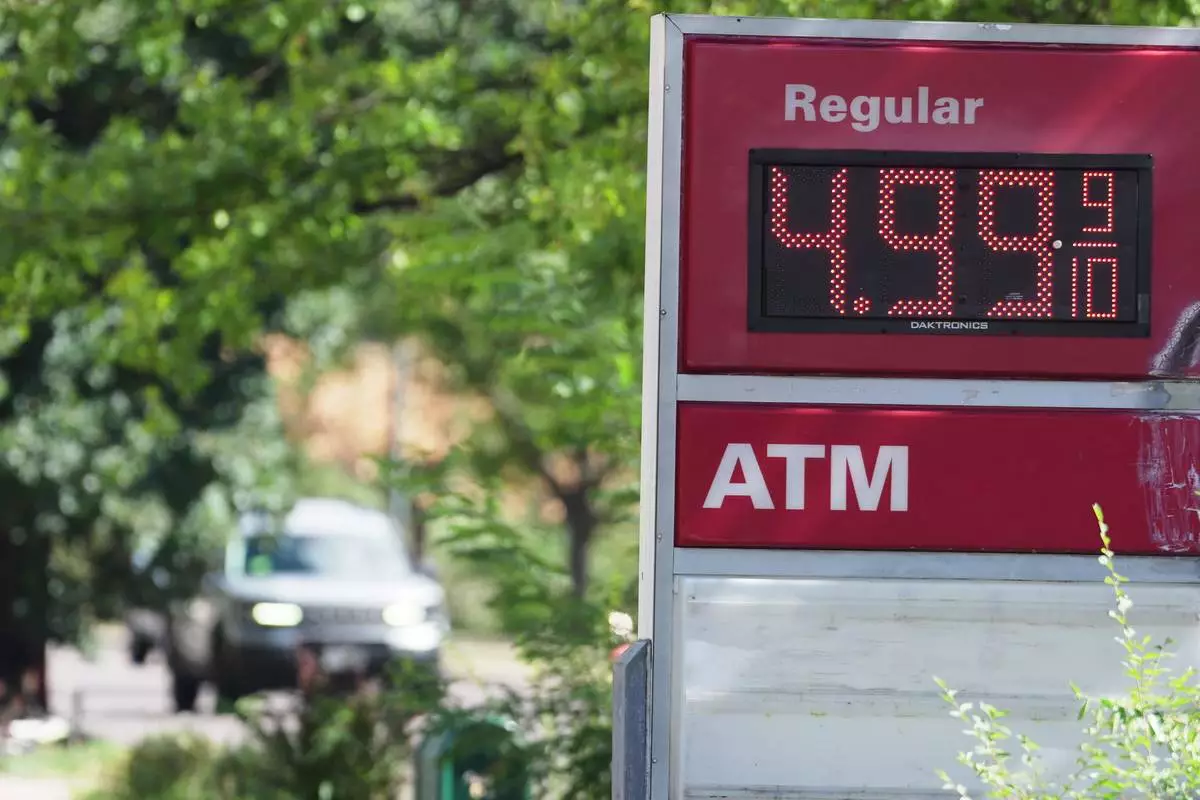
The per-gallon price for regular unleaded fuel is displayed electronically on a sign outside a Conoco gasoline station Wednesday, Sept. 9, 2026, in Denver. (AP Photo/David Zalubowski)
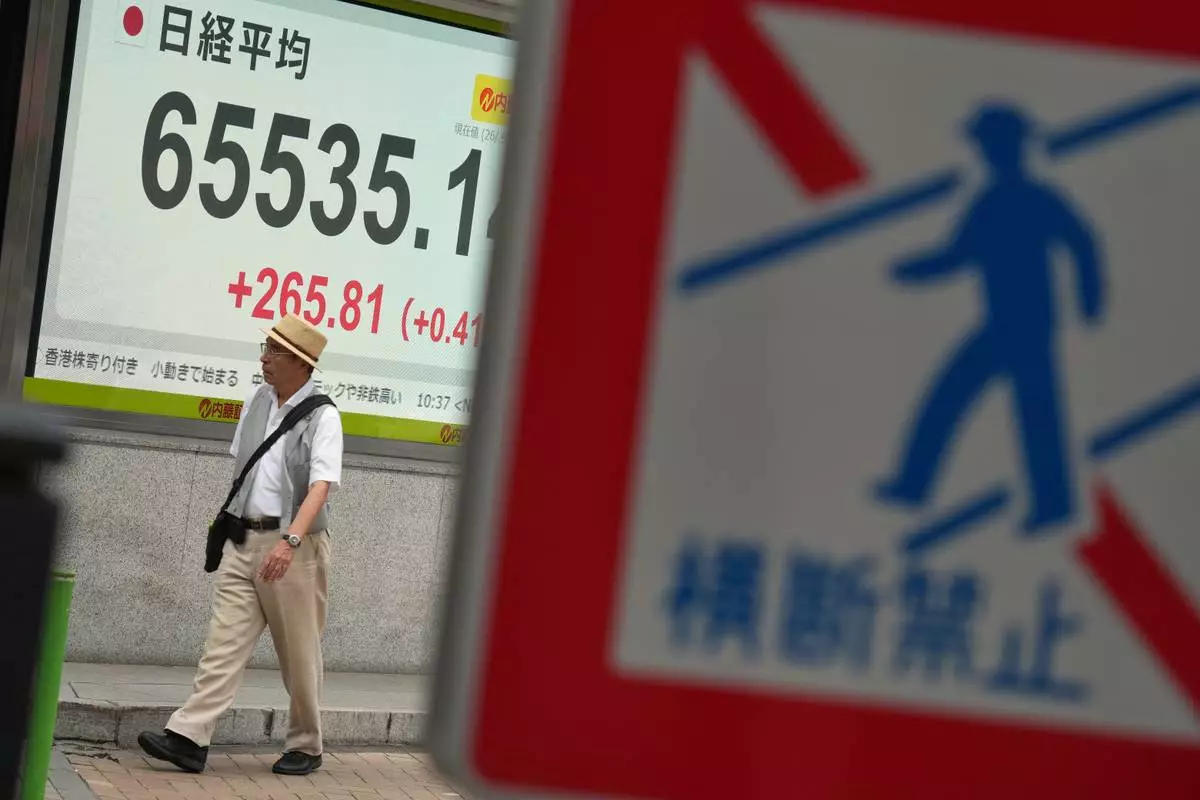
A person walks in front of an electronic stock board showing Japan's Nikkei index at a securities firm Wednesday, Sept. 9, 2026, in Tokyo. (AP Photo/Eugene Hoshiko)

A worker passes by a screen showing the Korea Composite Stock Price Index (KOSPI), SK Hynix and Samsung Electronics Co. stock price at the foreign exchange dealing room of the Hana Bank headquarters in Seoul, South Korea, Thursday, Sept. 10, 2026. (AP Photo/Ahn Young-joon)