CALGARY, Canada--(BUSINESS WIRE)--Sep 10, 2026--
Blackline Safety, a global leader in connected safety technology, will feature its new G8 connected safety wearable at the 2026 National Safety Council (NSC) Safety Congress and Expo in Indianapolis, Indiana, following strong early customer adoption.
This press release features multimedia. View the full release here: https://www.businesswire.com/news/home/20260910809699/en/
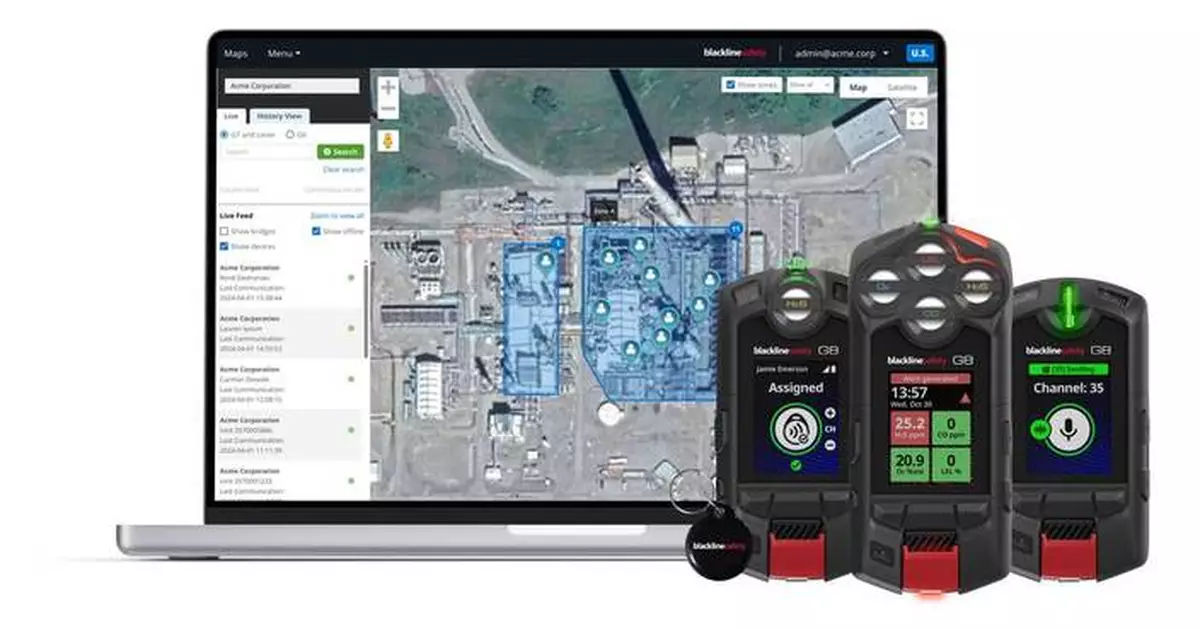
Blackline Safety's new G8 connected safety wearable is being adopted by organizations worldwide to increase visibility into worker wellbeing and save lives.
Since G8 began shipping in March 2026, both new and long-standing Blackline customers have moved to the next generation of connected safety technology.
G8 combines connected gas detection, lone worker protection, two-way push-to-talk and live field data in a single compact wearable that gives safety and operations leaders a clearer view of what's happening across their worksites through the Blackline Live platform.
“When a worker is in trouble, every second counts,” said Cody Slater, CEO, Blackline Safety. “Knowing there’s a problem is only the first step. G8 ensures you know exactly what’s happening, where that worker is, and how to reach them immediately. In an emergency, that ability to act in real time can make the difference between rescue and recovery.”
Three G8 capabilities generating particular interest include:
Built-in Push-to-Talk (PTT): allowing workers to talk directly with each other and their safety and monitoring teams through a single portable device. For organizations operating in high-risk environments, immediate voice communication can help teams coordinate work and respond quickly if something goes wrong.
Zone Intelligence: Blackline has expanded the Blackline Live platform behind G8 with ZoneAware™ geofencing this summer. This allows organizations to define specific worksite zones to see worker locations, movement and activity, and use that information to support emergency response, evacuation, and compliance.
New CSA-certified hydrogen (H2) sensor: This newly available low-range H2 sensor expands gas detection options for North American customers working around hydrogen, offering them an expanded detection portfolio for their G8 devices.
Among the organizations adopting G8 is Vida Bioenergy, a European bioenergy production company, which needed a fully connected solution for its new plant that included gas detection, lone worker protection, and communication for its staff and contractors.
“G8 makes work as safe as it could possibly be,” said Dr. Gary Cartwright, Plant Manager, Vida Bioenergy. “I had free choice to go anywhere I liked, but the G8 was just so good, so robust and, in my view, it was the best on the market.”
G8 and Blackline Live have also earned recognition across the industry, including two OH&S Industrial Hygiene Awards, in the “IoT — Connected Devices” and “Software” categories, and a Safety and Health Excellence Award.
See G8 and Join Blackline’s Safety Huddle presentation at NSC
Attendees can see and interact with G8 and Blackline's broader connected safety platform at booth #2213 on the expo floor from Sept. 14–16 in Indianapolis. Blackline’s Director of Product Management, Mike Brown, will also be giving a live demo of G8 at the New Product Showcase (booth #1977) on Monday, Sept. 14 at 12:30 p.m. ET.
Blackline Safety’s Yves Carrier will present a Safety Huddle session, “Where Safety Breaks Down: What New Research Tells Us,” on Monday, Sept. 14 at 10:00 a.m. ET. Drawing on Blackline’s new Keeping People Safe research, the session will explore where gaps can emerge between safety protocols and what happens in the field, and practical ways organizations can improve safety outcomes.
About Blackline Safety: Blackline Safety is a technology leader driving innovation in the industrial workforce through IoT (Internet of Things). With connected safety devices and predictive analytics, Blackline enables companies to drive towards increased safety and improved operational performance. Blackline provides wearable devices, personal and area gas monitoring, cloud-connected software and data analytics to meet demanding safety challenges and enhance overall productivity for organizations with customers in more than 75 countries. Armed with cellular and satellite connectivity, Blackline provides a lifeline to tens of thousands of people, having reported over 336 billion data-points and initiated over eight million emergency alerts. For more information, visit BlacklineSafety.com and connect with us on Facebook, X (formerly Twitter), LinkedIn and Instagram.
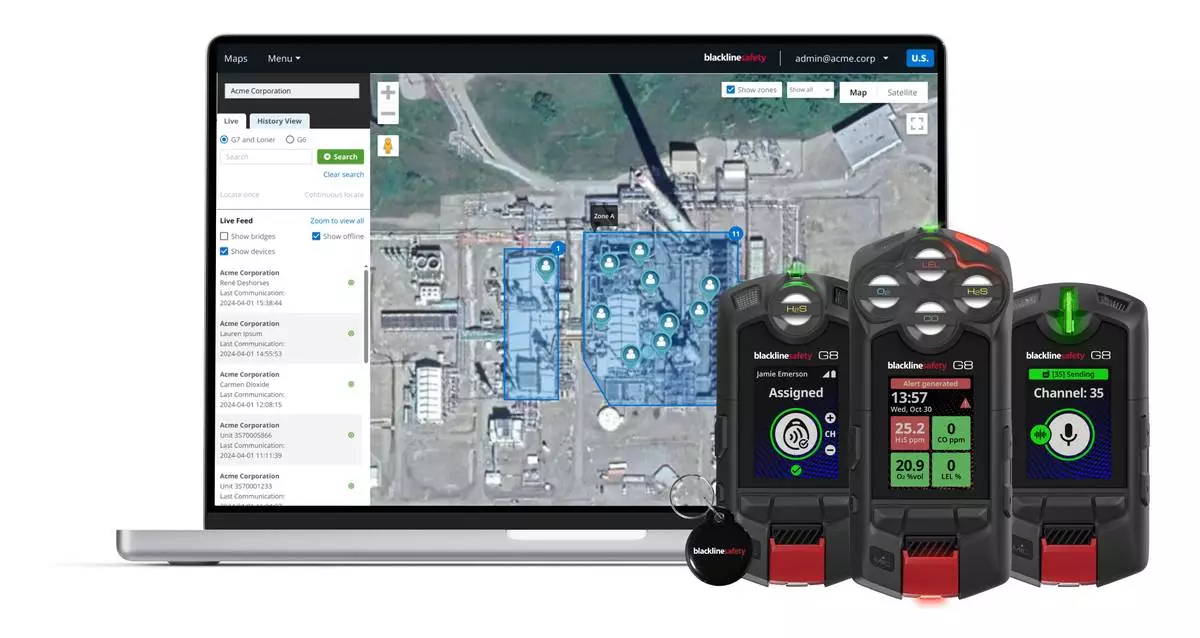
Blackline Safety's G8 wearable combines portable gas detection, lone worker protection, radio communication, and live field data in a single compact device.
JEFFERSON CITY, Mo. (AP) — The U.S. Supreme Court again rejected Missouri congressional maps backed by President Donald Trump on Thursday, a loss for Republicans trying to maintain control of the House in the pivotal midterm elections.
The decision appears to clear the way for the state to use a map passed in 2022, as the state's highest court ordered.
It's part of a pitched legal battle that has created confusion for voters and others shortly before ballots begin going out for the November elections. The Trump administration had urged the court to keep the president’s preferred maps, which were aimed at gaining one additional GOP House seat.
No Supreme Court justices publicly dissented from the brief order. It did not detail the court’s legal reasoning, as is typical in emergency appeals.
Meanwhile, the legal fight featuring dueling orders from different courts continued unfolding in Missouri, where the state's top court held a hearing Thursday on whether to hold Republican Secretary of State Denny Hoskins in contempt for not following its orders to use districts passed after the last census. Hoskins had instead told local election authorities to use the new Trump-backed map, pointing to a competing order from a federal judge on Tuesday requiring its use.
Missouri Supreme Court judges, while questioning a state attorney representing Hoskins, repeatedly pressed for Hoskins to send out new guidance Thursday to use the 2022 version of the congressional districts. The court made no immediate decision on whether to hold Hoskins in contempt for his actions but urged him not to stray too far from the state's capital of Jefferson City.
“We're in a precarious situation,” Chief Justice W. Brent Powell said.
Hoskins sat silently in the center of the courtroom's front row but left without answering reporters' questions. Republican Attorney General Catherine Hanaway also left without answering questions.
Missouri Deputy Solicitor General William Seidleck told the court that Hoskins is evaluating his next steps.
The U.S. Supreme Court's decision likely means Missouri will run the general election with a different congressional map than was used in the primary. Some people might not be able to vote for the same candidate they chose in the primary. It’s an unusual situation that leaves Missouri without a clear-cut example to follow.
The White House did not immediately respond to a request for comment on the U.S. Supreme Court decision.
Missouri’s battle over its congressional districts has spanned more than a year and spawned confusion over which districts will be in place for voters.
It was the second Republican-led state, after Texas, to enact new districts after Trump urged Republicans last year to redraw House districts to their advantage ahead of the midterm elections.
The revised districts target a Kansas City-based seat held by Democratic Rep. Emanuel Cleaver by shedding parts into neighboring districts and stretching the remainder into rural Republican areas. The goal is to help Republicans win seven of the state’s eight House seats in the midterm elections.
Redistricting opponents collected hundreds of thousands of petition signatures seeking to force a statewide vote on the new districts. They submitted the signatures in December. But Hoskins waited until August — on the same day as Missouri’s primary — to reject the petition. Hoskins asserted that a referendum petition could not be used for congressional redistricting.
The delay allowed Missouri to use the new districts in its August primary. Republican state officials have argued it would violate voters' federal rights to switch districts before the general election.
But the Missouri Supreme Court last week ordered Hoskins to put the redistricting referendum on the November ballot, which he did. It also ruled that the new districts never became law and instead were suspended retroactively to the December petition submission.
The state then appealed to the U.S. Supreme Court to block the state court decision. Justice Brett Kavanaugh rejected the request.
The court barred Hoskins from using the new map and said the old map — passed by Republican lawmakers in 2022 after the last census — must be used in the November election.
The group People Not Politicians Missouri, which sponsored the redistricting referendum, applauded the Supreme Court decisions that left the state court ruling in place.
“The law is the law, the Missouri constitution is clear as was the Missouri Supreme Court,” said Executive Director Richard von Glahn. “The courts have settled this, now it’s up to Missouri voters to finish the job and vote NO on Proposition A.”
Whitehurst reported from Washington.
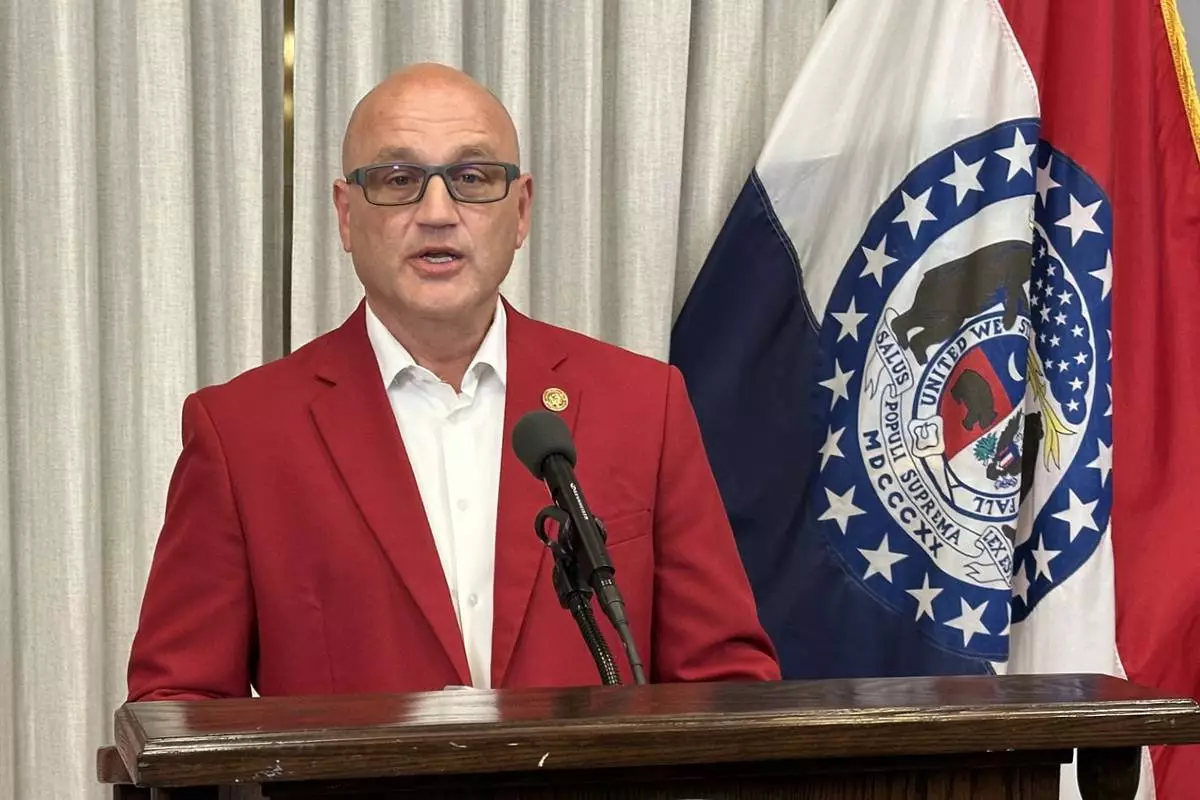
FILE - Missouri Secretary of State Denny Hoskins talks to reporters Tuesday, Aug. 4, 2026, at his office in the state Capitol in Jefferson City, Mo. (AP Photo/David A. Lieb, File)
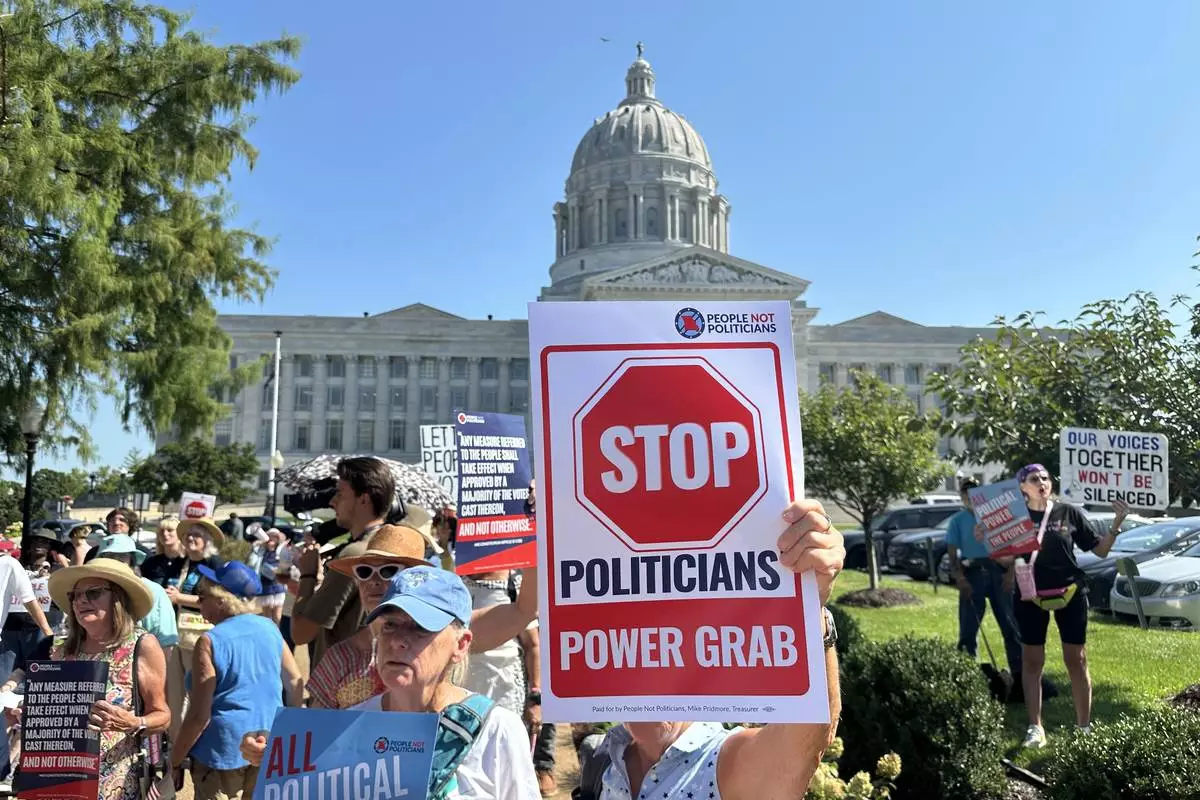
In this photo taken with a smartphone, people opposed to a congressional redistricting plan rally outside the Missouri Capitol in Jefferson City, Mo., Wednesday, Sept. 2, 2026. (AP Photo/David A. Lieb)