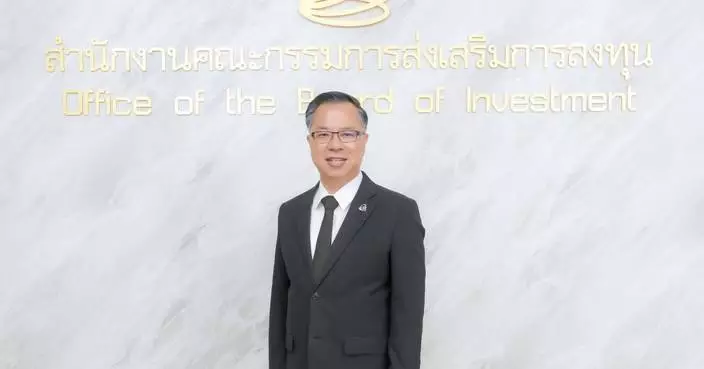
BANGKOK, THAILAND – Media OutReach Newswire – 11 September 2026 – Thailand is fast-tracking regulatory approval for $3.66 billion (121 billion baht) in strategic industrial investment. The move is part of a broader overhaul of the national investment regime, aimed at anchoring high-value global supply chains and boosting capital-market listings.
The Thailand Board of Investment (BOI) approved the pivot at a meeting chaired by Deputy Prime Minister and Finance Minister Ekniti Nitithanprapas. It is concentrating resources on advanced manufacturing, technology transfer, and domestic vendor integration, phasing out tax breaks for low-margin operations along the way.
BOI is also changing how it measures success, shifting from application volume to realized outcomes. New strategic indicators will track domestic value added, SME integration into supply chains, high-skill job creation, research and development, technology transfer, capital-market linkages, and realized investment. Operational indicators will track how many approved projects convert into actual investment and how quickly approvals are granted. At the same time, the BOI will integrate its investment promotion tools with the measures and mechanisms of relevant agencies to ensure comprehensive investment support and deliver tangible results.
"Our focus has decisively shifted toward the realized quality and tangible domestic value of every investment committed," said Mr. Narit Therdsteerasukdi, Secretary General of the Thailand Board of Investment. "We are deploying targeted, proactive measures for strategic sectors. This will lift national investment to 30% of GDP, drive annual economic growth above 3%, and support Thailand's push to reach the top 20 in global competitiveness and become a high-income nation within 12 years."
BOI also cleared its third batch of Thailand FastPass projects: 17 investments from 15 companies worth $3.66 billion (121 billion baht), expected to create more than 14,000 jobs. Electronics and electrical component manufacturers dominated the intake, securing 10 projects valued at $2.54 billion (83.92 billion baht) — nearly 70% of the batch. The remaining seven projects span high-grade processed foods at $735.4 million (24.34 billion baht), pet nutrition at $265.9 million (8.80 billion baht), and precision machinery and automotive parts at $131.8 million (4.36 billion baht).
The addition brings Thailand's cumulative FastPass portfolio across three intakes to 42 strategic projects worth $10.39 billion (344 billion baht) and 27,000 skilled positions. The mechanism enforces strict Service Level Agreements across state agencies to resolve licensing bottlenecks and speed the transition from application to plant commissioning.
The first two intakes cleared 25 projects from 23 companies worth more than $6.74 billion (223 billion baht), expected to create over 13,000 quality jobs. All 25 have received investment promotion approval, and 19 have been issued investment certificates. Of those, 11 have completed every required permit within the Service Level Agreement window. Projects already in the FastPass pipeline have invested more than $634.4 million (21 billion baht) to date.
Alongside the fast-track mechanism, BOI launched "BOI to IPO" with the Securities and Exchange Commission (SEC) and the Stock Exchange of Thailand (SET), targeting high-potential, BOI-promoted companies — particularly in New Economy sectors — to raise capital and expand locally. The SEC has accelerated its IPO approval timeline while SET is easing market-capitalization and track-record requirements for New Economy listings and adding a special track for BOI- and EEC-promoted companies.
Enterprises listed on the SET, the Market for Alternative Investment (mai), or the growth-focused LiVEx board can claim added tax benefits under two tracks: SET-certified "New Economy" companies get up to three additional tax-free years, or a 50% rate cut for five years; other promoted companies get up to two additional tax-free years, or a 50% rate cut for three years.
The proposed framework aims to replicate the path taken by market heavyweights such as Delta Electronics (Thailand) PCL and Cal-Comp Electronics (Thailand) PCL. Both entered Thailand as foreign manufacturers, then listed on the Thai stock exchange to finance large-scale production and local engineering hubs.
"The BOI-to-IPO measure links our investment promotion policy to the capital market," Mr. Narit said. "It lets companies that have invested and succeeded in Thailand raise capital to expand plants and production lines, invest in technology and R&D, or grow into overseas markets using Thailand as a base. This sustains investment and lets Thai investors take part in high-growth companies, creating long-term value for the Thai economy."
In separate project rulings, the board cleared $291.2 million (9.64 billion baht) in direct capital applications across three projects. Wind Mahasarakham 1 Co., Ltd. secured approval for a $95.8 million (3.17 billion baht) investment to build a 90-megawatt wind farm in Maha Sarakham province, supplying clean energy to the state grid under the Electricity Generating Authority of Thailand. Precision Plastic Co., Ltd. was granted approval for a $61.4 million (2.03 billion baht) expansion into sterile, aseptic food and beverage packaging production in Ayutthaya province. ShuCan (Thailand) Co., Ltd., a unit of China's Chengdu-based ShuCan Technology Group, secured approval for a $134.0 million (4.44 billion baht) expansion of its printed circuit board assembly operation, using full-line surface-mount technology to support a key customer relocating production to Thailand. The project is based in the Nong Lalok Industrial Estate in Rayong province.
"Our broader mission is to transition from standard investment facilitation to serving as an active catalyst for structural economic transformation," Mr. Narit said in closing. "By tying incentives directly to technology sharing, local supplier integration, and advanced manufacturing capabilities, we are ensuring that every project strengthens Thailand's long-term industrial resilience and competitiveness on the world stage."
Note: Currency conversions are based on the Bank of Thailand's average selling rate of approximately 1 USD = 33.1 THB.
Hashtag: #Thailandboardofinvestment #BOI #FDI #Investment
https://www.boi.go.th/en/index/
The issuer is solely responsible for the content of this announcement.
Thailand Board of Investment (BOI)
Established in 1966, the Office of the Board of Investment (BOI) has promoted value-adding investment from foreign and Thai investors for over 60 years, strengthening national competitiveness and driving Thailand's shift toward a higher-value economy.
Investment Services Center — PR Section, The Office of the Board of Investment (BOI)
555 Vibhavadi-Rangsit Road, Chatuchak, Bangkok 10900 Tel. +66 (0) 2553 8111, Fax: +66 (0) 2553 8222
** This press release is distributed by Media OutReach Newswire through automated distribution system, for which the client assumes full responsibility. **
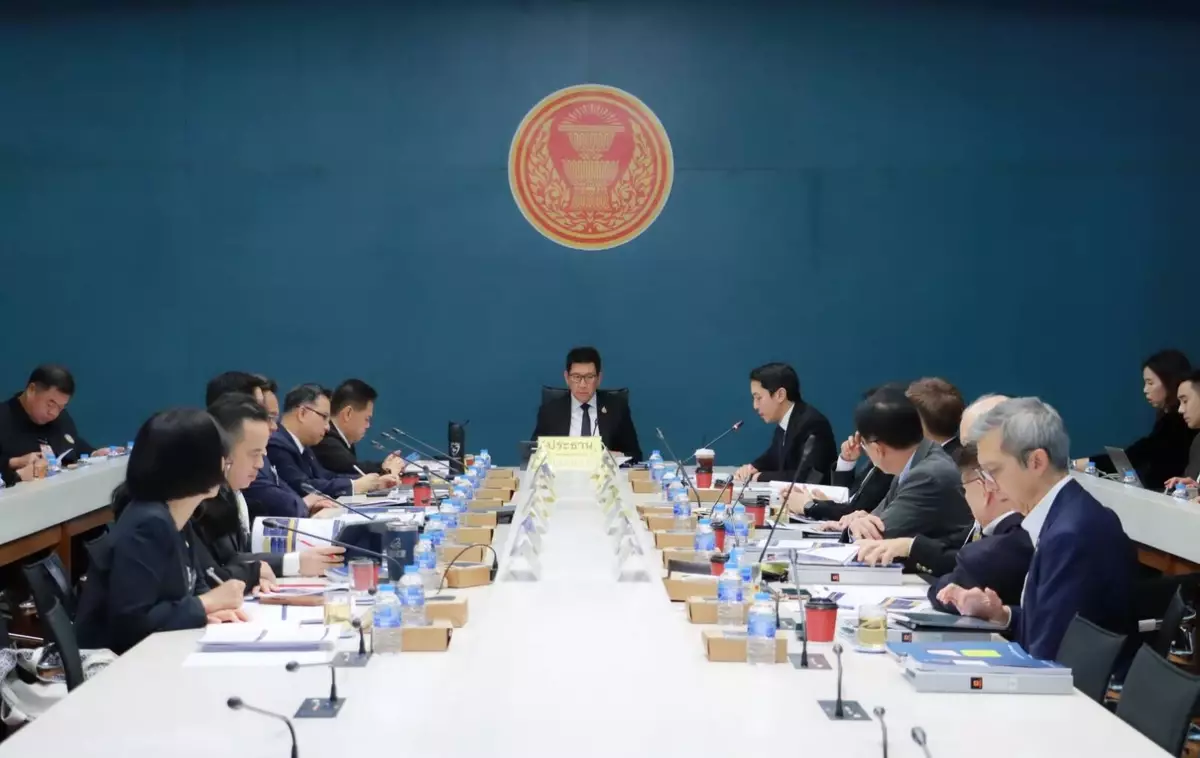
Thailand Board of Investment Meeting
Grade A Office Availability Rate Drops Further, High Street Leasing Activities Focus on Kowloon
- Residential Market: Market sentiment turned more cautious in Q3, with total residential transaction numbers slipping by 40% q-o-q and 21% y-o-y to record around 13,240 cases. Home prices softened by 0.8% between July and August, yet, supported by stronger 1H performance, still recorded a cumulative rise of 7% in the first eight months of 2026.
- Grade A Office Market: Citywide net absorption reached 412,400 sq ft in Q3, mainly driven by expansion activities by the banking, financial services and insurance (BFSI) sector. Rents in Greater Central continued to pick up, while rental level declines in non-core submarkets narrowed. The overall office market rental level is expected to rise by +5% to +7% in 2026.
- Retail Market: Overall retail sales growth remained resilient on the back of growing tourist arrivals and stronger economic fundamentals supporting local consumption sentiment. The overall high street vacancy rate remained broadly stable in Q3, with leasing activities concentrated in Mongkok and Tsimshatsui.
HONG KONG SAR – Media OutReach Newswire – 5 October 2026 – Global real estate services firm Cushman & Wakefield today held its Hong Kong Property Markets Q3 2026 Review andOutlook press conference. The Hong Kong residential market entered a consolidation phase in Q3 amid a shift in the U.S. Federal Reserve's interest rate outlook, increased stock market volatility, and tighter cross-border capital controls in the Chinese mainland. Against this backdrop, residential transaction numbers dropped by 40% q-o-q to record around 13,240 cases in Q3, while home prices declined by 0.8% during July and August. In the Grade A office market, the total new leased area for Q3 reached 1.4 million sq ft, the highest quarterly level since 2019, supported by expansion activities from the BFSI sector. Citywide net absorption reached +412,400 sq ft for the quarter, bringing the overall availability rate to trend further downward, while YTD rental growth recorded +6.1%. In the retail sector, total retail sales remained resilient in Q3. The overall high street vacancy rate remained broadly stable during the quarter, chiefly supported by more active leasing commitments in Mongkok. Leasing activity in Hong Kong Island districts moderated somewhat.
Grade A office leasing market:BSFI expansion demand fuels leasing momentum
The Q3 2026 period marked another active quarter for Hong Kong's Grade A office market. Total new leased area reached 1.4 million sq ft in Q3, the highest quarterly level since 2019. The banking, financial services, and insurance (BFSI) sector, and consumer products / manufacturing sectors, were the key demand drivers, with BFSI occupiers largely expansion-led. Citywide net absorption reached +412,400 sq ft in the quarter. This performance helped pull down the overall availability rate 0.4 percentage point q-o-q to 19.1%. Core district rents continued to outperform non-core areas. Greater Central rents continued to climb by a further 3.0% q-o-q in Q3, while non-core area rental level declines further narrowed. Rents in Hong Kong East and Hong Kong South edged up slightly in Q3. The overall citywide rental level rose by 1.7% q-o-q in Q3, bringing YTD rental growth to +6.1%.
John Siu, Managing Director, Hong Kong, Cushman & Wakefield,said, "Rents in Greater Central grew by 13% YTD, reflecting strong demand for prime offices. However, mid-priced Grade A offices, particularly those with net effective rents of around HK$45-60 psf, are expected to continue facing headwinds, as abundant existing space and forthcoming supply across multiple submarkets within this price range is likely to sustain intense competition."
Siu added, "Looking ahead, positive market momentum is likely to partly offset the scheduled 1.2 million sq ft of new supply in Q4, keeping the availability rate broadly stable at 19% to 20% at the year-end. With a decelerating supply pipeline beyond 2026, availability may have passed its cyclical peak in 2025, but non-core areas will continue to face absorption pressure. Full-year rental growth in Greater Central is now projected to grow by +12% to +14%, supporting the citywide Grade A office rental level to rise by +5% to +7% in 2026."
Retail leasing market: Retail sales growth remains resilient, with Mongkok leading high street leasing activities
Hong Kong retail sales growth remained resilient in Q3, driven by growing tourist arrivals and stronger economic fundamentals supporting local consumption sentiment. The city's overall retail sales for the January to August 2026 period reached HK$266 billion, up 8.5% y-o-y. Among key retail categories, the Jewellery & Watches sector recorded the strongest performance, recording y-o-y sales growth of 22.6%. Other sectors, such as Medicines & Cosmetics (+5.0%) and Fashion & Accessories (+3.2%), recorded more modest low single-digit growth.
The overall high street vacancy rate remained broadly stable at 5.4% in Q3, chiefly supported by more active leasing commitments in Mongkok, with the district's vacancy rate dropping to 4.8% from 8.6% in Q2. In Tsimshatsui, although the vacancy rate moved up to 9.5%, notable new transactions were also recorded during the quarter. On Hong Kong Island, vacancy rates in Causeway Bay and Central increased in Q3, rising to 5.1% and 1.4%, respectively, after remaining at 0% for two consecutive quarters. With prime retail spaces in both districts fully occupied in previous quarters, leasing activity moderated in Q3.
High street retail rents in both Causeway Bay and Tsimshatsui remained unchanged in the quarter. In Mongkok, stronger leasing momentum supported a 0.4% q-o-q rise in rental levels. As for Tsimshatsui, a slowdown in the luxury segment combined with relatively high vacancy weighed on the district's rental performance, resulting in a fall of 1.1% q-o-q. In the F&B sector, rents remained under pressure amid high availability, dropping within a 1% range q-o-q across the four key districts.
John Siu commented, "We have observed stronger leasing demand from Japanese, South Korean and Thai brands in recent months. Looking at the first-stores recorded so far this year, approximately 36% originated from Japan, South Korea and Thailand, similar to the share accounted for by Chinese mainland brands, while exceeding the 29% recorded for 2025 full-year. We expect this trend to continue through the remainder of the year. Looking ahead, the Hong Kong retail market is expected to remain supported by resilient local consumption resulting from stronger economic fundamentals, together with greater tourist spending underpinned by a stronger RMB, and a pipeline of planned mega-events. These factors will bring continued momentum to the city's retail market. We also expect local and non-local retailers to remain selective, with demand focused on well-located retail spaces in core districts offering attractive rental packages. In turn, the city's retail market is likely to maintain a gradual recovery trajectory. We forecast high street retail rents in Causeway Bay and Central to pick up by 2% to 3% y-o-y in 2026, with Tsimshatsui and Mongkok recording modest rental growth of 1% to 2% y-o-y."
Residential Market: Home prices consolidate as transaction numbers cool in Q3, rate hikes remain key
The Hong Kong residential market consolidated somewhat in Q3 following the strong momentum recorded in 1H. After the sustained release of purchasing power over the past year, coupled with the shift of the U.S. Federal Reserve rate direction, increased stock market volatility and heightened uncertainties, some prospective buyers reverted to a wait-and-see stance. This resulted in a noticeable slowdown in transaction activity from July onwards. The monthly transaction number, which averaged more than 7,000 cases in Q2, fell back to around 4,000 deals between July and September. A total of 13,242 residential transactions were recorded in Q3, down 40% q-o-q, bringing cumulative transactions to reach 54,052 cases for the first nine months of the year, representing an 18% increase y-o-y.
Edgar Lai, Senior Director, Valuation and Consultancy Services, Hong Kong, Cushman & Wakefield, commented, "Housing price growth momentum decelerated in Q3 2026. Rating and Valuation Department data suggests that the overall residential price index softened by 0.8% in the two months from July to August, yet still achieved 7.0% growth for the first eight months of 2026. Meanwhile, our Cushman & Wakefield mid-and-small size units price index shows that home prices mildly dropped 0.1% q-o-q, yet still registering a cumulative increase of 7.7% year to date. Our tracking of popular housing estates shows that prices softened in Q3 across different market segments. Prices at City One Shatin, representing the mass market, declined by 5.7% q-o-q, while prices at Taikoo Shing, representing the mid-market, dropped by 0.6% q-o-q. Residence Bel-Air, representing the luxury segment, retreated by 3.8% q-o-q. Following the sustained release of purchasing power over the past year, coupled with tighter cross-border capital controls from the Chinese mainland, and the U.S. Fed rate hike of 0.25% in September, our September Verbal Enquiry Index declined by 35% compared with the peak seen in May."
Rosanna Tang, Deputy Managing Director, Head of Research, Hong Kong, Cushman & Wakefield, added, "The city's residential market consolidated in Q3, with monthly transactions retreating to around 4,000 cases. The slowdown reflects a more cautious stance among homebuyers amid shifting interest rate expectations and heightened external uncertainties. Looking ahead, the frequency and pace of rate hikes, together with whether local banks will follow suit, will be the key factors affecting homebuyers' purchasing decisions and affordability. Given the slower pace of transactions in Q3, we have revised our full-year residential transaction forecast to around 67,000 to 68,000 cases.
"As for pricing, should the U.S. Fed rate further increase in Q4, the residential market is expected to remain in a consolidation phase, with 2026 annual home prices likely to fluctuate in a narrow range near +7%. The rental market, however, will be more resilient underpinned by rental demand brought by the inflow of talent, non-local students, and new entrants to the city. With rental growth of 4.9% recorded in the first eight months of the year, we project a 5% to 7% y-o-y increase for the full year of 2026."
Hashtag: #CWK
The issuer is solely responsible for the content of this announcement.
About Cushman & Wakefield
Cushman & Wakefield (NYSE: CWK) is a leading global commercial real estate services firm for property owners and occupiers with approximately 53,000 employees in nearly 350 offices and 60 countries. In Greater China, a network of 23 offices serves local markets across the region. In 2025, the firm reported revenue of $10.3 billion across its core services of Valuation, Consulting, Project & Development Services, Capital Markets, Project & Occupier Services, Industrial & Logistics, Retail, and others. Built around the belief that Better never settles, the firm receives numerous industry and business accolades for its award-winning culture. For additional information, visit www.cushmanwakefield.com.hk or follow us on LinkedIn (https://www.linkedin.com/company/cushman-&-wakefield-greater-china).
** This press release is distributed by Media OutReach Newswire through automated distribution system, for which the client assumes full responsibility. **