Sudan is grappling with a severe public health crisis as multiple infectious diseases spread across several regions amid ongoing armed conflict and a weakened medical system.
The country's healthcare system has been devastated by more than three years of armed conflict. While the government is working to restore medical services, shortages of medicines, medical supplies and staff continue to undermine urgently needed care.
At the same time, outbreaks of cholera, dengue fever, malaria, and some other illnesses are sweeping through many parts of the country.
This June, a fresh wave of cholera began spreading in Darfur and Kordofan. According to the World Health Organization, nearly 2,900 cases have been reported so far, including 247 deaths. UN data shows repeated cholera outbreaks have killed over 3,500 people in Sudan since July 2024.
Meanwhile, dengue fever and malaria have also surged in states like Gezira and Blue Nile. "Recently, over 680 cases of dengue fever have been recorded in Blue Nile State, and the number continues to rise. We hope that relevant aid organizations will act immediately and provide support," said Mustafa Jabrallah, health minister of Blue Nile State.
The ongoing conflict has left Sudan's medical system under severe financial strain, with widespread shortages of supplies and personnel. Basic public health services, such as waste collection, drainage maintenance, and environmental sanitation, have been severely disrupted. Clean drinking water is scarce in many areas, further increasing the risk of disease transmission.
"The dengue fever outbreak is spreading rapidly from Blue Nile to other regions. Treatment is extremely expensive, requiring many medicines and nutritional supplements. But the shortage of medicine is severe, and many people are struggling desperately," said Jaffer Hassan, a local resident.
To curb the outbreaks, Sudan's Ministry of Health has started cholera vaccination campaigns in Darfur and Kordofan. Humanitarian groups are also expanding safe drinking water supplies and stepping up sanitation efforts.
Despite the efforts, heavy rains, high temperatures, and rising mosquito populations in some regions continue to pose challenges to disease control.
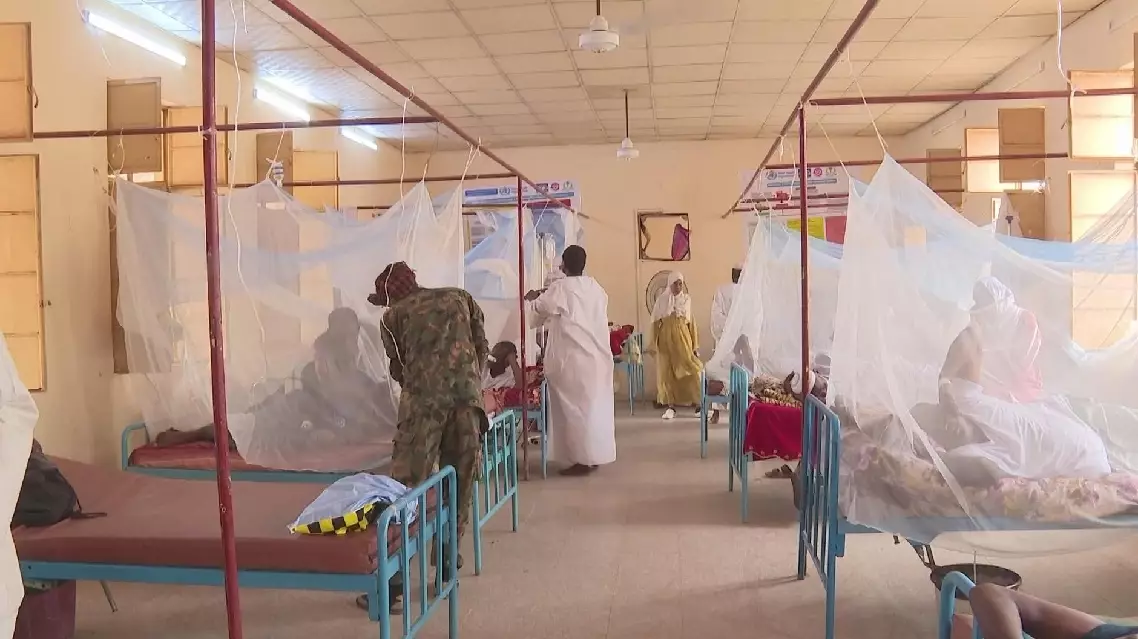
Multiple disease outbreaks push sudan toward health crisis
After more than three months at sea, members of China's 16th Arctic Ocean expedition have jointly created a painting that captures both the triumphs and trials of polar scientific research.
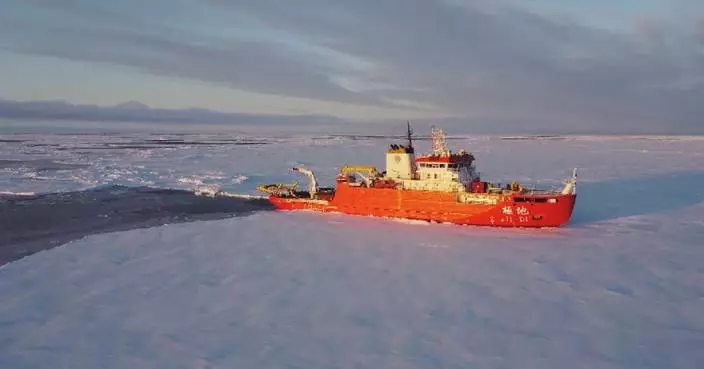
Organized by the Ministry of Natural Resources, the expedition deployed four ships, Xuelong, Xuelong 2, Jidi, and Tansuo 3, to study extreme environmental changes in the Arctic against the backdrop of accelerating global warming. On September 29, Xuelong and Xuelong 2 returned to Shanghai after completing their missions.
During the voyage, China Media Group (CMG) reporters aboard Xuelong invited nearly 100 crew members to collaborate on a canvas, sharing their experiences. The painting depicts the difficulties and challenges they faced, the honors and expectations of their research, and the images of those dedicated to science.
Before any crew member ever picked up a brush, the Arctic had already sketched the background with its extreme weather. Strong winds, torrents, and a harsh environment posed major challenges for the researchers.
"After staying outside for some five or ten minutes, our hands would already be frozen red. When we reached the trough of the waves [on a boat], it would look as if the waves were coming right over our heads," recalled Zhu Chengwei, an expedition member.
Despite the hardship, the researchers successfully tested and used domestically produced advanced ocean observation equipment in polar research -- one of their proudest moments, which they recorded on the canvas.
Qin Chuan, captain of the Xuelong ocean team, chose to paint a domestically produced monitor float.
"This is an Argo float we deployed, which automatically monitors ocean profiles. It has great significance for understanding the basic marine environment, and it's made in China," he said.
Xie Haixiang, director of the Xuelong laboratory, sketched a fundamental research equipment for the trip.
"I will draw a CTD (Conductivity, Temperature, and Depth instrument). The CTD is the most important equipment for ocean surveys, providing the most basic data and water samples," he said.
"Only by carrying equipment onto the Arctic sea ice yourself and lowering the instruments, can you get what you want. For instance, we take a little ocean water, and analyze what's in it, to understand the changes each year. Global warming needs to be understood through different dimensions," recalled researcher Zhu.
Beyond the canvas, what stands out even more striking are the moments of dedication: veteran members leading newcomers onto the ice, a group holding its ground in level-8 gales and heavy snow, and 30 people relaying to recover equipment stuck in the ice.
The most important element, beyond any record or image in the painting, is this group of expedition members who fear no hardship.
"Whenever I think of the polar spirit, countless images of those standing at the very front would flash before my eyes," Zhu said.
"What we have done today will benefit future generations. Although we are doing something that may seem very insignificant, I believe it will surely prove its worth in the future,"said Ning Wenfeng, another team member.
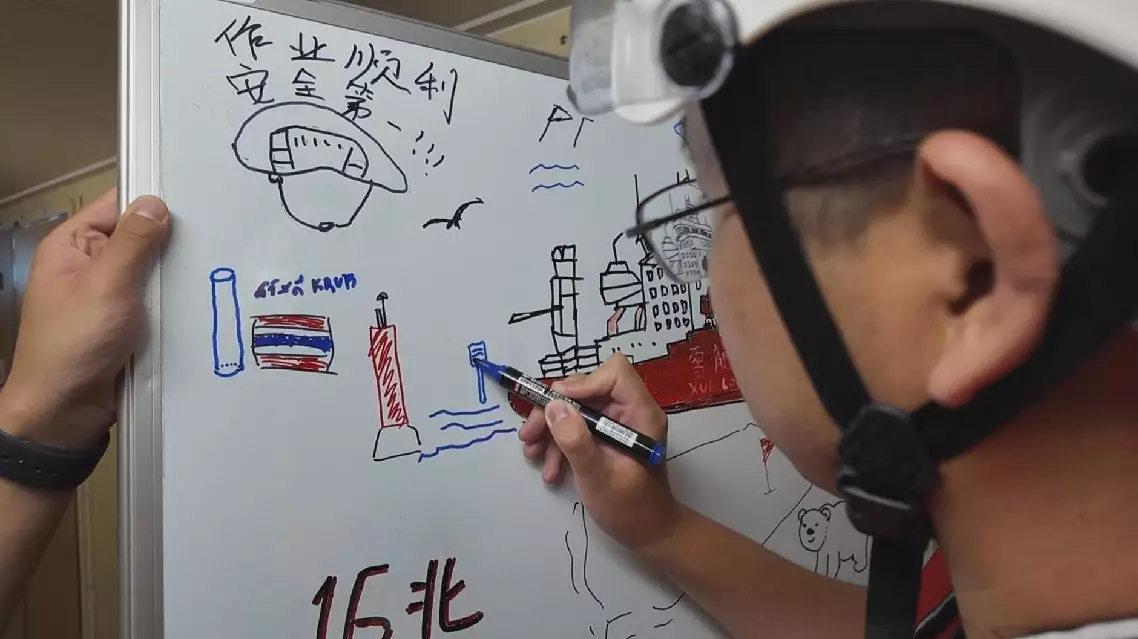
China's 16th Arctic expedition crews paint portrait of proud polar expedition moments, hardships