A rising number of Indonesian students are forging closer connections with China, driven by a fascination with its language, culture, and academic opportunities.
For Indonesian student Gina, the fascination with China began at home, watching Chinese dramas with her family.
"When I was a kid, I was pretty close with my auntie and also my uncle. We used to watch a lot of Chinese dramas, especially traditional Chinese dramas, and I was such in awe, especially in the female actors. They use really pretty costumes and makeup. It's such an enlightening experience," Gina said.
Gina now studies at the London School of Public Relations (LSPR) in Jakarta, where interest in China is flourishing.
This year, LSPR is partnering with Sichuan International Studies University, one of China's top language institutes, to launch a new center for Chinese language and culture in Jakarta.
"LSPR and SISU, or Sichuan International Studies University, is number four in China for Chinese language. So, we have a program together with them in Chinese language and culture. So, it's not enough just learning the language without really learning the culture. And this is very important for students who are pursuing to go to China or for them (who) want to know about China. Nowadays, we cannot ignore China, because China is a country that we all look up [to], and China work ethics, which is very efficient, and China technology. So all of us need to learn from China," said Prita Kemal Gani, founder and CEO of LSPR Institute.
These ties are also reflected in academic collaboration, with institutions like the University of Indonesia offering exchange programs with Chinese universities including Qingdao University of Technology and exploring cooperation with Peking University.
According to researchers, China's openness marks a significant shift in public perception among Indonesians.
"From China's perspective, they certainly possess their own form of soft power. One aspect, building on what we discussed earlier regarding educational diplomacy, is the significant opportunities they create for Indonesians to study there through various scholarship programs. China is far more open now. My generation, for instance, was very familiar with the term 'Bamboo Curtain,' an image that implies a closed society. That is no longer the case. Today, we can access a wealth of information about what China is actually like," said Hayati Nufus, a researcher at the Center for Politics at National Research and Innovation Agency.
For Gina, these changes are opening up real-life opportunities.
"I didn't think that going to China was achievable before, like in my childhood. But because I've seen the recent development with LSPR and also a lot of Chinese universities collaborating with LSPR, I feel like LSPR is going to be a very great way for me to achieve my dreams to finally, maybe, go to China through student exchange or get my master's program there," she said.
As China and Indonesia's relationship grows beyond trade and investment, a new generation is building bridges through language and shared culture, transforming curiosity into deeper, more personal connections.
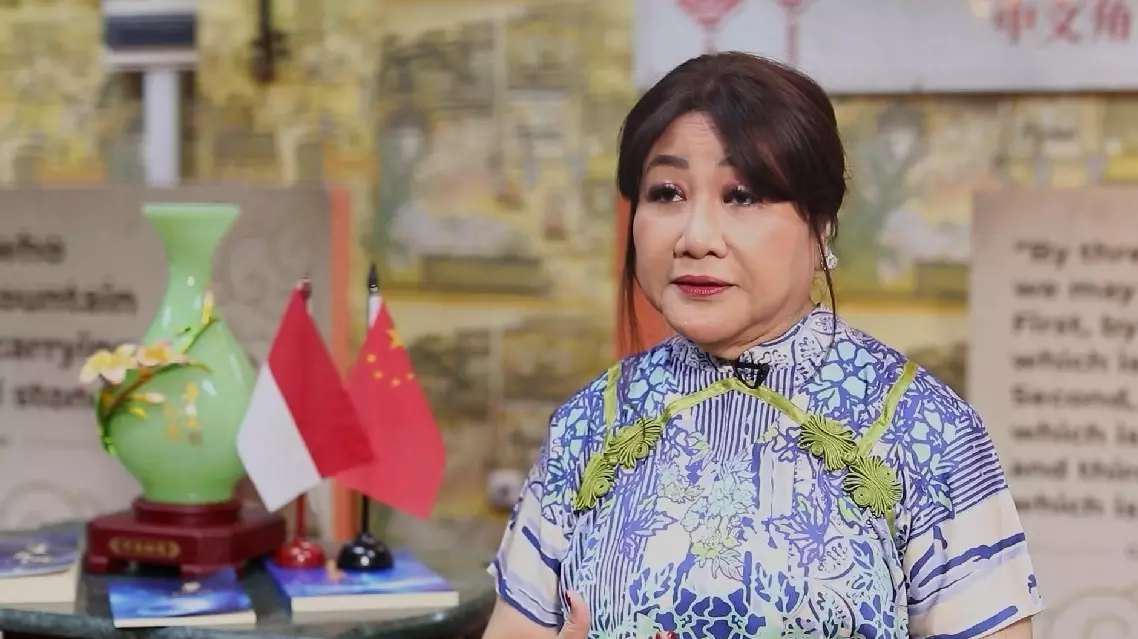
More Indonesian students turn to China for language, culture studies
More indonesian students turn to China for language, culture studies