MINNEAPOLIS (AP) — Court cases involving Twin Cities churches and immigration enforcement highlight how the acrimonious debate continues to roil faith communities more than six months since the federal surge turned Minnesota into a symbol of defiance of the Trump administration’s policies.
In one case, a Minneapolis Baptist church — alongside congregations nationwide — asked for the government to be reprimanded after spying on protest-related activity on its property. In another, more than three dozen protesters have asked for their charges to be dismissed after they disrupted a worship service in a St. Paul church where one of the pastors was also a U.S. Immigration and Customs Enforcement official.
Click to Gallery
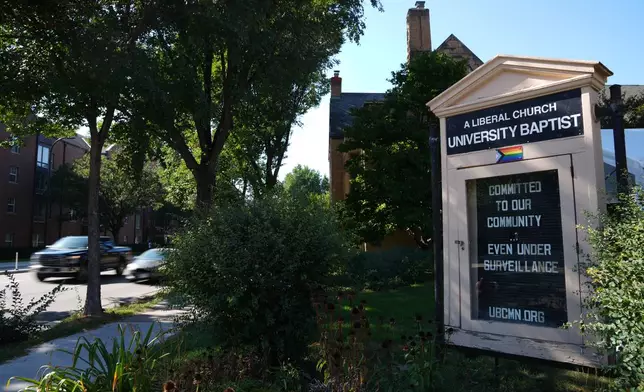
A sign denouncing surveillance is seen outside University Baptist Church, Friday, Sept. 4, 2026, in Minneapolis. (AP Photo/Ellen Schmidt)
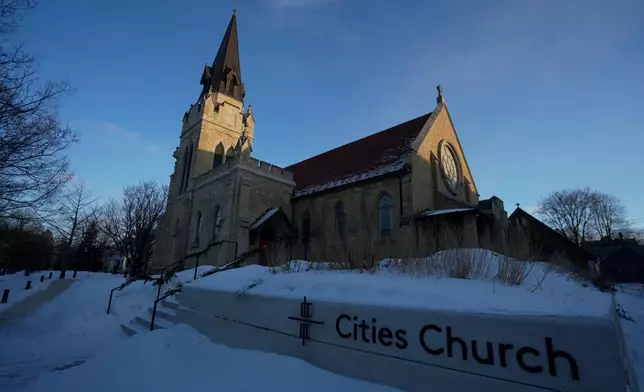
FILE - Cities Church in St. Paul, Minn., on Jan. 19, 2026. (AP Photo/Angelina Katsanis, File)
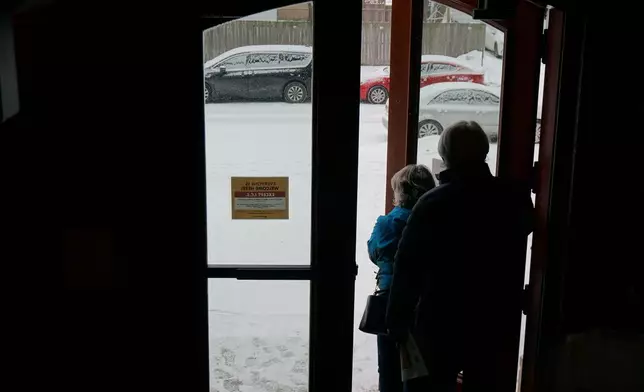
Signs saying that immigration agents have no right to enter without a warrant are posted on the doors of Holy Trinity Lutheran Church in Minneapolis on Sunday, Jan. 18, 2026. (AP Photo/Giovanna Dell'Orto)
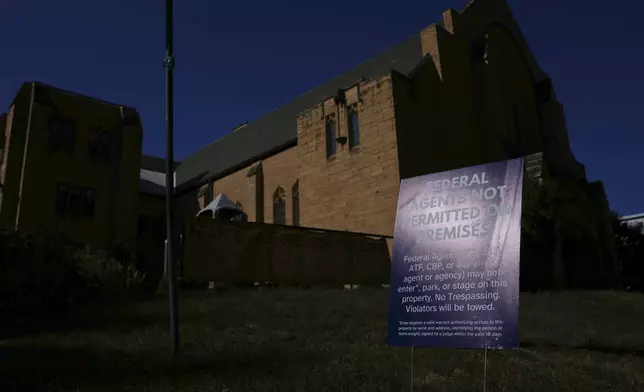
A sign prohibiting federal agents from entering the premises is posted outside University Baptist Church, Friday, Sept. 4, 2026, in Minneapolis. (AP Photo/Ellen Schmidt)
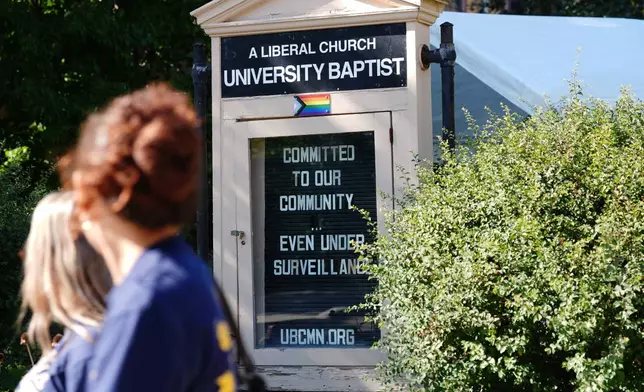
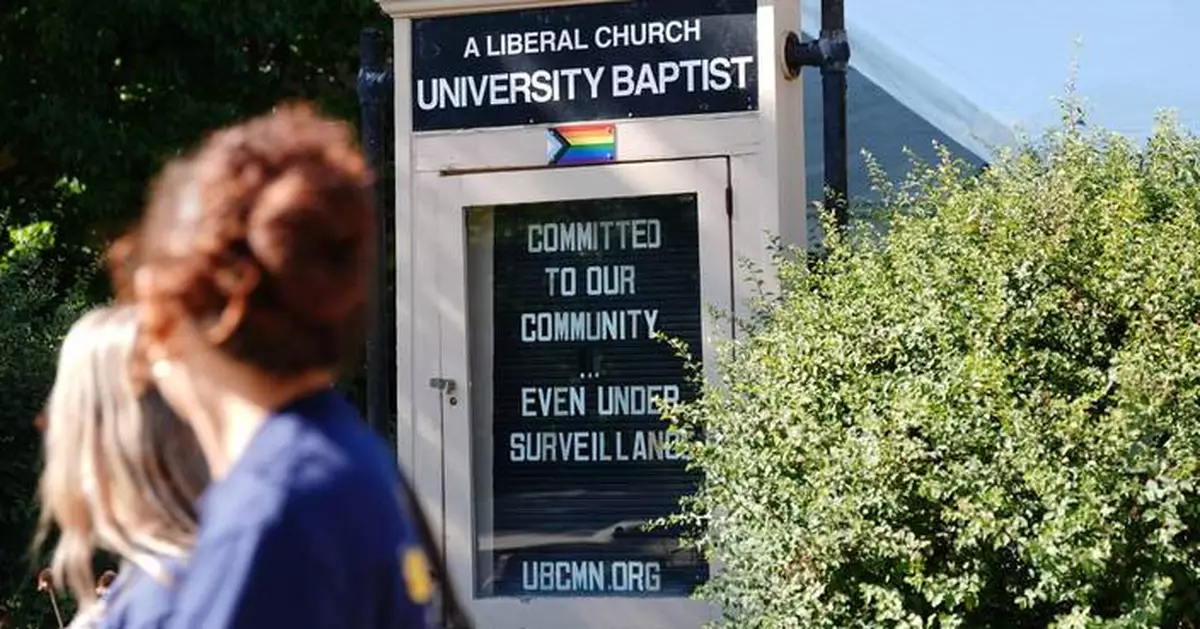
People walk by a sign outside University Baptist Church, Friday, Sept. 4, 2026, in Minneapolis. (AP Photo/Ellen Schmidt)
Even congregations uninvolved in the court cases say they’re still feeling the repercussions of the weekslong surge in immigration operations last winter. Protesters confronted federal law enforcement daily, and the killing of two protesters sparked global outcry.
Immigration agents are no longer visibly active on the same residential block as Holy Trinity Lutheran Church in Minneapolis. But its pastor says the signs that went up in January stating “Everyone is welcome here! Except I.C.E.” have stayed.
“I don’t foresee a time when they will come down. We want our building to remain a sanctuary for many people,” said the Rev. Ingrid Rasmussen. Her church provided whistles, which protesters across the city used to alert neighbors about law enforcement presence.
For decades, congregations have been on the front lines of providing for immigrants and refugees, whether in their faith communities or with outreach ranging from food distribution at the U.S.-Mexico border to advocacy in Washington.
As part of its sweeping crackdown on illegal immigration, President Donald Trump's current administration gave agents more leeway to make arrests at houses of worship.
In response, dozens of religious groups sued, heralding a more openly adversarial relationship between many faith leaders and federal authorities.
That has continued through surges last fall and winter in various parts of the country, with faith leaders arrested during anti-enforcement protests and suing to make pastoral visits to detained migrants.
“There’s been a pretty dramatic increase in lawsuits filed related to people of faith’s support for migrants,” said Elizabeth Reiner Platt, director of the Law, Rights and Religion Project at Union Theological Seminary.
Faith groups have achieved several “promising” wins, she said, adding that ongoing litigation shows how unpopular the administration’s aggressive enforcement approach is with many religious people.
Both Minnesota court cases center on the idea of protecting a sacred space and people’s right to worship — in one case from government intrusion and in the other, from people protesting the immigration crackdown.
In mid-August, court documents emerged in a separate case involving 15 people charged by federal prosecutors with impeding the immigration crackdown in Minneapolis. The documents revealed that federal agents had conducted an undercover surveillance operation, which had targeted groups leading protests earlier this year.
Among those charged was an organizer in a martial arts group who the government says was training protesters to physically prevent arrests. Some of the group’s meetings occurred in the gym of University Baptist Church in Minneapolis, and Homeland Security agents conducted surveillance operations there four times — including once with an undercover agent inside, according to court documents.
The church is a member of American Baptist Churches USA and the Alliance of Baptists, two of several groups that in February won an injunction against most immigration enforcement at their member churches nationwide.
The groups have asked the same federal judge to rule that Homeland Security violated that order, to instruct its agents about it, as well as to disclose if any other houses of worship were part of surveillance operations.
The government says in court documents that its operation didn’t violate the injunction because it wasn’t about immigration enforcement. Rather, they were investigating a suspect for training “individuals to commit acts of violence against federal officers and employees.”
A hearing was held Sept. 4 and a ruling is pending. A spokesperson with the Department of Homeland Security said it doesn’t comment “on the existence or status of specific ongoing investigations, nor on investigative methods.”
University Baptist Church’s interim pastor said the small congregation found the surveillance “very upsetting” — but also motivation to double down on their advocacy.
“We see the message of Jesus as compelling us to be where people are most vulnerable,” the Rev. Cody J. Sanders said.
For Kevin Friedl, an attorney with the Democracy Forward Foundation that’s representing the faith groups, the case is ultimately about offering sanctuary.
“For many, religion — being able to join together with others at their church or other house of worship — is an important and critical source of solace and comfort, in hard times, which these are,” he said. “This administration wants to deny them that.”
The argument that churches are protected spaces and worshippers have rights against intrusion is also buttressing the case over the anti-immigration enforcement protest at Cities Church in Minnesota’s capital in January.
More than three dozen people — including former CNN journalist Don Lemon and prominent local activists — are facing federal civil rights charges after entering the Southern Baptist church where one pastor was also a leader in the local ICE field office.
During Sunday worship, some walked up to the pulpit, others loudly chanted “ICE out” and “Renee Good,” referring to the woman who was fatally shot on Jan. 7 by an ICE officer in Minneapolis.
In August, a slew of motions to dismiss the cases were filed and will be heard in late October. Some contend the charges amounted to “selective or vindictive prosecution,” and cite the University Baptist Church surveillance. They argue that the “administration’s claims that this prosecution is based on a desire to protect the right to practice religion is disproved by the extraordinary freedom it has granted ICE to violate the sanctity of churches,” according to court documents.
“They’re using these cases to try to get information on the whole resistance movement,” said Jordan Kushner, an attorney representing several defendants.
An attorney representing Cities Church countered that the issue at play is “an invasion during worship.”
“Nobody has the right to storm a church,” Doug Wardlow said, adding that the protest — and smaller, outdoors ones that continue to occur during worship times — “traumatically impacted the life of the church.”
Faith leaders across the Twin Cities say they’re still dealing with fallout from the surge, whether it’s lingering fear among migrants, tensions over government surveillance, or persistent financial assistance requests.
Many congregants wonder who else was under federal surveillance, said the Rev. Mariah Furness Tollgaard, senior pastor at Hamline Church in St. Paul. She was briefly detained at an anti-deportations protest at the Minneapolis airport in January.
Several Protestant congregations that were outspoken in their anti-immigration-enforcement stances have increased their security measures.
While many remain committed to their advocacy, it’s taking a toll.
“The general vibe we get from leaders and congregations is just tired — there’s weariness more than anything,” said Nicholas Tangen of the Evangelical Lutheran Church in America’s Minneapolis Area Synod.
Associated Press religion coverage receives support through the AP’s collaboration with The Conversation US, with funding from Lilly Endowment Inc. The AP is solely responsible for this content.
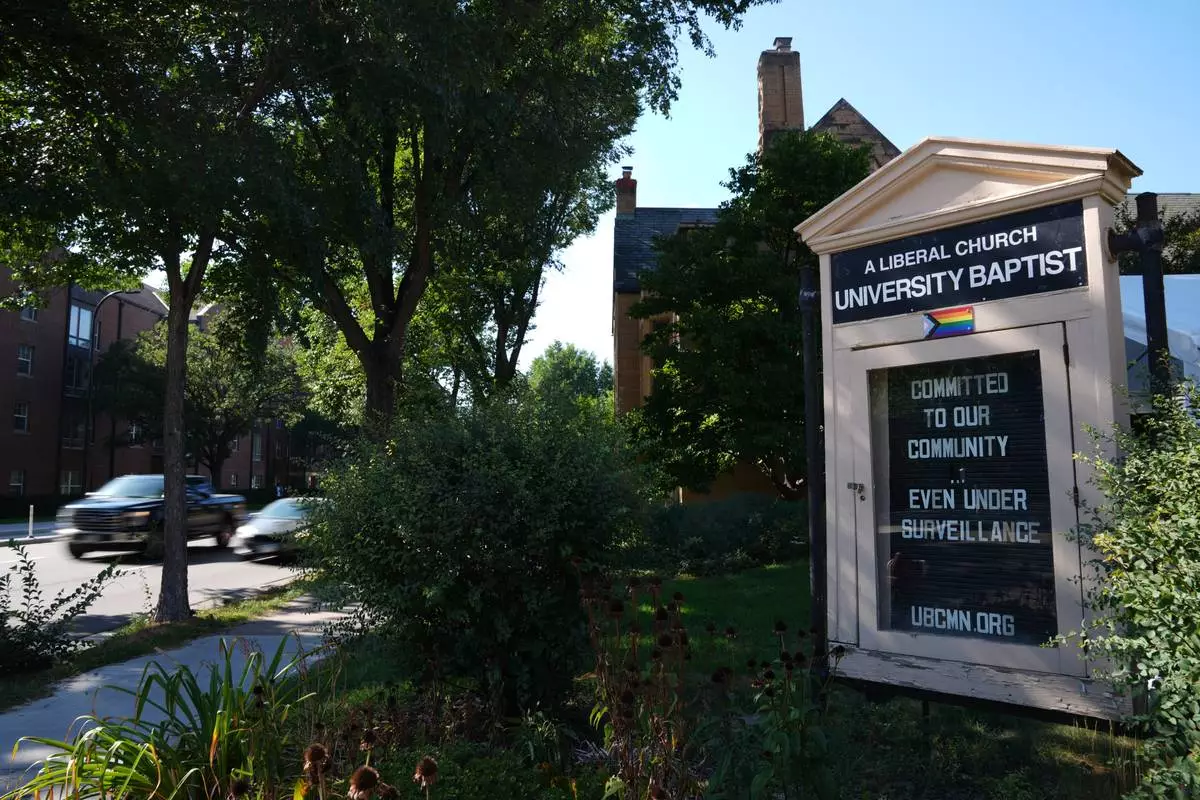
A sign denouncing surveillance is seen outside University Baptist Church, Friday, Sept. 4, 2026, in Minneapolis. (AP Photo/Ellen Schmidt)
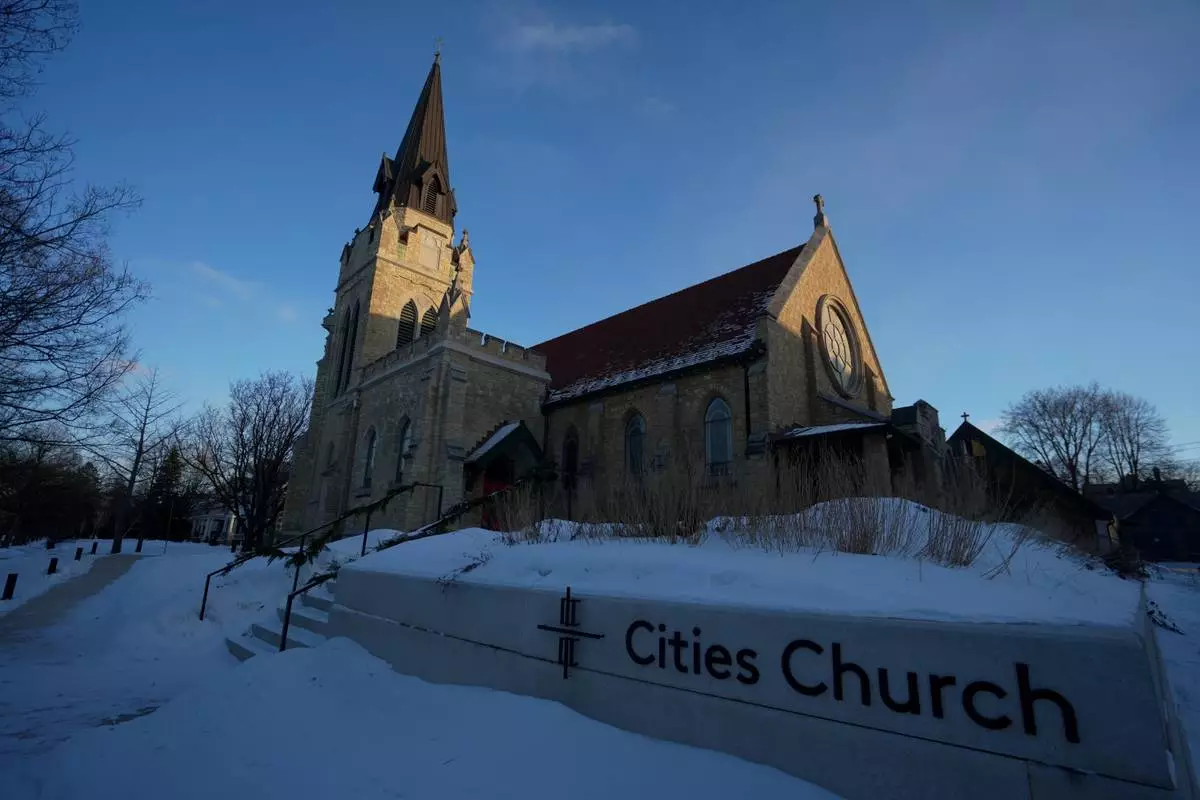
FILE - Cities Church in St. Paul, Minn., on Jan. 19, 2026. (AP Photo/Angelina Katsanis, File)
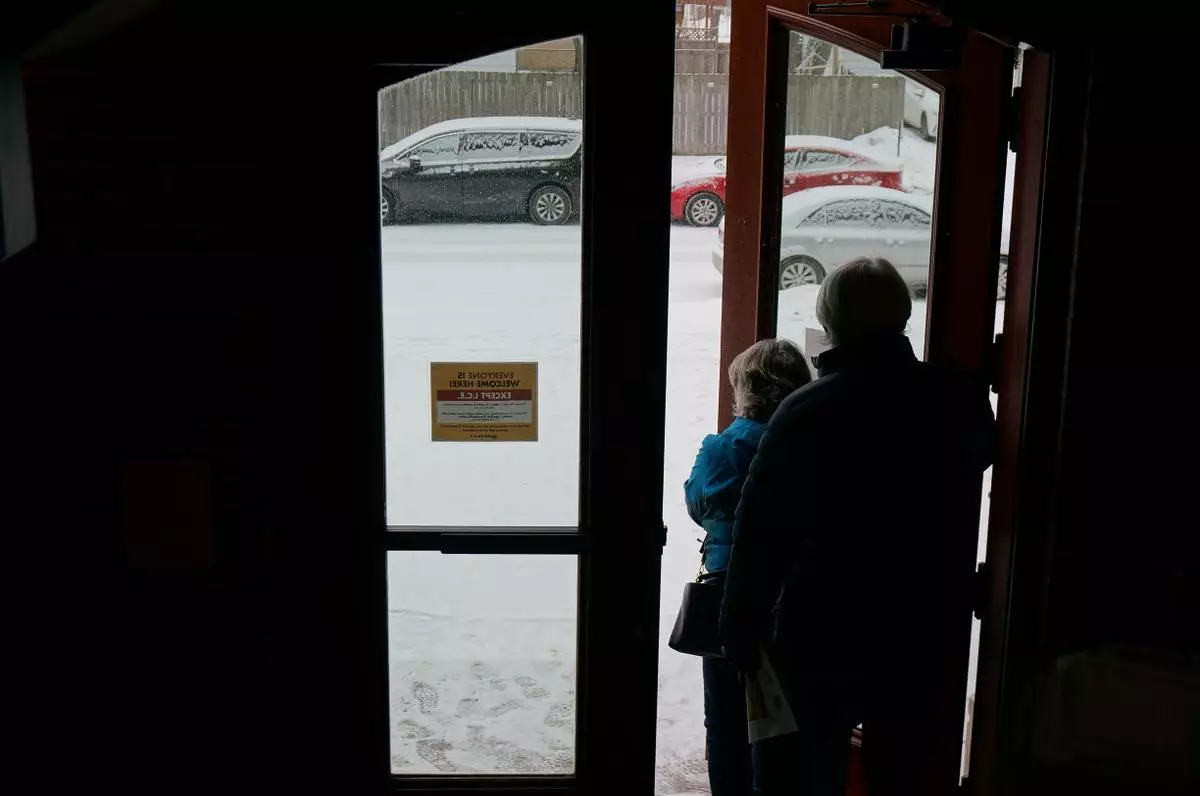
Signs saying that immigration agents have no right to enter without a warrant are posted on the doors of Holy Trinity Lutheran Church in Minneapolis on Sunday, Jan. 18, 2026. (AP Photo/Giovanna Dell'Orto)
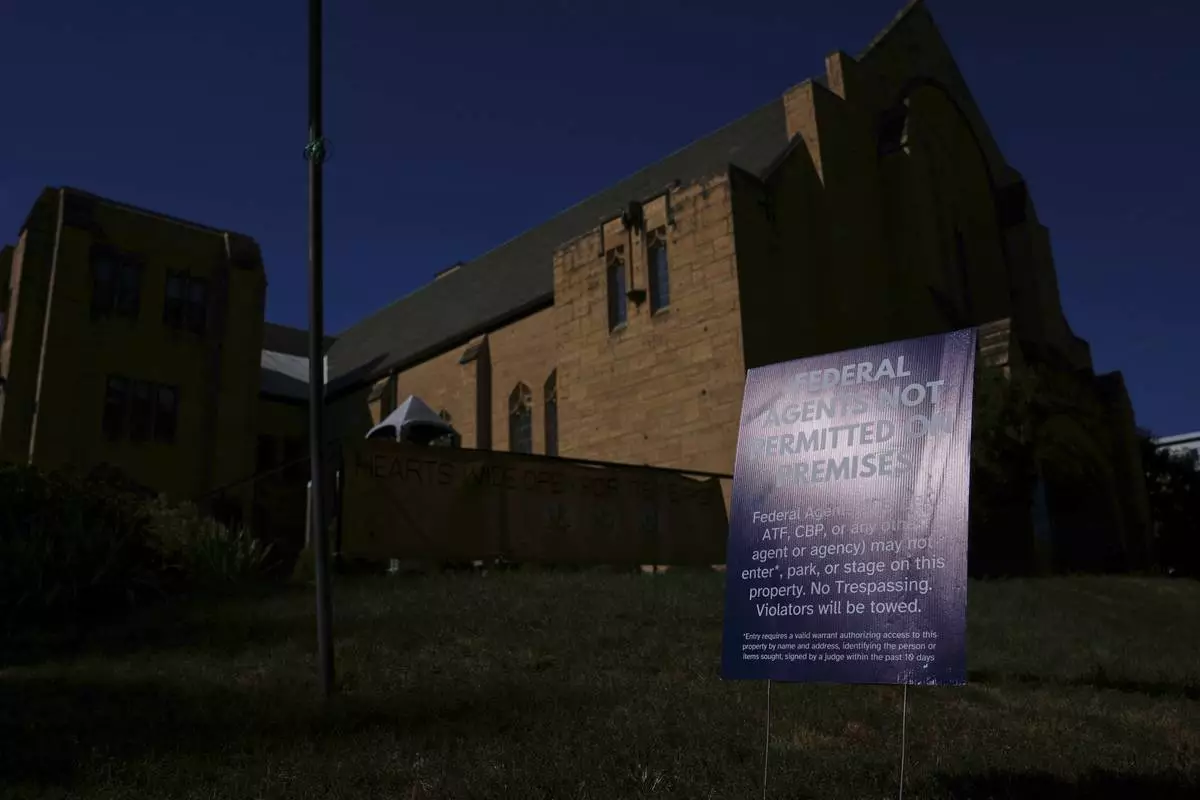
A sign prohibiting federal agents from entering the premises is posted outside University Baptist Church, Friday, Sept. 4, 2026, in Minneapolis. (AP Photo/Ellen Schmidt)
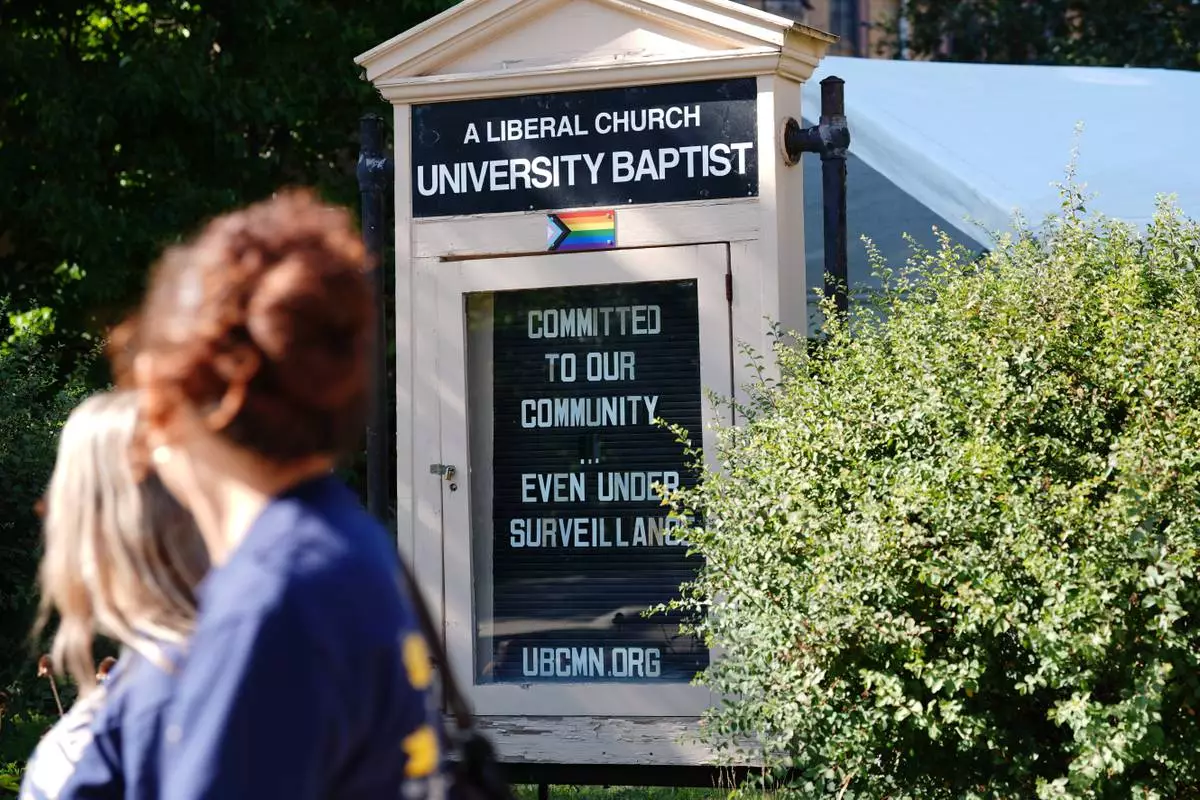
People walk by a sign outside University Baptist Church, Friday, Sept. 4, 2026, in Minneapolis. (AP Photo/Ellen Schmidt)