Former Jordanian Prime Minister Omar Razzaz has expressed the hope for greater tourism cooperation with China, saying his country offers magnificent landscape, rich historical heritage and a strong sense of safety.
Extending the invitation during an exclusive interview with China Media Group from Beijing, Razzaz shared a story of himself talking with one of his Chinese friends who traveled to Jordan.
"I asked a Chinese friend who visited Jordan as a tourist. And I said, so what did you think honestly, and she said, if I wanted to tell my Chinese brothers and sisters something, she said it would be that Jordan it's a beautiful nature, very different than anything experienced here. It's a very different history, people are very kind. And that was really a nice to hear her say and that it's a very safe place. You could walk in the street 12 in the morning or at three in the morning or three in the afternoon, and you're safe. It's like China in that sense, safety, and people are very welcoming," Razzaz said.
As travel between the two nations becomes easier with Jordan rolling out visa-issuance on arrival for Chinese citizens, Razzaz expressed his strong desire to see tourism act as a bridge to bring the people of Jordan and China closer together and deepening bilateral cultural exchanges.
"I'd like to welcome all Chinese people who are interested in understanding other cultures and understanding other communities and finding what's common between us all to visit Jordan and spend some time there. And the most important sites are Petra, which is one of the UNESCO top seven features and there are many others, the Dead Sea, Jerash, all these Roman cities that are ancient. And so, I'd like to extend an invitation to our Chinese partners and fellow citizens to come visit. And let's do much more of this than we have done in the past," said Razzaz.
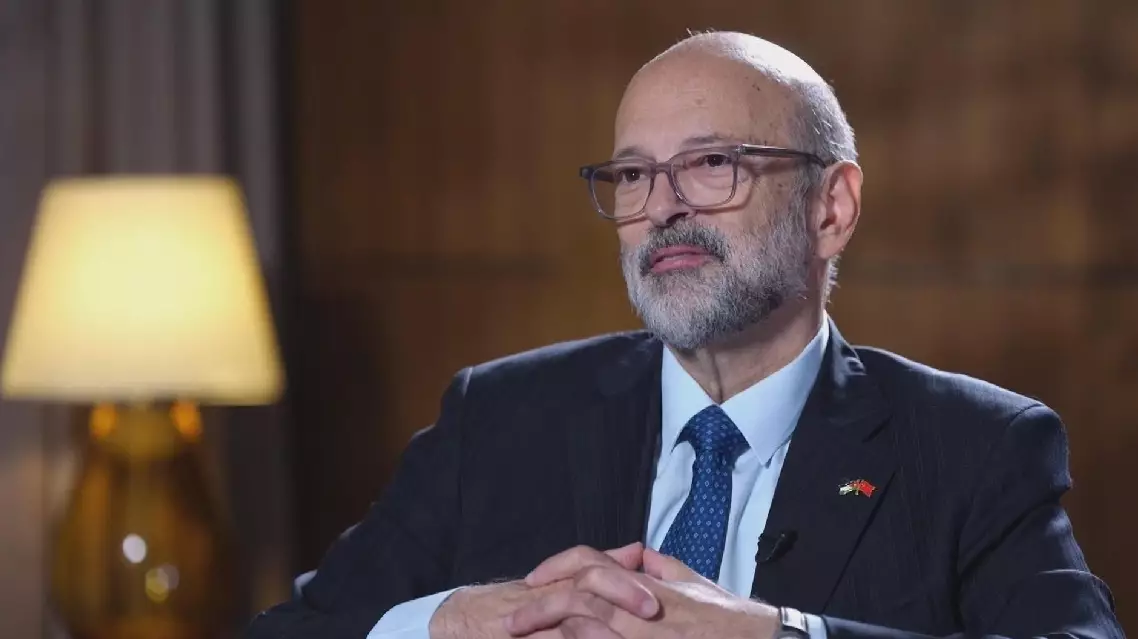
Jordan's former PM expects greater tourism cooperation with China
Artificial intelligence (AI) agents, embodied intelligence, and other emerging technologies took center stage at the four-day 2026 Inclusion Conference on the Bund in Shanghai, which concluded Saturday.
Under the theme of "Building the AI Economy Together," the conference attracted more than 300 companies to showcase their technologies, with applications ranging from AI agents and financial services to embodied intelligence and industrial systems.
The displays signaled a new phase in integrating AI into enterprise workflows, financial transactions and industrial automation as the tech industry shifts from building ever larger models to deploying practical real-world applications.
"I would expect in one or two years' time -- in fact it's already happening -- it's becoming a platform from which we do all the works on top of this platform. So also now the important part is [that] it's going to impact every field. The question is how we work to take advantage of AI to do our work at the next higher level," said Chua Tat-seng, a fellow at Singapore National Academy of Science.
For enterprises, the commercial incentive lies in boosting productivity, cutting operating costs and automating complex tasks, with experts noting that digital agents are already delivering the most immediate utility to specialized professionals.
"For the digital world, the question is how we can scale it up and also make very general agents [available] to everyone. So now actually for the current stage, for the people who can benefit most from the digital agents are actually the experts in different subfields," said Liu Ziwei, an associate professor at the Nanyang Technological University.
AI is moving beyond the digital world. More than 40 embodied-intelligence companies are presenting technologies designed for real-world environments, signaling a shift from generating information toward robots executing real-world labor. That shift could be where the next phase of the AI economy begins.
"Painting a fan may look like a fun and simple task, but it actually shows how robots are evolving from simply being able to grasp and lift objects. Each joint has a built-in torque sensor, giving the entire arm a sense of force," said Yang Wentao, director of the business department of Flexiv, a deep-tech company that is committed to developing and manufacturing general-purpose adaptive robots.
Yang added that combined with precise force control and fast response, the robot can sense contact in real time and adjust its movements accordingly.
Despite rapid advancements, industry developers emphasize that hardware and software integration remains in a formative stage.
"Robotics, no matter the hardware or software, is not mature at all. We are working on our robotics. For example, [in case of] some far distance or some dangerous space, so humans or manpower would be reluctant to do that. So we can replace [them] with humanoids to have this task fulfilled," said Li Hongyang, a 2026 Ant Intech Awards winner.
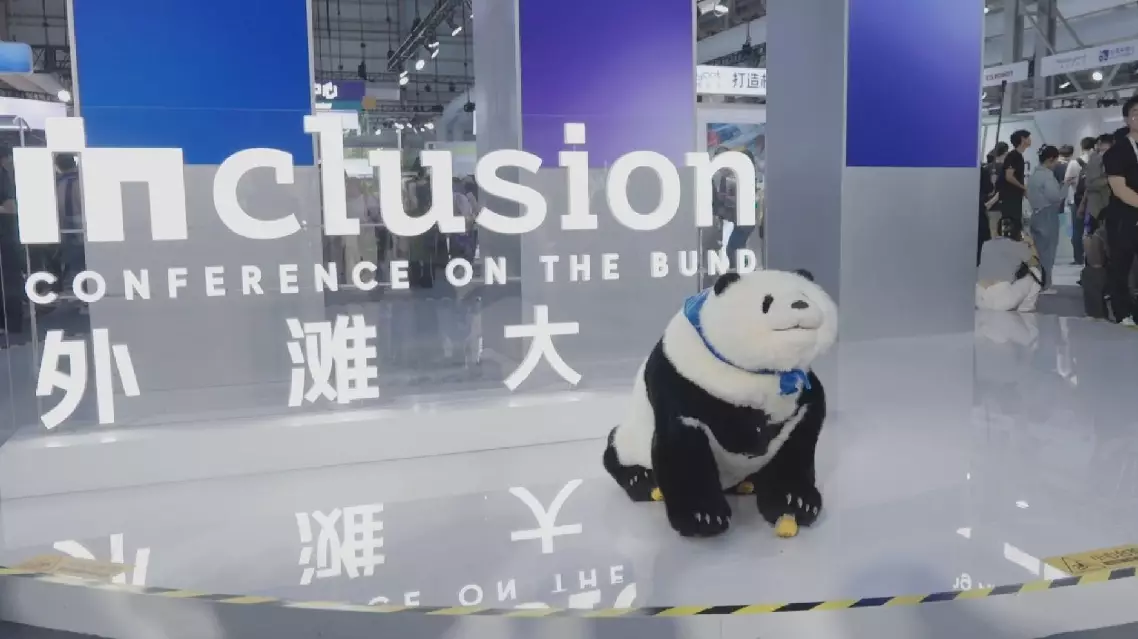
Practical AI applications, embodied robotics take center stage at Shanghai's Inclusion Conference